
Reviewed · CITY TOURS
East Berlin: City of Shadows Walking Tour
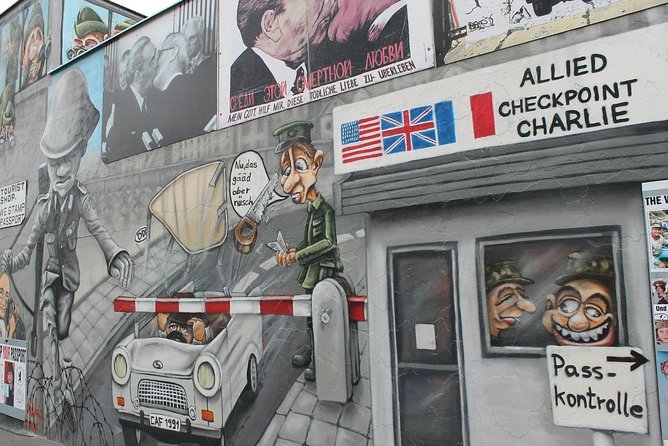
East Berlin during the DDR can feel like a museum, but the buildings are still doing the talking. This City of Shadows walk strings together Communist-era sites you would otherwise miss, from power symbols to private heartbreak.
I love that it is led by a local historian, so the story connects architecture to policy, not just dates. I also like the compact route and the small group size (up to 8), which keeps the pace human and the questions actually get answered.
The tradeoff is time. With a 3-hour format and short stop windows, you get great orientation, but you will probably want a separate, deeper museum visit if you are craving more than a quick stop, including the Stasi Museum.
Key things you will notice on this East Berlin walk
- A guided DDR story line that links Cold War politics to the streets you stand on today
- Small-group pacing (maximum of 8) that feels more like a conversation than a shuffle
- Emotion at the right places, especially at the Berlin Wall memorial and the Escape stories tied to the Death Strip
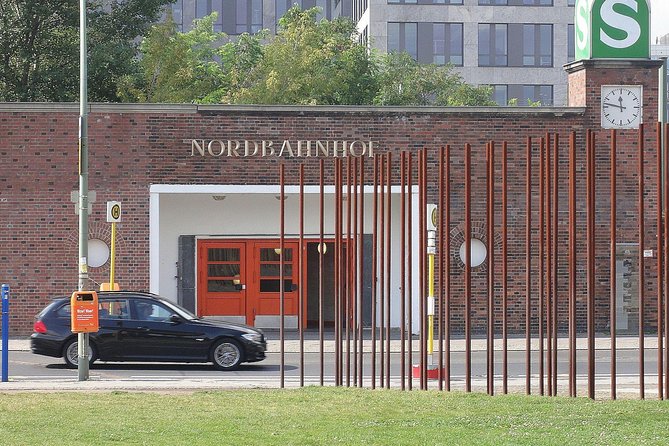
- Unusual stops you rarely plan on yourself, like the Palace of Tears and Nordbahnhof ghost stations
- The Stasi angle through Eric Mielke’s role, with a clear explanation of how surveillance worked in daily life
- Quick transit interludes where distances are too far to walk, with day ticket prices spelled out
A 3-hour East Berlin plan that gives you bearings fast
This is a 3-hour guided history tour focused on Berlin’s Communist-era sites. It is offered in English, and it runs at a pace that is brisk but not exhausting, especially since the tour uses public transport a few times when walking would be awkward or too long.
What makes it useful is the way it sets context. Rather than scattering facts, the guide threads a line through power, everyday life, suppression, and the eventual collapse in 1989. That means you will understand what you see later when you wander on your own.
You also get a built-in “first-timer advantage.” Even if you have seen photos of the Berlin Wall, you usually have not seen the connecting pieces, like how stations, housing blocks, and public squares were tied to state control and propaganda.
More walking tours in Berlin:
- Discover Berlin Half-Day Walking Tour
★ 5.0 · 9,624 reviews - Berlin: Third Reich and Cold War 2 Hour Walking Tour
★ 4.9 · 6,830 reviews - Berlin: Discover Berlin Walking Tour
★ 4.9 · 5,998 reviews
Price and value: what you get for $156.53 and what costs extra

The price is $156.53 per person for about 3 hours with a local guide. The tour includes a guide, and the stops are marked as having free admission tickets in the itinerary, so you are not hunting for add-on entrances just to keep the day moving.
Where your money actually goes is into framing and access to a story. A guided historian can turn a stop like Karl-Marx-Allee from “big buildings” into a lesson about how a political dream turned into deprivation and fear. That kind of interpretation is the main value here.
Food and drinks are not included. So plan a snack strategy. If your timing overlaps lunch, grab something nearby before you start or plan to buy something after, since you are on the move and you will not have long meal breaks.
Start at Unter den Linden 42, with pickup from your hotel
The meeting point is Unter den Linden 42, 10117 Berlin. If you are staying in Berlin, the tour also offers pickup from any hotel or accommodation, which is a real convenience in a city where “where do we meet?” can eat time.
You will receive confirmation at booking, and you are using a mobile ticket. That makes day-of logistics simpler, especially if you do not want to print anything.
You should expect a short walking component plus a few public-transport hops. The tour is best with moderate physical fitness, not intense hiking. If you know you are limited on stairs or long standing, consider planning extra time around each stop, just to stay comfortable.
Brandenburg Gate and the Soviet Embassy: how Cold War politics shaped the city
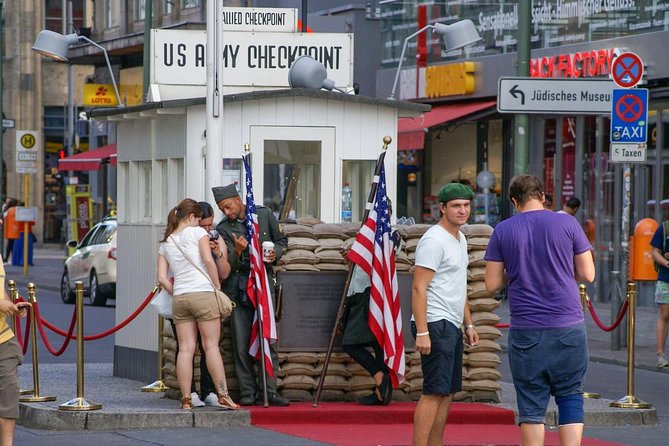
The tour kicks off at the Brandenburg Gate for about 20 minutes. This is where you get the big framing: how modern Berlin’s built environment interacts with a dark and often hidden history.
You will hear about life under Communist rule, how East Germans’ discontent grew, and how the government met that discontent with brutal suppression. The story also connects the Allies’ postwar division of Germany into four parts to the decades of Cold War tension, so the tour does not feel like it starts mid-drama.
A key moment here is the June 1987 call by US President Ronald Reagan to Soviet Premier Mikhail Gorbachev, urging him to tear down this wall. Even if you already know the moment, hearing it placed at this exact crossroads helps it click.
Nearby is the former Soviet Embassy, described as a grandiose monument built in 1945 amid World War II rubble. The guide uses it to explain how Stalin’s ambition to control all of Berlin showed up in stone, not just speeches.
If you like photos, this is your stop to take them. If you feel the tour is going fast, that is normal. Brandenburg Gate is where the guide sets the “rules of the game,” then you start seeing the smaller, human consequences.
A few more Berlin options worth a look
- Berlin: 1-Hour City Tour by Boat with Guaranteed Seating
★ 4.3 · 16,993 reviews - Berlin: City Sightseeing Hop-On Hop-Off Bus Tour
★ 4.1 · 4,233 reviews - Berlin: 1-Hour City Sightseeing Cruise
★ 4.4 · 2,210 reviews - Berlin City Hop-on Hop-off Tour with Optional Cruise
★ 3.5 · 1,155 reviews
Friedrichstrasse station and the Palace of Tears
Next comes Friedrichstrasse for about 15 minutes. This train station was a key crossing point between East and West Berlin, so it is not just a building, it is a human machine built to process separation.
The guide focuses on immigration laws and the way families were torn apart by East Germany’s strict rules. People said their sad goodbyes here in an office known as the Palace of Tears. That phrase can sound dramatic until the guide connects it to how paperwork and policy turned into real emotional outcomes.
This stop works well because you can still read the logic of travel in the place. You will see how a “border crossing” becomes a stage for the state, where control is enforced quietly but firmly.
Park am Nordbahnhof ghost stations: the eerie power of unused platforms
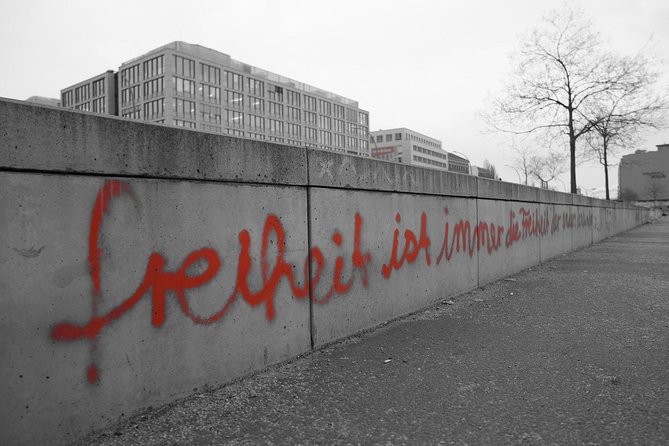
The tour moves to Park am Nordbahnhof for roughly 10 minutes. This is one of those stops that feels slightly spooky even when you are not in the middle of history class.
The focus here is on ghost stations. These were unused but heavily guarded stops on West Berlin’s subway lines that sat in East German territory. In other words, they were part of the system, but they were not meant to serve the people living around them.
You will learn how Berlin’s division shaped movement at a granular level. It is not only walls and checkpoints. It is also trains that passed through places that could have been ordinary, but were treated as dangerous.
If you like quiet curiosities, this is a highlight. It also gives you a contrast tool. After this, Karl-Marx-Allee and Alexanderplatz will feel less like random landmarks and more like an intentionally designed city.
Karl-Marx-Allee: the socialist dream, built in concrete
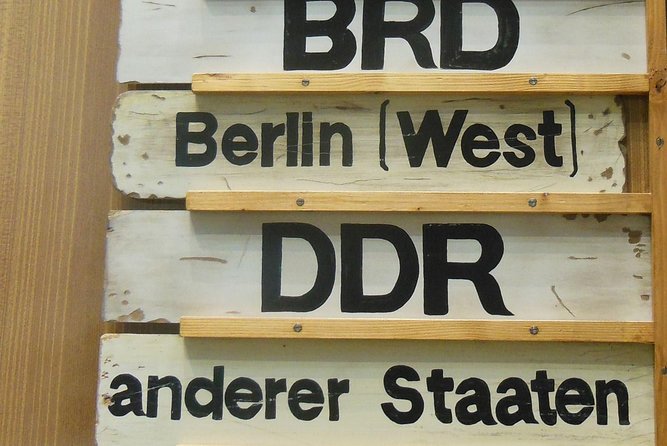
Stop 4 is Karl-Marx-Allee, also about 10 minutes. The guide takes you to the grandiose, mile-long housing complex and uses it to explain how East Germans’ dreams for a Socialist paradise turned into a nightmare of deprivation, suppression, and paranoia.
This is where the tour shifts from state control as a border issue to state control as daily life. Housing, space, and even how a city looks can be a political tool.
What I like about tackling Karl-Marx-Allee during a walking tour is that you can judge scale with your own eyes. Big buildings can be awe-inspiring from a distance, but when the guide frames them as part of a system that monitored and limited people, you start seeing the cost behind the design.
The short time here means you get the core interpretation, not a deep architectural lecture. But for an orientation tour, it lands the point clearly.
Berlin Wall memorial and the Death Strip: respectful, heavy, and direct
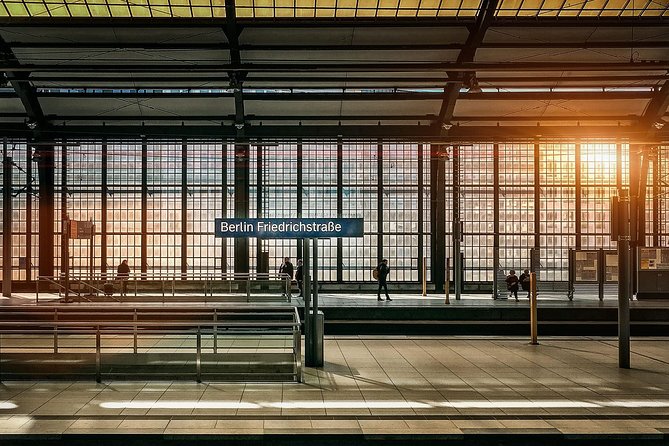
Next is the Memorial of the Berlin Wall for about 15 minutes. This stop is built around experience, not just information.
You get a chance to experience the Death Strip. The guide pairs that with stories about East Berliners whose escape attempts led to tragic deaths. This is the emotional peak of the tour, and the pace is usually slower in your body, even if the schedule stays tight.
I recommend approaching this stop with a bit of patience for your own feelings. You are absorbing a real-world history of people trying to flee violence. If you go in expecting a quick photo moment, you might feel unsettled. If you go in ready to listen, it is powerful.
Also, this is where the phrase “political legacy” becomes real. It is not abstract. It shows up as risk, fear, and consequences that were immediate.
The Stasi headquarters story: Eric Mielke and the system of spying
Then comes the Stasimuseum area for roughly 10 minutes. This stop focuses on East Germany’s secret police and the way the Stasi coerced neighbors and family members to spy on each other.
You will hear about the former Stasi headquarters and the role of its feared leader, Eric Mielke, including how he recruited a massive network of spies and used innovative surveillance techniques.
Ten minutes is not enough time to become an expert on the Stasi. But that is not the goal of a walking orientation tour. Here, the value is learning the mechanism: surveillance did not only happen through officers. It was embedded into social trust, which is why the impact lasted long after the system fell.
One practical note: if you were hoping for the type of slow museum visit where you read everything, plan a separate stop on your own later. This tour is designed to point you toward the most important themes fast.
Alexanderplatz: East Berlin’s public life and the 1989 tipping point
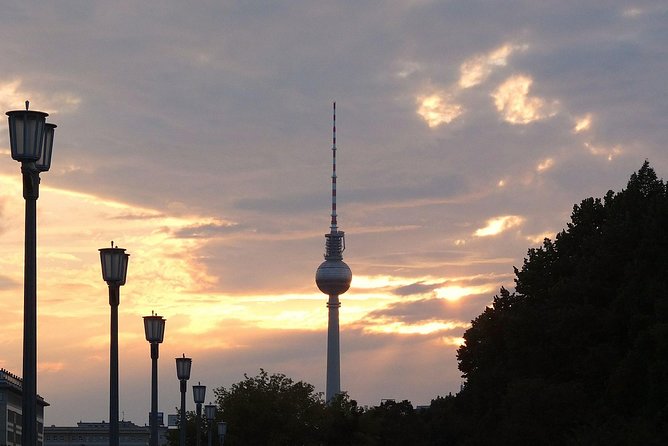
The tour ends at Alexanderplatz for about 10 minutes. This is the center of public life in East Berlin, rebuilt in the 1960s with monuments like a futuristic parliament building and the iconic TV Tower.
In 1989, this area became the setting for massive demonstrations that helped bring the regime’s downfall, ending 40 years of Communist rule. The guide ties the square to the idea of public space as a political stage, where crowds can shift from passive observation to active challenge.
If you have never stood in a big central square in a major European city, it can be a shock how quickly you feel the scale. Even with only a short stop, Alexanderplatz helps you see the “why” behind the story. People were not just trapped in private rooms. They gathered in public.
It also helps you future-proof your day. After this tour, when you see the TV Tower or walk through the square, you are not just looking at a landmark. You are remembering what the guide taught you about 1989.
Transit and timing: how to handle the public transport between stops
This tour uses public transport a few times. That is not a failure of planning, it is smart route design because some key sites are too far to walk comfortably.
If you do not already have a visitor’s transit pass, the suggestion is to purchase a day metro pass. The pricing provided is:
- One-way AB ticket: 2.8 EUR (Senior 1.70 EUR)
- Day ticket for one person: 7 EUR (Senior 4.70 EUR)
If you cannot purchase in advance, the guide can help you buy the ticket at the first metro station on the tour. That is a nice safety net, especially if you are arriving in Berlin with only a basic understanding of the system.
Practical advice from me: keep your transit plan simple. Buy one day pass if you expect to do more than one hop. If this is your first day, it is very likely you will want transit later anyway.
Who this tour is best for, and who may want a different format
This tour is ideal if you want a guided overview and orientation to Berlin’s Communist-era sites. It is also a good fit if you like learning with a local historian and want the story explained in a way that connects policy to everyday life.
It is especially good for first-timers who will spend more time exploring after the tour. You are not trying to see everything. You are trying to understand the city’s logic so your self-guided walking feels smarter.
If you want deep, slow museum time, this is not designed for that. The tour windows are short, and the stops are more like scene-setting than full museum reading. If Stasi Museum immersion is your main goal, you will likely need to plan an additional visit on another day.
Should you book East Berlin: City of Shadows?
Book it if you want the clearest path through East Berlin’s most meaningful DDR landmarks in a short amount of time, with a local historian explaining the political legacy in plain language. The small group size (up to 8) and the strong overall rating suggest most people appreciate how focused and well-structured it is.
Skip or supplement it if your top priority is long museum immersion, because this tour is built for orientation and key stories, not hours inside exhibits. I would still do it for context, then follow up on your own at the places that grabbed you most, especially if you want more from the Stasi angle.
If you like walking tours that do more than point and photo, this one is a solid value for your first pass through the sites that shaped modern Berlin.
FAQ
How long is the East Berlin City of Shadows walking tour?
It runs for about 3 hours.
What language is the tour offered in?
The tour is offered in English.
Is pickup available from my hotel?
Yes, pickup is offered from any hotel or accommodation in Berlin.
What is the group size limit?
The tour has a maximum of 8 travelers.
What is included in the price?
The included item listed is a local guide. Food and drinks are not included.
Do I need to buy public transport tickets during the tour?
You will need to use public transport a few times since some sites are too far to walk. A day metro pass is suggested if you do not already have a visitor’s transit pass.
Are admission tickets required for the stops?
The itinerary indicates admission tickets are free for the listed stops.
Do I need a certain fitness level?
You should have a moderate physical fitness level.
What is the cancellation window for a full refund?
You can cancel for a full refund if you cancel at least 24 hours in advance of the experience’s start time.
Recently added around Berlin
- Berlin Private Custom Walking Tour With A Guide (Private Tour)★ 4.5 · 8 reviews
- One Up to 3 Rickshaws(6 GUESTS)-Taylor Made Rickshaw Berlin Tour★ 5.0 · 20 reviews
- Moonshine Comedy – English Stand Up Comedy by the bay★ 5.0 · 11 reviews
- Private Half-Day Berlin Sightseeing Tour with a Minivan Including Short City Walks★ 5.0 · 31 reviews
- Private taxi tour to Potsdam and Sanssouci 6-8h★ 5.0 · 30 reviews
- Private City Kickstart Tour: Berlin★ 4.5 · 71 reviews
- Private tour of Berlin★ 5.0 · 15 reviews
- Private Tutankhamun’s Tomb Live Escape Room in Berlin★ 3.5 · 11 reviews
City Tours, compared.
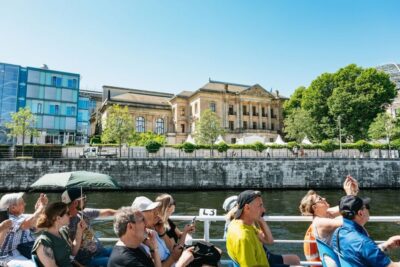
1-Hour City Tour by Boat with Guaranteed Seating
Read our review →
Berlin City Hop-on Hop-off Tour with Optional Cruise
Read our review →

Browse the lists this tour appears in