
Reviewed · SACHSENHAUSEN MEMORIAL VISITS
Never Again Sachsenhausen Concentration Camp
Sachsenhausen Memorial is one of those places that forces you to slow down, look closely, and understand how systems of control get built and then justified. This English tour from Berlin doesn’t treat it like a quick stop. You leave with a clearer picture of how Sachsenhausen evolved, from Nazi camp to Soviet special camp to a later propaganda site, all while keeping the focus on what really happened to prisoners.
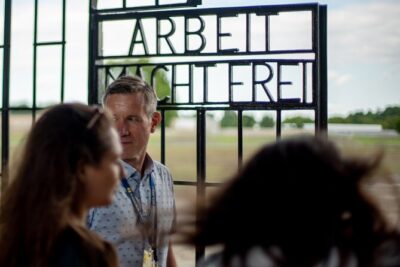
I especially like the way the guide, Siobhán, brings the story into the present with a progressive, feminist lens. Two other things I liked: the tone stays respectful even when the content is brutal, and the group stays small enough (up to 15) that questions feel normal, not rushed.
One consideration: this is not a neutral, purely academic script. If you really prefer a strictly fact-first delivery with zero political framing, you might find the emphasis on connections to the present a bit much.
Key things to know before you go
- Guided context with Siobhán’s style that links the past to today without being preachy
- Admission and the memorial donation are included in the price, so you can plan one less expense
- Small group limit of 15 helps you move through the site calmly and ask questions
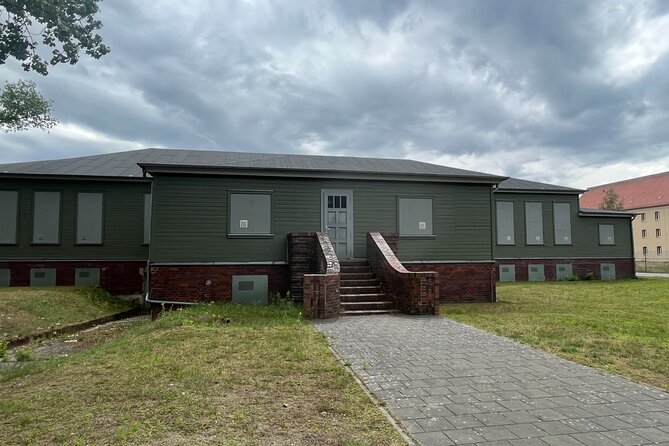
- Self-guided time in parts of the camp grounds like barracks and the kitchen area
- Strong focus on power and bodies through exhibits like the infirmary and eugenics-related material
- Moderate walking is part of the experience, including a walk from the station to the visitor area
Why Sachsenhausen from Berlin feels more real than a museum-only visit
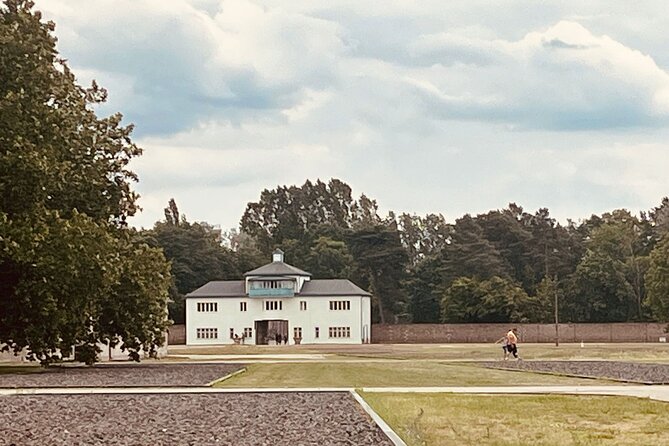
If you have ever visited a memorial and felt like you were only looking at objects behind glass, Sachsenhausen is different. The site makes the logic of the camp feel physical. You can literally see how space was used to control movement, visibility, and behavior. That is why a guided visit helps so much. It turns what could be overwhelming into a story you can follow.
This tour also gives you the chance to understand that Sachsenhausen did not stay frozen in one historical moment. It shifted roles, including a period under the Nazis and later use connected to Soviet control and propaganda. The point is not to confuse facts. The point is to show how terror systems adapt to whoever holds power.
I also appreciate that the tour does not aim to shock you for shock’s sake. The approach is blunt about what happened, but it stays humane. You are guided to notice how prisoners were treated, how ideology shaped policy, and how dehumanization becomes routine when a society decides some people are less than human.
Other Sachsenhausen memorial visits:
- Berlin: Sachsenhausen Concentration Camp Tour in English
★ 5.0 · 5,711 reviews - Berlin: Sachsenhausen Concentration Camp Memorial Tour
★ 4.7 · 3,716 reviews - Sachsenhausen Concentration Camp Bus Tour in English from Berlin
★ 5.0 · 1,962 reviews
Price and included value: what your $31.29 actually covers
At around $31.29 per person for about 4 hours, this is priced in a way that usually works for a Berlin itinerary. Here is what you get that matters for value.
What’s included:
- Admission ticket for the memorial
- A donation for the memorial
- English guided narration
- Mobile ticket for easier entry
What is not included:
- Snacks
- Bottled water
- A public transport ticket for the ABC zone
That mix matters. Some tours in big cities sound cheap but leave you to handle ticketing, and then your true cost creeps up. Here, admission and the memorial donation are already built in, so you can budget the rest around food and transit.
If you are the type who likes to pack and move, this works well. If you tend to buy snacks on the go, plan ahead. The tour includes long enough stretches where you will want water and something small to eat, even if the subject matter is heavy.
Meeting point at Potsdamer Platz 10 and how the timing works
The tour starts at Potsdamer Platz 10, 10785 Berlin and ends back at the meeting point. That matters because it keeps your day from becoming a scavenger hunt for the exact return direction.
From Berlin, you travel out to the memorial area, then you do a short walk from the train station to the visitor center. This is not a couch-tour. Expect outdoor walking and time on your feet. The tour notes moderate physical fitness is best. If you know you tire quickly or hate uneven ground, build in extra time and wear comfortable shoes.
Also, keep your expectations aligned with the format. This is guided, not a rapid-fire sprint. You will spend enough time at each area to absorb what you are seeing, and you will not be left standing around with nothing to do.
Finally, the group size cap of 15 travelers helps the timing. In a small group, you usually spend less time waiting for someone at the back, and more time listening and looking at what the guide is pointing out.
The visitor center: camp models, control systems, and why the layout matters
The heart of the start is the Memorial and Museum Sachsenhausen visitor center. This is where the tour gives you the mental map you need, and it does it in a way that is easier to follow than walking in cold.
Inside, you see detailed models that explain the physical structures created for control and for maintaining an ideology of superiority over prisoners. Models can sound a bit abstract, but here they are practical. When you later look at the actual ground and building remains, the layout becomes clearer. You start understanding what was meant to isolate prisoners, what was meant to limit privacy, and how surveillance shaped daily life.
The visitor center also covers the modern layers on top of the older camp. One of the striking transitions you learn about is how a former SS training camp became today’s Brandenburg police academy. That kind of fact can feel jarring at first, but it helps you understand something important: sites are not only history. They can also be reused, repurposed, and forgotten in ways that blur responsibility.
If you are sensitive to heavy material, this is still the right beginning. The guide sets the tone early and keeps the group focused on respectful observation.
Still in Berlin, but a different kind of day:
- Berlin: Reichstag, Dome and Government District Guided Tour
★ 4.7 · 18,288 reviews - Berlin: 1-Hour City Tour by Boat with Guaranteed Seating
★ 4.3 · 16,993 reviews - Berlin: Boat Tour Along the River Spree
★ 4.4 · 11,252 reviews - Discover Berlin Half-Day Walking Tour
★ 5.0 · 9,624 reviews
Barracks and the camp kitchen: self-paced time with a guided spine
After the visitor center, the tour shifts into a format that I think works well at a memorial site: you get autonomous exploration of key areas like the prisoners’ barracks and the camp kitchen.
What that means in real life is that you are not stuck listening nonstop. You get room to walk, look, and absorb at your own pace. That self-guided time is valuable because Sachsenhausen is not a place where you can just collect facts like postcards. You need a minute to register scale, routines, and the everyday parts of captivity.
The guide still frames what you are seeing, including references to how Holocaust denial and extremist groups have tried to attack or undermine memory work. You also learn about connections to the present, including the rise of the AfD, a German far-right group. This is where the tour leans into its mission: understanding the past is not just about the past.
Possible drawback: since the tour makes those links, you may notice the political lens more than on a strictly neutral tour. In the small-group setting, that lens stays connected to respect for victims rather than turning into an argument. Still, if the topic makes you want distance from current politics, plan for that.
Infirmary exhibits: racism, women’s bodies, eugenics, and Nazi doctors
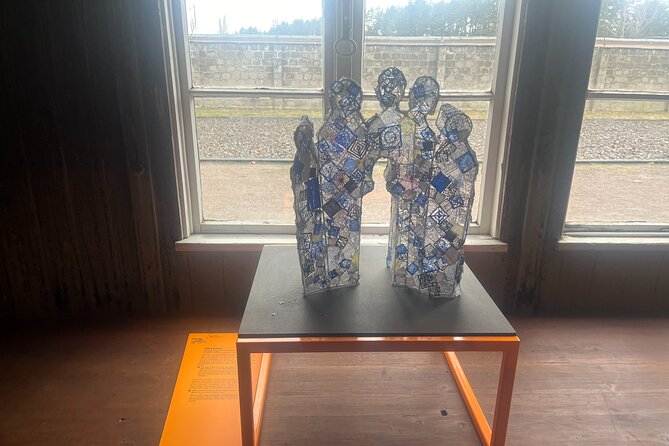
The final major stop is the infirmary area, and it carries some of the hardest material of the day. You do not just learn that racism and abuse existed. You learn how power worked through bodies, including racism, control over women’s bodies, and eugenics.
This is also where the tour shows how prisoners were treated as tools for career advancement. The content includes the truth that prisoners were handled like lab material for Nazi doctors. That is a grim phrase, but it captures the point: ideology was not just on banners. It was embedded in medical settings and used to justify experiments.
The guide’s tone here is one of the most praised aspects of the experience. The approach is sensitive to the fact that this site hits people differently. You get space to feel what you feel, without the tour becoming theatrical or flippant.
At the same time, the guide also uses a level of emotional pacing that helps the group keep going. A small amount of lighter tone at appropriate moments can be the difference between leaving numb and leaving able to think. More than once, that balance can help you absorb the lesson without getting mentally shut down.
Small group size and why it changes the feel of the tour
With a maximum of 15 travelers, this tour doesn’t feel like a conveyor belt. You tend to move as a unit, and you are less likely to lose track of where you are in the story.
Small groups also make questions easier. At a memorial, people often have practical or moral questions, like how different roles changed over time, or what certain terms mean. In a larger group, those questions can get swallowed. Here, the guide can respond without rushing you out of the moment.
Another benefit is that the guide can manage the mood. This is not a party-friendly activity. The site is heavy. The best tours help the group hold a respectful pace, and that is exactly what you get.
What to bring and how to make the 4-hour format easier
Because snacks and bottled water are not included, I’d treat this like any other half-day out of the center. Bring a small snack that you can eat quickly if you need it. A bottle of water is also a good idea, especially since the emotional weight can make time feel longer.
Wear comfortable shoes. You will be walking from the station to the visitor center, then moving around memorial grounds. If you know you get sore, break in your shoes first. This tour is described as moderate fitness, so plan accordingly.
Also, mentally prepare for political and social connections to the present. The tour does not stop at Nazi history. It also points to modern far-right influence and extremist Holocaust denial activity connected to the site. If that makes you tense, take a breath when you feel your thoughts spinning, and remind yourself the aim is to help you recognize patterns.
If you are going with teenagers or mixed-age group members, this can work well. The guide adjusts the tone and answers questions, rather than talking over everyone’s heads.
Should you book this Sachsenhausen tour?
If your goal is a structured, English-guided visit that explains Sachsenhausen in a way you can follow, this is a strong option. The biggest reasons to book are the blend of respectful delivery, a guide who can connect past and present without turning the site into a debate stage, and the practical value of having admission and the memorial donation included.
You should consider skipping or choosing another style if you want a strictly academic experience with minimal political framing. Also, if you have very low tolerance for heavy, disturbing topics, this may be more than you want in one sitting. But if you can handle hard history and want to understand it with context, this tour gives you what you need.
One last tip for the decision: read it as a commitment to memory work. You are not going to Sachsenhausen for comfort. You go to see how control systems function, how ideologies justify cruelty, and why vigilance matters after the cameras turn off. This tour does that with a steady hand.
FAQ
How long is the Sachsenhausen tour?
The experience lasts about 4 hours.
How much does the tour cost?
It costs $31.29 per person.
Is the tour offered in English, and do I get a mobile ticket?
Yes, it is offered in English, and you receive a mobile ticket.
Where do I meet in Berlin?
You meet at Potsdamer Platz 10, 10785 Berlin, Germany.
Is admission included?
Yes. Admission to the memorial is included (and a donation for the memorial is included as well).
Are snacks or bottled water included?
No. Snacks and bottled water are not included, so you’ll want to plan for that yourself.
Do I need a public transport ticket, and is it included?
You need to arrange public transport yourself. The public transport ticket for the ABC zone is not included.
What is the cancellation refund window?
You can cancel up to 24 hours in advance for a full refund.
Is the tour accessible for people with limited mobility, and are service animals allowed?
The tour is listed as requiring a moderate physical fitness level. Service animals are allowed.
Recently added around Berlin
- Berlin Private Custom Walking Tour With A Guide (Private Tour)★ 4.5 · 8 reviews
- One Up to 3 Rickshaws(6 GUESTS)-Taylor Made Rickshaw Berlin Tour★ 5.0 · 20 reviews
- Moonshine Comedy – English Stand Up Comedy by the bay★ 5.0 · 11 reviews
- Private Half-Day Berlin Sightseeing Tour with a Minivan Including Short City Walks★ 5.0 · 31 reviews
- Private taxi tour to Potsdam and Sanssouci 6-8h★ 5.0 · 30 reviews
- Private City Kickstart Tour: Berlin★ 4.5 · 71 reviews
- Private tour of Berlin★ 5.0 · 15 reviews
- Private Tutankhamun’s Tomb Live Escape Room in Berlin★ 3.5 · 11 reviews
Sachsenhausen Memorial Visits, compared.
Sachsenhausen Concentration Camp Tour in English
Read our review →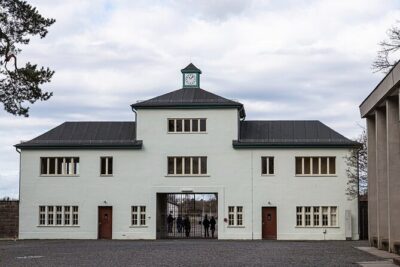
Sachsenhausen Concentration Camp Memorial Tour
Read our review →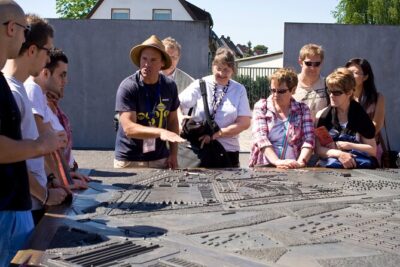
Sachsenhausen Concentration Camp Bus Tour in English from Berlin
Read our review →Sachsenhausen Concentration Camp Tour in English
Read our review →
Sachsenhausen Concentration Camp Memorial Tour (Max. 15 Guests)
Read our review →
Sachsenhausen Concentration Camp and Potsdam Tour
Read our review →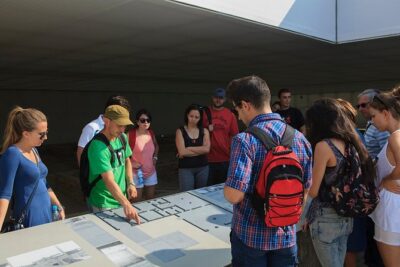
Visita en español al campo de concentración Sachsenhausen
Read our review →Browse the lists this tour appears in