
Reviewed · PRIVATE DRIVERS
Welcome/Farewell SightseeingTaxi Tour +Transfer from/to the airport
Berlin is big, spread out, and often easier to understand with a plan. This taxi-style sightseeing tour is a smart way to get oriented fast while still hearing the stories behind the landmarks.
I like how Gunter Bauer guides you stop by stop, with clear history you can actually remember. I also like the practical flow, you get comfortable car time between major sights, plus frequent photo and look-now stops so you are not just stuck riding.
The one consideration is time: because this is a car tour, your moments at each location are usually short. Some places are best enjoyed from the outside or with a quick look, rather than as a long indoor visit.
Key things I would plan around
- Airport transfer plus sightseeing means one arrangement, not two separate bookings
- Photo stops in a taxi helps you catch angles without standing around
- Government district explanations make the Reichstag area make sense, not just impress
- Reunification and Cold War themes are woven through the stops, especially near the Wall
- Neighborhood contrast from grand boulevards to Hackesche Höfe feels like different “Berlins” in one day
Picking up fast at BER, and ending the same easy way
This tour is built around taxi convenience. You can start with the Welcome Tour from Berlin Brandenburg Airport (BER), or do the Farewell Tour with pickup from your hotel or accommodation when you are heading back to the airport.
At BER, you share your flight number and arrival time, and then you message the guide right after landing (and again once you have your suitcases). The guide waits about 5 minutes from a free waiting spot, and meets you in the second lane at arrivals, not the main taxi queue.
That kind of handoff matters in Berlin because airports and city traffic can eat your energy. Here, you get a smooth “arrive, meet, go” rhythm, then the same idea on the way out.
In the car you get an air-conditioned vehicle and WiFi on board, which is genuinely useful when you want to review transit notes or look up what you just heard. It is also private, so it is only your group, not a mixed crowd.
Traveling with kids or mobility items? A baby car seat (MaxiCosy) is available on request. For strollers, the cradle must be removable and the frame foldable, so you should plan space for both stroller and extra suitcases.
More private drivers in Berlin:
- Berlin: Listening Station Teufelsberg Tour with Transfer
★ 4.8 · 354 reviews - Private Berlin Custom Half-Day Tour with Private Driver and Guide
★ 5.0 · 59 reviews - Berlin Private Transfer to/from Berlin Brandenburg Airport
★ 4.0 · 32 reviews
Price and value: why this one taxi can replace a messy day
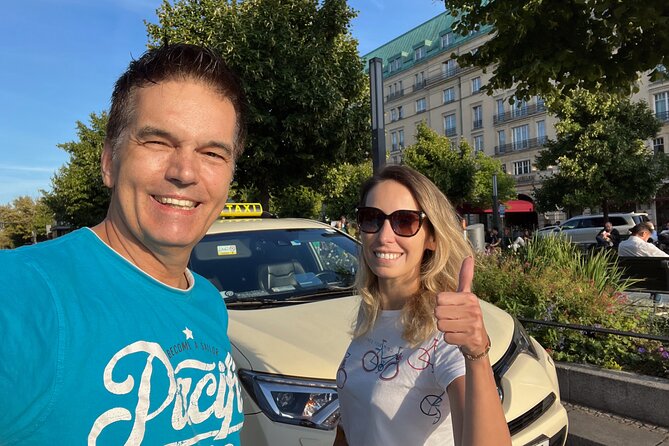
The price is $171.52 per person, and that number feels less scary when you zoom out at what is included.
You are paying for three things at once: the taxi ride according to the tariff, the guided city sightseeing, and the transfer to and from BER. The tour also includes parking fees, and it explicitly notes both the taxi tariff VAT and the city tour VAT are included.
If you are flying in and out of BER, that alone can save you time and decision-making. A lot of first-time Berlin planning turns into juggling: airport ride, then a separate guided day, then the question of where to start and how to fit in the big icons.
This arrangement does that work for you, and it helps that the tour is offered in English with a mobile ticket. If you are traveling as a small group, the tour also offers group discounts, which can bring your per-person cost down.
Brandenburg Gate to Pariser Platz: reunification in stone and surviving walls
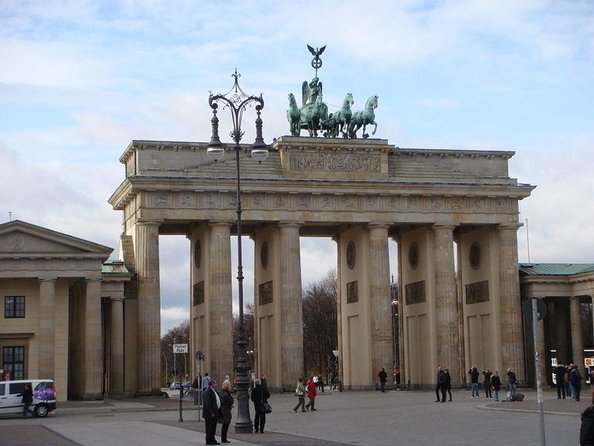
The tour’s emotional backbone starts around Brandenburg Gate. This is not treated like a postcard stop. You get the layers: how the gate started as a city gate, then took on new meaning after the French Revolution period, and how Napoleon’s Quadriga (the four-horse carriage) was taken to Paris.
After the Allies beat France, the statue returned in a triumphal procession. Later, during Berlin’s division, the gate became strangely isolated. With the Berlin Wall and border fences, it sat like a symbol separated from everyday access, and nearby landmark buildings were destroyed in the chaos of that period.
When the wall fell, the gate reclaimed its role as a symbol of German reunion, and that is the point you walk away with. You also get a quick, efficient stop, and the gate is listed as admission ticket free.
From there, the tour moves to Pariser Platz, Berlin’s “good room” where the city shows off its most polished face. The logic here is clever: this square was once cut off by thick walls and barriers, and after reunification the decision was made to rebuild the surrounding block modernized but in the older volume.
You also learn the quick geography you need to navigate later: Pariser Platz gathers buildings like the Akademie der Künste, the Liebermann Haus, plus French and American embassies in the reassembled ensemble.
A big Cold War detail gets explained near here too. A former Soviet-era palace-like building was erected on the scale of power, later associated with CIS. The tour uses that to show how architecture can be political messaging, not just appearance.
Gendarmenmarkt and the Forum Fridericianum: cathedrals, parliaments, and book burning
In this part of the city, you get a striking mix of aesthetics and weight. The tour brings you by the dramatic German-French “cathedral” complex that is actually tied to concert and museum uses. The guide points out that they are not active bishops’ seats like classic cathedrals, but the area still carries deep layers through its churches and museums.
The German side is used for a museum focused on parliamentary history, while the French side remains in use by a reformed congregation holding services in French on Sundays. A small Huguenot museum sits behind it, tied to the refugees who were allowed to build a church here.
Then comes the Forum Fridericianum zone, where a group of famous buildings forms a single story. The royal court library, St. Hedwig Cathedral, the State Opera, and Humboldt University create a picture of how Berlin once arranged culture, power, and education around one stage.
A grim interruption is part of the walk. The square includes a glass window that points to an empty library space, and the guide brings up May 10, 1933, when books deemed unacceptable by the Nazi regime were burned nearby. It is the kind of detail that turns architecture into memory.
You also stop by the memorial sculpture area associated with the Neue Wache concept, including the Pieta created by Käthe Kollwitz, a memorial for victims of war and terror. It is a short moment, but the guide gives you the meaning so it does not feel like just another statue.
Still in Berlin, but a different kind of day:
- Berlin: Reichstag, Dome and Government District Guided Tour
★ 4.7 · 18,288 reviews - Berlin: 1-Hour City Tour by Boat with Guaranteed Seating
★ 4.3 · 16,993 reviews - Berlin: Boat Tour Along the River Spree
★ 4.4 · 11,252 reviews - Discover Berlin Half-Day Walking Tour
★ 5.0 · 9,624 reviews
Reichstag, the Chancellery, and how Parliament really runs
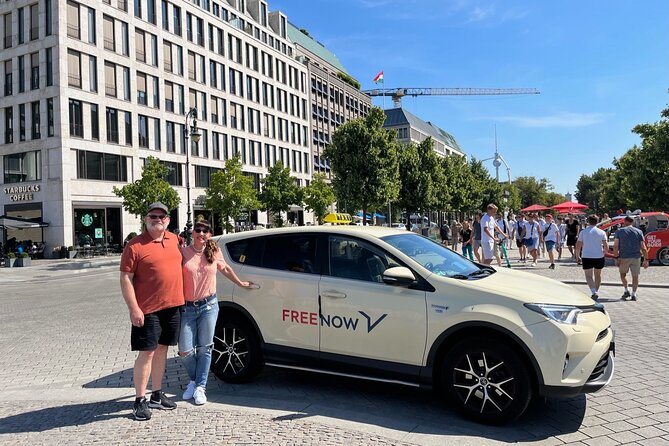
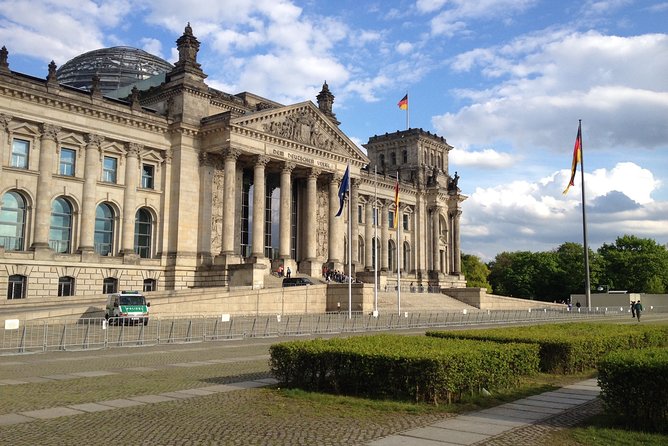
A highlight of this tour is how it makes the government district feel human. The stop around the Reichstag explains why the building matters beyond its iconic shape, including its later redesign and the well-known Christo wrapping action.
Then you shift to the German Chancellor’s office building. The guide breaks down scale in a way that clicks: it is about 36 meters tall, with ten floors, hundreds of office rooms, and the chancellor’s office in the upper section. There is also an official apartment mentioned, which is described as not used in the way you might expect.
What I like most here is the explanation of function. The tour does not just say this is where politics happens. It describes how work gets done through committees and the structure of where debates take place versus where detailed discussions happen.
That theme continues with the “glass” idea. From outside, you can often see the parliament’s form, and the guide helps you understand what you are looking at, even if you are not going inside every room.
The East-West border drama near the Wall
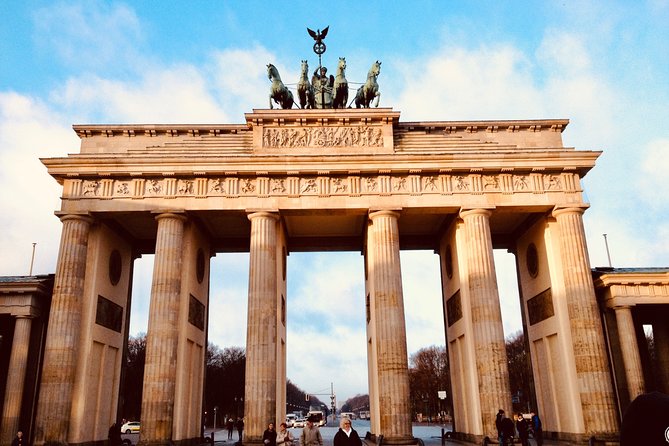
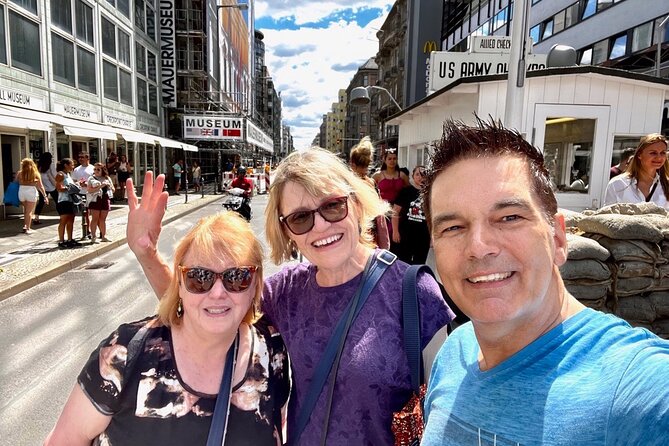
Berlin’s Cold War story can feel like a list of facts until you connect it to a physical place. This tour does that near the former East-West crossing station area, the kind that allowed travel between East and West in a controlled way.
You hear how the station was surrounded by barriers and checkpoints, with Stasi observation walks in the mix. The guide links this to the broader machinery of separation, including the emotional setting near the Palace of Tears.
Even if you already know Berlin Wall history, this part often changes how you picture it. It is not abstract. It is a specific corridor, a specific kind of surveillance, and a specific kind of farewell pressure.
Stadtschloss turned Humboldt Forum, plus Berlin Cathedral and Museum Island
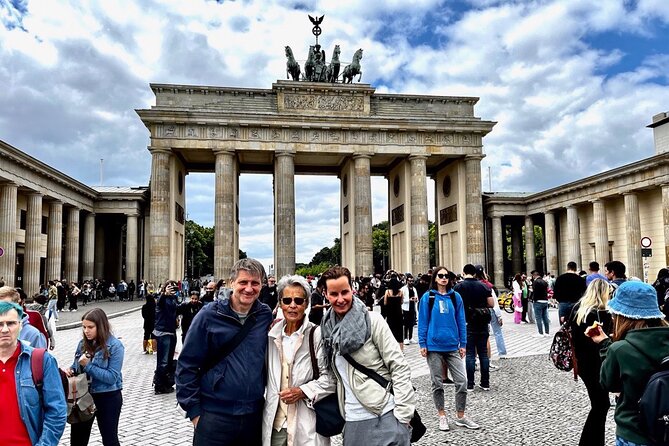
Now the tour shifts from borders to rebuild. At Stadtschloss Berlin, you hear how the palace area was left empty for decades, then rebuilt as the Humboldt Forum, with the rebuild opening in 2021 or 2022.
The guide explains how the prewar palace silhouette survived in the memory even after damage, then discusses the controversial demolition in the divided city era. What you get on the tour is the “now” of the reconstruction, including the reconstructed inner courtyard and a rooftop highlight where you can get a great view. Admission here is listed as free.
If your priorities include domes and viewpoints, the tour can include time around Berlin Cathedral style stops too. The guide frames it as a Berlin story: not old in the centuries sense, but full of layers inside.
You also get a detailed stop-by-stop understanding of Museum Island. This is where Berlin’s museum cluster makes sense as a single plan rather than a random list of museums.
You are guided through the UNESCO-protected peninsula concept and the way the museums evolved from the 1800s into the early 1900s. The guide points out key anchors like:
- the Old Museum and its role as a temple-like container for art
- a New Museum focus that includes major ancient Egypt holdings, including Nefertiti
- the National Gallery and its painting needs
- the Pergamon Museum and why it belongs here
Even if you only spend a little time outside, you leave knowing what each building is meant to do.
Hackesche Höfe and old Berlin on a human scale
Next comes a totally different feeling. Hackescher Markt and Hackesche Höfe offer a small-scale Berlin contrast to the big boulevard stretches.
The guide treats it as a recovered slice of older city fabric. The core area is mostly 19th century, and the older Berlin around spots like Nikolaiviertel and the red town hall was destroyed and later rebuilt. You get to see how an ensemble can be restored for living and commerce, not just sightseeing.
Hackesche Höfe is also great for atmosphere. The guide notes studios and workplaces blended with residences and shops, which is why it feels like a neighborhood rather than a theme park.
From there, you can continue through streets tied to Berlin’s religious and immigrant communities. The tour includes time for the Hamburger Straße area, with optional sights like Sophienkirche, a Jewish cemetery, and a Catholic hospital area nearby.
One detail that sticks is how the guide describes Jewish life here as more than a ghetto story, with multiple congregations and historic churchyards. You can also learn about the Mendelssohn family burial nearby. The tour references an older synagogue planned in a Moorish style with a golden dome, noting that the 3000-member hall was lost to bombing.
Alexanderplatz, the Red City Hall, and the Nikolaikirche area
As the route continues, you get a guided look at different political eras in one loop.
At Alexanderplatz, the guide explains why the square looked like a socialist redesign project in the GDR era. You also hear about the set of nearby buildings used to signal modern socialist life, from housing-style names to specific “house” functions like statistics, tourism, and electrical engineering.
Then you pass the Red City Hall, described as a landmark beyond its party association. The guide points out that you can visit it for free, and you get tips on what rooms might be worth seeing, including plaster casts of well-known statues.
The tour also includes the Nikolai area with a focus on reconstructed old Berlin. The guide gives the key idea: in the 1980s, the area was reconstructed during GDR times, with only a few real historic houses, and the Nikolaikirche church showing up as a visible end marker even before full restoration.
You also can see the Garlic House, described in a Biedermeier style, and a nearby museum context around the Nikolaikirche. If you want a quick feel for older Berlin life, this part delivers.
And yes, the tour also brings you a view tied to the Spree, including the lock idea. You learn the history of the crossing before the modern double-chamber lock was built, and why the older solutions were less practical.
Jewish tailoring, the stelae memorial, and Potsdamer Platz after the death strip
Some of the strongest emotional stops happen late in the day.
At HausVogteiPlatz, the tour explains why the area developed around Jewish tailoring in the 19th century. It connects it to restrictions on tailor-made work and then to the idea that tailoring created a competitive pull. You also see hints of this past in small memorial-style references like mirrors placed as art objects.
After that, the tour focuses on the Field of stelae memorial with 2711 stelae, designed by American architect Peter Eisenmann. The key value here is the interpretive walkthrough. The guide explains how the memorial can look confusing at first, and then how the meaning becomes clear as you walk through it.
The guide ties details to the lived uncertainty in Nazi Germany, including what a person might think and carry, and it also mentions a recruitment order that points toward extermination. There is information in the basement too, which matters because you might otherwise miss the narrative behind the shapes.
Then the tour shifts to Potsdamer Platz. You get the contrast: this was once Europe’s busy traffic area in the 1920s, then war damage and later demolition created a widened death strip. After reunification, new development built a modern quarter, including entertainment and museum sites, plus shops and restaurants.
The guide’s framing makes it feel like Berlin solved a wound by rebuilding around it, even when the wound is still part of the ground plan.
Should you book this taxi sightseeing tour?
Book it if you:
- want first-day orientation without spending your entire trip walking
- are flying into or out of BER and want one smooth transfer plan
- like your Berlin with a guide who connects places to events, not just dates
- want a day that moves between big icons and quieter neighborhood textures, like Hackesche Höfe and the Nikolaikirche area
I would skip or shorten it if you:
- want long indoor time in specific museums or churches
- prefer slow wandering with no car stops
- are planning a full museum day on top of this
If you do book it, do one smart thing: tell Gunter Bauer what you care about most before you roll out. The tour is designed for you to choose where you pause, where you stop, and where you drive past. That flexibility is part of the value.
FAQ
How long is the taxi sightseeing tour?
The duration is listed as about 1 to 3 hours, depending on your pace and choices during the ride.
Can the guide pick you up from the airport?
Yes. The Welcome Tour includes pickup from BER Airport. You share your flight number and arrival time, and message the guide after landing.
Is there a farewell pickup from a hotel or apartment?
Yes. The Farewell Tour includes pickup from your hotel or accommodation. You come out to the street only after the guide sends an SMS or WhatsApp.
What is included in the price?
The price includes the taxi ride according to the tariff and the city tour, plus parking fees, WiFi on board, and the transfer from and to BER.
Is WiFi provided during the ride?
Yes. WiFi on board is included.
Are any entrances free?
Some stops are explicitly listed as free, including Brandenburg Gate, the Pariser Platz area, and Stadtschloss Berlin.
Is the tour private?
Yes. It is described as a private tour/activity, so only your group participates.
Can I cancel for free?
Yes. Free cancellation is available up to 24 hours in advance for a full refund.
Is a baby car seat available?
A baby car seat (MaxiCosy) is available on request.
If you want, tell me your travel dates and whether you start from BER or your hotel, and I’ll suggest a simple plan for how much time to allocate to stops like Reichstag area versus Museum Island.
Recently added around Berlin
- Berlin Private Custom Walking Tour With A Guide (Private Tour)★ 4.5 · 8 reviews
- One Up to 3 Rickshaws(6 GUESTS)-Taylor Made Rickshaw Berlin Tour★ 5.0 · 20 reviews
- Moonshine Comedy – English Stand Up Comedy by the bay★ 5.0 · 11 reviews
- Private Half-Day Berlin Sightseeing Tour with a Minivan Including Short City Walks★ 5.0 · 31 reviews
- Private taxi tour to Potsdam and Sanssouci 6-8h★ 5.0 · 30 reviews
- Private City Kickstart Tour: Berlin★ 4.5 · 71 reviews
- Private tour of Berlin★ 5.0 · 15 reviews
- Private Tutankhamun’s Tomb Live Escape Room in Berlin★ 3.5 · 11 reviews
Private Drivers, compared.
Listening Station Teufelsberg Tour with Transfer
Read our review →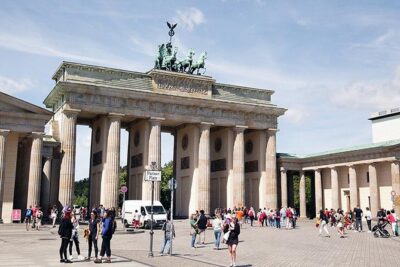
Private Berlin Custom Half-Day Tour with Private Driver and Guide
Read our review →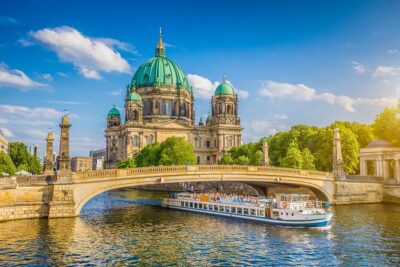
Berlin Private Transfer to/from Berlin Brandenburg Airport
Read our review →
Private One way Airport Transfer Berlin Airport To Berlin
Read our review →
Private Transfer from Berlin to Prague with 2h of Sightseeing
Read our review →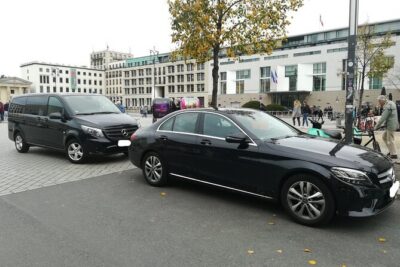
Minivan Driver and Guide (DIN15565) Tailor Made Berlin Highlights
Read our review →
Private Transfer from Berlin to Prague with 4h of Sightseeing
Read our review →
Private Transfer from Berlin to Prague, Hotel-to-hotel, English-speaking driver
Read our review →Browse the lists this tour appears in