Reviewed · TOURS
Karl-Marx-Allee Tour: Life and Architecture in East Berlin
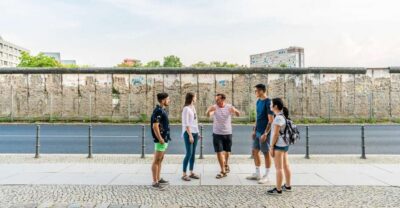
Karl-Marx-Allee is one of those Berlin places where architecture is never just architecture. It was designed to sell an idea of how society should work, and on this walking tour you’ll connect the buildings you see with the political hopes, hard edges, and everyday life behind them.
Two things I like a lot are the tight 2 hour format (perfect when your time is limited) and the way the guide turns the boulevard into a story you can follow stop by stop. A small group size of up to 15 people also keeps questions from getting lost, which matters on a topic this layered. The one possible drawback is that it runs on foot in good weather, so plan for walking and bring weather-ready clothing.
If you’re the type who enjoys details, you’ll probably love how the tour names specific architects like Hermann Henselmann and Hans Scharoun, and ties them to what East Germany was trying to build after World War II. In past tours, guides such as Martina have been praised for humor, organization, and a personal feel for the communist era, which can make the explanations land fast and stick.
Key things to know before you go
- Small group of up to 15 people, so you get more back and forth with the guide
- English tour with a local expert guide and a mobile ticket
- Two hours on foot, ideal for squeezing East Berlin into a busy schedule
- Admission is free at the listed stops, which helps keep your total cost reasonable
- Covers standout spots from Frankfurter Tor to Strausberger Platz, including the June 17, 1953 uprising
- The tour is designed for most people, and service animals are allowed
Karl-Marx-Allee as a real-life political stage
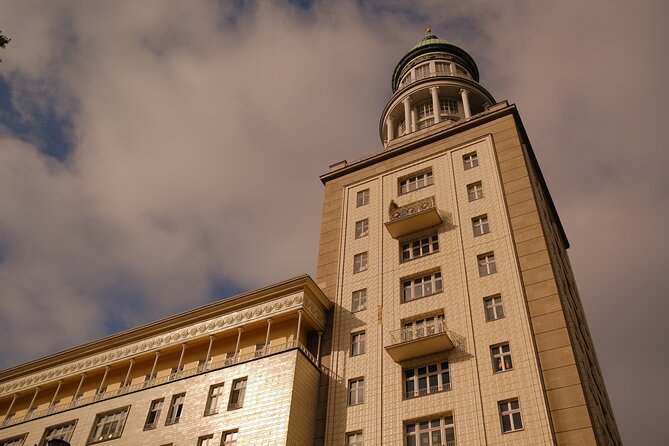
Karl-Marx-Allee in East Berlin is famous, but for a reason that’s easy to miss if you only glance at the facades. This boulevard was planned after World War II with big ambitions, built through a national effort, and shaped by propaganda needs. When you walk it with a guide, the buildings stop being background and start acting like evidence.
The tour focuses on how East Germany used design and city planning to communicate power, order, and modern life. You also learn why the story is not one note. Some ideas were accepted, others were rejected, and even the “successes” came with tensions that later played out in public dissent.
Other Berlin tours readers compare with this one:
- Berlin: Reichstag, Dome and Government District Guided Tour
★ 4.7 · 18,288 reviews - Berlin: 1-Hour City Tour by Boat with Guaranteed Seating
★ 4.3 · 16,993 reviews - Berlin: Boat Tour Along the River Spree
★ 4.4 · 11,252 reviews
A stop-by-stop walk through East Berlin’s bold rebuilding era
This tour runs about two hours and moves along Karl-Marx-Allee and nearby points that help you understand the whole stretch, not just one pretty corner. It starts at U Frankfurter Tor and ends at Strausberger Platz near the roundabout, about a 10 minute walk from Alexanderplatz.
Stop 1: Frankfurter Tor, symmetry and the first socialist street
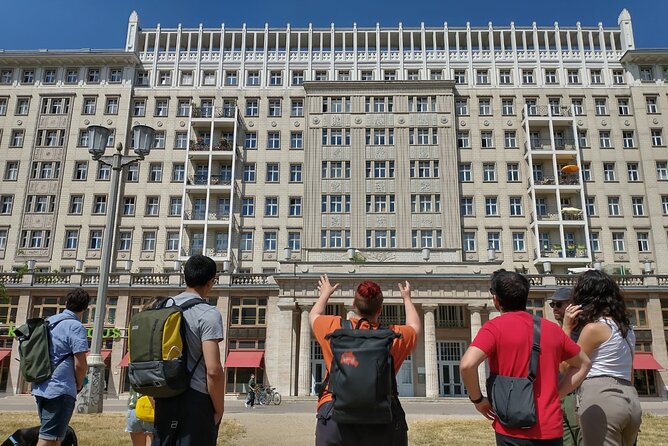
You begin at Frankfurter Tor, where the towers create that instantly noticeable sense of symmetry. The guide points out the architects behind the design, including Herman Henselmann, and then zooms out to the bigger plan.
This is where you learn how plans for what was described as the first socialist street in Germany were shaped in the early 1950s. You also hear about the national rebuilding program that mobilized thousands of volunteers. That volunteer effort matters, because it helps explain why the boulevard feels so deliberately monumental, not accidental.
Practical note: this is a good starting point because it’s visually strong, and it sets the tone for everything that follows.
Stop 2: Laubenganghäuser, postwar modernism that didn’t survive politics
Next you’ll see the Laubenganghäuser, an example of modernist architecture from the immediate post-World War II years. The tour connects these buildings to Hans Scharoun and his utopian urbanist ideas that were formed from the ashes of a destroyed Berlin.
Here’s the tension you’ll get used to throughout the walk: some visions were possible on paper, but the new East German regime rejected ideas that didn’t fit its direction. So this stop is not just “look at cool buildings.” It’s also about what gets allowed to become reality.
If you like urban planning and design philosophy, this is the kind of stop that changes how you look at a neighborhood. You start seeing the difference between architecture as aspiration versus architecture as policy.
Still in Berlin, but a different kind of day:
- Discover Berlin Half-Day Walking Tour
★ 5.0 · 9,624 reviews - Berlin: Hop-on Hop-off Bus Tour with Live Commentary
★ 4.3 · 8,579 reviews - Berlin: Government District around the Reichstag Guided Tour
★ 4.7 · 8,447 reviews - Berlin: Reichstag, Plenary Chamber, Cupola & Government Tour
★ 4.6 · 8,422 reviews
Stop 3: Hochhaus an der Weberwiese, luxury used as proof
At Hochhaus an der Weberwiese, the tour highlights a building that acted as a prototype for the rest of the socialist Karl-Marx-Allee. You’ll hear that early tenants were promised unprecedented luxury, which sounds humane until you understand the role it played next.
The guide explains how the building project became a propaganda tool. And it wasn’t only East Berlin that noticed. The tower and its approach also became a magnet for Western architects, because major projects always attract attention across borders, even during tense political periods.
This stop is great for getting past a common oversimplification. The tour doesn’t treat everything as fake or only oppressive. Instead, it shows how real construction, real comfort, and real design choices were wrapped into the political message.
Stop 4: Gedenkstätte Arbeiteraufstand 17 Juni 1953, when people pushed back
Then you reach the Gedenkstätte Arbeiteraufstand 17 Juni 1953, the site tied to the mass uprising in June 1953. The story here turns from building plans to human pressure.
You learn that disgruntled workers started what became a large uprising, one that almost toppled the socialist government of East Germany. You’ll also see the controversial monument dedicated to the uprising, and you get the sense that even memorials can be part of a struggle over meaning.
This is one of the most emotionally serious stops on the walk. It’s also one of the most valuable, because it explains that the boulevard story was never only about construction. It was about control, legitimacy, and what happens when those fail.
Stop 5: Café Sibylle, Stalin-era symbolism hiding in plain sight
At Café Sibylle, the tour shows how culture and politics mix in everyday places. You’ll hear how this café is connected to a statue of Joseph Stalin, with the reminder that the statue stood nearby until 1961.
This stop is a good reminder that ideology wasn’t just carved into grand buildings. It also showed up in the daily rhythm of a city, right where people walked, sat, and met friends.
Even if you don’t drink coffee on the spot, you’ll feel how a simple location can act like a marker of an entire era.
Stop 6: Karl-marx-bustendenkmal, ideology turned into daily life
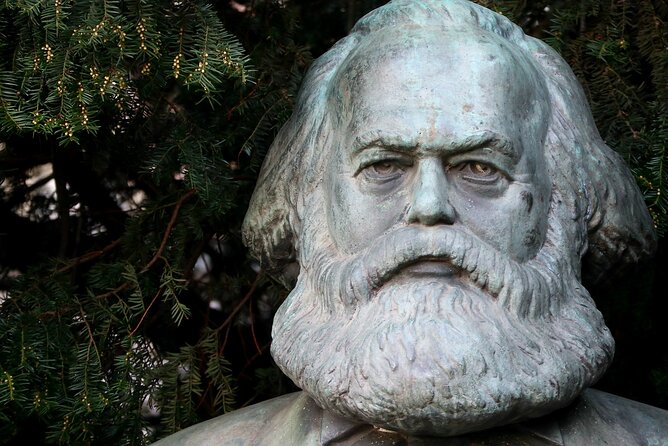
Next comes the Karl-marx-bustendenkmal, where you connect socialist ideology to everyday life. The guide talks about Karl Marx as the author of the Communist Manifesto and explains how socialist thinking shaped how East Berliners experienced the world around them.
This stop works well because it offers a bridge from big-state politics to personal routines. You start to understand how slogans become habits, and how those habits leave physical traces in a city.
If you’re the kind of person who reads plaques but usually moves on quickly, give this one a little time. The tour makes the meaning of the symbol much clearer.
Stop 7: Strausberger Platz, the boulevard after the Berlin Wall
Finally, the walk ends at Strausberger Platz, where you can shift from East Germany to post-1989 reality. The guide shares stories about Karl-Marx-Allee after the fall of the Berlin Wall and what the area looks like today.
This ending is important. Without it, you might leave with the impression that history is frozen in the past. With it, you get a sense of continuity: buildings remain, meanings change, and the street keeps living.
Why the guide matters on a politically loaded design tour
On a walk like this, the biggest value is interpretation. You can read facts from signs, but it’s the guide’s framing that helps you understand why these structures look the way they do and what the designers were trying to achieve.
In past experiences, guides such as Martina have been praised for humor, strong organization, and a way of telling stories that makes complex history feel manageable. Another key point from earlier tours is that some guides bring a personal perspective from having lived through parts of the communist regime, which can make the details feel less academic and more human.
If you want an atmosphere where you feel comfortable asking questions, the small group size of max 15 people helps. You’re not squeezed into a frantic line, and you can actually track names, dates, and locations as you go.
Price and value: what you actually get for about $30
At $30.01 per person for roughly two hours, the cost can feel very reasonable once you think about what’s included and how much you cover. You’re paying for a local expert guide, an English-language format, and a guided route through multiple major points along Karl-Marx-Allee.
Two value boosters stand out:
- Admission is free at the listed stops, so you’re not hit with extra entry fees as you move between sights.
- The tour includes a mobile ticket, which keeps the hassle low when you’re bouncing between Berlin transit and walking.
If you’re trying to build a short East Berlin day, this is also a smart way to avoid getting overwhelmed. It gives you a structured “what matters” route, which can be worth more than you’d expect if you’re visiting for only a few days.
Getting the most out of the walk on your side
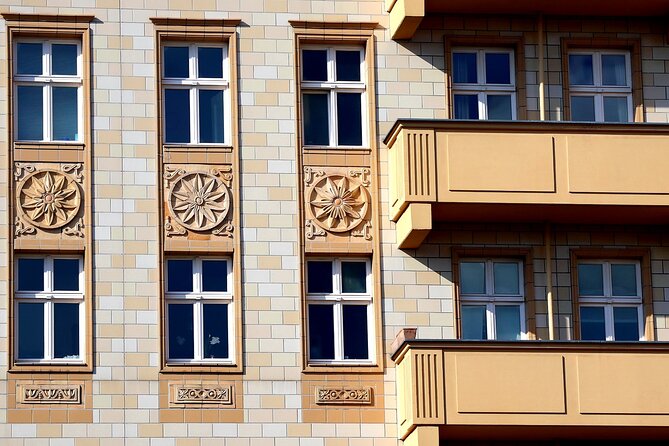
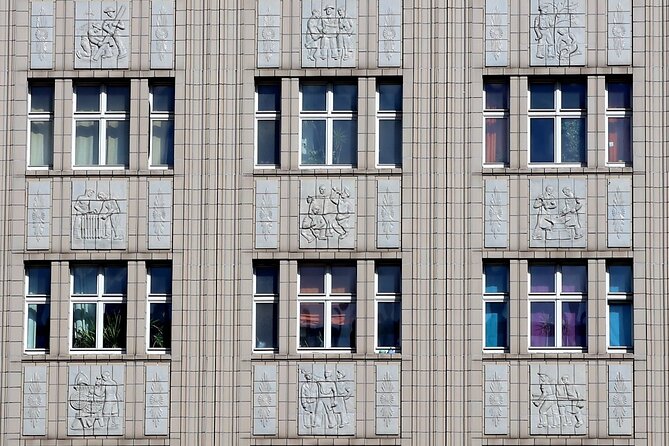
This tour is best if you come with two small habits: look up and ask questions. The architecture here rewards attention to proportions, symmetry, and repetition, and the guide helps you connect those visual cues to their political purpose.
A few practical tips that fit the experience:
- Wear comfortable shoes. You’ll be on foot for about two hours.
- Bring a weather layer. The experience requires good weather, and if it’s canceled due to poor weather, you’ll be offered a different date or a full refund.
- If you’re interested in the deeper side of East German history, the June 1953 uprising stop is a must-pay-attention moment.
- Use transit to arrive early. The start point is at U Frankfurter Tor, and the end point is a walk from Alexanderplatz, so you can often reconnect easily to the rest of your day.
Who should book this Karl-Marx-Allee tour?
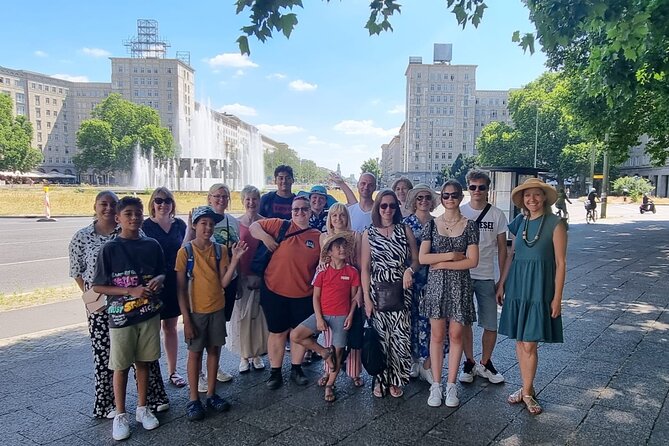
This is a great fit if you:
- Want East Berlin history and architecture together, not separately
- Have limited time and need a guided route that makes sense
- Enjoy city design as a story about power and ideology
- Like small groups and a conversation-based explanation
It may be less ideal if you prefer ultra-casual sightseeing with no political context. This tour’s strength is that it treats the boulevard as a living political artifact, including the controversial sides of remembrance.
Should you book Karl-Marx-Allee: Life and Architecture in East Berlin?
If you’re trying to understand East Berlin beyond headlines, this is a strong choice. The route moves from standout architecture to key historical turning points, including the June 1953 uprising site, and then lands with a post-Wall perspective at Strausberger Platz. For about two hours and around $30, you get a structured walk with a local guide and no listed stop admission fees.
Book it if you want your time to count and you like your sightseeing with meaning. Pass if you only want pretty buildings and don’t want politics in the mix. Either way, Karl-Marx-Allee is a street where the details matter, and this tour helps you read them.
FAQ
How long is the Karl-Marx-Allee walking tour?
It runs for about 2 hours.
What is the starting point and where does the tour end?
It starts at U Frankfurter Tor, 10243 Berlin, and ends at Strausberger Platz roundabout on the eastern side, about a 10 minute walk from Alexanderplatz.
How much does the tour cost?
The price is $30.01 per person.
Is the tour offered in English?
Yes, the tour is offered in English.
How big is the group?
The tour has a maximum group size of 15 people.
Do I get a mobile ticket?
Yes, the tour offers a mobile ticket.
Are there admission fees at the stops?
The listed stops show admission ticket as free.
What is the weather requirement?
The tour requires good weather. If it is canceled due to poor weather, you will be offered a different date or a full refund.
Is service animal access allowed?
Yes, service animals are allowed.
Can most people participate?
Yes, most travelers can participate, and it is near public transportation.
Recently added around Berlin
- Ultimate E-Bike Tour of Berlin with Beer Garden Stop★ 5.0 · 4 reviews
- Berlin: guided canoe | kayaktour★ 4.1 · 7 reviews
- Where It All Began: Berlin’s Queer & Trans History Tour★ 4.9 · 6 reviews
- Understanding Kreuzberg: The roots of local (sub)culture★ 4.9 · 11 reviews
- Warnemuende Shore Excursion: Private Berlin Tour★ 4.5 · 27 reviews
- Your ticket to The Wall Museum Berlin★ 3.0 · 60 reviews
- Love and War in Berlin: Self-Guided Story Puzzle Walk★ 5.0 · 7 reviews
- eSIM for Germany and 34 European Countries★ 4.5 · 16 reviews
Tours, compared.
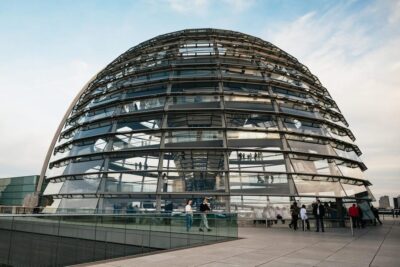
Reichstag, Dome and Government District Guided Tour
Read our review →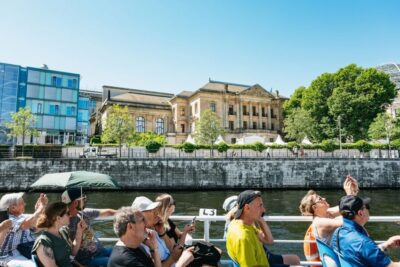
1-Hour City Tour by Boat with Guaranteed Seating
Read our review →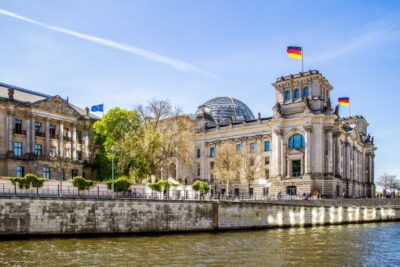
Government District around the Reichstag Guided Tour
Read our review →
Reichstag, Plenary Chamber, Cupola & Government Tour
Read our review →