
Reviewed · SACHSENHAUSEN MEMORIAL VISITS
Berlin: Sachsenhausen Memorial 6-Hour Tour in Spanish
Sachsenhausen is one of those places that can feel both historical and painfully up close, especially when a Spanish guide walks you through what each site meant. The standout reason to do this tour is the focus on A Tower and Station Z, plus the way the story moves from the Nazi camp system into the later Soviet use of the site.
I like that you are not just looking at buildings. You get a structured explanation of camp origins, prisoner life, and the kinds of work prisoners were forced to do, supported with survivor accounts, photographs, and official documents. And I like that the Spanish narration is built for comprehension, not just facts on signs.
One drawback to plan for: this is emotionally heavy, and you will spend time outdoors around the grounds. It also helps to bring your own snacks since there is no shop at Sachsenhausen, and you need to have your Berlin transport ticket ready.
Key things I’d prioritize on this tour
- Station Z and its 1942 role in killing victims quickly and clinically
- A Tower, the roll-call location where control started every day
- Two regimes in one place, Nazi administration followed by Soviet gulag use
- How prisoners lived and worked, explained with documents, photos, and survivor testimony
- Spanish guiding that makes the system click, including the legal and operational side of how it worked
- A smooth one-day outing from central Berlin, starting at Alexanderplatz and using a 50-minute train ride
From Alexanderplatz to Sachsenhausen, what the 6 hours actually feel like
This tour is designed as a straightforward day trip, and the start makes it easier than you might expect. You meet at the front of the Alexanderplatz TV Tower (Fernsehturm), right by the entrance area. The meeting instructions are very specific: you will find the group next to a green flag that says tours en español, between the tower and the Alexanderplatz train station, next to the Espresso House.
Once you are together, the group heads north to the Sachsenhausen area. There is a 50-minute train ride involved, so you can use that time to settle in, read any notes you brought, and mentally switch from Berlin city mode into memorial mode.
The timing is also real-life friendly: it is a 6-hour tour with a live Spanish guide. That is long enough for the tour to build context, but not so long that you feel like you are trapped on a bus all day. Wheelchair access is listed as available, so the route and pace are planned with accessibility in mind.
What you should know before you go is that this is not “just sightseeing.” Sachsenhausen is preserved to educate, and you will be walking through spaces built around intimidation, labor, and killing. Keep your pace gentle, and do not feel you have to race through photos. Your brain needs time to process the explanations.
Other Sachsenhausen memorial visits:
- Berlin: Sachsenhausen Concentration Camp Tour in English
★ 5.0 · 5,711 reviews - Berlin: Sachsenhausen Concentration Camp Memorial Tour
★ 4.7 · 3,716 reviews - Sachsenhausen Concentration Camp Bus Tour in English from Berlin
★ 5.0 · 1,962 reviews
Entering the Nazi system at A Tower, where the roll-call started
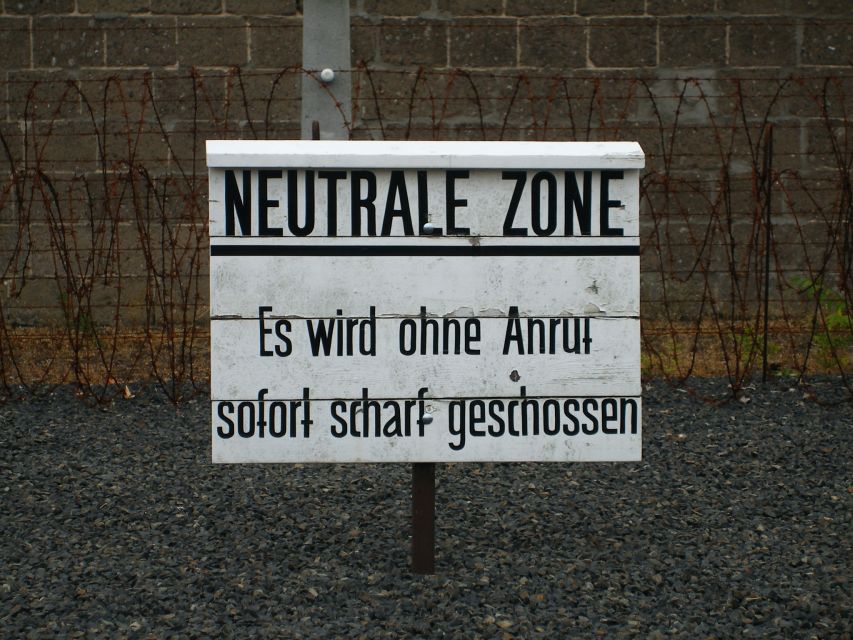
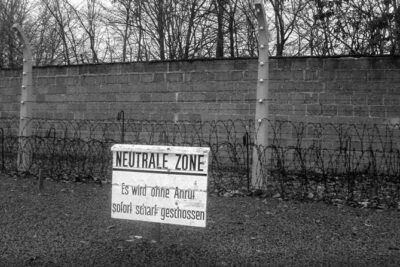
The tour’s first big emotional stop is A Tower, described as the camp roll-call location. That detail matters. Roll-call was not just a routine. It was control made visible, a daily mechanism that turned bodies into numbers and time into punishment.
Standing where people were expected to line up and be counted, you can understand why the camp felt inescapable. The tower symbolizes oversight. Even if you know the broad history of Nazi camps, the roll-call idea helps you see the system as organized and repetitive, not random terror.
Your Spanish guide’s job here is to translate what the site means into human terms. Expect the explanation to tie the layout back to daily operations: how prisoners were managed, how rules were enforced, and how a place like this functioned as an administrative machine. The goal is for you to see the camp as a system with procedures, not just isolated atrocities.
Practical tip: A Tower and the surrounding areas can mean long minutes of standing or slow movement. If you are cold or uncomfortable, the emotional impact lands harder. Dress for wind and chill, even in seasons when Berlin feels mild.
Station Z, the “quick and clinical” killing site
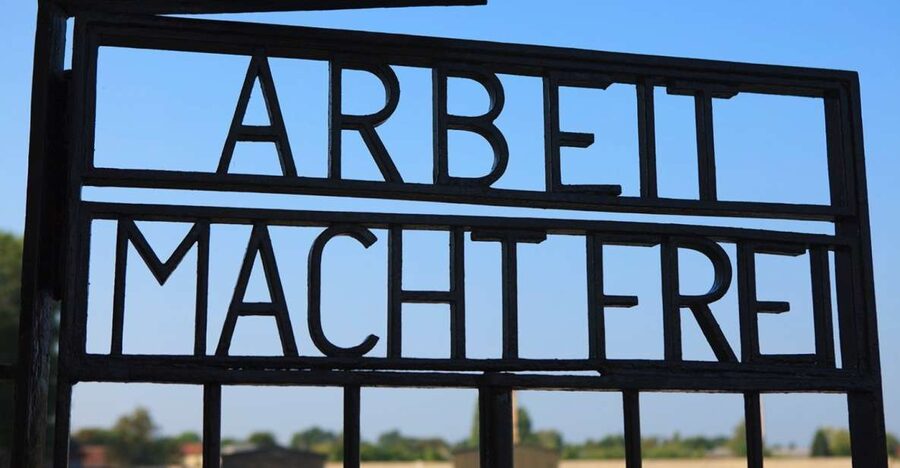
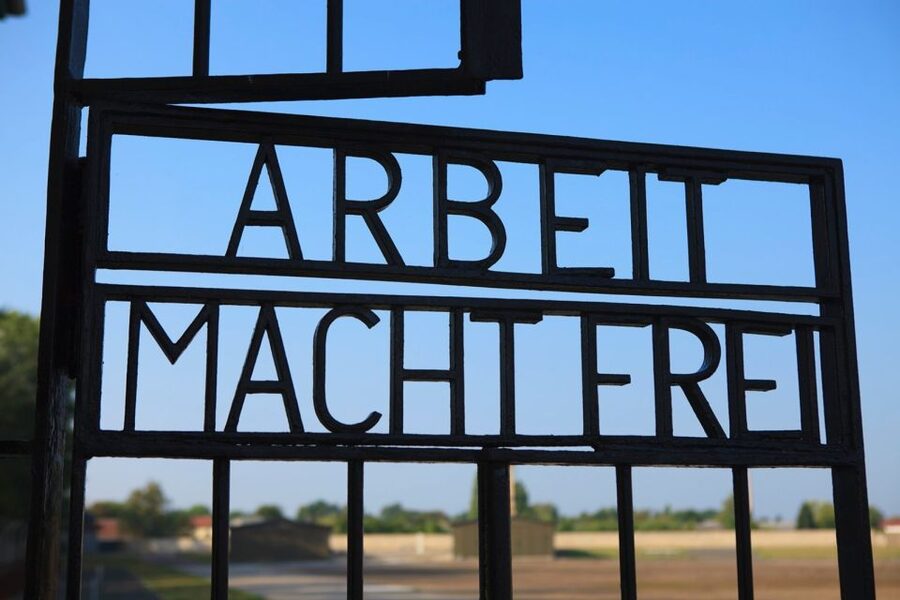
Then comes the most difficult stop, Station Z. This is the site added in 1942, and it was designed with a grim purpose: killing victims quickly and clinically.
That “clinical” detail is the point. You are not being asked to imagine chaos. You are being shown design. The tour language frames Station Z as a place where the Nazi regime tried to make mass killing function like an operation, controlled and efficient.
This stop is sobering for a reason you feel in your body, not just your mind. When a site is explained as purposeful rather than accidental, it can feel even more chilling. You will likely notice how the tour keeps returning to procedures and intent, which can make the horror harder to shrug off.
If you need a moment, take it. Look at the ground level, take in the space, and let the guide’s explanation land at your pace. You do not need to force your emotions into a “correct” reaction.
The camp as an operation: model camp, prison labor, and administration
Sachsenhausen sits close enough to Berlin that it functioned as a kind of reference point for other camps. The tour explains why the camp was intended as a model camp and also as an administration center for other Nazi concentration camps.
That is important context. Sachsenhausen is not just one facility. It is part of a larger network. When you understand that, the scale becomes easier to grasp. The tour shares that more than 200,000 people passed through Sachsenhausen, and at least 50,000 died.
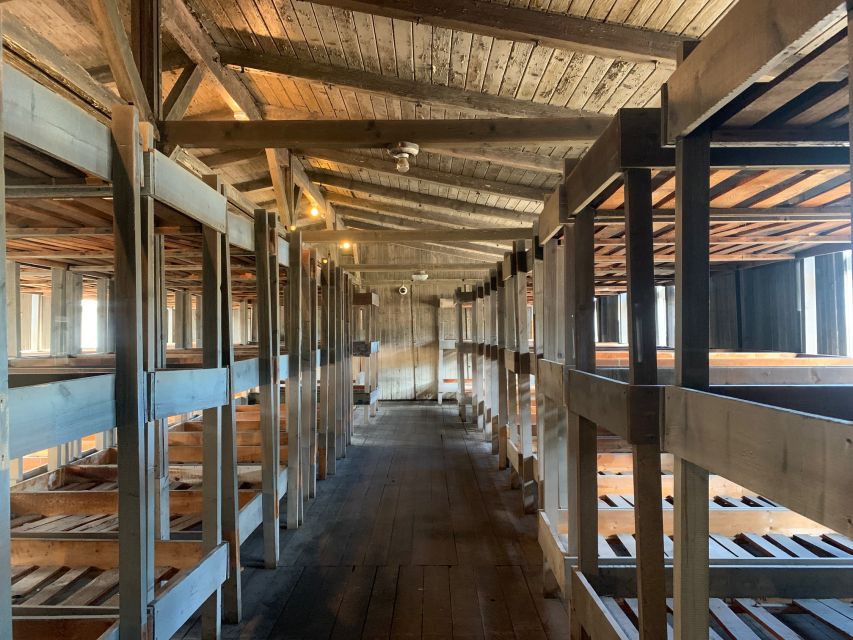
One thing I like about this tour format is that it does not stop at the dramatic sites. You also get an explanation of what life in the camp could be like, including the kind of work prisoners were forced to do. The guide also brings in personal accounts from survivors, plus photographs and official documents.
That combination helps you avoid the trap of learning only the headline facts. When you see camp life described through testimony and documents, the history becomes concrete. You start to understand how the Nazi regime used labor, surveillance, and bureaucracy together.
Expect to hear about the camp’s evolution over time too. The tour frames Sachsenhausen as something built to serve the regime, with control procedures that continued until the collapse of Hitler.
Still in Berlin, but a different kind of day:
- Berlin: Reichstag, Dome and Government District Guided Tour
★ 4.7 · 18,288 reviews - Berlin: 1-Hour City Tour by Boat with Guaranteed Seating
★ 4.3 · 16,993 reviews - Berlin: Boat Tour Along the River Spree
★ 4.4 · 11,252 reviews - Discover Berlin Half-Day Walking Tour
★ 5.0 · 9,624 reviews
The Soviet chapter and the GDR memorial, why the story does not end in 1945
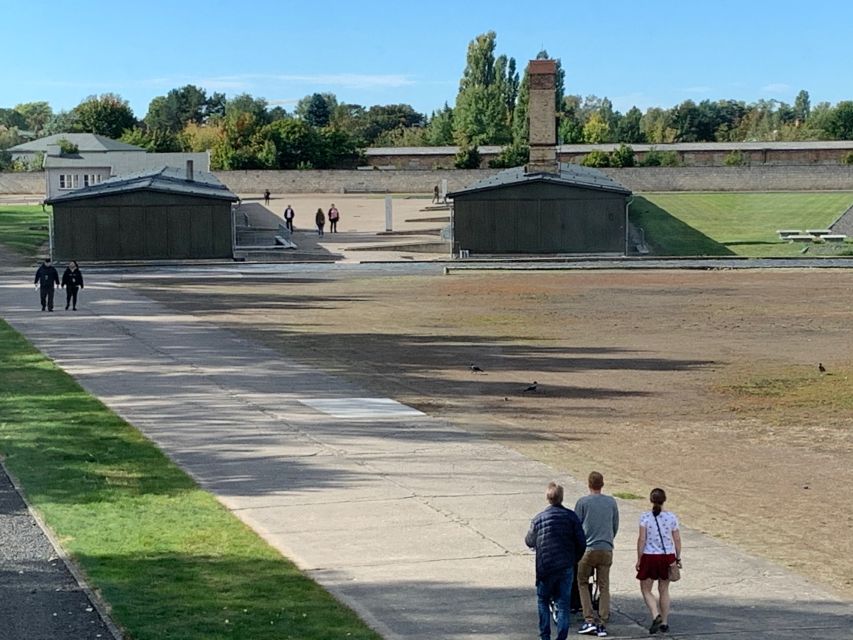
After the Nazi period, the story changes shape. The tour explains that after Hitler’s fall, the Soviets transformed Sachsenhausen into a gulag for Soviet prisoners. That matters because it shows how this place did not simply shut down and become a museum overnight.
Today, the memorial preserves the site for education and to honor those killed. As part of the visit, you will also learn about the GDR memorial area.
This is one of the reasons the tour feels more serious than a typical “historical tour.” It connects the dots across regimes. You get a sense of how the same physical grounds can be repurposed for different systems of control, and how that makes memorial work complicated and necessary.
If you are tempted to think of Nazi concentration camps as a single, isolated historical chapter, this is where the tour corrects that mindset. You leave understanding that suffering can be shaped by multiple political systems, and that sites carry layered meaning.
The museum and exhibits, how you use the time wisely
Sachsenhausen includes a museum and various exhibits, and the tour is structured to make those stops meaningful. The guide’s explanations are what turn the displays into a story you can follow.
If you are the type who reads slowly and looks closely, you will do well here. The museum content is meant to be processed, not skimmed. If you are short on attention, it still helps to let the guide point out what matters most.
In my experience, memorial museums work best when you treat them like guided reading. Listen to the explanation, then spend a few minutes looking at the photographs or documents. Give the material time to connect with what you learned at A Tower and Station Z.
Also, bring your emotional “buffer” mindset. You might feel like the information is heavy and repetitive at times. That is normal. These places are designed to show repetition, procedure, and control. The tour’s role is to help you understand why repetition is part of how systems like this work.
Why the Spanish guide matters, especially if you want real understanding
This tour is offered with a live Spanish-speaking guide, and that is not a small detail. In Berlin, you can survive with English, but for a subject this dense, language changes what you actually learn.
The tour content includes legal and operational thinking around how the camp functioned. That kind of explanation is easier in your native or fluent language. You do not just hear facts. You understand how the system was organized.
A number of people mention guides who speak with clarity and honesty. One name that comes up is Héctor, described as having strong command of the material and not softening the message. If you are lucky enough to have a guide like that, you get the “how it worked” part, not just the “what happened.”
Expect the guide to keep returning to the same key idea: this was an organized, documented system. The Spanish commentary helps you connect the buildings and spaces to the mechanics behind them.
One more thing I appreciate: the guides can respond to real conditions. In winter, Sachsenhausen can mean harsh wind and cold, and a good guide helps you stay focused and moving at a safe pace without rushing.
Price and value: $41 plus the €3 surcharge, and what you get
At about $41 per person for a 6-hour small-group style memorial visit, the value comes from what is included. You are paying for a full tour of Sachsenhausen with a Spanish-speaking guide, plus a concentration camp foundation surcharge of €3.
You do not have to pay extra for entry during the guided portion, and the guide’s explanations are the core product. Self-guided visits can be cheaper, but the value here is the context: what each site meant, how the camp operated day to day, and how the story shifts from Nazi use to Soviet gulag use and then into memorial interpretation.
Your main extra cost is practical, not hidden. A public transport ticket is not included, and you will need a transport ticket covering Berlin zones ABC.
If you are someone who likes to understand the “why” behind a place, the guide is worth it. If you mostly want to stand in silence and read signs, you might question the cost. For most people, though, having someone translate the complexity into Spanish is the difference between seeing the site and truly comprehending it.
What to bring, and how to handle the day without rushing
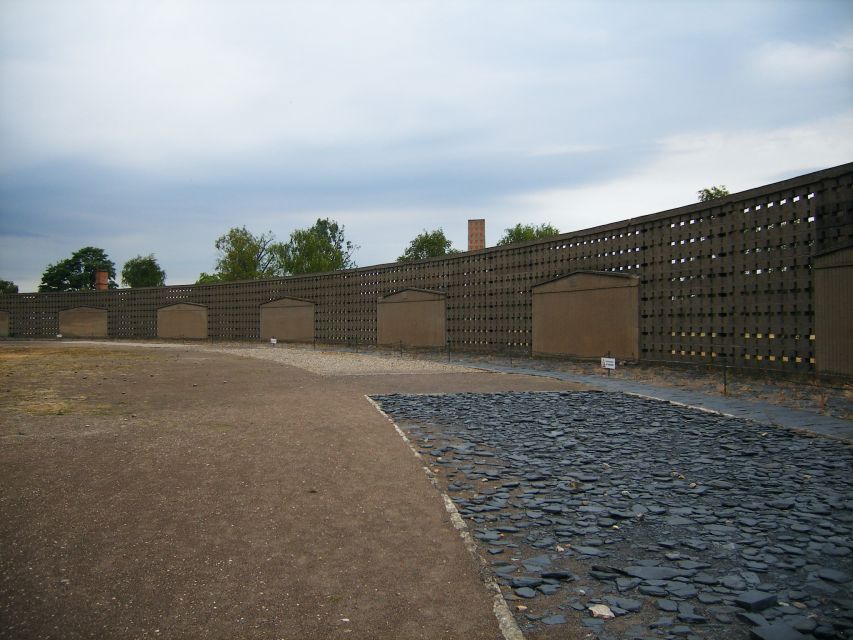
You should plan for discomfort and uncertainty in a memorial setting. The tour notes that you should bring snacks and drinks, because there is no shop at Sachsenhausen. That is a big one. When you are cold or hungry, your attention collapses, and you end up losing the thread of the explanation.
I also suggest you bring:
- Warm layers and a hat or gloves if weather is cold or windy
- Water, plus a small snack you can eat quietly during breaks
- A small notebook or notes app, so you can remember names and themes after the visit
Emotionally, this is heavy material. The best way to handle it is to pace yourself. Take pauses. Let your guide’s explanations breathe. If you try to speed-run the experience, you will miss the connections between A Tower, Station Z, the museum, and the GDR memorial.
Finally, remember you are in Berlin. You start at a major landmark, Alexanderplatz, and then you move out to a solemn site. That contrast is part of how the day works. Give yourself time to transition when you return.
Who should book this Spanish Sachsenhausen tour
This is a strong fit if:
- You want a Spanish-language explanation and not just basic captions
- You care about understanding how the camp system worked, including life and labor details
- You want both the Nazi and Soviet chapters, with a stop connected to the GDR memorial
- You are visiting Berlin for the first time and want a meaningful day trip that is still organized and manageable
It may not be your best choice if you need a light, casual outing. This tour is meant to teach, and the sites can be emotionally difficult. If you are looking for a relaxed museum morning, consider something else.
Wheelchair accessibility is listed, which is a plus for mobility planning.
Should you book this Sachsenhausen Memorial 6-hour Tour in Spanish?
I think you should book it if you want understanding, not just exposure. The pairing of A Tower and Station Z with a Spanish guide is a powerful way to connect the physical spaces to the machinery behind the atrocities. Add the museum content, survivor testimony, photographs, and official documents, and the day becomes both structured and human.
Also, it is good value for the length of the experience and the fact that the guide takes on the hard work of explaining how the camp functioned. Just come prepared: get your zones ABC transport ticket, bring snacks and drinks, and dress for wind.
If you can handle a serious subject and you want a clear Spanish explanation, this is one of the most worthwhile ways to do Sachsenhausen as a day trip from Berlin.
FAQ
How long is the Sachsenhausen Memorial tour?
The tour lasts 6 hours.
Where do I meet for the tour in Berlin?
You meet by a green flag that says tours en español, beside the main entrance to the Fernsehturm (TV Tower) at Alexanderplatz, between the TV tower and Alexanderplatz train station, next to the Espresso House.
What language is the tour guide?
The live tour guide speaks Spanish.
Is the public transport ticket included?
No, the public transport ticket is not included.
Do I need a specific Berlin transport ticket?
Yes. A transport ticket covering Berlin zones ABC is needed.
What areas of Sachsenhausen will we see?
You will visit the A Tower and Station Z, plus the national memorial area with a museum and exhibits, including a GDR memorial.
Will there be a shop at Sachsenhausen to buy snacks and drinks?
No shop is available at Sachsenhausen, so it is advisable to bring snacks and drinks.
Is the tour wheelchair accessible?
Yes, the tour is wheelchair accessible.
Is there free cancellation?
Yes. You can cancel up to 24 hours in advance for a full refund.
What is the price of the tour?
The price is listed as $41 per person, and it also includes a €3 concentration camp foundation surcharge.
Recently added around Berlin
- Berlin Private Custom Walking Tour With A Guide (Private Tour)★ 4.5 · 8 reviews
- One Up to 3 Rickshaws(6 GUESTS)-Taylor Made Rickshaw Berlin Tour★ 5.0 · 20 reviews
- Moonshine Comedy – English Stand Up Comedy by the bay★ 5.0 · 11 reviews
- Private Half-Day Berlin Sightseeing Tour with a Minivan Including Short City Walks★ 5.0 · 31 reviews
- Private taxi tour to Potsdam and Sanssouci 6-8h★ 5.0 · 30 reviews
- Private City Kickstart Tour: Berlin★ 4.5 · 71 reviews
- Private tour of Berlin★ 5.0 · 15 reviews
- Private Taxi Tour City East & West History and Architecture 3-4h★ 5.0 · 42 reviews
Sachsenhausen Memorial Visits, compared.
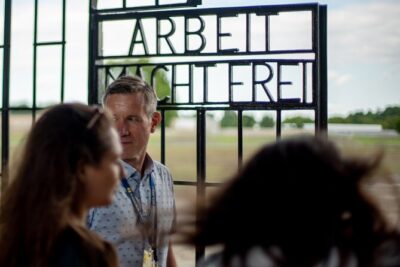
Sachsenhausen Concentration Camp Tour in English
Read our review →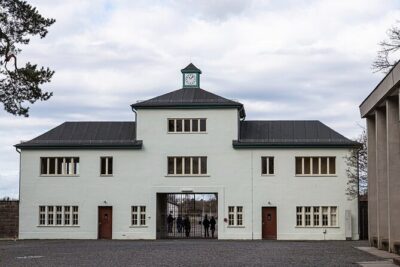
Sachsenhausen Concentration Camp Memorial Tour
Read our review →
Sachsenhausen Concentration Camp Bus Tour in English from Berlin
Read our review →Sachsenhausen Concentration Camp Tour in English
Read our review →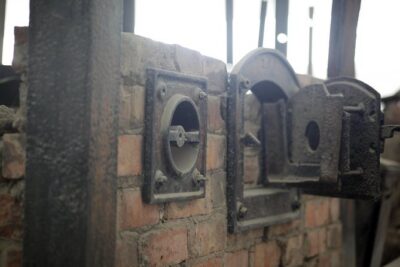
Sachsenhausen Concentration Camp Memorial Tour (Max. 15 Guests)
Read our review →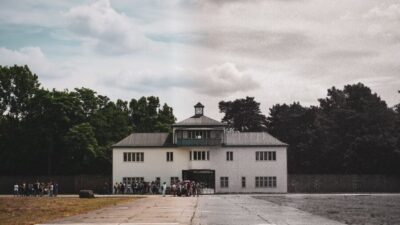
Sachsenhausen Concentration Camp and Potsdam Tour
Read our review →
Visita en español al campo de concentración Sachsenhausen
Read our review →Browse the lists this tour appears in