
Reviewed · BERLIN
Berlin: The Feuerle Collection Meditation Experience
This experience is interesting because it flips the usual museum script. Instead of listening to facts, you slow down in a silent, mobile-detox setting and let the art do the talking.
What I like most is the chance to meditate in front of real collections, not just screens or a lecture. You also get a built-in sense of place, with the route taking you through a Sound Room and into an underground Lake Room, where stillness feels part of the design. One thing to consider: this is not a guided tour, so if you want an explanation of every object, you may feel underfed.
Key takeaways before you go
- Silent by design: meditation is the point, but you can also move quietly or simply enjoy the art.
- A route with purpose: you pass through the Sound Room and then walk into the underground Lake Room.
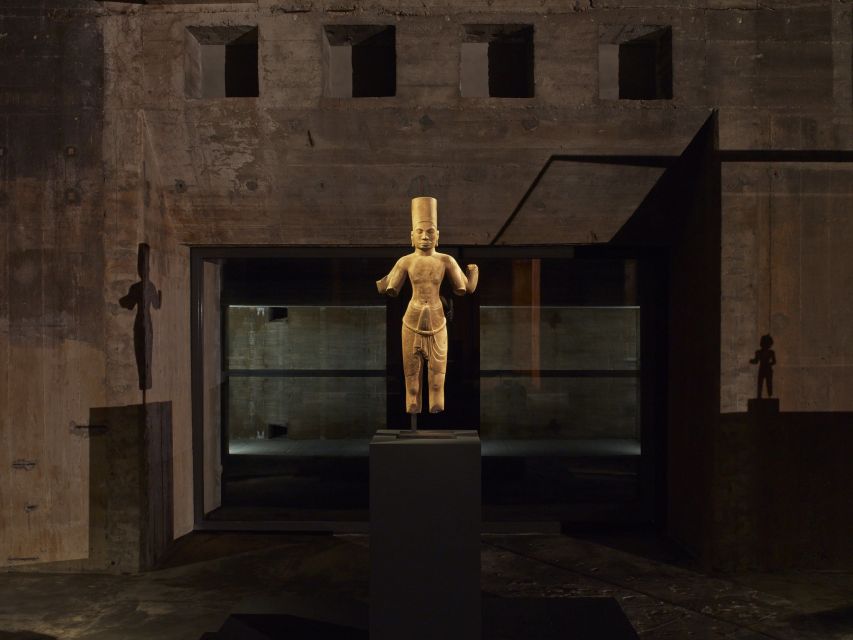
- Art in time periods that clash, on purpose: early Khmer sculptures, Chinese furniture, then contemporary works.
- A hands-on calm setup: you get a yoga mat and a blanket for your one-hour session.
- No children under 16: plan it as an adult calm block in your Berlin schedule.
A Berlin museum hour that trades explanations for stillness
In Berlin, you can fill days with galleries and guided tours. This is different. The Feuerle Collection Meditation Experience is built around one simple rule: be quiet, power down your phone, and use the space for contemplation. The result is that you notice small details you would normally rush past, because nothing is competing for your attention.
I like that the format doesn’t force you to sit there like a statue. Meditation is not mandatory. If you prefer to walk slowly, pause when something pulls you in, or just absorb the atmosphere, you can. That flexibility matters, because some people want formal meditation, and others just want a calm art break that feels intentional.
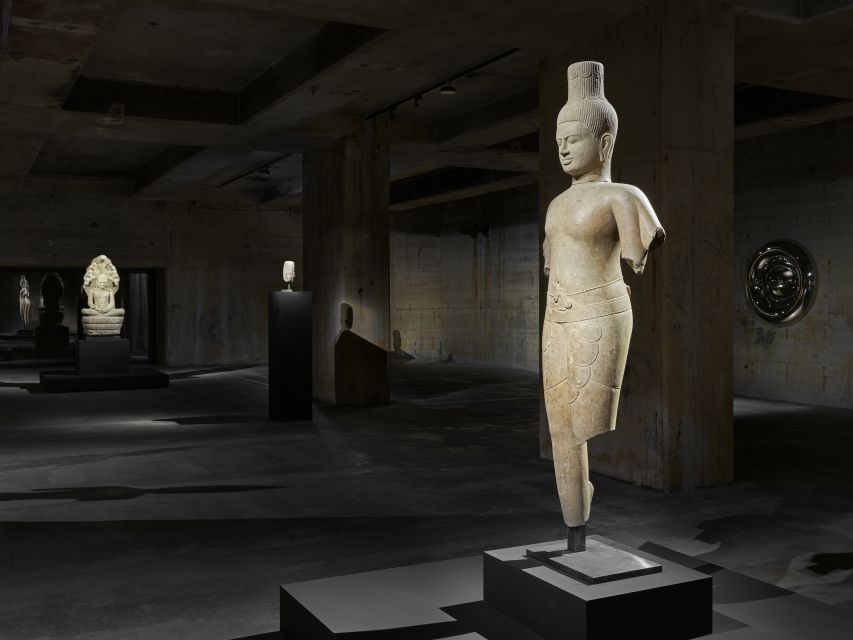
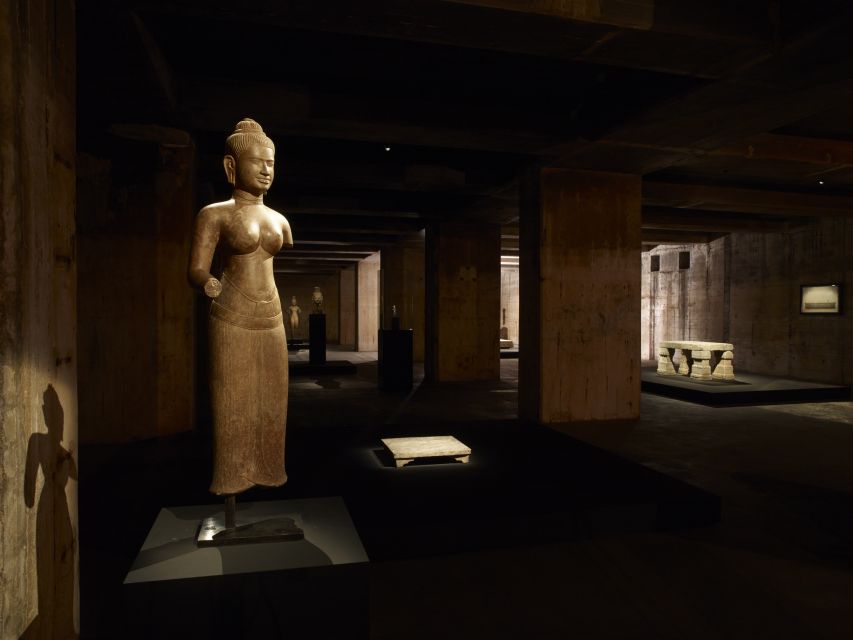
The collections themselves add another layer. You’ll move from early Khmer sculptures, to Imperial and Scholar Chinese furniture, and then into contemporary art by names like Anish Kapoor, Cristina Iglesias, Adam Fuss, Zeng Fanzhi, James Lee Byars, and Nobuyoshi Araki. The contrast can feel surprising, and that’s part of the value. When the brain stops chasing a single narrative, you start seeing connections by feeling, rhythm, and material, not just facts.
Other Berlin tours readers compare with this one:
- Berlin: Reichstag, Dome and Government District Guided Tour
★ 4.7 · 18,288 reviews - Berlin: 1-Hour City Tour by Boat with Guaranteed Seating
★ 4.3 · 16,993 reviews - Berlin: Boat Tour Along the River Spree
★ 4.4 · 11,252 reviews
The 1-hour flow: Sound Room to Lake Room, and how to pace yourself
The experience runs for one hour, and the collection is open only for meditation. That does not mean you’re chained to one spot. It means the whole visit has a calm logic. You’re not supposed to treat it like casual gallery hopping.
Here’s the practical way to think about the timing:
- You enter and orient yourself in silence, with the expectation that your phone use should stay off.
- You pass through the Sound Room as part of the route.
- Then you walk in the Lake Room, which is underground, and you stop to meditate there.
The Sound Room and Lake Room are the two anchor moments. Even without a spoken guide, the architecture does the work for you. The Sound Room sets your mindset. You transition into a deeper quiet before you reach the Lake Room, which feels made for lowering your volume, both literally and mentally.
One small drawback for first-timers: because it’s not guided, you’ll need to create your own structure. If you know you get fidgety, pick a plan before you start. For example, decide that you’ll meditate for the first half-hour, then do a slow walk with brief pauses for the second half. Or do the opposite if you think sitting still will get to you. The point is to avoid spending the whole hour deciding what to do.
Khmer sculptures and Chinese furniture you can actually feel
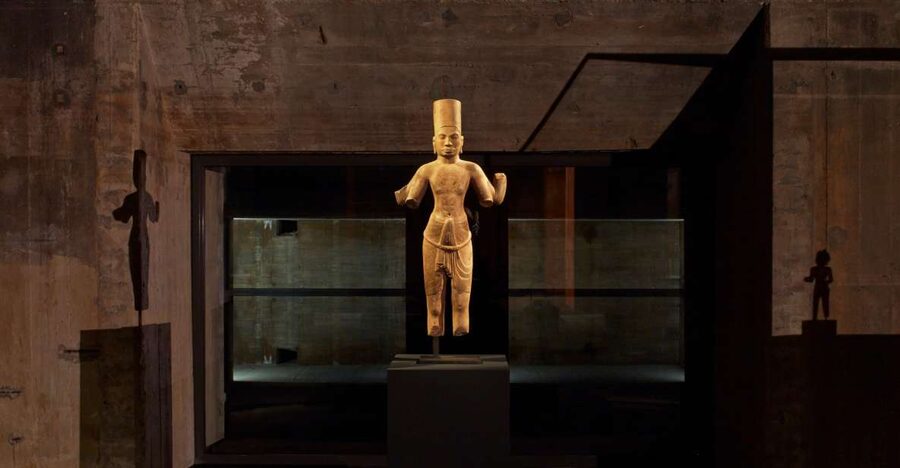
What makes this experience special is how it treats older art. Early Khmer sculptures, dated roughly from the 7th to 13th century A.D., sit in the frame like something you can come to know slowly. You’re not there to check a box. In silence, you tend to look longer at faces, textures, and posture. That changes your relationship with the objects.
Then you shift into Imperial and Scholar Chinese furniture, spanning a huge stretch from about the 2nd century B.C. to the 17th century A.D. Furniture can be hard to experience in a normal museum visit because it’s easy to treat it as background. Here, it becomes foreground. You’re quiet. You’re not being rushed along. So the craftsmanship gets time.
Two specific things I think you’ll like if you’re into Asian art:
- You get to see the material logic of the pieces without distraction.
- The juxtaposition creates a strange, useful effect, where you stop looking for one style and start noticing how objects communicate across cultures.
In other words, it’s not just a short art stop. It’s an hour that trains your attention.
Contemporary art in silence: Kapoor, Iglesias, Fuss, Zeng, Byars, Araki
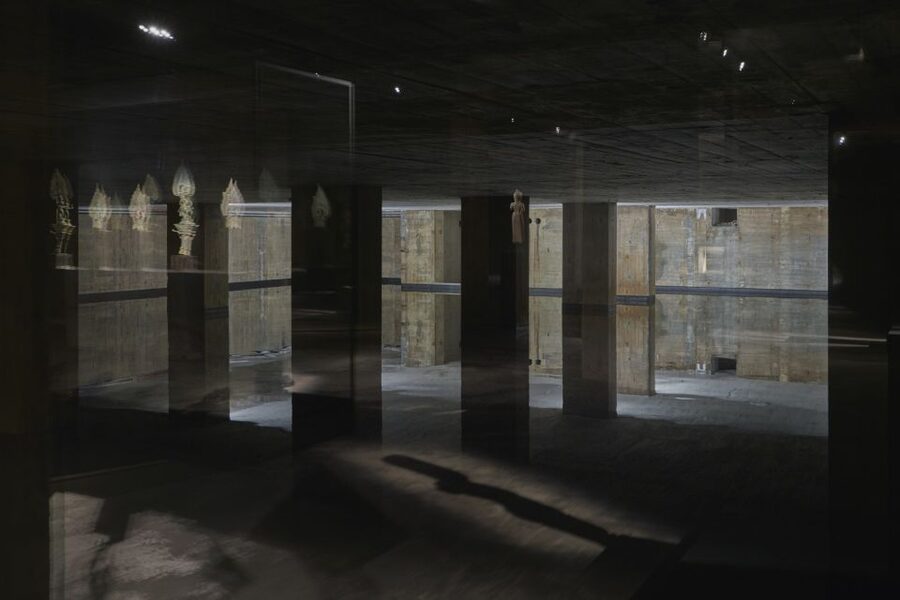
After the older galleries, contemporary works take over. You’ll encounter pieces by Anish Kapoor, Cristina Iglesias, Adam Fuss, Zeng Fanzhi, James Lee Byars, and Nobuyoshi Araki. This lineup matters because it ranges from sculptural presence to conceptual mood, and some of it can be emotionally intense.
One practical consideration: because the experience is adult-focused and not suitable for children under 16, you should expect that at least some contemporary art may carry adult themes. The collection includes Nobuyoshi Araki, and in this setting you should be ready for content that feels more personal or provocative than what you’d see in a strictly family-friendly museum hour.
The upside is that silence changes how you read contemporary art. In a guided visit, you might chase the explanation. Here, you feel the temperature of the space. Even if you do not understand every artistic decision, you can still experience how scale, surface, and composition affect your body.
If contemporary art usually overwhelms you, this may still work. The nonverbal format removes the pressure to get it fast. You can let your mind catch up at its own speed.
Still in Berlin, but a different kind of day:
- Discover Berlin Half-Day Walking Tour
★ 5.0 · 9,624 reviews - Berlin: Hop-on Hop-off Bus Tour with Live Commentary
★ 4.3 · 8,579 reviews - Berlin: Government District around the Reichstag Guided Tour
★ 4.7 · 8,447 reviews - Berlin: Reichstag, Plenary Chamber, Cupola & Government Tour
★ 4.6 · 8,422 reviews
Mobile detox without turning it into a punishment
This is marketed as a mobile detox and a silent experience, so your phone habits matter. You do not need to turn it into a self-improvement project. You just need a simple rule that you can follow without stress: no scrolling, no messaging, no checking the time every minute.
What helps is treating the hour like a controlled exhale. Bring your attention, not your apps.
Also, you’re not going in empty-handed. The experience includes a yoga mat and a blanket, so you can sit, kneel, or rest comfortably during meditation. That sounds small, but it’s huge for value. Many self-guided museum experiences make you figure out comfort on your own. Here, you can focus on staying calm and present.
If you’re picky about comfort, wear layers. Even if the room feels fine when you arrive, you may cool down while sitting quietly.
What you can do if you do not want to meditate
Meditation is not mandatory. I like that the experience gives permission to simply be. You can:
- meditate if you want the full silence practice
- walk around quietly
- enjoy the art at your own pace
This is important for people who feel awkward with meditation. The format still works because the space is designed for it, and because quiet movement is treated as part of the experience, not something to be ashamed of.
Think of it like museum viewing with one extra rule: you’re not performing your thoughts out loud. You’re not treating the objects like a checklist. You’re letting yourself look longer, without filling the quiet with commentary.
Wheelchair access and adult-only calm: plan your fit
The experience is wheelchair accessible, which is a real plus for an hour-long meditation format. You’ll still want to consider your own comfort needs, especially if you use the mat and plan to rest in a seated or semi-seated way. But the fact that access is included makes it easier to plan.
There’s also a clear suitability boundary: children under 16 are not suitable. That usually means the atmosphere stays calm and adult. If you are traveling with younger kids, this is probably not the right block for them.
If you’re someone who enjoys quiet spaces, art you can ponder, and the idea of slowing your brain down for an hour, this fits well.
Price and value: why $25 can feel fair
At $25 per person for one hour, the pricing is straightforward. The value is not coming from a long, guided narrative. It’s coming from the unique format, the controlled quiet, and the art setting you get to experience without performance pressure.
Here’s what you’re paying for:
- a silent, mobile-detox environment designed around contemplation
- a route through distinct spaces, the Sound Room and the underground Lake Room
- included comfort items, yoga mat and blanket
- access to a collection that spans Khmer sculpture, Chinese furniture, and contemporary art
If you love learning details from a guide, you may feel the lack of interpretation. The experience explicitly does not include a guided tour of the exhibition. But if you enjoy self-guided looking, reflective time, and letting art land in your body, this is a price point that feels reasonable for Berlin.
Also, the reviews add confidence that this is more than a gimmick. People describe it as relaxing and unusually fitting for the senses, and they even note that the entrance is easy to find and the experience works well in a small group feeling.
Who should book this, and who should skip it
This is a strong choice if you:
- want a break from nonstop Berlin sightseeing
- like Asian art or mixed-period collections and do not need every object explained
- enjoy quiet activities more than structured lectures
- are curious about meditation but do not want it to be strict
- want an adult-only cultural reset block
You might skip it if you:
- need a guided tour with lots of spoken context to enjoy art
- get anxious in silence
- are traveling with children under 16
- dislike sitting for extended periods even with a mat and blanket
A helpful mindset: go in expecting a feeling more than a lesson. If the goal is stillness, you’ll leave happier.
Should you book the Feuerle Collection Meditation Experience?
Yes, if you’re building a Berlin itinerary with one calm, different experience. This is not the kind of activity you pick when you want to collect facts. It’s the kind you pick when you want your attention back.
Book it when you need a reset after busy museum days, especially if you like art from multiple eras and you can enjoy objects at your own pace. If you prefer structure, treat this as a guided format without talking: the space leads you from the Sound Room to the underground Lake Room, and you fill in the quiet.
If that sounds like your kind of hour, go. If you only enjoy art through narration, you may feel frustrated by the lack of a guided explanation. That’s not wrong, it’s just a mismatch.
FAQ
How long is the Feuerle Collection Meditation Experience?
It lasts 1 hour.
Is this experience a guided tour?
No. This is an open meditation experience focused on meditation, not a guided tour of the exhibition.
Do I have to meditate the whole time?
No. Meditation is not mandatory. You can also walk around quietly and enjoy the art.
What is included with the experience?
You receive a yoga mat and a blanket.
Is it suitable for children?
No. It is not suitable for children under 16.
Is the experience wheelchair accessible?
Yes, it is wheelchair accessible.
Recently added around Berlin
- Berlin Private Custom Walking Tour With A Guide (Private Tour)★ 4.5 · 8 reviews
- One Up to 3 Rickshaws(6 GUESTS)-Taylor Made Rickshaw Berlin Tour★ 5.0 · 20 reviews
- Moonshine Comedy – English Stand Up Comedy by the bay★ 5.0 · 11 reviews
- Private Half-Day Berlin Sightseeing Tour with a Minivan Including Short City Walks★ 5.0 · 31 reviews
- Private taxi tour to Potsdam and Sanssouci 6-8h★ 5.0 · 30 reviews
- Private City Kickstart Tour: Berlin★ 4.5 · 71 reviews
- Private tour of Berlin★ 5.0 · 15 reviews
- Private Tutankhamun’s Tomb Live Escape Room in Berlin★ 3.5 · 11 reviews