
Reviewed · TRABI SAFARIS
Berlin Trabi Museum: Day Ticket
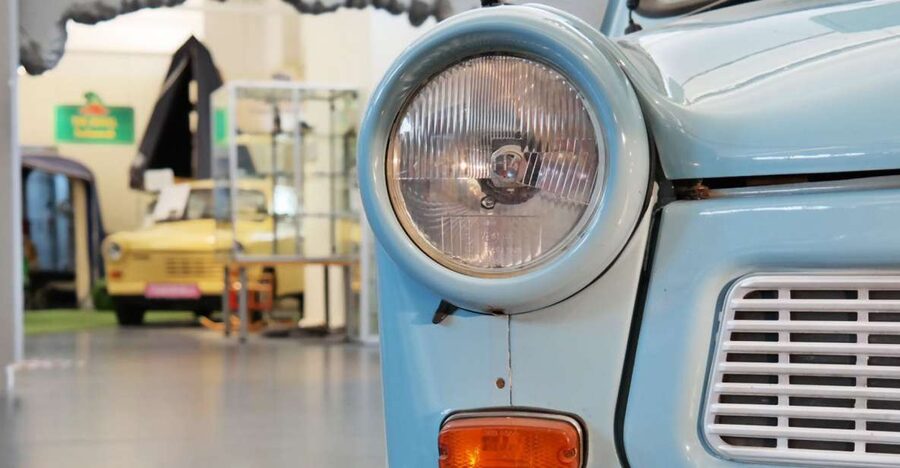
Berlin is full of big-ticket museums. This one is different, and that is the point. A Trabi museum at Checkpoint Charlie lets you connect the most iconic East German car with the real geography of Cold War Berlin.
I like that you get a focused collection: 14 different vehicles plus rare variations. I also like the mix of hands-on fun and media, from sitting in the lightshow theater to exploring a miniature GDR world. One thing to keep in mind, though, is that this museum is on the compact side, so plan your expectations accordingly.
Why Checkpoint Charlie is the right place for a Trabi museum
Checkpoint Charlie is already a story. This is where people wanted to believe the future had answers, and where the walls and rules felt painfully real. Putting a Trabi museum here makes the connection practical, not just thematic. You see a famous car shaped by a specific country, then you’re standing in one of the most recognizable symbols of division.
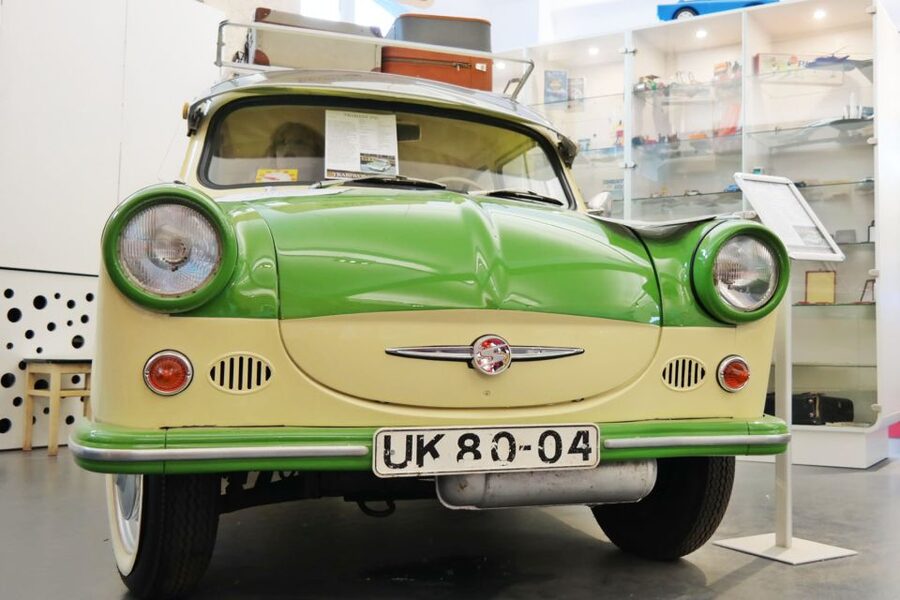
The Trabi story is not only about metal and design. It is about production, limits, and everyday life. The museum anchors that in key milestones. For example, it explains that the Rennpappe went into production in 1958 at the VEB Automobilwerk Zwickau. That matters because it shows the vehicle as an industrial product, not a toy for a souvenir shop.
The headline highlights you should plan around
- 14 vehicles on display, including different stages of development and different uses of the Trabant
- A lightshow theater with short films about the Trabant
- A miniature GDR world that helps you picture the setting beyond the car
- Rare Trabi variations such as the Trabant P70 with a wooden undercarriage
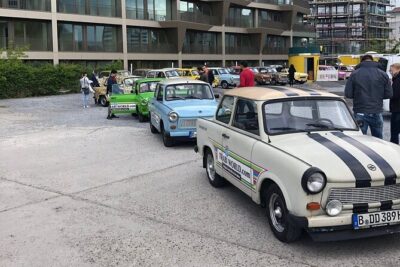
- Trabi Safari options where you can get behind the wheel and choose a route (East, West, along the former wall, or your own)
More Trabi drives in Berlin:
- Berlin: 75-minute Trabi Safari
★ 4.8 · 2,854 reviews - Berlin Self-Drive Trabi Tour with Guide
★ 4.5 · 410 reviews - Private Tour: Berlin by Trabant Stretch-Limousine
★ 5.0 · 186 reviews
Touring the museum: from everyday car to strange oddity
This is a one-day entry ticket, and the experience is built to move at a steady pace. Start by working your way through the main displays where you can compare different Trabant forms. The museum’s strength is how it shows progression. You’re not only looking at a finished car. You’re seeing how the vehicle changed over time and how it was used in real life.
Here is what I’d focus on first if you want the most payoff:
The 14-vehicle loop
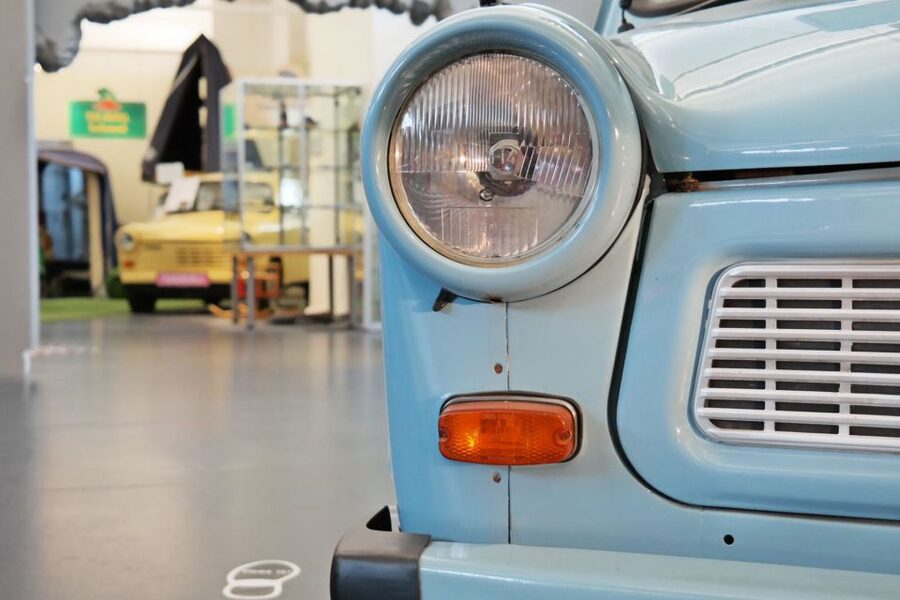
The museum gives you a curated set of cars and variations, totaling 14 different vehicles. That sounds small until you realize it is designed for comparison. You can stand in one place and absorb how the design evolved, rather than wandering through rows of near-identical exhibits.
If you enjoy design and engineering, the comparisons feel satisfying. If you mostly want photos, you still get variety. And if you are the type who likes “what is that?” details, you will have a lot of fun.
Stage of development and use cases
The displays cover the Trabant across different stages, plus multiple uses. You can see how the car was imagined for daily life, and how it became something else too. The museum specifically includes examples like camping Trabis and military vehicles.
That mix is useful. It prevents the Trabi from becoming a single, frozen stereotype. It reminds you the same basic car platform could be adapted for totally different roles, including leisure and more serious tasks.
More museums in Berlin:
- Berlin: Natural History Museum Entrance Ticket
★ 4.6 · 3,382 reviews - Skip-the-Line: Berlin Wall Museum at Checkpoint Charlie
★ 4.1 · 2,041 reviews - Berlin: Museum Island Multiple Museum Entry Ticket
★ 4.4 · 2,007 reviews - Berlin: Interactive DeJa Vu Museum Entrance Ticket
★ 4.1 · 1,338 reviews
The rarities that make people stop walking
Two standout rarities are called out directly in the museum’s collection:
- Trabant P70 with a wooden undercarriage
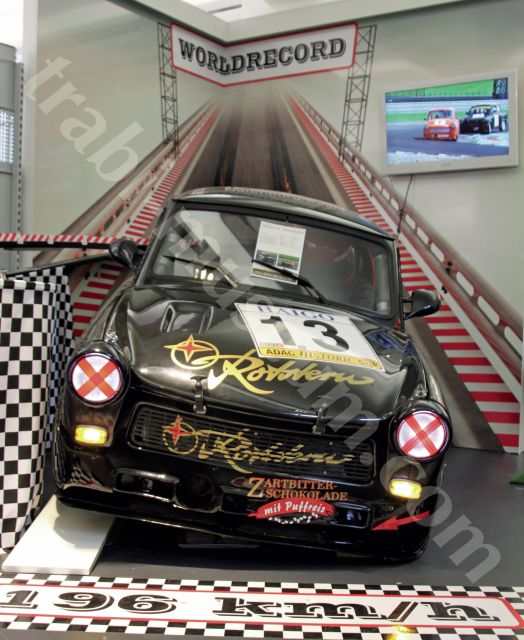
- The fastest Trabi in the display
These are the kind of details that keep you from treating the museum as a quick photo stop. They spark questions. Why would a wooden undercarriage exist? What made a Trabi the fastest? Even if you do not find every technical answer in the room, those objects anchor the bigger story.
The lightshow theater and miniature GDR world
After you’ve walked the cars, give your eyes a reset. The museum’s media area is where the story gets easier to digest.
Sit in the lightshow theater
The museum includes a seat in the lightshow theater where short films play about the Trabant. This is a smart part of the ticket because it lets you absorb context without reading a wall of text. If you like museums that teach you faster, this will feel like a breather.
I also like how the films support the vehicle displays you just saw. They help connect what you saw in metal and plastic to broader ideas like development and everyday experience.
The miniature GDR world
Then there is a miniature GDR world. Miniatures work best when they tell you scale and atmosphere. You start thinking in terms of streets, routines, and the way the built environment shapes how people move.
Even if you already know Berlin’s Cold War layout, the miniature approach is a different mental route. It turns history into something you can glance at and immediately understand.
Getting behind the wheel: Trabi Safari and route choices
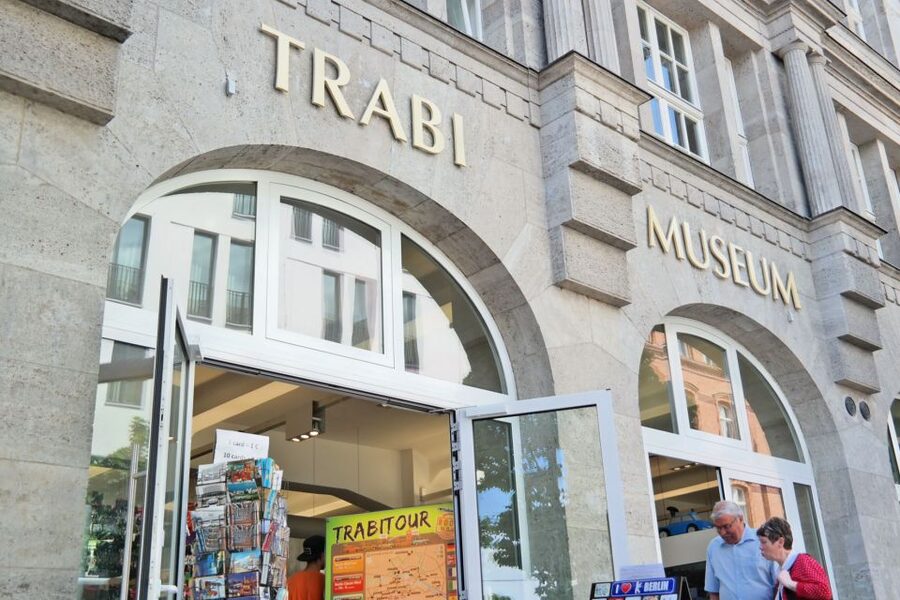
One of the most fun aspects is that you can get behind the wheel for a Trabi Safari. The museum offers route options, including:
- through the East or West
- along the former wall
- or another route you choose
A few practical thoughts here. First, consider this as part of the entertainment level, not a serious driving simulation. Second, treat it as a chance to make the history feel physical. You are not just looking at the car. You are using it as the key to a path through the city’s divided story.
If you like interactive experiences, this is where the day ticket can feel extra worth it, even if you keep the rest of the museum time short.
How long this really takes in a Berlin day
The ticket is valid for 1 day, and you should check starting times based on availability. That means you can build this visit around your other Berlin plans instead of forcing it into a tight schedule.
In terms of pacing, here is a practical way to think about it:
- If you like photos and want the highlights fast, you can likely do the car loop and theater first, then decide about any hands-on options.
- If you like to read labels and compare the vehicles, give yourself time to slow down at the rarities. Those take mental effort, and it is worth it.
Because the museum is compact, you can finish without feeling trapped for hours. That also means you should not stack too many other “heavy” stops back to back unless you are okay with a lighter museum day.
Price and value: what $10 gets you in Berlin
The listed price is $10 per person. That is remarkably low for a museum experience in central Berlin, especially one that includes media and a hands-on element (at least as an option).
Here is where the value comes from. You get:
- a curated display set with 14 vehicles
- context through short film programming
- a themed miniature environment
- optional interactive time that can add replay value to the story
For comparison, many small museums charge more while offering fewer ways to engage. Here, even with a compact floor plan, the experience has multiple “modes”: look, watch, and do.
A small consideration: if you want a giant multi-hour museum with deep collections across many themes, this one may feel short. But for a first-time Berlin visit, or for anyone who loves the Trabi as an icon, the tight focus is exactly why it works.
Getting there: Zimmerstraße meeting point and what if the door is closed
Your meeting point is Zimmerstraße 14-15, 10969 Berlin. If the door is closed, cross the street and look for TrabiWorld on the left side at Zimmerstraße 97-100.
This is the sort of detail that saves time. In Berlin, it is common for entrances to be a bit indirect, especially when venues share a building or operate with hours that affect door status. If you arrive a few minutes early and check the street side instructions, you avoid that awkward minute of wandering.
Also note that the experience includes a skip the ticket line benefit. If you want a smooth start, this helps you get into the museum while you still have energy for the walk-through.
Languages and accessibility: what to expect on site
The host or greeter offers English and German. That is ideal if you want help without being stuck waiting for translation.
The experience is also wheelchair accessible. That is important for planning, and it means you do not have to treat this as a “only for able-bodied visitors” stop.
Who this is best for, and who should adjust expectations
This is a great fit if you are one of these:
- You like cars as objects, not just as transportation
- You enjoy Cold War-era culture and how everyday items reflect politics
- You want something fun that is still grounded in a specific place
It is also a good option for couples, small groups, and solo travelers who want an easy win that does not eat an entire day. The interactive feel, the theater moment, and the “try it” possibility keep it from becoming too passive.
The one group that should adjust expectations is anyone who expects a huge museum campus. Based on feedback like the museum being very small, you should treat it as a compact experience with a strong focus, not a sprawling deep archive. If you love long indoor museum marathons, you may want to pair it with another major Berlin stop instead of treating it as the only activity.
Should you book the Berlin Trabi Museum Day Ticket?
I’d book it if you want an affordable, central Berlin stop that mixes car history with a fun format. $10 is an easy price to justify, and the combination of 14 vehicles, the lightshow theater, and a miniature GDR world means you are not just looking at static cars. You can also add the Trabi Safari option if you want the experience to move from viewing to doing.
I would pause before booking if you know you dislike small museums. If your idea of a good museum day is hours of galleries and a huge variety of themes, this one may feel too focused and too quick.
If you want a short, memorable Berlin experience tied to Cold War atmosphere, this ticket is an efficient choice. It hits the sweet spot between icon, context, and play.
FAQ
How much is the Berlin Trabi Museum Day Ticket?
It costs $10 per person.
How long is the experience valid for?
The ticket is valid for 1 day. You can check availability for starting times.
Where do I meet for the experience?
The meeting point is Zimmerstraße 14-15, 10969 Berlin. If the door is closed, cross the street and find TrabiWorld on the left at Zimmerstraße 97-100.
What languages are available with the host or greeter?
English and German.
Is the experience wheelchair accessible?
Yes, it is wheelchair accessible.
Can I cancel for a refund?
Yes, free cancellation is available up to 24 hours in advance for a full refund.
Recently added around Berlin
- Berlin Private Custom Walking Tour With A Guide (Private Tour)★ 4.5 · 8 reviews
- One Up to 3 Rickshaws(6 GUESTS)-Taylor Made Rickshaw Berlin Tour★ 5.0 · 20 reviews
- Moonshine Comedy – English Stand Up Comedy by the bay★ 5.0 · 11 reviews
- Private Half-Day Berlin Sightseeing Tour with a Minivan Including Short City Walks★ 5.0 · 31 reviews
- Private taxi tour to Potsdam and Sanssouci 6-8h★ 5.0 · 30 reviews
- Private City Kickstart Tour: Berlin★ 4.5 · 71 reviews
- Private tour of Berlin★ 5.0 · 15 reviews
- Private Tutankhamun’s Tomb Live Escape Room in Berlin★ 3.5 · 11 reviews
Trabi Safaris, compared.

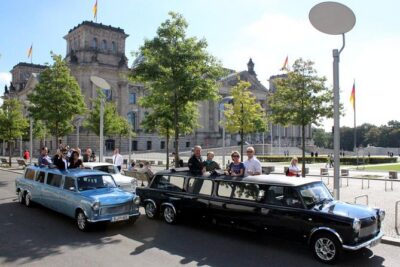
Private Tour: Berlin by Trabant Stretch-Limousine
Read our review →
Browse the lists this tour appears in