
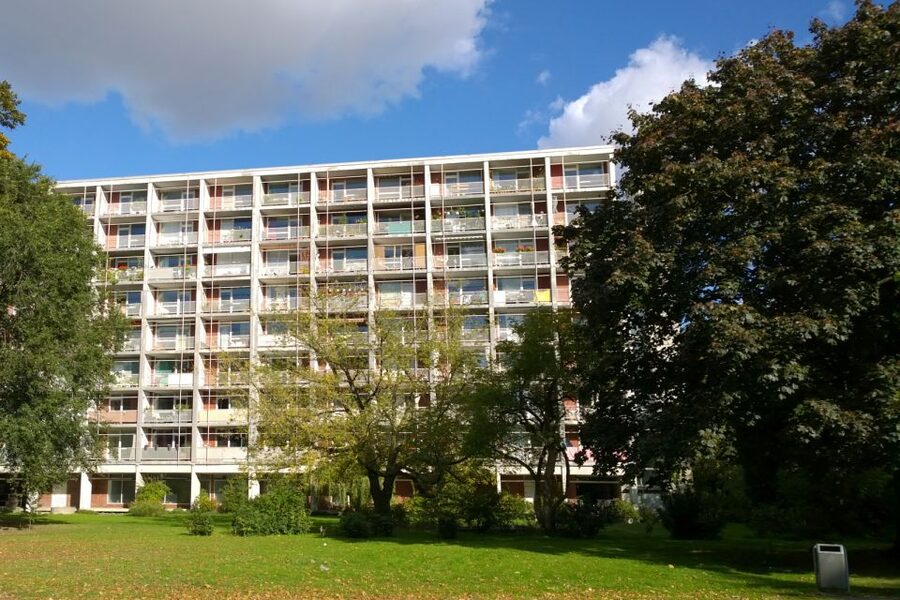
Reviewed · CITY TOURS
Berlin: Hansaviertel “The City of Tomorrow” Guided Tour
Berlin can feel like a history textbook written in concrete, and the Hansaviertel is one of the best pages to read on foot. I love how this 2-hour walk turns the neighborhood into a living exhibit of postwar planning, especially around the Berlin Pavilion and the Müller-Rehm/Siegmann House. You get clear explanations that make the buildings feel connected, not random.
One thing to factor in: in winter, the tour timing may feel late for long outdoor blocks. A few people have suggested starting earlier in colder months so you can finish before the daylight and chill really take over.
Key highlights

- International Building Exhibition 1957 plans in real streets, not just in books
- Berlin Pavilion plus Müller-Rehm/Siegmann House, a strong modernist first impression
- Gropius-Haus, Kaiser-Friedrich Memorial Church, and the Swedish House for quick style contrasts
- Hansaplatz station, Hansaviertel Library, and Hansaviertel Hospital for everyday-life context
- Van den Broek House, Schwippert House, and the Academy of Art to see how art, design, and living overlap
A 1957 City of Tomorrow, on Foot
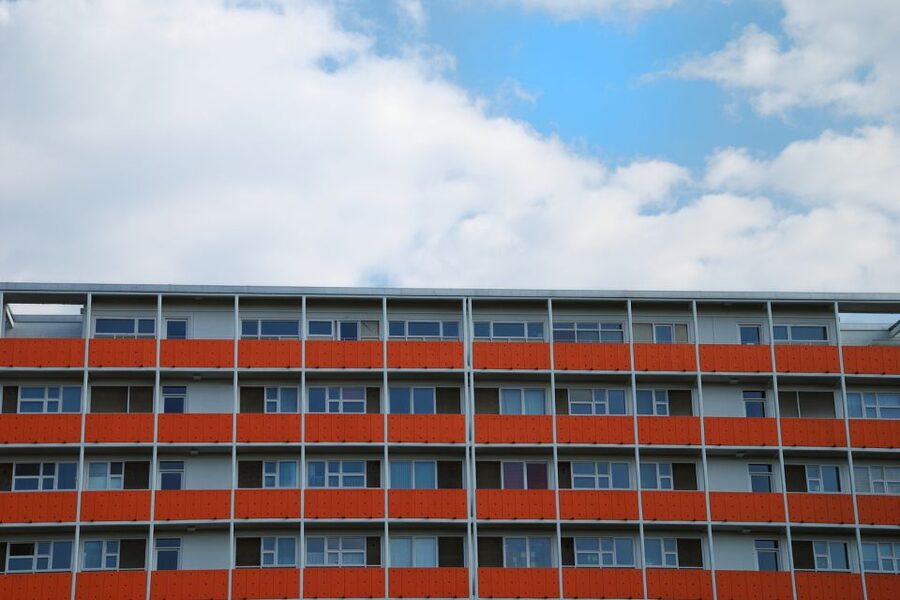
This is a relaxed walking tour through Hansaviertel, the kind of Berlin neighborhood that looks calm until you start paying attention to why it was built. The whole idea comes from a bold postwar moment, when planners wanted to show what a well organized city could be like. The inspiration is tied to the International Building Exhibition of 1957, and you will hear how those principles shaped the streets and buildings you see today.
I like tours that give you a way to read what you are looking at, and this one does that quickly. Instead of treating architecture like trivia, it connects design choices to the hopes and pressure of the era. You also get to cover several named buildings in a short time, which helps if your Berlin days are tight.
Because it is a walking tour, you should be comfortable with steady outdoor time for the full 2 hours. If it is raining or icy, bring practical shoes and be ready to take it slow when streets are slippery.
A few more Berlin options worth a look
- Berlin: Reichstag, Dome and Government District Guided Tour
★ 4.7 · 18,288 reviews - Berlin: Government District around the Reichstag Guided Tour
★ 4.7 · 8,447 reviews - Berlin: Hidden Backyards Guided Walking Tour
★ 4.8 · 5,360 reviews
Starting at Hansaviertel, With the Plan Behind the Buildings
You meet your guide and head into Hansaviertel at an easy walking pace. From the first stops, the story is about modern urban development, the kind that tries to make space feel organized and functional. The tour frames this as a “structured, spacious city” concept, and then it shows you that the neighborhood you see now still carries parts of that original thinking.
This is where the tour becomes more than architecture spotting. Once you understand the planning goals, small details start to make sense, like spacing between buildings and the way the district is arranged around community institutions. Even if you are not a design nerd, it is a good feeling to realize the city was designed with intentions, not just luck.
The group is led by a live guide in English or German, and the delivery seems to matter a lot here. People consistently highlight guides like Tobias and Mr Schwabe for mixing clear facts with a warm, slightly playful style that keeps questions flowing.
Berlin Pavilion and the Müller-Rehm/Siegmann House
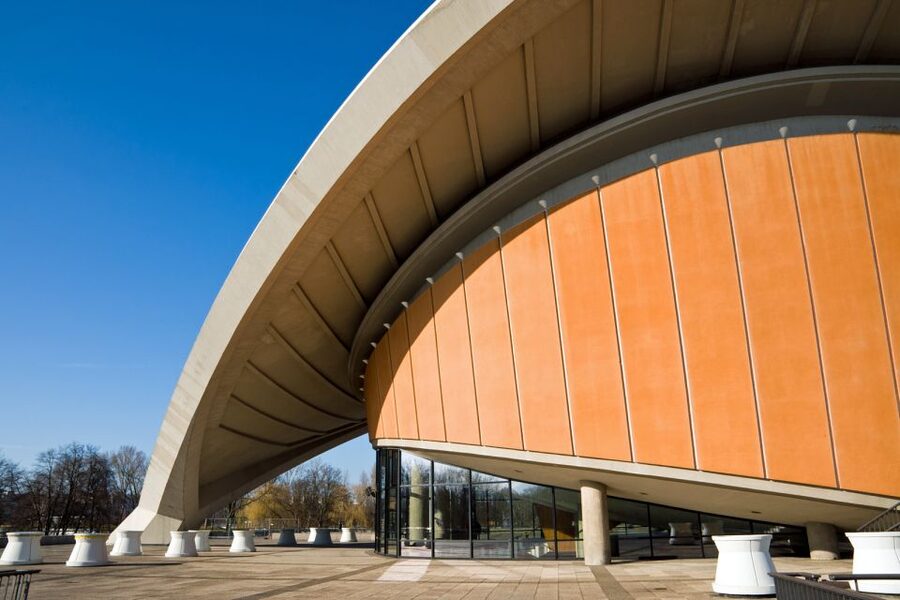
The Berlin Pavilion stop is a strong anchor for the whole tour. It gives you a reference point for the 1957 exhibition theme, so you can understand what planners and architects were trying to demonstrate. Think of it as a way to get the labels on your mental map before you start hopping between buildings.
Right after that, you get to see the Müller-Rehm/Siegmann House and learn how it fits the broader “city of tomorrow” idea. This is one of those buildings that makes sense once someone points out what you are looking for, since modern architecture can feel similar if you are rushing. Your guide helps you notice design choices that relate to function, form, and the postwar mindset.
I especially like how the tour treats these houses as evidence. Instead of vague admiration, you learn why the building was considered forward looking in its moment, and what it suggests about everyday life at the time.
If you enjoy photos, this is also a good early stretch. Starting with a big thematic stop means you have context before you start taking shots of facades and details.
Gropius-Haus, Kaiser-Friedrich Memorial Church, and the Swedish House
After the pavilion and the first major house, the walk keeps moving, and the architecture changes in tone as you go. You will pass the Gropius-Haus, and this is a key stop for understanding how modernism can look confident and orderly. The design language feels different from older European building styles, and that contrast is part of the point of the Hansaviertel project.
Then you shift to the Kaiser-Friedrich Memorial Church, which adds another layer. Churches are not usually associated with 20th-century urban planning experiments in the same way housing blocks are, so it helps you see how the district balances new ideas with familiar community landmarks. It is an effective reminder that urban “tomorrow” still needed anchors for identity.
Next up is the Swedish House. The name alone signals that this is not a one-country story. The Hansaviertel project brought together national and international architects, and this stop is a quick way to sense the cross-border ambition behind the district.
This sequence is valuable because it shows range. You are not stuck in one style for 2 hours. You get a mix of modern housing concepts, cultural institutions, and landmark architecture that helps you understand how the planners shaped a neighborhood experience.
Still in Berlin, but a different kind of day:
- Berlin: 1-Hour City Tour by Boat with Guaranteed Seating
★ 4.3 · 16,993 reviews - Berlin: Boat Tour Along the River Spree
★ 4.4 · 11,252 reviews - Discover Berlin Half-Day Walking Tour
★ 5.0 · 9,624 reviews - Berlin: Hop-on Hop-off Bus Tour with Live Commentary
★ 4.3 · 8,579 reviews
Hansaplatz Station, the Library, and the Hospital
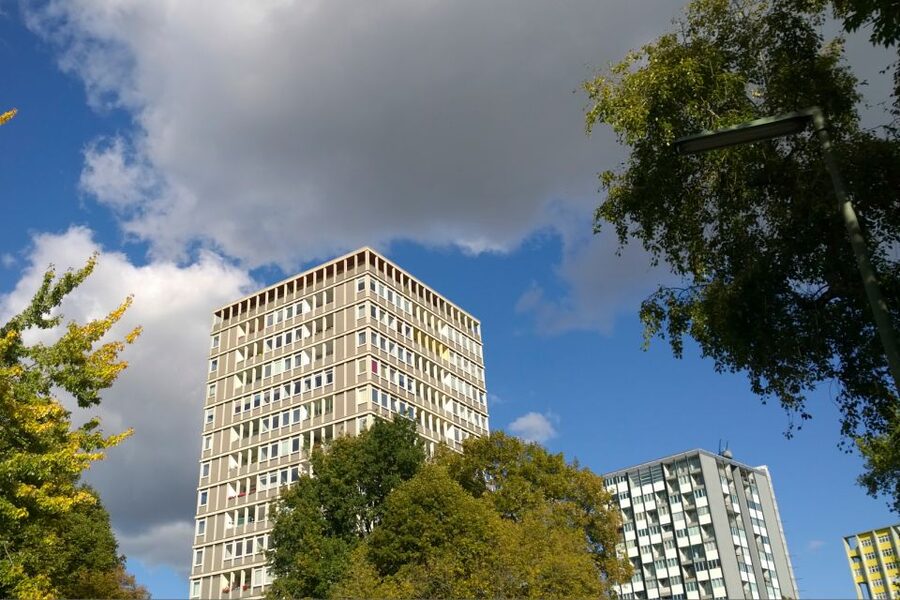
One of the best parts of the tour is that it does not stay stuck in landmark facades. You also pass Hansaplatz station, which matters because the district was meant to work as a real place, not just a set. The station helps you understand the practical side of the planning approach, how people would actually move through the area.
From there you see the Hansaviertel Library and the Hansaviertel Hospital. These stops are a big deal for anyone who thinks about architecture as a public service. A library and a hospital are not decoration, they are daily infrastructure, and including them on a “city of tomorrow” walk makes the theme more believable.
I like that this section shifts your brain from style to function. You start asking more interesting questions, like what the planners expected community life to look like, and how public institutions could reinforce the district’s goals.
Even if you do not plan to enter these places, the passing stops help you connect the designed district to the routine of modern Berlin. It is the difference between seeing buildings and understanding a neighborhood.
Van den Broek House, Schwippert House, and the Academy of Art
As you continue, you move through more architecture designed as part of the Hansaviertel experiment. The Van den Broek House and the Schwippert House help you spot how architects approached the same general challenge with different solutions. If you like looking at repetition versus variation, this is a satisfying part of the walk.
Then the Academy of Art ties the tour back to creative education. It is a reminder that the “tomorrow” concept was not just about housing and roads. It was also about culture, skill, and the idea that the city should support people who make art and shape ideas.
This section is a good payoff after the earlier stops, because you start seeing patterns. You realize the district was built to make daily life, creative work, and modern design live side by side. It is a subtle but powerful theme in just a short walk.
If you are photographing, pace yourself here. The buildings are close enough for good shots, but you will be stopping for explanations. That is a tradeoff, but it is one that makes the architecture stick in your memory.
What Makes the Guide Matter (Tobias, Mr Schwabe, and Real Answers)
A guided tour lives or dies by the person holding the thread. This one is praised again and again for guides who keep the tone friendly and the answers practical. Names like Tobias and Mr Schwabe show up in the positive feedback, and the common theme is clear communication plus a sense of humor that makes the facts easier to handle.
I like when a guide does two things well. First, they help you understand the purpose behind the design, tied to that 1957 exhibition planning push. Second, they are patient with questions, which is important because architecture questions can get specific fast.
Even if you only catch part of the explanation at each stop, you still leave with a better way to look at Berlin. You will start noticing how the city’s layers respond to political change, rebuilding, and new ideas about what public space should feel like.
Price and Timing: Is This Good Value?
At $23 per person for 2 hours, the price feels reasonable if you want more than a casual walk. You are not only seeing a few famous buildings. You are getting a guided explanation of how an entire district was shaped by modern urban planning ideas connected to the 1957 exhibition.
For Berlin, that is strong value because so many architecture-focused activities cost more once you add entry tickets and separate guides. Here, you get a curated route through multiple named buildings and institutions in one guided chunk of time.
Timing is the only potential wrinkle. In winter, people have suggested the tour could start and finish earlier, so you get more usable daylight. If you are visiting in colder months, dress for wind and plan for it to feel longer outdoors than the clock says.
If you want a low-stress plan, this tour works well as a morning or early afternoon activity. It is also a good add-on if you already covered other modern Berlin neighborhoods and want something quieter but still packed with meaning.
Who This Walk Suits Best
You will probably love this tour if you like any of these:
- Architecture and planning, especially mid-century modern ideas
- Berlin history that is not only about monuments, but also about how people planned to live
- A guided walk that helps you connect buildings to the reasons they exist
It may be less ideal if you want a museum-style experience with lots of indoor stops and long sitting time. This is a walking route focused on what you can see and read as you move through Hansaviertel.
Because it is wheelchair accessible, it can work for visitors with mobility needs, as long as you are comfortable with the walking portion. If you have specific access concerns, it is worth coordinating with the operator before you go.
If you like to travel with flexibility, the option to reserve first and pay later can make scheduling easier when you are still fine-tuning your Berlin days.
Should You Book the Hansaviertel City-of-Tomorrow Tour?
Book it if you want a guided way to understand why this district looks the way it does. For the price and time, you get a focused route through Berlin Pavilion, major houses like Müller-Rehm/Siegmann, and landmark architecture such as Gropius-Haus and the Kaiser-Friedrich Memorial Church, plus the everyday context of Hansaplatz station, the library, and the hospital.
Skip it if you are only in Berlin for a tight hits list of headline sites and you do not care about architectural context. This tour rewards attention, not speed.
If you do book, wear comfortable shoes and bring a jacket. And if you have questions, ask them. This tour seems to be the kind where the guide sticks with your curiosity, not just their script.
FAQ
Where is the meeting point?
The meeting point may vary depending on the option booked.
How long is the Hansaviertel City of Tomorrow guided tour?
The tour lasts 2 hours.
What’s the price per person?
The price is $23 per person.
What languages are available?
The live tour guide is available in English and German.
Is the tour wheelchair accessible?
Yes, the tour is wheelchair accessible.
Is this a walking tour?
Yes, it is a walking tour.
Can I cancel for a refund?
Yes. You can cancel up to 24 hours in advance for a full refund.
Is there an option to pay later?
Yes. You can reserve now and pay later.
Can tours start from specific points at set times?
It is possible to organize tours beginning from specific points at certain times.
Recently added around Berlin
- Berlin Private Custom Walking Tour With A Guide (Private Tour)★ 4.5 · 8 reviews
- One Up to 3 Rickshaws(6 GUESTS)-Taylor Made Rickshaw Berlin Tour★ 5.0 · 20 reviews
- Private taxi tour to Potsdam and Sanssouci 6-8h★ 5.0 · 30 reviews
- Moonshine Comedy – English Stand Up Comedy by the bay★ 5.0 · 11 reviews
- Private Half-Day Berlin Sightseeing Tour with a Minivan Including Short City Walks★ 5.0 · 31 reviews
- Private City Kickstart Tour: Berlin★ 4.5 · 71 reviews
- Private tour of Berlin★ 5.0 · 15 reviews
- Private Tutankhamun’s Tomb Live Escape Room in Berlin★ 3.5 · 11 reviews
City Tours, compared.
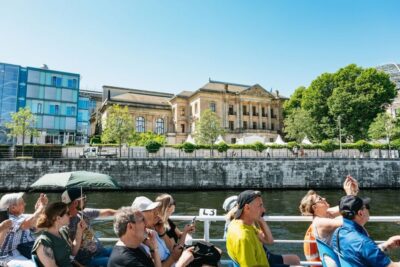
1-Hour City Tour by Boat with Guaranteed Seating
Read our review →
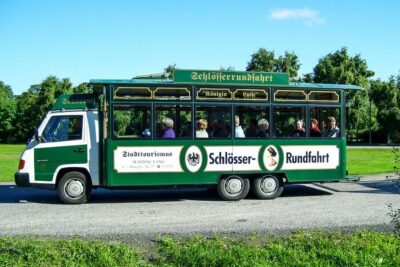
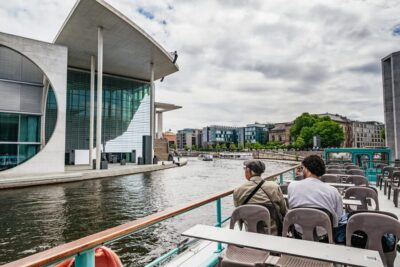
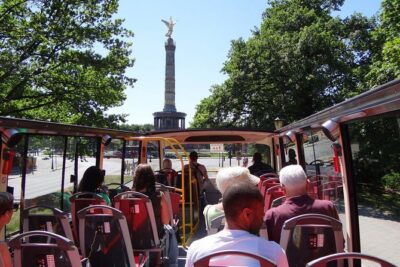
Berlin City Hop-on Hop-off Tour with Optional Cruise
Read our review →

Browse the lists this tour appears in