Reviewed · TOURS
All-in-One Berlin Shore Excursion from Warnemunde
What makes this Berlin shore excursion interesting is the format. You trade a stressful DIY day for an organized coach ride, a real local guide in English, and a route built around the big Cold War and WWII landmarks. Pickup is from your cruise ship port in Warnemünde or Rostock, then you settle in on an air-conditioned bus for about three hours into Berlin.
I especially like two things. First, you get a guided “big picture” day that hits the major sights, from Charlottenburg Palace area to Checkpoint Charlie, without needing to plan every turn. Second, it is built for cruise timing, with rest stops and a guaranteed return so you are not gambling with traffic.
The main drawback to consider is that it is a long day. From dock pickup to return, you are out about 10 to 11 hours, and you will do some walking at memorial sites where time can feel tight.
Key points at a glance
- Port pickup from Warnemünde or Rostock with a modern, air-conditioned bus
- About 5 hours with your guide in Berlin, even though the full day runs longer
- Big-hits route: Reichstag area, Brandenburg Gate, Holocaust memorial, Checkpoint Charlie, Topography of Terror
- Memorial-focused stops with time for reflection, not just photos
- Small group size up to 35 people, which makes it easier to move through crowds
- No Wi-Fi or charging on the bus, so bring a power bank if you rely on your phone
How the Warnemünde or Rostock pickup shapes your whole day
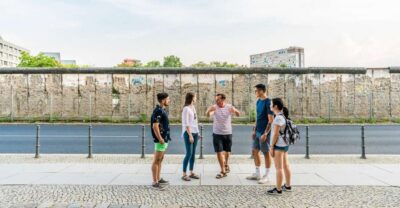
This is a classic “get on, get guided, get back” shore excursion. As soon as your cruise docks, you meet the team outside your ship and head straight onto a comfortable shared coach. From there, the bus ride becomes part of the tour, not dead time.
Expect around three hours each way (so plan your patience). You are traveling through the flatlands of former East Germany, and the guide typically frames what you will see later: why Berlin was split, how borders functioned on the ground, and how the city reassembled itself after 1989. That context matters. Without it, Berlin can feel like a list of monuments. With it, the sites connect.
You also get practical support. The tour includes restroom stops during transfers, and there is time for a snack or souvenir browsing on the way. Plus, the operation is built around the ship schedule, including a guaranteed return if your ship cannot dock.
More shore excursions to Berlin:
- Explore Berlin Shore Excursion: Top Attractions Private Tour from Warnemuende
★ 5.0 · 41 reviews - Group Driving Tour 1 to 6 people. Berlin Shore Excursion incl pick-up at Port
★ 5.0 · 8 reviews - Berlin and Hamburg: Shore Excursion Tour Package
★ 5.0 · 3 reviews
Entering Berlin via Charlottenburg: palaces, boulevards, and WWII scars
Your first proper Berlin stop is the Charlottenburg Palace area. You start with a short introduction and time to stretch your legs. Even without entrance included for the palace itself, this works as a grounding point. It helps you understand Berlin’s westward “imperial and elegant” identity before you head toward the Cold War story.
Next comes a stretch of big-city Berlin that feels very different from the memorial-heavy centers. You drive along Kurfürstendamm, often described as Berlin’s answer to the Champs-Élysées. It is a good reminder that Berlin is not only history. It is also shops, architecture, and everyday life.
Then you pass a preserved ruin of a late 19th-century church, a stark reminder of destruction from WWII bombing raids. This is one of those “you can see it and feel it” moments. Even if you move past quickly, it sets a tone for what is coming next: the city carrying damage forward, instead of wiping it clean.
You also go by the Kaufhaus des Westens, known as the largest department store in continental Europe. It is a quick stop in motion, but it is useful. Berlin’s West was rebuilding in real time, and commercial landmarks like this show what “recovery” looked like on the street.
Tiergarten walkways and the statue views you do not want to miss
As the bus travels through Berlin’s central park area, you pass embassies and major institutions along Tiergartenstraße. You will catch the Berlin Philharmonic area, and you also see the Memorial for Victims of the National Socialist Euthanasia Program. That memorial is easy to overlook if you only care about the famous names, but it adds important context for how Nazi persecution expanded beyond battlefields.
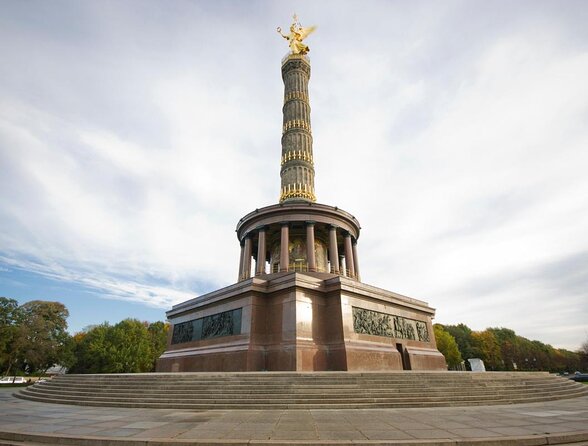
The route also includes the Victoria statue, often called the golden angel. When you circle it, you get a good photo opportunity, plus a simple history lesson in how Prussia framed its power during the Wars of Unification. It is a reminder that German history is not only about catastrophe. It includes the stories governments tell themselves, and the monuments built to promote those stories.
If you want one practical tip here, it is this: keep your camera ready during transitions like this. The tour moves at a pace that works for a full-day overview, and photo windows can be brief.
Reichstag on foot: democracy after destruction
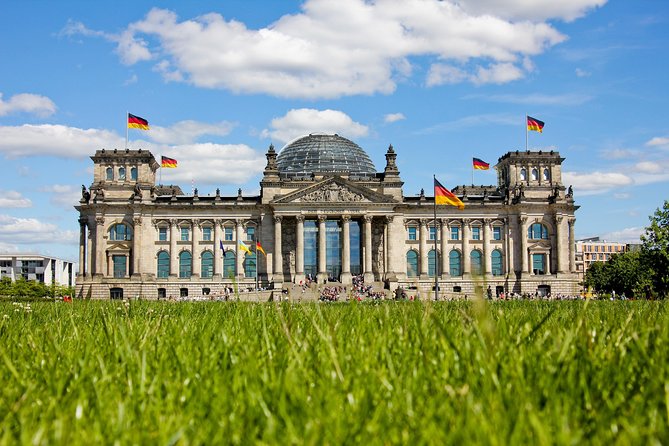
The Reichstag Building is next. Your bus drops you near the modern parliament area, where you see a symbol of Germany’s shift from dictatorship to democracy. The building was burned after Hitler rose to power, and that history is part of the guide’s explanation.
Then you get a short on-foot segment. This is a real change of pace. It is not just driving past. You stand in the area and absorb the “then and now” contrast, with modern Germany in one direction and the weight of the past in another.
Time here is limited, and that is worth noting. The tour is designed to fit many major stops in a single day, so the value is the overview, not lingering for hours.
Still in Berlin, but a different kind of day:
- Berlin: Reichstag, Dome and Government District Guided Tour
★ 4.7 · 18,288 reviews - Berlin: 1-Hour City Tour by Boat with Guaranteed Seating
★ 4.3 · 16,993 reviews - Berlin: Boat Tour Along the River Spree
★ 4.4 · 11,252 reviews - Discover Berlin Half-Day Walking Tour
★ 5.0 · 9,624 reviews
Memorials from Sinti and Roma to the Holocaust Memorial: take the quiet seriously
From the Reichstag area, the walking route continues toward the Brandenburg Gate through the Tiergarten. Along the way, you stop at the Memorial to the Sinti and Roma Victims of National Socialism. It is a short stop, but it gives you a chance to pay respects where you can actually slow down.
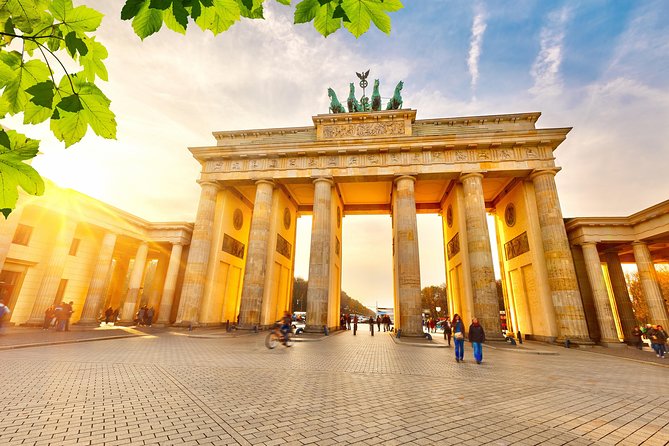
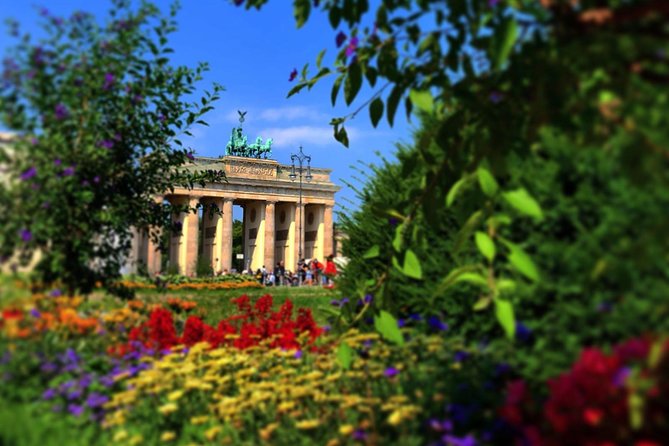
Then comes Brandenburg Gate. This is one of Berlin’s most recognizable landmarks for a reason. The guide explains it as a cultural monument with deep layers of unity and division. Even if you have seen photos before, seeing it in person helps you understand why it became a recurring symbol in German political life.
After that, you reach the Holocaust Memorial, the Memorial to the Murdered Jews of Europe. This is one of the hardest parts of the day, and it is also one of the most important. The concrete block field creates a kind of forced quiet. You get time to walk through at your own pace and reflect. It is free time in the sense that you do not need a ticket, but it is not time to rush.
Practical note: wear shoes you can walk in comfortably, because you will likely spend more time than you think moving through the memorial sections.
Fuhrerbunker and lunch reality: a hard history pause
Another stop is the Fuhrerbunker site, connected to where Hitler committed suicide at the end of WWII. This part of the tour keeps tightening the focus on the Nazi endgame, and it can feel heavy.
Then the tour gives you a lunch break of about 45 minutes. The guide accompanies you to a spot with quick food options and convenient access to restrooms. The good news is that the stop is planned. The tricky part is that 45 minutes is not long.
So plan lunch smart. If you want the most time for sightseeing later, grab food quickly and eat while it is hot. If you sit down for a long meal, you may feel rushed when you rejoin the group.
Museum Island, Bebelplatz book burning, and Gendarmenmarkt photos
After lunch, the tour shifts back into “city highlight” territory.
You pass Nikolaiviertel, described as Berlin’s oldest district, with charming medieval architecture and cobbled streets. It is mostly a pass-through, but it gives you contrast: the old city texture inside a modern capital.
You then see Berliner Fernsehturm, the TV tower built in 1969 to showcase East German modernity. Even if you do not go up, the sight anchors the East Berlin story.
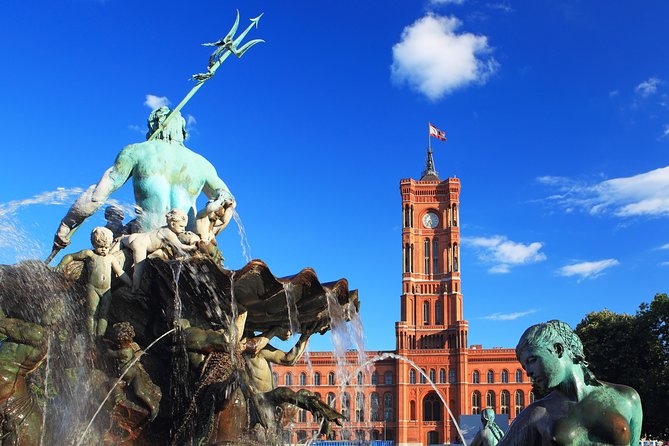
From there, you pass the Old and New Town Halls and the Church of St. Mary. This is a helpful “pre-WWII Berlin” moment. It reminds you that Berlin’s story did not begin with the wall. It has long roots in architecture and civic life.
Next is Museum Island, a UNESCO World Heritage area. You stop briefly to admire the imperial splendor from the outside and see multiple key landmarks grouped together. It is efficient, but you also get the point: this area concentrates centuries of cultural ambition.
Bebelplatz is another meaningful stop, tied to the Nazi book burnings on May 10, 1933. It is a strong reminder that censorship was policy, not an accident. Time here is short, but it is one of those stops that leaves a mental bookmark.
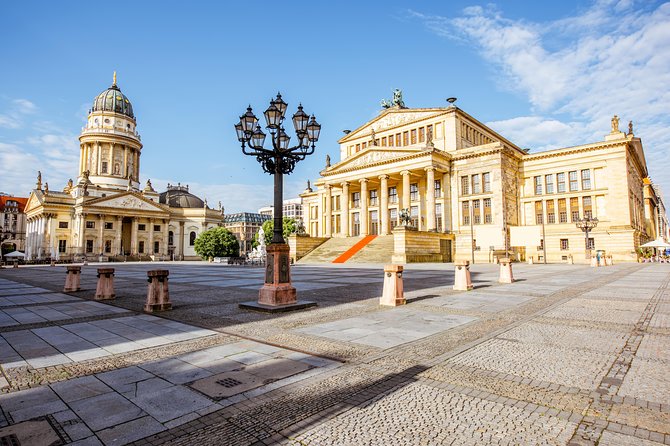
Then you finish with Gendarmenmarkt, one of Berlin’s most photogenic squares. You see the French and German Domes and the Concert House. This portion feels lighter, mostly because the square is visually stunning and easy to enjoy.
Checkpoint Charlie and Topography of Terror: Cold War in plain sight
Checkpoint Charlie is next, and this is where many people’s Berlin memory usually starts. You get a chance to cross between East and West at the famous border crossing point over the Berlin Wall. It is tied to Cold War spy drama and the very real standoff atmosphere of 1961.
Time is limited here too. You get a break to snap photos and buy souvenirs if you want them. If you care most about Checkpoint Charlie, arrive mentally ready to do your walking and photos quickly.
Then the final major stop is Topography of Terror. This is at the former headquarters of the SS and Gestapo, and it also brings you face-to-face with Cold War brutality tied to the Berlin Wall. You get time for a bathroom break before you board the bus for the last ride back to the port.
In practice, the guides do a good job of keeping the flow moving while protecting the serious parts of the day. The tradeoff is that you may wish you had more time at one or two sites. That is the nature of a port-day, long-drive route.
The bus, the group, and the practical stuff that can make or break it
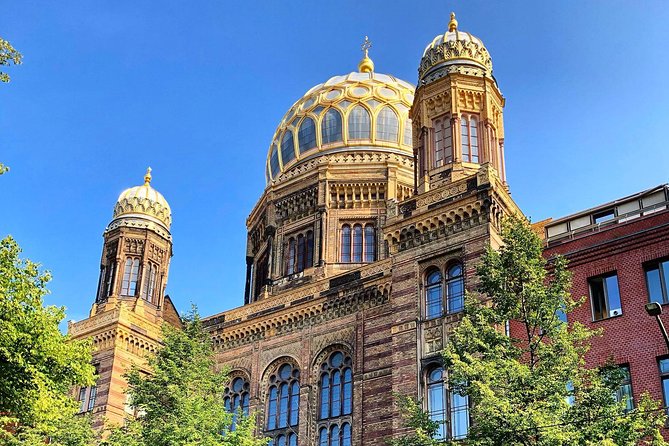
This tour runs with a maximum of 35 travelers. That matters. In a city this crowded, smaller groups mean less chaos at crossings and stops.
You are also on an air-conditioned shared bus, and you can store your possessions on board when you step out. There are restrooms during transfers, and the guide typically keeps the timing tight.
One practical snag to plan for: the bus does not include Wi-Fi or charging ports. So if you rely on your phone for photos, translation, or navigation, bring a fully charged device and consider a power bank. I like having that backup for long days like this.
Also bring small cash for bathroom stops. Even when the tour provides breaks, some facilities can require payment. Keep a bit of euro handy and you will not stress about it in the moment.
And pack for walking and weather. The itinerary includes some walking, including memorial areas. Bring comfortable shoes, and if the forecast looks rainy, an umbrella is a smart move.
Value for money: why this price can beat cruise ship rates
At about $83.48 per person, you are paying for a full-day structure: port pickup and return, a professional local guide in English, and the long transportation between Warnemünde or Rostock and central Berlin. The math gets easier when you compare it to cruise line excursions that often cost more for less time on the ground.
The real value is not just the price tag. It is the way the day is managed. You get guided context on the drive, a planned lunch window, restroom breaks, and a guaranteed return tied to the ship schedule. For a first-time Berlin day from a cruise port, that is a huge stress reducer.
If your priority is a slow, deep museum day with zero time pressure, you might feel constrained by the packed schedule. But if you want the big landmarks and the story behind them, this is a strong use of your limited port time.
Who this tour fits best, and who should pick something else
This is a great fit if you:
- Want a guided Berlin overview with major WWII and Cold War stops
- Prefer a cruise-day timetable that protects your return
- Enjoy learning through walking segments and outdoor memorial settings
- Like having English commentary that connects what you see to the bigger story
It is less ideal if you:
- Need lots of solo free time at one site, like lingering at the wall or inside museum spaces
- Hate long drives or packed schedules
- Count on charging your phone during bus rides (this one does not offer that)
If you are traveling as a family with older teens, or with friends who want a structured day, it usually lands well.
Should you book this Berlin shore excursion from Warnemünde?
Yes, I think you should book it if your goal is a smart, guided hit list of Berlin’s must-see history in one day. The combination of English-speaking local guidance, a route that actually covers key landmarks, and a return that protects your cruise timing makes it feel like good insurance against a chaotic port day.
Before you book, be honest about two things. First, commit to the fact that it is a long day with some walking. Second, decide whether you want a balanced overview, because the schedule is built to fit a lot, not to maximize time at just one or two sites.
If you want Berlin in a single port stop, with the heavy parts handled respectfully and the logistics handled for you, this is an excellent choice.
FAQ
How long is the Berlin shore excursion?
The total duration is about 10 to 11 hours, with flexible timing to match docking and ship schedules.
Where do you get picked up?
You are picked up at the cruise ship port you select when booking, either Warnemünde or Rostock.
Is the tour guided in English?
Yes, the tour includes a professional local English-speaking tour guide.
How much walking is included?
The tour includes some walking, including around several major landmarks and memorial sites. Comfortable shoes are recommended.
Are there entrance fees for the sights on the tour?
Attractions entrance fees are not required during the tour.
What kind of transportation is used?
You ride in a modern, air-conditioned shared bus. Restroom stops are included during transfers.
How big is the group?
The tour has a maximum of 35 travelers.
What if my ship cannot dock?
The tour includes a full refund if your ship cannot dock.
Is Wi-Fi or phone charging available on the bus?
No, the buses do not include Wi-Fi or charging ports, so bring a fully charged phone or a power bank.
Recently added around Berlin
- Berlin Private Custom Walking Tour With A Guide (Private Tour)★ 4.5 · 8 reviews
- One Up to 3 Rickshaws(6 GUESTS)-Taylor Made Rickshaw Berlin Tour★ 5.0 · 20 reviews
- Moonshine Comedy – English Stand Up Comedy by the bay★ 5.0 · 11 reviews
- Private Half-Day Berlin Sightseeing Tour with a Minivan Including Short City Walks★ 5.0 · 31 reviews
- Private taxi tour to Potsdam and Sanssouci 6-8h★ 5.0 · 30 reviews
- Private City Kickstart Tour: Berlin★ 4.5 · 71 reviews
- Private tour of Berlin★ 5.0 · 15 reviews
- Private Tutankhamun’s Tomb Live Escape Room in Berlin★ 3.5 · 11 reviews
Tours, compared.
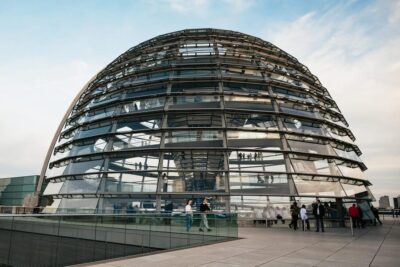
Reichstag, Dome and Government District Guided Tour
Read our review →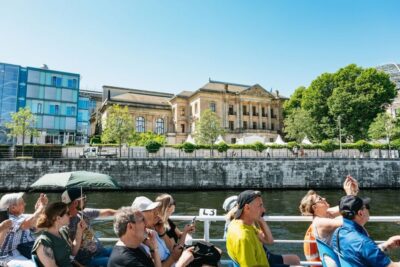
1-Hour City Tour by Boat with Guaranteed Seating
Read our review →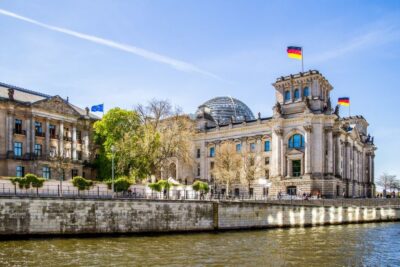
Government District around the Reichstag Guided Tour
Read our review →
Reichstag, Plenary Chamber, Cupola & Government Tour
Read our review →