Reviewed · TOURS
Berlin and Car Culture Tour
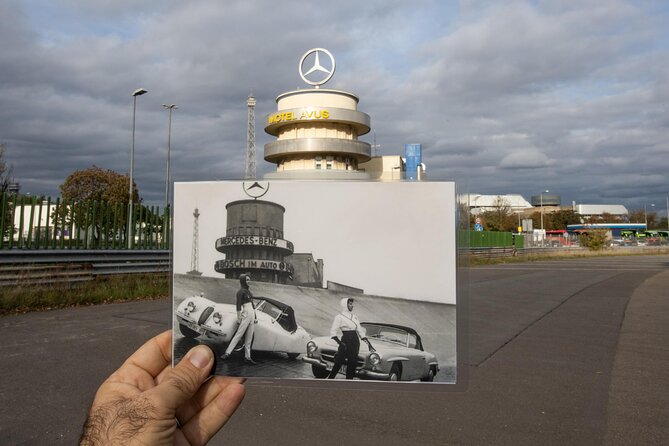
This Berlin and Car Culture Tour is interesting because it treats Berlin like a giant showroom, but with a brain. You’ll start in the industrial and patent-era world near Potsdamer Platz, then move forward to the electric-car questions shaping today.
I like two things a lot. First, the pacing and focus keep the story moving, with a small group size of up to 30. Second, you get real contact with the future part, including time around electric cars at Leipziger Platz, plus discussion that does not shy away from the politics of the switch.
One drawback to plan for: it is a point-to-point walk, from Potsdamer Platz to the Beusselbrücke area in Moabit, so you should wear good shoes and expect to handle local transport back to your hotel.
Key highlights worth planning around
- Patent-era car history at Potsdamer Platz, including the story tied to Karl Benz and an iconic traffic signal nearby
- Germany’s oldest traffic light is right in the first stop zone, so you are learning while you look at details
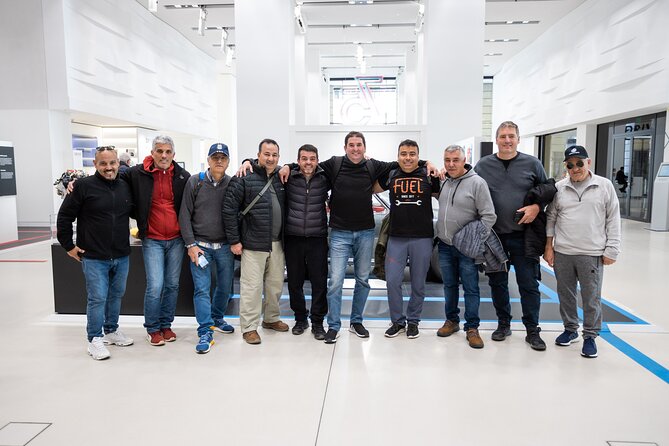
- Electric cars up close at Leipziger Platz, with time to get into the vehicles
- Tesla link to the Berlin area comes up during the electric-car discussion
- Moabit is the long stop, with more time focused on notable motor engineering and cars living in Berlin
- Small group format helps the guide answer questions while you move
A Berlin car culture tour that walks through time, not just streets
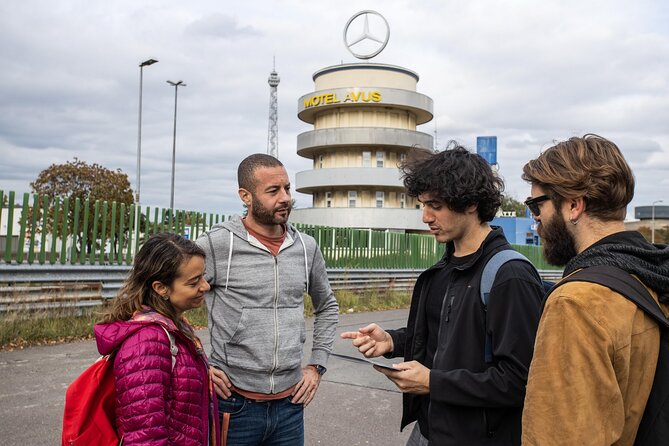
If you think Berlin’s car story is just about speed and horsepower, this tour nudges you to think bigger. It starts with the origins of the automobile and the surprise it caused, then fast-forwards to debates about what powers the next era.
I enjoy that the tour feels like a guided timeline you can actually see. You are not stuck in one museum room. You’re outside, you look, you talk, and the guide ties the dots between invention, cities, and technology.
The other thing I appreciate is that it is not trying to be one-note. Electric cars show up, but so does the question of whether the change is driven by engineering, policy, or both. If you care about how technology lands in real life, you will get more out of this than you would from a basic sightseeing loop.
Other Berlin tours readers compare with this one:
- Berlin: Reichstag, Dome and Government District Guided Tour
★ 4.7 · 18,288 reviews - Berlin: 1-Hour City Tour by Boat with Guaranteed Seating
★ 4.3 · 16,993 reviews - Berlin: Boat Tour Along the River Spree
★ 4.4 · 11,252 reviews
Price and what you truly get for about $50.57
At $50.57 per person for about three hours, this is priced like an experience with more than a simple photo walk. The big value lever here is that the tour includes entrance tickets to all places you visit. Even though the stops are described as admission free for the listed items, the inclusion matters because you do not have to hunt down add-on fees at each moment.
Two practical price notes to keep you from surprises. Daily transit is not included, and you will need an AB zone transport ticket for Berlin public transit. Also, the tour is booked fairly regularly, with an average booking window of around 12 days ahead, so reserving early helps lock in the time you want.
For your money, you get three things that are hard to replicate on your own: a tight route (Potsdamer Platz to Moabit), an English-speaking guide who connects the history and the tech, and a structure that gives time at each stop instead of rushing through everything.
How the 3 stops connect: Potsdamer Platz to Leipziger Platz to Moabit
The tour is designed as a clean, readable progression. Start at Potsdamer Platz, where the story links to invention and early road tech. Move to Leipziger Platz for the electric future and hands-on moments. Finish in Moabit, where you spend the longest stretch and where the tone shifts from origin myths to real, ongoing car culture in the city.
Stops 1 and 2 are shorter, around 30 minutes each. Stop 3 is the deep stretch, about 1 hour 30 minutes. That imbalance is not random. It gives you a chance to settle into the story and absorb more as Berlin shifts from invention history into what actually exists today.
One more practical detail you should know: the tour ends near Beusselbrücke rather than back at your starting point. That makes the tour feel efficient, but it also means you should plan an easy way to get back to your hotel after the last stop.
Stop 1 at Potsdamer Platz: Karl Benz, Berlin’s traffic signals, and the first-car shock
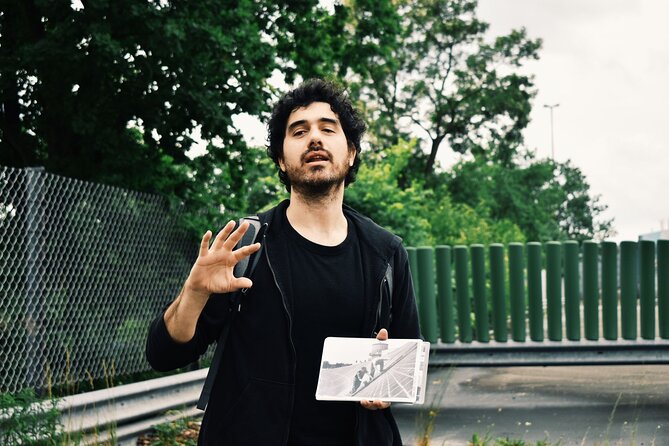
Potsdamer Platz is a strong place to begin, because it is the kind of area where you can feel modern Berlin while still tying into older industrial roots. This first stop is built around the idea that Berlin played a role in the early automobile story, including the patent linked to the first automobile in history.
You also get a concrete visual anchor nearby: the oldest traffic light in Germany. That matters because it turns “traffic history” from a vague idea into something you can look at and talk about. You’re not only hearing about invention, you’re noticing how cities adapted when cars arrived.
The guide frames Karl Benz’s invention and the furor it caused, which is a smart choice. It helps you understand that technology changes society, not just roads. When people argued about cars back then, those debates echo into today, just with different buzzwords.
Time at this stop is about 30 minutes. You’ll get enough to learn the story without it turning into a lecture you have to escape. If you are the type who likes small details, keep your eyes up and around, not only straight ahead.
Still in Berlin, but a different kind of day:
- Discover Berlin Half-Day Walking Tour
★ 5.0 · 9,624 reviews - Berlin: Hop-on Hop-off Bus Tour with Live Commentary
★ 4.3 · 8,579 reviews - Berlin: Government District around the Reichstag Guided Tour
★ 4.7 · 8,447 reviews - Berlin: Reichstag, Plenary Chamber, Cupola & Government Tour
★ 4.6 · 8,422 reviews
Stop 2 at Leipziger Platz: getting into electric cars and arguing about the future
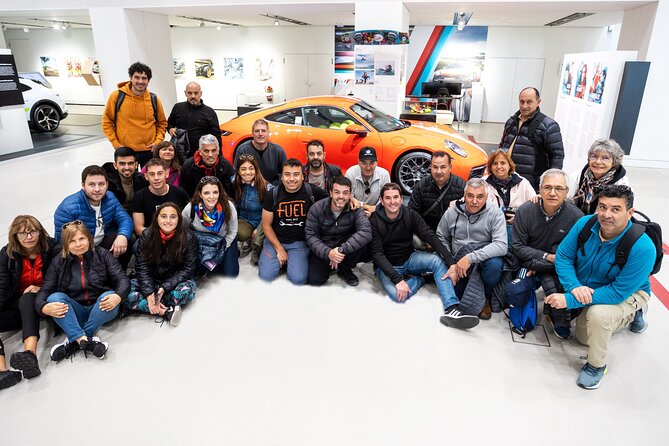
Leipziger Platz brings the tour into the present tense. This stop focuses on advanced electric cars of today, and you’ll spend around 30 minutes around the vehicles.
The most practical part here is hands-on access. The format includes getting in the cars, so you can judge things like seating position, visibility, and how different electric designs feel in real life. It is one thing to read specs, and another to sit in the cabin and notice what the designers chose to prioritize.
The guide also points to a Tesla that is manufactured near Berlin, which gives the discussion a local anchor. Then you get the big discussion questions: Are electric cars truly the future, or are they supported because of politics as much as progress? When will combustion engines finish, if they do at all?
That debate format is a good match for Berlin. The city is comfortable with argument, and car tech is one of the places where politics and engineering visibly collide. If you want a tour that respects both sides instead of preaching, this stop is likely to work for you.
Stop 3 in Moabit: your longest stretch for motor “timeless jewels” in the city
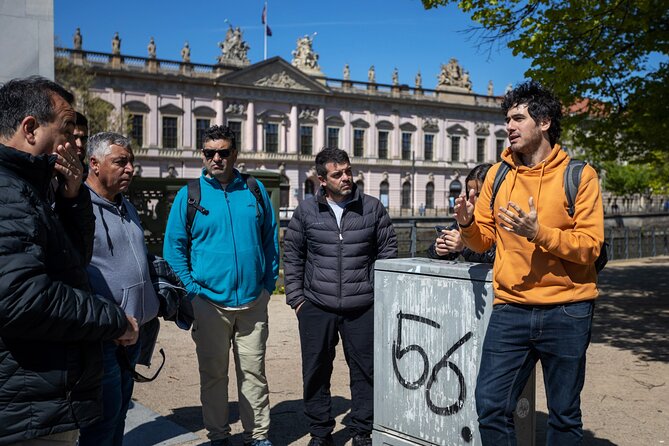
Moabit is where you slow down a bit and let the story settle. This is the longest stop, around 1 hour 30 minutes, and it is described as enjoying the best motor timeless jewels that live in Berlin.
Because the specific cars and exact viewing format are not detailed in the provided info, I’d approach this stop as a more open-ended “car culture” segment. Expect less of the patent-to-present timeline and more of the idea that Berlin has a living relationship with cars, not just a static history.
This part is valuable even if you are not a car collector. Longer time means you can listen longer, ask more questions, and connect the earlier invention themes to what you see in the real world now. Think of it like the tour’s payoff act. You started with origins, visited the future, and now you get to see how the thread continues in the city.
The Moabit endpoint near Beusselbrücke also helps the feel of closure. You finish in an area where you can keep exploring Berlin easily, either by heading toward sights you planned or by returning to transit lines.
The guide factor: why Martin Sacan’s storytelling style matters
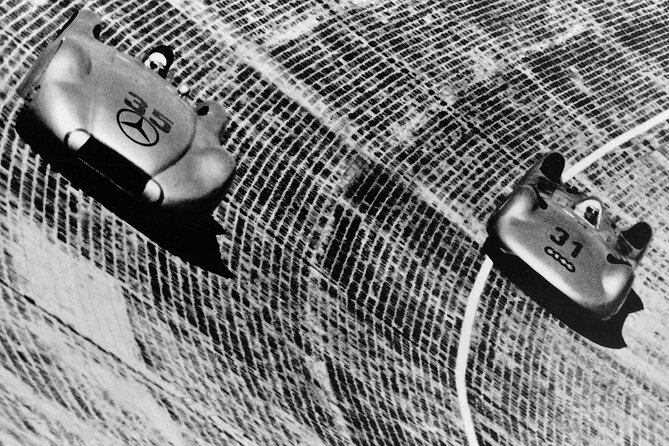
One name you may hear connected with this kind of route is Martin Sacan. In at least one case, he was praised for expertise and passion, and for storytelling that brought Berlin’s past to life in a way that felt both engaging and informative.
That matters because car history can get dry fast. A guide who can connect invention to city life, and tech to the emotions people had when it arrived, is the difference between hearing facts and actually understanding why those facts mattered.
The feedback around Martin’s tour also emphasized organization and attention, meaning the pacing and flow were handled well. For you, that translates to fewer moments of confusion and more time focused on the stops themselves.
If you enjoy tours where the guide talks like a person who actually cares, not like a script, this is the kind of experience where you’ll feel that energy during the route.
Group size, English, and how long you really need
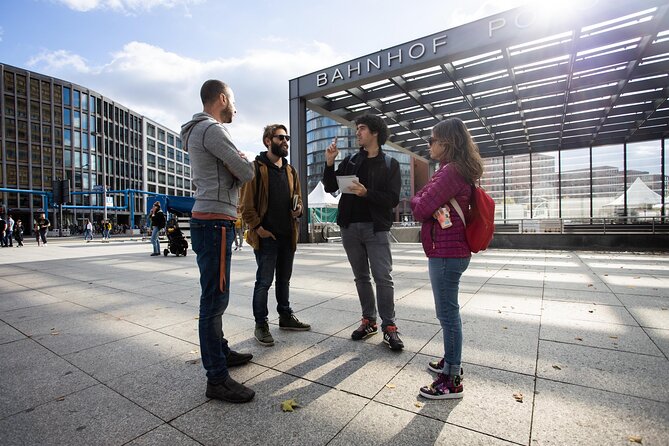
This experience is offered in English and keeps the group capped at a maximum of 30 people. A smaller group is helpful when the tour includes discussion and hands-on moments, like sitting in electric cars. You are not shouting to be heard, and you can get your questions answered while you are still looking at the things being discussed.
The total duration is about 3 hours. With two 30-minute stops and one 1 hour 30 minutes stop, you can assume the remaining time goes into walking between the areas and staying on schedule.
Most people can participate, and service animals are allowed. The tour also runs near public transportation, which is good for planning your approach to Potsdamer Platz and your exit from the Beusselbrücke area.
If you are traveling with limited stamina, plan around the point-to-point nature. It is not a sit-and-stay experience, and the route assumes you can handle a city walk between stops.
Getting to the start and planning your finish without stress
You begin at Potsdamer Platz 10, 10785 Berlin. That is a major area, which usually means transit options are easy. You’ll end at Berlin BeusselstraßeBeusselbrücke, 10551 Berlin, so treat this as a one-way tour that leaves you nearer Moabit.
The not-included transport ticket is important. The tour needs a daily transport ticket AB zone. If you arrive without the right ticket, you may find yourself scrambling right when you want to start.
My practical tip: plan a simple end-of-tour plan before you go. Check where your hotel or next stop sits relative to Beusselbrücke so you are not standing around deciding the moment the tour finishes.
Also, bring a small amount of patience for city logistics. Berlin is easy to navigate, but you still want to be ready for street crossings and typical sidewalk traffic.
Who should book this Berlin and Car Culture Tour
I think this tour is a strong fit if you want more than a standard history walk. You should book it if you are curious about how automobiles changed Berlin, from Karl Benz era ideas to the electric questions people debate today.
It’s also a good choice if you enjoy seeing objects and design features up close. Sitting in the electric cars adds a hands-on angle that most history tours do not provide.
You might skip it if you want a deep museum-style experience with lots of time indoors. The format is short stops, city walking, and discussion, so it is designed for engagement rather than long exhibits.
If you travel with friends who are split between history and modern tech, this tour is built to satisfy both sides. It gives you origin context and then returns to today’s technology in a way that invites real questions.
Practical tips to make the most of your 3 hours
Wear shoes you can handle for a point-to-point walk. Even if each stop is timed, the movement between Potsdamer Platz, Leipziger Platz, and Moabit still adds up.
Bring a curious mindset. The electric-car stop includes debate-style discussion. If you can handle a conversation that touches politics and engineering, you will get more value out of it than if you only want hard facts.
Also, arrive on time. The schedule is tight: about 30 minutes at stop 1, 30 minutes at stop 2, and 1 hour 30 minutes at stop 3. If you start late, you cut into the part that deserves the most attention.
Finally, if you rely on public transit, set up your route ahead of time. The tour requires an AB zone ticket for daily transport, and having it ready means you spend less time troubleshooting and more time enjoying the stops.
Should you book this tour or keep searching?
Book this tour if you want a smart, time-efficient blend of Berlin street history and car technology talk, with a guide style that makes the story feel alive. The inclusion of entrance tickets, the English option, and the small group cap up to 30 are good signs for value.
I’d be cautious if you hate walking between neighborhoods or if you only want deep indoor exhibits. This is a route with city context, not a showroom full-day.
My final advice: if you are in Berlin for a short visit and you care about how tech shapes cities, this is a very reasonable use of three hours. It hits both the origin story and the electric future, and it does it in a way that feels practical, not abstract.
FAQ
How long is the Berlin and Car Culture Tour?
It lasts about 3 hours.
What is the price per person?
The price is $50.57 per person.
Is the tour offered in English?
Yes, the tour is offered in English.
Where does the tour start and end?
It starts at Potsdamer Platz 10, 10785 Berlin and ends at Berlin BeusselstraßeBeusselbrücke, 10551 Berlin.
Do I need an entrance ticket?
Entrance tickets to all the places you visit are included.
Is public transportation included?
No. You need a daily transport ticket AB zone.
How many people are in the group?
The tour has a maximum of 30 travelers.
Will I get confirmation right away?
You receive confirmation at booking time unless you book within 1 hour of travel. In that case, you get confirmation as soon as possible, subject to availability.
Are service animals allowed?
Yes, service animals are allowed.
What is the cancellation policy?
Free cancellation is available. You can cancel up to 24 hours in advance for a full refund, and cancellations made less than 24 hours before the experience start time are not refunded.
Recently added around Berlin
- Berlin Private Custom Walking Tour With A Guide (Private Tour)★ 4.5 · 8 reviews
- One Up to 3 Rickshaws(6 GUESTS)-Taylor Made Rickshaw Berlin Tour★ 5.0 · 20 reviews
- Moonshine Comedy – English Stand Up Comedy by the bay★ 5.0 · 11 reviews
- Private Half-Day Berlin Sightseeing Tour with a Minivan Including Short City Walks★ 5.0 · 31 reviews
- Private taxi tour to Potsdam and Sanssouci 6-8h★ 5.0 · 30 reviews
- Private City Kickstart Tour: Berlin★ 4.5 · 71 reviews
- Private tour of Berlin★ 5.0 · 15 reviews
- Private Tutankhamun’s Tomb Live Escape Room in Berlin★ 3.5 · 11 reviews
Tours, compared.

Reichstag, Dome and Government District Guided Tour
Read our review →
1-Hour City Tour by Boat with Guaranteed Seating
Read our review →
Government District around the Reichstag Guided Tour
Read our review →
Reichstag, Plenary Chamber, Cupola & Government Tour
Read our review →