Reviewed · GUIDED
Berlin: Decolonial Berlin Castle/ Humboldt Forum Guided Tour
Berlin’s Humboldt Forum is interesting even if you know nothing about the debates around it. This guided tour adds an Afrocentric, decolonial perspective and asks you to look at the Berlin Palace story as part of the same colonial system that shaped European museums.
I liked how the tour connects palace history to colonial realities you cannot ignore, including the links to the Humboldt brothers and the role missionaries played in building colonial structures. I also appreciated the way the ethnological collection is treated as something you read and question, not just admire.
One possible drawback: the tour is only 2 hours, so the museum time can feel tight. If you love lots of free-roam time inside galleries, you might want something longer or a second stop on your own.
Key highlights worth planning for
- Afrocentric framing for the Humboldt Forum and the Berlin Palace story
- Critical analysis of the ethnological collection, not passive museum watching
- Colonialism facts tied directly to the castle and its symbolism
- Humboldt brothers context, including why they matter in German history
- Missionaries and the roof cross discussed for their symbolic meaning
- Ethnological collection audio walk to slow you down and train your attention
Why Humboldt Forum, the reconstructed Sanchi Gate, and “decolonial” go together

This tour is designed for people who want more than architecture photos and postcard explanations. You start at the reconstructed Sanchi Gate, and right away you are in the right mindset: this building is not a neutral container for culture. It is part of a larger story about collecting, displaying, and interpreting objects from around the world.
What makes the whole experience click is that it treats the Humboldt Forum like a real question, not a finished answer. You are shown how a 500-year-old palace history and German scientific history tie into colonial structures. Then you walk through the ethnological collection with prompts that push you to think about how museums shape meaning.
A few more Berlin options worth a look
- Berlin: Reichstag, Dome and Government District Guided Tour
★ 4.7 · 18,288 reviews - Berlin: Government District around the Reichstag Guided Tour
★ 4.7 · 8,447 reviews - Berlin: Hidden Backyards Guided Walking Tour
★ 4.8 · 5,360 reviews
Entering Berlin Palace history from a new angle

You are not just visiting a museum. You are getting history with a point of view, which can feel refreshing or uncomfortable depending on your personality. The tour focuses on the Berlin Palace’s long history, but it keeps turning back to the connection between colonialism and what ends up represented in cultural heritage.
The Humboldt brothers are a key part of this story. You get why they are considered important figures in German history as scientists, and you also see how their legacy connects to knowledge systems that grew alongside empire. This tour does not ask you to memorize names and dates. It pushes you to connect the dots between science, collecting, and power.
I also liked the way the tour brings in missionaries. That part matters because missions were not only about religion. They were often part of the broader colonial project, including education, cultural change, and control of narratives. Hearing that context in Berlin, inside a major cultural institution, makes the topic feel immediate.
The 2-hour rhythm: how the timing shapes your experience
The full tour is about 2 hours. Plan to treat that time like a focused session rather than casual sightseeing.
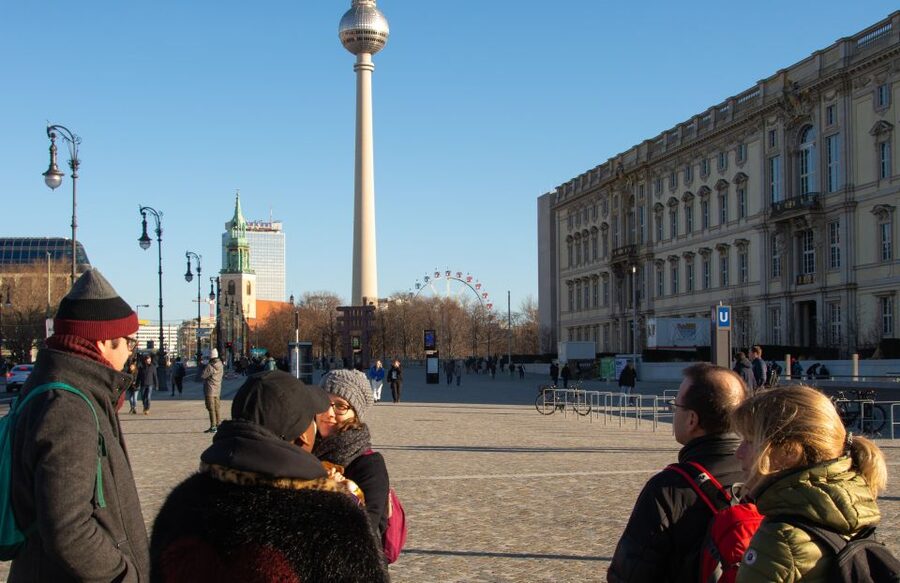
A practical detail: you spend about 1 hour seated outside before going into the museum. That is not “wasted time” if you pay attention. It helps you get oriented and gives the guide time to set the interpretive frame, so your museum visit has direction instead of feeling like wandering.
Then you head into the Humboldt Forum and do the museum portion guided by the tour structure and an audio walk. Because it is time-boxed, you will probably not see every gallery. You are meant to look at selected themes closely, especially the ones tied to colonialism, symbolism, and interpretation.
Starting at the reconstructed Sanchi Gate: get your bearings fast
Meet near the reconstructed Sanchi Gate, with white chairs available if you want to sit. Both listed starting-location options point to the same place, so your main goal is simple: find the gate area and the group.
This start matters because the tour’s theme is partly about symbolism. You are already in a space that is recreating a past form, and the guide uses that to frame how Berlin builds and displays “heritage.” If you arrive late, you can miss the setup that makes the rest of the tour easier to follow.
Bring comfortable shoes and weather-appropriate clothing. Since you are seated outside for roughly an hour, cold or wet weather can change your comfort level quickly.
Still in Berlin, but a different kind of day:
- Berlin: 1-Hour City Tour by Boat with Guaranteed Seating
★ 4.3 · 16,993 reviews - Berlin: Boat Tour Along the River Spree
★ 4.4 · 11,252 reviews - Discover Berlin Half-Day Walking Tour
★ 5.0 · 9,624 reviews - Berlin: Hop-on Hop-off Bus Tour with Live Commentary
★ 4.3 · 8,579 reviews
Inside the museum: missionaries, the roof cross, and symbolic meaning
Once inside, the tour shifts from “why this place exists” to “how meaning gets constructed.” One highlight is the discussion of missionaries during the establishment of colonial structures, and how that history shows up in cultural institutions and their narratives.
Another standout topic is the symbolic meaning of the cross on the roof of the museum. The point is not to debate religion in a vacuum. It is to talk about why a symbol is placed where it is, and what it signals about the cultural claims attached to collecting and interpretation.
You also learn more about the Humboldt brothers as scientists. The guide connects that scientific reputation to the broader colonial context in which many collecting practices happened. For me, this is where the tour shifts from a history lecture into a “look again” experience. You start seeing the museum as an interpreter of the world, not just a storage room for artifacts.
The ethnological collection audio walk: how to look critically without getting lost

The ethnological collection is where the tour earns its name. You browse the collection and analyze it from a critical perspective, supported by an audio walk.
This is a big deal for value. Many tours talk about decolonial ideas abstractly. Here you are actually practicing the method: pausing, noticing display choices, and thinking about how the museum context affects what you think you are seeing.
Because the tour includes entry to the ethnological collection, you get access that would otherwise take extra steps on your own. And because it is guided plus an audio component, you are not stuck reading the labels only. You have prompts pushing you to ask harder questions like:
- Who collected these items, and under what historical conditions?
- What story does the museum setting encourage you to accept?
- What gets explained, and what gets left out?
The practical takeaway for you: come ready to spend time in slower mode. Do not rush past objects. Give yourself permission to feel a bit uneasy if the framing challenges your assumptions. That reaction is often the point.
What the tour teaches about colonialism, culture, and modern-day legacy
The tour’s main promise is a new perspective on colonial history and its cultural heritage and legacy in the modern day. That can sound big, but the structure keeps it grounded.
You get key facts about colonialism and how they relate to the Berlin Castle. You connect the palace, the Humboldt Forum, and the ethnological collection into one story. Instead of treating each part like an isolated attraction, you see them as pieces of a historical narrative that still influences how people experience culture today.
I found it especially useful that the tour frames this as cultural heritage, not only a political argument. That matters because decolonial discussions often get reduced to slogans. Here you learn how symbols, display choices, and institutional histories shape what audiences think is “normal” or “objective.”
Who this tour is best for, and who might want a different format
This is a strong match if you:
- want a museum visit with real context, not just facts and photos
- are curious about Afrocentric and decolonial perspectives and how they change the reading of museum collections
- like tours that connect art and history to power and interpretation
It might not be the best match if you:
- want long unstructured gallery time
- prefer a purely descriptive museum experience with minimal critique
- get frustrated when the historical framing is intentionally challenging
Because the tour is only 2 hours, it suits people who want focus and direction. It is less suited for travelers who want to slowly wander at their own pace for a half-day.
Value for the $41 price: what you actually get in 2 hours
At $41 per person for about 2 hours, you are paying for three things: a live guide, museum entry to the ethnological collection, and a structured way to view the collection through the audio walk.
That is decent value if you would otherwise pay separately for entry and still want guided interpretation. The outside seated hour also counts, because it sets up the themes so you do not enter the museum cold.
Where value can wobble is expectations. If you expect a long museum walkthrough where you see everything in detail, time limits may disappoint. But if you want targeted analysis of colonialism, symbolism, and the Humboldt legacy, the time budget makes sense.
Practical tips so you get the most from your visit
This is a straightforward tour, but a few choices make a real difference.
First, double-check the actual provider name you booked. The tour is offered by deSta- Dekoloniale Stadtführung. A mismatch can send you to the wrong event if you booked through a platform that lists similar titles.
Second, arrive a few minutes early and find the reconstructed Sanchi Gate area. The meeting point is clear, and you have a seated setup, but you do not want to start late.
Third, pack light. No food and drinks are allowed, and luggage or large bags are not permitted. Wear comfortable shoes, because you will be moving through the museum during the ethnological collection portion.
Finally, if you are the type who gets mentally tired by heavy topics, pace yourself. Bring curiosity, not an argument. The tour works best when you treat it as a learning session, not a courtroom.
Should you book this decolonial Humboldt Forum tour?
I would book it if you want a museum experience with clear questions and an Afrocentric decolonial lens. The mix of palace history, Humboldt brothers context, missionary references, symbolism on the roof cross, and the ethnological collection audio walk gives you a full arc in just 2 hours.
I would skip it or pair it with something else if you mainly want a relaxed sightseeing break. Here, the point is critical analysis, and that takes attention.
If you do book: show up on time at the reconstructed Sanchi Gate, keep your expectations realistic about time in the galleries, and come ready to look twice. This tour rewards that mindset.
FAQ
How long is the Humboldt Forum decolonial guided tour?
The tour lasts about 2 hours.
Where do I meet the guide?
Meet your guide near the reconstructed Sanchi Gate, where there are white chairs you can sit on.
What is included in the ticket price?
You get a tour guide, entry to the ethnological collection, and time seated outside for about 1 hour before entering the museum.
Is the tour offered in English and is it wheelchair accessible?
Yes. The live tour guide is English, and the tour is wheelchair accessible.
What should I bring, and what is not allowed?
Bring comfortable shoes and weather-appropriate clothing. Food and drinks are not allowed, and luggage or large bags are not allowed.
Is there an option to cancel or pay later?
There is free cancellation up to 24 hours in advance for a full refund. You can also reserve now and pay later.
Recently added around Berlin
- Berlin Private Custom Walking Tour With A Guide (Private Tour)★ 4.5 · 8 reviews
- One Up to 3 Rickshaws(6 GUESTS)-Taylor Made Rickshaw Berlin Tour★ 5.0 · 20 reviews
- Moonshine Comedy – English Stand Up Comedy by the bay★ 5.0 · 11 reviews
- Private Half-Day Berlin Sightseeing Tour with a Minivan Including Short City Walks★ 5.0 · 31 reviews
- Private taxi tour to Potsdam and Sanssouci 6-8h★ 5.0 · 30 reviews
- Private tour of Berlin★ 5.0 · 15 reviews
- Private City Kickstart Tour: Berlin★ 4.5 · 71 reviews
- Private Tutankhamun’s Tomb Live Escape Room in Berlin★ 3.5 · 11 reviews
Guided, compared.
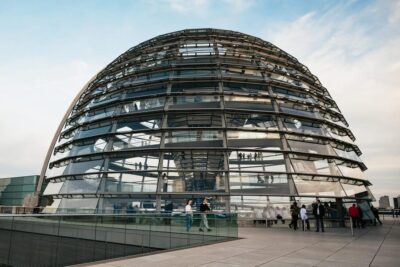
Reichstag, Dome and Government District Guided Tour
Read our review →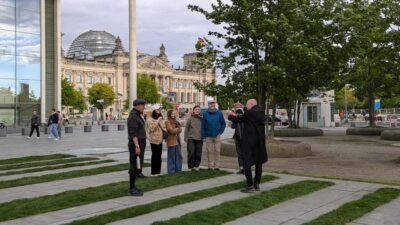
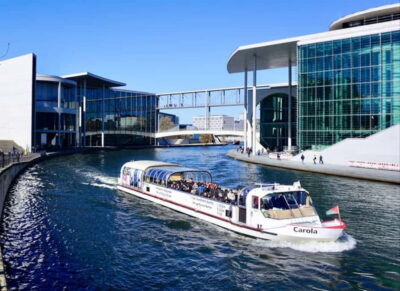
Government District around the Reichstag Guided Tour
Read our review →
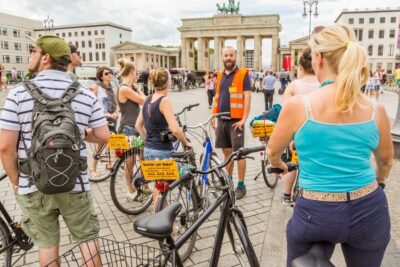
Sights and Highlights Bike Tour with a Local Guide
Read our review →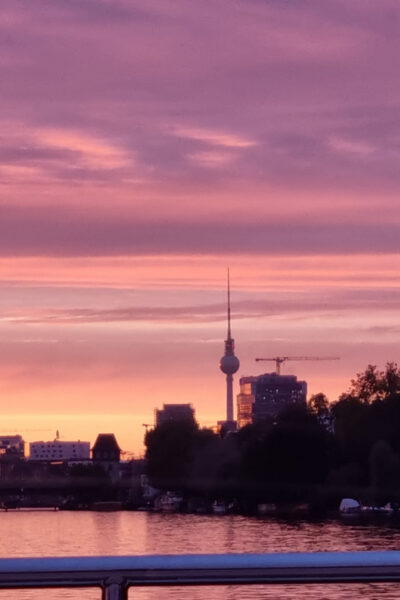
Solar Powered Sunset Catamaran Cruise & Audio Guide
Read our review →