Reviewed · TOURS
Berlin: Modernist Architecture Tour in the Hansaviertel
The Hansaviertel is one of Berlin’s cleverest postwar experiments, and it feels like a time machine you can walk through. You start at the edge of the Tiergarten and end in the middle of a neighborhood that was rebuilt to prove a point. If you get a guide like Morgan, the whole thing comes alive with stories you can actually remember.
I love the mix of big-name architecture and real street-level context. You do not just stare at buildings, you learn what they were trying to promise, and what daily life might have looked like around them. I also like that you begin with the 19th-century character, so the later Cold War designs land with real contrast.
One thing to consider: this is a 2-hour walking tour with historical material that gets serious at key moments. If you want only light sightseeing, this may feel heavier than you planned.
Key things to look for on this Hansaviertel architecture walk
- A Cold War neighborhood design story told in the streets, not from a textbook
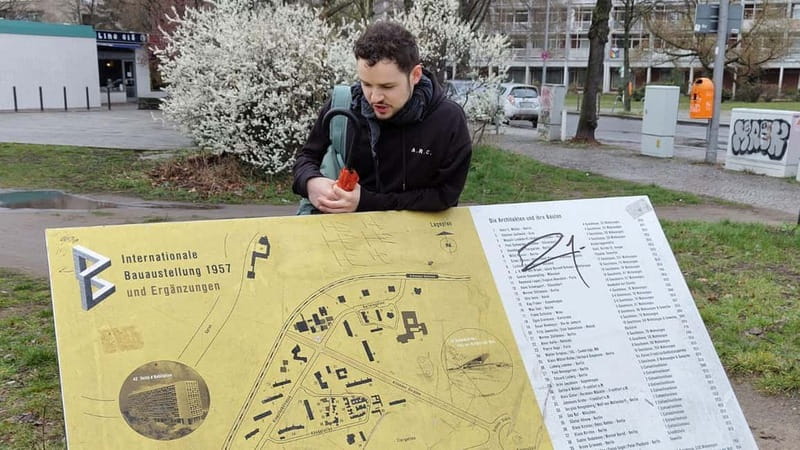
- Interbau 1957 context, plus how WWII rubble became a showcase
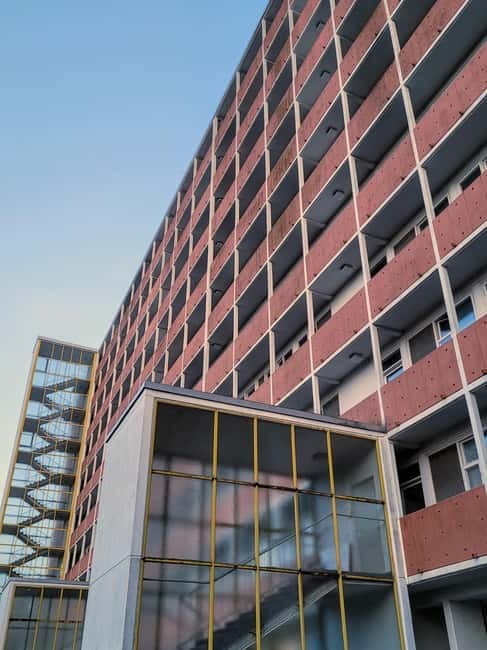
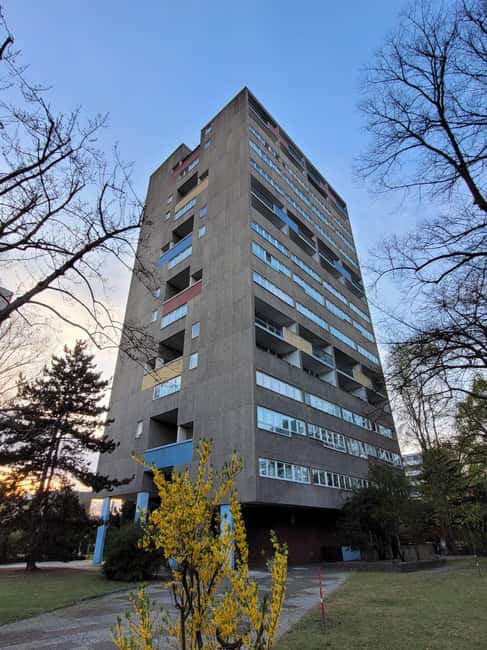
- Modernist icons like Gropius, Niemeyer, and Aalto you can see up close
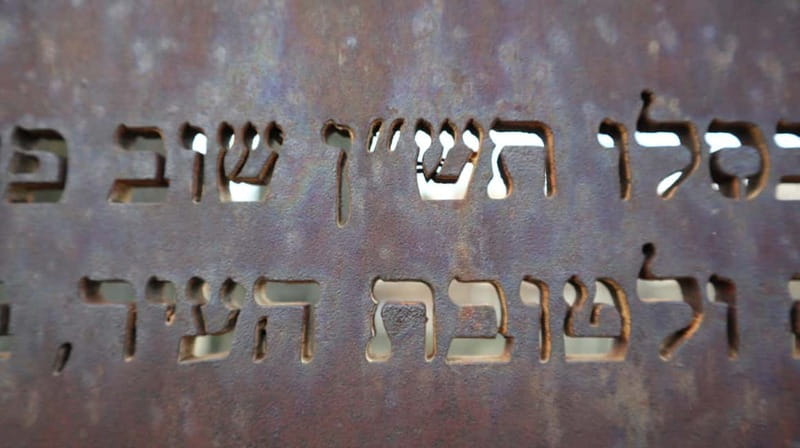
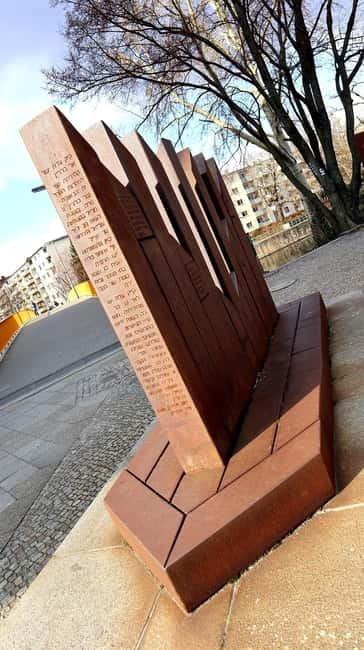
- A memorial stop tied to a lost Jewish neighborhood in Berlin
- Leafy, river-adjacent calm that makes the architecture feel less like a museum
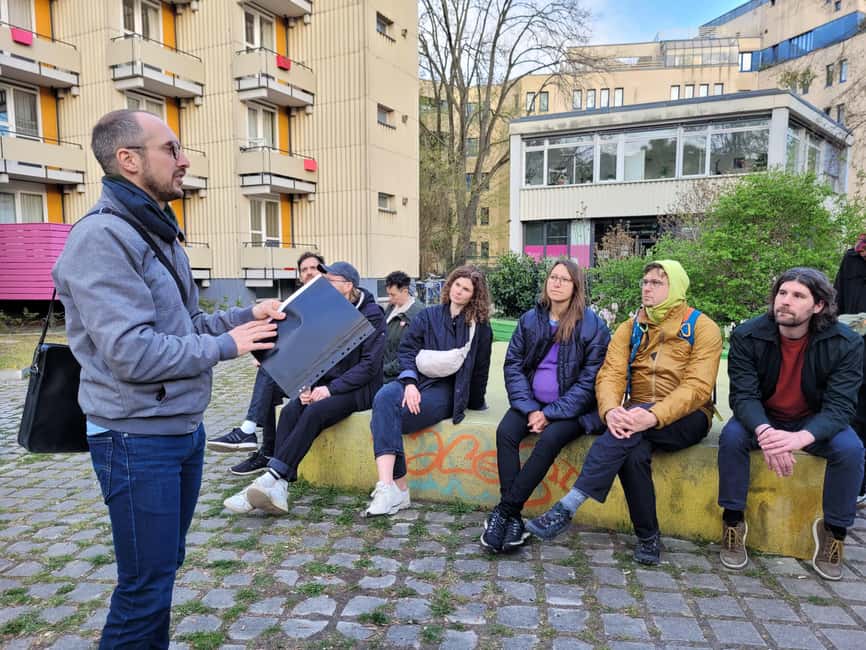
- A guide who stays chatty and keeps answering your questions as you go
Entering Hansaviertel, Berlin’s postwar modernist “model city”
Hansaviertel sits between the Spree and the Tiergarten, and that location matters. The area has that Berlin habit of mixing wild green space with serious thinking. You get tree shade and quiet paths, then suddenly the street opens toward buildings that look like they were designed by people who had very strong opinions about the future.
This tour is interesting because it shows how architecture can be a political tool and a lifestyle proposal at the same time. In 1957, West Berlin tried to show the world what a modern city could be, right after devastating war. Hansaviertel became one of the clearest stages for that message.
The best part is the pacing. You do not jump straight to Cold War concrete. You start earlier, in the late 19th-century growth of Berlin, when this area was more about villas, gardens, and an upper-class feel. Then you watch the neighborhood shift into something else.
And yes, the modernist buildings are the star. But they work better once you know what came before and what got erased.
Other Berlin tours readers compare with this one:
- Berlin: Reichstag, Dome and Government District Guided Tour
★ 4.7 · 18,288 reviews - Berlin: 1-Hour City Tour by Boat with Guaranteed Seating
★ 4.3 · 16,993 reviews - Berlin: Boat Tour Along the River Spree
★ 4.4 · 11,252 reviews
Stop 1: Biergarten der Tiergartenquelle and the right way to start
You begin at Biergarten der Tiergartenquelle, in front of Berlin-Tiergarten S-Bahn (Exit Siegmunds Hof / Bachstraße). Look for the guide with the orange umbrella.
I like this start point because it gives you immediate context. You are not meeting in a random square. You are at the border of the park, with the sense that this neighborhood was built to sit alongside nature and still look forward.
Practical note: plan to arrive a few minutes early. The tour is only about 2 hours, and you walk for roughly 1.5 hours during the guided portion. If you show up late, you will feel it quickly.
Stop 2: Hansaviertel, where villa elegance meets postwar ideas
The core of the tour is in Hansaviertel, and you will move through the neighborhood’s layers like you are reading the city in chapters.
The late 1800s vibe, before the modernist rebuild
Berlin grew fast in the late 19th century. This area became a kind of enclave for middle and upper classes, with villas, manicured gardens, and elegant façades. You get a sense of what people wanted then: space, privacy, good looks, and a sense of order.
You also connect the district to real names tied to Berlin life. Expect to hear about Rosa Luxemburg, Nelly Sachs, and Käthe Kollwitz. Even if you are not a history buff, these names help you see the area as more than architecture. It is people. It is politics. It is art. It is everyday existence.
Still in Berlin, but a different kind of day:
- Discover Berlin Half-Day Walking Tour
★ 5.0 · 9,624 reviews - Berlin: Hop-on Hop-off Bus Tour with Live Commentary
★ 4.3 · 8,579 reviews - Berlin: Government District around the Reichstag Guided Tour
★ 4.7 · 8,447 reviews - Berlin: Reichstag, Plenary Chamber, Cupola & Government Tour
★ 4.6 · 8,422 reviews
Then the story turns to a neighborhood marked by loss
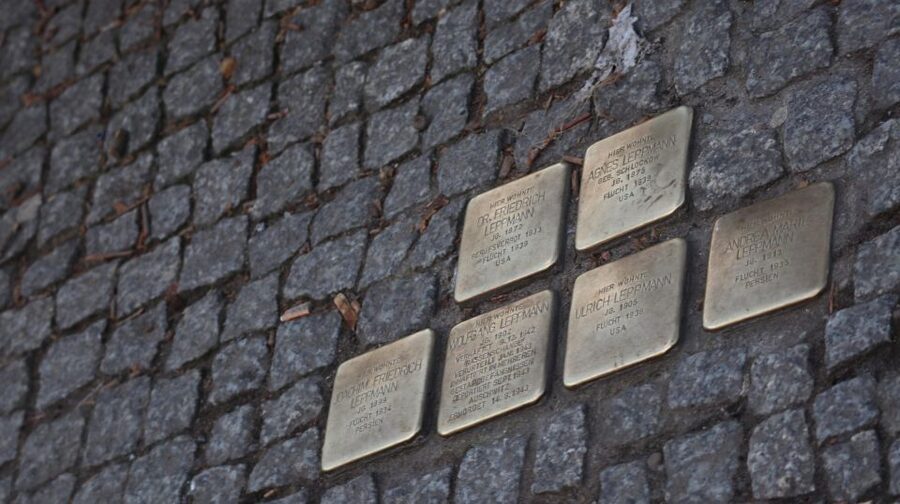
The tour does not treat modern architecture as something floating above reality. It brings you to a quiet but powerful memorial connected to one of Berlin’s significant Jewish communities in this area.
This part matters because Hansaviertel is not only about Cold War competition. It is also about what happened to communities under Nazi persecution, and how later bombing raids and war damage physically removed neighborhoods. The tone here tends to be reflective, not showy. It helps explain why postwar rebuilding carried such emotion and such urgency.
If you usually skip memorials because you think they will slow you down, do not skip this one. It is short, but it changes how you interpret the next buildings.
Interbau 1957: the Cold War showcase you can walk through
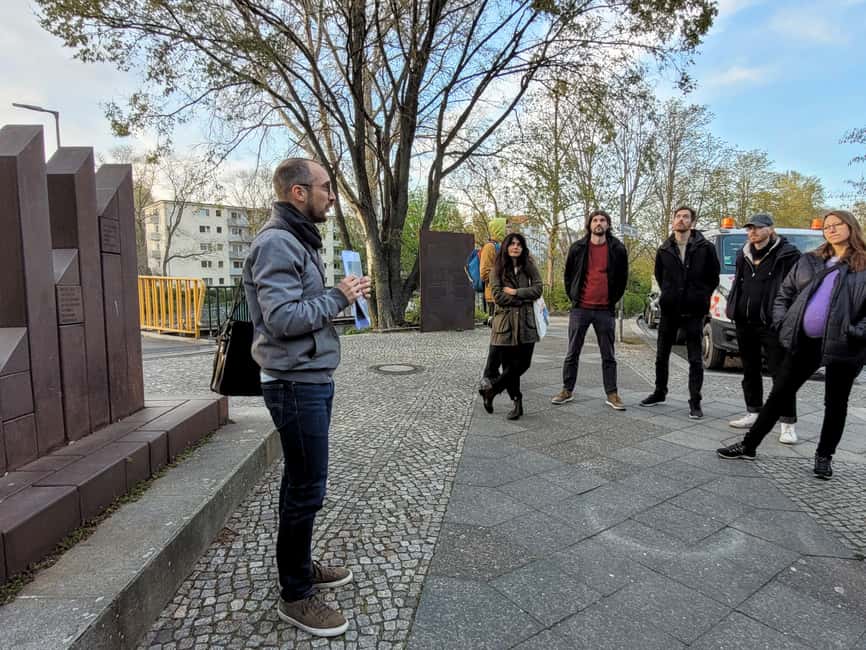
After the memorial, the tour takes a dramatic turn. In 1957, West Berlin hosted Interbau, an international architecture exhibition meant to reset ideas about how cities should look and function after WWII.
The big idea was simple but bold: take war damage and rubble, and turn it into a public statement. Hansaviertel became that statement, redesigned by major modernist architects.
This is where you start seeing the neighborhood as a “living argument.” The buildings were not just designed for beauty. They were designed to communicate a philosophy, and they were built on land cleared by destruction.
And because this was the Cold War, there was extra pressure. Architecture became a way to show confidence, control, and a model for modern identity.
Seeing the modernist icons: Gropius, Niemeyer, Aalto, and the rest
Interbau is where many people’s architecture curiosity wakes up. You will see designs tied to big names including Walter Gropius, Oscar Niemeyer, and Alvar Aalto.
What I find useful on this tour is that you do not just hear name-dropping. You learn what the designers were thinking about, and why their choices might have affected how someone lived day to day.
For example, modernism often promises:
- cleaner lines and simple forms
- better airflow and light in daily living
- new ideas about space, access, and community
- a sense that the future can be designed
But modernism can also feel cold or mechanical if you only look at it from the outside. So you get to ask a key question as you walk: does this still feel modern, or does it feel like a preserved plan from a specific decade?
That question is the heart of the Hansaviertel experience. You can judge for yourself.
How to read modernism while walking (so it actually sticks)
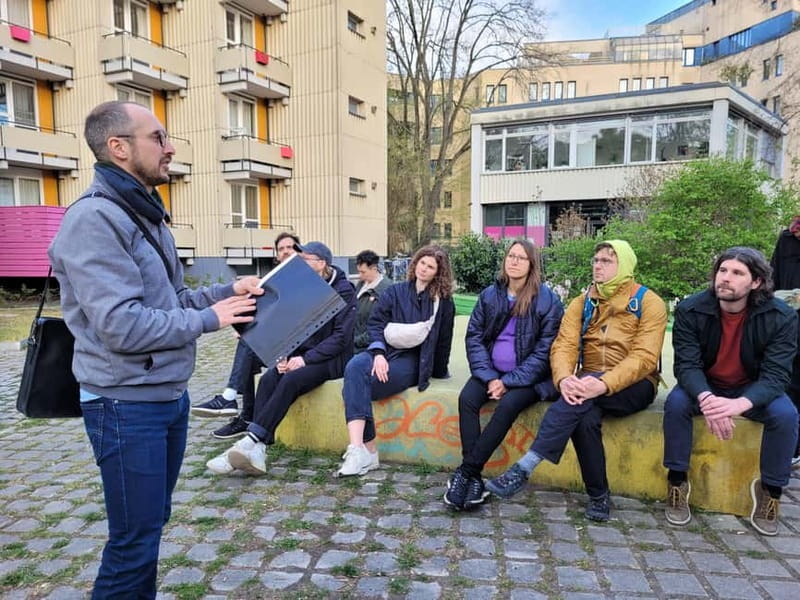
One reason guided tours work here is that modernist buildings can look like abstract sculptures until you know what to notice. As you move through Hansaviertel, keep your eyes on a few practical cues.
First, watch how the buildings sit in relation to open space. Interbau designs often play with distance, sightlines, and greenery. You are walking through a planned landscape, not a random collection of structures.
Second, look for how forms relate to function. Some buildings emphasize geometry and light. Others seem more experimental. The point is not to rank them like a museum review. The point is to learn what each approach hoped to improve.
Third, pay attention to how the neighborhood feels at street level. Hansaviertel’s leafy quiet helps. It makes the architecture feel less like a lecture and more like something people actually had to live with.
If your guide is good, you will also get prompts that guide your attention. On this walk, that kind of storytelling is a major strength, especially when your guide can respond to questions and steer the conversation into the details that interest you most.
Stop 3: Finishing at Hansaplatz, and what you’ll take away
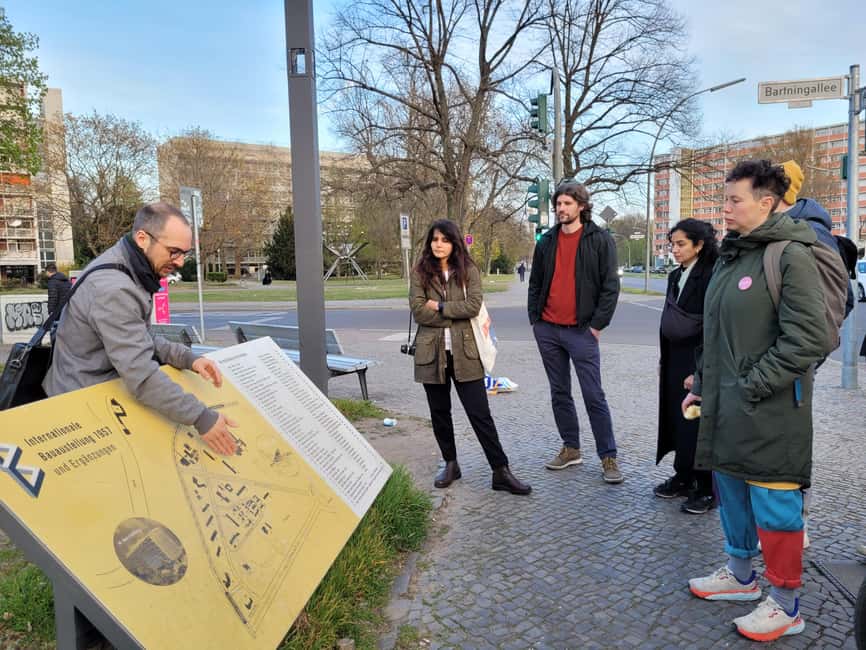
You finish at Hansaplatz. By then, you are done with the long storytelling arc, but you still get the payoff: you can look at what you just saw with less confusion.
I like finishing at Hansaplatz because it feels like a real neighborhood endpoint, not a “back to the start” loop. You have a place to reset your bearings, and you can decide if you want to wander more on your own.
By the end, you have typically walked through more than a century of social, political, and architectural history in one compact area. That is the value: the story is concentrated, and the streets do the teaching.
Price and value: $23 for an architecture story that has real stakes
At $23 per person for a roughly 2-hour guided walk, this tour is priced like a smart add-on to a Berlin visit. It is not cheap enough that you can ignore it, but it is also not museum-price territory.
The value comes from the guide doing the heavy lifting. You get:
- an expert local guide
- a structured route that links 19th-century villas, a Jewish memorial site, and the Interbau rebuild
- explanations that connect architecture to politics and daily life
You also avoid the common travel trap of spending time getting to one site, then learning very little. Here, the learning is built into the walking route.
If you love architecture, the names and styles are part of the fun. But even if you do not, you still get something worthwhile: a clear way to understand how Berlin rebuilt identity after war.
Who this tour suits best (and who should think twice)
This tour is a good fit if you:
- want modernist architecture without needing a degree
- enjoy walking tours that explain what you are seeing
- like history that connects to real places in a city
It is also recommended for ages 14 and up, mainly because of the historical depth and the serious memorial moment. If you are traveling with a younger kid, you might find it long or intense for their attention span.
If you want only “pretty buildings” and minimal context, you might feel pulled into heavier themes. For most people, though, that context is exactly what makes Hansaviertel unforgettable.
Tips so you enjoy every minute
A walking tour is only fun if you are comfortable enough to focus. So:
- Wear comfortable shoes. Do not test new footwear here.
- Bring water, especially on warmer days.
- Be ready for about 2 hours of walking and standing.
- Bring curiosity. This is the kind of tour where questions can improve your experience.
Also, Germany and Berlin have a way of rewarding people who show up engaged. When you listen closely, the modernist buildings stop looking random. You start seeing the intentions.
Should you book the Berlin Hansaviertel modernist architecture tour?
Yes, I think you should book it if you want a Berlin experience with actual ideas behind it. You will get a coherent story in a compact area, plus the kind of detail that usually takes you weeks of independent research to piece together.
This is not a “check off famous sights” tour. It is more like learning how a neighborhood got built to make a case, then realizing that case was shaped by loss as well as ambition.
Book it if you enjoy architecture, history, and walking. Skip it only if you want light sightseeing with no emotional weight and no serious backstory.
FAQ
How long is the Hansaviertel modernist architecture tour?
It lasts about 2 hours total, with roughly 1.5 hours of guided time during the Hansaviertel walk.
Where does the tour start?
You meet at Biergarten der Tiergartenquelle, in front of the Berlin-Tiergarten S-Bahn station (Exit Siegmunds Hof / Bachstraße), next to the beer garden Biergartenquelle.
Where does the tour end?
The tour finishes at Hansaplatz.
How much does it cost?
The price is $23 per person.
What languages are offered?
The live guide offers the tour in German and English.
Is food or drink included?
No. Food and drinks are not included.
Do I need museum or monument entry tickets?
Entry to museums or monuments is not specified as included, so plan as if you will not have tickets covered unless the guide mentions otherwise.
Is the tour wheelchair accessible?
Yes, the tour is wheelchair accessible.
What should I bring?
Bring comfortable shoes and water.
Is this tour suitable for children?
It is not suitable for children under 14 years, and minors must be accompanied by an adult.
Recently added around Berlin
- Berlin Private Custom Walking Tour With A Guide (Private Tour)★ 4.5 · 8 reviews
- One Up to 3 Rickshaws(6 GUESTS)-Taylor Made Rickshaw Berlin Tour★ 5.0 · 20 reviews
- Private Half-Day Berlin Sightseeing Tour with a Minivan Including Short City Walks★ 5.0 · 31 reviews
- Private taxi tour to Potsdam and Sanssouci 6-8h★ 5.0 · 30 reviews
- Moonshine Comedy – English Stand Up Comedy by the bay★ 5.0 · 11 reviews
- Private City Kickstart Tour: Berlin★ 4.5 · 71 reviews
- Private tour of Berlin★ 5.0 · 15 reviews
- Private Tutankhamun’s Tomb Live Escape Room in Berlin★ 3.5 · 11 reviews
Tours, compared.
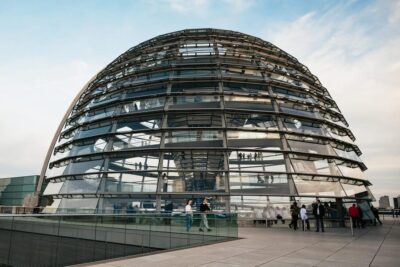
Reichstag, Dome and Government District Guided Tour
Read our review →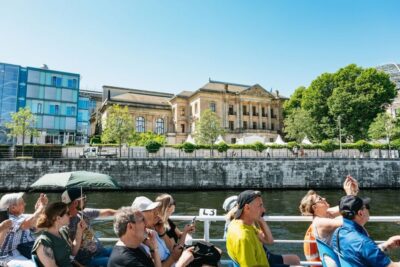
1-Hour City Tour by Boat with Guaranteed Seating
Read our review →
Government District around the Reichstag Guided Tour
Read our review →
Reichstag, Plenary Chamber, Cupola & Government Tour
Read our review →