Reviewed · TOURS
Berlin: Sightseeing Tour in Classic Volkswagen T1 Samba Bus
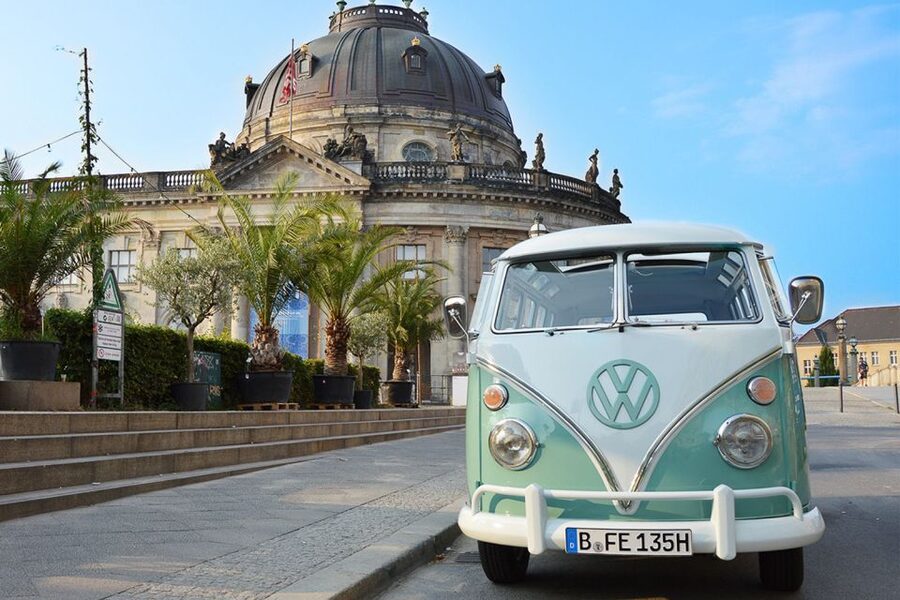
Berlin can feel huge. This tour makes it easy, because you see it from the charm machine itself, a 1965 Volkswagen T1 Samba Bus, with wide views out 21 windows. The route is packed, but the guide keeps it human, so the city starts to make sense fast.
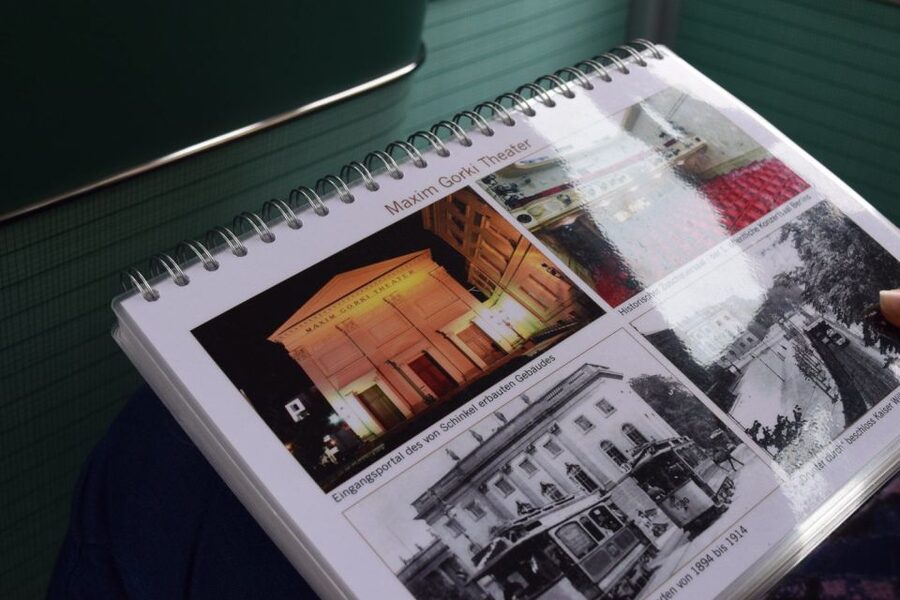
I really like two things here: the bus is built for comfortable sightseeing (including heating when necessary), and you get a visual aid that helps you picture the city in earlier eras through an included photo booklet. Small group size helps too, limited to 7 participants.
One drawback to consider is time. In 2 hours, you will mainly glide past a lot of landmarks, so if you want long photo stops or museum entry time, you will need to plan follow-up on your own.
Key highlights you will actually feel during the ride
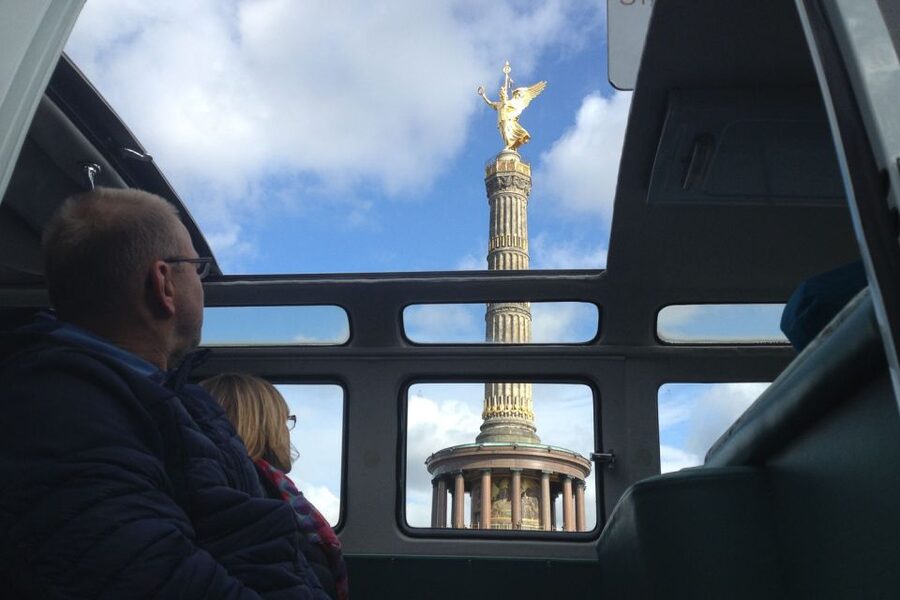
- A classic VW T1 Samba Bus with 21 windows, so you are constantly scanning facades, bridges, and street grids.
- Live driver commentary in English and German, with guides who can explain the same spot from multiple angles.
- A photo booklet (analog iPad) that turns famous buildings into before-and-after visuals.
- A small group of up to 7, which keeps questions from getting lost.
- A route that stitches together East and West Berlin, not just the postcard stops.
- Heating when necessary, which matters more in Berlin than you think.
Why Berlin land tours work better from a VW T1 Samba Bus
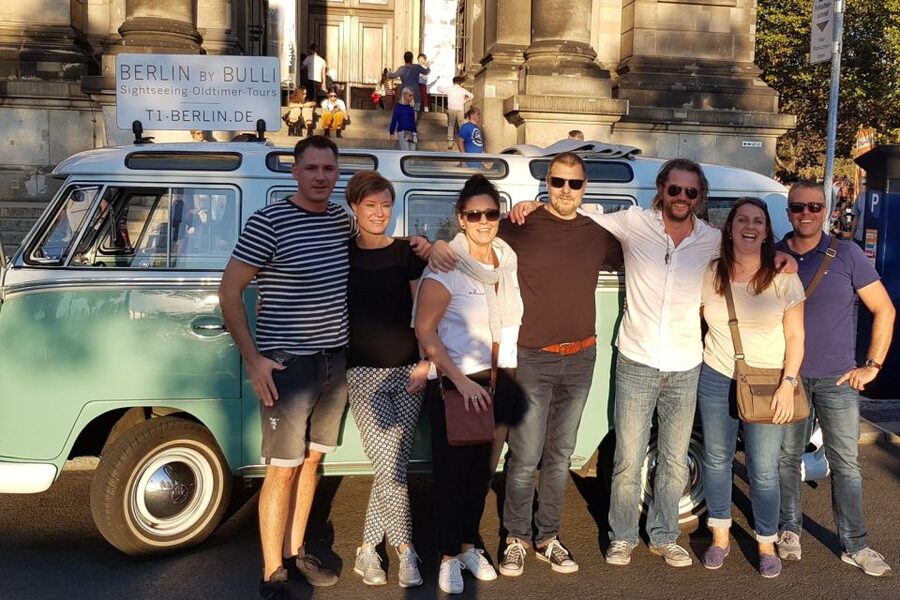
There is a reason this style of sightseeing sticks. Berlin is full of big monuments, long boulevards, and sharp architectural contrasts, and the fastest way to grasp it is by watching it slide past at street level. From a normal bus, you get distance. From this VW T1 Samba Bus, you get angles, street texture, and the feeling that you are part of the city, not parked outside it.
The bus itself is part of the show. The 21 windows turn the tour into a rolling observation deck. That matters because a lot of Berlin landmarks are easier to understand when you can compare perspectives, like how the TV Tower sits in relation to the central squares or how the government district reads from different streets.
And because it is a small group, the tour stays flexible. In tight areas, the guide can keep the pace conversational. You can ask what you are actually seeing, not just what you read the night before.
Other Berlin tours readers compare with this one:
- Berlin: Reichstag, Dome and Government District Guided Tour
★ 4.7 · 18,288 reviews - Berlin: 1-Hour City Tour by Boat with Guaranteed Seating
★ 4.3 · 16,993 reviews - Berlin: Boat Tour Along the River Spree
★ 4.4 · 11,252 reviews
Price and time: what $51 for 2 hours really buys you
At $51 per person for a 2-hour ride, you are paying for three things: a premium vehicle experience, live interpretation, and concentrated sightseeing coverage. This is not a slow pan through one neighborhood. It is a sprint with explanations.
For me, the value is strongest if you are at the start of your trip or if you hate the feeling of missing context. You will get a structured path through many major sights, plus the kind of street-level details that help later when you explore on your own.
If you are the type who prefers to linger, this is still useful, but treat it as the map-making phase. Plan to return to a few places afterward, especially if you want time for photos, walking, or deeper museum visits.
Meeting at Berlin Cathedral and getting your bearings fast

The tour starts at Berlin Cathedral. That is a smart choice because it is central and visually dominant, and it gives you a clear baseline for the rest of the route.
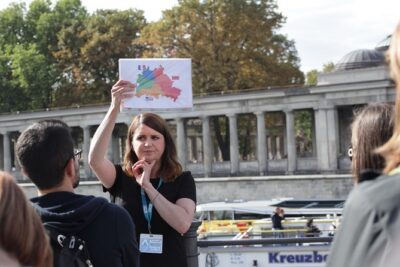
Once you are seated, you will use the photo booklet as the city moves by. Think of it like an analog guide that helps you connect what you see now to what existed in earlier periods. That makes the whole route less like a checklist and more like a timeline you can read through the windows.
The bus is also set up for comfort. The operator notes heating when necessary, and people have mentioned how helpful that is during colder days. In other words, you are not just paying for novelty. You are paying for a ride that works in real Berlin weather.
Museum Island to Unter den Linden: the city’s long story through key landmarks
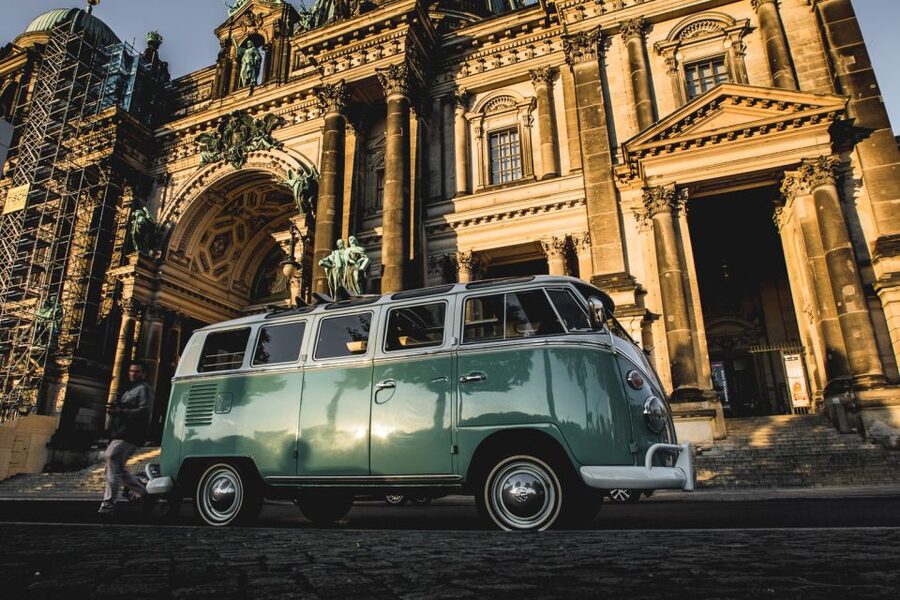
From Lustgarten, you roll toward the museum cluster that anchors central Berlin. This part of the route is where Berlin often shifts from modern city rhythm to a heavier, historical mood.
Here is what to watch for as you move through the stops:
- Berlin Cathedral (start): Look for the cathedral’s role as a central landmark for orientation.
- Lustgarten: The open space helps you understand how big civic buildings were meant to face public life.
- Altes Museum (old museum): Even from the street, you can read the classic layout and ceremonial placement.
- Alte Nationalgalerie: This is a reminder that Berlin used culture as a statement, not just entertainment.
- Neues Museum: Watch for how museum architecture signals different eras.
- Pergamon Museum: It is one of Berlin’s most famous draws, and even exterior views tell you why people travel for it.
- Bode Museum: Another Museumsinsel anchor, helpful for seeing the cluster as a whole.
- German Historical Museum: This stop keeps the theme moving from architecture to how the story gets framed.
- Neue Wache: You are in the zone where memorial meaning shows up in design.
- Alte Kommandantur: This is one of the stops that rewards attention to historical layers, not just the facades.
- Kronprinzenpalais (Crown Prince’s Palace): A reminder of how political history sits in everyday streets.
- Prinzessinnenpalais (Palace of Princesses): It adds another “palace layer” so you can see how status buildings were placed.
- Humboldt University of Berlin: A key educational landmark that connects the city to ideas and institutions.
- Berlin State Opera: Notice how the opera building changes the scale of the street around it.
- Bebelplatz: This square has strong civic atmosphere, even when you only see it from the road.
- Altes Palais: Another stop that helps you track how “palace Berlin” shaped the center.
- Unter den Linden: Now you are on one of the most important Berlin axes. Watch how the boulevard lines up big landmarks.
- Pariser Platz: This is where the city’s international-facing identity shows through in layout.
What makes this section valuable is the pacing. You are not just seeing famous museums. You are seeing how Berlin’s center was planned to be viewed, walked, and symbolically interpreted. The photo booklet helps you connect the modern street view to the older look, so the city’s past feels less abstract.
Still in Berlin, but a different kind of day:
- Discover Berlin Half-Day Walking Tour
★ 5.0 · 9,624 reviews - Berlin: Hop-on Hop-off Bus Tour with Live Commentary
★ 4.3 · 8,579 reviews - Berlin: Government District around the Reichstag Guided Tour
★ 4.7 · 8,447 reviews - Berlin: Reichstag, Plenary Chamber, Cupola & Government Tour
★ 4.6 · 8,422 reviews
Brandenburg Gate, Reichstag, and the government district: what to watch from the windows
Next comes the big-ticket political triangle.
- Brandenburg Gate: Watch the Gate as a pivot point. It often gets treated as one sight, but from the bus you can see how it relates to the broader axis.
- Reichstag: This is where Berlin’s public political drama is most visible. Keep an eye on how the building reads against the surrounding streets.
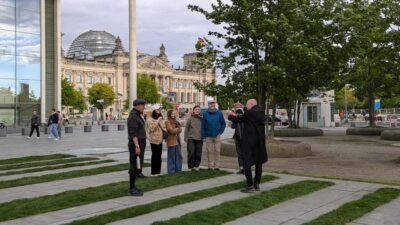
- Government district, Berlin: This broad area can feel confusing if you just walk in circles. From the bus, the shape and distance become clearer.
- Federal Chancellery: You get a sense of the architecture’s seriousness and the security-minded placement around it.
- Berlin Hauptbahnhof (Central Station): This is a modern contrast point, a good place to reset your eyes.
- Moltke Bridge: Bridges are underrated for understanding a city. Watch how river and movement corridors structure Berlin.
- Kongresshalle: Another massing landmark that helps you read 20th-century planning.
- Bellevue Palace: It adds a “residence of power” feel to the sequence.
- Siegessäule (Victory Column): Even if you do not get off, the column’s positioning makes it easy to picture why it dominates.
From a practical standpoint, this section is best when you are paying attention to sightlines. When you later walk in the area, you will already know what aligns with what.
West Berlin highlights: Tiergarten to Kurfürstendamm and KaDeWe
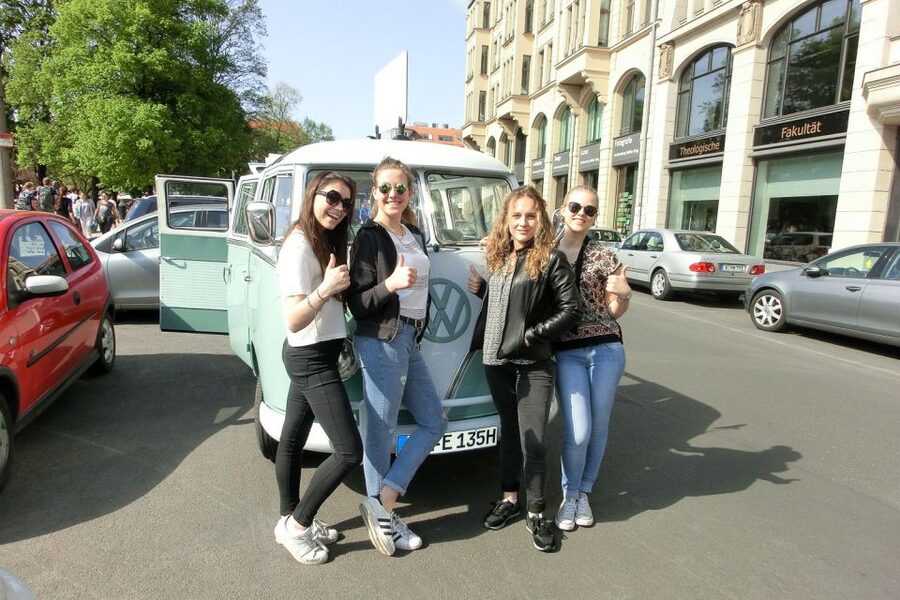
Berlin also runs on contrast, and the bus delivers it. You start moving toward the West Berlin story, with classic showpieces and old-school shopping energy.
Key stops and what to notice:
- Scandinavian embassies: This adds a diplomatic feel that changes how you imagine the streets.
- Zoologischer Garten: A major area marker. If you want to understand where city life shifted, this helps.
- Theater des Westens: Cultural architecture that gives you a different Berlin tone than the museum corridor.
- Savignyplatz: Squares like this are good for spotting neighborhood rhythms.
- Kurfürstendamm: This is the big shopping boulevard moment.
- Gedächtniskirche (Kaiser Wilhelm Memorial Church): Look at the way the church’s form shapes the block, even when you only see it passing by.
- Tauentzienstraße: Another shopping artery.
- KaDeWe: Even from a drive-by, you get the sense of why it became a magnet for Berlin shoppers.
- Embassy district: You are back to the political-adjacent vibe, but in a different urban setting.
- Berliner Philharmonie: A major music landmark. The building is easier to appreciate after seeing it in motion.
- Kulturforum: This area is planned to group big cultural identities together.
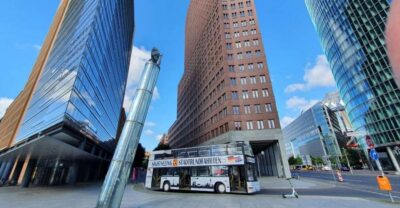
- Potsdamer Platz: Watch how the square reads as a connection point, not a dead-end.
This section is where the route is most fun if you like architecture plus everyday city energy. You are moving through places you might otherwise only see on separate days, stitched into one ride.
The Berlin Wall route: from Niederkirchner Straße to Checkpoint Charlie
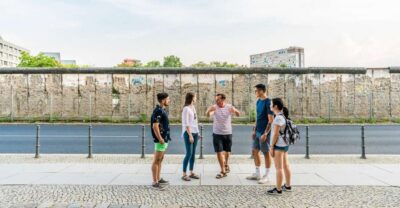
This is the emotional core of the tour. The bus keeps rolling, but the stops push you to remember what lived here, not just what stands here now.
- Berlin Wall: This is the defining marker of the route. Even if you only see parts from the street, it anchors the whole East-West story.
- Niederkirchner Straße: A nearby street stop that helps you place the Wall in its real urban context.
- Anhalter Station: Watch for how the station area signals how cities rebuilt themselves after disruption.
- Holocaust Memorial: This stop shifts the mood quickly. From the bus, it is still a powerful pointer to the scale of what happened here.
- Führer Bunker: You will get context about a site associated with Hitler’s bunker. It is not the kind of place you want to treat as just another photo stop, but the guide framing matters.
- Reich Chancellery: Another site that adds to the “power center” story.
- Friedrichstraße: This major street helps you see Berlin as a set of corridors, not just monuments.
- Checkpoint Charlie: A high-recognition border-crossing reference point that makes the Wall-era story feel more concrete.
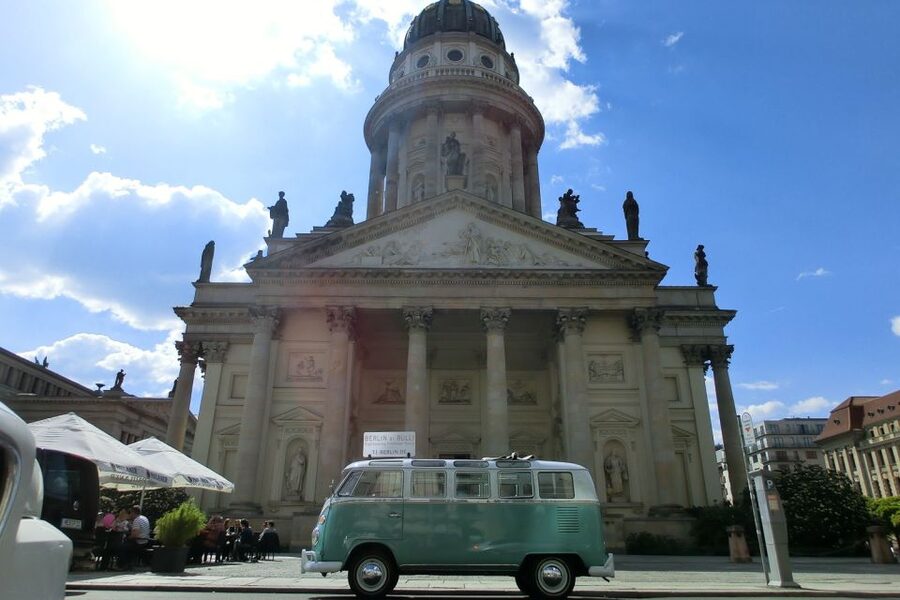
- Gendarmenmarkt: A lovely square contrast point that makes the route feel like Berlin, not only history.
- Berlin City Palace: Even when you see it in motion, it reminds you how rebuilding and memory show up in architecture.
- Jungfern Bridge: Bridges again matter, especially here where the city’s divisions shaped movement.
- Galgenhaus: A smaller, more specific historical reference point that stands out because it is not one of the usual headline stops.
- Rotes Rathaus: A city hall stop that helps bring you back to civic life.
- Arrive toward TV Tower area: This is your next anchor point.
This segment is where the photo booklet can really help you, because the bus view gives you location, and the booklet helps you visualize what changed. If you are the type who likes to understand why Berlin looks the way it does, this is the part that usually “clicks.”
TV Tower, Neptune Fountain, and St. Mary’s Church: the tour closes with classic Berlin icons
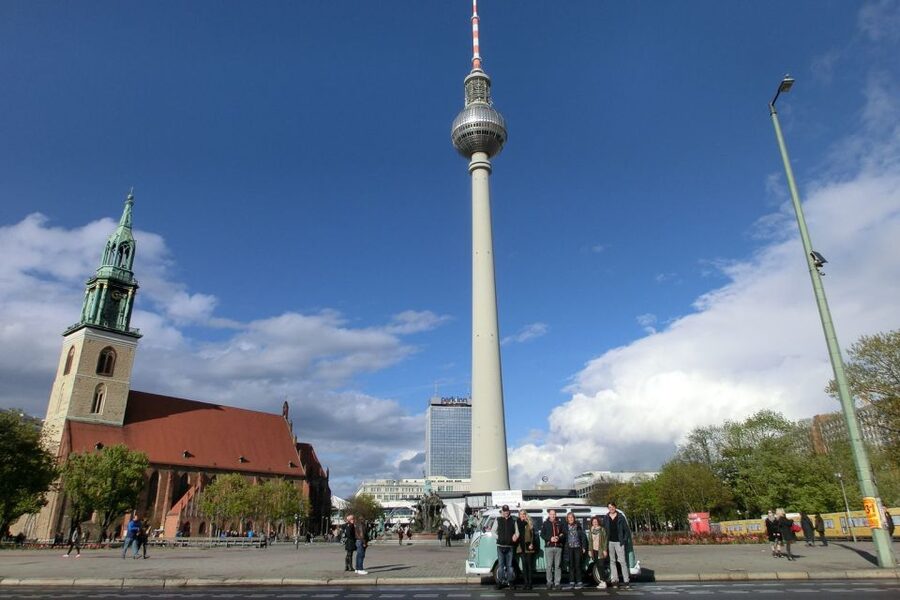
After the Wall-era stops, you end with recognizable center-city landmarks that feel like a reward.
- TV Tower (Fernsehturm): It is one of the easiest landmarks to spot, and seeing it from the road helps you judge its distance from the central squares.
- Neptunbrunnen (Neptune Fountain): A classic centerpiece that helps you register the layout around the tower area.
- Marienkirche (St. Mary’s Church): Ending with a church gives the route a “city roots” feeling, even after everything you just learned about modern conflict and reconstruction.
Then you circle back to Berlin Cathedral.
Live guide commentary and the analog photo booklet: how the tour stays memorable
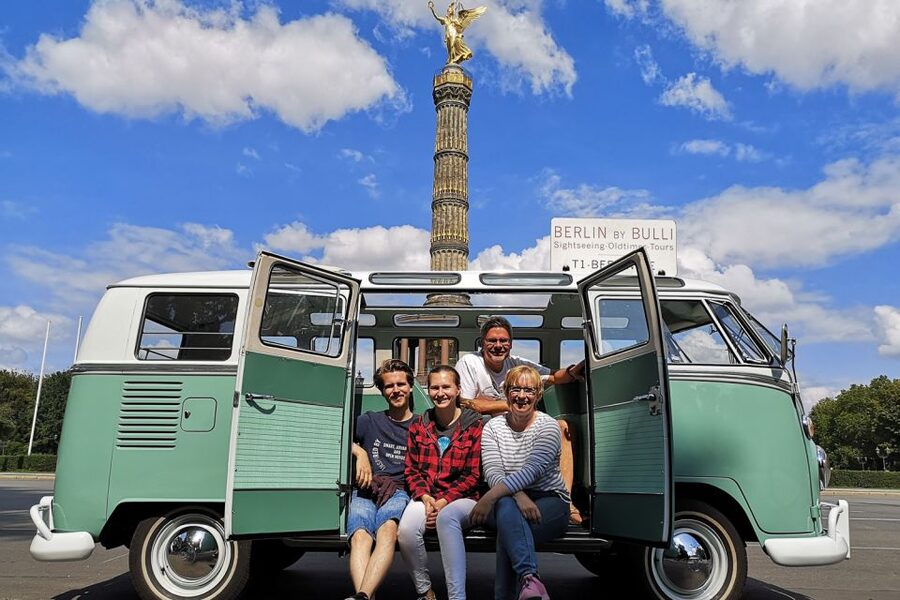
The best tours do one thing well: they make you notice. This one uses live commentary plus the photo booklet (analog iPad) to do that.
I like that the guide is also the driver, with live narration in English and German. That matters because Berlin has so many similar-looking buildings, and the difference between understanding and forgetting often comes down to having someone point out what to watch.
Some guides leading this tour, including names like Rajko and Michael, have been praised for being organized and for sharing extra context, not just reciting facts. The practical takeaway for you: come in ready with questions. If you care about a particular era, ask about it. The structure of the route makes those questions easier to answer because you are already moving through the relevant places.
Small group size, comfort rules, and who should consider skipping
This tour is limited to 7 participants, and that is a big part of the value. You are not stuck listening over a crowd.
A few other details you should factor in:
- The tour is wheelchair accessible, but non-folding wheelchairs are not allowed.
- It is not suitable for people with epilepsy or who have a cold.
- There is a weight limit of 275 lbs (125 kg).
- Intoxication is not allowed, and glass objects are not allowed.
If you fit these limits and you like short, focused sightseeing with a story attached, this is a great format. If you want a calm, slow walk in one area, you may prefer a neighborhood-focused walking tour instead.
Should you book this VW T1 Samba bus tour?
Yes, you should book it if you want a fast, guided way to understand Berlin across multiple eras, especially if you are early in your trip and you need a mental map. The combination of classic VW T1 Samba Bus charm, live guide commentary, and a photo booklet is a strong value mix for the price.
Skip it if your priority is long stops, hands-on museum time, or quiet wandering in one district. This is a rolling overview, with the good kind of pressure, the kind that gives you direction fast.
If you do book it, do one smart thing: plan to revisit your favorite two or three stops afterward. The tour is at its best when it turns into a jumping-off point for your own Berlin day.
FAQ
How long is the Berlin sightseeing tour in the Classic Volkswagen T1 Samba Bus?
The tour lasts 2 hours.
Where does the tour start?
The activity starts at Berlin Cathedral.
How much does it cost?
It is priced at $51 per person.
Is the tour offered in English and German?
Yes. The live tour guide provides English and German.
What size is the small group?
The group is limited to 7 participants.
What is included in the tour?
Included are transportation in the Volkswagen T1 Samba bus, a driver/guide with live commentary, a photo booklet (analog iPad), and heating when necessary.
Is the bus wheelchair accessible?
Yes, the tour is wheelchair accessible. Non-folding wheelchairs are not allowed.
Is heating provided?
Heating is provided when necessary.
What sights are included on the route?
The tour includes major sights such as Berlin Cathedral, Brandenburg Gate, Reichstag, Berlin Wall, Holocaust Memorial, Checkpoint Charlie, and TV Tower, along with many other stops.
Is there anything the tour does not allow?
Intoxication is not allowed, and glass objects are not allowed. Non-folding wheelchairs are not allowed as well.
Who might want to avoid this tour?
It is not suitable for people with epilepsy or people with a cold, and there is a weight limit of 275 lbs (125 kg).
Can I cancel for a full refund?
Yes. You can cancel up to 24 hours in advance for a full refund.
Recently added around Berlin
- Berlin Private Custom Walking Tour With A Guide (Private Tour)★ 4.5 · 8 reviews
- One Up to 3 Rickshaws(6 GUESTS)-Taylor Made Rickshaw Berlin Tour★ 5.0 · 20 reviews
- Moonshine Comedy – English Stand Up Comedy by the bay★ 5.0 · 11 reviews
- Private Half-Day Berlin Sightseeing Tour with a Minivan Including Short City Walks★ 5.0 · 31 reviews
- Private taxi tour to Potsdam and Sanssouci 6-8h★ 5.0 · 30 reviews
- Private City Kickstart Tour: Berlin★ 4.5 · 71 reviews
- Private tour of Berlin★ 5.0 · 15 reviews
- Private Tutankhamun’s Tomb Live Escape Room in Berlin★ 3.5 · 11 reviews
Tours, compared.
Reichstag, Dome and Government District Guided Tour
Read our review →
1-Hour City Tour by Boat with Guaranteed Seating
Read our review →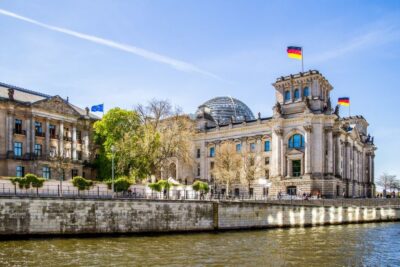
Government District around the Reichstag Guided Tour
Read our review →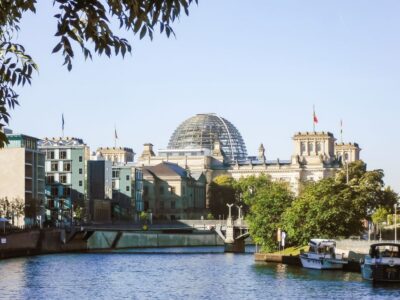
Reichstag, Plenary Chamber, Cupola & Government Tour
Read our review →