
Reviewed · DAY TRIPS FROM BERLIN
Day trip through multicultural city landscapes & photo highlights
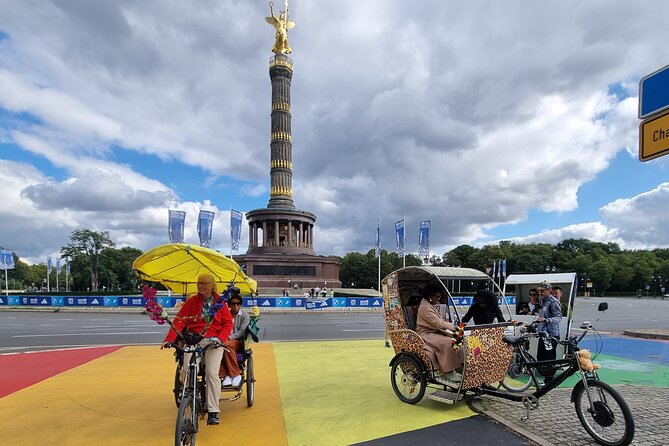
This Berlin rickshaw tour works because it strings together major landmarks and real neighborhood color in one smooth route. It is built for seeing a lot without the usual sore legs, plus you get a photographer to help capture your stops as you go.
I especially like the photo-forward pace and the fact that the ride goes beyond the obvious map points, threading through parks and pedestrian-friendly streets. I also like that the experience includes coffee and tea, with alcoholic beverages included too, so the downtime feels part of the outing, not a pause. One consideration: some of the bigger sites are marked as ticketed separately, so you may not get inside everything in the time window.
Highlights at a Glance: From Brandenburg Gate to East Side Gallery
- Leo’s English-guided rickshaw route helps you cover famous monuments and local streets without constant walking.
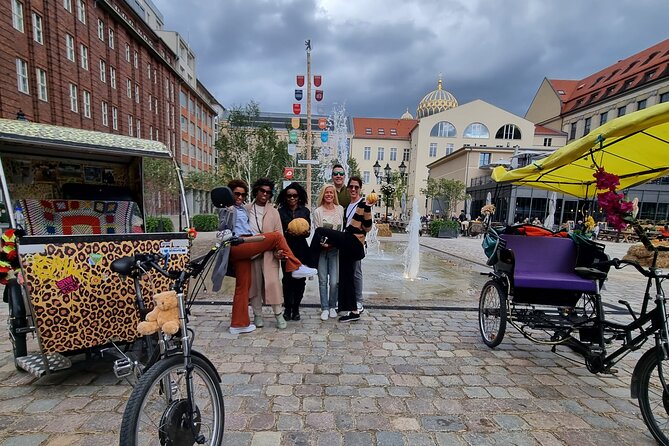
- A photographer is included, so your picture stops are not just accidental selfies.
- Free-admission anchors show up often, including Brandenburg Gate, Topography of Terror, Bebelplatz, and Checkpoint Charlie (per the schedule).
- Serious history + everyday Berlin in the same outing, from Nazi-era sites to Kreuzberg nightlife streets.
- Short, focused stop times make this ideal for first-timers who want range, not long museum marathons.
- Good-weather required, which matters in a city where plans can change fast.
A Rickshaw That Turns Berlin Into a Photo Walk
Berlin can feel like two different cities at once. You get grand architecture, then you get street life that moves at human scale. This tour is designed for both. The rickshaw plus a photographer means you get moving context, plus built-in framing for photos at each stop.
The route is also a strong value move. At $140.77 per person with a 3 to 6 hour window, you are paying for time efficiency, private transportation, and guided storytelling. In a city where you can spend hours just traveling between areas, that matters.
You also have some comfort extras folded in: coffee and/or tea, alcoholic beverages, and music on request. That turns the ride into a real experience, not just transport. And because it is a private tour, it is focused on your group only, not a big bus crowd.
More day trips out of Berlin:
- From Berlin: Potsdam and Sanssouci Palace Tour with Entry
★ 4.5 · 1,094 reviews - Potsdam Half-Day Walking Tour from Berlin
★ 4.5 · 398 reviews - Potsdam Tour from Berlin With Guided Sanssouci Palace Visit
★ 4.5 · 364 reviews
Brandenburg Gate and Reichstag: Germany’s Big Turning Points, Close Up
Your first landmark hit is the Brandenburg Gate, built between 1788 and 1791 in sandstone. The story here is not just that it is beautiful. It was designed by Carl Gotthard Langhans the Elder, with inspiration drawn toward the propylaea of the Athens Acropolis. King Friedrich Wilhelm II wanted a grand architectural ending for the boulevard Unter den Linden, and that ambition is still visible today.
Next comes the Reichstag/Bundestag area, where German history events are tied directly to the building. On November 9, 1918, SPD politician Philipp Scheidemann made a Republic call from the balcony on the west portal. Then came February 27, 1933, the Reichstag fire, which destroyed the plenary hall and dome. Finally, April 30, 1945 brought a Soviet victory symbol, when two Red Army soldiers raised a Soviet Union red flag. This stop is short at about 5 minutes, and the schedule lists the admission ticket as not included, so think of it as an interpretation moment rather than a long interior visit.
If you like history that is anchored to specific places, this is a key payoff. The buildings do not sit in isolation, they act like timelines you can walk up to.
German Chancellery: Transparency as a Design Message
After the Reichstag, you pass through the German Chancellery area. The building is described as a 36-meter high administration structure rising between and above two five-story wings. What makes it interesting is the design language: arches are cut into walls on different sides, and the north and south sections open up visually with large glass surfaces supported by tall concrete pillars.
The intent feels architectural, almost political. The structure is made to look light and transparent even though it is heavy administration. The side wings are also described as having a comb-like layout, built around fully glazed atriums, with alternating windowless concrete walls and big glass spans.
Just be ready for this to be mainly an exterior and photo-stop moment. The schedule lists tickets as not included, so you are not coming here expecting a long visit inside.
Tiergarten Meets Soviet Memory: T-34 Tanks and 2,500 Graves
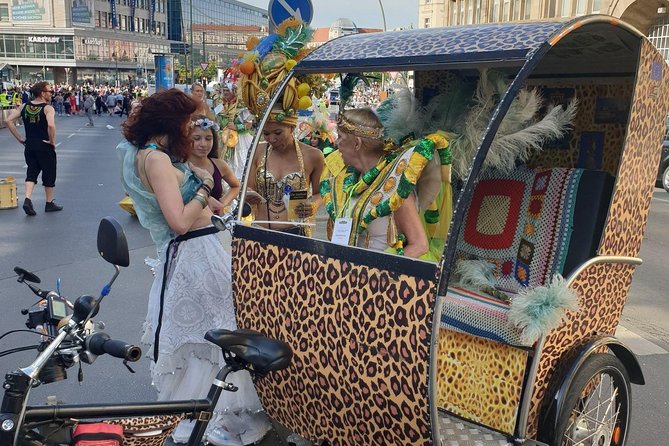
Then you shift into the Soviet War Memorial in Tiergarten. This stop is visually memorable right away: two T-34 tanks flank the square, with a bronze statue of a Red Army soldier carrying his rifle on his shoulder. Behind the soldier are name texts for fallen Soviet soldiers, and in the rear are graves for around 2,500 soldiers.
If your Berlin travel style includes moments that make you pause, this is one of the places where the city asks for it. The schedule calls this about 3 minutes, with admission free, so it is not long, but it is specific. A good strategy is to stand still for a few breaths and read at least some of the names if you can. Those details are the point.
Right after that, you enter Tiergarten proper, and the tour connects the park to the zoo history. Toward the end of the 17th century, Elector Friedrich III created a pleasure park for the population out of a former hunting ground. Later, between 1833 and 1838, landscape designer Peter Joseph Lenné transformed the zoo area using an English public park model, including the English Garden concept.
Tiergarten is about the scale and the pace. It is roughly 200 hectares, and it has plenty of monuments and memorials mixed into everyday walking routes. The English Garden, created around a pond, is singled out as one of the most beautiful corners.
This is a spot where the rickshaw helps you get variety fast. You are still seeing green space, but you are not stuck walking in circles to get the right angles and sightlines.
A few more Berlin options worth a look
- Berlin Complete in one day
★ 5.0 · 222 reviews - From Berlin: Sachsenhausen Concentration Camp Day Trip
★ 4.7 · 52 reviews - Private Tour: Potsdam Day Trip from Berlin
★ 4.5 · 43 reviews - Private Day Trip to Potsdam from Berlin by Train
★ 4.5 · 27 reviews
Potsdamer Platz and Topography of Terror: Modern Berlin Meets Nazi-Era Ground
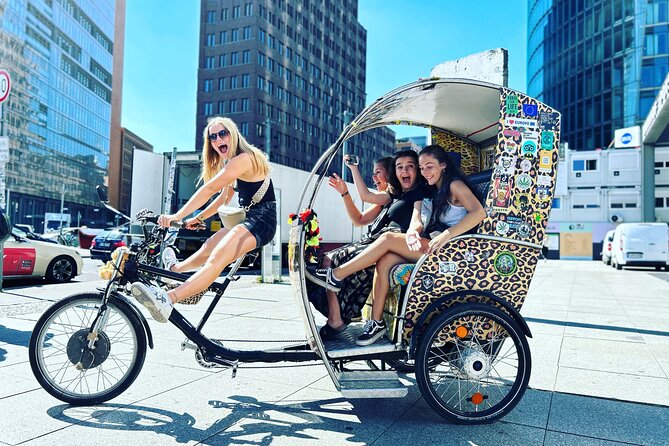
From Tiergarten, you head toward Potsdamer Platz, a district planned by architects rather than built up piece by piece. The area includes cafes, cinemas, and shops between futuristic high-rise buildings, and Berliners actually use the place, not just tourists. The schedule even notes that the city planners’ calculations worked, including the acceptance of cafes and the large shopping arcade in the Daimler City area. It is a modern district created across 6.8 hectares between Potsdamer Platz and Reichpietschufer.
Then the tour switches gears to Topography of Terror, marked as about 5 minutes and free. This site is tied to the planning and control of most Nazi crimes. Between 1933 and 1945, key Nazi terror institutions of the SS and police were located here, including the Secret State Police Office, the Reichsführung SS, and the Reich Security Main Office.
This pairing is useful because it shows two Berlirns in one line. Modern architecture and shopping energy sit close to the ground where terror administration once operated. You get context for why Berlin feels layered instead of polished and simple.
Gropius Bau, The Berlin Wall Memorial, and Checkpoint Charlie

Art and memory show up again with Gropius Bau, dedicated to cultural history, contemporary art, and photography. The schedule lists the admission ticket as not included, and the stop is brief. So treat it as a visual and location marker, not a promise of a full exhibit time.
Then comes the Memorial of the Berlin Wall, with the schedule listing admission tickets as not included. Even without details on entry, the point is to connect this day’s walking route to the political fracture that shaped Berlin for decades.
After that, you hit one of the most famous boundary symbols in the city: Checkpoint Charlie. The schedule frames it as the most famous border crossing among the three border points controlled by the Americans. It also lists the other American-adjacent comparison checkpoints: Checkpoint Alpha at Helmstedt-Marienborn and Checkpoint Bravo at Dreilinden-Drewitz. Importantly, the crossing rules are spelled out: transition could only be used by foreigners and employees of the Permanent Representation of the FRG in the GDR, plus GDR officials. Admission is listed as free.
If you want to understand Berlin after the fall of the wall, this stop helps explain the before story, too. It is one thing to see photos of barricades and another to hear how the crossing actually worked.
Friedrichstrasse, Gendarmenmarkt, and Classic Berlin Architecture
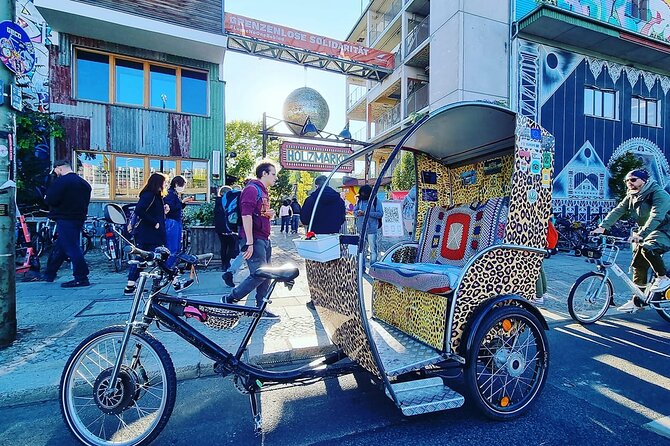
Next up is Friedrichstrasse, a north-south axis in Berlin. After the fall of the wall, a shopping mile developed between Checkpoint Charlie and Friedrichstrasse station. It is a useful segue from border history into the daily city economy.
Then you arrive at Gendarmenmarkt, one of the most elegantly planned squares. It was created at the end of the 17th century by Johann Arnold Nering. French immigrants, mainly French Protestants known as Huguenots, settled here, and the square went through several names: Esplanade, Lindenmarkt, Friedrichstädtischer Markt, and Neuer Markt. In 1799 it became Gendarmenmarkt because the guard and stables of the Gens d’armes ward regiment were located there from 1736 to 1782.
This is a stop that rewards good light. If you like photos with symmetry and clean lines, you will likely enjoy the angles around the square.
The tour also includes Deutscher Dom and Konzerthaus near Gendarmenmarkt. Deutscher Dom hosts the permanent exhibition Ways – wrong trails – detours, shown across five floors, focused on the historical development of liberal parliamentary democracy in Germany. Tickets are not included on the schedule, so again, this is mainly a stop for context unless you plan extra time elsewhere.
Konzerthaus am Gendarmenmarkt is described as a masterpiece of classicist architecture and named as one of Karl Friedrich Schinkel’s main works. The background here is also specific: in 1776, at Frederick the Great’s instigation, a small comedy house opened based on plans by Prussian construction director Johann Bouman the Elder, then renamed to the Royal National Theater in 1787 as it rose to a leading theater role. Tickets are listed as not included, so expect exterior appreciation and quick positioning.
Bebelplatz and Museum Island: Book Burning and the Museum Powerhouse
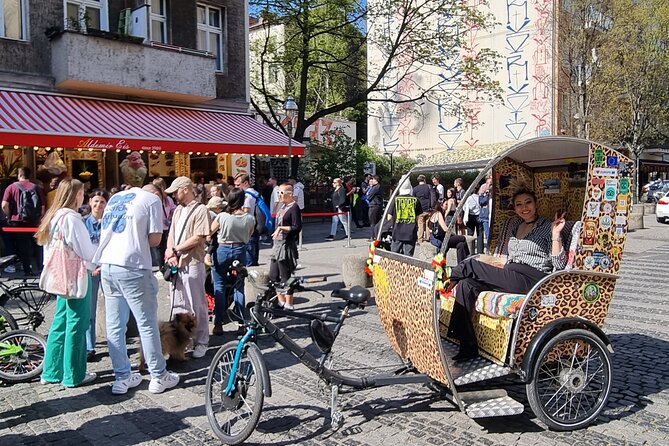
Berlin does not shy away from uncomfortable symbolism. At Bebelplatz, the Nazis desecrated the place by burning books, now marked as a memorial. On May 10, 1933, national socialists burned over 20,000 books, believing they were a non-German spirit. Names connected to the burn list include Erich Kästner, the Mann family, Magnus Hirschfeld, Lion Feuchtwanger, Karl Marx, Else Lasker-Schüler, and almost 400 other authors, plus Heinrich Heine. The tour also ties the experience to Heine’s remark about book burning and human harm.
Admission here is listed as free, and the stop is brief. Still, it is one of those places where you can stand for a minute and let the meaning settle.
After that, you reach Museum Island, a museum complex on the Spreeinsel. It is listed as one of Europe’s outstanding complexes, with an ensemble described as created in 1930, including work by five architects. It was added to UNESCO’s world cultural heritage list in 1999, and it has been restored since the late 1990s with an expanded reception building.
The schedule lists admission ticket as free. So if you want a low-cost museum-center moment, this can fit neatly into a half-day plan.
Berliner Dom, Alexanderplatz, and Nikolaiviertel: Big Names Without Big Time
The tour continues into standout city landmarks that are worth seeing even when you do not go inside.
Berliner Dom is hard to miss with its striking dome. It served as the court and cathedral church of the Hohenzollerns, rebuilt between 1894 and 1905 under Emperor Wilhelm II. The schedule lists admission ticket as not included, so treat it as a must-see exterior and photo stop.
Then it is Alexanderplatz, the central square and transportation hub. It is described as one of the most visited places in Berlin, which tells you the energy level right away. Admission ticket is listed as not included.
You also get a stop at Nikolaiviertel, described as a kind of open-air museum of destroyed old Berlin. The area in its current form was created for Berlin’s 750th anniversary in 1987. Admission ticket is listed as not included.
A small but clever photo stop follows at Neptunbrunnen in front of the Red City Hall. The fountain’s Berlin nickname is Forckenbecken, and the name works two ways: it references the then mayor Forckenbeck and it fits the fountain itself since Neptune stands in a basin holding his trident. The four female figures at his feet symbolize the Elbe, Rhine, Oder, and Vistula rivers.
This is exactly the kind of detail that makes the day feel guided, not just sightseeing.
East Side Gallery and Kreuzberg Streets: Art on the Wall, Life Beyond It
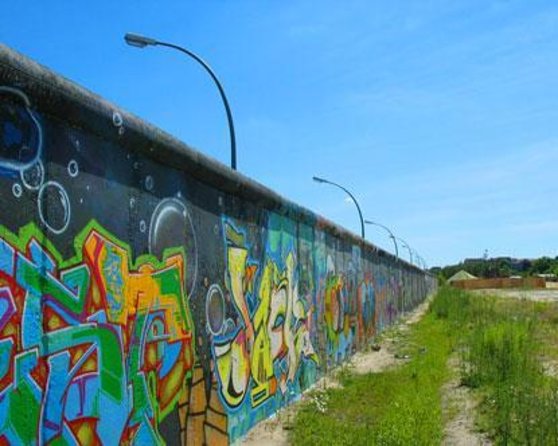
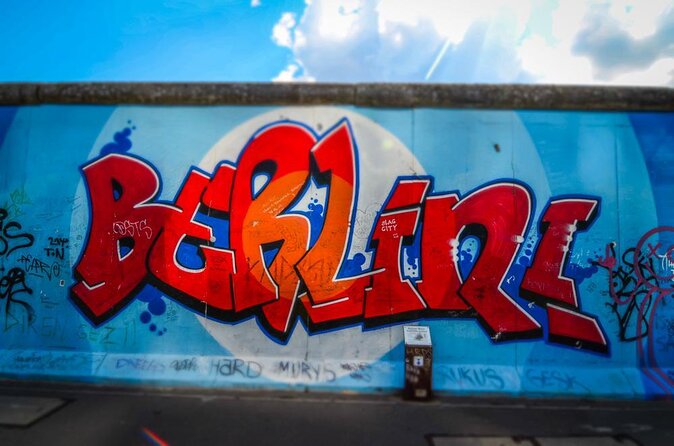
Now the tour moves into the most emotional visual evidence of the divided city: the East Side Gallery. The schedule describes it as a painted 1.3 kilometer section of the former Berlin Wall along the Spree, with over a hundred original wall paintings, and it is described as the longest open-air gallery in the world.
This is where your earlier history stops start to pay off. When you see the Wall as a canvas, you understand Berlin did not just remember the past, it processed it in public space.
Next come neighborhood streets with a different feel. Along Bergmannstraße you are in Kreuzberg SW 61, described as a well-kept area of old buildings. The tour’s framing is practical: you get insight into the versatility of Kreuzberg and residents’ daily way of life. It is described as a bit more sedate than SO 36, away from the club scene, but still multicultural and lively.
Then comes Landwehrkanal, an inner-city canal running through Treptow, Kreuzberg, Neukölln, Tiergarten, and Charlottenburg. The tour notes that Berlin’s first artificial waterway dates to the 19th century, when industrialization pushed transport needs beyond road and rail. King Friedrich Wilhelm IV commissioned Peter Joseph Lenné to design the canal, construction began in 1845 and finished in 1850, and it was used for transport of building materials during Berlin’s rapid Gründerzeit development.
The canal matters because it turns Berlin from a flat sightseeing list into a lived geography. It also sets you up for the next photo and atmosphere stop.
Admiralbrücke, Oranienstraße, and Görlitzer Park: Canalside Evenings and City Play
At Admiralbrücke, the schedule describes a summer meeting place. It is associated with cobblestone streets and old gas lanterns, with evenings where you might hear multiple languages carried by the air. Small groups sit together on bollards and paving stones, talking, having drinks, sometimes making music, and looking toward a sunset over the Landwehr Canal. The city also responded to noise, clearing the bridge peacefully every evening at 10 p.m. with police support after local residents complained about nightly volume.
Then you roll into Oranienstraße, where gastronomy and the scene shape the street. It is very lively at night, with 100 small shops, bars, and restaurants described as having international flair. The tour also places it in SO 36.
After the city energy, you get a breather at Görlitzer Park via the Görlitzer Bahnhof area. It is the central recreation area in Kreuzberg, created in the early 1990s on the site of the former Görlitz train station. The park includes spacious lawns, sports fields, playgrounds, and a children’s farm near Glogauer Straße. The indoor swimming pool Spreewaldbad sits on Wiener Strasse.
The stop also includes historical context about the train station. Built in 1865 on 14 hectares at the Köpenicker Feld, between Emmaus Church and Landwehr Canal, the project involved dumping tons of sand, laying rails, and building buildings to move people and goods. The terminal station opened in 1866, inaugurated by the Prussian king with the first troop transports.
So even your leisure stop has a backstory, which is great if you like learning while still taking a break.
Tempelhofer Feld and Park am Gleisdreieck: Berlin’s Citizen-Driven Spaces
The tour ends on a lighter, future-facing note with Berlin’s open-air urban spaces.
Tempelhofer Feld is a former airport, with a large check-in hall and an airfield described as more than 300 hectares. Since flight operations ceased, it opened to the public in May 2010. The schedule highlights that the area is set to be redesigned into a park with citizen participation.
It also notes the May 2014 referendum and the Tempelhofer Feld Law coming into force in June 2014, describing a development and care plan created with population participation. This is a stop that feels like Berlin thinking out loud about how public space should work.
Finally, Park am Gleisdreieck brings in another citizen-driven story. The railway area around the Gleisdreieck traffic junction lay fallow after the end of the Second World War. Vegetation grew there almost unnoticed, and with dense development nearby, a group of citizens formed to green the area permanently. The schedule says they succeeded.
This kind of stop makes sense at the end of a fast day. You do not just see Berlin as monuments and memorials. You see it as a city still making choices in real time.
Practical Fit: Who This Tour Suits Best (and When It Feels Tight)
This tour is a great fit if you want a first-time Berlin overview that mixes top monuments with lived-in neighborhoods. It is especially good if you care about photo coverage. The included photographer and short stop structure mean you do not waste your best daylight time searching for angles.
It also works well if you dislike long walking loops. The rickshaw helps you keep momentum, and the stops are designed to keep you moving between areas.
If you know you want lots of museum time inside ticketed attractions, you might find the pace too quick. The schedule shows several places with tickets not included, and the listed stop times are short across the board. In other words, it is a “see and understand” day, not a “stay and linger” day.
Should You Book This Berlin Rickshaw Day Trip?
If you are the type of traveler who wants history, architecture, and street life in one half-day to full-day sweep, I think it is an easy yes. The included photographer, English guide, and coffee and tea support a smooth, photo-ready outing, and the route covers both iconic sites and local neighborhoods like Kreuzberg.
Book it if you want efficiency and range, plus you are happy with quick stops at major landmarks. Skip it if you are hoping for long indoor museum sessions or you have your heart set on specific ticketed entrances during your 3 to 6 hour window.
FAQ
How long is the tour?
It runs for about 3 to 6 hours.
What is the price per person?
The price is $140.77 per person.
Is pickup available?
Yes. Pickup is offered from hotels, the central station, and cafes.
Is the tour offered in English?
Yes, it is offered in English.
Is this a private tour?
Yes. It is private, meaning only your group participates.
What is included in the price?
The tour includes private transportation, a photographer, a travel guide, music on request, coffee and/or tea, and alcoholic beverages.
Are admission tickets included for every stop?
Not for every stop. Several stops are listed as free, while others are listed as tickets not included, such as the Reichstag/Bundestag, German Chancellery, Gropius Bau, the Berlin Wall memorial, Deutscher Dom, Konzerthaus, and Berliner Dom.
Which stops are listed as free in the schedule?
The schedule lists admission ticket free for stops including Brandenburg Gate, Soviet War Memorial Tiergarten, Tiergarten, Potsdamer Platz, Topography of Terror, Soviet War Memorial Tiergarten, Checkpoint Charlie, Bebelplatz, and Museum Island, among others.
What weather does the tour require?
It requires good weather. If it is canceled due to poor weather, you are offered a different date or a full refund.
What is the cancellation policy?
You can cancel for free up to 24 hours in advance for a full refund. If you cancel less than 24 hours before the experience starts, the amount paid is not refunded.
Recently added around Berlin
- Berlin Private Custom Walking Tour With A Guide (Private Tour)★ 4.5 · 8 reviews
- One Up to 3 Rickshaws(6 GUESTS)-Taylor Made Rickshaw Berlin Tour★ 5.0 · 20 reviews
- Private taxi tour to Potsdam and Sanssouci 6-8h★ 5.0 · 30 reviews
- Moonshine Comedy – English Stand Up Comedy by the bay★ 5.0 · 11 reviews
- Private Half-Day Berlin Sightseeing Tour with a Minivan Including Short City Walks★ 5.0 · 31 reviews
- Private City Kickstart Tour: Berlin★ 4.5 · 71 reviews
- Private tour of Berlin★ 5.0 · 15 reviews
- Private Tutankhamun’s Tomb Live Escape Room in Berlin★ 3.5 · 11 reviews
Day Trips from Berlin, compared.
Potsdam Tour from Berlin With Guided Sanssouci Palace Visit
Read our review →
Potsdam Bike Tour with Rail Transport from Berlin
Read our review →
BERLIN PHOTO TOUR with a professional Photographer from Berlin
Read our review →Browse the lists this tour appears in