
Reviewed · STREET ART & ALTERNATIVE TOURS
East Meets West: Berlin Food Culture & Street Art
Berlin does this rare thing where food and street art tell the same story. This tour is interesting because you walk through neighborhoods shaped by East Berlin, West Berlin, and the long shadow of World War II, then you eat your way across that change in Kreuzberg.
I love the variety of tastings, from a Berlin schnitzel stop to Turkish and Ukrainian food, plus classic currywurst. I also like that the route mixes practical “what to eat” advice with visual history, including the Wall area where you can see real political murals.
One consideration: the focus is on tasting and walking, not on long museum time. If you want major sightseeing with lots of sitting down and lingering, you might find some stops feel brief.
Key highlights to look for on this tour
- Six tastings plus beverages so you are not left hunting for lunch afterward
- Small group size (max 8) for more Q&A, not just a fast herd walk
- East Side Gallery with a still-standing Wall section plus political street art context
- Kreuzberg food stops that reflect immigration and modern Berlin culture
- Beer included, including Berliner Pilsner alongside the food sampling
- Street art focus in Berlin with a stop tied to one of the world-famous murals
East Meets West Berlin: Food and Murals as One Story
Berlin can feel like a patchwork of eras, and this tour uses that patchwork as the main theme. You start in Friedrichshain and move toward Kreuzberg, passing through places shaped by East Berlin identity, the Communist period, and the way World War II still shows up in streets and buildings.
What makes it work is that you do not just look at history from a sidewalk. You also taste it. A bite of Berlin comfort food is followed by street art that explains the politics behind the city walls. Then you shift to food that reflects migration, like Turkish and Ukrainian spots that have shaped Kreuzberg’s everyday life.
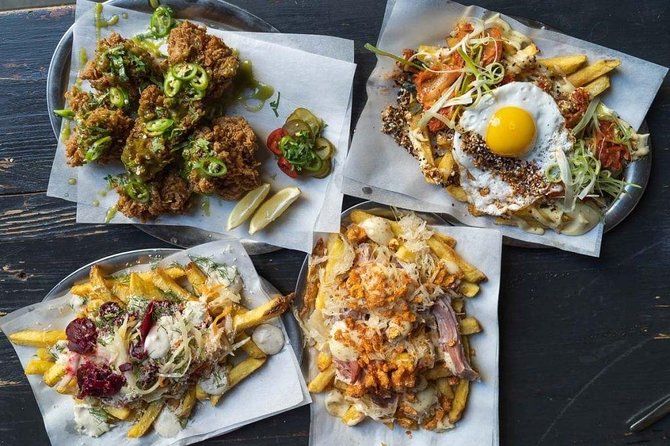
Also, there is real structure. You know you are sampling Arabic-style eats, hipster coffee, Ukrainian soul food, Turkish street food, and vegan donuts. That mix is not random. It’s how Berlin communicates “East meets West” in daily life, not just on postcards.
More street art and alternative tours in Berlin:
- Berlin: Alternative Berlin Walking Tour
★ 4.6 · 1,204 reviews - Berlin: City Street Art Guided Walking Tour
★ 4.8 · 886 reviews - Berlin: 3-Hour Street Art Tour
★ 4.7 · 778 reviews
Price and what $169.38 gets you in practice
At $169.38 per person for about 3 hours and 30 minutes, the value depends on what you usually spend on food while sightseeing. If you plan to eat multiple meals across different neighborhoods, this pricing can feel fair fast.
Here’s what’s included:
- 6 local tastings
- Beverages
- Local Berliner Pilsner Beer
- A local guide
- Mobile ticket
What this buys you is time-saving convenience and an “adult version” of exploring by taste. Without a guided route, you might walk around hungry, second-guess menus, or end up in the nearest tourist place. With this tour, you get stops selected for the story behind the food, not just for Instagram photos.
The one thing not included is a BVG transport ticket. If you’re staying near U-Bahn lines, plan to grab your transit pass or single tickets before you start.
Your 3.5-hour route: meeting point, pace, and what to bring
The tour runs in English, starts at 12:00 pm, and meets at Industriepalast Hostel, Warschauer Str. 43, 10243 Berlin. It ends near U Kottbusser Tor (U8 and U1).
You should expect moderate walking. Comfortable walking shoes matter because you are moving between several neighborhoods and several food spots. Bring a rain jacket or poncho if the forecast looks shaky, since Berlin weather can turn quickly.
The group is small, up to 8 travelers, which is a big deal for a walking food tour. You can ask why something is served the way it is, what to try at the next stop, or how one neighborhood differs from the next without feeling like you’re yelling over a large crowd.
Friedrichshain to the East Side Gallery: the Wall you can see up close
You start in Friedrichshain, a neighborhood tied to East Berlin identity. The tour frames it as a place associated with revolutionary East Berliners, and that tone matters because it sets you up to read the city walls and murals with context, not just curiosity.
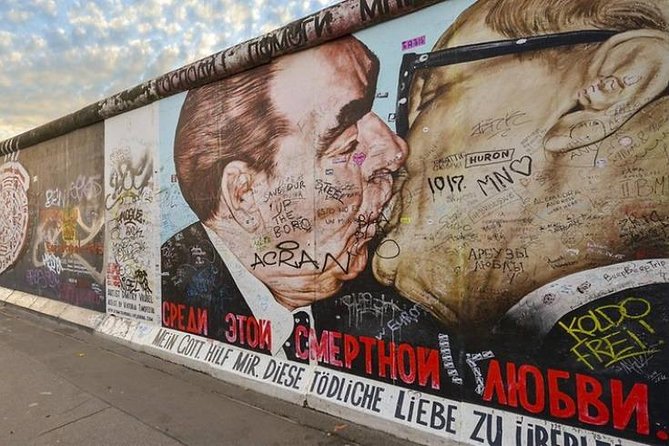
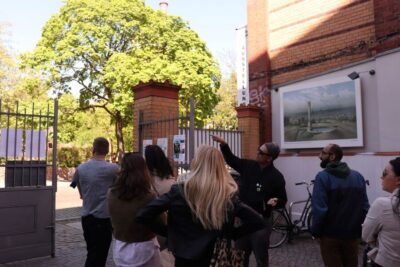
Then you hit the East Side Gallery. This is where you get the most concrete “Berlin history in street art form” moment on the whole walk. You explore the political murals along the former Berlin Wall and you can touch a section that is still standing. It’s described as the longest stretch of Wall still standing in Berlin, and that matters because it changes how you understand the Wall. It stops being a distant monument and becomes street-level reality.
A good guide here will also connect the art to the mindset of different eras. You may hear stories tied to Nazi Germany and also about the Communist era, and you might get references to SS soldiers that once moved through the area. Even if you already know the broad timeline, this kind of street-level narration makes it feel specific, not abstract.
Practical tip for this part: slow down. The murals are the point, but reading them takes a minute. If you’re the type who rushes for photos, adjust your pace here so you can actually take in the message.
More food tours in Berlin:
- Berlin Center Food Tour with 8+ Authentic Local Tastings
★ 5.0 · 1,227 reviews - Berlin City Bike Tour with Beer Garden Stop
★ 5.0 · 917 reviews - Kreuzberg: Culinary Food Tour
★ 4.5 · 770 reviews - Berlin: BRLO BRWHOUSE Tour and Craft Beer Tasting
★ 4.4 · 654 reviews
Kreuzberg first feels like a food neighborhood, then a history lesson
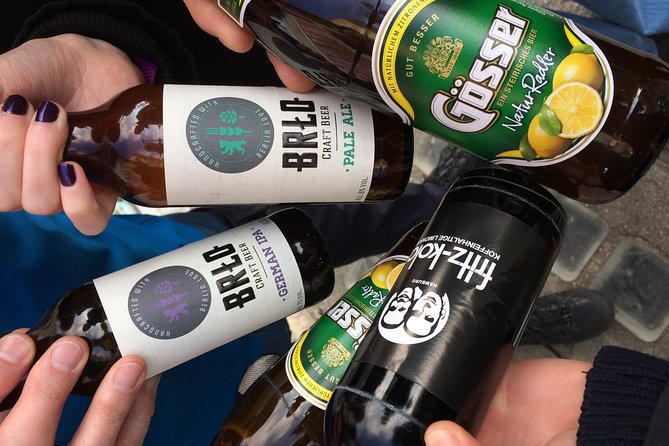
Once the tour crosses over toward Kreuzberg, the mood changes. Kreuzberg is described as former West Berlin, and the feel on the street is tied to culinary trends, funky bars, and a lot of everyday energy. You’re also walking through a place with deep historical meaning, and the guide’s job is to show you why the food culture here grew the way it did.
This is where your tastings start stacking up. You’ll go from Wall and murals to food you can actually taste right away, which is a smart rhythm. It keeps the history from becoming lecture-only, and it helps you burn off the “food tour anxiety” of wondering if you’ll find the right places on your own.
If you like neighborhoods that feel lived-in rather than staged, Kreuzberg is one of Berlin’s most honest settings. The tour leans into that, pairing stories with practical stops you can revisit later.
The classic Berlin bites: schnitzel, currywurst, and coffee
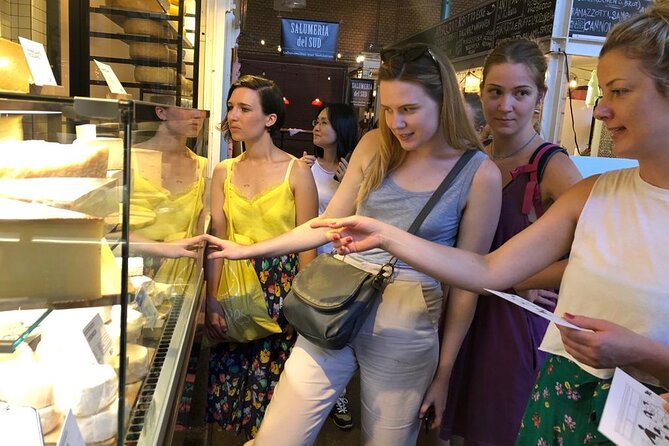
Berlin has a few dishes that you see again and again for a reason, and this tour gives you the chance to try them without overthinking it.
One stop is Scheers Schnitzel, a Berlin schnitzel institution. This is the kind of place you go when you want the classic Berlin-style answer to the question: what should I eat while I’m in Berlin? The tasting here is a straight shot at comfort food, and it gives you a baseline before the tour moves into more international flavors.
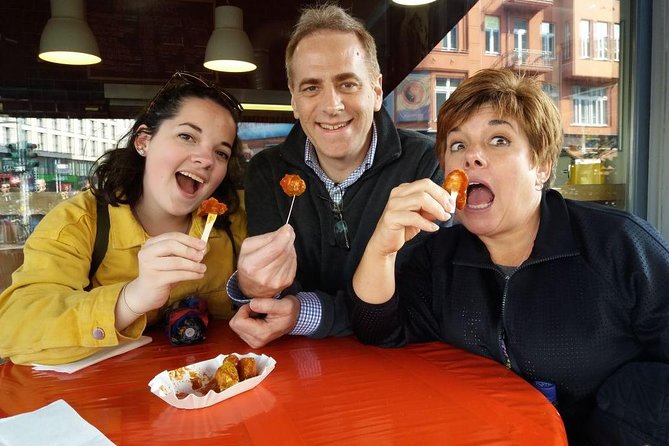
Next comes Ketels Curry, where you get the story of currywurst, including the claim that it changed Berlin’s culinary face in a way many people do not realize. Even if you already love currywurst, hearing how it became such a Berlin staple makes your next bite feel like a history lesson you can chew.
Between the “classic plate” moments, you also get a coffee stop. The tour is described as ending up at one of the neighborhood’s hippest coffee shops. This matters because Berlin’s coffee culture can be part of the street-level creative scene, not just a caffeine pit stop.
And here’s the practical part: because beverages are included, you are not stuck paying extra for every pause. Your guide also handles sequencing so you don’t end up too full too early, or hungry when you reach the next tasting.
Street Art Berlin: seeing the creative Berlin, not just reading about it
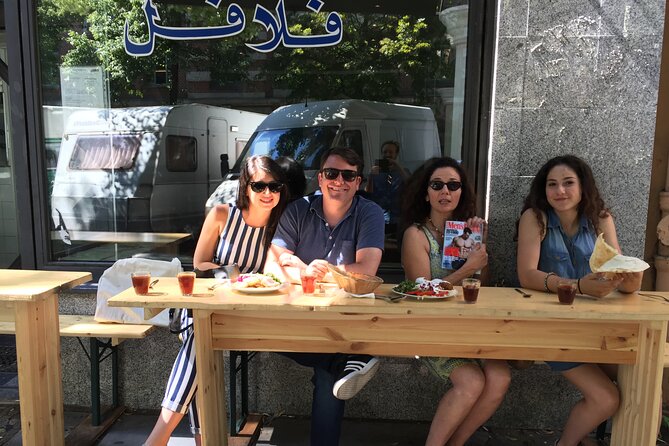
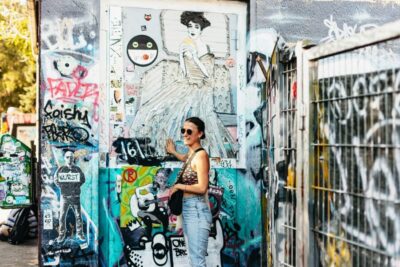
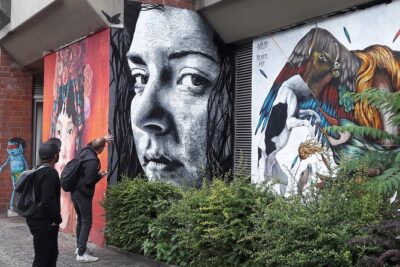
After the Wall section, you move deeper into the street art world. The tour includes a Street Art Berlin neighborhood stop described as the mecca for street art in Europe, where stories of East and West, past and future show up in murals on walls and underpasses.
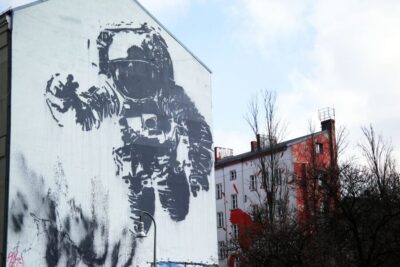
You are not just looking at one mural from far away. The stop is tied to one of the world-famous murals, and the goal is to give you enough context to understand what you are seeing. Berlin street art is political sometimes, personal other times, and often both. A strong guide helps you notice details you would otherwise miss.
Also, this part complements the history talk from earlier. When you connect street art to events like Nazi Germany and later political shifts, it stops feeling like decoration. It becomes a language.
One consideration here: if you have already seen a lot of street art in other cities, pay attention to the Berlin-specific references. The value is in learning how Berlin’s street art reflects its split past and its changes since.
Slava Berlin and the immigrant food map of modern Kreuzberg
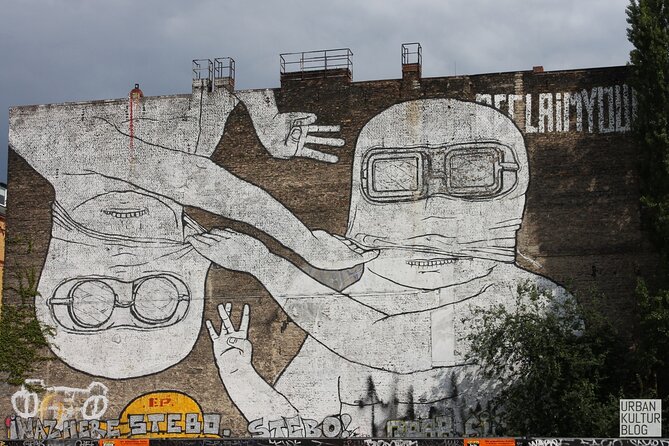
The tour includes Slava Berlin! Ukrainian Soulfood & Nalivanki, an immigrant women-led restaurant. This is one of the stops that makes the tour feel like more than a “Berlin classics” sampler.
You learn about the modern Ukrainian story in Berlin through the food itself. That kind of framing is important because it shifts your understanding from “immigrant food equals variety” to “immigrant food equals lived culture.” It also adds emotional weight to what you eat, since the menu comes with a background story.
From there, you step into a larger food setting at Markthalle Neun. This is a beautifully refurbished market hall from the 1900s. It survived World War II annihilation and also survived the pressure of commercialization enough to remain an independent icon.
What I like about this kind of stop is how it feels like a real Berlin gathering place. The market’s event calendar is described as bringing together food and beverage people from Berlin and beyond, connecting city visitors with surrounding producers the hall promotes. Even when you are just tasting, the setting helps you understand why Berlin food culture is so tied to community and local makers.
Practical tip: if you like looking around, take a quick lap with your eyes after your tasting. You do not need to turn it into a long stop, but spotting how the market is arranged helps you plan a return visit later.
Little Istanbul, Leylak, Ketels Curry, and a vegan finish at Brammibal’s Donuts
By the time you reach the Turkish-focused portion of the walk, the tour starts using place names that tell you exactly what you are walking through. The Turkish influence in Kreuzberg is described as rebuilding the neighborhood across the 1980s and 1990s. It also notes that Berlin has the largest Turkish population outside Turkey.
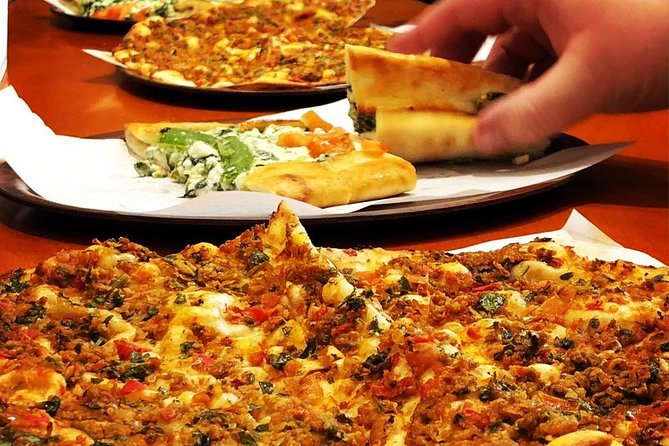
That sets up the Leylak stop, where you get typical street-food recipes from the Anatolian region. This is the heart of Little Istanbul, and it’s where you’ll likely understand why this part of Berlin is not a side note. It’s a major engine of food culture here.
Then the tour returns to another Berlin staple at Ketels Curry. Currywurst and schnitzel are two different kinds of comfort food. One is warm and crispy, the other is smoky, sauced, and instantly recognizable. Trying both within the same walk helps you see how Berlin’s “classic” foods coexist with its international neighborhood flavors.
Finally, you end with Brammibal’s Donuts at Maybachufer. This stop is all about vegan donuts, with the tour describing it as part of a citywide reputation for vegan options. If you have ever struggled to find a satisfying dessert that fits your dietary needs, this is a smart way to end a food tour without compromising.
Also, donuts near the finish are a good strategy. You’re already full from earlier tastings, but a small sweet bite gives you a satisfying end note rather than a heavy final meal.
What the guides do right, and how to get more out of the tastings
The biggest difference between a good food tour and a forgettable one is the guide. On this one, the guide style matters because you get both food sampling and history context tied to specific streets.
You may meet guides such as Lee, Elena, Tiago, or Will, and they are consistently described as handling questions well and connecting what you eat to what you see outside. That shows up in the way tastings are introduced, and in the way the walk is paced so you are not stuck waiting while someone else talks.
Here’s how you can get more out of it:
- Come hungry enough for lunch to vanish. People often skip breakfast for this kind of tour, and the included tastings support that choice.
- Ask one history question before the tastings start stacking. It helps the story stay connected to the food, not separated.
- If you have dietary needs, tell the operator at booking. A vegetarian option is available, but it needs to be arranged ahead of time.
You’ll also appreciate that the tour includes local Berliner Pilsner Beer. If you drink beer, it makes the experience feel more like a Berlin ritual. If you do not, you can still enjoy the food and beverages plan, just check how they handle substitutions for your needs when you confirm.
Who should book this Berlin East Meets West tour
I think this tour is best for you if:
- You want food plus street-level history in a short, walkable route
- You like Berlin’s mixed identity, where East and West still show up in daily life
- You enjoy sampling across cultures, not just eating one cuisine
- You want a small group so your questions get answered
I would pick a different option if:
- You want lots of big ticket sights with long stays
- You dislike walking between multiple food stops
- You want a strict menu focus with no story element
Also, if you are visiting and trying to figure out where your “Berlin food lane” is, this is a strong starter map. You’ll learn what kind of Berlin you like, then you can follow up on your own.
Should you book it?
Yes, if you want a mid-day Berlin plan that mixes tastings, beer, coffee, and street art with real neighborhood context. The value is strongest when you treat it as your main food experience, not a quick snack tour.
If you book, do two things to make it pay off: wear comfortable shoes for the walking, and tell them your dietary needs early so the vegetarian option (or other accommodations) are set up. If you do that, you’ll leave Kreuzberg with both a full stomach and a clearer sense of how Berlin’s past shows up in its present, one bite at a time.
FAQ
How long is the East Meets West Berlin Food Culture & Street Art tour?
It lasts about 3 hours and 30 minutes.
Where does the tour start and where does it end?
It starts at Industriepalast Hostel, Warschauer Str. 43, 10243 Berlin and ends at U Kottbusser Tor (10999 Berlin).
What time does the tour begin?
The start time is 12:00 pm.
What is included in the price?
The tour includes 6 local tastings, beverages, food tasting, and local Berliner Pilsner beer, plus a local guide.
Are there vegetarian options?
Yes, a vegetarian option is available. You should advise your needs at the time of booking.
Do I need a BVG transport ticket?
A BVG transport ticket is not included.
How many people are in the group?
The tour has a maximum of 8 travelers.
What is the cancellation policy?
Free cancellation is available up to 24 hours in advance for a full refund. If you cancel less than 24 hours before the start time, the amount paid will not be refunded.
Recently added around Berlin
- One Up to 3 Rickshaws(6 GUESTS)-Taylor Made Rickshaw Berlin Tour★ 5.0 · 20 reviews
- Berlin Private Custom Walking Tour With A Guide (Private Tour)★ 4.5 · 8 reviews
- Moonshine Comedy – English Stand Up Comedy by the bay★ 5.0 · 11 reviews
- Private Half-Day Berlin Sightseeing Tour with a Minivan Including Short City Walks★ 5.0 · 31 reviews
- Private taxi tour to Potsdam and Sanssouci 6-8h★ 5.0 · 30 reviews
- Private City Kickstart Tour: Berlin★ 4.5 · 71 reviews
- Private tour of Berlin★ 5.0 · 15 reviews
- Private Tutankhamun’s Tomb Live Escape Room in Berlin★ 3.5 · 11 reviews
Street Art & Alternative Tours, compared.
Alternative Bike Tour of Kreuzberg & Friedrichshain
Read our review →
Experience the Alternative Kreuzberg on a Bike Tour
Read our review →
Browse the lists this tour appears in