
Reviewed · BERLIN
Explore Berlin: See All The Iconic Sights & Some Hidden Gems
What makes this Berlin walk so interesting is how fast it connects big sites to big events, from the Nazi era through the Cold War. You’ll move on foot through the city’s memory, with your guide turning famous buildings into real human stories. WWII and Cold War history, right on the street is the main draw here.
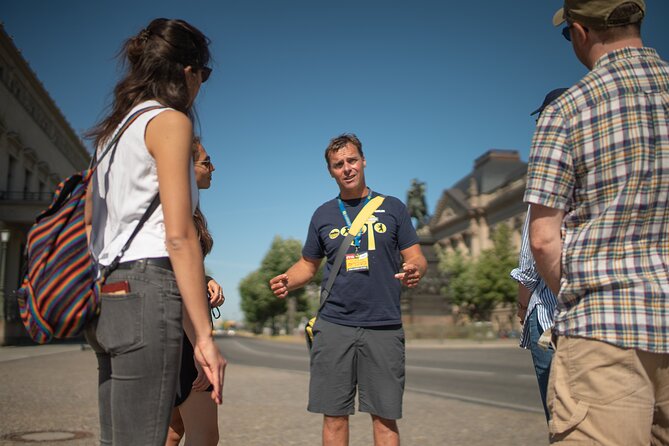
I love two things about it. First, you get major landmarks in one tight route, including Brandenburg Gate, the Reichstag area, and the Holocaust Memorial. Second, guides like Joseph, Klaus, and Hannah keep the pace moving and encourage questions, so you can clarify details instead of just nodding along.
One possible drawback: it is a real walk, and if you show up late you can lose the group early. A few notes point to meeting point confusion or the tour moving along quickly, so you’ll want to be on time and ready for about three miles of walking. Arrive early and stay close.
Key Points to Know Before You Go
- A guide-led story, not a checklist: Expect the city to be explained through regimes, borders, and what Berliners lived through.
- Practical photo timing: There are short stops built in, but you still should be ready to move when your guide says so.
- Big emotional stops: The Memorial to the Murdered Jews of Europe and sites tied to WWII come up on the same route.
- Optional tickets at major museums: Berliner Dom, Pergamonmuseum, Neues Museum, and Altes Museum have tickets not included if you want to go inside.
- Small enough to manage, big enough to be lively: Maximum group size is 25, so it’s usually easy to follow but still feels like a group.
- Common guides with strong communication: Names that come up include Joseph, Klaus, Hannah, Simon, Tina, and Jimmy.
A Fast, Focused Walk From Friedrichstrasse to the Brandenburg Gate
This is a three-hour, English-speaking walking tour designed to help you get your bearings fast. You start in central Berlin near Friedrichstrasse, then end at the Brandenburg Gate area by Pariser Platz. It is an efficient way to see the headline sites without trying to stitch together five separate tickets and bus rides.
The route also gives you a natural flow: Cold War division first, then the cultural and museum district, then the Berlin Wall trace and the Führerbunker site, and finally the Reichstag area and Brandenburg Gate. That pacing matters because Berlin’s history can feel like a pile of dates if nobody explains the connections.
Plan for steady walking. Based on the experience feedback, you may end up covering about three miles total, depending on the group and how often you stop for photos. Comfortable shoes help, and if the weather is cold, I’d treat it like an outdoor walk, not a sightseeing bus tour.
Other Berlin tours readers compare with this one:
- Berlin: Reichstag, Dome and Government District Guided Tour
★ 4.7 · 18,288 reviews - Berlin: 1-Hour City Tour by Boat with Guaranteed Seating
★ 4.3 · 16,993 reviews - Berlin: Boat Tour Along the River Spree
★ 4.4 · 11,252 reviews
Palace of Tears, Neue Wache, and the Human Side of Cold War Boundaries
Right at the start, the story turns to what borders did to real lives. At Palace of Tears, also known as the Traenenpalast, you get a quick but pointed look at an international checkpoint used during the Cold War. Your guide uses it to explain why crossing was not just geography, it was stress, separation, and rules.
Then you move to Neue Wache, a national memorial site reflecting on war and tyranny. This stop is short, but it sets the emotional tone. It’s the kind of place where you notice how Berlin builds remembrance into everyday public spaces.
If you care about understanding the texture of the period, these early stops are a smart way to get context before you hit the bigger, louder landmarks. If you’d rather save heavy topics for later, you might feel the intensity early, but it also keeps the tour coherent.
Humboldt University and the Museum Quarter on Foot, Without the Ticket Hassle
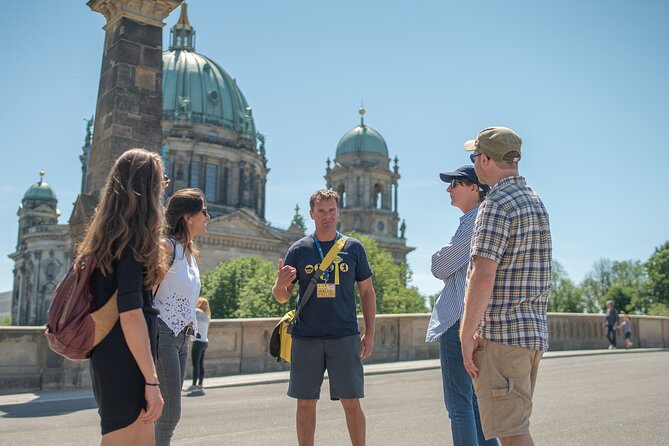
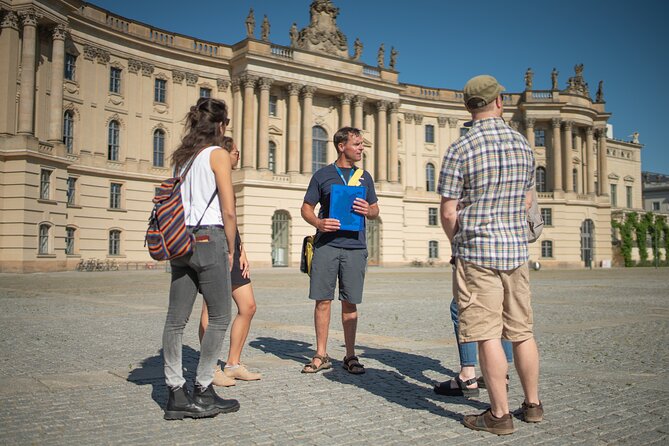
As you head toward the museum and cultural zone, your guide points out what to look for and what to ignore. Humboldt University comes up early, tied to big names like Marx, Engels, and Einstein. You’ll also get a sense of how education and politics tangled together in different eras of Berlin.
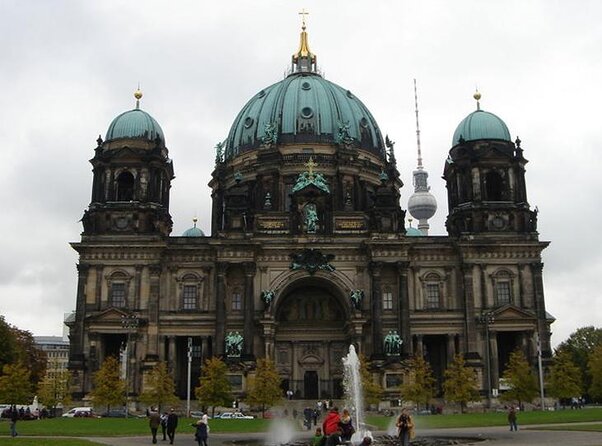
From there, the route passes several major cultural institutions in quick succession. You’ll see the Berliner Dom as well as the Lustgarten, the City Palace area (Stadt Schloss), and the Humboldt Forum. The tour notes that tickets are not included for Berliner Dom, so you’ll likely enjoy this stop from the outside unless you decide to purchase admission separately.
Next come the big museum stops along the route: Pergamonmuseum, Neues Museum, and Altes Museum. The tour highlights what each collection is known for, including Islamic art and the Ishtar Gate at Pergamonmuseum, and major ancient Egyptian holdings at Neues Museum, which is noted as part of a World UNESCO Heritage site. Altes Museum is tied to architect Karl Schinkel, and it’s described as the first museum built in Berlin.
Here’s the practical part. Because tickets are not included at those museums, your time at each is brief. If you want to go in deep, you’ll need to plan a separate museum visit on another day. For this tour, think of it as a guided orientation that tells you what to prioritize later.
One good tip is to treat this section as photo and orientation time. Snap a few exterior shots now, then decide later if a museum ticket is worth it for you. That approach saves money and keeps your legs from turning into wet noodles.
Bebelplatz, Book Burning, and How Berlin Uses Public Space to Teach
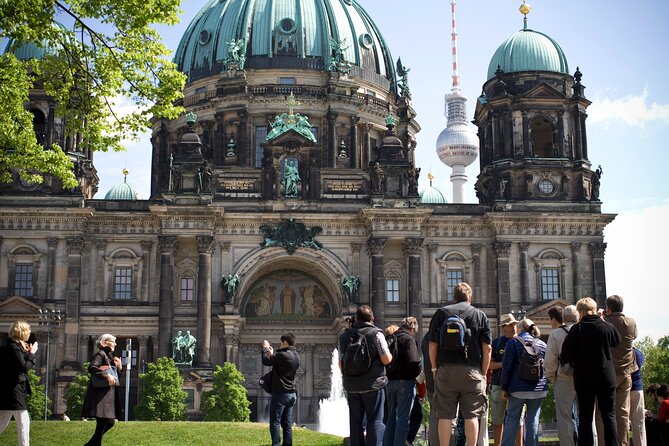
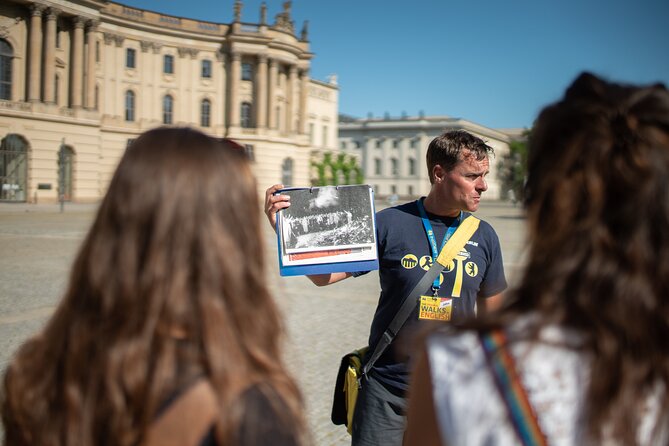
One of the most memorable moments on this route is Bebelplatz, a beautiful 18th century square. The tour ties the aesthetics to ideas, then hits you with the Book Burning Memorial at Bebelplatz, marking where the Nazis burned tens of thousands of books in 1933.
This stop works well even if you don’t know German history. Your guide frames what book burning meant in practice, not just as a headline event. It also connects the broader tour themes: authoritarian control, censorship, and the way regimes attack culture before they control bodies.
Short and focused, this is the kind of stop I love on walking tours because it gives you something to remember beyond architecture. If you’re traveling with teens or anyone who likes real-world examples, this is a strong teaching moment.
Still in Berlin, but a different kind of day:
- Discover Berlin Half-Day Walking Tour
★ 5.0 · 9,624 reviews - Berlin: Hop-on Hop-off Bus Tour with Live Commentary
★ 4.3 · 8,579 reviews - Berlin: Government District around the Reichstag Guided Tour
★ 4.7 · 8,447 reviews - Berlin: Reichstag, Plenary Chamber, Cupola & Government Tour
★ 4.6 · 8,422 reviews
Staatsoper, Konzerthaus, and Gendarmenmarkt, Berlin’s Cultural Face
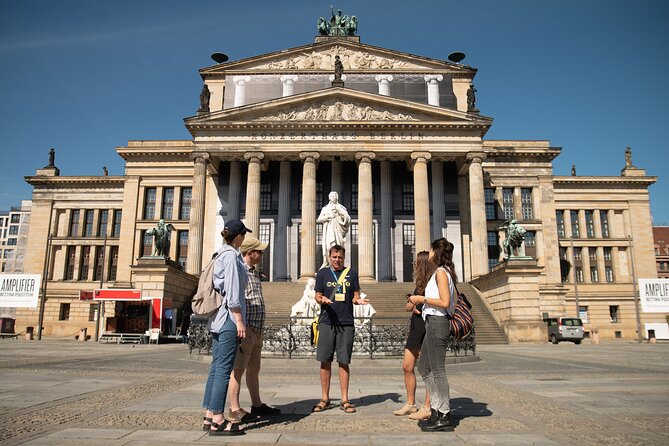
After the darker moments, the route shifts into music and architecture. You’ll pass Staatsoper, noted as built under Friedrich the Great in 1743. Then there’s Konzerthaus, completed in 1821, described as a spectacular concert house.
Next up is Gendarmenmarkt, with its famous paired churches that reflect Berlin’s religious tolerance. The tour calls out the French Cathedral and German Cathedral here, and the whole square feels designed for dramatic photos.
These stops are brief, but they matter because they remind you that Berlin kept making art even while politics was grinding people down. If all you see is the heavy stuff, Berlin starts to feel like one long tragedy. This section keeps the city human.
If you’re someone who likes architecture details, pay attention to the facades and the symmetry. Your guide will connect them to time periods, and once you see the timeline, it clicks.
Checkpoint Charlie and Topography of Terror, Where the Wall Shows Up in Plain Sight
Then you hit the most famous Cold War punchline: Checkpoint Charlie. The tour places it within the Cold War border system and highlights the 1961 tank stand-off between Soviet and American armed forces. Even if you’ve seen photos before, it helps to understand why this crossing point became so symbolic.
After that, you move to Topography of Terror, where you can see a 200 meter piece of the Berlin Wall. This stop gives you a more concrete sense of the physical reality behind the story. It’s one thing to hear about division, it’s another to stand near a surviving stretch of barrier.
A practical note: these areas can be busy in general, and the tour moves with a group pace. To get good photos, stand where your guide tells you and keep the group together. If you drift, you risk losing the line.
This is also the point where I’d ask questions if something still feels confusing. Asking in person is a huge advantage of a guided walk, and multiple guides in the experience feedback are described as welcoming questions early.
From Göring’s Air Ministry to the Fuhrerbunker Site
As the tour moves toward the WWII climax points, it gets direct. Aviation Ministry of Berlin is described as Hermann Göring’s airforce ministry, and the route also notes later East German usage and German Finance Ministry functions. The point here is continuity and reuse, how power changes hands without erasing the architecture.
Then comes one of the most intense stops: Fuhrerbunker. You’ll stand above the location where Hitler spent the last days of WWII, tied to the site of his bunker. The tour keeps this grounded in what happened there, rather than treating it as a sightseeing stop.
Important mindset: this is not a casual photo corner. Even if you’ve heard the history before, it lands differently when you’re standing on the ground that shaped the ending of the war. If you’re sensitive to WWII topics, this is still the right tour to do, but go slowly and take breaks if you need them.
Holocaust Memorial and the Reichstag to Brandenburg Gate Finale
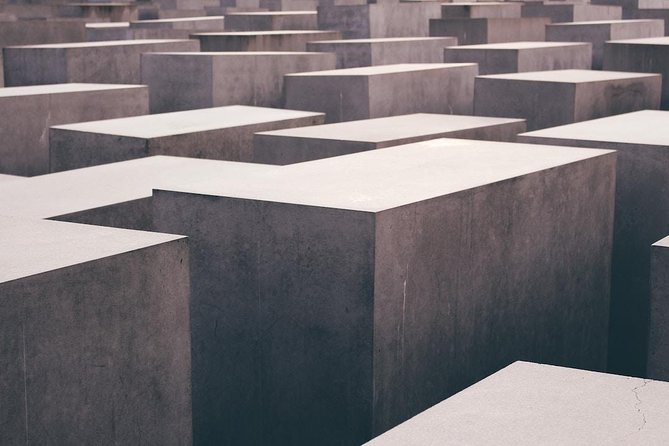
The route culminates in two major remembrance and governance zones. First, you’ll walk through the Holocaust Memorial, the Memorial to the Murdered Jews of Europe. Your guide’s framing helps you understand the purpose of the memorial, and walking through it is more than a quick look, it’s a moment of silence built into the experience.
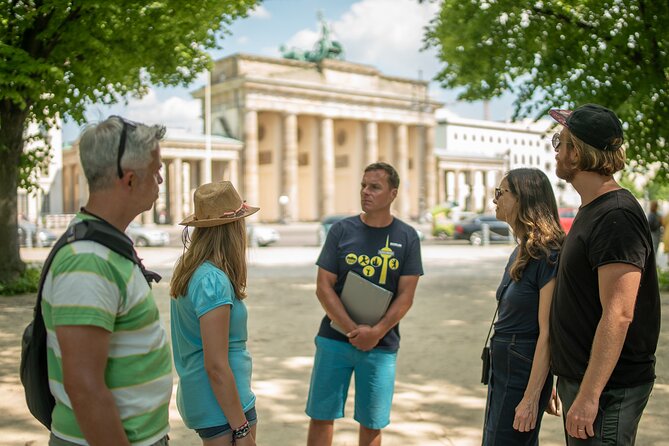
After that, you move through the broader German Parliament and government quarter area, then finish at Brandenburg Gate. The tour explains Brandenburg Gate as a national symbol that shifted from a marker of division during the Cold War to a statement of peace and unity.
The final square is Pariser Platz, where you can see the American and French embassies and the famous Hotel Adlon from the outside. It’s a good way to close because it feels like the tour’s theme resolves on one iconic viewpoint.
If you want a simple win here, look at Brandenburg Gate from a few angles before you leave. The symbolism is real, but it also looks great in the late-day light.
Price and Logistics, What You’re Really Paying For
At about $24.07 per person for roughly three hours, this is priced like a value-first walking tour. The key reason it feels like good value is that you’re not just looking at buildings, you’re getting context tied to the same path, which you would otherwise have to cobble together with separate guides, museum audio, or your own reading.
What you should watch for is what’s included versus what costs extra. Tickets are not included for stops like Berliner Dom, Pergamonmuseum, Neues Museum, Altes Museum, and the Aviation Ministry area. That doesn’t make the tour weak, it makes it focused. You get the guided orientation now, then you choose later what deserves paid entry.
The tour also uses a mobile ticket, runs in English, and has a maximum group size of 25. Those are the kinds of details that affect how pleasant the experience feels, especially on busy days.
One more logistics point: you’re asked to be at the meeting point 15 minutes before the tour begins. With any walking tour in a big city, being five minutes late can turn into a scavenger hunt. Avoid that by arriving early and keeping your eyes up for the guide.
Should You Book This Berlin Sights and Cold War Walking Tour?
Book it if you want a fast, guided way to understand how Berlin went from WWII to the Cold War and then to reunification, all while covering major landmarks like Brandenburg Gate, the Reichstag area, Checkpoint Charlie, and the Holocaust Memorial. It’s also a great choice if you like asking questions, because the tour setup and guide approach are built around answering them.
Skip it or pick a different option if you struggle with longer walking. The route is short in time, but the total distance still adds up, and you may need more frequent breaks. Also, if you hate emotional WWII and genocide topics, you might find this tour too heavy for an early trip, since it includes memorials tied to the Holocaust and WWII.
If you’re aiming to get oriented in Berlin on day one or day two, this is a strong plan. Afterward, you’ll know what to revisit, what to skip, and why the buildings matter.
FAQ
What is the tour length?
The tour is approximately 3 hours.
Is the tour offered in English?
Yes, the tour is offered in English.
Where does the tour start and end?
You meet your guide near Friedrichstrasse train station in central Berlin. The tour ends at Brandenburg Gate, by Pariser Platz.
Are admission tickets included for major museums and churches?
Admission tickets are free for several stops, but tickets are not included for some places such as Berliner Dom, Pergamonmuseum, Neues Museum, and Altes Museum. You can purchase those separately if you want to enter.
How big is the group?
The maximum group size is 25 travelers.
Can I cancel for a full refund?
Yes. You can cancel for a full refund if you cancel at least 24 hours in advance of the experience start time. If you cancel less than 24 hours before, the amount you paid is not refunded.
Recently added around Berlin
- Berlin Private Custom Walking Tour With A Guide (Private Tour)★ 4.5 · 8 reviews
- One Up to 3 Rickshaws(6 GUESTS)-Taylor Made Rickshaw Berlin Tour★ 5.0 · 20 reviews
- Moonshine Comedy – English Stand Up Comedy by the bay★ 5.0 · 11 reviews
- Private Half-Day Berlin Sightseeing Tour with a Minivan Including Short City Walks★ 5.0 · 31 reviews
- Private taxi tour to Potsdam and Sanssouci 6-8h★ 5.0 · 30 reviews
- Private City Kickstart Tour: Berlin★ 4.5 · 71 reviews
- Private tour of Berlin★ 5.0 · 15 reviews
- Private Tutankhamun’s Tomb Live Escape Room in Berlin★ 3.5 · 11 reviews