

Reviewed · BERLIN
Sündenbabel Berlin – The Roaring Twenties in Berlin
Berlin’s 1920s queer scene is not just a story you read in a book, it’s a street map you can walk. This tour connects that world to very real addresses, from Nollendorfplatz to the Kurfürstendamm nightlife zone, with your guide stitching the clues together stop by stop.
I especially like the street-level storytelling. You get names and signals, like the Eldorado slogan at Motzstraße, and the way legendary entertainment spots shaped what people did after dark.
The other big plus is that it mixes major landmarks with specific entertainment venues. The only drawback: some stops involve ticketed venues (for example Zoo Palast), so you may pay a little extra if you want everything inside rather than just viewing from outside.
Key highlights you will actually notice

- Nollendorfplatz as the starting point for the gay and lesbian magnet in the 1920s
- Motzstraße and the Eldorado place sign that sets the tone fast
- Fuggerstraße Scala connections, including Enrico Rastelli, Clown Grock, and the Scala Girls
- KaDeWe as a fashion sensation pulling in huge crowds looking for the latest Paris styles
- Tauentzienstraße’s Femina Palace, preserved and known for open-air dancing when the roof could open
- A smart finish at Cafe Kranzler, right where Ku’damm energy takes over again
Where Nollendorfplatz sets the tone for queer Weimar Berlin
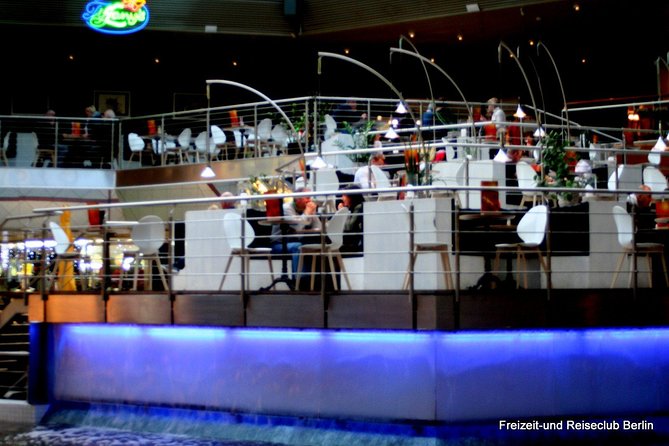
Your tour starts at Nollendorfpl. 3-4, right in the area that mattered for the queer community in the 1920s. The framing is instantly clear: Auden’s dreamlike line about Berlin is tied to the way people formed connections there, and how Nollendorfplatz became a magnet for gay and lesbian life.
You get to think about history in a practical way. Instead of memorizing dates, you watch the city’s geography explain itself. The streets you’re walking are the same kind of crossroads where word-of-mouth, nightlife culture, and social freedom traveled.
This is also a tour built for a manageable pace. It runs about 2 hours, stays in English, and keeps group size small enough to feel personal, up to 25 travelers. That matters because the best parts are the guide’s connective tissue: why a street mattered, how a venue fit into the scene, and what the area signals even today.
Other Berlin tours readers compare with this one:
- Berlin: Reichstag, Dome and Government District Guided Tour
★ 4.7 · 18,288 reviews - Berlin: 1-Hour City Tour by Boat with Guaranteed Seating
★ 4.3 · 16,993 reviews - Berlin: Boat Tour Along the River Spree
★ 4.4 · 11,252 reviews
Motzstraße and the Eldorado slogan: the scene before you even get tickets
Stop 1 is Motzstraße, and it’s a clever choice because it turns the street into a message. You walk down the sidewalk in a Weimar mood, where a sign line like This is the place recalls the famous Eldorado brand and what it represented.
The tour doesn’t ask you to guess. Your guide points you toward the idea that prominent personalities came and went here, which is exactly the kind of detail that makes the history feel personal instead of generic. If you’ve ever visited a city and felt like everything is separated into museums over there and nightlife over there, this stop helps you see the overlap.
Practical tip: take a moment at the curb and look around. Even without the 1920s posters, you can still read the street shape: where people would have noticed the sign, where they’d have met, and how easy it would have been to move between venues.
Fuggerstraße and the Scala nights you can almost hear
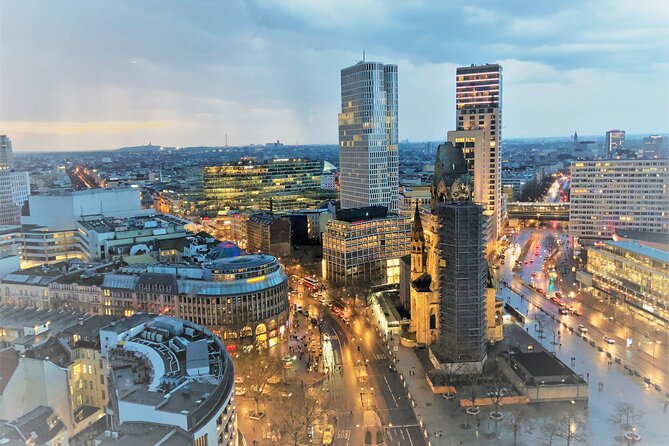
Stop 2 is Fuggerstraße, a short walk from the former Scala. In this part of Berlin, “going to the Scala in the evening” becomes a slogan in its own right, the kind of phrase people used when nightlife had a signature address.
What makes this stop fun is the guide’s use of entertainment history as a lens. You’re not only hearing about nightlife as a concept, you’re hearing about the international names connected to the Scala, including Enrico Rastelli, Clown Grock, and the Scala Girls. That list helps you picture the audience: it wasn’t just local scenes, it was world-famous performance culture drawing people in.
From a value standpoint, I like that this stop is short but dense. You spend a few minutes outside, then move on with more context already in your head. If you love theater, cabaret, or circus-style performances, this is one of those moments where Berlin feels like a stage.
KaDeWe’s early-1900s fashion shock and the Femina Palace roof legend
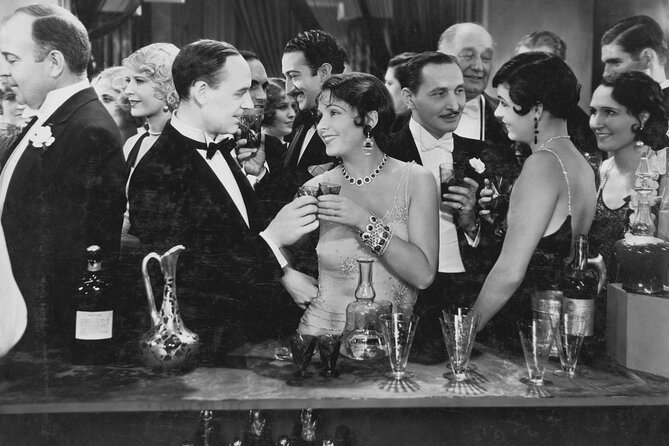
Stop 3 is KaDeWe, and the tour uses it to explain how modern consumer culture fed nightlife. The store opened at the beginning of the 20th century and attracted audiences of millions, with the latest Parisian fashion a world sensation. You feel the logic: shopping wasn’t separate from being seen, it was part of the social display.
Then Stop 4 shifts to Tauentzienstraße and the Femina Palace, a legendary dance hall. The most memorable detail here is that the building has been preserved in its original condition, and the roof could open so dancing could happen in the open air. That’s not just a curiosity. It tells you what people valued: atmosphere, visibility, and the thrill of being outdoors while still protected by the venue.
A small drawback to keep in mind: these landmarks come with a lot of visual information, so if you’re the type who likes slow museum-style reading, the timing can feel fast. The tour is designed for story flow, not lingering.
Practical tip: wear comfortable shoes for this section. You’ll be moving between major streets, and you’ll want your feet to cooperate.
Still in Berlin, but a different kind of day:
- Discover Berlin Half-Day Walking Tour
★ 5.0 · 9,624 reviews - Berlin: Hop-on Hop-off Bus Tour with Live Commentary
★ 4.3 · 8,579 reviews - Berlin: Government District around the Reichstag Guided Tour
★ 4.7 · 8,447 reviews - Berlin: Reichstag, Plenary Chamber, Cupola & Government Tour
★ 4.6 · 8,422 reviews
Kaiser Wilhelm Memorial Church and Zoo Palast, where cinema pulled in the masses
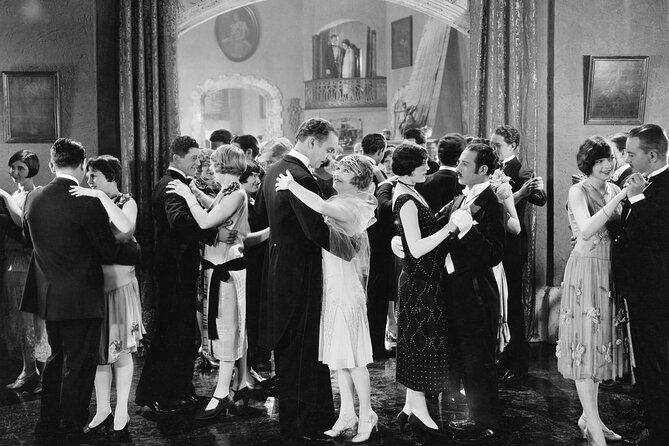
Stop 5 is Kaiser Wilhelm Memorial Church. It’s not only an eye-catcher and a landmark, it works well in this itinerary because it grounds you in a Berlin you can recognize. Even if you don’t go inside, it helps you calibrate your mental map.
Stop 6 is Zoo Palast, and this is where the tour makes cinema feel social again. You learn how cinema drew the masses in the 1920s, how advertising worked, and how a gentleman might take his wife out. That last bit is a reminder that entertainment was also ritual. People didn’t just watch films, they used cinema to perform status, romance, and belonging.
Important value note: the Zoo Palast admission is not included. If you want the full experience inside, plan to budget a bit more. If you’re more interested in the guide’s interpretation than in paying for entry, you can still get a lot from the way the story is framed outside.
Bahnhof Zoo and the meeting-place logic of gay and lesbian Berlin
Stop 7 is Bahnhof Zoologischer Garten, one of the key segments of the tour. In the 1920s, the area around the station became a meeting place for the gay and lesbian movement in Berlin, and your guide explains which establishments were preferred.
This is the moment where the tour’s title makes sense. Instead of treating queer life as one abstract timeline, it gives you a practical geography: you can imagine where people would meet, where they might feel safer, and how nightlife and transportation routes overlapped.
I also like that this stop includes admission. It means you’re not always just looking from the curb. You get a chance to spend time where the connections would have felt real, and that’s where the tour stays most convincing.
Theater des Westens, Delphi Palace, and the entertainment map of Ku’damm
Stop 8 brings Theater des Westens and the adjoining Delphi Palace into the conversation. Both were important places of entertainment or dancing in the 1920s. This is where Berlin starts to feel like a connected system of stages: you have clubs and dance halls, then bigger venues that turn nightlife into a public event.
Stop 9 is Kurfürstendamm, and here the tour delivers both humor and advice. You’re told to leave your credit card at home, then guided through the luxury items associated with the boulevard, already a thing in the 1920s. The tour also connects the shopping street to dance and entertainment venues, which helps you understand why the area was so attractive.
A helpful way to think about this part: the tour isn’t pushing you to buy things. It’s using the shopping line to explain how status and leisure worked together. If you’ve ever wondered why some streets become symbols, Ku’damm is a case study.
Note: some venues around here mark admission as not included. If you’re hoping for every indoor space on the itinerary, check what’s ticketed in advance so you can decide what matters most to you.
Kranzler Eck, Cafe Megalomania, and stories that stick after the walk
Stop 10 is Kranzler Eck, tied to the former Cafe megalomania. This is one of those endings that feels like a punchline with a lesson: why it was called that and what stories hide in the name.
Even without going deep into any single building, the stop works because it brings the tour full circle back to the idea of performance. In the 1920s, Berlin was a city where reputation was part of entertainment. A cafe name could signal style, attitude, and who belonged there.
The tour ends at Cafe Kranzler, right on Kurfürstendamm. That makes it easy to keep the mood without having to jump to another neighborhood. You finish with a place that fits the story you just heard, not an awkward scramble across the city.
Timing, pace, and who this Berlin story-walk fits best
This is a 2-hour guided walk with short stops, roughly five minutes each for most exterior sights, and a few longer moments where your guide is likely to give more detail. The itinerary leans on visible landmarks and recognizable venue locations, which keeps it efficient.
Group size is capped at 25 travelers, so you get more chances to hear the guide clearly and ask questions without feeling swallowed by a crowd. The tour is offered in English, and it uses a mobile ticket, which is a small convenience that matters on travel days.
Who it suits best:
- You like history told through locations, not just through classroom-style facts.
- You want queer Weimar Berlin context alongside famous sights like KaDeWe and Kaiser Wilhelm Memorial Church.
- You enjoy nightlife and entertainment history, especially cabaret and cinema culture.
Who should think twice:
- If you only want museum-level entry fees and long interior visits, this may feel too focused on street scenes and short stops.
- If you strongly want to do every ticketed venue inside, be ready that some admissions are not included.
Should you book Sündenbabel Berlin: The Roaring Twenties in Berlin?
Yes, if your goal is to understand 1920s Berlin through a coherent walkable storyline, not disconnected highlights. This tour gives you names, slogans, and venue identities that help you picture what people did, where they met, and why certain addresses mattered.
I’d especially book it if you like the idea of pairing iconic Berlin landmarks with more specific queer history details, like the Eldorado references, the Scala performer connections, the Femina Palace open-roof dancing, and the Bahnhof Zoo meeting-place explanation.
Skip or choose another format if you mainly want indoor attractions with lots of time inside. This experience is a story-and-streets tour, and its value comes from how smoothly it connects those stories to real corners you can see.
FAQ
How long is the tour?
The tour is listed as about 2 hours.
Where does the tour start and end?
It starts at Nollendorfpl. 3-4, 10777 Berlin, and ends at Kurfürstendamm 10719 Berlin, at Cafe Kranzler.
What language is the tour offered in?
The tour is offered in English.
Do I need a mobile ticket?
Yes, the tour uses a mobile ticket.
What is the maximum group size?
The tour has a maximum of 25 travelers.
Are all admissions included?
No. Zoo Palast admission is not included, while Bahnhof Zoologischer Garten admission is included. Some other venue stops are marked as admission not included, while several stops are free.
What time does the tour start?
The start time is 2:00 pm.
Is this tour suitable for most travelers?
Most travelers can participate.
What is the cancellation policy?
You can cancel for a full refund up to 24 hours in advance. If you cancel less than 24 hours before the start time, the amount paid is not refunded. Free cancellation is available.
Recently added around Berlin
- Berlin Private Custom Walking Tour With A Guide (Private Tour)★ 4.5 · 8 reviews
- One Up to 3 Rickshaws(6 GUESTS)-Taylor Made Rickshaw Berlin Tour★ 5.0 · 20 reviews
- Moonshine Comedy – English Stand Up Comedy by the bay★ 5.0 · 11 reviews
- Private Half-Day Berlin Sightseeing Tour with a Minivan Including Short City Walks★ 5.0 · 31 reviews
- Private taxi tour to Potsdam and Sanssouci 6-8h★ 5.0 · 30 reviews
- Private City Kickstart Tour: Berlin★ 4.5 · 71 reviews
- Private tour of Berlin★ 5.0 · 15 reviews
- Private Tutankhamun’s Tomb Live Escape Room in Berlin★ 3.5 · 11 reviews