

Reviewed · 1-DAY TOURS
Berlin in one day – day tour with an expert guide
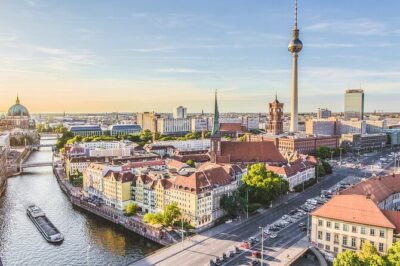
This one-day Berlin tour is interesting because it strings together key WWII and Cold War places into one tight route you can actually process, not a rushed grab bag. I love the expert local guide who can tune the focus to your interests, and I love how you hit standouts like Brandenburg Gate and the Wall memorial in about 6 hours.
The main drawback is the pace. You are walking through a lot of emotionally intense stops, so comfortable shoes and a flexible mindset help a lot.
Key highlights to expect
- A full Berlin story in 6 hours, moving from WWII flashpoints to Cold War reality
- Major sites in one route, including Brandenburg Gate, Checkpoint Charlie, and the Wall memorial area
- A guide who structures the day, keeping the route coherent and easy to follow
- No vehicles on the tour, so you get street-level context and fast orientation
- Admission included, which helps you avoid extra ticket hassles at the big stops
Price and what you actually get in 6 hours
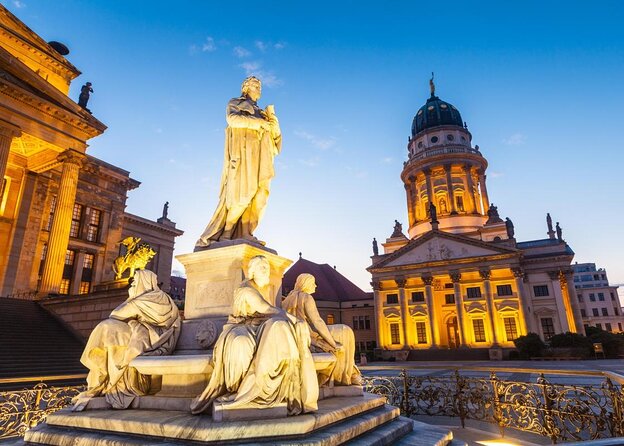
At $294.72 per person for a roughly 6-hour experience, this is not a bargain-basement city walk. But you are paying for the things that make a one-day Berlin plan work: a local guide, a structured route, and at least one admission ticket included for major sights.
The other value point is the format. You are not hopping in and out of vehicles. Instead, you move through Mitte and surrounding central areas where Berlin’s most “you have to see it” history is concentrated. That means your time goes to sights and explanations, not transfers.
If your goal is to cover the big themes, not just collect photos, this tour makes sense. You will leave with a clearer sense of where WWI and WWII trauma shaped the city, how the Cold War split it, and how Berliners marked those events on the ground.
A few more Berlin options worth a look
- Berlin Complete in one day
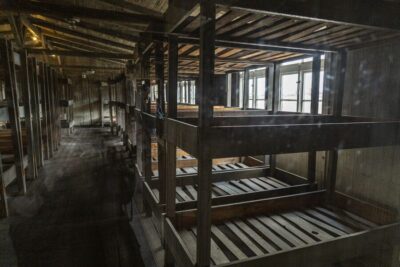
★ 5.0 · 222 reviews - From Berlin: Sachsenhausen Concentration Camp Day Trip
★ 4.7 · 52 reviews - Private Tour: Potsdam Day Trip from Berlin
★ 4.5 · 43 reviews
Meeting point at Ebertstraße 24 and the 5-minute hotel lobby pickup
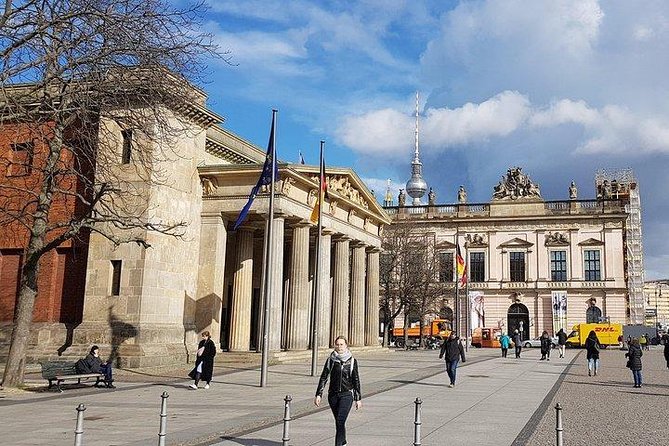
The day starts at Ebertstraße 24, 10117 Berlin. The tour ends back at the same meeting point, which helps you plan the rest of your evening.
Pickup is available on foot from your hotel lobby about 5 minutes before the tour begins. That small detail matters. You avoid the awkward waiting game, and you get a fast start without having to find some far-off transit stop.
Also, it’s close to public transportation, so even if your exact pickup spot is a bit tricky, you are not stuck far from transit options.
How this tour keeps you moving without a bus
There are no vehicles in this tour. That sounds like a small detail, but it changes the whole feel. You see Berlin as pedestrians do, with the street layout and spacing of landmarks doing part of the teaching.
It also means the route is built for walking efficiency. In practice, that helps you fit a lot into a half-day without it turning into a constant sprint. Your guide’s job is to keep the day structured, so you are not just stumbling from one famous sign to the next.
If you get tired easily, this is the main thing to consider. You can participate as a typical adult visitor, but you should still expect a steady pace and some time outdoors.
Mitte first, Berlin’s center as your timeline
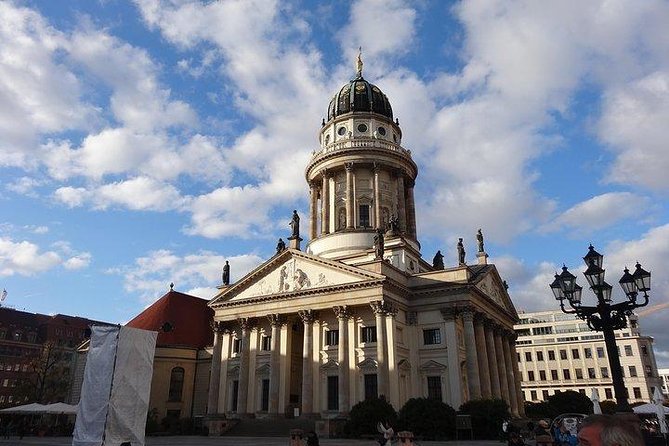
The tour begins in Mitte, which is a smart choice because this is where Berlin compresses its most important political and historical sites into a walkable area.
You start with WWI and WWII historical sights, including a retrospective focused on the Battle of Berlin. Even if you know the names, Berlin can still feel abstract until you see how the city’s geography and institutions fit into the story. Mitte gives you that anchor fast.
From there, the tour builds forward into the Cold War layer of the city. That matters because in Berlin, the past is not behind glass. It’s written into streets, sight lines, and memorial placements. Your guide keeps tying things together so you do not end the day with ten separate stops and no connecting thread.
Still in Berlin, but a different kind of day:
- Berlin: Reichstag, Dome and Government District Guided Tour
★ 4.7 · 18,288 reviews - Berlin: 1-Hour City Tour by Boat with Guaranteed Seating
★ 4.3 · 16,993 reviews - Berlin: Boat Tour Along the River Spree
★ 4.4 · 11,252 reviews - Discover Berlin Half-Day Walking Tour
★ 5.0 · 9,624 reviews
Brandenburg Gate and Checkpoint Charlie, where the city turns cinematic
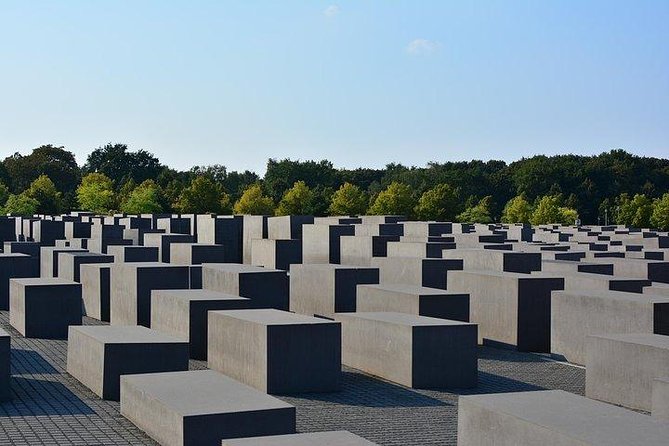
You will spend time around major Cold War and WWII symbolism, including the Brandenburg Gate and the area around Checkpoint Charlie and the Berlin Wall memorial.
The Brandenburg Gate works as a reference point because it’s both political and symbolic. It’s easy to take it at face value as a postcard landmark, but your guide’s explanations help you see it as part of the shifting power map over the 20th century.
Checkpoint Charlie and the wall memorial zone add the human scale. This is where Berlin stops feeling like history on a map and starts feeling like choices, danger, and daily life. The tour’s emphasis on the wall makes it more than scenery. You get context for what “divided city” meant in real time.
If you like understanding how people survived restrictive systems, this part is a highlight. The tour leans into the stories that explain the physical barriers, not just the dates.
East Side Gallery and Museum Island, how Berlin layers old and new
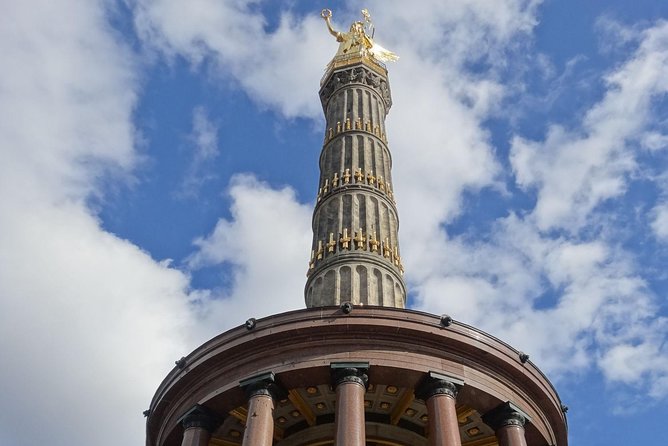
Next comes the East Side Gallery and Museum Island. This is a good tonal shift in the route. After heavy wall history, you move into spaces where Berlin shows how it repurposed and reinterpreted its past.
The East Side Gallery is known for its wall art, and it fits the tour’s broader theme perfectly. Berlin took one of the city’s most painful symbols and turned it into a place for public voice. That doesn’t erase the tragedy, but it changes what you feel standing there.
Museum Island adds another type of context: the idea of institutions and learning in Berlin. In a city shaped by politics, universities and cultural landmarks matter because they represent continuity as much as change. When your guide connects this back to the wider story of East vs West, it helps the city make sense beyond one era.
Reichstag and Topography of Terror, government plus receipts
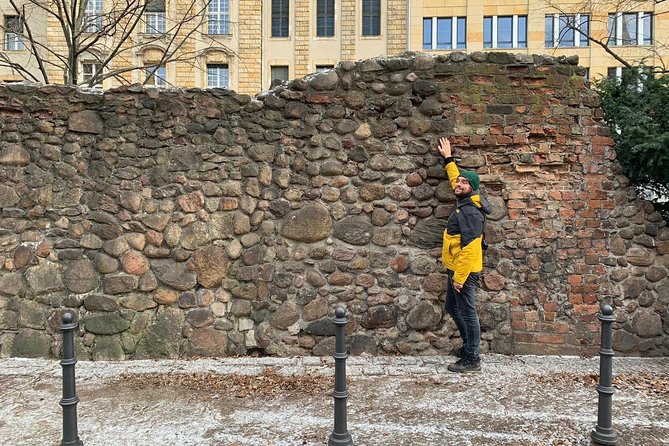
Two big stops follow: the Reichstag and the Topography of Terror. This is where your day gets very real, very fast.
The Reichstag ties Berlin’s political center to the kinds of dramatic shifts that defined the 20th century. Standing in the vicinity, you get a sense of how much history is wrapped up in government buildings and the people who fought over them.
Topography of Terror brings the evidence side of the story. Your guide’s walkthrough helps you connect the museum setting to the bigger narrative. This is not just “look at artifacts,” it’s understanding how systems of terror were built and how they left a mark.
If you want to feel grounded in facts while still hearing the story’s emotional weight, this pairing is strong. The included admission ticket also means you can focus on the site rather than worrying about which door to find or whether you need extra cash on the spot.
Unter den Linden, the “main street” that tells the story of power
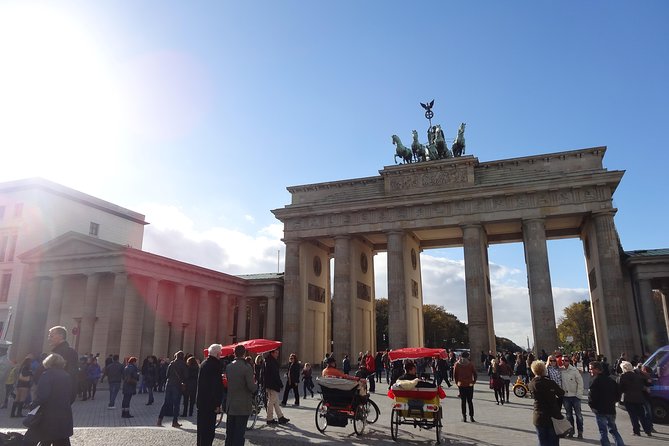
You will walk Unter den Linden, the famous avenue that ties together monuments, institutions, and the sense of ceremonial Berlin.
This is more than a scenic transit stretch. It’s a way to read the city. Your guide uses the avenue to show how power and public life were staged in Berlin, first as one vision, later as a city divided between different systems.
If you enjoy walking and learning at the same time, this section helps you build a mental map. You start to recognize how the city’s big axes line up with political sites you will see later.
Watchtowers, ghost stations, and escape stories, where the Cold War becomes physical
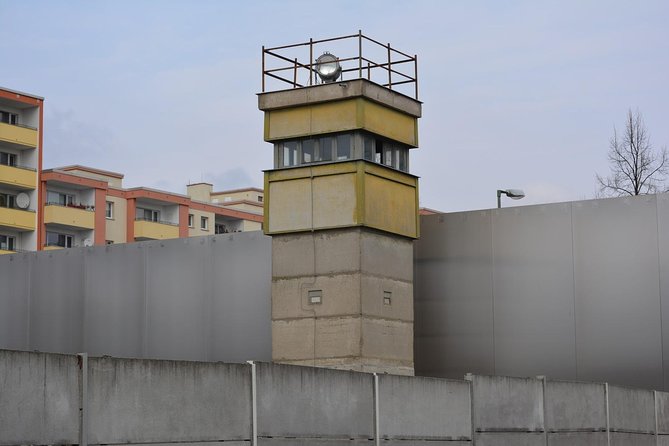
One of the tour’s more memorable themes is the section focused on watchtowers, ghost stations, and escape stories. These elements turn Cold War history into something tactile.
Instead of treating the Cold War as vague tension, you see it as infrastructure. Barriers. Surveillance. Places that became unsafe or unreachable. Your guide’s storytelling connects the dots so you understand how everyday movement changed when the city was split.
This is also where Berlin’s contradictions show up. The city kept functioning, people kept traveling, and yet some routes were effectively erased. When you understand that, you stop seeing the wall as just a line on a map.
Remembering Europe’s Murdered, a place for weighty reflection
You will also visit Remembering Europe’s Murdered. This is one of those moments where the tour shifts from explanation to reflection.
The value here is that you’re not just standing there with your thoughts and trying to guess context. Your guide helps set the scene so you understand what the site is meant to communicate.
Be prepared for the day to feel heavier here. It’s not the best stop to sprint through for photos. If you want to get the most out of this part, slow down mentally for a few minutes and let the meaning settle.
Humboldt University, Soviet War Memorial, and the East vs West contrast
Later, the tour includes Humboldt University and the Soviet War Memorial, then brings you toward the core theme of Divided Berlin, East vs West.
Humboldt University adds an important thread: education and ideology. In Berlin, schools and research aren’t neutral backdrops. They get pulled into the systems around them.
The Soviet War Memorial is another anchor point for how power and memory were organized by the occupying influence. It’s a reminder that Berlin’s split was not only about ideology, it was also about military presence and how that shaped public space.
When your guide ties these stops into the East vs West story, the city stops feeling like a list of landmarks. You understand the logic behind the way the two sides used monuments and institutions to define legitimacy.
What to bring so the 6 hours feel manageable
This tour is designed for walking and seeing a lot in a short day. To make it comfortable, I’d plan like this:
- Wear comfortable shoes. Some history sites require walking on uneven sidewalks and long stretches outdoors.
- Bring water. Even a well-timed tour still means time standing and walking between stops.
- Dress for the weather. You’ll be outside during key parts of the route.
- Bring a curious attitude. This is the kind of day where a good question to ask your guide can sharpen the whole experience.
Also, because the tour is private to your group, you can often adjust your speed slightly to match your comfort level. The guide’s structure helps you keep up without feeling lost.
Guide quality is the difference between seeing sights and understanding them
The tour is led by local guides, and the standout praise you’ll hear is about how structured and adaptable the experience feels. You want a guide who can explain the why behind what you are seeing, and who can adjust when your interests shift.
If you care more about the WWII side, the Cold War side, or how Berlin’s institutions tie everything together, this tour format is built for that. The pace is tight, but the explanations aim to keep the story coherent rather than random.
Who this tour fits best
This is a strong choice if you:
- Want a one-day overview that connects WWII to the Cold War in a logical way
- Prefer walking through central Berlin rather than hopping in a bus
- Appreciate guided context, especially at memorial and museum-style stops
- Want a private group experience rather than a large crowd tour
It might be less ideal if you:
- Need lots of downtime between stops
- Know you dislike walking and long outdoor segments
- Prefer extremely slow museum time without a packed schedule
Should you book Birchys Berlin Tours for Berlin in one day?
If you want the smartest path through Berlin’s biggest historical signals in a half-day, I’d book it. The price is high enough that you should treat it as a planned experience, not a casual stroll. For that money, you get a guided route built around the key story beats, plus admission included, and a format that avoids bus logistics.
Two final decision points help you be confident:
- If your goal is understanding the city quickly, the structured route is exactly what you need.
- If you are ready for walking and reflective stops, this tour’s pacing will feel rewarding rather than exhausting.
If you like Berlin best when history has context, not just monuments, this one-day sweep is a solid pick.
FAQ
How long is the Berlin in one day tour?
It runs for about 6 hours.
Where is the meeting point?
The tour starts at Ebertstraße 24, 10117 Berlin, Germany, and it ends back at the same meeting point.
Is pickup available?
Yes. The guide will pick you up on foot from your hotel lobby about 5 minutes before the tour starts.
Does the tour include transportation by vehicle?
No. The tour does not use vehicles. It is designed around walking.
Is the tour offered in English?
Yes, it is offered in English.
What is included in the price?
Local guides and an admission ticket are included. Group discounts are also offered.
Can I cancel for a full refund?
Yes. You can cancel up to 24 hours in advance for a full refund.
Recently added around Berlin
- Berlin Private Custom Walking Tour With A Guide (Private Tour)★ 4.5 · 8 reviews
- One Up to 3 Rickshaws(6 GUESTS)-Taylor Made Rickshaw Berlin Tour★ 5.0 · 20 reviews
- Moonshine Comedy – English Stand Up Comedy by the bay★ 5.0 · 11 reviews
- Private Half-Day Berlin Sightseeing Tour with a Minivan Including Short City Walks★ 5.0 · 31 reviews
- Private taxi tour to Potsdam and Sanssouci 6-8h★ 5.0 · 30 reviews
- Private City Kickstart Tour: Berlin★ 4.5 · 71 reviews
- Private tour of Berlin★ 5.0 · 15 reviews
- Private Tutankhamun’s Tomb Live Escape Room in Berlin★ 3.5 · 11 reviews
1-Day Tours, compared.

Private Day Trip to Potsdam from Berlin by Train
Read our review →
Potsdam Day Trip from Berlin with a Local: Private & Personalized
Read our review →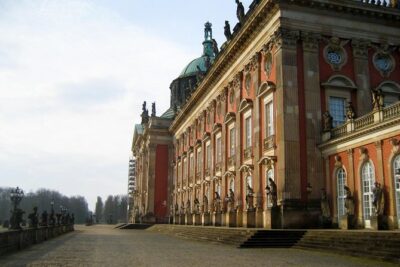
Day trip through multicultural city landscapes & photo highlights
Read our review →Browse the lists this tour appears in