
Reviewed · WALKING TOURS
An Introduction to Berlin Walking Tour
This Berlin walking tour is interesting because it connects 300 years of change to the city blocks you walk today, with a clear thread from Prussian militarism to 20th-century Berlin. You do not just see monuments, you understand why they were built, how they were used, and what they mean now.
I love the way the historian-led format turns famous architecture into a story you can follow, especially at the Reichstag glass dome and the Brandenburg Gate. I also like the setup for conversation: a max of 8 people, so questions do not get lost in a crowd.
One possible drawback is simple: three hours can feel like a fast pace, and you will use public transport a few times between stops. If you are sensitive to walking or timing, plan for a little shoe time and waiting.
Key things I’d focus on before you go
- Small group, big guide attention (max 8), with a historian leading the whole arc
- Architecture with political context, from the Reichstag to Unter den Linden
- Wall-adjacent Berlin, including Potsdamer Platz as a rebuild story
- A serious stop that changes the mood, the Memorial to the Murdered Jews of Europe
- No-cost stop entries listed, so you can focus on the meaning, not tickets
Why the Prussian-to-Modern Story Works on Foot
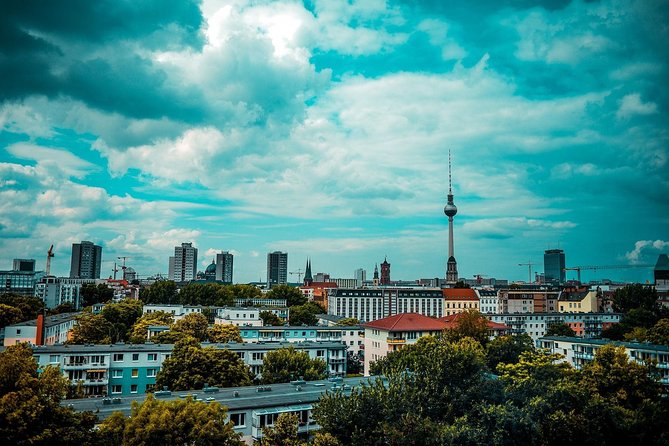
Berlin can feel like a city of time layers piled on top of each other. This tour helps you read those layers in order, with the specific lens of Prussian militarism and how it shaped the city you know from the 1900s. That theme matters because it explains why certain buildings and streets were treated as symbols, not just real estate.
You start with national power and democratic identity at the Reichstag, then move to iconic Prussian-era symbolism at the Brandenburg Gate. From there, you shift into cultural institutions on Museum Island, the postwar reshaping at Potsdamer Platz, and the long visual timeline of Unter den Linden and its grand approach to the gate. In other words, you get a map for the city’s meaning, not just a checklist of landmarks.
More walking tours in Berlin:
- Discover Berlin Half-Day Walking Tour
★ 5.0 · 9,624 reviews - Berlin: Third Reich and Cold War 2 Hour Walking Tour
★ 4.9 · 6,830 reviews - Berlin: Discover Berlin Walking Tour
★ 4.9 · 5,998 reviews
The Small-Group Advantage at Unter den Linden (Max 8)
The tour meets at Unter den Linden 42, 10117 Berlin. That starting point is helpful because you are already on one of Berlin’s main stages, the grand boulevard that the city uses to present itself.
With a maximum of 8 travelers, you should expect a more human pace. You are less likely to be herded, and it is easier to ask the kind of question that turns a photo stop into real learning. Guides for this tour come from academic and editorial backgrounds, including professors, doctoral students, journalists, and enthusiastic hosts. If you get someone like Dan, one account highlights an architect-style approach with a smooth pace and clear explanations.
You also get a mobile ticket, which makes the start and handoffs simpler. The tour is offered in English, so you can follow the historical thread without doing extra mental translation work.
Reichstag Building: The Reichstag as a Symbol, Not Just a Photo
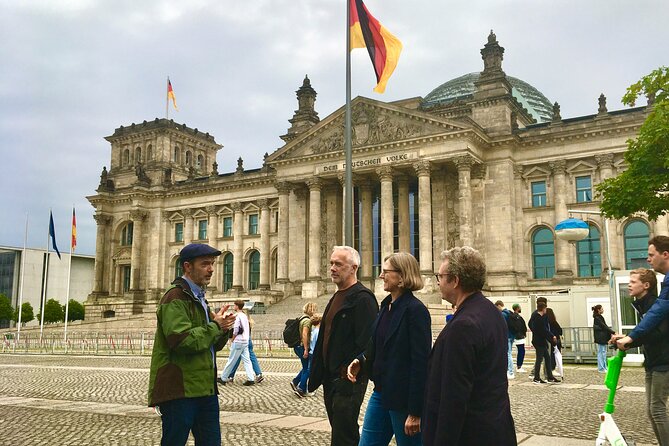
Stop 1 focuses on the Reichstag building, the meeting place of Germany’s Bundestag, the federal assembly. The big visual hook here is the glass transparent dome added in the 1990s by architect Norman Foster. It has become an iconic image of modern Germany’s commitment to democratic government.
Why this stop is valuable: it gives you a present-day lens before the tour moves deeper into older power structures. When you later see how Berlin changed through wars, borders, and ideology, you can compare how the country chose to represent governance in stone and glass.
Practical tip: give yourself a moment to study how the dome works visually. It is not just “cool architecture,” it is built to communicate transparency. Even if you do not go up into it during your stop, the exterior and the surrounding context make the symbolism clear.
Time on this stop is listed as about 15 minutes, and the tour keeps moving. If you want longer time staring, come with realistic expectations. You will get more depth in the walking and the next stops, where the story continues.
Brandenburg Gate: From Prussian Orders to Cold War Footnotes
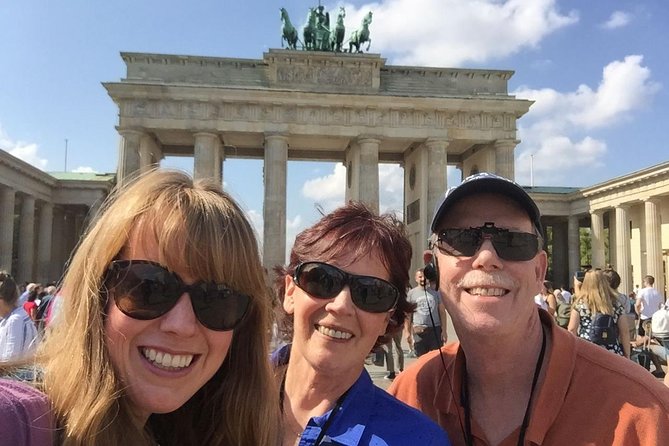
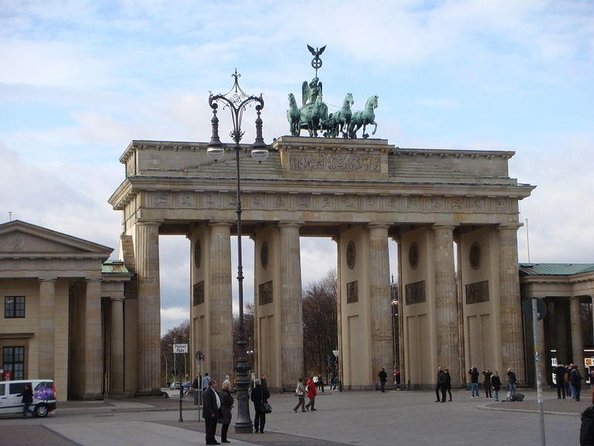
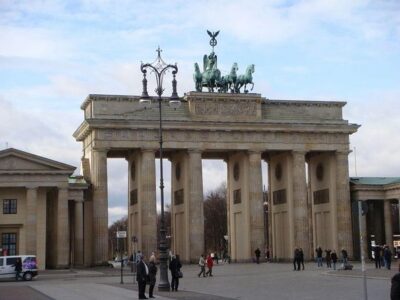
Next comes the Brandenburg Gate, an 18th-century neoclassical monument built on orders of Prussian king Frederick William II. This is one of those places that has been used as a backdrop for major moments in Berlin’s public memory, from Napoleon’s entry to Ronald Reagan’s famous Cold War speech.
The gate matters because it sits at the crossroads of two big ideas: empire-era power and later political theater. The neoclassical design was meant to signal order and authority. Then history piled on, so the same structure became a stage for very different messages over time.
Time on this stop is about 20 minutes. That is enough to take in the scale, read the context from your guide, and still have time to move on without feeling rushed. The main consideration here is crowding. Even with a smaller group, this is a central magnet, so plan for some foot traffic around you.
Still in Berlin, but a different kind of day:
- Berlin: Reichstag, Dome and Government District Guided Tour
★ 4.7 · 18,288 reviews - Berlin: 1-Hour City Tour by Boat with Guaranteed Seating
★ 4.3 · 16,993 reviews - Berlin: Boat Tour Along the River Spree
★ 4.4 · 11,252 reviews - Berlin: Hop-on Hop-off Bus Tour with Live Commentary
★ 4.3 · 8,579 reviews
Museum Island on Spreeinsel: Art, Learning, and State Power
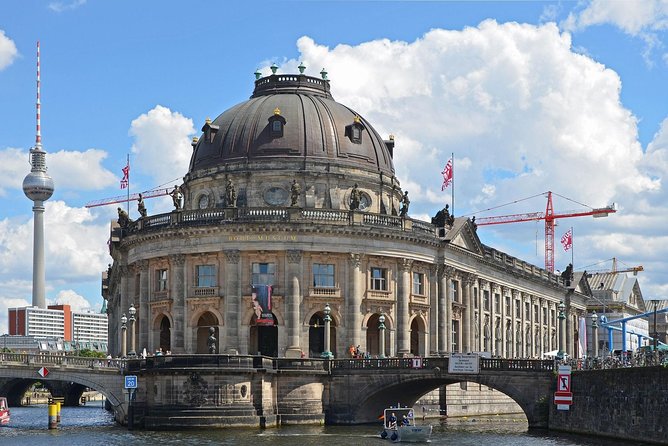
Stop 3 is Museum Island on Spreeinsel, in the heart of Berlin. The tour highlights it as an ensemble of five major museums built under the Prussian rulers, including the Pergamon, Neues Museum (New Museum), and Alte Nationalgalerie (Old National Gallery).
This stop is valuable because it shows cultural ambition as another form of power. When a state invests in museums, it is not only collecting art. It is building a public identity and projecting prestige.
Time here is listed at about 25 minutes, which is generous compared to typical walking tours. You should use the time to understand what the museums represent as a group, not only as individual buildings. Even if you do not enter museums on this specific tour, you can still connect the street-level views to the idea of Prussian support for major institutions.
A possible drawback: this is still a walking tour, so you will not have the kind of time you would want for deep museum visits. If you want long gallery time, treat this as orientation and story-building, then plan a separate museum day on your own.
Potsdamer Platz: A Rebuilt Square with a Wall-Shadow
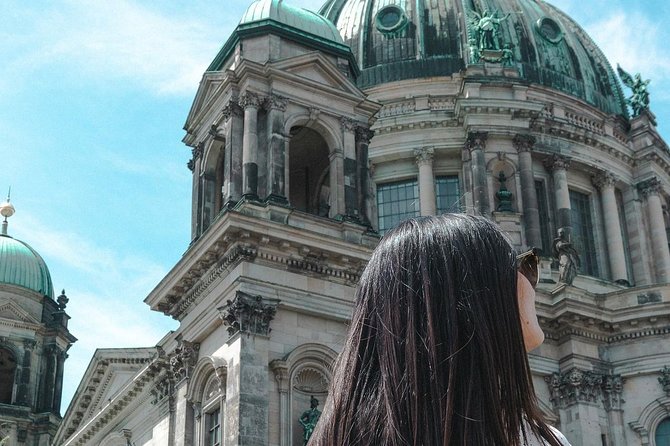
At Potsdamer Platz, the tour shifts to a post-wall Berlin story. This historic square was reborn after the fall of the Berlin Wall and is now a hub of entertainment, restaurants, and shops.
Why this stop fits the tour’s theme: it shows how Berlin did not only heal, it rebuilt its identity. Potsdamer Platz is a visible marker of change, where the city replaced older structures and reconfigured movement, business, and public life.
Time is about 15 minutes. That is usually enough for the key context and a look around. The main consideration is that the area can feel busy and commercial. If you want quieter reflection, keep your focus on what your guide says about why this area transformed the way it did.
Unter den Linden: Berlin’s Grand Avenue From City Palace to the Gate
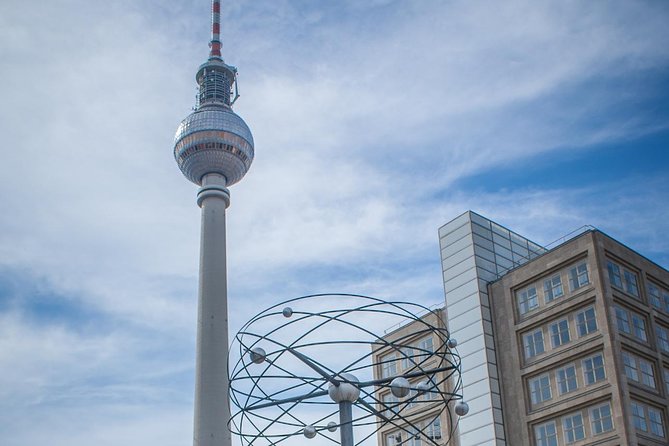
Stop 5 is Unter den Linden, the grand boulevard running from the City Palace to Brandenburg Gate. It is named after the linden trees lining the street, and it is often described as Berlin’s answer to Paris’s Champs-Élysées.
This is more than a scenic walk. On this tour, Unter den Linden helps you understand Berlin as a planned, symbolic city. A straight grand boulevard does not happen by accident. It funnels attention toward major landmarks, and it signals how the city wanted to be seen.
Time here is listed at about 30 minutes, which means you will actually walk the boulevard rather than just stop at it. If you like street-level perspective, this is one of the best segments. It gives you time to look at building facades, alignments, and how the boulevard frames the gate in your mind.
One practical note: this stretch is outdoors and can be affected by weather. If it is cold, windy, or rainy, dress for the walking and you will enjoy it more.
Tiergarten: A Needed Reset in the Middle of the City
Stop 6 is Tiergarten, Berlin’s most famous inner-city park. It is described as a place with graceful gardens and grand statuary.
This short stop, about 10 minutes, is a smart pacing break. After architecture and big political monuments, you get a change in sensory tone. That matters because it keeps your attention sharp for the last third of the tour, especially the Holocaust Memorial.
If you enjoy photos, Tiergarten offers calmer angles than many street corners. If you prefer to stay present, use the time to breathe and let the tour’s mood settle.
The Holocaust Memorial: Geometry That Forces Reflection
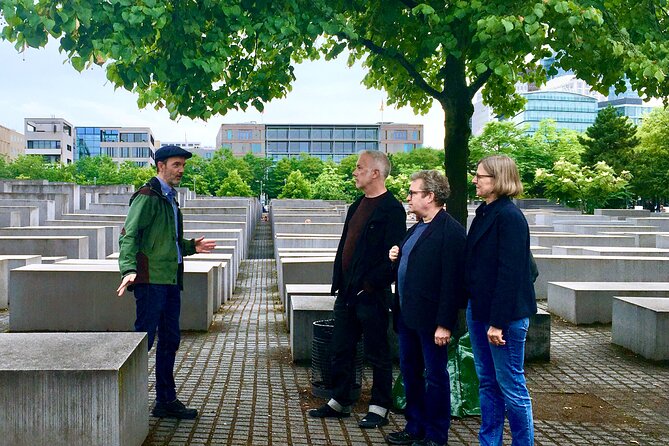
Stop 7 is the Memorial to the Murdered Jews of Europe, designed by architect Peter Eisenman and opened in 2005. The design uses 2,711 concrete slabs of different heights. Together they create a powerfully somber labyrinth and a space for reflection.
This is the emotional center of the itinerary. You should expect the tone to shift, and you should give it your full attention. The slabs are not meant to be “walk through for a picture.” They are meant to make you feel disoriented and vulnerable, which is part of why this memorial is so affecting.
Time is listed at about 10 minutes. That is not long, but it is enough to walk the lines carefully, pause when something clicks for you, and read your guide’s context. The main consideration is emotional readiness. If you need more time than the schedule allows, you can always return later on your own day, but you will still benefit from what you get here.
Hackescher Markt: Pre-War Courtyards and Art Nouveau Charm
The final stop is Hackescher Markt, with about 15 minutes to explore. This lively square offers a glimpse into preserved Art Nouveau courtyards from pre-war Berlin.
I like this stop because it returns you to the everyday city scale. After big national and memorial sites, you get a quieter, human-feeling view of urban design. Courtyards like these can show you what Berlin looked like before it was reshaped by 20th-century shocks.
Time is short, so focus on the vibe of the courtyards rather than trying to do everything at once. If you are hungry, this is also a natural place to continue your own plans afterward.
Price and Value: What $156.53 Buys You
The price is $156.53 per person for about 3 hours, and it is not just a sightseeing walk. It includes a 3-hour tour in the company of a historian, plus you get a small group size capped at 8 and a mobile ticket.
For me, the value comes from the storytelling structure. You are paying for a guide who can connect Reichstag symbolism, Prussian-era monument design, museum-building policy, and the rebuilt city after the Wall into one coherent route. That kind of context is hard to replicate with an audio app unless you already know what you are looking for.
It is also a practical win that the stops listed in the itinerary have admission ticket costs marked as free. That reduces the chance of surprise expenses during the tour.
One more value angle: the tour is on a tight schedule (about 3 hours) and uses public transport when walking would be too far. That can save you time on your own itinerary, especially if it is your first day in Berlin.
If you are traveling in peak season, booking about a week in advance is common, since the average booking time is 7 days ahead. Plan early if you want a spot at a specific time.
Getting Around: Public Transport Between Stops Without Stress
This tour involves walking, but it also includes using public transport a few times since some key distances are too long for a pure walking route. If you do not already have a Berlin visitor transit pass, the tour suggests getting a day metro pass.
The listed options are:
- Berlin Transit one-way AB ticket: 2.8 Euro per one way (Senior discount 1.70 Euro)
- Berlin Transit day ticket for one person: 7 Euro (Senior discount 4.70 Euro)
If you cannot buy in advance, the guide can help you purchase at the first metro station on the tour. That is a big deal because it removes one common friction point for first-time transit riders in Berlin.
My advice: if you arrive without transit sorted, plan a little buffer at the start. Even though the guide helps, you still want time to validate tickets and settle before moving.
Who This Tour Is Best For
This tour is a strong fit if you:
- Want a guided thread from Prussian militarism through to Berlin’s 20th-century transformation
- Like architecture and urban design, not only monuments
- Enjoy small groups where you can ask questions
- Prefer a compact orientation day with major anchors, including the Brandenburg Gate, Potsdamer Platz, and the Holocaust Memorial
You might consider a different format if you want heavy museum time. Museum Island is covered as a story stop, not as a full museum day. Food is not included either, so you will likely want to plan where you eat afterward.
So, Should You Book It?
I think this is worth booking if you want Berlin to make sense fast. The strongest reason to choose it is the structure: you get a historian’s framing across the city’s biggest symbols, including the Reichstag dome, Brandenburg Gate, Museum Island, Potsdamer Platz, and the Holocaust Memorial, all in a tight route.
Book it if you enjoy asking questions and you want a guide who can read buildings and streets like evidence. Skip it if you want long museum immersion and a free-form day with zero transit planning. For most first-time visitors who want both context and efficiency, this is a solid pick.
FAQ
How long is the Berlin walking tour?
The tour lasts about 3 hours.
Is the tour in English?
Yes, it is offered in English.
What is the group size?
The maximum group size is 8 travelers.
Where does the tour start?
The tour starts at Unter den Linden 42, 10117 Berlin, Germany.
Is food included?
No. Food and drinks are not included.
Do I need public transport during the tour?
Yes. The itinerary includes times when you will need to use public transport because some distances are too far to walk. A day metro pass is suggested if you do not already have one.
Recently added around Berlin
- Ultimate E-Bike Tour of Berlin with Beer Garden Stop★ 5.0 · 4 reviews
- Berlin: guided canoe | kayaktour★ 4.1 · 7 reviews
- Where It All Began: Berlin’s Queer & Trans History Tour★ 4.9 · 6 reviews
- Understanding Kreuzberg: The roots of local (sub)culture★ 4.9 · 11 reviews
- Warnemuende Shore Excursion: Private Berlin Tour★ 4.5 · 27 reviews
- Your ticket to The Wall Museum Berlin★ 3.0 · 60 reviews
- Love and War in Berlin: Self-Guided Story Puzzle Walk★ 5.0 · 7 reviews
- eSIM for Germany and 34 European Countries★ 4.5 · 16 reviews
Walking Tours, compared.
Berlin’s Best: 2 Hour Walking Tour Third Reich and the Cold War
Read our review →
Third Reich Berlin: Hitler and WWII Walking Tour
Read our review →
Browse the lists this tour appears in