
Reviewed · THIRD REICH & WW2 HISTORY WALKS
Berlin’s Best: 2 Hour Walking Tour Third Reich and the Cold War
This is interesting because Berlin turns big political storylines into real streets and monuments. You walk the link between the Nazi era and the Cold War in just 2 hours, with clear site-by-site context and lively guiding, like Glen, Ben, Mikey, and others who keep even heavy material clear and human. I especially like the on-foot access to street-level remnants, and I like how the guide shapes the route so the buildings make sense, not just dates and names. One consideration: it is a short walk that stays outdoors and covers very grim history, so keep your expectations set for a serious emotional tone.
You also get a nice structure for first-time Berliners. The group is capped at 30, it runs in English only, and you get a mobile ticket plus a simple start point at Brandenburg Gate. Just plan for walking time, cold weather if needed, and the fact that the guide will ask you to look and think, not just photograph.
What makes this Berlin walk work so well
- Brandenburg Gate to Checkpoint Charlie in one pass, so you do not have to build a multi-day plan
- Street-level Cold War details, including a Berlin Wall segment at Niederkirchnerstraße
- Landmarks you can actually see up close, not only distant, bus-window views
- Free entries at the listed stops, so you spend money on the tour, not admissions
- Guides who handle questions with care, often using historical images for context
Getting your bearings, start to finish, with a tight 2-hour plan
This tour is built for people who want a sharp overview without losing a day. It lasts about 2 hours, moving on foot between major sites tied to the Third Reich, the division of Berlin, and reunification. The route is linear enough that your brain can map what you are seeing, and fast enough that you still have time for your own wandering after.
You start at Brandenburg Gate, at Pariser Platz, and you meet the guide 15 minutes early on the Pariser Platz side. Look for the guide with the pink umbrella. It ends at Checkpoint Charlie, on Friedrichstraße 43 to 45.
Group size is capped at 30, which helps the guide keep the pace controlled and lets people ask questions. Since the tour is English only, it is also simple to commit and not worry about language logistics once you are there.
The practical part you should plan around: it is mostly outdoors. So wear comfortable walking shoes, and bring layers in colder months. This is also not a light, joking walking loop. Expect moments that are emotionally heavy, especially around the Holocaust Memorial and Führerbunker. If you want a Berlin taste that feels respectful but intense, this format fits.
Other Third Reich and WW2 history walks in Berlin:
- Berlin: Third Reich and Cold War 2 Hour Walking Tour
★ 4.9 · 6,830 reviews - Third Reich Berlin: Hitler and WWII Walking Tour
★ 5.0 · 3,301 reviews - Berlin: Third Reich, Hitler, and WWII Walking Tour
★ 4.9 · 1,133 reviews
Brandenburg Gate and the Reichstag: symbolism, power, and the 1933 turning point
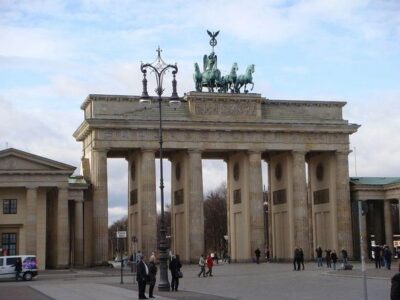
Brandenburg Gate is the obvious opening for a reason. The guide frames it as a symbol of a reunified Germany, which gives you a contrast before you even reach the darker sites. Standing here first helps you feel how the city changed, because the Gate does not read as one-era propaganda. It reads like an argument about the past and what Germany chose afterward.
Next comes the Reichstag Building, Berlin’s house of parliament. You get the sense of why this building is not just impressive architecture, but a political stage. The stop highlights the Reichstag fire in 1933 and explains how Hitler used the building during his dictatorship. That matters, because it shows the pattern: power attaches itself to institutions, then rewrites the rules.
What I like about placing the Reichstag here is the pacing. You go from a national symbol to a specific moment when political violence and manipulation reshaped Germany. If you only read about this in a book, it can feel abstract. On foot, you start to understand why these places stuck in history and memory.
Possible drawback: because the tour moves quickly and the stops are short, you will not have long moments to sit quietly at every site. If you are the type who needs deep silence and extra time, plan to return later on your own.
Tiergarten Soviet Memorial: tanks and artillery that make Cold War reality physical
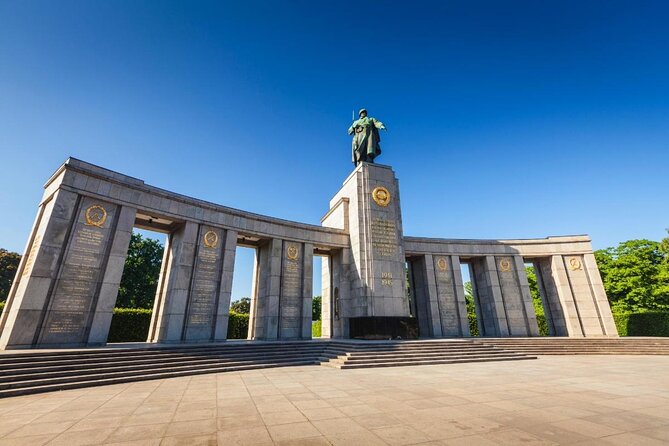
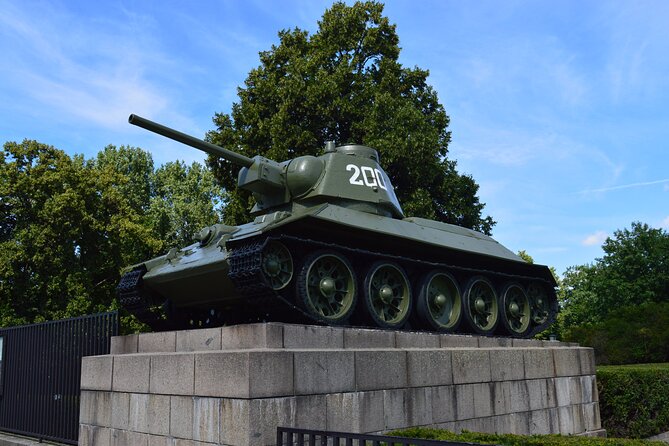
In Tiergarten, the story turns into military realism. At the Soviet war memorial you see Soviet T34/76 tanks and field artillery from World War II. It is one of those stops where the objects are not symbols, they are hardware, and they change the tone immediately.
The guide uses this setting to connect what the city endured in World War II with what it faced afterward. Berlin was not just split on a map. It was divided with force nearby, and this memorial is a way to feel that on the ground.
I like how this stop adds another voice to the overall narrative. You are not only hearing about Nazi Germany or Nazi decisions. You are also seeing what the postwar era left behind, including the physical marks that supported the Cold War standoff.
The Victory Column and Albert Speer’s Germania fantasy
Then you hit the Victory Column, and the guide brings in Albert Speer and the Nazi vision for a grand new capital. You learn why Speer moved the column from its original location to the new site, and you hear about his plans for Germania, which would have been the proposed name for Berlin if the Nazis had won.
This stop works because it links urban planning to ideology. Buildings are not neutral in this story. Change the city, and you change what power tries to claim about the future.
One thoughtful way the guide often frames this kind of topic is to treat the fantasy as a warning, not a fascination. You get the mechanics of how the regime imagined control, and you also get the sense of how badly those plans collapsed.
More Berlin Wall and Cold War tours in Berlin:
- Skip-the-Line: Berlin Wall Museum at Checkpoint Charlie
★ 4.1 · 2,041 reviews - Berlin: 2.5-Hour East Side Boat Cruise with Commentary
★ 4.4 · 2,016 reviews - Berlin: East Side Gallery Spree Cruise in a Solar Catamaran
★ 4.0 · 1,039 reviews - Cold War, Berlin Wall, Spies and the East Side Gallery
★ 5.0 · 1,024 reviews
Holocaust Memorial: walking through the names Germany tried to bury
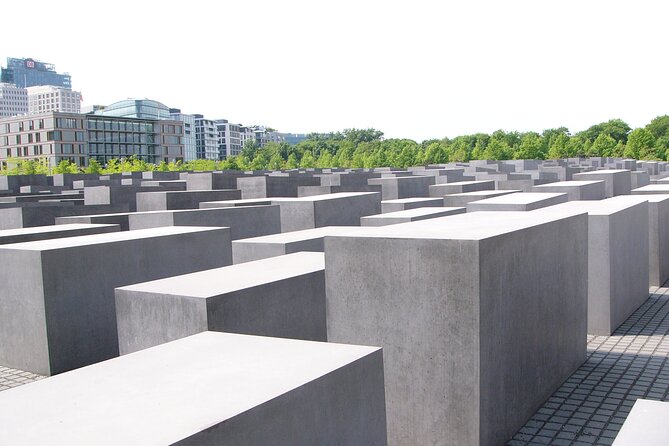
The Holocaust Memorial, the Memorial to the Murdered Jews of Europe, is the emotional center of the route. You walk through the immense memorial built to honor the murdered Jews of Europe, and the scale is the point. The design forces you to slow down and notice space, absence, and the weight of what is being commemorated.
This stop is not about trivia. It is about presence. The guide’s job here is to help you look without rushing, and to hold the topic with the seriousness it deserves. That careful tone is a big reason this tour earns such strong recommendations.
If you want a practical tip: give yourself a moment before you enter to think about what you want to remember. Then let the memorial do the rest.
If you have limited time and want this memorial on your list, this tour makes it easy. The itinerary is designed so you reach it in a logical sequence, after earlier stops that explain how Germany got to this point.
Führerbunker, Goering’s air ministry stretch, and Topography of Terror
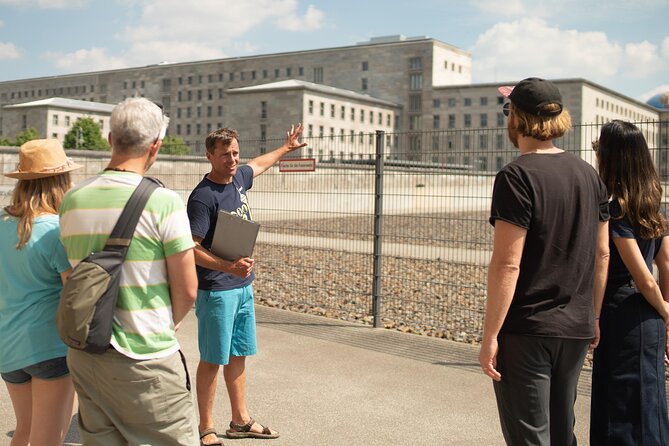
After the Holocaust Memorial, the tour moves into the machinery of the Nazi regime, both through locations tied to leadership and through the institutional space where terror was organized.
At the Führerbunker stop, you stand above Hitler’s bunker area and listen to the story of the last days of World War II, including Hitler’s suicide on April 30, 1945. The guide also addresses how Germans deal with this past today. This is one of the moments where the guide’s tone matters most. You are standing in a place linked to a mass-catastrophe timeline, not a movie set.
Next is the Aviation Ministry of Berlin area. You walk the length of Hermann Goering’s air force ministry. This stop adds a specific thread: how power was compartmentalized, and how key leaders shaped different arms of the regime. It also includes a later twist tied to 1949, when East Germany (GDR) was proclaimed at this location.
Then comes Topography of Terror. You see the site where Nazi institutions, including the SS, Gestapo, and SD, had their headquarters, and today it houses the Topography of Terror exhibition. Even if you only take in a short moment here, the location instantly explains why this museum theme fits the site. The buildings, the street, and the history align.
What you might like most is how the guide keeps the story connected. You are not hopping randomly between grim sites. The tour links decision-makers, propaganda era locations, and the institutions that carried out terror.
The Berlin Wall story at Niederkirchnerstraße, then Checkpoint Charlie
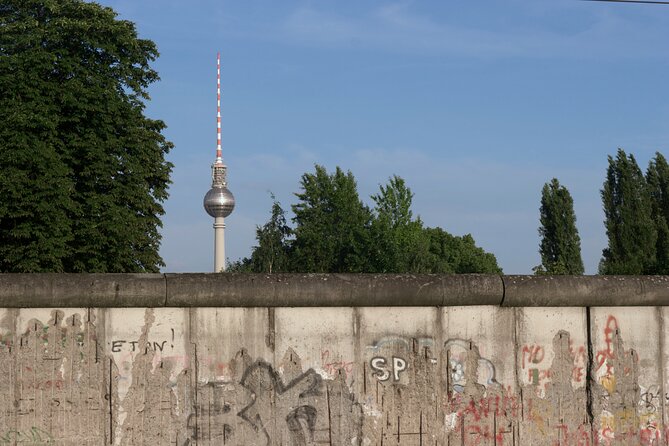
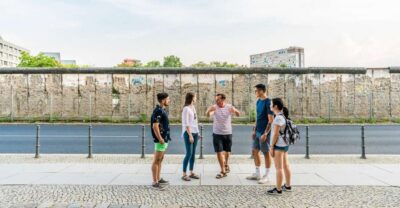
The Berlin Wall segment at Niederkirchnerstraße is a sharp reminder that history happened at street level, not just in archives. You see a large piece of the Wall, and the guide shares stories about people escaping over it. You also hear what happened to those who tried but did not make it. The stop then broadens out to what life was like on both sides of the Wall, East Berlin and West Berlin.
This is the stop where you often notice how guides handle the subject with sensitivity. In strong versions of this tour, the guide balances facts with respect, and it is not performed, it is explained.
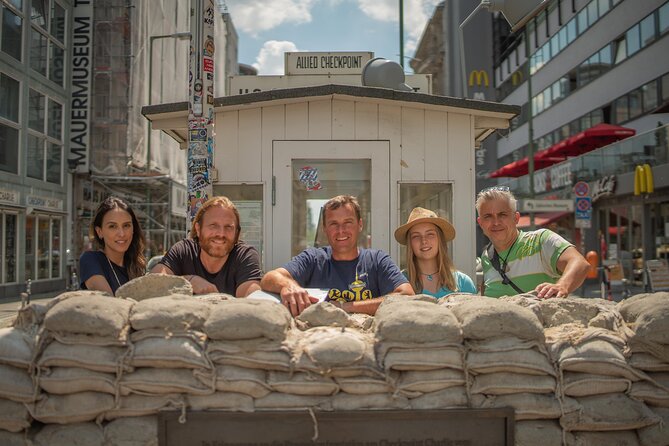
The finale is Checkpoint Charlie, the most famous checkpoint connected to the Berlin Wall. You learn about the Soviet vs USA tank standoff on this street in 1961, and you hear how the Wall came down on November 9, 1989. The tour closes with reunification, including the last 30-plus years of progress the city has tried to build afterward.
I like ending here because it gives you a clean emotional resolution. The Wall is not just a physical barrier in the story. It becomes a before-and-after symbol for how Berlin rebuilt itself. By the time you reach Checkpoint Charlie, you have already seen the Nazi rise, the war aftermath, and the Cold War tension, so the reunification ending lands with context.
What the guides do that makes the tour feel worth your time
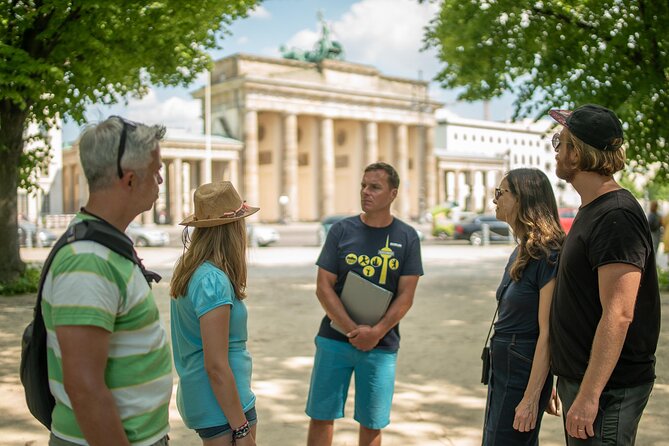
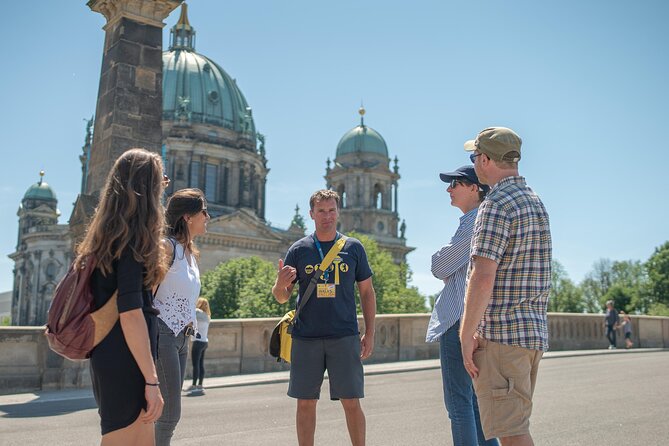
A tour like this lives or dies by the guide. The highest praise in the guide feedback points to three things: clear explanations, answers to questions, and a tone that respects difficult topics.
I saw a recurring pattern in the guide style described across the tour experiences: people praised guides for striking the right level of detail and staying accessible. Names that came up include Glen, Ben, Maggie, Rebecca, Tom, Joachim, Peter F., Simon, Paul, Mikey, Georgia, Mikhail, and Eyan. The common thread is that the guide keeps the walk lively without turning tragedy into entertainment.
Another helpful detail is the use of historical images at certain stops. That extra layer helps you connect what you see now with what used to be there. It is especially useful for places like the bunker area, where your mind wants visual confirmation.
Finally, the guides often answer questions in a patient way. If you care about the why, not just the what, this format helps. Even if the topic is heavy, you do not feel shut down.
Price and time: does $24.07 really make sense for 2 hours?
At about $24.07 per person for roughly 2 hours, the main value is concentration. You are paying for a guide to connect major sites across two huge eras, with a route that is designed to be walked efficiently. You also get the benefit of listed stops that are free to enter on this route, which means you are not stacking additional entry fees on top of the tour price.
You also get planning savings. Berlin can feel big and complicated for first-timers. This tour gives you a guided spine from Brandenburg Gate to Checkpoint Charlie, and after that, you can choose what to revisit on your own.
For English-only visitors, this is also a straightforward way to avoid translation gaps. You can ask questions in English and keep the narrative flowing.
If you are traveling with kids, this tour can work well, especially for older teens who can handle serious topics and ask questions. One family experience described a strong dynamic where younger visitors felt comfortable asking things and staying engaged. Just remember: the subject matter is not kid-friendly in the light sense. It is educational and respectful.
Who should book, and who might want a different kind of Berlin walk
This tour is a strong fit if you want:
- a fast, structured overview of Third Reich and Cold War Berlin
- major landmarks placed in context, not just photographed
- a guide who can handle difficult topics with care and clarity
- an English-language walking tour that ends near another major sightseeing anchor
I would steer you away if:
- you want a light sightseeing vibe
- you hate heavy subjects and cannot handle Holocaust-related stops
- you need lots of quiet time at every monument, because the route is intentionally time-efficient
Should you book this Third Reich and Cold War walking tour?
If you are visiting Berlin for a short time and you want the city’s modern story to make sense, this is a smart booking. You get a concentrated route, free access at the listed stops, and a guide-led narrative that helps the names and dates connect to real places. The heavy topics are handled with care in the way people describe the tour, and the English-only format is simple for planning.
If you want Berlin through a guided lens that respects the past while still letting you experience the streets, book it. Then plan one or two extra hours afterward to wander around the areas that hit hardest for you.
More Walking Tours in Berlin
- Discover Berlin Half-Day Walking Tour
★ 5.0 · 9,624 reviews - Berlin: Discover Berlin Walking Tour
★ 4.9 · 5,998 reviews - Berlin: Hidden Backyards Guided Walking Tour
★ 4.8 · 5,360 reviews - Berlin: Alternative Berlin Walking Tour
★ 4.6 · 1,204 reviews
Recently added around Berlin
- Berlin Private Custom Walking Tour With A Guide (Private Tour)★ 4.5 · 8 reviews
- One Up to 3 Rickshaws(6 GUESTS)-Taylor Made Rickshaw Berlin Tour★ 5.0 · 20 reviews
- Moonshine Comedy – English Stand Up Comedy by the bay★ 5.0 · 11 reviews
- Private Half-Day Berlin Sightseeing Tour with a Minivan Including Short City Walks★ 5.0 · 31 reviews
- Private taxi tour to Potsdam and Sanssouci 6-8h★ 5.0 · 30 reviews
- Private tour of Berlin★ 5.0 · 15 reviews
- Private City Kickstart Tour: Berlin★ 4.5 · 71 reviews
- Private Tutankhamun’s Tomb Live Escape Room in Berlin★ 3.5 · 11 reviews
Third Reich & WW2 History Walks, compared.
Third Reich Berlin: Hitler and WWII Walking Tour
Read our review →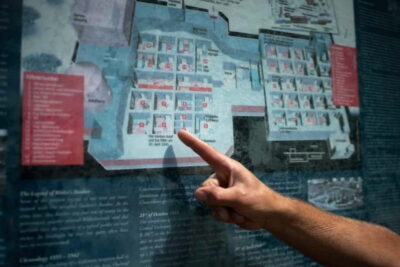

Berlin Third Reich Sites: Half-Day Walking Tour
Read our review →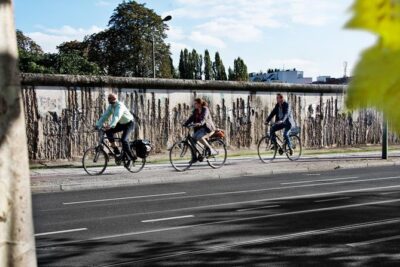
Guided Bike Tour of the Berlin Wall and Third Reich
Read our review →
Hitler’s Germany: Berlin During the Third Reich & WWII
Read our review →
Private Walking Tour Berlin Third Reich Hitler and World War II
Read our review →
Hitler’s Berlin The Rise & Fall Guided Walking Tour
Read our review →Browse the lists this tour appears in