
Reviewed · THIRD REICH & WW2 HISTORY WALKS
Private Walking Tour Berlin Third Reich Hitler and World War II
Berlin’s Nazi sites can feel like a maze. This tour is interesting because it follows the logic of how power worked, then how it collapsed, using real street corners and buildings you can still point to today. You get context you cannot get from plaques alone.
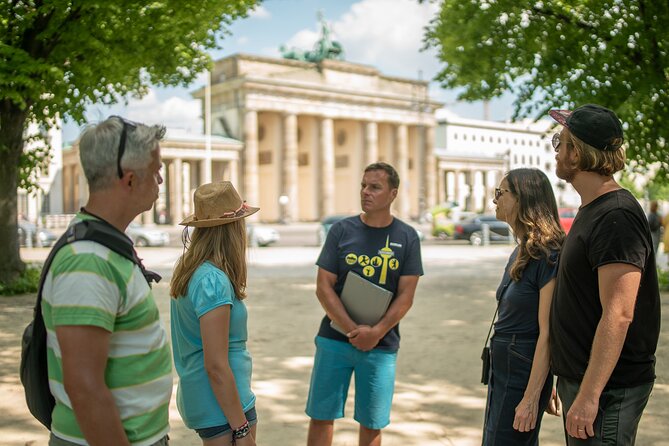
I really like the practical hotel pickup and drop-off that makes this work even on a tight schedule. And I love the way the private format lets guides shape the pace and focus, which shows up in experiences led by people like Georgia, Emma, and Jasper, who adjusted the day to their group.
One consideration: the Reichstag stop has admission ticket not included, so plan for that cost if you want to go inside.
Key highlights that make this tour worth your time
- Hotel pickup and drop-off so you do not burn energy figuring out meeting points
- Private group with a guide who can tailor the pacing and your priorities
- Topography of Terror on the grounds of former SS and Gestapo headquarters
- Holocaust Memorial with 2,711 slabs designed to create a disorienting walk through memory
- Reichstag visit includes key WWII context, but admission is not included
Price and what you truly get for $192.97
At $192.97 per person, this is not a budget “wander and read” kind of outing. You are paying for three things that matter in Berlin: a professional guide, a private experience (only your group), and hotel pickup and drop-off that saves time and stress.
The value becomes clearer when you look at the stop list. This is not just famous names, it is the machinery of rule and persecution, from Nazi government streets to memorial sites that explain what happened and why it matters now.
Booking tends to fill ahead, since the average booking window is about 34 days. If your dates are firm, I would lock it in sooner rather than later so you can pick a time that fits your other Berlin plans.
Other Third Reich and WW2 history walks in Berlin:
- Berlin: Third Reich and Cold War 2 Hour Walking Tour
★ 4.9 · 6,830 reviews - Berlin’s Best: 2 Hour Walking Tour Third Reich and the Cold War
★ 5.0 · 5,486 reviews - Third Reich Berlin: Hitler and WWII Walking Tour
★ 5.0 · 3,301 reviews
How the private format works on the street
This is a 3 to 4 hour private walking tour in English, and it runs in all weather. That matters because several of the most important stops are outdoors or partially outdoors, and the city can be wet or cold even when the sun is out.
You will move from site to site with short, focused visits. Many stops are listed as free admission, with time carved out for the guide to explain what you are looking at before you move on. Some groups end up walking a lot, and one party reported about 10,000 steps on a similar day, so wear shoes that can handle cobbles and long stretches.
The best part of a private day is that you can steer it. In guided experiences led by Emma, Daniel, and Oren, the tour pace and emphasis shifted based on what the group wanted most, including adding time to revisit spots later.
Soviet Memorial Tiergarten: starting with the Battle of Berlin from the outside in
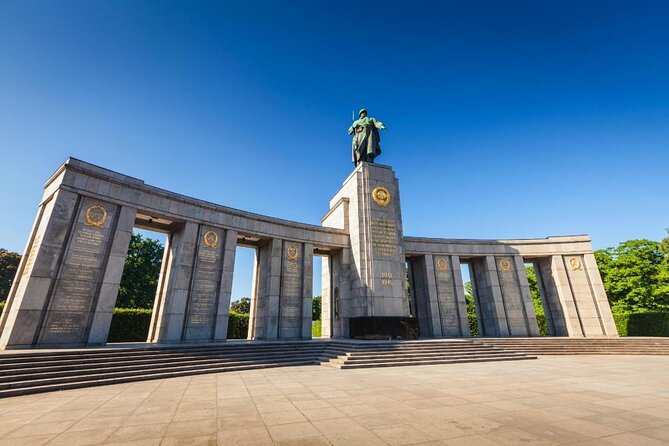
The tour begins at the Soviet Memorial Tiergarten, inaugurated in 1949. It commemorates Soviet soldiers who died during the Battle of Berlin in 1945, and the architecture is not subtle. A large statue of a soldier holding a sword and a shield symbolizes victory and sacrifice.
This is a smart opening stop because it sets the ending before you track the beginning. Instead of treating Berlin as a single narrative, you see how the final days were experienced by different armies and different countries.
You also get a concrete thread to follow: how the Soviet Army helped defeat Nazi Germany, and how postwar Berlin chose to remember the cost of that battle. It is a sober start that puts the rest of the day into sharper focus.
Wilhelmstraße power corridors: Detlev-Rohwedder-Haus and the architecture of control
Next you head into the center of Nazi-era administration around Wilhelmstraße, often described as the heart of government where decisions were made. The tour points out the political geography of the Third Reich, not just the buildings you might recognize from textbooks.
A major stop here is the Aviation Ministry of Berlin, specifically the Detlev-Rohwedder-Haus on Wilhelmstraße. Originally built in the 1930s as headquarters for the Reichsbank, it later became the Ministry of Aviation under Hermann Göring. After WWII, it was transformed into the German Federal Treasury, which adds a haunting layer to what you are seeing: the same structure serving different regimes.
As you walk Wilhelmstraße, you are not just learning facts. You are learning how bureaucracy becomes power. That is why this stretch feels different from a simple sightseeing walk. You can almost map the chain of decisions to the streets where people worked.
More walking tours in Berlin:
- Discover Berlin Half-Day Walking Tour
★ 5.0 · 9,624 reviews - Berlin: Discover Berlin Walking Tour
★ 4.9 · 5,998 reviews - Berlin: Hidden Backyards Guided Walking Tour
★ 4.8 · 5,360 reviews - Berlin: Alternative Berlin Walking Tour
★ 4.6 · 1,204 reviews
Topography of Terror plus Bendlerblock: repression, then resistance
The Topography of Terror stop is one of the most important learning moments of the whole day. It is located on the grounds of the former SS and Gestapo headquarters, and the exhibition includes indoor and outdoor sections with photographs, documents, and testimonies.
This is where the tour explains the rise of the Nazi regime in a grounded way, including the methods of political repression and state-sponsored terror. You are given a framework that helps you connect what you saw earlier about power to what happened afterward to victims and dissidents.
Then the route turns toward those who fought back at the German Resistance Memorial Center at the Bendlerblock. This memorial honors people who opposed the Nazi regime, with special focus on Claus von Stauffenberg and the July 20, 1944 assassination attempt on Hitler. The contrast is intentional. One stop shows terror as a system, the next shows resistance as a moral choice with real consequences.
If you are bringing older kids, this pairing can work well. In guided days led by Jimmy and Daniel, the guides leaned into clear explanations and answered questions patiently, which helps younger minds handle such heavy material without getting lost.
Bebelplatz book burning and the Reichstag Fire: propaganda and the use of institutions
At Bebelplatz, the Nazi approach to control shows up in the simplest form: censorship. The square is known for the book burnings on May 10, 1933, when thousands of books were destroyed as the regime targeted works labeled un-German.
The memorial beneath the square with empty bookshelves is powerful because it is physical. You can see the absence, not just read about it. The guide also points out surrounding architecture, including the State Opera House and Humboldt University, so the lesson connects education, culture, and politics.
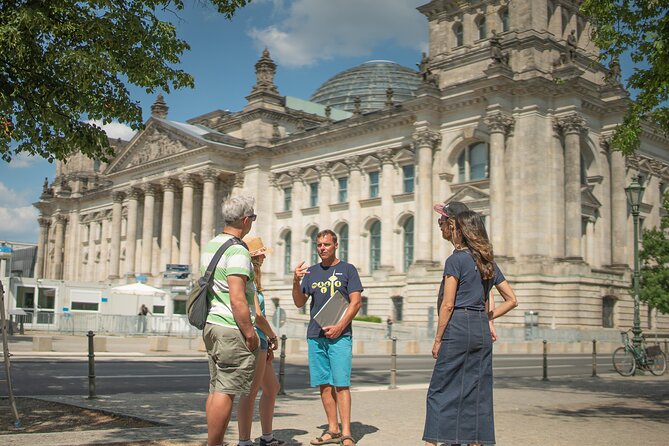
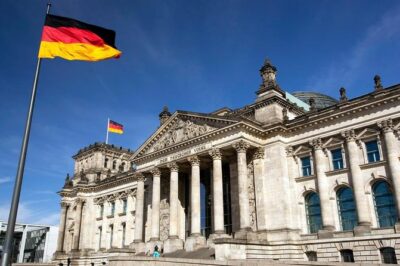
After Bebelplatz, the tour goes to the Reichstag Building. Completed in 1894, it became central to Germany’s political landscape, especially during the Nazi rise. You will hear about the Reichstag Fire in 1933, which the Nazis exploited to consolidate power and suppress opposition.
It is also worth knowing the WWII layer here. The building was heavily damaged during the war and later restored as a symbol of democracy, so the same structure carries competing meanings across decades.
Practical note: the Reichstag stop lists admission ticket not included. So if you want to enter, budget for it separately.
The Holocaust Memorial and Anhalter Bahnhof: memory, scale, and routes of deportation
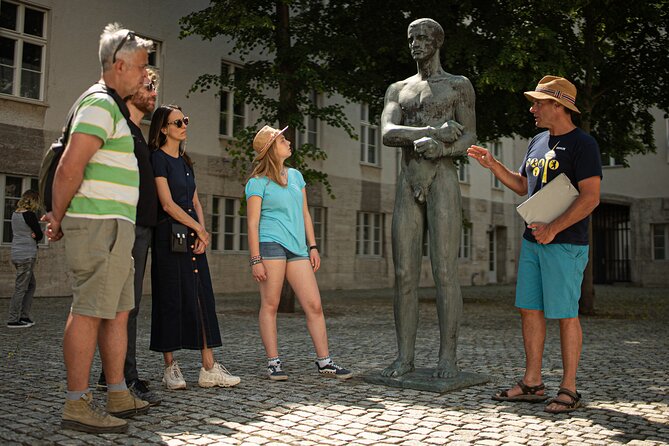
The Memorial to the Murdered Jews of Europe is the tour’s emotional core for many people. It consists of 2,711 concrete slabs of varying heights in a grid. The design creates a disorienting feeling on purpose, symbolizing the magnitude of loss and the complexity of memory.
Your guide will explain the memorial’s design and the historical context of the Holocaust, including how Nazi policies devastated European Jewry. This is not a quick photo stop, you will be encouraged to slow down and take in the space.
Next is Anhalter Bahnhof, one of Berlin’s iconic railway stations. The guide ties the station to WWII and the Holocaust through its role in deportations, including that it served as a departure point for many Jews headed to concentration camps. Today, memorials and exhibits help commemorate the victims who passed through the station.
I like how these two stops work together. The memorial gives you the scale of loss through design. Anhalter Bahnhof grounds it in geography and logistics, so the history feels less abstract.
Führerbunker and the T4 Memorial: the final days and Nazi euthanasia
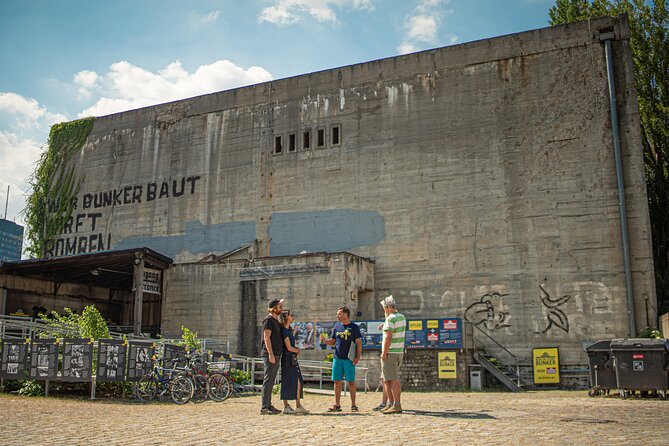
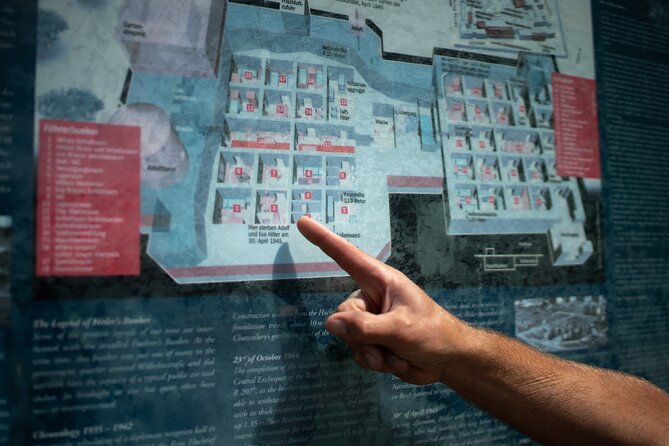
At Führerbunker (Hitler’s bunker), you stand above the underground complex beneath the Reich Chancellery. This was Adolf Hitler’s last refuge during the last months of WWII. The guide explains the bunker layout and the historical significance, including what unfolded as the Allies closed in on Berlin.
Much of the original structure was destroyed after the war, so you are not touring a fully preserved museum. Instead, you are getting a sober view of how leadership lived through the end, including the atmosphere of despair described for the final days.
Then the tour shifts to another side of the regime’s cruelty at the T4 Memorial for the Victims of the Nazi Euthanasia Program on Tiergartenstraße 4. This memorial focuses on the systematic extermination campaign against people labeled unworthy of life, including people with disabilities and mental illnesses.
The guide points out the memorial’s design and the informative displays, and you will hear the ethical questions raised by the program. This stop can be hard, but it is essential because it expands the idea of Nazi terror beyond concentration camps and battlefield deaths.
Moltkebrücke: the Soviet crossing that changed Berlin in April 1945
The day closes with Moltkebrücke, the bridge where Soviet forces crossed in 1945 during the assault on Berlin. This stop is short, but it is full of direction. Standing on the bridge, you get a sense of the route Soviet troops used and why it mattered.
In April 1945, the bridge became a critical link in the Soviet advance into the city. The guide explains fierce battles nearby and how the Soviet advance shifted Berlin’s fate and future.
I like ending here because you finish on movement rather than institutions. The story lands back on the ground, where armies, geography, and timing determined the outcome.
Should you book this Berlin Third Reich and WWII private walking tour?
Book it if you want a structured, respectful tour that connects Berlin’s Nazi-era sites into a clear storyline. The highest praised strengths from guides and experiences you can expect here are: guides who explain in a clear, teacher-like way, a pace that can match your group, and frequent chances to ask questions. People also highlight that the day can feel moving and meaningful for families, including kids, when the guide sets context and keeps the walk organized.
Skip it, or choose a different angle, if you are not ready for heavy subject matter. This route spends real time on persecution, genocide, censorship, and resistance, and it is not a light sightseeing circuit.
If you do book, wear comfortable shoes and plan to take a breath after the Holocaust Memorial and Topography of Terror. Then use the rest of your Berlin time to revisit any site that stayed with you more than the rest.
Recently added around Berlin
- Berlin Private Custom Walking Tour With A Guide (Private Tour)★ 4.5 · 8 reviews
- One Up to 3 Rickshaws(6 GUESTS)-Taylor Made Rickshaw Berlin Tour★ 5.0 · 20 reviews
- Moonshine Comedy – English Stand Up Comedy by the bay★ 5.0 · 11 reviews
- Private Half-Day Berlin Sightseeing Tour with a Minivan Including Short City Walks★ 5.0 · 31 reviews
- Private taxi tour to Potsdam and Sanssouci 6-8h★ 5.0 · 30 reviews
- Private City Kickstart Tour: Berlin★ 4.5 · 71 reviews
- Private tour of Berlin★ 5.0 · 15 reviews
- Private Tutankhamun’s Tomb Live Escape Room in Berlin★ 3.5 · 11 reviews
Third Reich & WW2 History Walks, compared.
Berlin’s Best: 2 Hour Walking Tour Third Reich and the Cold War
Read our review →
Third Reich Berlin: Hitler and WWII Walking Tour
Read our review →
Berlin Third Reich Sites: Half-Day Walking Tour
Read our review →
Guided Bike Tour of the Berlin Wall and Third Reich
Read our review →
Hitler’s Germany: Berlin During the Third Reich & WWII
Read our review →
Hitler’s Berlin The Rise & Fall Guided Walking Tour
Read our review →Browse the lists this tour appears in