
Reviewed · WALKING TOURS
Berlin Walking Tour
Berlin is best learned on foot, because the city refuses to sit still. This walking tour strings together several of Berlin’s most important landmarks, then explains how the stories connect, from Prussia to the Cold War and into the modern era. You also get that group energy that makes even heavy sites feel more human, especially when the guide is strong.
What I like most is the value. With a listed price around $2.90 per person for a guided, multi-stop history walk, it’s one of the easiest ways to get oriented fast. I also like the format, short stops with real context, so you are not just stopping for photos.
One thing to consider is guide consistency. The route sounds great on paper, but the experience can swing if you are unlucky with meeting-point confusion or a guide who does not show. Go in with a plan, arrive a bit early, and double-check where you are supposed to meet.
Key things to know before you go
- Five to six major stops in about 3 hours, with frequent chances to ask questions
- English-speaking guide and a group size capped at 50 people
- Outdoor-friendly route, with stops near major landmarks like the Reichstag and Brandenburg Gate
- Free admission listed for each featured stop, so you should not need separate entry tickets just to see the points
- Most stops are about 20 minutes, so you will move, not linger all day
- Guide quality matters, and some guides stand out for storytelling and pacing, including names like Ana, Miguel, Ester, Katia, Nora, and Francesca
Price and what you are really paying for
At about $2.90 per person, this is priced like a grab-and-go history sampler. The included part is simple: you get a walking tour guide and the guided route. You are not buying museum time or transit in that price.
So here is the practical way to think about it: this tour is for people who want to connect the dots. You pay for narration, timing, and someone to answer questions while you walk. If you mainly want quiet self-guided wandering, you might feel underwhelmed. But if you want to learn why Berlin looks the way it does, it is a bargain.
Also, keep expectations realistic. The tour runs roughly 3 hours, and the stop list moves quickly. Even when a tour is well done, you are not getting hours at each site. You are getting the why, the how, and the quick emotional map.
More walking tours in Berlin:
- Discover Berlin Half-Day Walking Tour
★ 5.0 · 9,624 reviews - Berlin: Third Reich and Cold War 2 Hour Walking Tour
★ 4.9 · 6,830 reviews - Berlin: Discover Berlin Walking Tour
★ 4.9 · 5,998 reviews
The 3-hour route: how the day flows on the ground
The walk starts at Generator Berlin Alexanderplatz, Otto-Braun-Straße 65. It ends back at the meeting point, so you do not have to figure out a separate finish.
The tour is built around short, focused segments. Each named stop is listed at about 20 minutes. That pacing is intentional. It is meant to help you cover a lot in a small window and still understand the big themes: German political power, shifting borders, the architecture of ideology, and the memory of World War II and the Holocaust.
A small caution: some people find the pace fast at certain moments, and one stop can feel brief if you are the type who wants to linger. If you like to soak in details, plan to revisit your favorite sights after the tour with more time.
Entering Berlin’s political core at the Reichstag Building
The first stop is the Reichstag Building, the historic home of Germany’s parliament, the Bundestag. Even if you have never been inside, the building matters because it represents how democratic power gets reimagined after chaos.
What you will likely get from a good guide here is more than dates. You should walk away understanding the Reichstag’s long arc, why it became symbol-heavy, and how Germany’s modern story ties into earlier state power. Since this stop is listed with free admission, you can treat it as a low-friction start, great for jumpstarting your Berlin context.
Practical tip: bring a phone for quick reference notes. If your guide points out visual details on the façade or nearby perspectives, you will want them later when you are back in your hotel looking at photos.
Berliner Dom: architecture with a political backbone
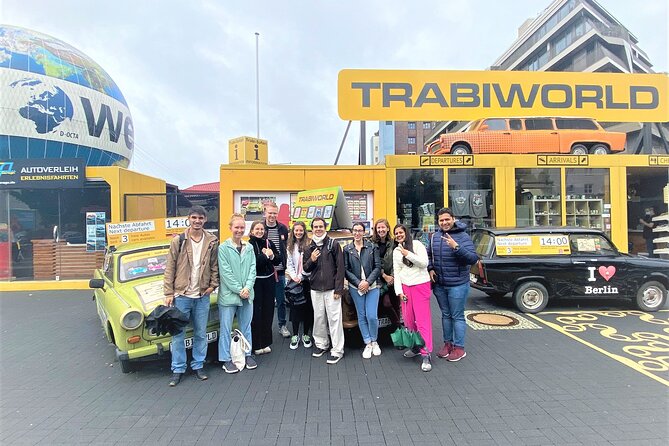
Next comes Berliner Dom, the Berlin Cathedral. This is a place where architecture is doing more than looking pretty. The cathedral helps explain how the city’s religious and state identities showed up in stone, and how Berlin’s center of gravity shifted over time.
The key value here is the guide’s framing. A strong guide turns a landmark visit into a social history lesson: who used buildings like this, why they were built, and how the area around them fits into the idea of Berlin as a capital that constantly remakes itself.
This stop is also listed as free. That is nice, because it keeps your time focused on understanding instead of ticket logistics.
Still in Berlin, but a different kind of day:
- Berlin: Reichstag, Dome and Government District Guided Tour
★ 4.7 · 18,288 reviews - Berlin: 1-Hour City Tour by Boat with Guaranteed Seating
★ 4.3 · 16,993 reviews - Berlin: Boat Tour Along the River Spree
★ 4.4 · 11,252 reviews - Berlin: Hop-on Hop-off Bus Tour with Live Commentary
★ 4.3 · 8,579 reviews
Brandenburg Gate: more than a postcard
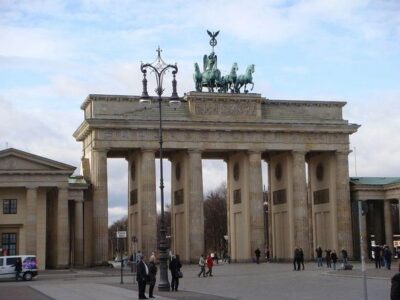
Brandenburg Gate is the next big visual anchor. It is an 18th-century neoclassical monument ordered after the Prussian king Frederick William II restored order following the Batavian Revolution. That sentence sounds like history class. The payoff is that it explains why this gate is tied to power and political messaging.
Then you connect it to what the 20th century did to Berlin. A guide who is good at storytelling will show you how the gate’s meaning shifted as the city’s political story changed.
The practical advantage: this is an easy, central landmark that works well early in your trip. If you want an orientation landmark that helps you mentally place the rest of the route, this is it.
Checkpoint Charlie and the Wall’s human scale
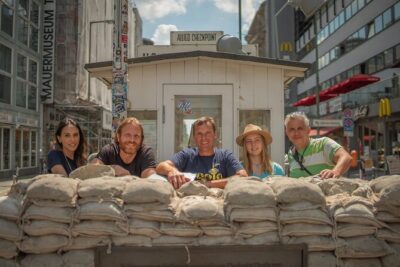
From there, the tour points you toward Checkpoint Charlie, the best-known Berlin Wall crossing point between East Berlin and West Berlin during the Cold War. This is where Berlin’s division becomes personal.
Checkpoint Charlie often gets treated like a quick stop. But if your guide is paying attention, this is where you understand what “crossing” meant in real life, not just on signage. You should come away with a sense of how the Wall shaped movement, families, and daily decisions.
After that, you visit the Memorial of the Berlin Wall. This part is heavier. The point is to see the wall as a structure that separated the city and claimed freedom for millions during Soviet rule.
What makes this stop work is pacing and tone. You will be walking, but you should also get a guided explanation that respects the subject. This is also where the group vibe matters. A good guide can keep the energy thoughtful, not goofy photo mode.
The Memorial to the Murdered Jews of Europe: space that forces reflection
Next is the Holocaust Memorial, the Memorial to the Murdered Jews of Europe. This is one of those places where the physical environment does the emotional heavy lifting.
Here is what I find practical for first-time visitors: you do not need to be a history expert to get something meaningful from it. A guide’s job is to give you a way to read the space, explain the context, and help you understand why memory is built into public land.
This stop is listed at about 20 minutes. You will not solve the Holocaust in 20 minutes. But you can leave with a clear mental framework for Berlin’s later memorial culture and why the city treats remembrance as part of public life.
If you tend to get overwhelmed at intense memorials, give yourself permission to step back for a minute. The tour moves, but you still control your pace inside your body.
Ausstellung Objektschutzregiment der Luftwaffe Friesland: the lesser-known angle
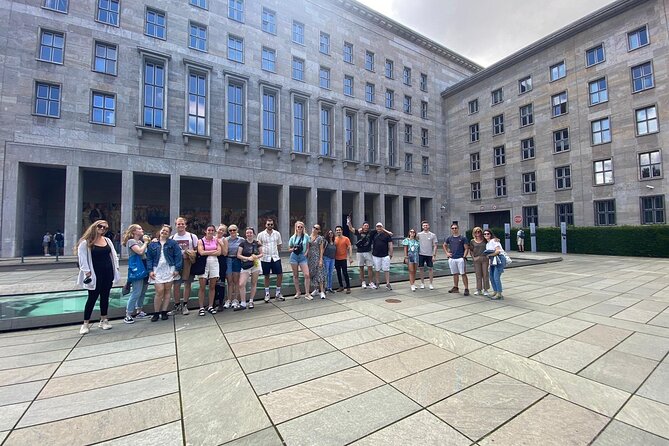
The last featured stop is Ausstellung Objektschutzregiment der Luftwaffe Friesland. This is not the kind of name you memorize for fun, but it is one of those spots that can make you love Berlin more because it feels a bit off the main tourist track.
You will see guard towers, times memorials, and streetlights connected to Stalin’s Soviet empire, and you get to notice what people often walk past without thinking about: how surveillance and control become part of the urban landscape.
This is where the tour can feel extra valuable. Many Berlin visitors only chase the obvious monuments. This stop adds texture by showing you how power systems physically shaped neighborhoods and infrastructure.
If your guide is strong at pointing things out, this will be the stop where you find details you would never have noticed alone.
How to get the best guide experience (the part you can control)
The big pattern in the feedback is that the tour depends on the guide. Some guides turn Berlin into a story with pacing, humor, and clean answers. Others deliver facts in a drier way.
Names that have been mentioned as standouts include Ester, Adolfo, Katia, Ana, Ana’s fellow guides, Miguel, Nora, Francesca, Phillipe, Rosanna, Evan, Richard, and ronja. You cannot guarantee who you get. But you can set yourself up for success.
Do this:
- Arrive a few minutes early so you do not miss the start.
- Be ready to ask questions quickly, especially at the Wall and memorial stops.
- Wear shoes that can handle uneven pavement and long stretches.
- If you are cold or wet, bring layers. One snow-and-ice experience still resulted in safe walking, but you do not want to be miserable.
Also, note that some people report the tour running longer than the advertised time. That can be good if the guide keeps it engaging. It can also mean less time at a specific stop. Keep your flexibility mindset.
Who should book this tour, and who should not
This tour is a great fit if:
- You are in Berlin for a short stay and want a fast orientation to central landmarks
- You like history that connects architecture and politics, not just names and dates
- You want a guided way to understand the Cold War sites without getting lost in context
- You are traveling solo or with friends and like chatting with other people along the walk
It might not be the best fit if:
- You hate walking and want only major indoor attractions
- You prefer to linger at memorials and buildings for long stretches
- You want a slow, cinematic tour where every photo gets time
Practical planning: what to bring and how to time it
Because the tour covers a cluster of major sites in a limited window, plan to use it as your first-day move if you can. It helps you know what you want to revisit later.
I also recommend wearing layers. Berlin weather can change quickly, and you will be outside for most of the experience. If you are visiting in winter or shoulder season, you will thank yourself for bringing gloves or warm socks.
Finally, have a realistic mindset about what “free admission” means in practice. The tour lists free admission for every featured stop. Still, be ready for the possibility that a specific area may have its own rules at the moment you arrive. A quick listen to your guide usually solves most confusion.
Should you book this Berlin walking tour?
I’d book it if your goal is to learn Berlin fast, walk through the center with a guide, and get the story behind major landmarks like the Reichstag, Brandenburg Gate, the Wall, Checkpoint Charlie, and the Holocaust Memorial. At this price level, it is hard to beat as an orientation and context builder.
I would not book it as your only Berlin history plan if you are strict about slow pacing or need guaranteed long time at each stop. And if you are the type who panics when plans change, arrive early and confirm the meeting spot in your booking details, because meeting-point errors and no-show experiences are exactly the kind of problem that can ruin a one-day trip.
If you go in prepared, this is a smart, budget-friendly way to see Berlin with your eyes open.
FAQ
Where does the Berlin Walking Tour start?
The tour starts at Generator Berlin Alexanderplatz, Otto-Braun-Straße 65, 10178 Berlin, Germany.
How long is the tour?
The duration is about 3 hours.
Is the tour offered in English?
Yes. The tour is offered in English.
How many people are in the group?
The tour has a maximum of 50 travelers.
What is included in the price?
The included item is a walking tour guide.
Do I need tickets or pay admission at the stops?
The stops listed on the tour are marked as free admission, and public transportation is not included if you need it to get between areas.
Recently added around Berlin
- Berlin Private Custom Walking Tour With A Guide (Private Tour)★ 4.5 · 8 reviews
- One Up to 3 Rickshaws(6 GUESTS)-Taylor Made Rickshaw Berlin Tour★ 5.0 · 20 reviews
- Moonshine Comedy – English Stand Up Comedy by the bay★ 5.0 · 11 reviews
- Private Half-Day Berlin Sightseeing Tour with a Minivan Including Short City Walks★ 5.0 · 31 reviews
- Private taxi tour to Potsdam and Sanssouci 6-8h★ 5.0 · 30 reviews
- Private City Kickstart Tour: Berlin★ 4.5 · 71 reviews
- Private tour of Berlin★ 5.0 · 15 reviews
- Private Tutankhamun’s Tomb Live Escape Room in Berlin★ 3.5 · 11 reviews
Walking Tours, compared.
Berlin’s Best: 2 Hour Walking Tour Third Reich and the Cold War
Read our review →
Third Reich Berlin: Hitler and WWII Walking Tour
Read our review →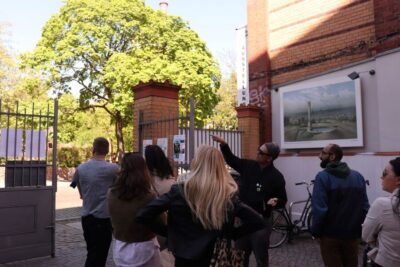
Browse the lists this tour appears in