
Reviewed · WALKING TOURS
Berlin: Hidden gems around the Gendarmenmarkt – Guided walking tour
Berlin’s Gendarmenmarkt is already pretty, but this tour makes you notice the details you usually skip. What I love is the way the guide connects three standout buildings with real stories, and the way you get a focused look at Berlin-Mitte landmarks without feeling rushed.
The one drawback to keep in mind is language. The live guide speaks German, and the tour is not for visitors who are visually or hearing-impaired. If you do not read German, you’ll want a translation plan before you go.
Key things I would not miss on this Gendarmenmarkt tour
- Three big architectural stops up front: German Cathedral, French Cathedral, and the Konzerthaus
- The 1989 moment tied to the proclaimed freedom of travel
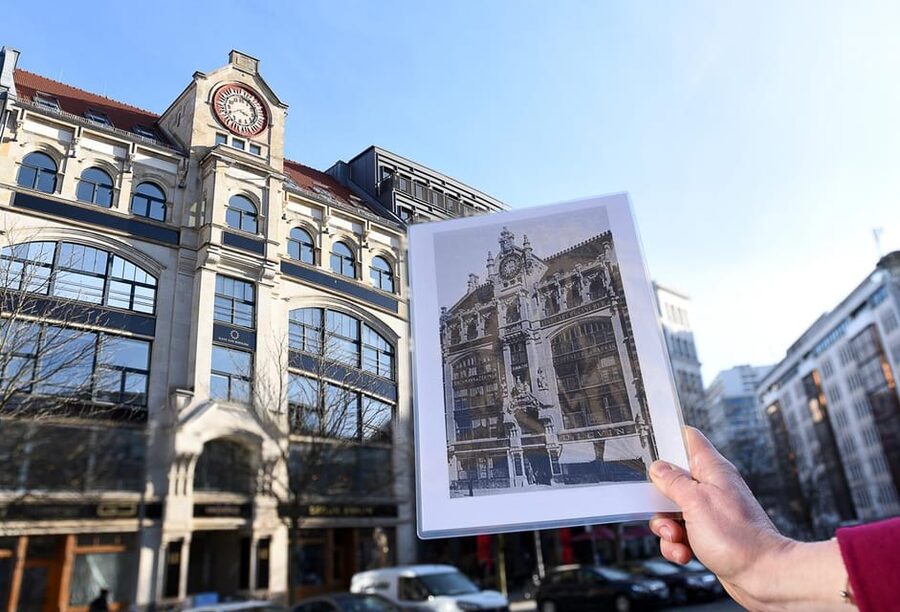
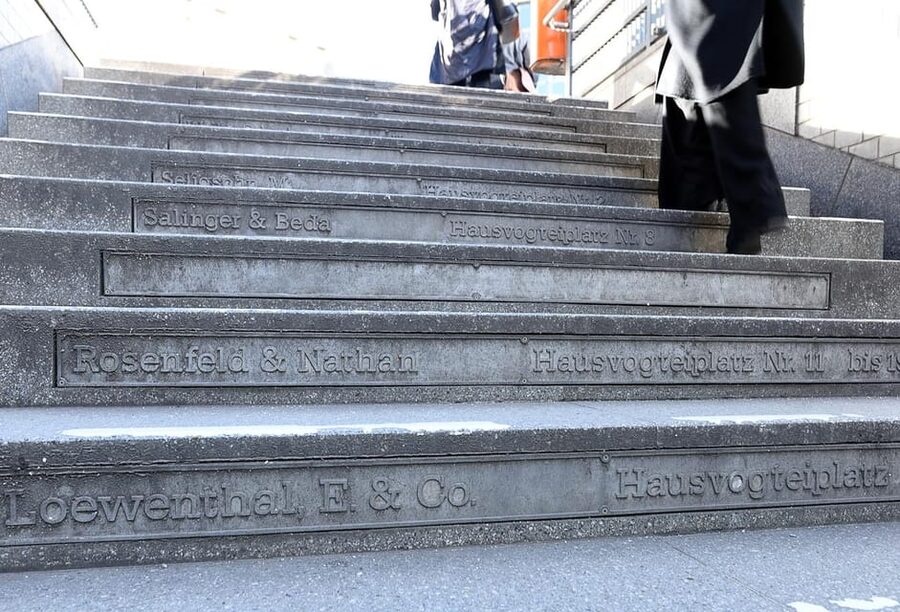
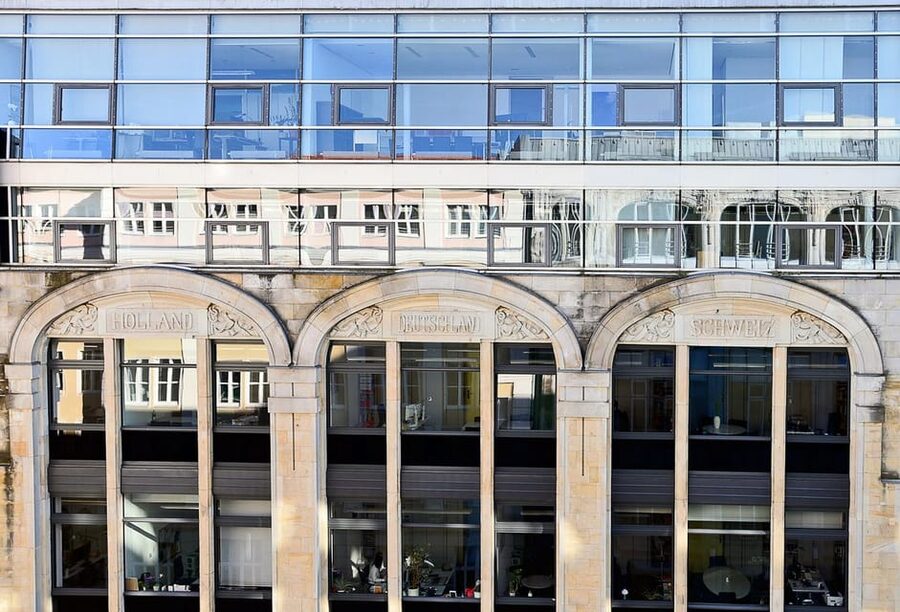
- Smaller streets, bigger stories in Mohrenstraße, Hausvogteiplatz, and Jägerstraße
- Fashion history near Hausvogteiplatz, when Berlin was building its fashion reputation
- Jägerstraße and the Mendelssohn link, plus meetings of intellectuals like Alexander von Humboldt
- A small group size (max 15), which keeps the walk interactive and easy to follow
Where Gendarmenmarkt gets its real personality
Gendarmenmarkt is famous for looking symmetrical and grand. But the tour’s angle is what makes it worth your time: it treats the square like a living stage that kept changing roles as Berlin changed. You do not just see buildings. You learn why they mattered, and how the area kept reinventing itself across different eras.
You’ll also get context that helps you read the space. The tour frames the square as Berlin’s most beautiful square, then quickly shows that beauty comes with layers: shifting power, shifting culture, and even the feeling of a place still in motion. The area has been a major construction site since 2023, and the tour does not ignore that reality. It is one more reminder that even a classic square still has a present-day story.
More walking tours in Berlin:
- Discover Berlin Half-Day Walking Tour
★ 5.0 · 9,624 reviews - Berlin: Third Reich and Cold War 2 Hour Walking Tour
★ 4.9 · 6,830 reviews - Berlin: Discover Berlin Walking Tour
★ 4.9 · 5,998 reviews
Starting at Gendarmenmarkt, then walking the streets people actually use
The tour begins at Gendarmenmarkt, opposite the house at Französische Straße 44. That’s a good location because you’re right where the action is, and you can orient yourself quickly. After about two hours, you end back at the same meeting point, which makes it easy to fold into a larger day of sightseeing.
The pacing is built for wandering. It’s a guided walking tour, not a bus ride with stop-and-go photos. In practice, that means you get to see how the square opens up into side streets, and you catch the vibe of Berlin-Mitte at walking speed.
Also, the group stays small, max 15 people. You’re less likely to feel lost in a crowd. The guide can point things out and keep the story line straight, especially when the tour jumps from architecture to personalities to major historical moments.
The first wow factor: German Cathedral, French Cathedral, and Konzerthaus
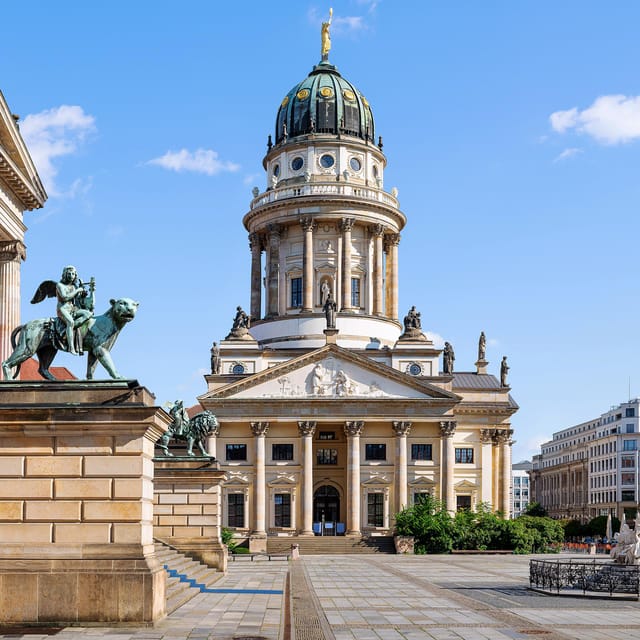
The route starts by walking you through the heart of the square: the German Cathedral, the French Cathedral, and the Konzerthaus. This is smart for first-time visitors. If you want to understand Gendarmenmarkt, you need to start with the three buildings that give it its identity.
What I like about this approach is that you do not only get descriptions. You learn what to look for, so the architecture becomes something you can read. The tour highlights architectural features and explains why each building matters to the city. That helps you notice symmetry, style differences, and the way these structures visually “talk” to each other across the open space.
The Konzerthaus is also treated as more than a pretty façade. It’s part of the square’s cultural meaning, and it fits the tour’s theme: this area has been about public life, not private corners.
Practical tip: take a minute early on to decide what direction you want to photograph from. Once you move through the square, you’ll naturally see the best angles without rushing.
How Berlin’s big historical turns show up on a small square
One of the most compelling parts is the visit to the place where the freedom of travel was proclaimed in 1989. Berlin in 1989 is a headline moment for Germany, but what you often miss is how the city’s geography helps you feel the timeline. Walking there, on foot, makes the history feel less like a date on a page and more like something anchored to a specific setting.
This matters because it changes the tone of the tour. You go from admiring architecture to standing near a turning point that shaped the country. The tour’s framing helps you understand why the square is not only decorative, but also historically charged.
And because you’re walking, your body stays in the same place your eyes are learning. That simple continuity makes the story stick.
A few more Berlin options worth a look
- Berlin: Reichstag, Dome and Government District Guided Tour
★ 4.7 · 18,288 reviews - Berlin: Government District around the Reichstag Guided Tour
★ 4.7 · 8,447 reviews - Berlin: Hidden Backyards Guided Walking Tour
★ 4.8 · 5,360 reviews - Berlin: 1-Hour Boat Tour with Bilingual Live Guide
★ 4.7 · 3,629 reviews
Mohrenstraße, Hausvogteiplatz, and Jägerstraße: why side streets matter here
A lot of “squares” tours stop at the square and call it done. This one pushes into the nearby streets, including Mohrenstraße, Hausvogteiplatz, and Jägerstraße. That shift is where you start to understand how Gendarmenmarkt connects to daily life and to the city’s changing economy.
You’ll hear the tour’s idea that even if you think you know the square, the surrounding streets can surprise you. That is believable here. The area feels central, yet it has pockets that tell different stories: culture and ideas, finance and institutions, and later, the pull of fashion and public creativity.
If you like tours that help you build a mental map, this is the part that earns it. After you leave, you’ll have a clearer sense of how to move through Berlin-Mitte without just following the most obvious sights.
Hausvogteiplatz and the fashion world that once centered here
One stop that’s easy to underestimate is Hausvogteiplatz. The tour presents it as a place of fashion history, once the center of Berlin’s fashion industry. Instead of treating fashion as a modern trend, the guide uses it to show how Berlin built its reputation into a fashion metropolis.
This is useful for you because it gives a different lens on Berlin today. When you walk these streets and think about the city’s current creative energy, it feels more grounded. You can connect the modern look and lifestyle with a specific historical location, even if your fashion interests are casual.
The value here is not just trivia. It’s a way to make your visit feel like a story you’re walking through. You start to see the city as a chain of places that shaped roles, not just a collection of attractions.
Jägerstraße: Mendelssohn Bank, money, and the minds behind it
Then the tour moves to Jägerstraße, described as a key area in Berlin’s financial world, including the influential Mendelssohn Bank. This matters because finance in a city is never only about numbers. It connects to who had influence, which families and institutions shaped decisions, and which networks could fund culture.
But the tour does not keep it dry or purely economic. Jägerstraße is also presented as a place of intellectual inspiration. The guide highlights meetings between major figures such as Alexander von Humboldt, Rahel Varnhagen van Ense, and Moses Mendelssohn.
That blend of banking and big ideas helps you understand why certain neighborhoods feel like they carry weight. You’re not just seeing where famous people lived. You’re learning how their circles intersected in real places, right there on the walk.
The personalities that animate the square’s story
Another highly praised element is the tour’s use of people. Instead of listing names and moving on, the guide ties personalities to place, and to how Berlin’s culture evolved.
You’ll meet (through the tour’s storytelling) key figures such as:
- E.T.A. Hoffmann (writer and composer)
- Josephine Baker (dance icon)
- Marlene Dietrich (acting legend)
- Claire Waldoff (cabaret star)
- The Mendelssohn family (already echoed through the Jägerstraße banking thread)
What I appreciate is that these people span different flavors of culture, from literature and music to performance and cabaret. That makes Berlin feel less like one uniform “brand” and more like a city where multiple arts kept feeding each other.
One practical benefit: if you remember only one or two names, you still get something. The guide is setting up anchors, and those anchors make the buildings and streets easier to recall after your walk.
What the small group size changes for you
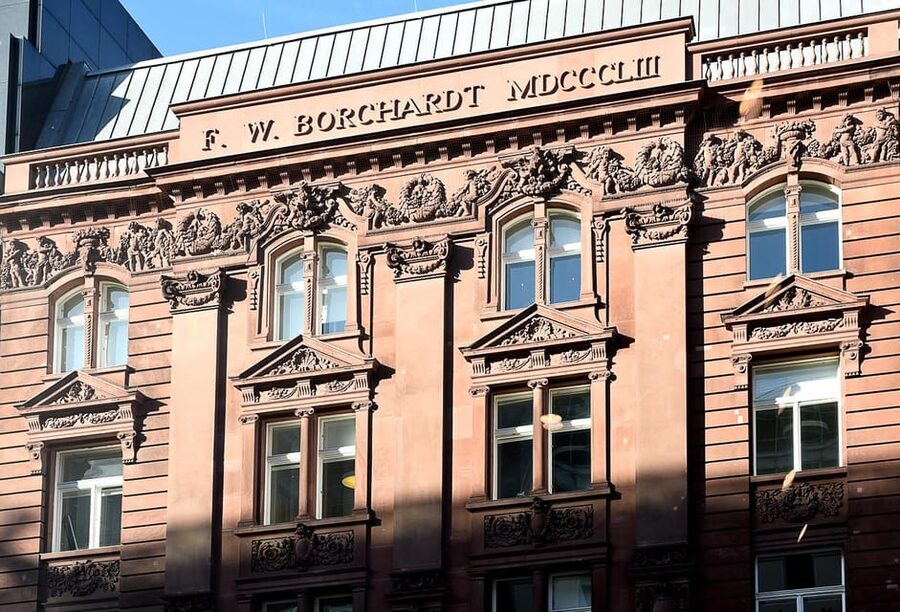
A tour for max 15 people sounds like a technical detail, but it affects your experience. You’ll be able to hear the guide, ask quick questions if you have them, and still keep a comfortable walking rhythm. When you’re learning architecture and history in a confined area like Gendarmenmarkt, audio and attention matter more than you might think.
It also helps that the tour is 2 hours. That’s long enough to go beyond surface facts, but short enough that you don’t feel stuck in a slow group shuffle. For many visitors, it lands perfectly between museum time and evening plans.
If it rains (and Berlin loves drama), the format still works. The guide’s storytelling keeps you engaged, and the walk stays manageable rather than turning into a slog.
Price and value: is $20 a good deal for this specific walk?
At $20 per person for about 2 hours, this is priced like a practical city walk, not a “big production” tour. The value is strongest if you want guided context without paying for a full-day excursion.
Here’s what you’re buying:
- A live guide who can point out architecture and historical connections
- A focused route that covers three landmark buildings plus surrounding streets like Hausvogteiplatz and Jägerstraße
- A small group experience (max 15), which usually means more attention per person
The tour is also in German. If you speak German, you get full value. If you do not, the tour may still be enjoyable if you are comfortable reading along mentally and using a translation app. Still, it’s not ideal if you rely on a precise, fast-paced explanation in a language you do not understand.
Best fit: who should book this tour
This walking tour is best for you if:
- You love Berlin-Mitte and want a guided way to connect neighborhoods, not just monuments
- You enjoy architecture when someone shows you what to notice
- You want a history route that includes culture, personalities, and a key 1989 moment
- You prefer a small group where you can stay attentive
It may not be the right match if you:
- Need tours in English or require nonstop accessibility support beyond general wheelchair access
- Are looking for a deep museum-style experience, because this is a walk and story-focused route
Also, if you’re the type who likes to plan days tightly, the fact it starts and ends at the same point at Gendarmenmarkt is a big convenience.
Tips to get the most from this walk
- Wear comfortable shoes. You’ll be on foot for the full 2 hours.
- Bring a light layer. You are out in open spaces around the square, and Berlin weather can shift fast.
- Decide ahead what you want from the tour: architecture, 1989 history, fashion connections, or all of it. The best results come when you let yourself be curious instead of trying to “collect” facts.
- If you do not speak German well, load a translation app and keep an eye on key names the guide mentions so they stick.
Should you book this Berlin Gendarmenmarkt walking tour?
If you want a high-value way to understand Gendarmenmarkt beyond the postcard view, I think this one is worth booking. The mix of architecture, a clear thread through 1989 freedom of travel, and story stops in Hausvogteiplatz and Jägerstraße gives you more than a standard square walk.
Book it if you’re the type who likes to learn how a city works, not only what it looks like. Skip it if you need the tour in English or if a German-language guided experience will frustrate you.
FAQ
FAQ
How long is the Berlin Gendarmenmarkt hidden gems walking tour?
The tour lasts about 2 hours.
How much does the tour cost?
It costs $20 per person.
What is the meeting point for the tour?
The meeting point is at Gendarmenmarkt, opposite the house at Französische Straße 44.
Where does the tour end?
The tour ends back at the meeting point.
How large is the group?
The tour runs as a small group with a maximum of 15 people.
Is there a live guide?
Yes, it is a live guided walking tour.
What language is the guide speaking?
The tour guide speaks German.
Is the tour wheelchair accessible?
Yes, it is wheelchair accessible.
Who might the tour not be suitable for?
It is not suitable for visually impaired people or hearing-impaired people.
What is the cancellation policy?
You can cancel up to 24 hours in advance for a full refund.
Can I reserve now and pay later?
Yes, you can reserve now and pay later to keep your plans flexible.
Recently added around Berlin
- Berlin Private Custom Walking Tour With A Guide (Private Tour)★ 4.5 · 8 reviews
- One Up to 3 Rickshaws(6 GUESTS)-Taylor Made Rickshaw Berlin Tour★ 5.0 · 20 reviews
- Moonshine Comedy – English Stand Up Comedy by the bay★ 5.0 · 11 reviews
- Private Half-Day Berlin Sightseeing Tour with a Minivan Including Short City Walks★ 5.0 · 31 reviews
- Private taxi tour to Potsdam and Sanssouci 6-8h★ 5.0 · 30 reviews
- Private City Kickstart Tour: Berlin★ 4.5 · 71 reviews
- Private tour of Berlin★ 5.0 · 15 reviews
- Private Tutankhamun’s Tomb Live Escape Room in Berlin★ 3.5 · 11 reviews
Walking Tours, compared.


Berlin’s Best: 2 Hour Walking Tour Third Reich and the Cold War
Read our review →
Third Reich Berlin: Hitler and WWII Walking Tour
Read our review →
Browse the lists this tour appears in