
Reviewed · BERLIN WALL & COLD WAR TOURS
2.5-Hour Berlin Wall and Memorial Sites Walking Tour
Berlin can feel like two cities glued together, and this tour is a direct way to see how the divide worked on the ground. You start at the Square of 9th November 1989, where the wall’s story takes a sharp turn, then you move along the former border line and the hard reality of the “death strip.” It is heavy subject matter, but it is also clear and human.
Two things I really like are the tight focus on major memorial stops like Bernauer Strasse and the Church of Reconciliation, and the fact the tour stays small, up to 12 people. That smaller group size makes it easier to ask questions and get answers that fit what you are actually seeing. I also like that the tour includes a guided pause so you are not just marching nonstop.
One possible drawback: it is still a walking tour, and it calls for moderate physical fitness. Also, you finish at Berlin-Nordbahnhof, so you’ll want to plan your next step instead of assuming you’ll end right back near where you started.
Key highlights to look for on this Berlin Wall route
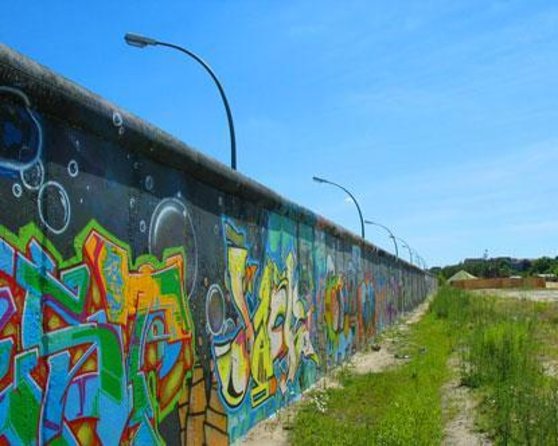
- Square of 9th November 1989 start gives you immediate context for why the wall fell after 28 years
- Bornholmer Strasse to Nordbahnhof line helps you understand how the border shaped movement across Berlin
- Ulbricht Curve, Schwedter Way, and Gleim tunnel are named waypoints that anchor the story in real places
- Berlin Wall Park and Bernauer Strasse Memorial focus on what remains, and what was erased
- Church of Reconciliation and viewing platform add a reflective stop, not just facts on a sign
- Small-group feel with a guided pause keeps the pace manageable for a 2.5-hour walk
Why a Berlin Wall walking route makes Berlin click
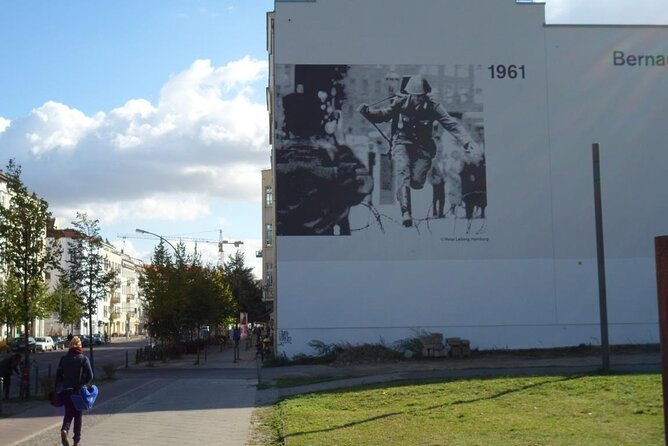
This kind of tour works because the border was not an abstract idea. It was a physical line, with watchpoints, barriers, and paths that determined where people could and could not go. When you walk it, you stop thinking in headlines and start understanding how control looked minute by minute.
What helps most is how the route is organized around named locations. You do not just see a random stretch of wall history. You move from a major date marker, then along the old boundary, and into the stations that shaped what travel meant under the Cold War.
Yes, it is emotional. But the best part is how your guide turns that emotion into comprehension. You leave knowing how Berlin’s political division actually functioned in real space, instead of just knowing that it happened.
More Berlin Wall and Cold War tours in Berlin:
- Berlin: Third Reich and Cold War 2 Hour Walking Tour
★ 4.9 · 6,830 reviews - Berlin’s Best: 2 Hour Walking Tour Third Reich and the Cold War
★ 5.0 · 5,486 reviews - Skip-the-Line: Berlin Wall Museum at Checkpoint Charlie
★ 4.1 · 2,041 reviews
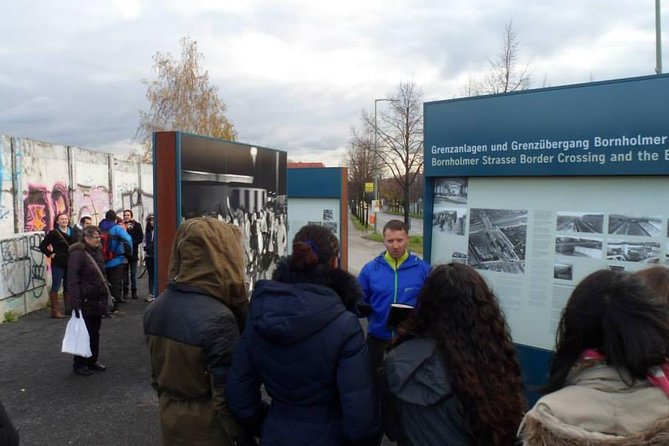
Meeting at Bornholmer Strasse, then walking toward Nordbahnhof
The tour meets at Bornholmer Str. 75A, 10439 Berlin, with a start time of 3:00 pm. You end at Berlin-Nordbahnhof, Invalidenstraße 131, 10115 Berlin. That matters because this is not a loop, so you’ll want to map your return plans before you go.
The route runs about 2 hours 30 minutes, and it is designed for a maximum group size of 12. That small cap helps a lot with questions, plus it keeps the guide able to slow down when something crosses your path that you might miss on your own.
You’ll also get a mobile ticket, which is practical in a city where you’ll likely be checking your phone anyway. And you’ll have a local guide and a professional guide working with you, so you’re not relying on one perspective.
Square of 9th November 1989: starting at the moment everything changed
You begin at the Square of 9th November 1989, which is a strong choice because it places you on the historic ground where the wall fell after 28 years of splitting. Instead of starting with architecture or museum basics, you start with the moment the story pivoted.
This is the kind of start that gives you a timeline you can feel in your feet. As you begin moving, the date is not just a fact you memorize. It becomes a lens for what you’re about to see next.
Even if you already know the broad events, I like starting here because it sets expectations for the emotional tone. It is not just a sightseeing walk. It is a guided path through consequences.
Following the former boundary and the death strip in real space
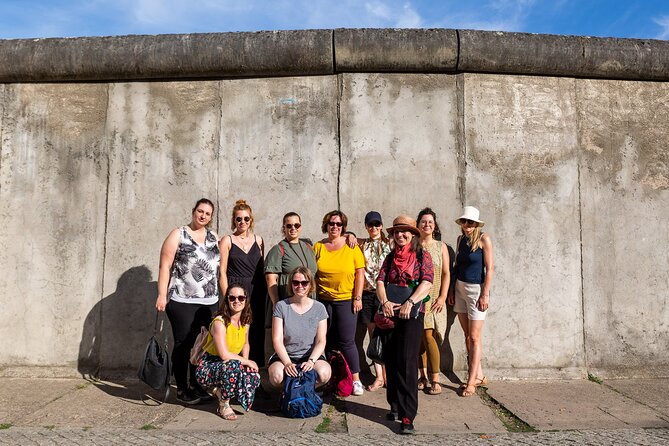
As you continue, you follow the route along what used to be the former death strip. This is one of those phrases people hear, but it lands differently when you are outside looking at where it ran and why it mattered.
You’ll hear about how the tour traces old boundaries and the trails of the former structure. Some of the details are the kind of things insiders recognize, but the city also documents them, so the guide can connect what is visible now with what the border system required then.
This is also where a walking format shines. You can see how the border’s logic changed depending on where you are, rather than assuming one uniform experience. One stretch can feel like open space, another feels tighter and more controlled.
More walking tours in Berlin:
- Discover Berlin Half-Day Walking Tour
★ 5.0 · 9,624 reviews - Berlin: Discover Berlin Walking Tour
★ 4.9 · 5,998 reviews - Berlin: Hidden Backyards Guided Walking Tour
★ 4.8 · 5,360 reviews - Third Reich Berlin: Hitler and WWII Walking Tour
★ 5.0 · 3,301 reviews
Ulbricht Curve, Schwedter Way, and named border waypoints
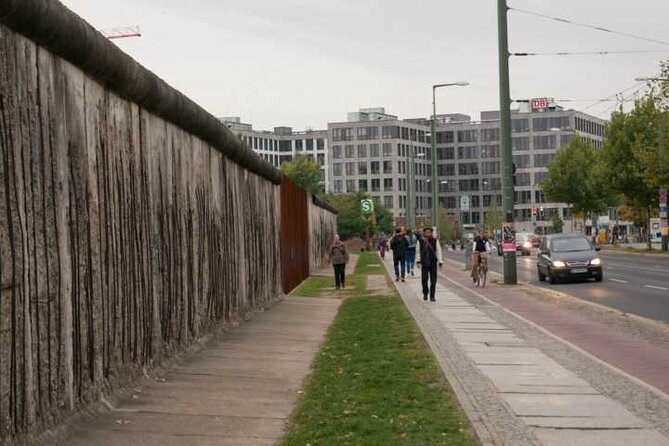
Along the walk, you hit several named points: the Ulbricht Curve and the Schwedter Way. You also move through areas connected to the old border stations.
I like these stops because the names act like bookmarks. Without them, it would be easy to treat the tour as a general “Wall overview.” With them, you build a mental map that you can revisit later when you look up what you saw.
The guide’s job here is important. You want someone who can explain how these waypoints fit into the bigger Cold War story, and the tour is set up for that kind of guided interpretation, not just photo stops.
A practical note: plan for short waits and regrouping as you move from point to point. Even at a fast pace, the guide will likely take a minute to connect the location to what you’re seeing and why it matters.
Gleim tunnel and Berlin Wall Park: where the story becomes physical
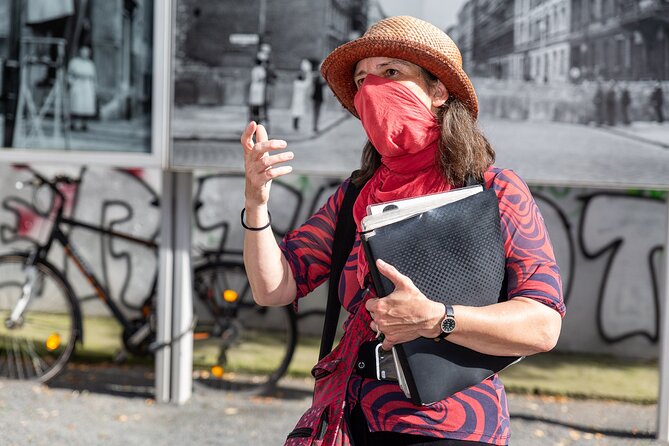
Two major waypoints come up around the middle of the route: Gleim tunnel and the Berlin Wall Park. These places help you understand that the border was not only walls and guards, it was also infrastructure and movement design.
At Gleim tunnel, the name alone signals why this area belongs in a guided route. Tunnels, passages, and border-adjacent structures shaped how people navigated the limits they faced. You don’t need to already know the detailed accounts to get value here, because the guide’s explanations are built around what the site represents in the wider story.
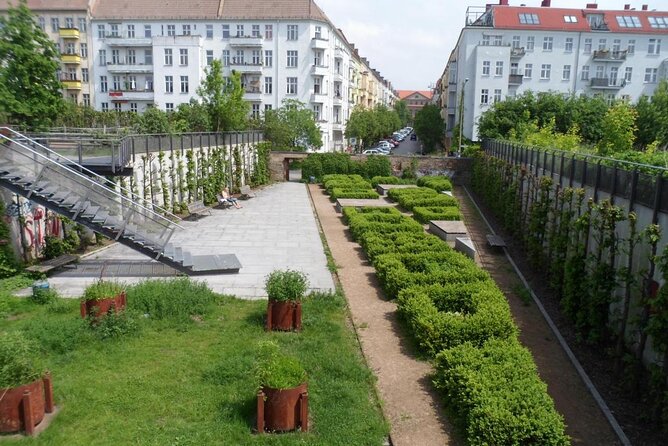
Then Berlin Wall Park brings you into a setting where history sits in public view. Parks are often where cities put traces of the past in a way that becomes part of daily life, and that makes the contrast with a former “no-go” area feel sharper.
There’s also an inclusive pause during the walking portion. I appreciate this kind of built-in break because it lets you process what you’ve just learned before you move on.
Bernauer Strasse Memorial and the Church of Reconciliation
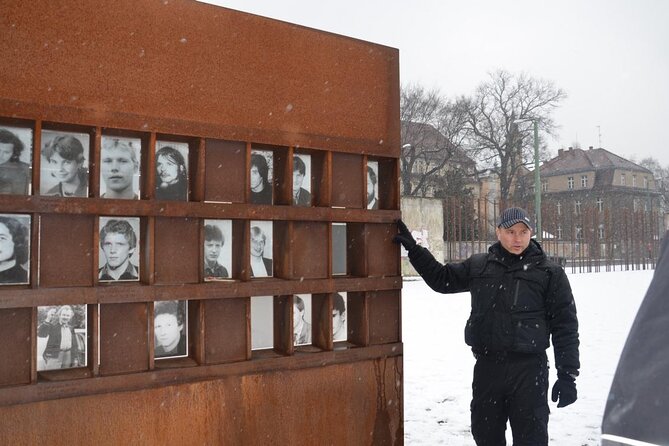
If you want the strongest emotional and educational concentration on the route, this is where you look. Bernauer Strasse Memorial and the Church of Reconciliation are both key stops, and they help you understand the border’s human scale.
Bernauer Strasse is especially valuable because it is a place where you can connect what happened to what you see now. Memorial sites do more than mark a location. They translate an overwhelming story into something you can stand in and read with your own eyes.
The Church of Reconciliation adds another layer. A place like this tends to shift you from “what happened” toward “how people coped and how the city tried to heal.” Even if you are not religious, the setting supports a reflective pace, which helps with the heavier themes.
You’ll also reach a viewing platform of the Berlin Wall Memorial. For me, a viewing platform is where your mental map becomes real. After walking sections of the route, standing somewhere with a wider sightline helps you see how the Wall’s presence influenced space around it.
Nordbahnhof: ending at an ex-ghost train station
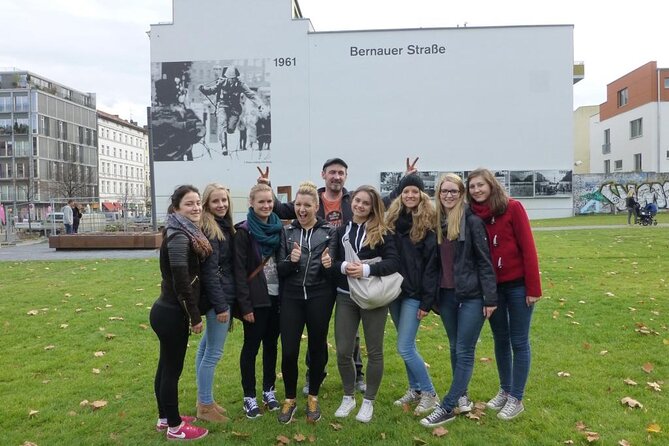
The tour finishes at Nordbahnhof, an ex-ghost train station. Ending here is a smart storytelling choice because it ties the Wall to how travel and transit were disrupted, not just how people lived nearby.
Train stations are where you expect movement and connection. When you learn that a station became an ex-ghost space in the border system, it changes how you think about the Cold War. It was not only about who could cross a line, it was about who could even travel through.
Nordbahnhof also gives you an easy way to keep your day going. You can pair the tour with more exploring in the surrounding area, since you end in a major part of the city’s transport network.
The guide makes the difference, especially with personal stories
The strongest praise from past participants is consistent: the guide is informative, and the explanations go beyond basic facts. You should expect clear routing through the major stops, and you should also expect your guide to connect the locations to real lived experience.
One review highlighted how the guide shared personal experience from her own life, which is exactly what makes a tour like this land. When someone has a personal connection, they can explain why certain details mattered, not just what happened. That is how you avoid turning memorial sites into a checklist.
If you’re the type who likes asking questions, this tour style works well. You are moving slowly enough that it feels natural to pause and ask what a named spot means, or how a specific section relates to the broader story your guide is building.
Price and value for $25.45 in Berlin
At $25.45 per person, this tour is priced in the range where you should look closely at what you get. You are paying for a guided route (local guide plus professional guide), a compact 2.5-hour format, and a guaranteed skip of long lines.
For me, the value here is the combination of time and focus. You get to walk between major memorial sites instead of spending half your day figuring out routes and interpreting locations on your own. And because the group is capped at 12, you’re less likely to get the feeling that you’re being rushed through heavy material.
Also, “skip the long lines” matters at busy Berlin memorial stops. It is not glamorous, but it saves your time and your energy, which is key on a walking tour where you’ll be on your feet anyway.
Food and drinks are not included, so if you plan to eat afterward, give yourself a little buffer time. You will likely want water during the walk, especially if you’re going in warm weather.
Who should book this Wall tour, and who may want a different plan
This tour is a strong fit if you want a guided, chronological feel to Berlin Wall history. It is also great if you like walking and want to understand the geography of the border, not just read plaques.
You’ll probably enjoy it most if you like memorial sites that come with context. The Church of Reconciliation, the viewing platform, and Bernauer Strasse are not meant for casual sightseeing. They are meant to be understood in the moment.
The main caution is the walking. The tour asks for moderate physical fitness, and the route is long enough that you should wear supportive shoes and be prepared for standing during explanation stops.
Also consider the end point. You finish at Nordbahnhof, so if you have a strong preference for ending near your hotel, you may want to plan your transport in advance.
Practical tips so the 2.5 hours feel worth it
Bring comfortable walking shoes. You’ll be out for 2 hours 30 minutes, and even if the pace is guided, you are still doing real walking between sites.
Dress for weather. Berlin can shift quickly, and memorial sites outdoors are not sheltered in the same way a museum is. If you’re going in a season with cooler evenings, plan layers, because the ending near Nordbahnhof may feel more open.
Arrive a few minutes early at Bornholmer Str. 75A. Getting settled before the group starts makes it easier for the guide to begin right on time.
Because food is not included, don’t treat this as a full tour-and-meal combo. If you need lunch or a snack, handle it before you start, or plan something immediately after you finish.
Finally, use your guide like a guide. Ask what a place means in the border system, not just what happened there historically. When you ask that way, your answers tend to connect back to what you’re seeing in front of you.
Should you book the 2.5-hour Berlin Wall and memorials walking tour?
I think this is a smart booking if you want a focused Wall experience without getting lost in logistics. The route connects multiple major sites, including Bernauer Strasse Memorial and the Church of Reconciliation, and it does it in a way that builds a clear understanding of the border geography. The small group size, plus the guide’s depth, is what makes the $25.45 feel justified.
Book it if you like guided walking tours, and if you’re comfortable with a moderate amount of walking. Consider another approach if you want a longer self-paced day at memorials, or if you need a tour that ends closer to where you start.
If you want the Wall story explained in the place where it happened, this is one of the best ways to do it in a single afternoon.
FAQ
How long is the Berlin Wall walking tour?
The tour lasts about 2 hours 30 minutes.
Where does the tour start and end?
It starts at Bornholmer Str. 75A, 10439 Berlin and ends at Berlin-Nordbahnhof, Invalidenstraße 131, 10115 Berlin.
What is the group size?
The tour has a maximum of 12 travelers.
What is included in the price?
Included features are a local guide and a professional guide, plus guaranteed skip the long lines.
What is not included?
Food and drinks are not included. Hotel pickup and drop-off are not included, and transportation to and from attractions is not included.
Do I need to have special fitness or any ticket type?
You should have moderate physical fitness. The tour uses a mobile ticket. Confirmation is received at the time of booking.
Recently added around Berlin
- Berlin Private Custom Walking Tour With A Guide (Private Tour)★ 4.5 · 8 reviews
- One Up to 3 Rickshaws(6 GUESTS)-Taylor Made Rickshaw Berlin Tour★ 5.0 · 20 reviews
- Moonshine Comedy – English Stand Up Comedy by the bay★ 5.0 · 11 reviews
- Private Half-Day Berlin Sightseeing Tour with a Minivan Including Short City Walks★ 5.0 · 31 reviews
- Private taxi tour to Potsdam and Sanssouci 6-8h★ 5.0 · 30 reviews
- Private City Kickstart Tour: Berlin★ 4.5 · 71 reviews
- Private tour of Berlin★ 5.0 · 15 reviews
- Private Tutankhamun’s Tomb Live Escape Room in Berlin★ 3.5 · 11 reviews
Berlin Wall & Cold War Tours, compared.
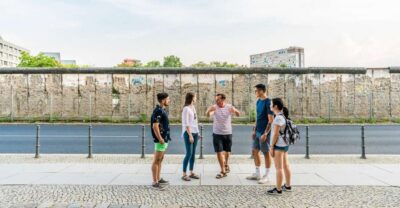
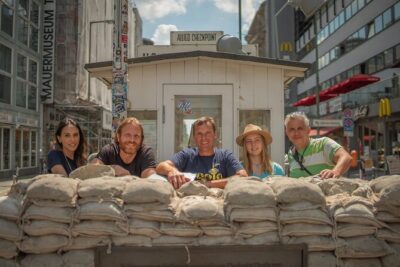
Berlin’s Best: 2 Hour Walking Tour Third Reich and the Cold War
Read our review →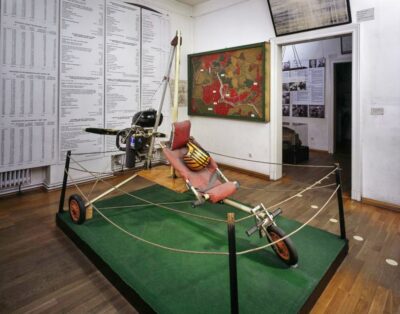
Skip-the-Line: Berlin Wall Museum at Checkpoint Charlie
Read our review →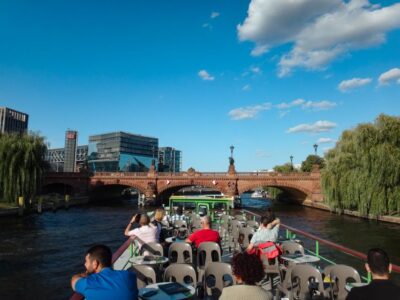
2.5-Hour East Side Boat Cruise with Commentary
Read our review →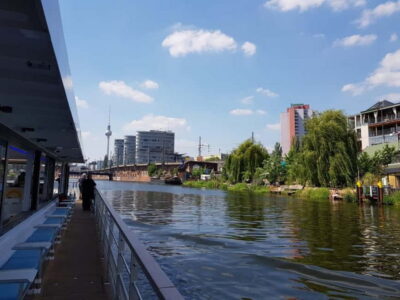
East Side Gallery Spree Cruise in a Solar Catamaran
Read our review →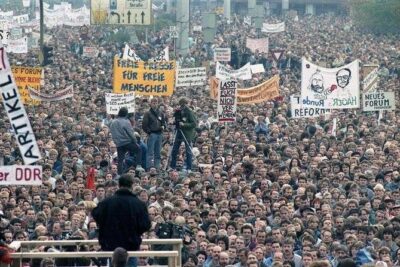
Cold War, Berlin Wall, Spies and the East Side Gallery
Read our review →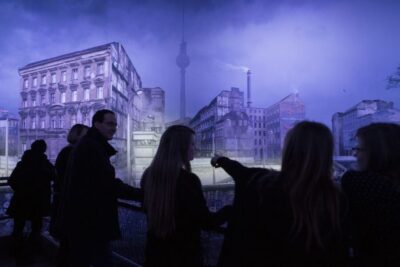
Guided Bike Tour of the Berlin Wall and Third Reich
Read our review →Browse the lists this tour appears in