
Reviewed · WALKING TOURS
An Introduction to Berlin Walking Tour
Berlin is the kind of city where the past still shapes what you see in front of you. This walking tour strings together a 300-year evolution of Berlin, from Prussia’s rise to the Nazi and Cold War eras, and ends with the city’s reunified, modern pulse. I love the historian-level guidance, and I love how the route forces you to connect big ideas to exact street corners, not just facts in a textbook.
The one thing to consider is that you will not rely on walking alone. You’ll use public transport one or twice because some distances are too far to do comfortably on foot in a tight 3-hour window.
Key things I’d mark on your mental map
- Potsdamer Platz to the Wall line, where you can visualize how the city was cut in two
- Holocaust Memorial and Reichstag dome talk, including why the 1990s glass concept matters
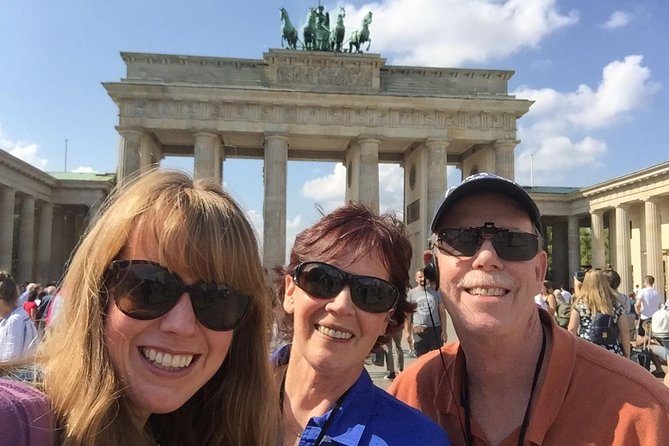
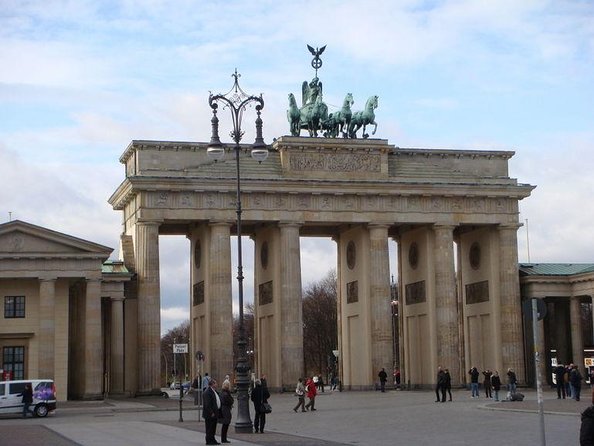
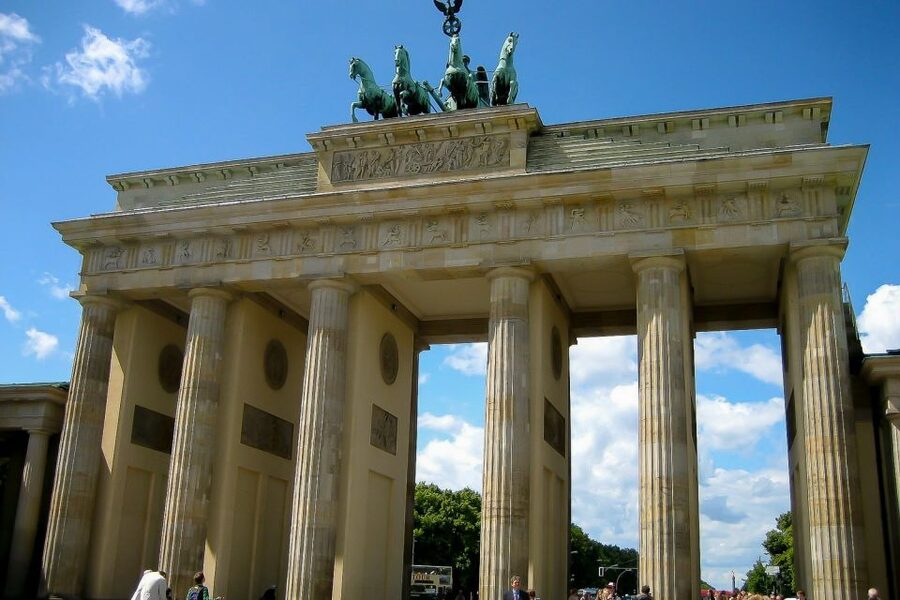
- Brandenburg Gate and Napoleon’s footsteps, tied to German nationalism and political identity
- Bebelplatz book burning, a chilling turning point tied to Hitler’s rise
- Alexanderplatz and Checkpoint Charlie, showing how East and West built their own versions of Berlin
Why this Berlin walk works: a timeline you can actually walk
Most Berlin tours give you pieces. This one gives you a through-line: how power, ideology, and war escalated over centuries, and how the city still carries the marks. You start in the modern business area of Potsdamer Platz and move toward places where democracy was attacked, borders hardened, and eventually reopened.
What makes this approach practical is that the tour isn’t only about tragedies. It also tracks Berlin’s ability to rebuild, rethink itself, and create a modern identity that leans on multiculturalism and tolerance. The guide keeps the tone serious, but you are not stuck in only one mood.
Also, the guides are the real deal. You’re walking with academics and published writers, including professors and doctoral students. In at least one case, I’d expect you to meet Dr. Martin Sauter, and his style is described as highly knowledgeable, but also individualized.
More walking tours in Berlin:
- Discover Berlin Half-Day Walking Tour
★ 5.0 · 9,624 reviews - Berlin: Third Reich and Cold War 2 Hour Walking Tour
★ 4.9 · 6,830 reviews - Berlin: Discover Berlin Walking Tour
★ 4.9 · 5,998 reviews
Starting at Cafe Einstein on Unter den Linden, then Potsdamer Platz’s before-and-after story
You meet at Cafe Einstein, Unter den Linden 42. That location is smart because it puts you right on the royal boulevard, the kind of street that signals old power and big ambition. From there, the tour heads toward Potsdamer Platz, once a crossroads that became a symbol of how Berlin reorganized itself after the Cold War.
At Potsdamer Platz, you learn how the area changed from East Germany’s harsh border-zone reality into something else entirely. The tour frames it as a replacement of the wasteland known as the Death Strip. That name hits harder when you can look around and understand you are standing in a spot that used to be defined by danger and isolation.
This first leg matters because it sets the tour’s method: you’re not just seeing landmarks, you’re seeing how Berlin re-used space. The message is simple. When political systems change, cities get rewritten.
Following the Berlin Wall route: Tiergarten, the Holocaust Memorial, and the Reichstag dome
From Potsdamer Platz, you follow the path where the Berlin Wall once stood, and then head into Tiergarten Park. Even if you have seen photos of the Wall before, it’s different when your feet trace the line. You start to sense how geography was weaponized, how separation became architecture.
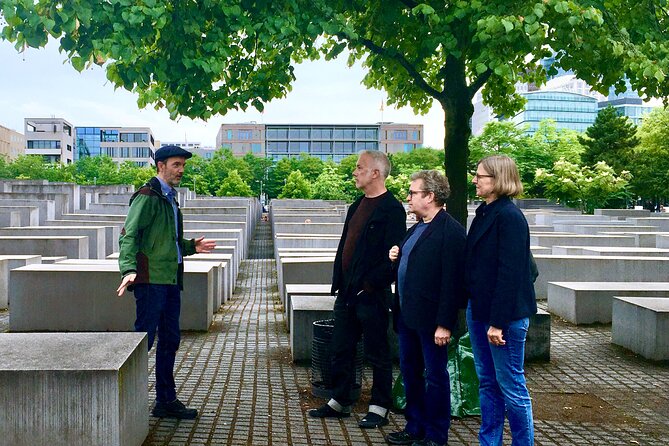
Next up is the Holocaust Memorial, where the tour keeps the focus on the human cost and on how ideology turns into policy, then into machinery. It’s one of those places where you don’t need extra dramatics. You need explanation that makes the scale and purpose understandable.
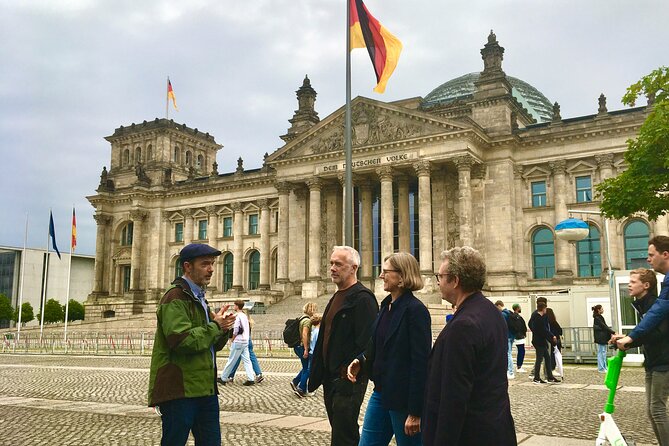
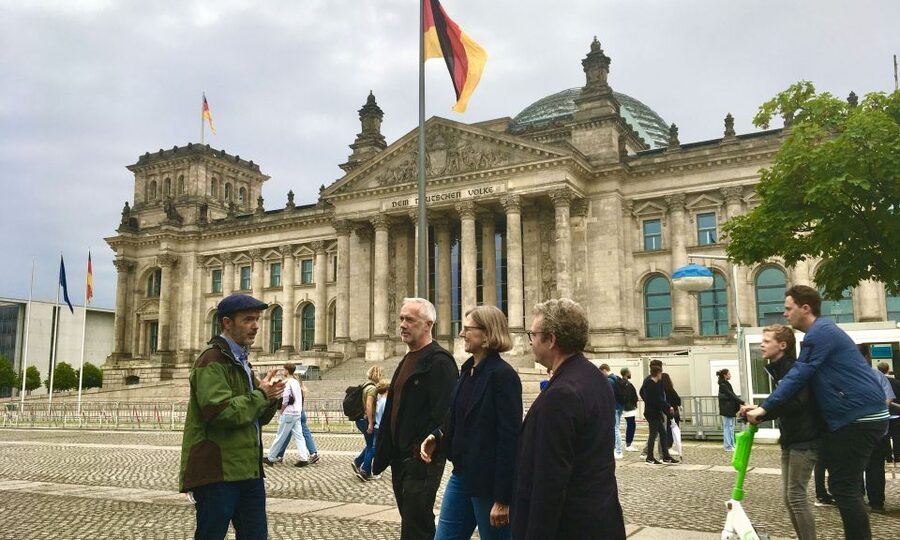
Then you reach the Reichstag. The guide explains the 1933 fire, and how the Nazis used it as a pretext to suspend civil liberties and arrest political opponents. That context helps you read the building not as a monument, but as a battleground.
The Reichstag’s 1992 glass dome, created by architect Norman Foster, becomes a discussion point. The tour uses it as a metaphor for reunification, transparency, and commitment to democracy, partly because it lets visitors look down into the parliamentary space. If you’re the type who likes to understand symbolism, this stop is where the tour really pays off.
Practical note: the Reichstag area can draw crowds on your own. Having a guide helps you move with purpose and not waste time asking, what should I even look at here?
Napoleon, Brandenburg Gate, and Frederick the Great on Unter den Linden
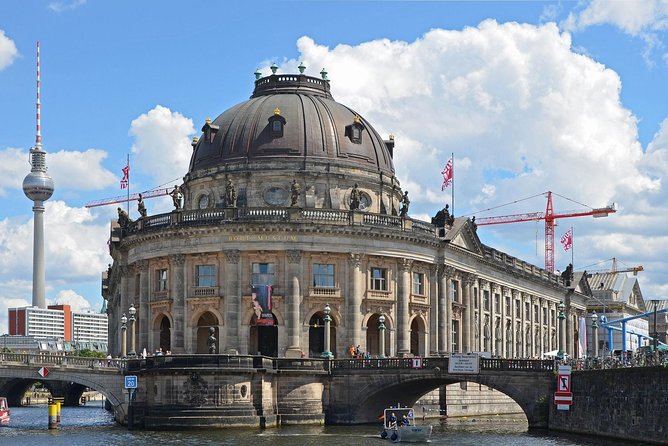
One of the tour’s strengths is that it doesn’t treat German history like a sealed box with dates you memorize. It connects European politics across borders and generations.
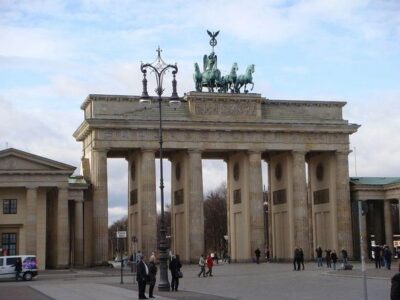
You track Napoleon’s footsteps through the Brandenburg Gate, and the guide talks about how the French Revolution acted like a catalyst for German nationalism. Standing at Brandenburg Gate, that discussion lands differently. It’s easy to think of “nationalism” as an abstract word, until you connect it to dramatic power struggles and the way nations define themselves.
Then you move along Unter den Linden, Berlin’s royal boulevard lined with palaces, museums, and theaters. This street gives you the feeling of a capital that wanted to project authority. The tour pauses for the famous equestrian statue of Frederick the Great, the kind of stop that turns a quick photo into a story about what Prussia valued.
Frederick the Great is framed as the so-called Poet King, and the discussion connects his cultural and militaristic influence to the future German Empire. In other words, you start to see how “culture” and “power” were never completely separate in Prussian thinking.
If you like walking with an argument in your head, this section gives you plenty to chew on.
Still in Berlin, but a different kind of day:
- Berlin: Reichstag, Dome and Government District Guided Tour
★ 4.7 · 18,288 reviews - Berlin: 1-Hour City Tour by Boat with Guaranteed Seating
★ 4.3 · 16,993 reviews - Berlin: Boat Tour Along the River Spree
★ 4.4 · 11,252 reviews - Berlin: Hop-on Hop-off Bus Tour with Live Commentary
★ 4.3 · 8,579 reviews
Bebelplatz’s book burning and Museum Island’s cultural pivot
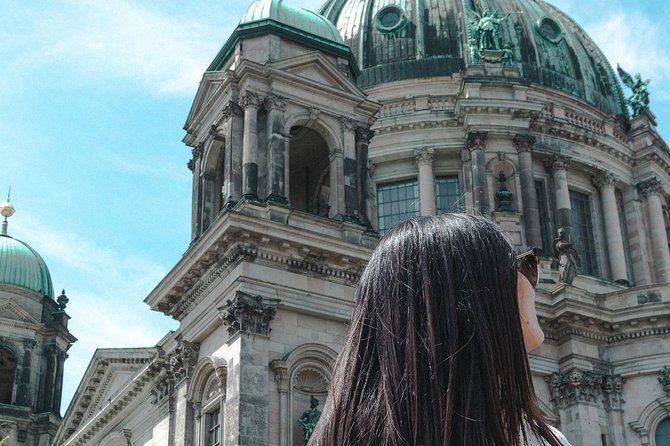
At Bebelplatz, the tour marks the site of the 1933 Nazi book burning. This is a moment that feels almost unreal when you see it in the middle of a normal urban square, which is exactly why the guide’s explanation matters. The point is not just that books were burned. The point is that censorship and propaganda were treated as political tools, and they were linked to wider persecution.
From there you cross Museum Island, often described as Berlin’s major cultural zone. The tour frames it through the city’s 19th-century development into a cultural center, basically asking you to compare two Berlin stories. One story is about intellectual life and public culture. The other is about destroying thought when it threatens the wrong kind of power.
This stop helps you build a mental balance. Berlin isn’t only a “dark history” city. It’s a city where cultural institutions grew alongside imperial ambitions, and later had to survive being misused or shattered.
Hackescher Markt courtyards, then Alexanderplatz and East Berlin’s showplace
The route pivots to a more human scale at Hackescher Markt, where you get time to ramble through a network of courtyards. This is the section where your senses reset. You go from major monuments and state buildings to smaller-scale architecture and the feeling of pre-war Berlin street life.
This matters because Berlin can feel like a museum of itself. Courtyards and side passages remind you the city was always more than ceremonies and parades. You can be serious and still notice textures.
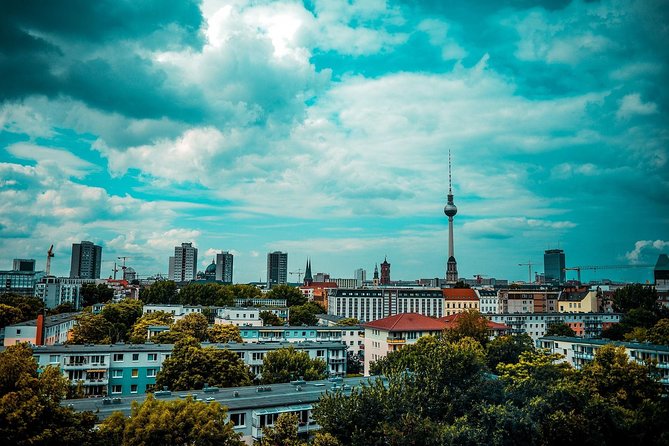
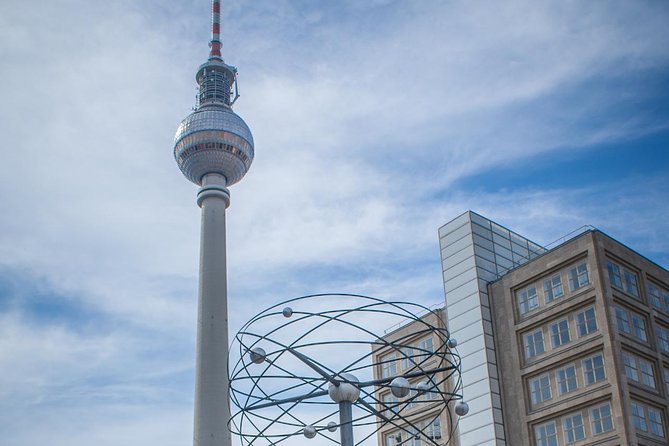
Then you head to Alexanderplatz, where the mood changes again. The guide explains how East Germans rebuilt it in the 1960s as a communist bloc showplace, with futuristic government buildings, apartment blocks, and the famous TV Tower. You’re not just seeing a landmark. You’re seeing how regimes used skyline and square design to broadcast modernity, control, and collective identity.
Alexanderplatz is a good counterpoint to the Reichstag. Both are about state power, but in totally different languages. That contrast is a big part of what makes this tour more than a sightseeing loop.
Checkpoint Charlie: where the Cold War ended, and what still lingers
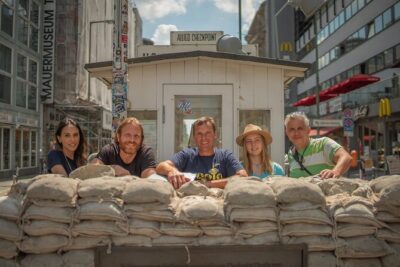
The tour finishes at Checkpoint Charlie, the legendary crossing point from West Berlin to East. In 1989, the guide explains that thousands of East Germans poured across the border, signaling the end of the Cold War era.
Ending here gives you closure that feels earned. You have traced borders as lines, but now you see the moment those lines broke. The guide also helps you consider how East/West divisions still impact Berlin even as the city keeps evolving.
Checkpoint Charlie can be a tourist magnet if you arrive on your own, so having a guide who ties the site to the bigger narrative is key. You leave with a clearer sense of what the crossing meant beyond the famous name.
Price, timing, and whether $135 per person makes sense
The price is $135 per person for a 3-hour guided walk with a historian. That’s not the budget end of Berlin tours, but it’s also not priced like a private car. The value comes from three things you’d struggle to get on your own in the same time window.
First, you’re paying for interpretation. The tour isn’t only listing places. It connects them, like how the 1933 Reichstag fire links to civil liberty, or how Frederick the Great’s cultural identity ties to later militaristic orientation.
Second, you get a tight route across major districts without turning the day into a transit marathon. You’ll use public transport one or twice, and the guide can help you buy tickets if you do not have a Berlin metro pass.
Third, the guide credentials matter. Your guides are professors, doctoral students, historians, journalists, art critics, and published authors. One review specifically highlights Dr. Martin Sauter, praised for expertise and an individualized approach.
If you are short on time and want big-picture Berlin that still points to exact places, this price starts to look fair. If you prefer free-form wandering without structure, you might feel you are paying for direction you would rather create yourself.
Getting the logistics right: meeting time, transport, and what to do before you go
This tour lasts 3 hours, so it’s best for days when you want to get oriented fast and feel confident about where Berlin has been headed historically. The starting times depend on availability, but you meet at Cafe Einstein on Unter den Linden.
Because you’ll use transit for portions, go in with a simple plan: wear comfortable shoes and be ready for quick steps between major stops. You’ll need Berlin Transit AB one-way tickets or a day ticket, depending on what the day requires. The listed prices are:
- Berlin Transit one-way AB ticket: 2.8 EUR (senior: 1.70 EUR)
- Berlin Transit day ticket: 7 EUR (senior: 4.70 EUR)
If you do not have a pass, the guide helps you purchase tickets in the first metro station.
One more tip: Berlin weather changes fast. Bring a light layer even in mild seasons. A 3-hour walk means you stay out long enough to feel it if you’re underprepared.
Who should book this tour, and who might prefer something else
This is a strong match if you want Berlin with context, and you enjoy history that explains how ideas turn into events. The balance between Prussian power, Nazi crimes, and Cold War divisions is thoughtful, and the guide does a good job of linking the city’s physical changes to political shifts.
You’ll also like it if you care about symbolism. The Reichstag dome discussion is the kind of topic that can turn a photo stop into real understanding.
It may feel a bit heavy if you want only casual sightseeing with minimal mention of genocide and repression. This tour is built for people who can handle difficult history and who want it taught responsibly.
If you have the flexibility for a private or small group format, that can help you get a more personal pace. The reviews highlight how individualized the experience can be, especially when the city is quieter and the group is small.
Should you book this Berlin walking tour?
Yes, if you want a structured, meaningful Berlin overview in a short time. The route connects iconic sites from Prussia, the Nazi era, and the Cold War into one readable story, and it adds explanation that helps you see what matters at each stop, from the Wall line to the Reichstag dome and finishing at Checkpoint Charlie.
If you’d rather skim history and save your energy for museums you choose yourself, you might feel constrained. But if your goal is to understand the city’s “why,” not just its “what,” this tour is a smart use of 3 hours.
FAQ
How long is the Berlin walking tour?
It lasts 3 hours.
What is included in the tour price of $135 per person?
The tour includes a 3-hour guided walk in the company of a historian.
Do I need a transport ticket during the tour?
Yes, you’ll use public transport one or twice because some distances are too far to walk. If you do not have a Berlin metro pass, your guide will help you purchase tickets in the first metro station.
Where does the tour meet?
The meeting point is Cafe Einstein, Unter den Linden 42, 10117 Berlin, Germany.
What language is the tour offered in?
The tour is offered in English.
Can I cancel for free, and can I reserve without paying right away?
Free cancellation is available up to 24 hours in advance for a full refund, and you can reserve now and pay later.
Recently added around Berlin
- Berlin Private Custom Walking Tour With A Guide (Private Tour)★ 4.5 · 8 reviews
- One Up to 3 Rickshaws(6 GUESTS)-Taylor Made Rickshaw Berlin Tour★ 5.0 · 20 reviews
- Moonshine Comedy – English Stand Up Comedy by the bay★ 5.0 · 11 reviews
- Private Half-Day Berlin Sightseeing Tour with a Minivan Including Short City Walks★ 5.0 · 31 reviews
- Private taxi tour to Potsdam and Sanssouci 6-8h★ 5.0 · 30 reviews
- Private tour of Berlin★ 5.0 · 15 reviews
- Private City Kickstart Tour: Berlin★ 4.5 · 71 reviews
- Private Tutankhamun’s Tomb Live Escape Room in Berlin★ 3.5 · 11 reviews
Walking Tours, compared.

Berlin’s Best: 2 Hour Walking Tour Third Reich and the Cold War
Read our review →
Third Reich Berlin: Hitler and WWII Walking Tour
Read our review →
Browse the lists this tour appears in