
Reviewed · BERLIN WALL & COLD WAR TOURS
Berlin East Side Tour 2.5 hour cruise with commentary
A long, slow look at Berlin works better than a sprint. This 2.5 hour Spree cruise strings together the big museum zone, Wall-era landmarks, and the government district, all from the water.
I really like the format: live commentary in English and German while you sit down and watch the city slide by. Second, I love how the route mixes famous hits with “wait, what is that building?” moments, including the lock at Mühlendammschleuse and the Molecule Man sculpture.
The main thing to consider is comfort and sound. On some boats, the upper deck can be harder to hear and the lower seating can feel hot on warm days, so you may want to plan your spot before the ride starts.
Key highlights worth knowing
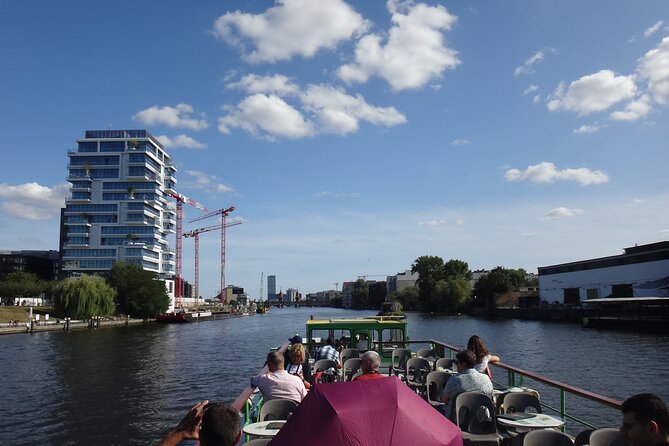
- Museum Island views from the water, including Berlin Cathedral at the Lustgarten and the Humboldt Forum in the Berlin Palace
- Mühlendammschleuse lock passage, a real Berlin founding point and a waterway engineering moment
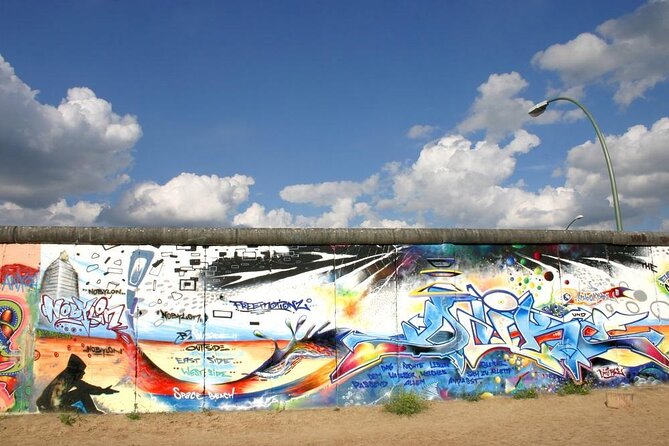
- East Side Gallery on the longest surviving Wall section, with the story behind the 1990 murals and later replicas
- Oberbaum Bridge area, where the Wall-era waterways and today’s sculptures, like Molecule Man, share the same stretch of Spree
- Reichstag and the parliament dome area, plus the surrounding government buildings along the riverbank
- Palace of Tears and Weidendammer Bridge, Cold War geography seen from the river
A 2.5-hour Spree cruise that actually beats the “one hour loop”
This is the kind of tour that makes sense on day one or day two, when you need to orient fast. You start in central Mitte and spend your afternoon gliding past major landmarks in a single, doable block of time. You do not have to choose between history and city views because you get both.
The 2.5 hour length is the difference maker. A short cruise can feel like a quick highlight reel. Here, you get enough time to settle in, take photos without racing, and still hear the story as the boat moves through Berlin’s changing riverfront.
More Berlin Wall and Cold War tours in Berlin:
- Berlin: Third Reich and Cold War 2 Hour Walking Tour
★ 4.9 · 6,830 reviews - Berlin’s Best: 2 Hour Walking Tour Third Reich and the Cold War
★ 5.0 · 5,486 reviews - Skip-the-Line: Berlin Wall Museum at Checkpoint Charlie
★ 4.1 · 2,041 reviews
Where you board at Alte Börse, and how to plan your afternoon
You meet at Anlegestelle Alte Börse / BWSG Berliner Wassersport und Service GmbH, Burgstraße 27, 10178 Berlin. The start time is 2:45 pm, and the activity ends back at the same meeting point.
A few practical notes that help you enjoy the day:
- Aim to arrive a bit early so you are not stuck scrambling for a place. The boat holds up to 55 travelers.
- You get a mobile ticket, and there is a toilet on board, which matters more than you think on a 150-minute cruise.
- Drinks are available onboard from the bar, but food and drinks are not included in the price, so plan on buying what you want.
Also, this is a “real river” tour. Some sections can be visually busy because you are looking at working buildings and everyday streets. That is part of the charm.
Museum Island to Humboldt Forum: grand architecture, seen the Berlin way
A big chunk of the appeal here is that you are not only looking at monuments. You are seeing how Berlin stacks culture on top of history along the Spree.
One of the first landmarks that anchors the view is the Berlin Cathedral at the Lustgarten. It was built from 1894 to 1905 in Neo-Renaissance and Neo-Baroque styles, and it is also a major Protestant site and a key dynastic burial location. From the water, the cathedral’s scale feels different. You get the full massing instead of only the facade you see from street level.
Then you roll toward the Humboldt Forum in the Berlin Palace complex. This is a universal museum setup, including the Ethnological Museum and the Museum of Asian Art, plus space used by the Berlin City Museum and the Humboldt Laboratory of Humboldt University. Even if you do not go inside, seeing it from the river helps you understand why this area is such a magnet for visitors.
As you continue, the cruise route also frames the broader Museum Island ensemble, which includes multiple museums and was recognized as a UNESCO World Heritage site as a whole. The interesting part from the boat is that you see the spacing and sight lines: museums, gardens, and river curves that connect the architecture.
Mühlendammschleuse lock passage: slow down, watch the river change level
One of the best “only-on-a-boat” moments is the Mühlendammschleuse stop. This lock sits in Mitte east of Mühlendamm on the Fischerinsel. The Spree-Oder waterway runs through here, and this is tied to Berlin’s early formation, including the older connection between Berlin and Cölln via a route that used the water corridor.
What makes it special on the cruise is the actual lock operation. The lock was put into service in 1942, and it overcomes a drop of about 1.51 meters. In plain terms: your boat changes height with the river system.
That slowdown does two things for you:
- It gives your brain a break from scanning buildings.
- It turns the cruise into more than sightseeing, it becomes a real look at how Berlin’s waterways work.
This is also one of those times when sound can be a mixed bag. If you want to catch every detail of the commentary, pay attention during the lock segment when the boat is not moving as fast.
More boat trips and river cruises in Berlin:
- Berlin: 1-Hour City Tour by Boat with Guaranteed Seating
★ 4.3 · 16,993 reviews - Berlin: Boat Tour Along the River Spree
★ 4.4 · 11,252 reviews - Berlin: 3.25-Hour Spree & Landwehrkanal Boat Tour
★ 4.6 · 4,311 reviews - Berlin: Hop-On Hop-Off Sightseeing Bus with Boat Options
★ 4.3 · 4,012 reviews
East Side Gallery and the Wall storyline you can read without a guidebook
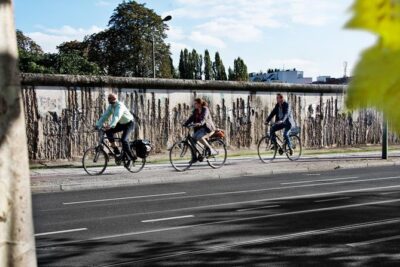
The East Side Gallery is one of those places where you cannot help but look back. This section is the longest surviving stretch of the Berlin Wall, running along Mühlenstraße near the Spree.
In spring 1990, after the Wall opened, 118 artists from 21 countries painted murals across 1316 meters. The murals were created on the side facing East Berlin, and they reflect political changes around 1989 and 1990. Later, urban planning meant the original paintings were not preserved in their entirety, so you see replicas from 2009 instead.
From the boat, the best part is that you are not only seeing the artwork. You are also seeing it in context with the river boundary. The actual border here was along the Kreuzberg bank of the Spree, and the area included the Hinterland Wall, the barrier that closed off the border region to East Berlin. That “read the geography” feeling is exactly why this cruise route works.
And because you are outside, in real daylight, the memorial quality hits differently than it does from a busy walking path.
Oberbaum Bridge, the Molecule Man, and the Spree between districts
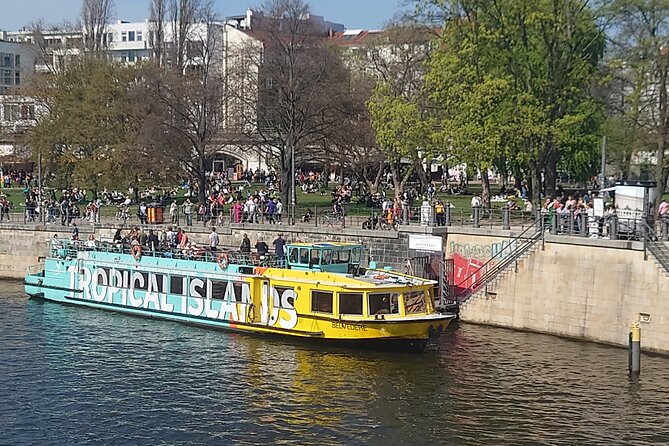
As you move along the Wall-era riverfront, the cruise passes the Oberbaum Bridge area and the surrounding district edges around Kreuzberg, Alt-Treptow, and Friedrichshain.
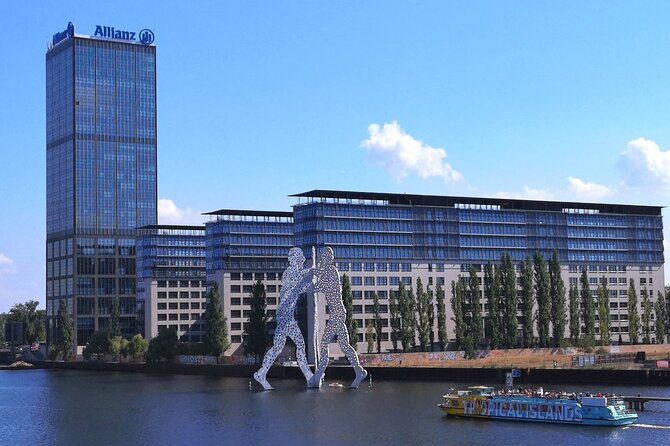
Near this stretch sits the Molecule Man, a monumental sculpture by Jonathan Borofsky, installed in May 1999. It is a three-person sculpture set up in the Spree between Elsenbrücke and Oberbaumbrücke. The fun part for me is that it reads as public art, not museum art. You see it as something Berlin added to the river after the Wall era, the same place that once carried border restrictions and customs control.
Speaking of restrictions, the route also ties in the story of the wooden bridges and the “tree” gates used to block the passage at night while customs duties were collected. Even if you only catch part of this detail through the narration, the overall idea is clear: Berlin’s early growth and the Wall-era border system both lived along the same river lines.
Nikolaiviertel and the city center vibe, without getting stuck in crowds
Nikolaiviertel is one of the oldest settlement areas in Berlin’s Mitte. It was nearly destroyed in World War II and later rebuilt in the 1980s (1980 to 1987) by architect Günter Stahn for the East Berlin magistrate, tied to the city’s 750th anniversary.
Rebuilt around a reconstructed Nikolaikirche, the neighborhood includes an ensemble of historic townhouses and prefabricated buildings shaped to fit an almost medieval floor plan. From the boat, you get an outsider’s view of how this historic core sits beside modern Berlin. You are not just checking boxes, you are seeing how the old city shape survives as a physical layout.
The cruise route also brings you past the area around Berlin’s television tower, a standout landmark in Mitte. At 368 meters, it is Germany’s tallest building and it has been a major visitor magnet since it opened in 1969.
Government architecture along the Spree: Reichstag, Chancellery, and the river spine
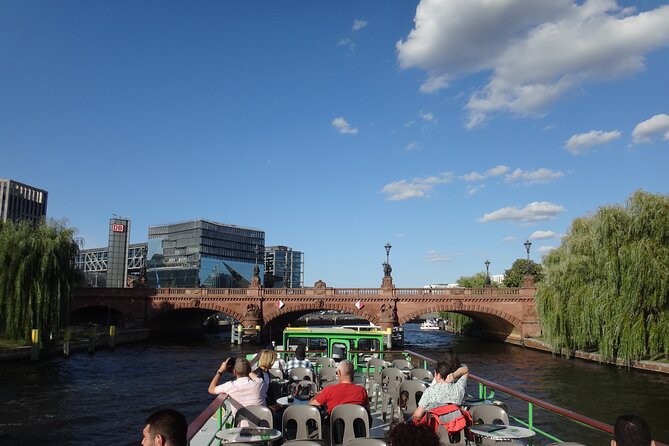
One of the reasons this cruise feels worth it is how it handles Berlin’s modern power center. You are not taking a bus across traffic. You are sliding along the riverfront where the government buildings line up in a way you might miss on foot.
The tour passes the Reichstag building, seat of the German Bundestag since 1999. It was built between 1884 and 1894 in Neo-Renaissance style by architect Paul Wallot. The building has a layered past, including damage from the Reichstag fire in 1933 and heavy impacts from World War II. After that, it was restored in a modernized form, and then redesigned by Norman Foster from 1995 to 1999, including the accessible glass dome above the plenary hall.
From the water, the dome area can look almost cinematic. You see the building as part of a wider riverfront composition, not as an isolated stop.
You also see other government district markers:
- Kronprinzenbrücke, a road bridge connecting Mitte and Tiergarten, with cycle and pedestrian paths.
- Humboldthafen, a listed dock named after Alexander von Humboldt, with a water surface area of about 33,500 m² and about 3.5 meters depth.
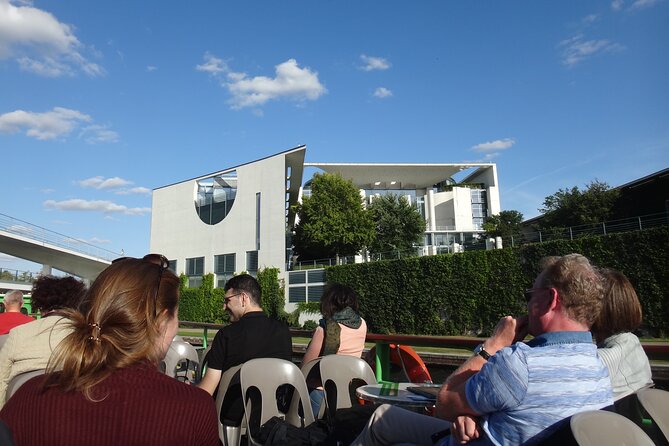
- The Federal Chancellery building group around the Spreebogen, including the Chancellery’s headquarters on this side of Berlin since 2001.
As you glide through, the story is not just politics. It is about Berlin’s re-centering after reunification, and how the city built an entire civic landscape right along the Spree.
House of World Cultures and Palace of Tears: two very different kinds of meaning
The cruise route also takes in the House of World Cultures (HKW). This is an exhibition space for international contemporary art and for discourse tied to current developments. It focuses on non-European cultures and societies. It is based in the former congress hall on the Spree, originally founded in March 1989.
Then there is Palace of Tears, the colloquial name for the former departure hall at Bahnhof Friedrichstraße. This is Cold War history you can grasp fast because the name itself carries the emotional weight. From there, S-Bahn and U-Bahn trains ran to West Berlin, and long-distance trains traveled via West Berlin to the Federal Republic. The phrase Palace of Tears came from East Germans saying goodbye to Western visitors in tears, because many East Germans themselves were not free to travel west.
One more anchor: Weidendammer Bridge. It crosses Friedrichstraße over the Spree, and the current bridge continues the line of older bridges at that spot, going back to the 17th century. The modern structure is a listed building and it is a key part of the river’s historic crossing story.
If you like history that is tied to place, these are the stops that feel most “real,” because they are not abstract. The river makes the geography obvious.
Commentary, seat comfort, and sound: how to pick your spot on the boat
Live commentary is included, in English and German. That is a real plus if you want the story while you watch.
But the onboard experience depends on where you sit.
- On some days, the upper deck can be hot, and the lower salon can feel even warmer if air conditioning is not working.
- Hearing can be inconsistent. Even when the narration is loud and clear from one area, it can be harder to catch full sentences if wind or crowd noise interferes.
- Language order matters. If German starts first, you can feel like you miss the beginning of the English portion if you come in late or if the boat is moving quickly.
What I would do in practice:
- If you care about views, choose the upper deck. For photos, you generally get the best angles from there.
- If you care about comfort and clarity, pick a spot where you can see speakers and still hear without straining.
- Dress for micro-weather. A clear day can be nice, but the boat can also feel chilly when the wind picks up.
Also note the seating arrangement. Some seats are connected in rows, which can reduce how much you can spread out. If you are sensitive to comfort, I would bring a layer and plan on a bit of posture compromise.
Speed, timing, and why the route feels longer than it sounds
The cruise runs about 2 hours 30 minutes. Average booking timing shows it is often reserved around 16 days in advance, which suggests popular availability windows.
Your timing is shaped by real river operations, especially around the lock. During the lock passage, you are not just cruising. You are watching a system switch modes. That is one reason it can feel more substantial than a simple sightseeing loop.
Some days may also feel slower if the boat traffic and lock schedule stretch things out. That can be either a good thing (more relaxed viewing) or a frustrating thing (less sightseeing momentum). Either way, you will have enough time to absorb the major highlights, because the route links them in a logical river flow from Mitte outward and back.
Price and value: is $36.04 a fair deal for a 2.5-hour cruise?
At $36.04 per person for about 2.5 hours, this cruise is not trying to be a bargain basement option. You are paying for three things:
- Time saved versus doing multiple separate stops on foot.
- The water perspective, which changes how the architecture reads.
- Live narration, which helps you understand what you are seeing without constantly looking things up.
I think it is good value if you want a “one-ticket Berlin afternoon” that hits several distinct zones, including Museum Island, Wall memorial area, and the government district. It also tends to be better value than a 1 hour cruise because you get the lock moment and more riverfront variety.
Where it might not be a perfect fit:
- If you strongly prefer history explained with lots of depth and storytelling, you may find the balance between facts and narration to be uneven during a long ride.
- If you need quiet, the experience can be disrupted if groups are loud, especially on upper deck seating.
Who should book this Spree cruise, and who should skip it
I’d book it if you:
- Want a sit-down way to see major Berlin landmarks in one afternoon.
- Like learning as you go, with live German and English narration.
- Enjoy photography from the water, especially around the Wall memorial stretch and the government district.
I’d think twice if you:
- Get uncomfortable in hot seating areas or dislike tight seating layouts.
- Need to hear narration from everywhere on the boat. Sound can vary by deck and wind.
- Are planning for a stroller or very young kids. The ride is long enough that some parts can feel slow.
If you are using a wheelchair, I would double-check the boat setup before booking. There is at least one caution from experience data that suggests access could be difficult.
Should you book this Berlin East Side cruise?
Book it if you want an easy afternoon with a strong mix of Berlin’s eras, from historic cores to Wall memory to modern civic architecture, all along the Spree. The lock passage and the East Side Gallery stretch are the kind of moments you cannot recreate from street-level planning.
Skip it if your priority is ultra-deep history in a very quiet setting. The narration is live and covers a lot of ground, so it is more about “guided orientation” than an intense single-topic lecture.
If you can, pick a day with decent weather. You will enjoy the views more, and you will have a better chance of getting the sound and temperature balance you want.
FAQ
What is the duration of the Berlin East Side Tour?
The tour is about 2 hours 30 minutes.
How much does the cruise cost?
It costs $36.04 per person.
Is the commentary offered in English?
Yes. The tour includes live commentary in English and German.
Where do I meet for the tour?
You meet at Anlegestelle Alte Börse / BWSG Berliner Wassersport und Service GmbH, Burgstraße 27, 10178 Berlin.
Is food and drinks included in the ticket price?
No. There is an onboard bar with food and drinks, but you pay for them separately.
Is there a toilet on the boat?
Yes, there is a toilet on board.
How large is the group?
The tour has a maximum of 55 travelers.
Recently added around Berlin
- Berlin Private Custom Walking Tour With A Guide (Private Tour)★ 4.5 · 8 reviews
- One Up to 3 Rickshaws(6 GUESTS)-Taylor Made Rickshaw Berlin Tour★ 5.0 · 20 reviews
- Moonshine Comedy – English Stand Up Comedy by the bay★ 5.0 · 11 reviews
- Private Half-Day Berlin Sightseeing Tour with a Minivan Including Short City Walks★ 5.0 · 31 reviews
- Private taxi tour to Potsdam and Sanssouci 6-8h★ 5.0 · 30 reviews
- Private City Kickstart Tour: Berlin★ 4.5 · 71 reviews
- Private tour of Berlin★ 5.0 · 15 reviews
- Private Tutankhamun’s Tomb Live Escape Room in Berlin★ 3.5 · 11 reviews
Berlin Wall & Cold War Tours, compared.
Berlin’s Best: 2 Hour Walking Tour Third Reich and the Cold War
Read our review →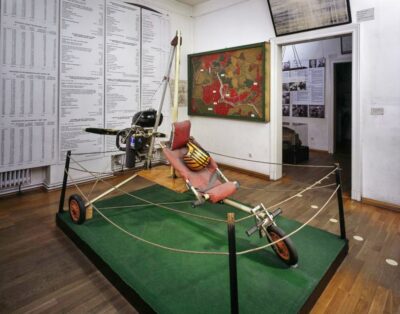
Skip-the-Line: Berlin Wall Museum at Checkpoint Charlie
Read our review →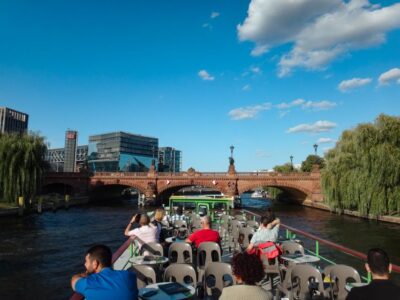
2.5-Hour East Side Boat Cruise with Commentary
Read our review →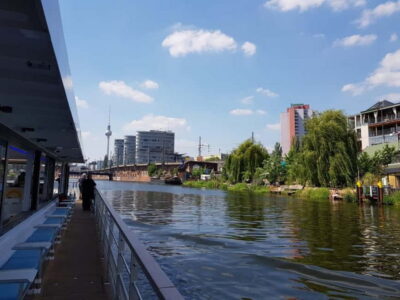
East Side Gallery Spree Cruise in a Solar Catamaran
Read our review →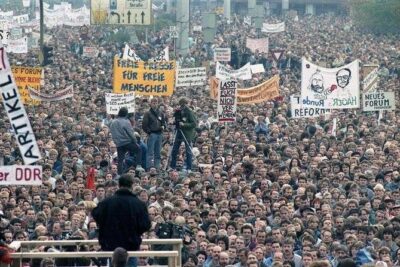
Cold War, Berlin Wall, Spies and the East Side Gallery
Read our review →
Guided Bike Tour of the Berlin Wall and Third Reich
Read our review →Browse the lists this tour appears in