
Reviewed · WALKING TOURS
Berlin: Guided Walking Tour in English
Berlin feels like a city that keeps changing the rules. This walking tour is interesting because it gives you a timeline as you move, so the landmarks make sense instead of feeling like random stops. You also get that rare combo of grand symbols and human-scale streets, with plenty of open space to look around.
What I especially like is the way you’ll cover Museum Island with a big view, then shift to the prettiest squares for balance. I also like the darker stops handled directly, including the place tied to Hitler’s bunker and the Berlin Wall story at Checkpoint Charlie. One drawback to consider: the tour info does not spell out a scheduled restroom or drink break, so plan your timing and bring layers for comfort.
Key Highlights Worth Planning Around
- A chronological storyline that helps you connect eras fast, not just point at buildings.
- Museum Island’s open space for a calmer moment and a classic sightline toward Berlin Cathedral.
- Gendarmenmarkt’s grand square layout so you see why it’s considered one of Berlin’s most beautiful spaces.
- Checkpoint Charlie focus that brings the Berlin Wall into focus where it’s most symbol-heavy.
- Hitler’s bunker site passing that confronts the dark past without turning it into a shock ride.
- Guide quality is consistently praised, with names like J.R., Jule, Ru, and Will showing up in recent feedback.
Where This Walk Makes Sense in a Berlin Trip
This is the kind of tour I recommend early in your visit. Berlin can be a lot. You’ll see buildings that look “official,” buildings that were reconstructed for meaning, and places that exist because something terrible happened. A timeline tour gives you the map in your head first, then you can enjoy the city later with less confusion.
The route is also smart for first-timers. You start near Alexanderplatz, then work your way through the central core. That keeps the walking efficient, and it lines up with how most people want to explore: big landmarks, readable streets, and a finale that feels symbolic rather than just another photo spot.
One more thing I like is the emphasis on how Berlin changed. You’re not just going from A to B. You’re watching the city’s ideas evolve, from medieval leftovers to imperial ambition to Cold War division and beyond. That’s why it feels different from the usual “see the sights” walks.
More walking tours in Berlin:
- Discover Berlin Half-Day Walking Tour
★ 5.0 · 9,624 reviews - Berlin: Third Reich and Cold War 2 Hour Walking Tour
★ 4.9 · 6,830 reviews - Berlin: Discover Berlin Walking Tour
★ 4.9 · 5,998 reviews
Meeting at Rotes Rathaus, Then Getting Oriented Fast
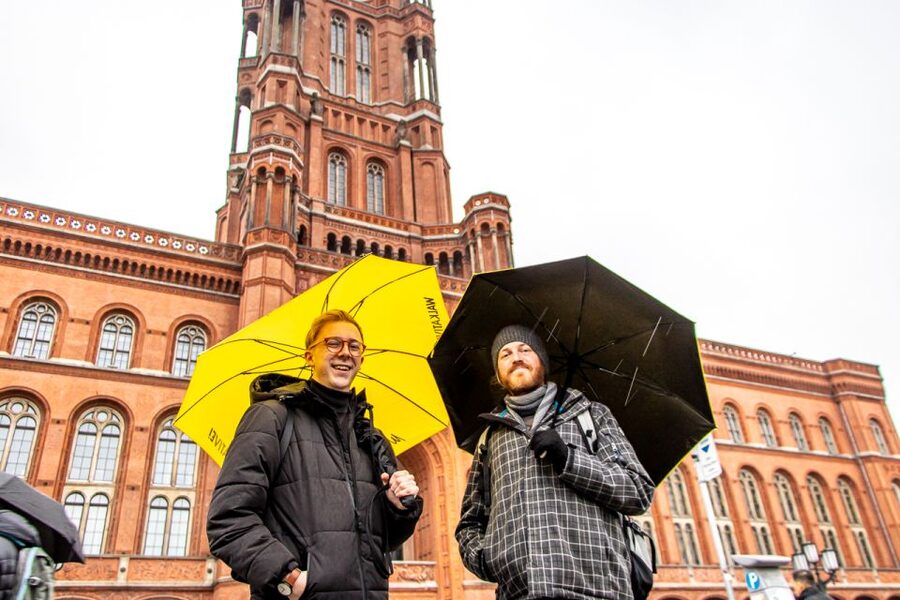
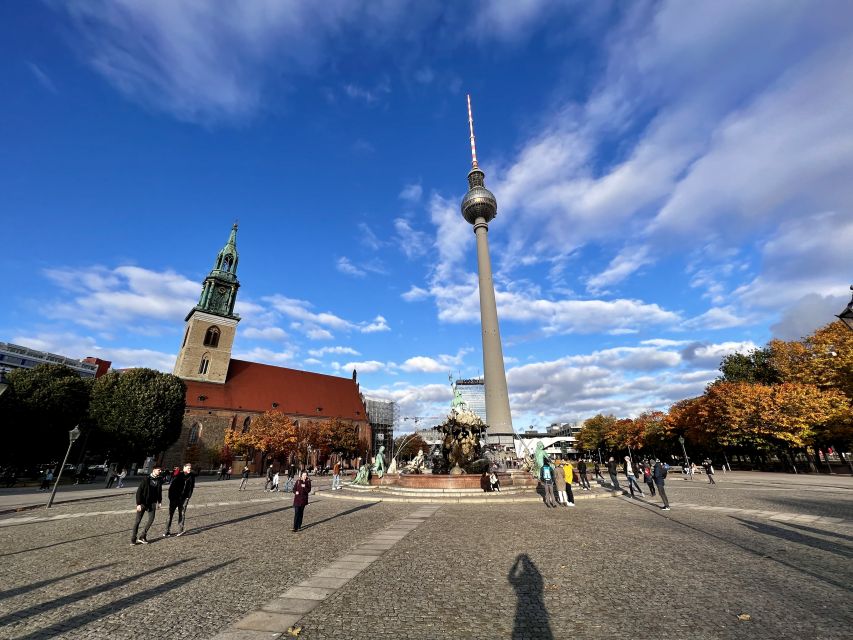
Your meeting point is the front of the Rotes Rathaus (Red Town Hall), close to the TV Tower and Neptune Fountain. This matters because it puts you near a major anchor so you can find it without stress. If you’re arriving on public transit, that area is also a lot easier to navigate than meeting at a random side street.
Plan to arrive 10 minutes early. Berlin is easy to move through, but meeting points can still get busy, and you want a moment to settle before the guide starts shaping the story.
This start is practical for another reason: the TV Tower gives you a visual landmark you can keep in mind as the tour moves across town. When you later explore on your own, that reference helps you feel like you know where you are.
Alexanderplatz to Berlin’s Early Remnants and the TV Tower View
From the Alexanderplatz side of the historical center, you’ll take in two very different layers of Berlin. First, you’ll see the TV Tower, a modern vertical marker that screams “this is today’s capital.” Right beside that, the guide points out what remains from the earlier, smaller town shape of Berlin.
Why this works: it reminds you that Berlin did not begin as the big, polished capital you imagine from postcards. It started as a town with gradual growth, and you’ll keep seeing that theme. That is a key payoff of a chronological approach. It prevents that common problem where you see a medieval-looking corner and wonder what it’s doing here.
You’ll also get your first set of orientation moves. Expect street-level walking that helps you understand the geography of central Berlin, not just the highlight photos.
The Reconstructed Royal Palace Area and Why It’s Controversial
Next comes a stop you’ll likely recognize even if you’re not sure why it matters: the area connected to the former Royal Palace of the Hohenzollern, which has been reconstructed. The tour treats it as more than an architectural curiosity. You’ll hear why it’s controversial, and why reconstruction debates in Berlin have a real emotional weight.
This is one of those moments where the tour adds value beyond facts. Berlin has plenty of restored buildings, but they don’t all carry the same meaning. Reconstructed imperial space can feel like celebration to some people and erasure or forced nostalgia to others. A guide’s framing helps you stand there and think about what you’re actually looking at.
If you care about how cities use architecture to tell stories, this part is a strong reason to book. You’re not just walking past. You’re learning how to read the scene.
A few more Berlin options worth a look
- Berlin: Reichstag, Dome and Government District Guided Tour
★ 4.7 · 18,288 reviews - Berlin: Government District around the Reichstag Guided Tour
★ 4.7 · 8,447 reviews - Berlin: Hidden Backyards Guided Walking Tour
★ 4.8 · 5,360 reviews - Berlin: 1-Hour Boat Tour with Bilingual Live Guide
★ 4.7 · 3,629 reviews
Museum Island Open Space, Humboldt University, and the Cathedral View
One of the clearest high points is the stop in the Museum Island area. You get the feeling of open space here, not just tight streets and constant movement. The guide also points you toward a great view of Berlin Cathedral, which is exactly the kind of sight that makes a walking tour worth the effort.
Museum Island is also a lesson in how Berlin organizes meaning. Museums tend to give you a “clean” experience of the past. But the city around them is the messy part, shaped by politics, ideology, and shifting borders. You’ll likely feel that contrast as you move through the area.
After that, you’ll pass by Humboldt University. This isn’t just a photo stop. It’s another clue that Berlin’s identity is tied to institutions, not only events. You’ll get context for how power, education, and culture moved together in different historical periods.
Practical note: since this is a walking tour, you’ll want comfortable shoes. This section is where your legs may start to notice you are on a plan, not just strolling.
Gendarmenmarkt, Central Streets, and Why Squares Matter
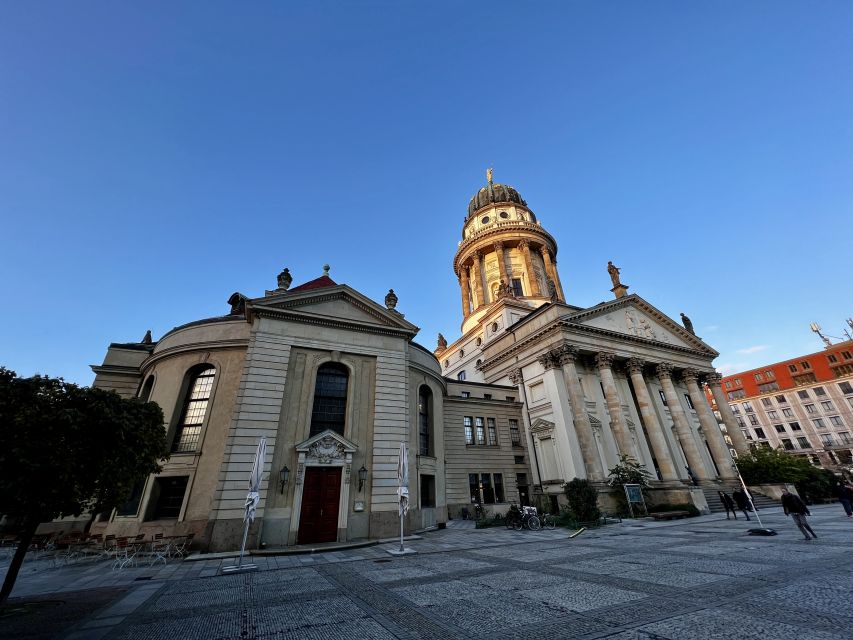
After the Museum Island and university stretch, you’ll walk through the central streets toward Gendarmenmarkt. This part is more than pretty scenery. The tour emphasizes the square’s beauty and layout, which helps you understand why certain public spaces become symbols of civic pride.
Gendarmenmarkt is famous for looking like it belongs in an elegant postcard. The value here is that you’ll learn to see it as part of Berlin’s changing identity. A square is a stage. Who built it, what style it reflects, and what happens there over time all say something about the city’s story.
I also like that the tour uses the square as a mental reset. After darker or heavier parts of Berlin, you need visual breathing room. Gendarmenmarkt gives you that, while keeping you in the narrative flow.
Checkpoint Charlie and the Berlin Wall, Where Symbols Are Close-Up
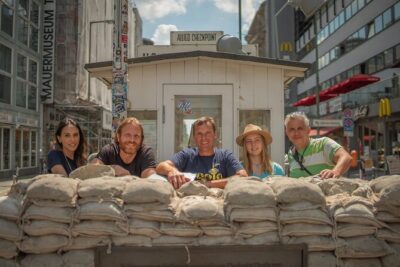
Then you hit one of Berlin’s most unmistakable sites for the Cold War era: Checkpoint Charlie, with a history lesson about the Berlin Wall.
What I like about this stop is the location itself. It’s symbol-heavy. That can sometimes feel touristy if you show up without context. A good guide changes that. You’ll come away with a clearer idea of what the Wall meant in daily life, not only as a line on a map.
You’ll walk in a way that makes the story feel physical. The Wall is one of those historical topics people learn from posters, but understanding it takes more than a quick glance. The tour is built to teach that connection, so you see why this place keeps showing up in history discussions.
If you’re the type who likes photos, this is where you’ll naturally slow down. The trick is to keep listening while you look, because the story is the point here.
Passing the Hitler Bunker Location and Handling the Dark Past
One of the most serious parts of the tour is when you pass the location where Hitler’s bunker formerly stood. This stop shifts the tone. Expect the guide to frame Germany’s dark past directly.
This is not designed to feel like a haunted-house stop. It’s part of the chronological narrative, which helps keep it grounded. You’re connecting political decisions, war outcomes, and how those consequences reshaped Berlin.
The important thing for you to know as a visitor: this area may feel emotionally heavy, even if you’ve learned a lot before. Wear comfortable shoes and keep your pace steady. If you want to take a moment, this is a good place to pause briefly, breathe, and let the context land.
Also remember: the tour moves on. It doesn’t linger for long, so if you care about details, listen closely and save questions for your guide when they’re available.
Brandenburg Gate as the Symbolic Finale: Unity in Stone
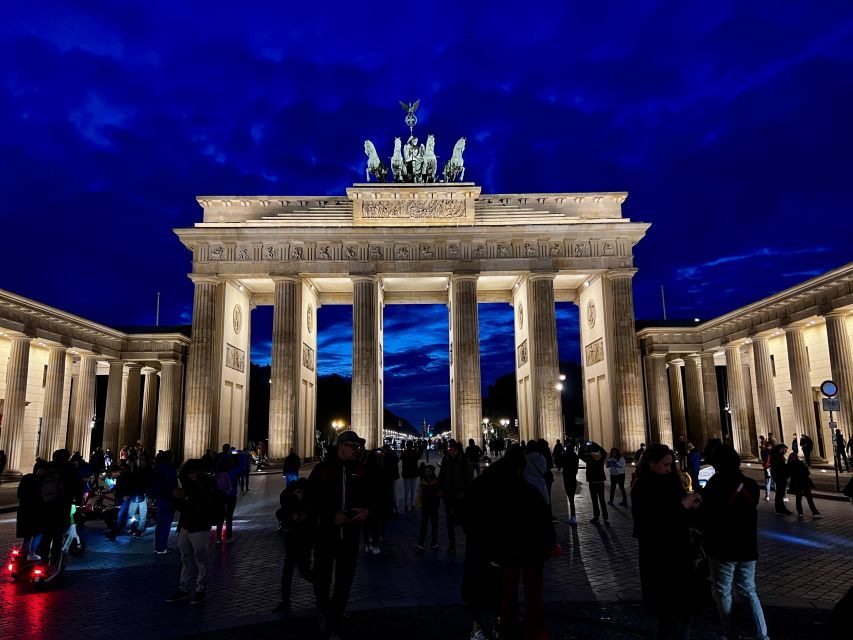
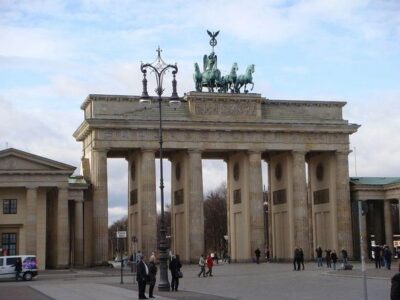
The final stop is Brandenburg Gate, a symbol of unity for Germany and Europe, with its open, classical archways. This ending matters because it’s not just a landmark. It’s a visual summary of the tour’s overall message: Berlin’s story ends up trying to become something new after being forced into division and conflict.
When you reach the Gate, you’ll likely notice the contrast immediately. Earlier parts of the walk are about conflict, power, and shifting borders. Brandenburg Gate feels like an invitation to look outward. That’s a good emotional arc for many visitors, and it’s also practical if you plan to continue exploring afterward.
If you want a classic photo, this is where you’ll want to be ready. Arrive with a phone charged and a jacket zipped, because you’re in a spot where wind can find you.
How Long It Takes, How Much It Costs, and What You’re Actually Getting
The tour runs 2.5 hours for $31 per person. That price is reasonable for Berlin, especially because it includes an expert English-speaking local guide and a uniquely designed, chronological narrative.
Where the value really shows is in what’s included and what isn’t. You are not paying for food. You are also not getting hotel pickup. That might sound like a minus until you think about it: it keeps the cost focused on the guide and story. For a city like Berlin, that guide time is often the difference between “I saw a lot” and “I understood what I saw.”
Also, note the tour works like a pay-what-you-wish style structure. The amount you pay covers the reservation fee and the guide’s payment. In other words, your booking is not the same thing as a totally all-in, no-thought tipping approach. If you do well with the guide and the pacing fits your style, you’ll likely want to reward them appropriately. If you prefer to travel with clear expectations, this is good to know up front.
You should also know this is an active walking tour. The info does not describe breaks or stop times for drinks or restrooms, so I’d treat that as a personal responsibility. Bring water if you tend to need it. Dress for the weather, because you’ll be outside the whole time.
Who This Tour Suits Best
This is a strong fit for you if:
- You want a first-pass understanding of Berlin’s history without getting lost in dates.
- You like walking through real neighborhoods, not just hopping between sites by bus.
- You appreciate guided context at places that are emotionally or politically charged.
It’s also a good fit if you want something you can do without a complicated plan. The start point is easy to reach, and the route keeps you in the central zone.
It may be less ideal if you hate walking, or if you need frequent scheduled stops for food or restrooms. The tour does say it’s wheelchair accessible, but there’s not a lot of detail about pace in the info you provided. If you have mobility needs, you’ll want to be ready for street-level conditions and plan accordingly.
What the Experience Feels Like With Real Guide Energy
A big part of the success here is the guide quality. Recent feedback repeatedly praises guides by name, including J.R., Jule, Ru, and Will, for being engaging and sharing fascinating stories. One theme you’ll feel in that feedback is that the guides don’t just talk history. They also help you understand Berlin as a place you’ll continue to explore after the tour.
There’s also a practical side. One review mentioned the guide being mindful of cold weather. That matters because Berlin weather can flip fast. On a walking tour, comfort affects your attention. If you’re layering up and the guide is paying attention to the situation, the whole experience feels smoother.
One more expectation I’d set from the start: some people would have liked clearer info about a time to get a drink or use the restroom. Since the tour details do not guarantee those moments, I suggest you plan ahead rather than assume the tour will schedule them.
Should You Book This Berlin Walking Tour?
Yes, if you want the most value out of a short time in Berlin. At $31 and 2.5 hours, you get a guided walk that connects the city’s big stories in a clean sequence, from central origins to Cold War division and an ending at Brandenburg Gate.
Book it if you like learning while walking, and especially if you want help turning Berlin history into something you can picture and reuse later while you explore on your own. The meeting point is clear, the tour is in English, and the guide is a major part of why it works.
Skip it or think twice if you’re the type who needs frequent breaks, or if you’re hoping the tour will handle drinks and restroom stops for you. You’ll still see the key sights, but you should bring practical flexibility to make the walk comfortable.
If you’d like, tell me your travel month and your fitness level, and I’ll suggest what time of day to do this walk and how to pair it with nearby self-guided stops.
FAQ
Where is the meeting point?
You meet in front of the Rotes Rathaus (Red Town Hall), close to the TV Tower and Neptune Fountain.
How long is the tour?
The duration is 2.5 hours.
Is the tour offered in English?
Yes, the live tour guide provides the tour in English.
Is the tour wheelchair accessible?
Yes, the tour is listed as wheelchair accessible.
What should I bring?
Bring weather-appropriate clothing and plan to dress for time outdoors on a walking route.
Can I reserve now and cancel later if plans change?
Yes. You can reserve now & pay later, and you can cancel up to 24 hours in advance for a full refund.
Recently added around Berlin
- Berlin Private Custom Walking Tour With A Guide (Private Tour)★ 4.5 · 8 reviews
- One Up to 3 Rickshaws(6 GUESTS)-Taylor Made Rickshaw Berlin Tour★ 5.0 · 20 reviews
- Private Half-Day Berlin Sightseeing Tour with a Minivan Including Short City Walks★ 5.0 · 31 reviews
- Private taxi tour to Potsdam and Sanssouci 6-8h★ 5.0 · 30 reviews
- Moonshine Comedy – English Stand Up Comedy by the bay★ 5.0 · 11 reviews
- Private City Kickstart Tour: Berlin★ 4.5 · 71 reviews
- Private tour of Berlin★ 5.0 · 15 reviews
- Private Tutankhamun’s Tomb Live Escape Room in Berlin★ 3.5 · 11 reviews
Walking Tours, compared.

Berlin’s Best: 2 Hour Walking Tour Third Reich and the Cold War
Read our review →
Third Reich Berlin: Hitler and WWII Walking Tour
Read our review →
Browse the lists this tour appears in