
Reviewed · 2-HOUR EXPERIENCES
Berlin: Karl-Marx-Allee 2-Hour Tour
Berlin’s Karl-Marx-Allee is one of those city walks where the street itself is the story, and the architecture is the language. I especially love how the tour lines up the big visual landmarks, like Frankfurter Tor, with the smaller details that help you understand what East Berlin was trying to build.
The main thing to consider is that you are on your feet for a full 2 hours, and the meeting point can vary by booking, so you’ll want to plan a little extra time to get oriented.
Key highlights you will actually notice on this walk
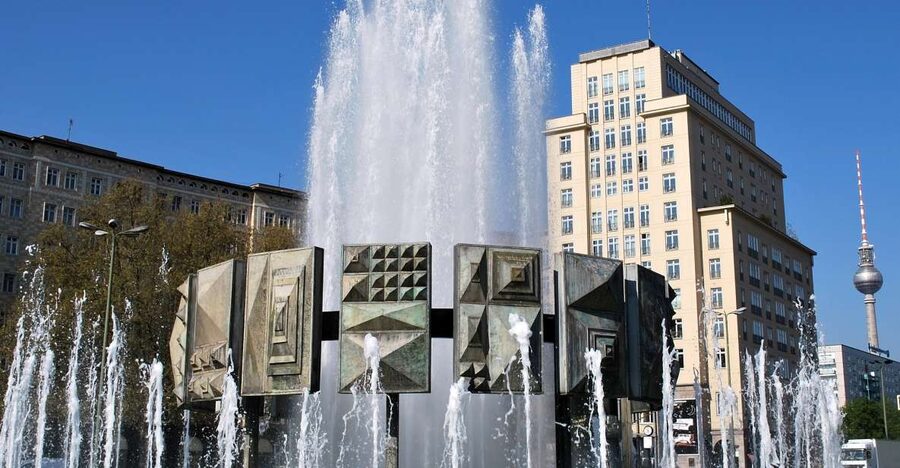
- Frankfurter Tor towers: the signature gateway view you’ll remember even after you leave Berlin
- Friedrichshain arcades: apartment buildings that feel planned, not accidental
- Kosmos cinema by Josef Kaiser: a specific design story you can see with your own eyes
- Karl-Marx-Allee’s name changes: how politics shows up on street signs and in urban design
- Hochhaus an der Weberweise: a high-rise that signals the era’s ideas about height and progress
- Strausberger Platz: high-rise architecture as a gateway into the socialist city center
Why Karl-Marx-Allee’s socialist makeover still feels personal
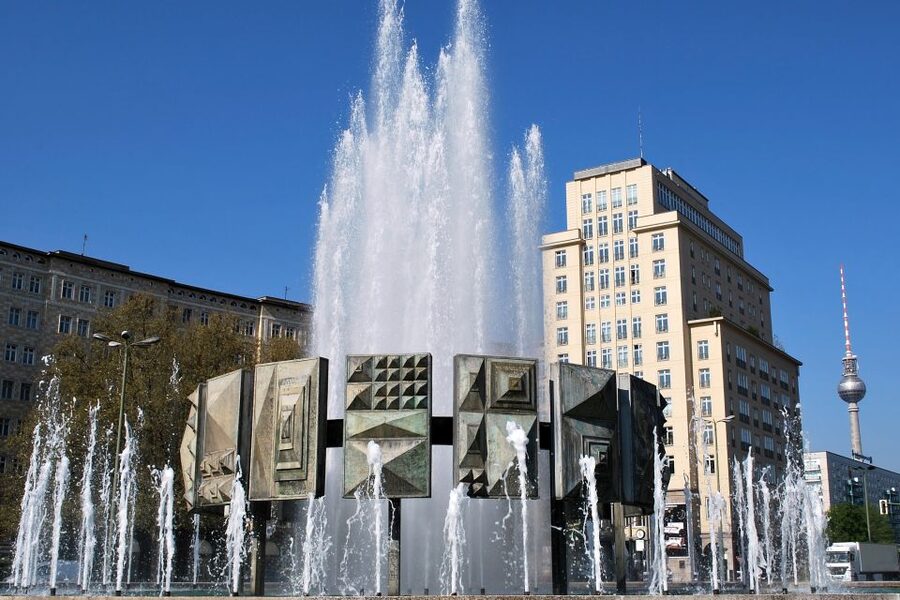
Karl-Marx-Allee is not just another long Berlin street. It’s a designed boulevard with a purpose, and in two hours you get the full sense of how the city looked when it wanted to project power, order, and a future.
What I like most is the way the route connects big monuments and clear viewpoints with everyday urban elements, like housing blocks, arcades, and a cinema. You’ll walk through East German city planning, then watch how it reads today in Friedrichshain and around Strausberger Platz.
The tour also gives you a simple way to keep your bearings: you’re moving from key landmarks to the next visual “chapter,” not wandering around hoping it all clicks.
A few more Berlin options worth a look
- Berlin: Third Reich and Cold War 2 Hour Walking Tour
★ 4.9 · 6,830 reviews - Berlin’s Best: 2 Hour Walking Tour Third Reich and the Cold War
★ 5.0 · 5,486 reviews - Berlin: 2-Hour Lake Oberhavel Cruise from Tegel
★ 4.4 · 577 reviews
Getting oriented fast, from Frankfurter Allee to Stalinallee and now Karl-Marx-Allee
You start by placing the boulevard in context, including how it changed names over time, from Frankfurter Allee to Stalinallee, and finally to its current identity. That timeline matters because it helps you interpret what you’re seeing, not just admire it from a distance.
Karl-Marx-Allee is about two kilometers long, and it’s often described as the largest kind of monument in Berlin’s German capital. On a walking tour, that scale is exactly what you feel, because you’re learning to read a corridor of architecture as if it were one designed object.
The best practical tip here is mental, not physical. When you see a new building style, pause for a second and ask yourself what the city might have been trying to signal at that moment.
Frankfurter Tor: the towers that turn a street into a statement
The Frankfurter Tor stop is the kind of place where you naturally slow down. Those distinctive towers do not just decorate the entrance, they frame the boulevard and make it feel ceremonial, like an official gateway rather than regular street space.
I love how this is the first big “wow” moment, because it gives you a reference point for the rest of the walk. After you’ve seen Frankfurter Tor, you’ll spot the same planning logic echoed in the blocks and high-rises that follow.
A small consideration: if you’re expecting lots of interior access, don’t. This part is about exterior architecture and street-level reading, so bring your attention and look up often.
Friedrichshain apartment buildings with arcades, built for movement and meeting
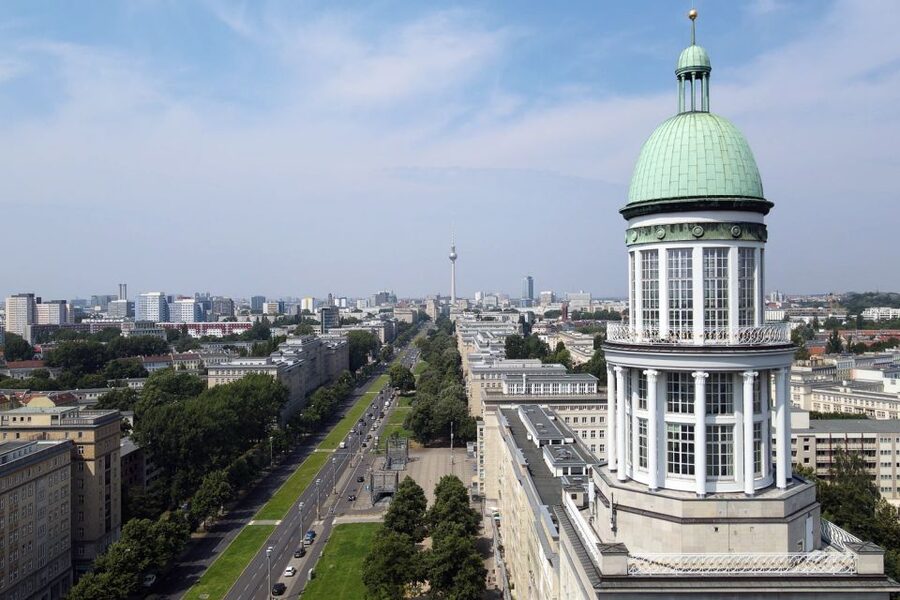
Next up is Friedrichshain, where you see apartment buildings with arcades. This is where the tour becomes more than sightseeing, because arcades are functional design, not just decoration.
Arcades create a sheltered rhythm for walking, gathering, and passing daily life from one spot to another. They also show you a key idea behind post-war urban development: housing, circulation, and public space were often treated as one system.
You’ll learn how these buildings fit into the broader socialist-era construction language. The street isn’t only political messaging, it’s also about how people are meant to live, commute, and share space.
Still in Berlin, but a different kind of day:
- Berlin: Reichstag, Dome and Government District Guided Tour
★ 4.7 · 18,288 reviews - Berlin: 1-Hour City Tour by Boat with Guaranteed Seating
★ 4.3 · 16,993 reviews - Berlin: Boat Tour Along the River Spree
★ 4.4 · 11,252 reviews - Discover Berlin Half-Day Walking Tour
★ 5.0 · 9,624 reviews
Kosmos cinema by Josef Kaiser: why a theater matters in a political city
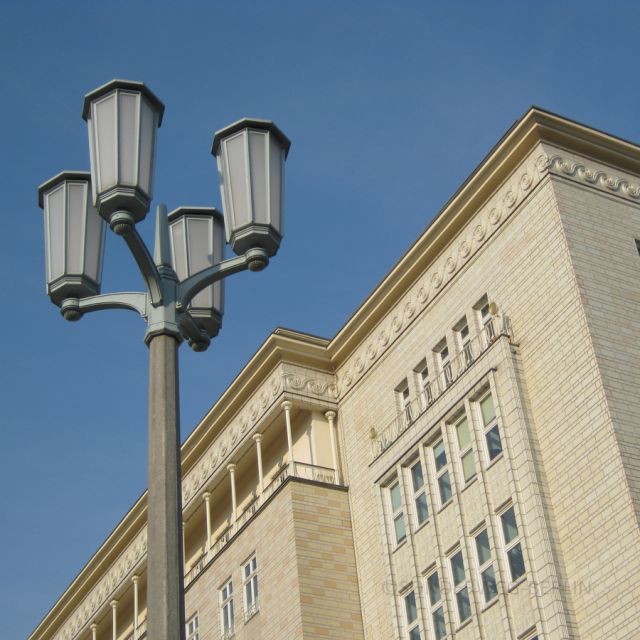
You then get to Kosmos cinema, designed by Josef Kaiser. The reason this stop works is simple: a cinema is a public building, and public buildings are where you see the city’s ambitions most clearly.
Even without going inside, you can connect form and function. A cinema is about gathering people, and that makes its architecture part of the cultural plan, not just a backdrop for entertainment.
If you enjoy design details, this is a great moment to pay close attention to the building as an object in the urban fabric. The guide’s storytelling here helps you see the cinema as part of the same long boulevard idea you saw at Frankfurter Tor.
Strolling Karl-Marx-Allee’s long boulevard, and learning what “first socialist street” means
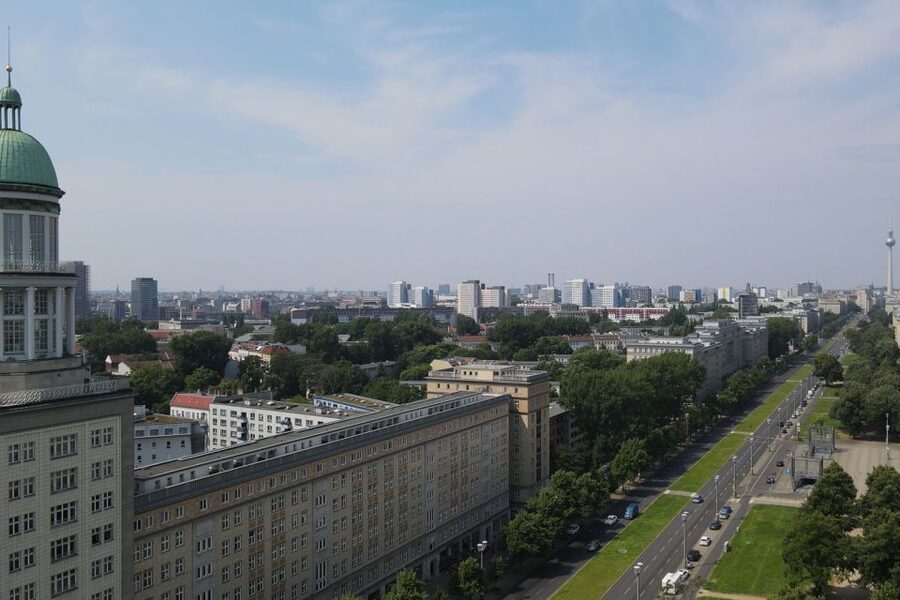
A big part of the experience is walking along Karl-Marx-Allee itself, described as the first socialist street in Germany. That sounds like a label, but your understanding grows as you compare the street width, the pacing of buildings, and the repeated visual shapes.
This is the stretch where the tour feels most “architectural,” because the boulevard is almost two kilometers of continuous planning. You’ll start noticing how entrances, sightlines, and building heights combine into a single design experience.
I also like that you’re not asked to be an expert. The guide translates the city plan into plain language, so you can follow what’s happening even if you’re not a building nerd going in.
Hochhaus an der Weberweise: reading ambition in height and massing
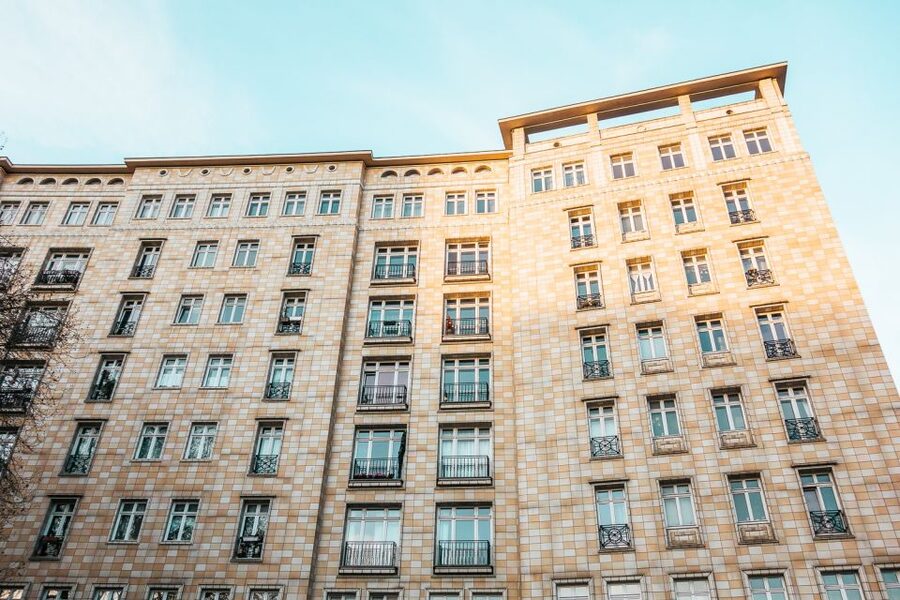
One of the more striking moments is Hochhaus an der Weberweise, a high-rise that helps explain the era’s thinking about progress. High-rises in planned city centers are never accidental, they’re signals, and this one gives you a clear example.
As you look at it from the street, you can learn to see massing and scale as political tools. A tall building changes how people feel about the neighborhood, because it turns a district into something that looks forward, not just back.
The practical payoff is that you stop treating tall buildings as random skyline items. Instead, you treat them as part of an overall city design plan.
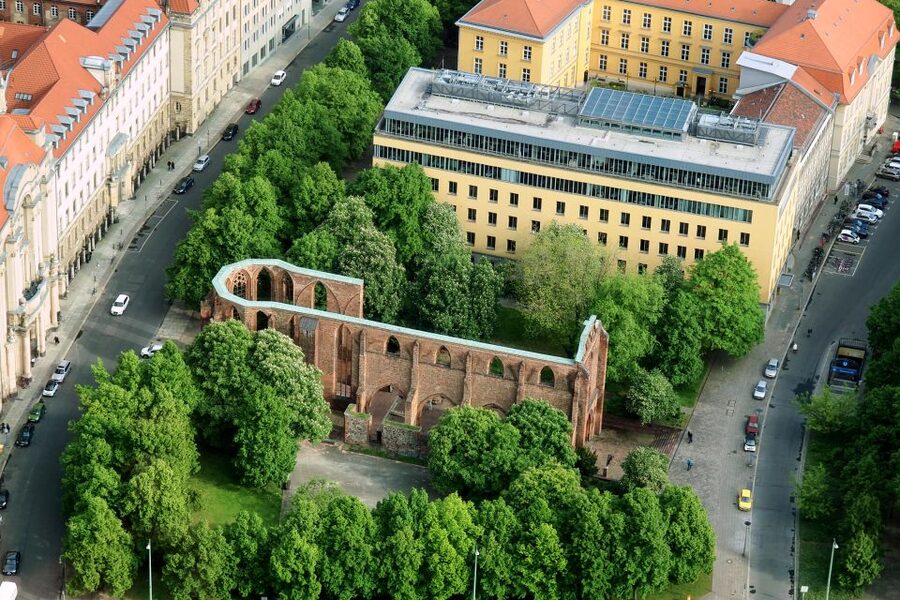
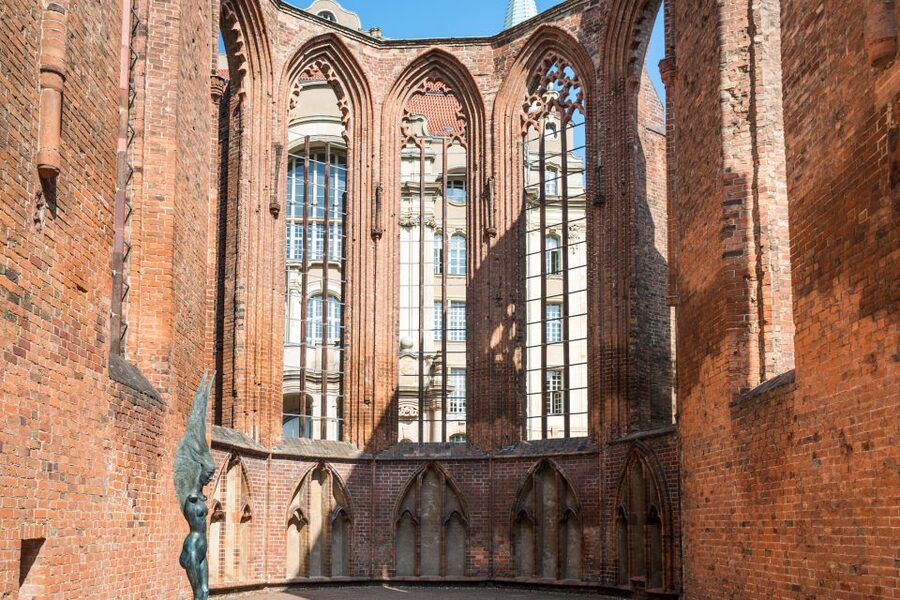
The partial ruins of the Church of the Resurrection: history you can’t wallpaper over
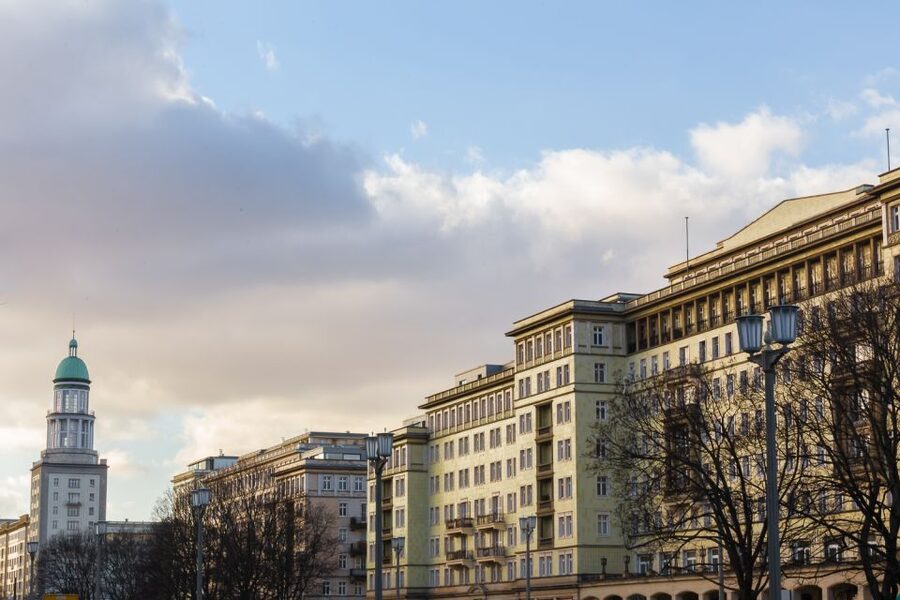
The tour includes the partial ruins of the Church of the Resurrection, and that choice is important. Ruins do more than add atmosphere, they show the gap between what was planned and what survived.
You may not get the full church story in every detail during a short walk, but you will understand why the guide includes it. It’s a reminder that post-war reconstruction and political transformation did not erase everything, and the city still carries scars.
I find stops like this useful because they prevent the tour from becoming a purely aesthetic parade. You end up with architecture you can admire, and context you can’t ignore.
Strausberger Platz: the socialist gateway in high-rise form
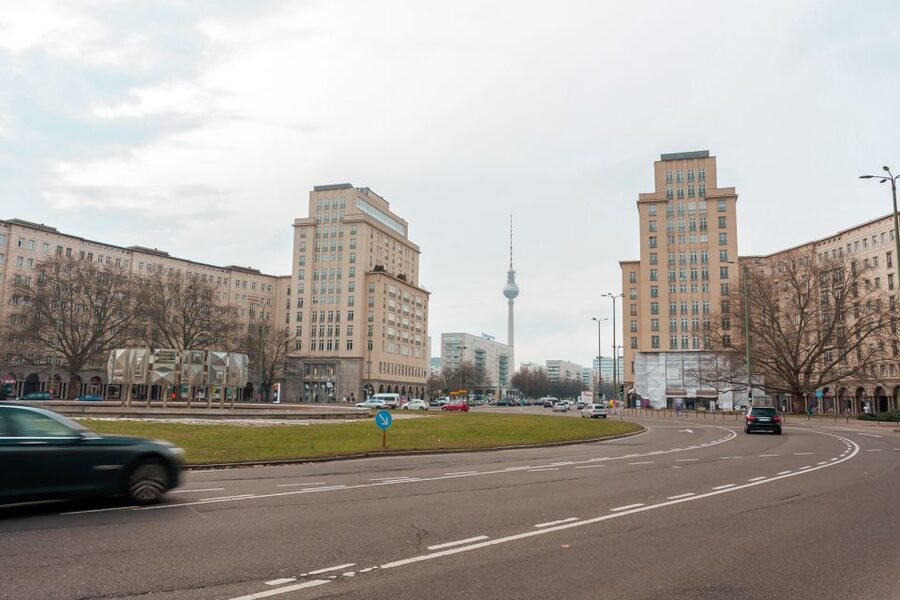
Near Strausberger Platz, the atmosphere shifts into a different kind of urban geometry. The distinctive high-rises here work like a gateway into the socialist city center, so the architecture starts to feel like arrival, not just location.
This stop also helps you understand why Karl-Marx-Allee mattered beyond its length. You’re seeing how different parts of the planned area connect visually and functionally, with Strausberger Platz acting like a hinge in the overall picture.
If you like walking routes that feel purposeful, this is one of the best sections. The buildings guide your eyes, and the guide gives you the connection between what you see and why it was built this way.
Price and value: $23 for expert guidance over two focused hours
At $23 per person for a 2-hour walking tour, this is strong value if you care about architecture and urban planning. In Berlin, you can easily spend that much just getting into one major attraction, but here you get multiple major landmarks plus an expert guide connecting them.
You also don’t lose time to complicated transport on the route, since it’s a walking tour that concentrates on one corridor. And because hotel pickup and drop-off are not included, you can stay flexible, meet at the designated spot, and keep your day simple.
What makes the price feel fair is the quality of interpretation, not just the list of sights. When the guide brings in visual material, like historical photos and old posters, the buildings stop being static, and you start understanding them as part of a larger story.
Language, pace, and what to bring for a better experience
The tour runs with a live guide in German and English, so you’ll be able to follow the commentary closely. The pacing is built for walking, not lingering for long photo sessions, so you’ll want to be ready to move.
Because you’re out for two hours, wear comfortable shoes and bring a light layer if the weather is changeable. Berlin weather loves to surprise you, and you’ll enjoy the architecture more when you’re not thinking about your feet.
For photos, keep your phone ready for skyward looks too. Towers, high-rises, and planned street rhythms are easier to capture when you remember to tilt your camera upward sometimes.
Who should book this Karl-Marx-Allee architecture walk
This tour is ideal if you like architecture you can interpret, not just architecture you can admire. If you care about post-war urban development, East German city planning, and the way politics leaves traces in the built environment, you’ll get a lot from this compact route.
It’s also a good fit if you want an efficient Berlin hit without committing to a full day. Two hours is enough time to see the key markers along Karl-Marx-Allee, plus the Friedrichshain and Strausberger Platz stops that give the plan meaning.
You might skip it if you only want museums, interiors, and deep time periods that require longer context than a walking circuit can provide.
Should you book the Berlin Karl-Marx-Allee 2-hour tour?
I think you should book it if you want a guided, architecture-focused walk that helps you read the street instead of just viewing it. The route hits major landmarks like Frankfurter Tor, Kosmos cinema by Josef Kaiser, Hochhaus an der Weberweise, and the Church of the Resurrection ruins, then connects it all with the boulevard’s transformation through different names.
Also, this tour has a strong track record with a 5/5 rating and over a hundred bookings, which usually points to consistent guiding. If you get a guide like Tobias, you’ll benefit from a lively style that uses historical photos and old posters, with lots of clear anecdotes that make the buildings easier to remember.
If your goal is to understand Berlin beyond the postcard stops, this one is a smart, time-efficient choice.
FAQ
How long is the Karl-Marx-Allee 2-hour tour?
It lasts 2 hours.
How much does the tour cost?
The price is $23 per person.
Where does the tour start?
The meeting point may vary depending on the option booked.
Is hotel pickup included?
No, hotel pickup and drop-off are not included.
What languages are available on the tour?
The live guide offers German and English.
What’s included in the price?
The tour includes a walking tour and an expert guide.
Can I cancel for a refund?
Yes. You can cancel up to 24 hours in advance for a full refund.
Is there a way to book without paying right away?
Yes. You can reserve now & pay later, meaning you can book your spot and pay nothing today.
Recently added around Berlin
- Berlin Private Custom Walking Tour With A Guide (Private Tour)★ 4.5 · 8 reviews
- One Up to 3 Rickshaws(6 GUESTS)-Taylor Made Rickshaw Berlin Tour★ 5.0 · 20 reviews
- Moonshine Comedy – English Stand Up Comedy by the bay★ 5.0 · 11 reviews
- Private Half-Day Berlin Sightseeing Tour with a Minivan Including Short City Walks★ 5.0 · 31 reviews
- Private taxi tour to Potsdam and Sanssouci 6-8h★ 5.0 · 30 reviews
- Private City Kickstart Tour: Berlin★ 4.5 · 71 reviews
- Private tour of Berlin★ 5.0 · 15 reviews
- Private Tutankhamun’s Tomb Live Escape Room in Berlin★ 3.5 · 11 reviews
2-Hour Experiences, compared.

Berlin’s Best: 2 Hour Walking Tour Third Reich and the Cold War
Read our review →
East Berlin and the Berlin Wall 2-Hour Walking Tour
Read our review →
Browse the lists this tour appears in