
Reviewed · MUSEUMS
Berlin: Samurai Museum Entry Ticket
If you like history that doesn’t feel like a classroom, the Samurai Museum Berlin is a smart pick in Mitte. It mixes real objects with projections, touchscreens, and guided interactions, so the samurai era feels visual and playable, not dusty.
I especially love two parts. First, the close-up Peter Janssen Collection focus, with objects spanning from late Kofun through early Meiji, plus standout pieces like tea utensils tied to Sen no Rikyū and armor linked to the Matsudaira clan. Second, the museum’s AI-style fox guide, Kitsune, that turns you into an active participant by asking questions as you go.
One consideration: this place follows rules, no pets, no food and drinks, and no luggage or large bags. If you’re carrying a lot, plan for lighter travel so you are not stuck figuring out storage at the door.
Key Highlights You Shouldn’t Skip
- AI fox guide (Kitsune) that asks you questions and keeps you moving through the galleries
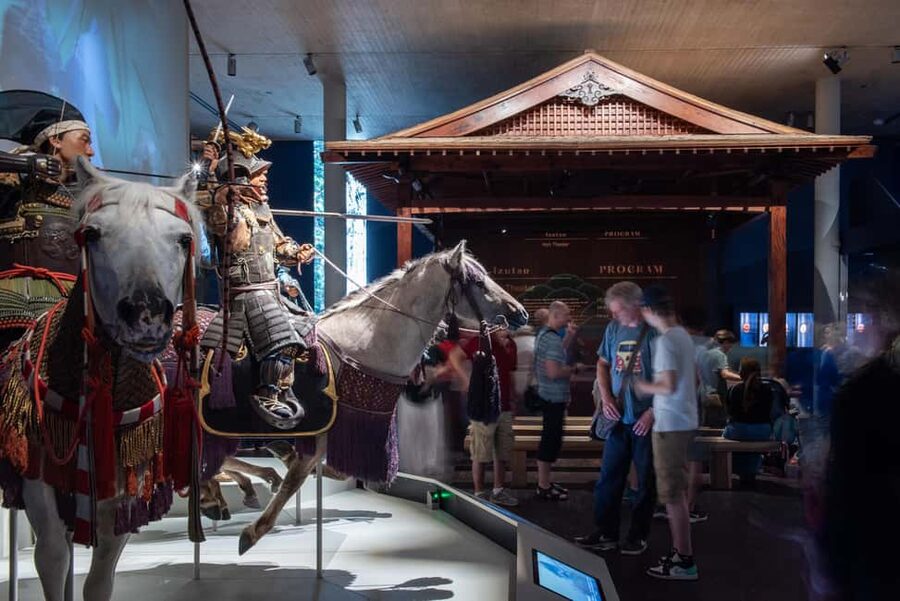
- Noh theater and tea house built in Japan with traditional materials and techniques, then erected in Berlin
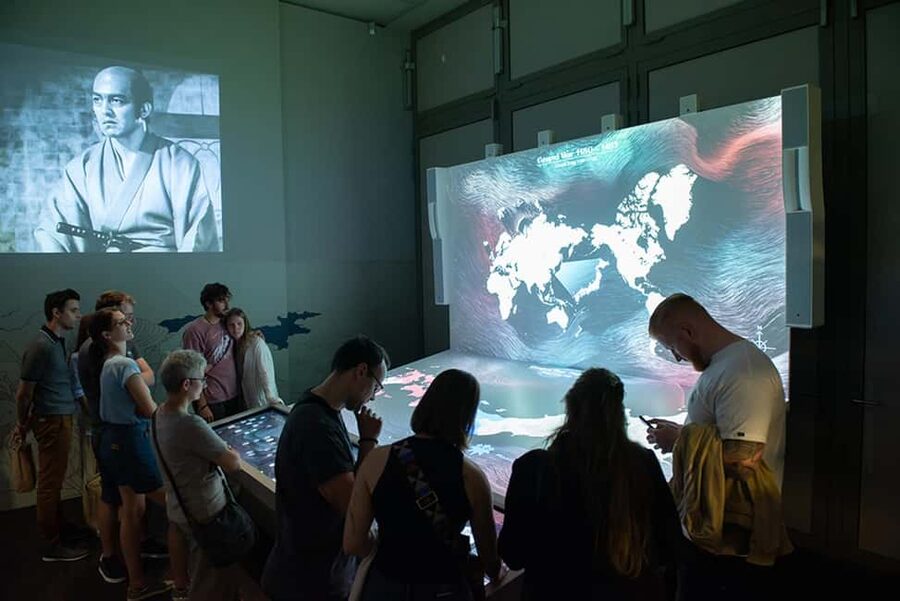
- Hands-on interactive installations, including projections and touchscreens
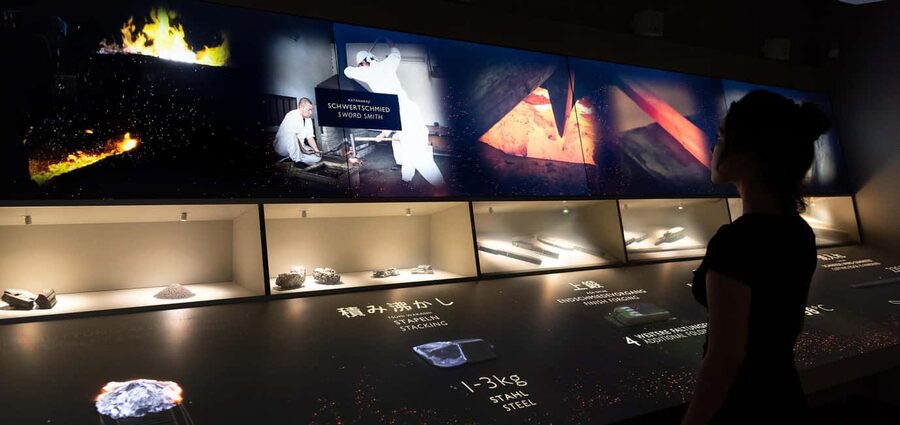
- Swordsmithing and blade production content, plus a dedicated sword collection focus
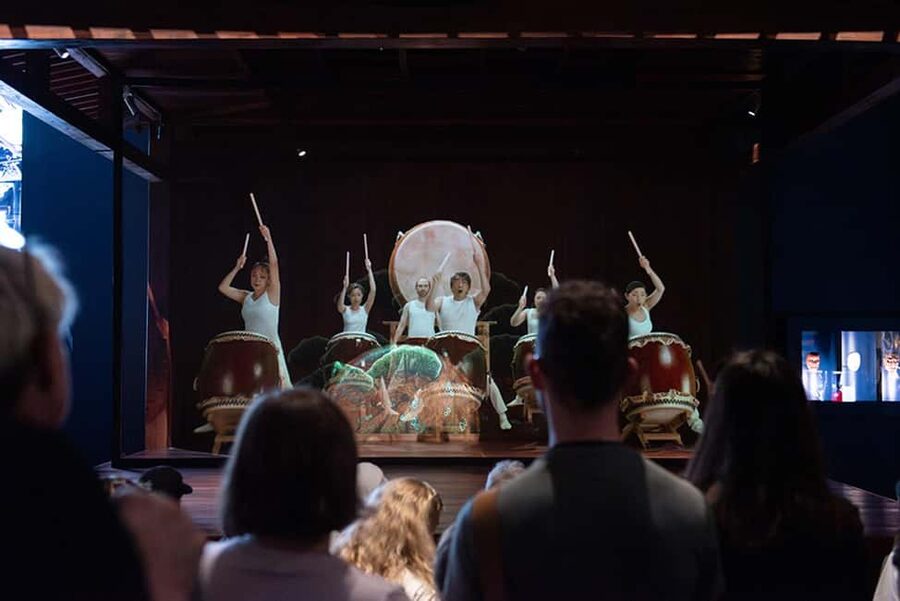
- Holographic performances, including a holographic drum presentation
What You Are Really Buying With a Berlin Samurai Museum Ticket
This is an entry ticket to a museum experience built around one idea: you should learn samurai culture through both objects and storytelling tech. The payoff is that you get authentic artifacts up close, then you also get guided moments that explain how the culture worked, from armor and weapons to theater, ritual, and craft.
For me, the value comes from the mix. If you only wanted photos and static displays, many museums could do that. Here, the interactive pieces are a big part of the plan, so you are not just looking, you are responding. That matters in Berlin, where you can find plenty of museum options, but fewer that feel like a “do something” experience.
The ticket price is listed at $15 per person. Given that the collection is described as one of the world’s largest private samurai culture holdings and the exhibition includes hundreds of historical objects plus multiple performance and interactive stations, it can feel like a bargain for a family or a rainy-day plan. The museum also has a strong overall rating, 4.8 out of 5 based on 101 ratings, which is a decent signal that the experience lands for most people.
More museums in Berlin:
- Berlin: Natural History Museum Entrance Ticket
★ 4.6 · 3,382 reviews - Skip-the-Line: Berlin Wall Museum at Checkpoint Charlie
★ 4.1 · 2,041 reviews - Berlin: Museum Island Multiple Museum Entry Ticket
★ 4.4 · 2,007 reviews
Getting to Auguststraße, Mitte, Without Making It Complicated
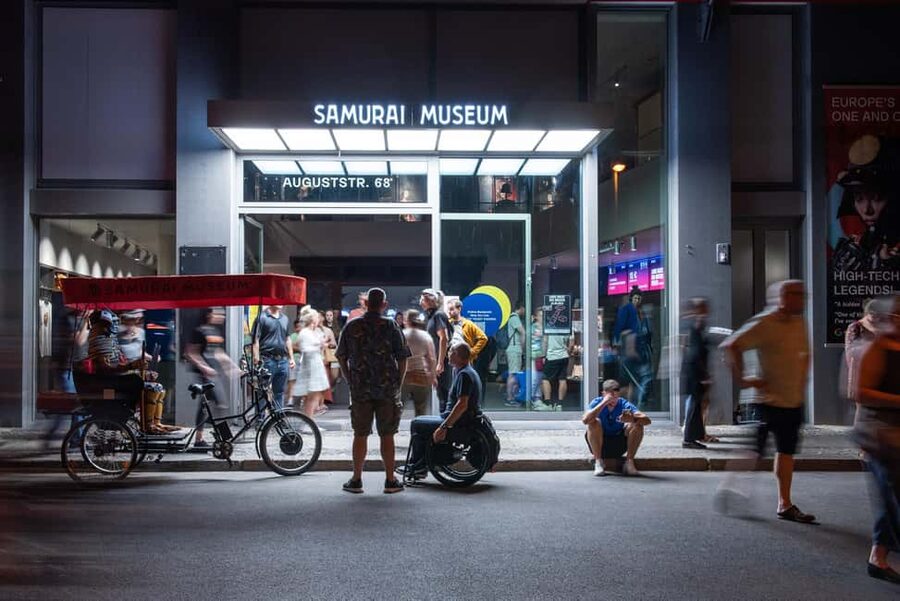
The Samurai Museum Berlin is in Berlin-Mitte at Auguststraße. The meeting point is the museum at Auguststraße in Mitte, which is convenient because you are close to major transit and central sightseeing.
Public transport options listed for you:
- U-Bahn: U6 at Oranienburger Tor, and U8 at Rosenthaler Platz
- S-Bahn: S1, S2, S25, S26 at Oranienburger Straße
- Tram: M1 and M5 at Oranienburger Straße, M8 at Rosenthaler Platz
- Bus: 142 at Tucholskystraße, and M41 at Abgeordnetenhaus
I like that you can hop off at a U-Bahn stop and walk, rather than relying on one single route. Mitte is also easy to pair with other stops around Museum Island and Alexanderplatz, so you can build a day without tight backtracking.
Your Entrance Plan, Go Straight to the Barrier With Your Smartphone
A small detail that makes your visit smoother: the ticket includes a skip-the-ticket-line approach. When you arrive, you go directly to the entrance barrier with your ticket on your smartphone.
This is the kind of practical move that saves time, especially when a museum is busy. It also means you do not need to print anything. Just have your phone ticket ready to scan, then get inside and start with your first galleries.
The experience is described as ending back at the meeting point, so think of it as a self-guided visit that still loops you back to where you started.
The High-Tech Interactive Exhibition, Where You Stop Being a Passive Viewer
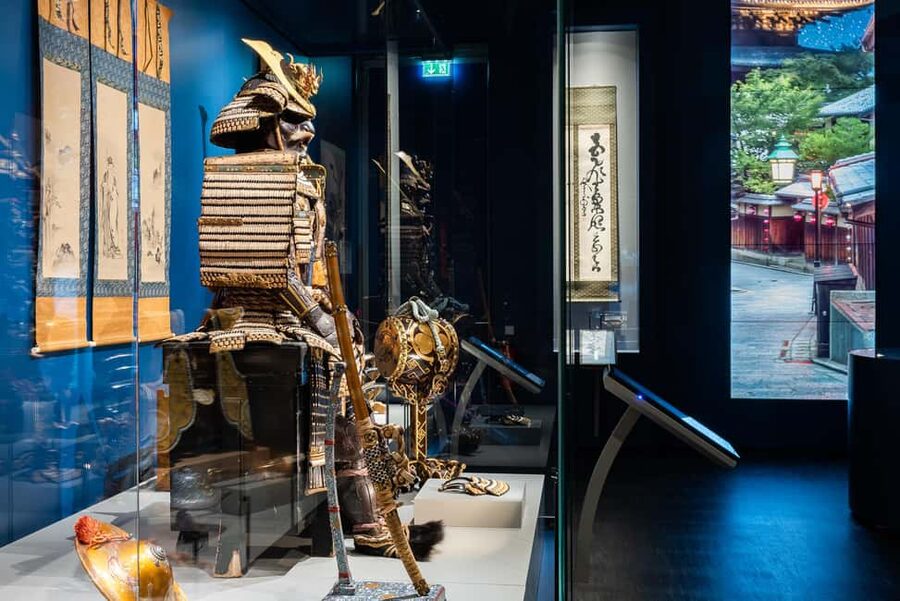
The museum’s core feature is its interactive exhibition style. It is not only projections and screens, it is also structured to keep you engaged as you move through the space. You will see touchscreens and projection systems guiding you, plus moments that turn learning into short tasks.
Two things make this work for regular visitors.
First, it helps connect artifacts to stories. Armor and weapons can feel abstract unless you understand purpose, technique, and context.
Second, it breaks up the experience so you do not spend your whole visit just reading labels.
And about that AI guide, Kitsune. The museum description calls out a fox character that prompts you with questions. From the practical side, that means you can treat your visit like a scavenger-style route. If you like “answering as you go,” this fits your style.
The museum also provides language support, with exhibits designed for both German and English visitors, which is a real advantage in Berlin when you do not want to guess what a display is saying.
A few more Berlin options worth a look
- Berlin: Berlin Story Bunker Entry Ticket
★ 4.6 · 6,759 reviews - Berlin: Illuseum Berlin Entrance Ticket
★ 4.1 · 3,970 reviews - Berlin: Madame Tussauds Admission Ticket
★ 4.6 · 3,941 reviews - Berlin: Charlottenburg Palace Entry Ticket
★ 4.4 · 2,076 reviews
Inside the Peter Janssen Collection, Real Objects With Real Craft
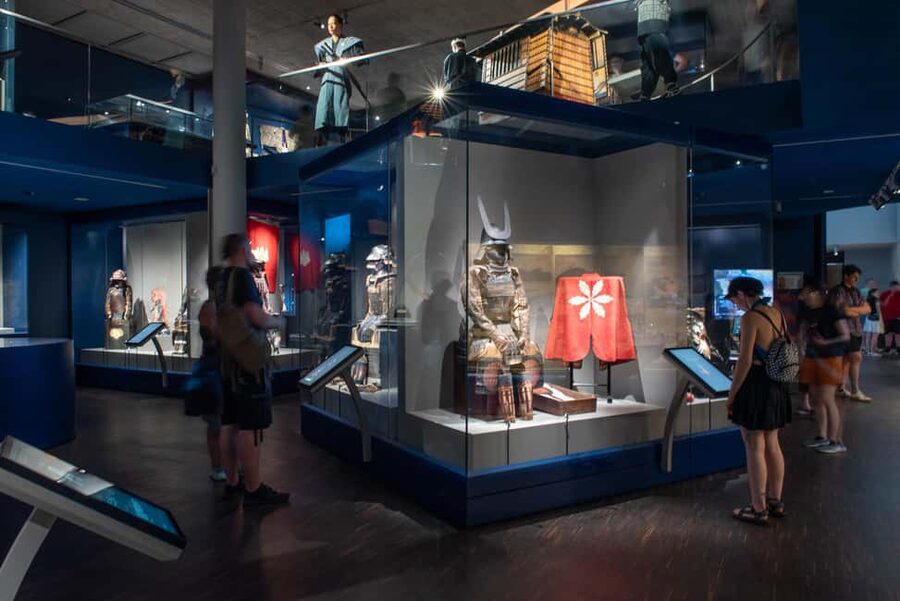
The star anchor is the Peter Janssen Collection, described as one of the world’s largest private collections of samurai culture. This collection grew from a find at a flea market in Berlin into a holdings set of more than 4,000 objects, with coverage of late Kofun through early Meiji periods, listed as roughly the 6th through 19th century range.
What that means for you: you are not seeing a handful of “representative” items. You are seeing objects that illustrate how craftsmanship and culture developed over a long timeline.
Here are specific collection highlights you can look for:
- An 18th-century palanquin
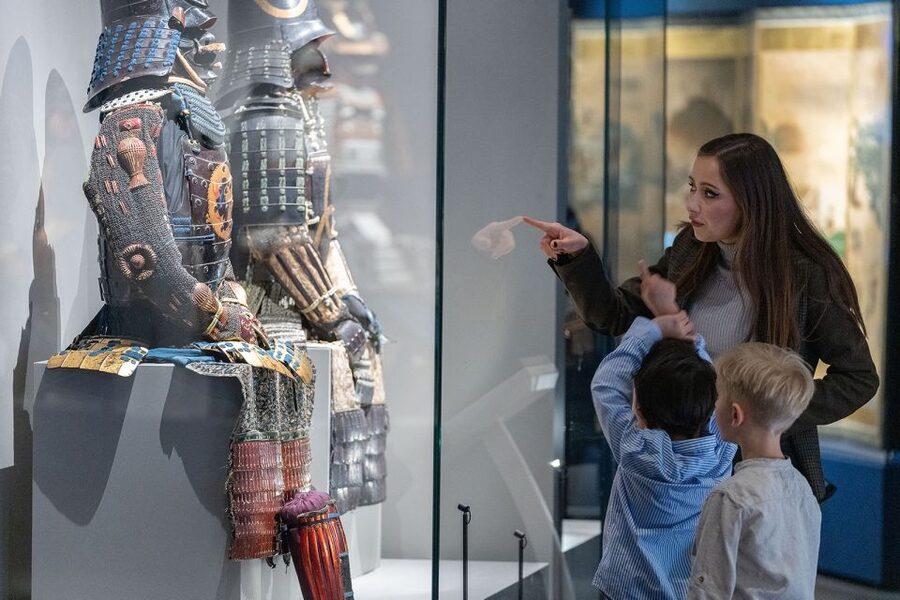
- A 17th-century armor tied to the Matsudaira clan
- Tea utensils from the time of Sen no Rikyū (1522–1591)
I like when a museum shows you the full loop of culture, not just warriors. Tea utensils help you understand the samurai world beyond the battlefield. Ritual and discipline were part of the identity, not a separate theme.
The collection is described as unique worldwide for quality, variety, and scope. Even if you only skim, the quality of artifacts makes the explanations feel grounded. That is important, because interactive tech can sometimes feel like a gimmick in other places. Here, it is tied to the objects.
Samurai Armor and Sword Collections, What to Look For
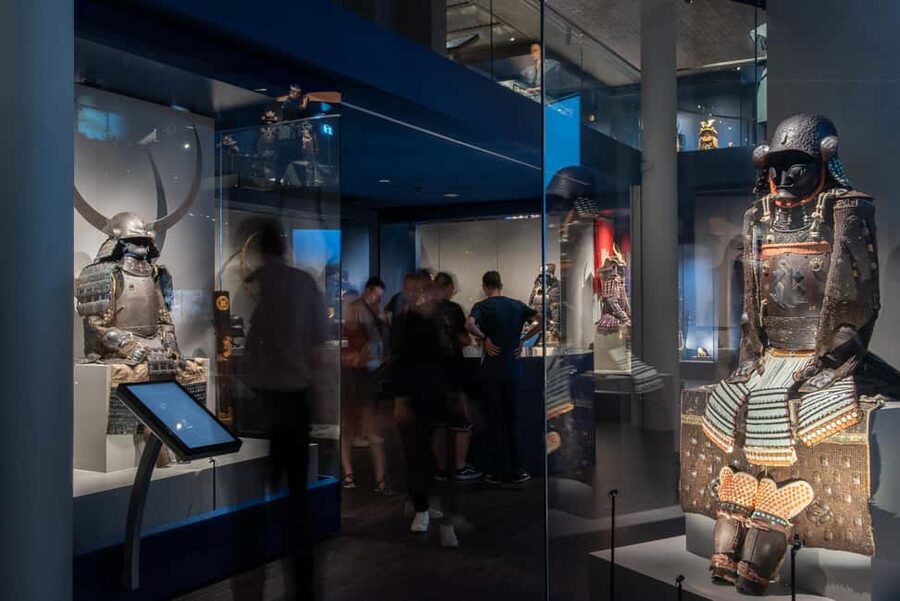
The museum is built around authentic samurai armor and weapons, shown up close. If you are the type who likes details, you will get a lot out of the sword collection and sword-related sections.
The content is described as including swordsmithing and the production of legendary sword blades. That craft angle matters. A sword is not just a weapon, it is also a handmade tool with engineering, metallurgy, and specific techniques.
As you move through, try to pay attention to:
- How the exhibits frame the relationship between armor design and protection needs
- How the sword-related stations explain technique, not just the final object
- How the museum connects the idea of craftsmanship to cultural values
You might also notice the museum’s playful tone in how it teaches. Instead of heavy lectures, you get interactive installations that guide your attention. That helps if you are visiting with kids, or if you simply do not want to spend your limited time in Berlin reading wall text.
The Noh Theater and Tea House in Berlin, a Translation of Tradition
One of the most distinctive parts of this museum is the presence of a Noh theater and a tea house. They were built in Japan using traditional materials and techniques, then later erected in Berlin.
Even if you are not an expert in Japanese theater, the sheer physical space changes how you experience the museum. It stops feeling like a gallery and starts feeling like a staged cultural setting. That is what makes the Noh theater and tea house worth your time, even if you think you only came for armor and swords.
The museum also uses realistic projections as part of these spaces. The idea is that you are learning cultural influence and context through visuals, not only artifacts behind glass.
And the tea house gives you a chance to get an insight into the processes of the centuries-old tea ceremony. If you are curious about how ritual shaped everyday life, this is one of those sections that can surprise you in a good way.
Holographic Drum, Ninja Techniques, and Sword-Blade Production
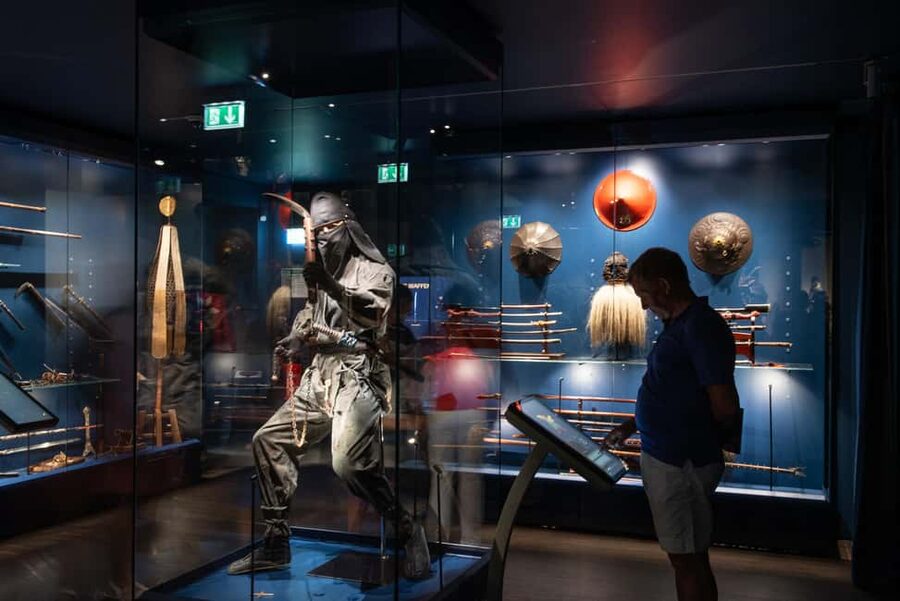
The interactive side does not only sit in screens. The museum includes performance-like moments and craft demonstrations.
Some of the listed experiences you can look for:
- A holographic drum performance
- A tea ceremony experience in the tea house
- Ninja technique learning stations
- Exploration of how legendary sword blades are produced
From a visitor standpoint, these sections are where the museum earns its “high-tech” reputation. You get a sense of performance, process, and technique in separate beats. That spacing keeps things from turning repetitive.
If you like “learning by doing,” focus on the stations that involve guided interaction or technique explanations. If you prefer slower looking, pause longer around the best artifacts and use the high-tech bits as short breaks between object areas.
How Long to Plan, and Who Will Enjoy This Most
Your ticket is valid for 1 to 14 days, with starting times depending on availability. That suggests you do not need to cram the visit into one specific hour far in advance. Still, check availability to pick your start time.
A practical way to think about your schedule:
- If you want time to interact with lots of stations and actually look closely at objects, give yourself a few hours.
- If you are short on time, prioritize the Noh theater and tea house plus the main collections and sword-related sections.
Who this suits best:
- Families, because multiple interactive elements keep kids engaged
- Anime and pop-culture fans, because the Kitsune fox guide is described as looking like Kurama from Naruto in the experience
- Culture lovers who like ritual and art as much as weapons
- Anyone who wants a Berlin museum that feels more like an experience than a browse
Who might hesitate:
- If you strongly prefer quiet museums with minimal tech, you may find the projections, touchscreens, and interactive prompts a bit more stimulating than you want.
Price and Value, Is $15 a Fair Deal in Berlin?
At $15 per person, the price feels reasonable for a central Berlin cultural stop, especially because:
- The experience includes both a major private collection and performance-style stations
- Interactive installations are a core part of how you learn
- You get multiple theme areas, armor and weapons, theater, tea ritual, and sword craft
To judge value in a city like Berlin, I think in terms of time spent and engagement level. This ticket is designed to occupy you with activities, not just reading. If you are the type who enjoys “answering” and using touchscreens, you will likely feel the time was well used.
Also, since you can choose a day and time with a flexible ticket approach described as Samurai Flex Ticket, you are not locked into one narrow schedule. That makes it easier to fit into your overall Berlin itinerary.
Practical Rules, What You Can Bring, and What You Should Expect
The museum lists several restrictions. Not allowed:
- Pets
- Food and drinks
- Luggage or large bags
So pack light. If you are doing a full day in Berlin with shopping or a lot of carry-on, you may need to plan storage elsewhere before you head to Auguststraße. Also keep your hands free so you can use the interactive stations without hassle.
Wheelchair accessibility is noted as available, so you can expect the museum to accommodate visitors who need that.
Finally, the museum is located in a walkable, central pocket of Berlin near Alexanderplatz and Museum Island, with cafés, restaurants, and shopping nearby. That is handy for pairing your visit with a meal before or after.
Should You Book the Samurai Museum Entry Ticket?
Book it if you want a Berlin museum that blends authentic samurai objects with interactive learning, especially the AI fox Kitsune experience, the sword and craft focus, and the Noh theater and tea house setting. At $15, it is also a strong value for a centrally located activity that can work well for families.
Skip or reconsider if you prefer quiet, text-heavy museums, or if your day in Berlin includes lots of luggage and you hate the idea of dealing with restrictions on large bags.
If you do book, I suggest you arrive with a simple plan: start with the main collections, then make the Noh theater and tea house your anchor stops, and finally use the holographic and ninja or sword production stations as your interactive finish. That order keeps the visit feeling intentional, not random.
FAQ
Where is the Samurai Museum Berlin located?
The Samurai Museum Berlin is located at Auguststraße in Berlin-Mitte. The meeting point is at the museum on Auguststaße/Mitte.
How much does the entry ticket cost?
The price is listed as $15 per person.
What does the ticket include?
The ticket includes entry to the Samurai Museum Berlin.
Is the ticket for a specific day or does it have flexibility?
The ticket is valid for 1 to 14 days. Starting times vary based on availability, so you should check available time slots when you book.
How does skip-the-line entry work?
With the skip-the-line setup, you go directly to the entrance barrier using your smartphone ticket.
What items are not allowed inside the museum?
Pets are not allowed. Food and drinks are not allowed. Luggage or large bags are not allowed.
Is the museum wheelchair accessible?
Yes, the museum is listed as wheelchair accessible.
Recently added around Berlin
- One Up to 3 Rickshaws(6 GUESTS)-Taylor Made Rickshaw Berlin Tour★ 5.0 · 20 reviews
- Berlin Private Custom Walking Tour With A Guide (Private Tour)★ 4.5 · 8 reviews
- Moonshine Comedy – English Stand Up Comedy by the bay★ 5.0 · 11 reviews
- Private Half-Day Berlin Sightseeing Tour with a Minivan Including Short City Walks★ 5.0 · 31 reviews
- Private taxi tour to Potsdam and Sanssouci 6-8h★ 5.0 · 30 reviews
- Private City Kickstart Tour: Berlin★ 4.5 · 71 reviews
- Private tour of Berlin★ 5.0 · 15 reviews
- Private Tutankhamun’s Tomb Live Escape Room in Berlin★ 3.5 · 11 reviews
Museums, compared.


Skip-the-Line: Berlin Wall Museum at Checkpoint Charlie
Read our review →


“Pergamonmuseum. The Panorama” Exhibition Tickets
Read our review →

East Side Gallery Spree Cruise in a Solar Catamaran
Read our review →Browse the lists this tour appears in