
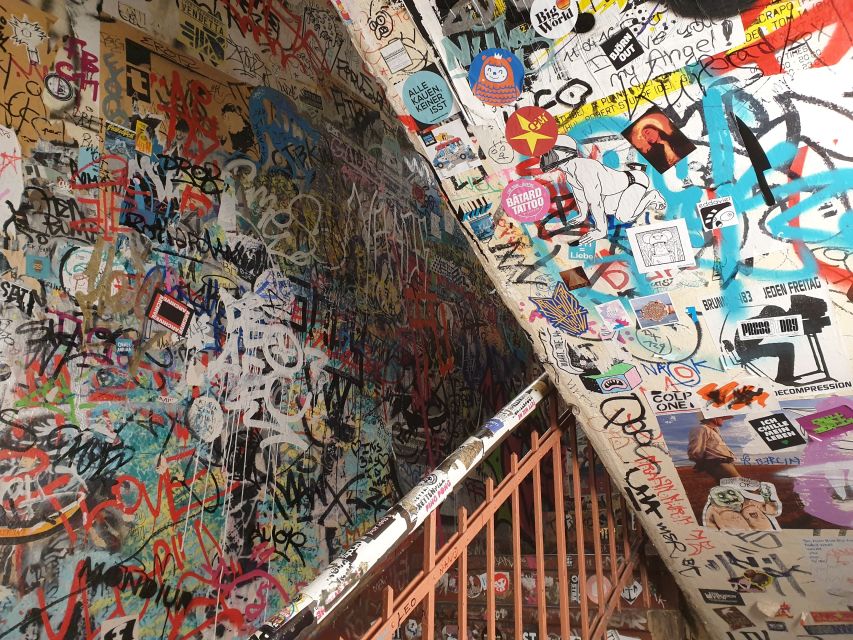
Reviewed · STREET ART & ALTERNATIVE TOURS
Berlin: Street Art and Alternative Tour
Berlin’s street art is interesting because it grew from real Cold War pressure. This 3-hour walk traces the city’s fault lines, where the wall divided lives and the walls later became public canvases. I love the small-group format, and I love how the guide ties what you see to neighborhood change, not just pretty paint.
One drawback to plan for: you need to buy an AB 24-hour ticket for public transport, and the tour is entirely on foot, so comfortable shoes really matter.
Key highlights worth knowing
- Small-group walking tour where you can ask questions and keep your bearings fast
- Kreuzberg focus, known for bold walls and counterculture energy
- Cold War to today, with street art explained through politics and social change
- East Side Gallery, the most famous stretch of wall turned into public art
- French or Italian guide, with clear storytelling that connects art to real places
Cold War Lines Turn Into a Street Art Museum in Motion
Berlin’s alternative culture did not appear out of nowhere. During the Cold War, the city sat on a border. East and West were not just ideas, they were daily pressure on housing, jobs, and identity. On this tour, you get to read that tension directly on the streets, because Berlin’s urban art often acts like a public notice, a protest poster, or a family story written in color.
I like that the tour does not treat street art as decoration. You’ll see it as language. The guide helps you connect wall-era realities to later revivals and the later questions that came with new residents, new money, and gentrification.
And here’s the practical win: walking a small loop makes the stories stick. It’s one thing to see photos. It’s another to stand in the place where the wall scar is still part of the city’s rhythm.
More street art and alternative tours in Berlin:
- Berlin: Alternative Berlin Walking Tour
★ 4.6 · 1,204 reviews - Berlin: City Street Art Guided Walking Tour
★ 4.8 · 886 reviews - Berlin: 3-Hour Street Art Tour
★ 4.7 · 778 reviews
Kreuzberg Streets: Big Murals, Tiny Messages, and Courtyard Surprises
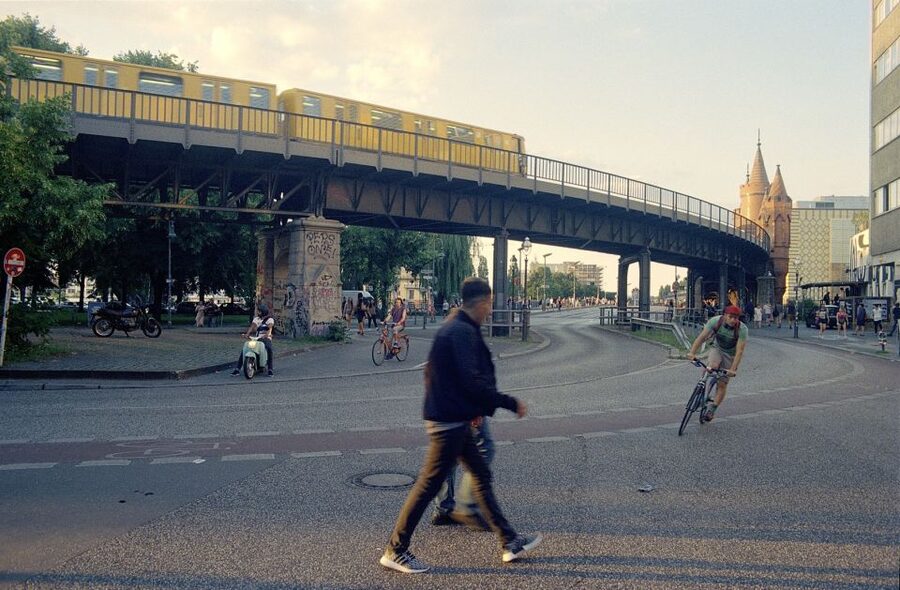
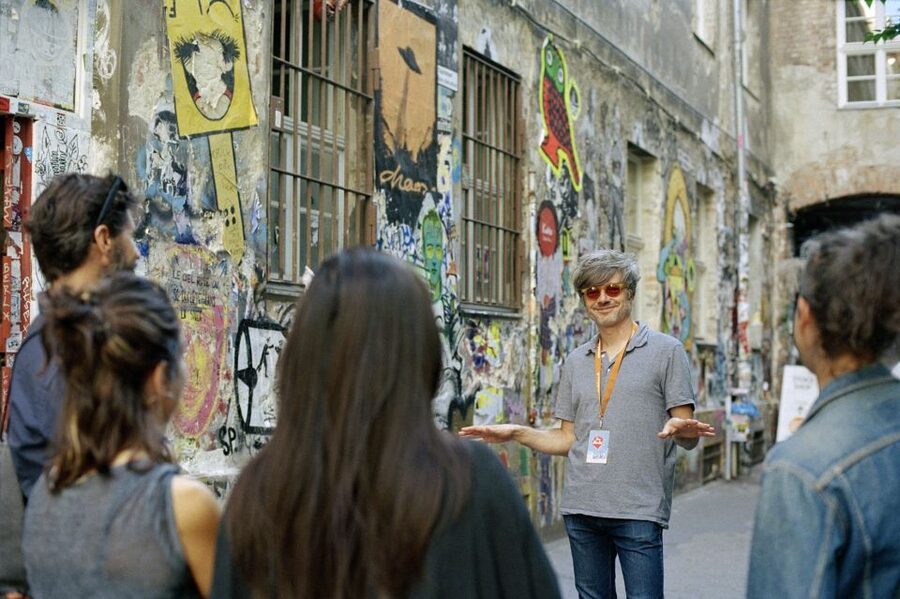
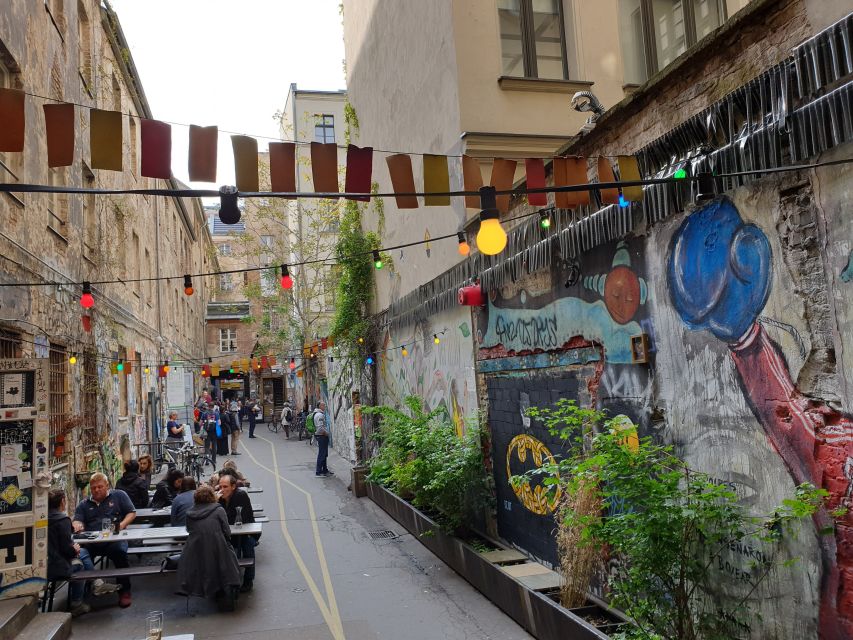
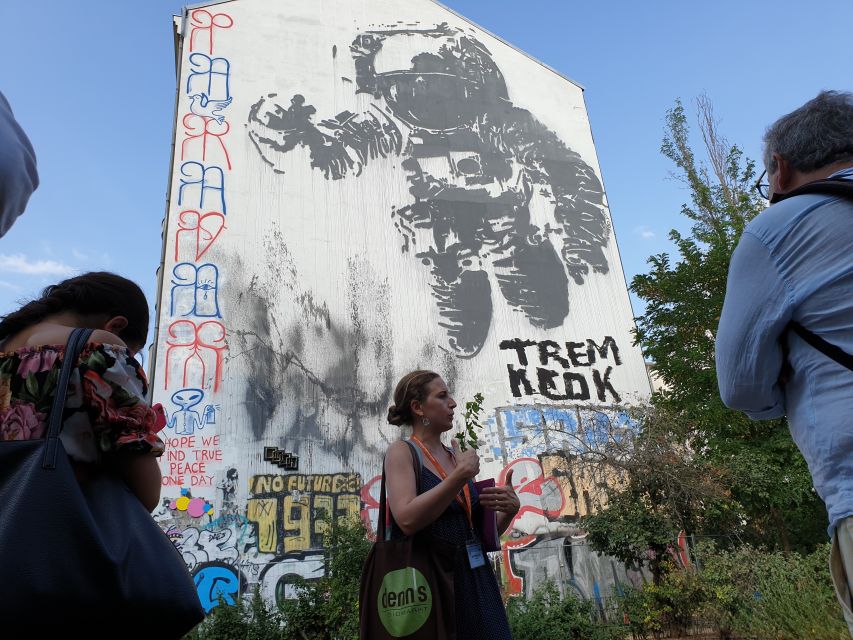
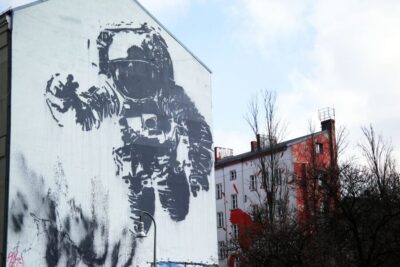
Kreuzberg is one of the best areas in Berlin for understanding why urban art became so powerful here. You get a mix of scale, from enormous works on building faces to smaller pieces tucked into corners. The tour route uses that variety on purpose, because the meaning changes with the space.
In Kreuzberg, you’ll notice how the art behaves like neighborhood communication. Some walls feel like declarations. Other spots look like private notes. And then you’ll get those “wait, where is that?” moments, where you spot a small work wedged into a place you would probably walk past on autopilot.
This is where I think the guide’s role really matters. The best guides explain the why behind the paint: the social claims, the local tensions, and the way artists respond when a city changes faster than people can adjust. One of the guides you may hear from is Marie, who is praised for making the walk joyful and for answering questions with up-to-date anecdotes, so you’re not stuck with history that feels trapped in the past.
Friedrichshain on Foot: Reading Change After 1989 Without Getting Lost
Berlin after 1989 is a key part of what you’ll learn. When the wall fell, the city entered a period of huge economic and social shifts. In practical terms, that meant neighborhoods changing, new opportunities showing up, and new debates starting about who the city is for.
On this kind of street art tour, the point is not to memorize dates like a textbook. The point is to understand how the walls absorbed those shocks. You’ll walk through areas where artistic expression grew between old and new realities, including the districts that helped define Berlin’s later underground scene.
You also get a sense of the city’s “next phase,” after the fall and after the early revival energy. The tour explicitly connects today’s street art presence with both the optimism and the complications of transformation, including gentrification. That matters, because street art is often a barometer. When a neighborhood changes, artists react, too.
The East Side Gallery: When the Wall Becomes Public Art
If you only remember one stop from the tour, make it the East Side Gallery. It’s one of the clearest examples of how Berlin’s wall story did not disappear when the physical barrier ended. Instead, parts of it became an open-air gallery, and the images have been interpreted and reinterpreted by each new generation.
What you’ll get on this stop is context. The guide will help you understand the difference between seeing the artwork as a tourist photo-op and understanding it as something born from a border that once had real consequences. It’s art you can walk around, yes, but it’s also history you can read with your feet.
This stop also changes your pacing. After walking through smaller corners and courtyards, standing at a major wall section gives you scale. You can compare how artists used large canvases versus how they used quiet spaces. That contrast is a big part of why this tour works.
Still in Berlin, but a different kind of day:
- Berlin: Reichstag, Dome and Government District Guided Tour
★ 4.7 · 18,288 reviews - Berlin: 1-Hour City Tour by Boat with Guaranteed Seating
★ 4.3 · 16,993 reviews - Berlin: Boat Tour Along the River Spree
★ 4.4 · 11,252 reviews - Discover Berlin Half-Day Walking Tour
★ 5.0 · 9,624 reviews
Guides Who Connect Paint to Politics (Italian or French)
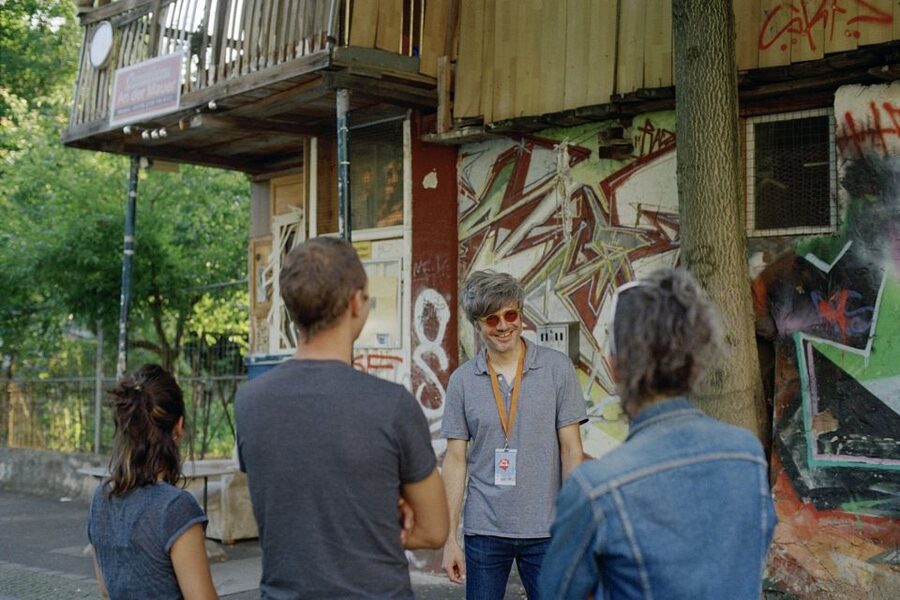
The tour runs with a French- or Italian-speaking guide, and the guide quality is a major reason the rating is so high. You’re not just getting facts. You’re getting a translator between Berlin’s art and Berlin’s lived reality.
The small-group format helps a lot here. You can ask a question without feeling like you’re slowing down a big bus crowd. And when a guide has real teaching instincts, the walk feels like a guided conversation with the street as your textbook.
From the information you’ll see reflected in how guides are described, you might meet guides such as Antonella and Iacopo, noted for passion and for guiding guests through the city’s story with energy. Another guide, Martin, is praised for sharing a love of Berlin in an accessible way, especially when it comes to historical context that would otherwise be hard to pull together.
If you like your travel stories practical and human, this is one of those tours that tends to deliver. You’ll leave understanding why the art looks the way it does, and why Berlin’s street culture became a lasting part of the city’s identity.
What the 3 Hours Actually Feels Like
This is not a full-day museum day. It’s a focused walk designed to hit the key areas tied to Berlin’s street art culture and its Cold War roots. Plan for a steady pace. Your legs do the work, and the guide does the interpreting.
Because the tour is 3 hours, you’ll get a satisfying arc. Early on, you’ll start learning how to read the city, then the stops get more specific, and by the time you reach the more famous wall-related area, you’re ready to understand what you’re looking at.
The one thing to keep realistic: if you hate walking, or if you want every stop to be a long sit-down pause, this may feel a bit brisk. It’s designed for movement and momentum.
Price and Value: Why $31 Can Make Sense for Street Art in Berlin
At $31 per person for a 3-hour small-group walking tour, the value comes from what’s included and what you avoid.
Included:
- a walking tour in a small group
- a guide speaking French or Italian
Not included:
- the AB public transport ticket for the day
So what are you paying for? Not just street art visuals. You’re paying for interpretation: how the guide connects what you see to Cold War border history, social claims in different neighborhoods, and the later changes after 1989.
If you tried to DIY this, you would need to figure out what’s meaningful versus what’s simply decorative, and you’d need enough background to connect the art to the neighborhood story. With a guide, you skip that learning curve and spend your time looking at the actual walls.
Transport and Meeting Point: The One Admin Detail That Matters
This tour does not include the public transport day ticket. You’ll need to purchase an AB 24-hour ticket to take the tour. That’s not a minor detail. Berlin’s transit is how you connect districts, and the tour depends on you being able to move as planned.
The meeting point may vary depending on the option you book, so don’t assume it’s one fixed landmark. Use the confirmation details you receive for your exact start location.
And bring the basics:
- comfortable shoes for walking
That’s it. No special gear is listed, so the comfort factor is mostly about footwear.
Who Should Book This Tour, and Who Might Skip It
This tour is a great match if you:
- want Berlin street art explained through history and politics, not only aesthetics
- like walking neighborhoods such as Kreuzberg and getting the sense of what changed over time
- enjoy learning from a guide in French or Italian and asking questions in real time
- care about understanding why street art became part of Berlin’s alternative identity
You might skip it if:
- you strongly prefer indoor attractions and minimal walking
- you only want quick photo spots with no social or historical framing
- you do not want to plan for an AB 24-hour ticket
Should You Book This Berlin Street Art and Alternative Tour?
Yes, if you want street art with meaning, and you like the idea of walking through Berlin as a living archive. The standout advantage is the combination of small-group pacing and guide-led context that connects paint to real neighborhood changes from the Cold War to today.
If you’re budget-conscious, $31 is also a fair price for 3 hours when you consider you’re getting interpretation and a guided route, not just a generic walk. Just budget a little time for the AB 24-hour ticket and wear shoes you can trust.
If that sounds like your kind of Berlin, book it and treat the city like a gallery you can walk through.
FAQ
How long is the Berlin Street Art and Alternative Tour?
The tour lasts 3 hours.
How much does the tour cost?
The price is $31 per person.
What is included in the tour price?
You get a walking tour with a small group and a live guide who speaks French or Italian.
Is a public transport ticket included?
No. You need to purchase an AB public transport ticket for the day.
Where does the tour meet?
The meeting point may vary depending on the option you booked.
What language options do you have for the guide?
The guide speaks French or Italian.
What should I bring?
Wear comfortable shoes, since the tour is on foot.
Recently added around Berlin
- Berlin Private Custom Walking Tour With A Guide (Private Tour)★ 4.5 · 8 reviews
- One Up to 3 Rickshaws(6 GUESTS)-Taylor Made Rickshaw Berlin Tour★ 5.0 · 20 reviews
- Moonshine Comedy – English Stand Up Comedy by the bay★ 5.0 · 11 reviews
- Private Half-Day Berlin Sightseeing Tour with a Minivan Including Short City Walks★ 5.0 · 31 reviews
- Private taxi tour to Potsdam and Sanssouci 6-8h★ 5.0 · 30 reviews
- Private City Kickstart Tour: Berlin★ 4.5 · 71 reviews
- Private tour of Berlin★ 5.0 · 15 reviews
- Private Taxi Tour City East & West History and Architecture 3-4h★ 5.0 · 42 reviews
Street Art & Alternative Tours, compared.
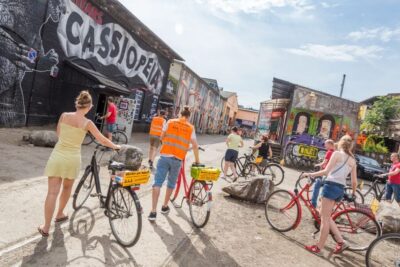
Alternative Bike Tour of Kreuzberg & Friedrichshain
Read our review →
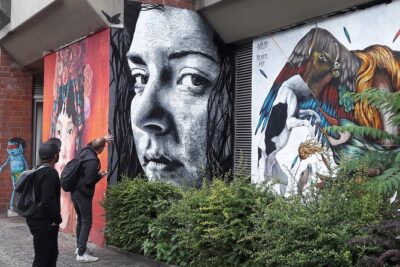

East Meets West: Berlin Food Culture & Street Art
Read our review →
Experience the Alternative Kreuzberg on a Bike Tour
Read our review →Browse the lists this tour appears in