
Reviewed · BERLIN WALL & COLD WAR TOURS
Berlin Wall: City Tour of Divided Germany
Berlin once ran like two different countries sharing one city, and that tension still shows up if you know where to look. I love the way the tour anchors you at Friedrichstraße station, including the role of the single Cold War border station, and turns the border into something you can picture day to day. I also love how clearly you follow the line across major landmarks, from the Brandenburg Gate area to Potsdamer Platz and Checkpoint Charlie. One consideration: you are outside for a good chunk, so you will want comfortable shoes and warm layers.
You’ll be with a live German guide, and the biggest perk is the personal stories that make the division feel human, not just historical. People specifically highlight guides such as Stephan or Stefan for bringing the city’s division to life, sometimes even extending the tour when questions and timing allow.
Key highlights to look forward to
- Friedrichstraße and the Cold War border station start you in the thick of real travel and paperwork.
- Following the Spree toward the parliament and government district shows how the border shaped power and daily movement.
- Brandenburg Gate on the division line makes the symbol make sense in context, not just in photos.
- Holocaust Memorial near the former death strip adds a solemn layer to what the wall meant.
- Potsdamer Platz and the Tiergarten Triangle show why the split felt so visible on the ground.
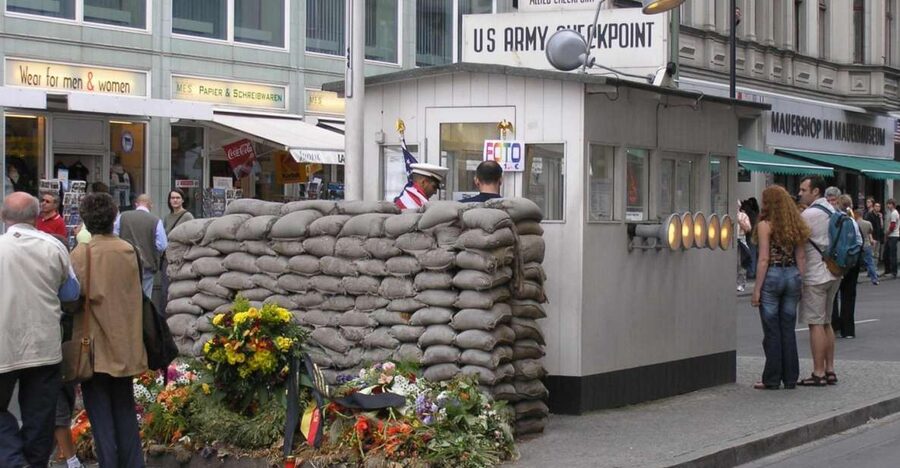
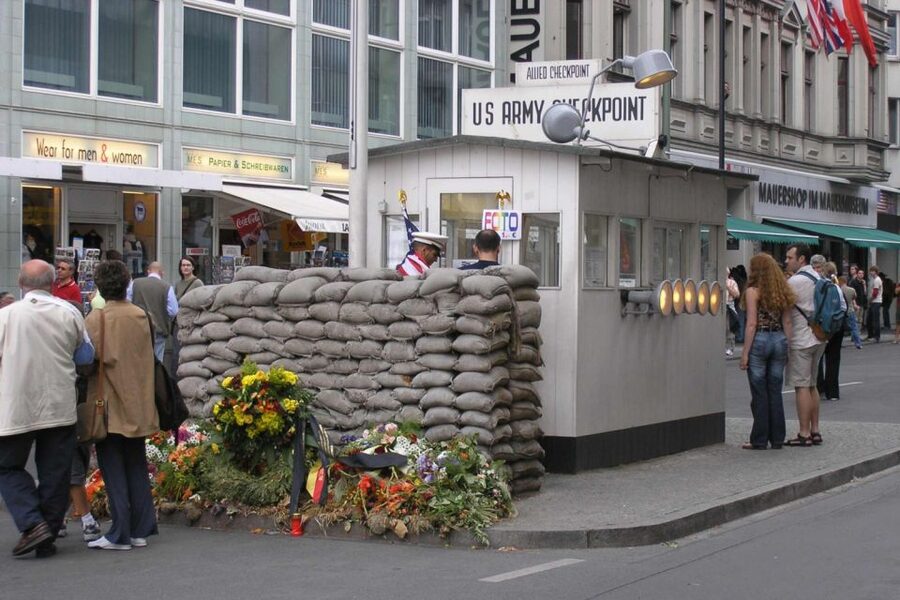
- Longest remaining stretch of the wall plus Checkpoint Charlie gives you two iconic contrasts in one route.
Walking Berlin’s border: why this 2-hour tour matters
This is a Berlin Wall tour, but it’s not the kind where you hop between monuments and call it a day. The value is how you connect the border to the city’s rhythm. You start at a station where border rules were part of travel life, then move through the governmental area where politics sat close to barbed wire realities.
The tour also helps you understand how division worked on multiple levels. There was the big, obvious symbolism, like the Brandenburg Gate. But there was also the smaller, day-to-day impact, like routes, sightlines, and the feeling of living near a boundary that could change what you were allowed to do. That’s the difference between knowing dates and actually getting the sense of how the city functioned under pressure.
More Berlin Wall and Cold War tours in Berlin:
- Berlin: Third Reich and Cold War 2 Hour Walking Tour
★ 4.9 · 6,830 reviews - Berlin’s Best: 2 Hour Walking Tour Third Reich and the Cold War
★ 5.0 · 5,486 reviews - Skip-the-Line: Berlin Wall Museum at Checkpoint Charlie
★ 4.1 · 2,041 reviews
Meeting at Tränenpalast, in front of Friedrichstraße station
Your tour begins at the entrance of Tränenpalast (Palace of Tears), right in front of Friedrichstraße station on Reichstagufer, 10117 Berlin. Tränenpalast has only one entrance, so you should plan on approaching from the side that leads to that single entry point.
Why I like this start: it sets the tone quickly. Palace of Tears is not subtle, and it reminds you this was not just a political divide. It was personal, bureaucratic, and emotional for people trying to cross from one system into another. If you get your bearings here, the rest of the walk makes more sense.
Quick tip: bring comfortable shoes. The tour is short, but Berlin sidewalks and station areas can be surprisingly tiring, especially if you are sightseeing before or after.
Friedrichstraße station: where the border shaped travel life
The first major focus is Friedrichstraße station. During the Cold War, this area mattered because it functioned as one of the key border crossings in the city. The guide walks you through what made this station special, how border control affected movement, and why Friedrichstraße became a stage for people dealing with permission, delays, and uncertainty.
I like this part because it turns the wall from an abstract line into a lived experience. Stations are where you expect transit to be simple. Here, it was anything but. You can start to picture travelers pausing, waiting, explaining themselves, and trying to read the rules fast enough to make the next decision.
Following the Spree to the government district, built partly along the border strip
Next, the route follows the Spree toward the parliament and government district. This section is valuable because it shows how division touched not only homes and streets, but also the seats of power.
The buildings here were situated partly along the border strip, which means you get a strong sense of how close political life was to the “restricted zone” reality. Even if you have studied Cold War maps before, it helps to see the physical layout: river, government area, and the sense that the border was not far away. It was adjacent.
If you enjoy architecture, sightlines, and how a city’s shape affects behavior, you’ll likely find this stretch satisfying. It’s also a good time to listen closely because the guide’s explanations help you connect what you see with why it mattered.
A few more Berlin options worth a look
- Berlin: 1-Hour City Tour by Boat with Guaranteed Seating
★ 4.3 · 16,993 reviews - Berlin: City Sightseeing Hop-On Hop-Off Bus Tour
★ 4.1 · 4,233 reviews - Berlin: 1-Hour City Sightseeing Cruise
★ 4.4 · 2,210 reviews - Berlin City Hop-on Hop-off Tour with Optional Cruise
★ 3.5 · 1,155 reviews
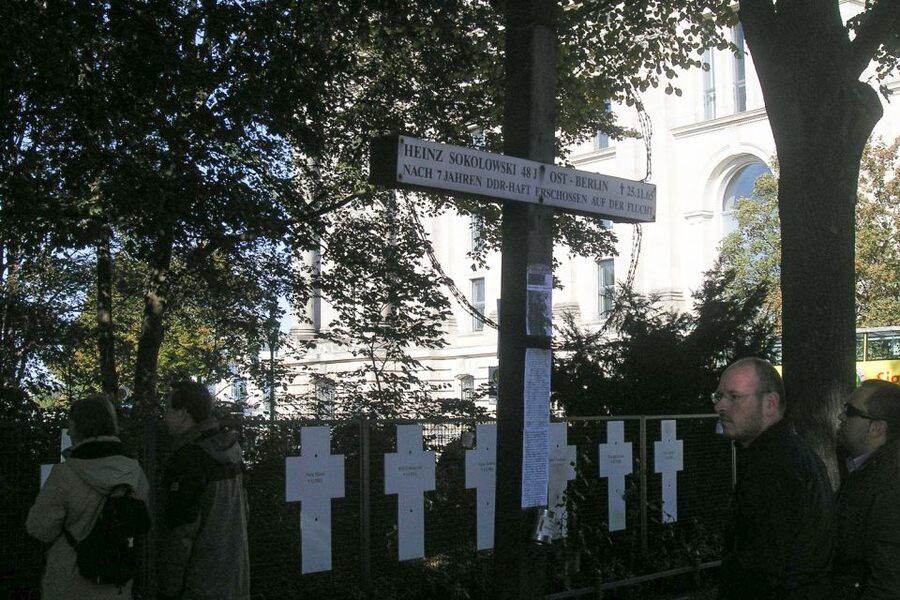
Brandenburg Gate: the symbol, placed on the actual division line
The Brandenburg Gate is famous, but it becomes more meaningful when you stand near it with the idea that the border ran there. The tour points you toward how the symbol of division played out at street level, not just as a postcard image.
What I appreciate: you’re not only told it was a landmark. You’re guided to understand why it was powerful. A gate is supposed to mean passage. In a divided city, that contrast hits harder. The gate’s meaning shifts depending on where you stand and what the surrounding border situation was doing.
This stop can also help you recalibrate your expectations. If you only think of the Berlin Wall as a barrier, you may miss that it also shaped what people believed a barrier meant. The guide’s framing helps you see the wall as part of an entire system of control and messaging.
Holocaust Memorial and the former death strip: keeping the focus human
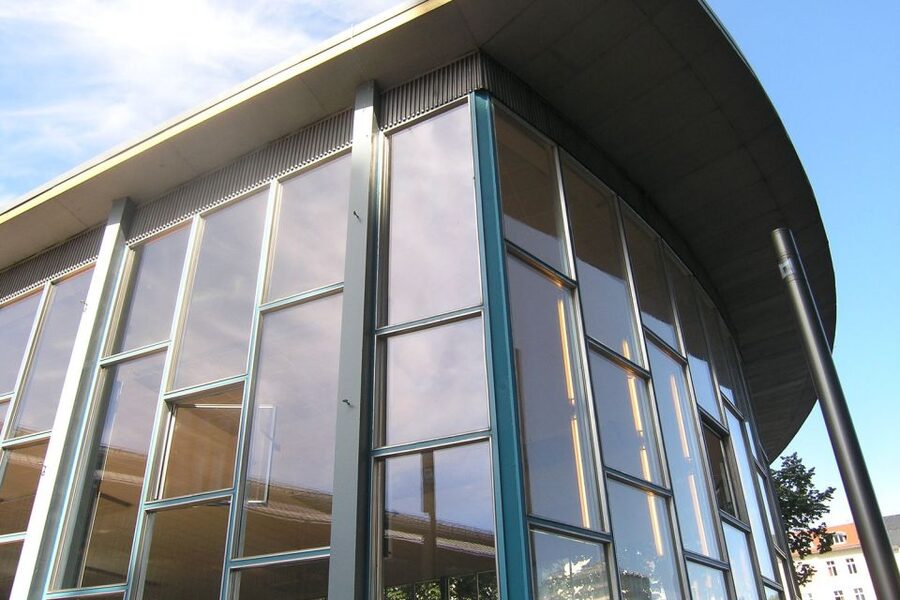
From the Holocaust memorial at the former death strip, the tour moves you forward with a more solemn lens. This is one of those moments where you’re not just touring sights, you’re learning how tragedy is embedded in place.
The key value here is that the route does not treat the wall as only a political story. It brings in the reality of human suffering and loss connected to the time and the space around the border. That matters because it keeps the tour from becoming only about symbols and drama. You remember that borders were not only about ideology, but also about immense harm inflicted on people.
Take it slow here. If you are the type who likes to think as you walk, this section gives you a moment to do that. And if you prefer a guided explanation, it’s still a point where listening closely is more important than speed.
Potsdamer Platz and the Tiergarten Triangle: where the split becomes visible
After that, you go to Potsdamer Platz, and you’ll see why the division felt so physically clear in this area. Potsdamer Platz was split in ways that people could notice in the layout and movement patterns around it. The tour specifically highlights the former Tiergarten Triangle, a spot that helps you understand how the urban grid and open spaces emphasized separation.
This is a great stop for photos, but also for understanding. At Potsdamer Platz, you can often better grasp the “before and after” of how spaces changed. The guide’s explanations help you connect the architecture and open streets to how the border shaped what people could access.
I’d also say this is one of the most mentally engaging parts. You are not just hearing about a barrier. You are learning how a city can look the same on the surface, yet feel completely different depending on what’s behind the rules.
Longest remaining wall stretch and Checkpoint Charlie: iconic, but better in sequence
The tour includes two major “wow” sites in a tight sequence: the longest remaining stretch of the wall and the world-famous Checkpoint Charlie.
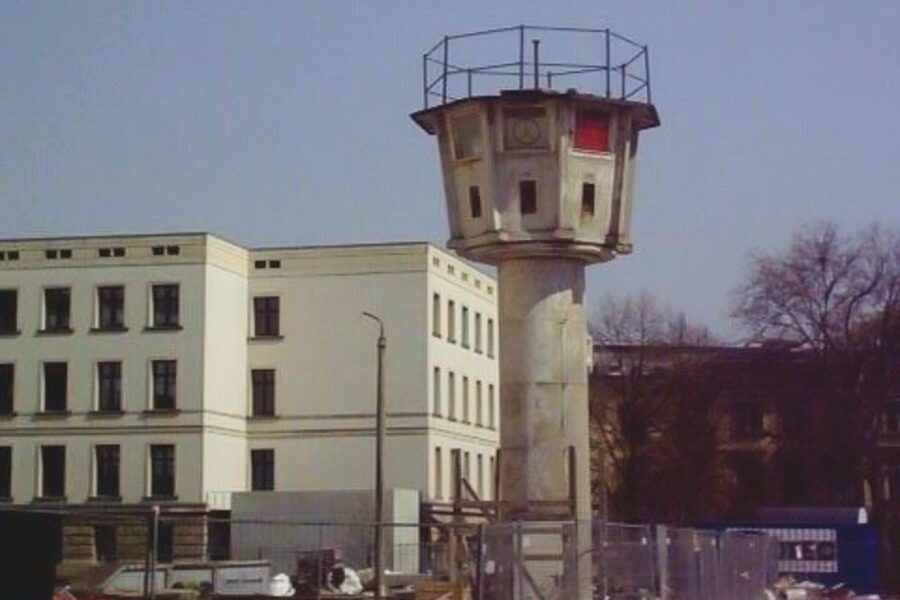
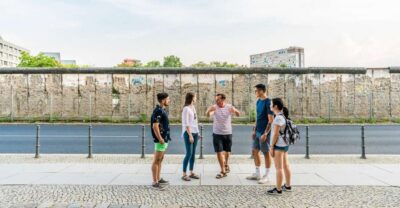
The longest remaining stretch matters because it gives you scale and texture. A wall you can see in length helps you understand why escape, surveillance, and control were such defining realities. It stops being a symbol and becomes a physical fact of daily geography.
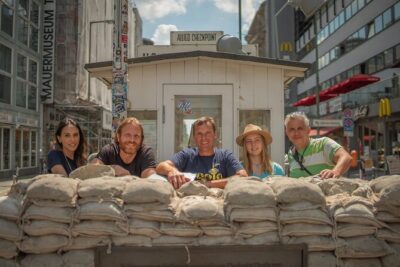
Then you reach Checkpoint Charlie. It’s famous enough that you’ve probably seen it in films or photos, but the difference here is context. By the time you arrive, you have already walked through the reasoning of the route, so the checkpoint feels less like a theme park stop and more like a practical crossing point shaped by the same division logic you’ve been hearing about.
This “wall stretch then checkpoint” flow is strong for first-timers. You get both the barrier and the crossing, both sides of the same coin.
The guide: where the tour really earns its near-perfect rating
The tour’s standout strength is the guide. The overall rating is very high, and the patterns in the feedback are consistent: people value personal storytelling and an energetic, specific explanation.
You’ll see phrases like small group and very intensive, plus praise for guides such as Stephan or Stefan for giving extra personal context and clear answers. One booking even notes the guide extended the tour by about an hour, which tells me the guide is not rushing you through the script. They want the story to land.
One practical note: the guide language is German. If you are comfortable with German, you’ll get the most out of the personal details. If your German is limited, you can still follow the route, but the emotional and historical nuance will be harder to catch.
Price and value: why $21 can feel like a lot and also like a bargain
At about $21 per person for a 2-hour guided city tour, the price is straightforward. The value comes from the fact that you cover multiple anchor points linked directly to how the border functioned: Friedrichstraße, the Spree to the government area, Brandenburg Gate, the Holocaust memorial zone near the former death strip, Potsdamer Platz with the Tiergarten Triangle, plus the wall stretch and Checkpoint Charlie.
A lot of Berlin tours will give you a list of famous names. This one is more focused on the division line as a living system. That kind of framing takes skill from the guide, and it’s hard to replicate if you are just wandering on your own without a clear narrative.
If you like learning through walking, you’ll likely feel it was worth it. If you already know the full story and you prefer unguided exploring, you might be paying for explanations you don’t need. But for most first-time visitors, a guided 2-hour route is a fast way to build a useful mental map.
Who should book this Berlin Wall city tour
This tour is a strong match if you:
- want a short walk that still connects major landmarks to everyday life under division
- appreciate guided context, not just photos
- prefer a focused route that stays coherent rather than bouncing around the city
- can handle a German-language guide
It might be less ideal if you:
- want a long, deep historical seminar (this is 2 hours)
- need everything explained in English, because the tour guide is German
- dislike cold weather walking, since it is largely outdoors and you will be on your feet
Quick tips to get the most out of the 2 hours
- Wear comfortable shoes. You’ll move steadily and linger at meaningful stops.
- Dress for the weather. Berlin can feel sharper than you expect.
- Listen for the connection between spots. The best moments are when the guide explains how a location fits the border system.
- Use the route to orient yourself later. After this, you’ll recognize where the division was most obvious and why.
Should you book this tour?
I think this is a smart booking for first-time Berlin visitors who want the Berlin Wall story in the streets, not just in museum walls. The route hits the big names, but it also keeps the focus on how the wall shaped daily life, movement, and the human experience behind the policy.
Because the reviews emphasize personal storytelling and intensive guidance, you’ll likely feel more informed at the end than you expected for a $21, 2-hour walk. If your German is workable and you want a clear, memorable narrative, book it. If you need English, then you might want to look for an equivalent tour in your language, because the guide’s story is the main reason this one scores so well.
FAQ
How long is the Berlin Wall city tour?
The tour lasts 2 hours.
How much does the Berlin Wall city tour cost?
The price is $21 per person.
Where do we meet for the tour?
Meet at the entrance of Tränenpalast (Palace of Tears) in front of Friedrichstraße station on Reichstagufer, 10117 Berlin. Tränenpalast has only one entrance.
What language is the tour guide?
The live tour guide speaks German.
What should I bring?
You should wear comfortable shoes.
Is free cancellation available?
Yes, you can cancel up to 24 hours in advance for a full refund.
Can I reserve without paying right away?
Yes. You can reserve now and pay later to keep your plans flexible.
Recently added around Berlin
- Berlin Private Custom Walking Tour With A Guide (Private Tour)★ 4.5 · 8 reviews
- One Up to 3 Rickshaws(6 GUESTS)-Taylor Made Rickshaw Berlin Tour★ 5.0 · 20 reviews
- Moonshine Comedy – English Stand Up Comedy by the bay★ 5.0 · 11 reviews
- Private Half-Day Berlin Sightseeing Tour with a Minivan Including Short City Walks★ 5.0 · 31 reviews
- Private taxi tour to Potsdam and Sanssouci 6-8h★ 5.0 · 30 reviews
- Private City Kickstart Tour: Berlin★ 4.5 · 71 reviews
- Private tour of Berlin★ 5.0 · 15 reviews
- Private Tutankhamun’s Tomb Live Escape Room in Berlin★ 3.5 · 11 reviews
Berlin Wall & Cold War Tours, compared.
Berlin’s Best: 2 Hour Walking Tour Third Reich and the Cold War
Read our review →
Skip-the-Line: Berlin Wall Museum at Checkpoint Charlie
Read our review →
2.5-Hour East Side Boat Cruise with Commentary
Read our review →
East Side Gallery Spree Cruise in a Solar Catamaran
Read our review →
Cold War, Berlin Wall, Spies and the East Side Gallery
Read our review →
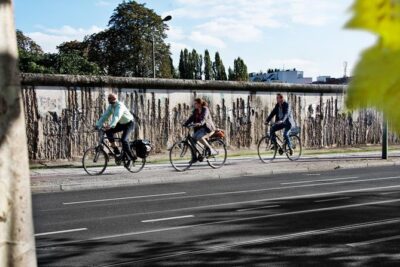
Guided Bike Tour of the Berlin Wall and Third Reich
Read our review →Browse the lists this tour appears in