
Reviewed · KREUZBERG & FRIEDRICHSHAIN TOURS
Small Group Tour: “Wild Kreuzberg”
Kreuzberg can feel like a whole attitude wrapped in streets. This walking tour is interesting because it connects everyday life around Kottbusser Tor with the neighborhood’s punk-era stories, from arts spaces to squatter traces.
I really like that you get a tight 3-hour route with lots of real stops, not just a drive-by recap. I also like the focus on specific places you can still find on your own the next day, like the Oranienhöfe coffee area and the Museum of Objects. One thing to consider: the tour runs in German, so if you do not feel comfortable, plan for a slower pace on questions.
Key highlights you should care about
- Kottbusser Tor and the U1 rails cut right through daily life, so the neighborhood makes sense fast.
- Oranienstraße (SO36) shows how Kreuzberg’s punk identity still echoes in shops, bars, and food.
- Museum of Objects tackles mass production history in a way that fits Berlin street life.
- Bethanien and Rauchhaus point to the art-squat scene in a former hospital setting.
- Fontane-Apotheke and Görlitzer Park connect old infrastructure to how the city lives now.
Why Kreuzberg Feels Like Two Cities in One Block
Cruzberg, spelled the right way, is not subtle. It throws markets, religions, languages, and late-night energy into the same few blocks, and it all has a reason. This tour is built to help you see that pattern instead of just taking photos.
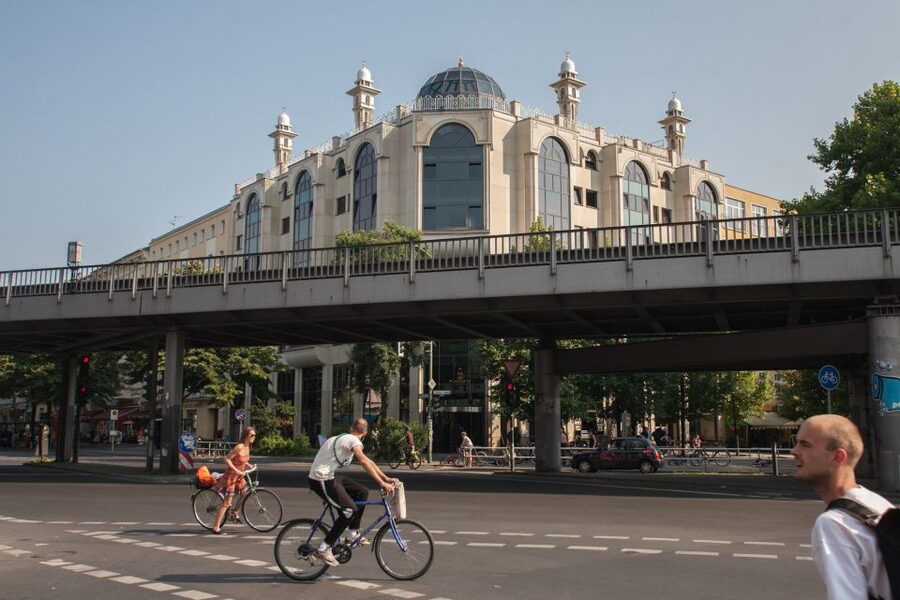
You start at Kottbusser Tor, where the square sits in the middle of real commuter movement. The U1 line runs overhead, dividing the space right down the middle. That sounds like a small detail until you walk it. Once you see how the rails slice the neighborhood, the whole layout of Kreuzberg clicks.
The tour also leans into what is left behind from Berlin’s famous squatter scene. You are not chasing myths. You are walking by physical places that show how political energy, art, and community use buildings over time. That is a big part of why a simple walking route can feel so story-driven.
More Kreuzberg and Friedrichshain tours:
- Kreuzberg: Culinary Food Tour
★ 4.5 · 770 reviews - Berlin: Kreuzberg Guided Walking Evening Tour
★ 4.7 · 555 reviews - Berlin: Alternative Bike Tour of Kreuzberg & Friedrichshain
★ 4.7 · 548 reviews
Getting Oriented at Skalitzer Straße and Kottbusser Tor
You meet at 137 Skalitzer Straße, in front of Gold Exchange and next to REWE. The nearest U-Bahn is Kottbusser Tor (lines U1 and U8), using the Skalitzer Straße exit. Your guide carries a sign with the operator’s logo, so you can spot the group.
This is the kind of start location that is practical. You have multiple transit connections, and once you reach the station area you can orient fast even before the tour begins. Also, because it is a small group (minimum 3, maximum 12), you are not stuck in a crowd trying to read a sign.
Bring comfortable shoes. Kreuzberg is mostly sidewalks and walking time, and you will want your legs ready for a 3-hour loop.
Kottbusser Tor to Oranienstraße: Rails, Markets, and the SO36 Beat
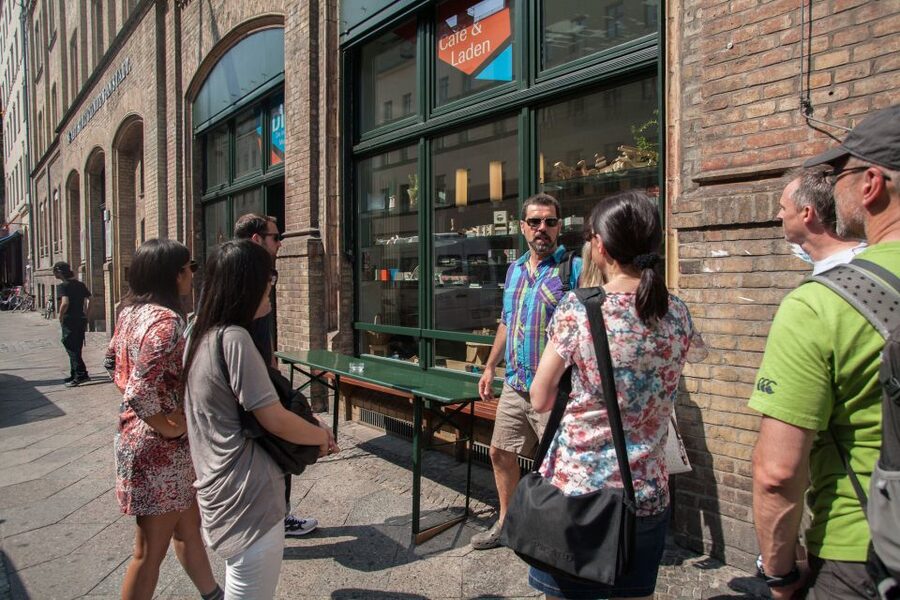
After meeting, you walk past Kottbusser Tor, where everyday life meets Kreuzberg night culture. The feel here is immediate. A Turkish market, Arabic restaurants and bistros, and chic cafés and alternative clubs can sit within a short stroll of each other. It is a mix that can look random if you just wander. With a guide, it becomes a map of the neighborhood’s layers.
You also pass landmarks tied to older Berlin architecture and later reinterpretations, including the Adalbertstraße skyscrapers and the Sozialpalast. The point is not just to name buildings. It is to understand that Kreuzberg’s identity comes from change, reuse, and immigration over decades, not one single era.
Oranienstraße is the next key moment. This is described as the heart of the former SO36 postal district, still known as Berlin’s punk district. When you reach it, you will notice the street energy becomes more retail and nightlife focused. The tour mentions restaurants, bars, and shops with that classic Kreuzberg charm. You are basically walking through the neighborhood’s confidence, with a little edge.
If you like neighborhoods where you can picture day-to-day life, you will enjoy this section the most. It is the part that helps you imagine what Kreuzberg feels like outside of sightseeing hours.
Kreuzberg Museum Stops, Adalbertstraße Views, and Taking a Breath
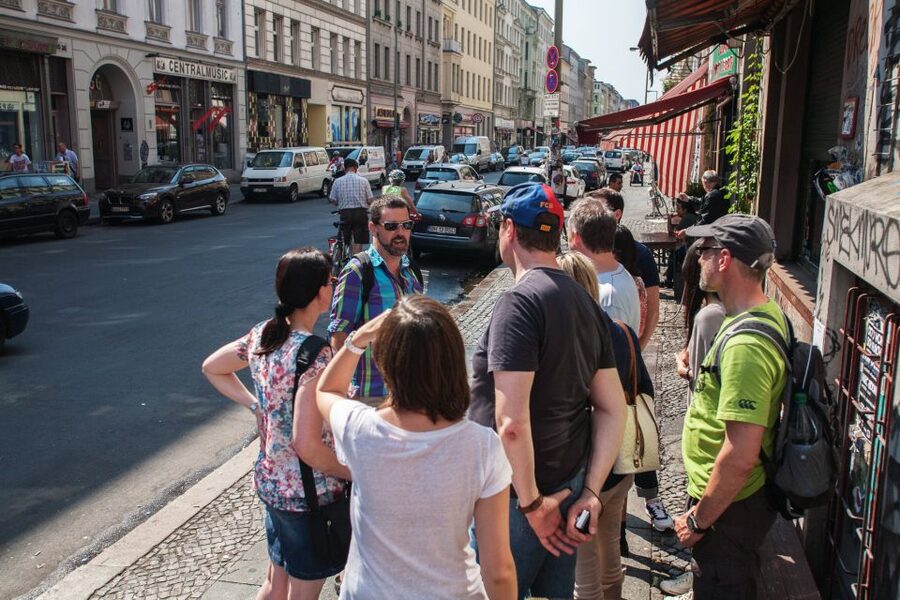
The route includes stops like the Kreuzberg Museum and views tied to Adalbertstraße. Even if you do not go inside everything, these pauses matter because they give you a baseline for what Kreuzberg used to be, and what it became.
Here is the practical value: walking tours can turn into a blur. A museum stop style moment breaks that blur. It helps you switch from street-level impressions to bigger context, then you head back out to look again with fresh eyes.
You should also be ready for a bit of visual contrast. Kreuzberg can swing from imposing early-20th-century buildings to newer uses and creative spaces. That tension is part of the story the tour wants you to feel.
Still in Berlin, but a different kind of day:
- Berlin: Reichstag, Dome and Government District Guided Tour
★ 4.7 · 18,288 reviews - Berlin: 1-Hour City Tour by Boat with Guaranteed Seating
★ 4.3 · 16,993 reviews - Berlin: Boat Tour Along the River Spree
★ 4.4 · 11,252 reviews - Discover Berlin Half-Day Walking Tour
★ 5.0 · 9,624 reviews
The Home for the Blind and Oranienhöfe Coffee Break
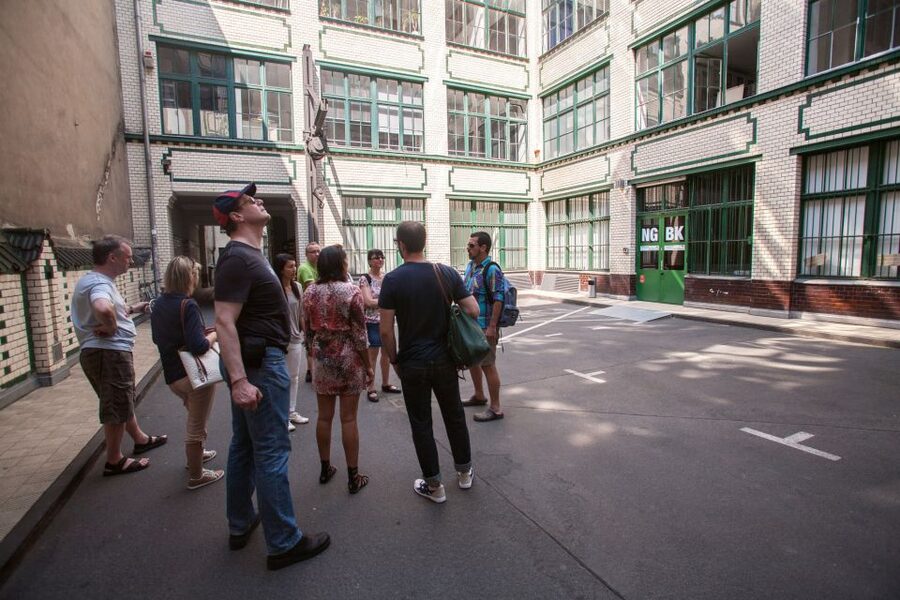
One of the tour’s most human beats is the stop at the Home for the Blind. It is a pause that shifts you from scenery to people and community institutions. The details may not be the flashy kind, but that is exactly why it works.
Right after, you get time to relax over coffee in the Oranienhöfe. This matters because Kreuzberg is a lot at once. A short break gives your feet time to recover and your brain time to organize what you just saw.
Also, Oranienhöfe is one of those places you can return to later. If you like the route, you can use it as a reference point for independent wandering after the tour ends.
Museum of Objects, Mass Production, and Mariannenplatz
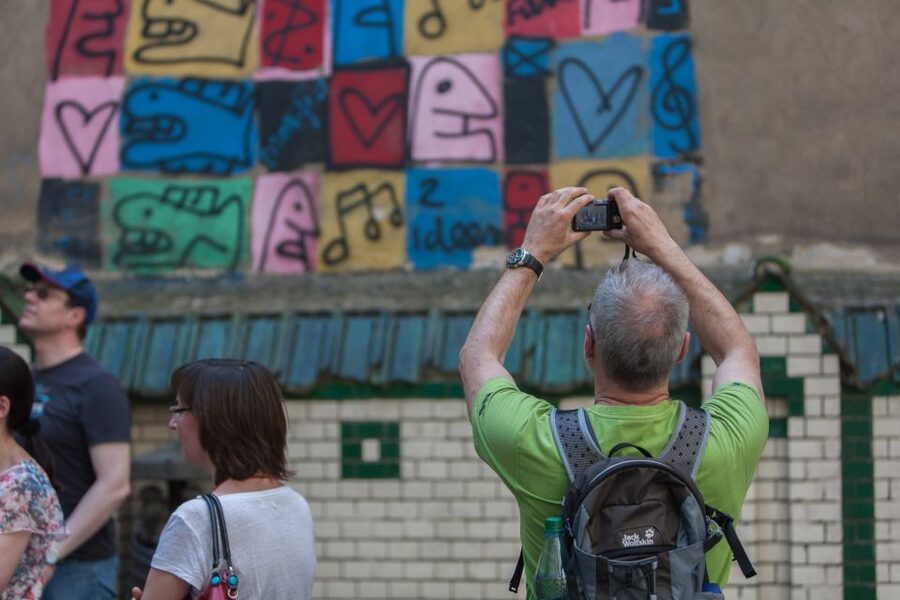
Next up is the Museum of Objects, focused on the history of mass production. That topic might sound like it belongs in a classroom, but on foot in Kreuzberg it makes sense. You are walking through a district where everyday objects, shops, and industry shaped daily life. Learning the theme behind them gives your street observations a backbone.
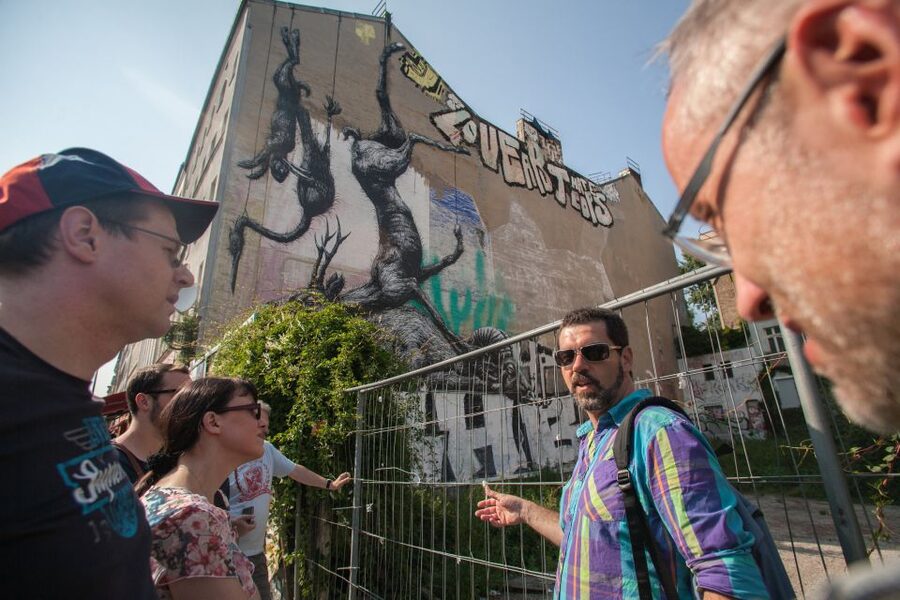
From there you head toward Mariannenplatz and the art-squat scene at Bethanien, described as an art squat in a former hospital. This is one of the most symbolic stops in the whole tour. The building’s former purpose and later reuse underline a key point of Berlin’s squatter legacy, people taking spaces and redefining them for community and creativity.
Then you also visit the Rauchhaus, noted as another place with traces of squatters’ life from days gone by. If you are the kind of person who likes to read buildings like documents, this is where the tour starts feeling less like a walk and more like a guided interpretation.
One caution: art-squat locations can be visually intense, and you may want time to look slowly. If you are the type to keep moving nonstop for the full photo count, you might want to remind yourself that the tour is only 3 hours. Save a few minutes for quiet looking here.
Fontane-Apotheke and Görlitzer Park’s Old Station Story
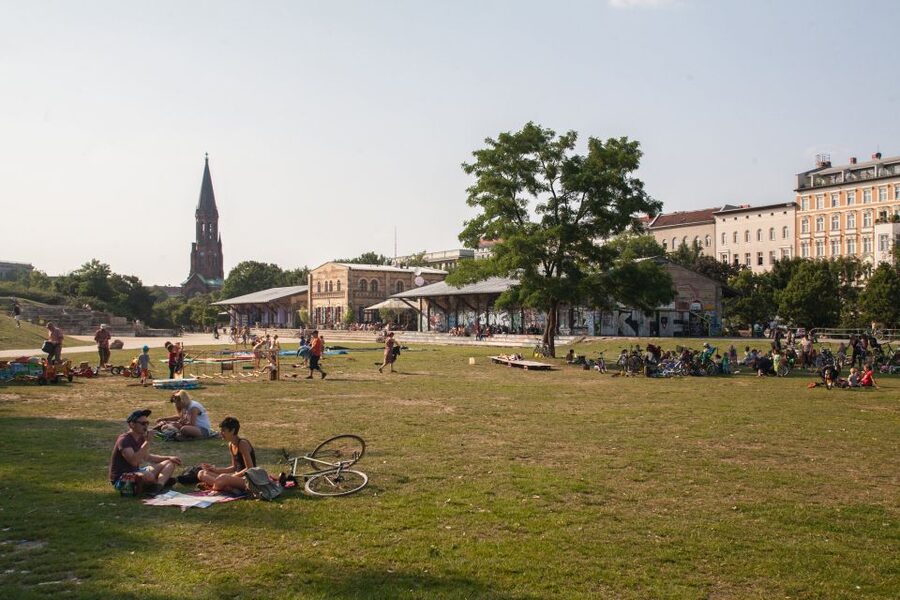
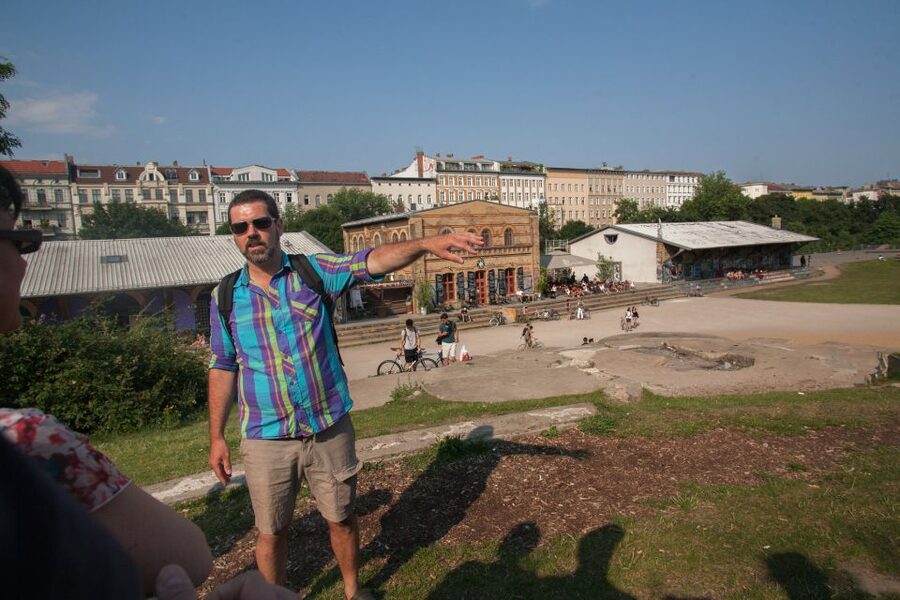
The route includes the well-known pharmacy, Fontane-Apotheke, and then continues to Görlitzer Park. Görlitzer Park is pointed out as a place that was previously a train station.
That train-station-to-park transformation is exactly the kind of Berlin detail that changes how you see the city. Instead of treating parks as generic green space, you understand it as reuse. That is also why the tour feels authentic. It teaches you how the city repurposes infrastructure, not just how it decorates itself.
Fontane-Apotheke adds another layer. A pharmacy is a small daily-life landmark. It reminds you that this neighborhood is not only culture and nightlife. It is also errands, care, and routine. That balance is a big reason I like this tour concept.
Oberbaumbrücke: East and West Linked on Foot
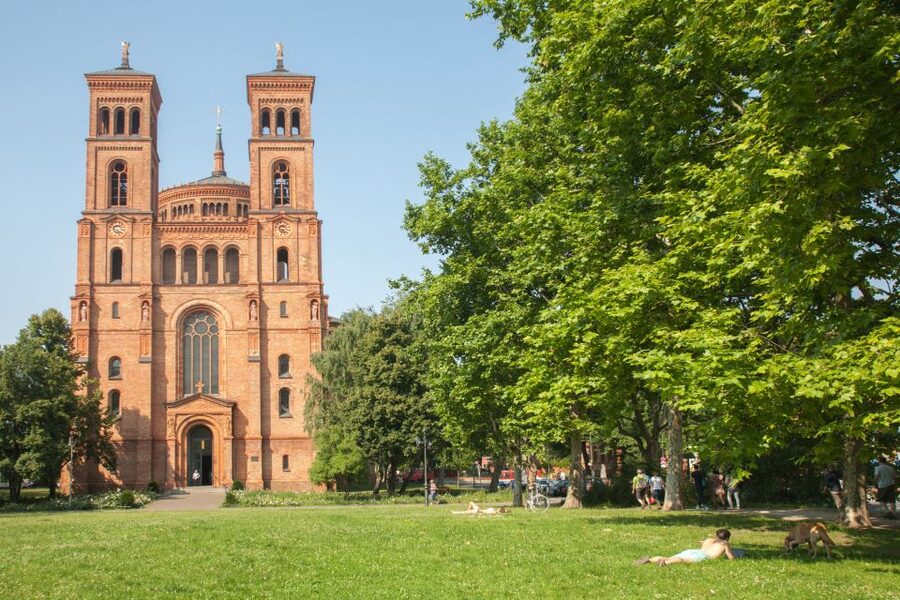
The walk ends with a visit to Oberbaumbrücke, described as symbolically linking East and West Berlin. You will not need a lecture to feel why this matters. The bridge area makes it easy to picture Berlin’s division and also the later connection.
As a final stop, it works well because it gives the tour an outward-facing feeling. Before this, you have been focused on neighborhood blocks, buildings, and small-scale stories. Oberbaumbrücke lets you step back and see how those stories fit into the larger Berlin picture.
And because the tour ends back at the meeting point, it is easy to continue on your own. You can head out for food nearby or hop to another part of the city.
Price and Group Size: What $24 Buys You
The price is listed at $24 per person for about 3 hours. That is one of the best values in Berlin walking experiences when what you want is interpretation and direction, not a ticketed attraction.
What you are paying for:
- a city guide
- included essentials like duties
- and a rain poncho if necessary
What you are not paying for:
- food and drink
So if you plan to do the coffee stop during the tour, budget for it like you would in any café. The tour gives you moments to sit, but it does not cover the meal part.
The group size also helps the value. With a minimum of 3 and maximum of 12, you get a guided experience that still feels personal. You are not shouting to be heard, and you are more likely to ask questions about what you are seeing.
One practical note: the tour is German. The guide is live, and that is great if you speak the language. If you do not, you might still enjoy it for the places and pacing, but your ability to ask follow-ups will be limited.
Weather, Shoes, and Other Things to Plan for
This tour runs in all weathers. On rainy days, a rain poncho is distributed. That is a real help in Berlin, where weather can change quickly.
The key thing you control is footwear. Comfortable shoes are not a suggestion. You are walking long enough for blisters to become a problem if your shoes are wrong.
Also, the tour needs a minimum number of participants to operate. The listing says a minimum number of 2 persons is required, and it can be canceled if the minimum is not reached. For your peace of mind, plan a flexible day or keep backup options in your schedule.
A Quick Reality Check on Language and Cancellations
This is a German-language tour, so it is worth making sure you select the right language version when booking. If you are not comfortable with German, you might find it hard to get full value from the guide’s explanations.
On the cancellation side, the operator reserves the right to cancel if minimum participation is not met. That is not unusual for small group tours, but it is still something you should take seriously. If your schedule is tight, book early enough to handle a reroute.
Should You Book Wild Kreuzberg?
If you want Kreuzberg as a story, not just a street stroll, I think you should book it. The itinerary focuses on recognizable neighborhood anchors, plus specific places tied to the squatter and art scene, like Bethanien and Rauchhaus. You also get a thoughtful break for coffee in Oranienhöfe, which keeps the whole 3 hours from feeling like one long push.
Book it if:
- you like walking tours that explain what you see
- you want markets, cafés, and alternative culture in one route
- you are comfortable with a German-guided experience
Skip it if:
- you need an English-only guide
- you hate walking in all weather and do not have solid shoes
Overall, at about $24 for 3 hours, this is a good value way to understand Kreuzberg’s layers, from old infrastructure and mass production themes to the art spaces that carry the neighborhood’s edge forward.
FAQ
Where does the Wild Kreuzberg tour start?
The tour starts at 137 Skalitzer Straße, in front of Gold Exchange and next to REWE.
What is the nearest U-Bahn station?
The nearest U-Bahn station is Kottbusser Tor (lines U1 and U8), using the Skalitzer Straße exit.
How long is the tour?
The tour lasts 3 hours.
How big is the group?
It runs with a minimum of 3 participants and a maximum of 12 participants.
What language is the guide?
The live tour guide speaks German.
Is food included?
No. Food and drink are not included.
What should I bring?
Wear comfortable shoes.
Does the tour run in rainy weather?
Yes. It takes place in all weathers, and a rain poncho will be distributed on rainy days.
What is the cancellation policy?
You can cancel up to 24 hours in advance for a full refund. The information also notes that for groups of 3 or more, there is a 3-day cancellation deadline.
Can I book without paying right away?
Yes. You can reserve now and pay later, meaning you book your spot and pay nothing today.
Recently added around Berlin
- Berlin Private Custom Walking Tour With A Guide (Private Tour)★ 4.5 · 8 reviews
- One Up to 3 Rickshaws(6 GUESTS)-Taylor Made Rickshaw Berlin Tour★ 5.0 · 20 reviews
- Moonshine Comedy – English Stand Up Comedy by the bay★ 5.0 · 11 reviews
- Private Half-Day Berlin Sightseeing Tour with a Minivan Including Short City Walks★ 5.0 · 31 reviews
- Private taxi tour to Potsdam and Sanssouci 6-8h★ 5.0 · 30 reviews
- Private City Kickstart Tour: Berlin★ 4.5 · 71 reviews
- Private tour of Berlin★ 5.0 · 15 reviews
- Private Tutankhamun’s Tomb Live Escape Room in Berlin★ 3.5 · 11 reviews
Kreuzberg & Friedrichshain Tours, compared.
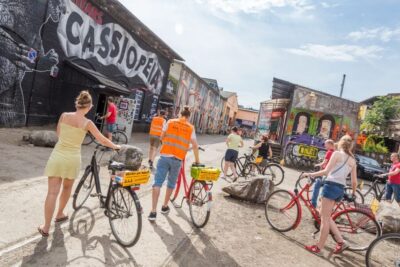
Alternative Bike Tour of Kreuzberg & Friedrichshain
Read our review →
Berlin Off-the-Beaten-Path Walking Tour: Kreuzberg, Mitte and Friedrichshain
Read our review →
Kreuzberg Berlin: Off the Beaten Track PRIVATE Walking Tour
Read our review →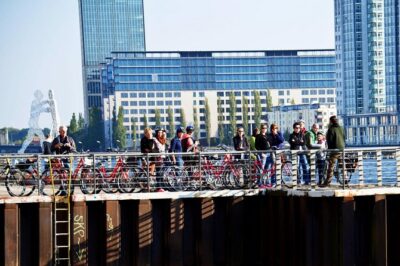
Experience the Alternative Kreuzberg on a Bike Tour
Read our review →
Browse the lists this tour appears in