
Reviewed · KREUZBERG & FRIEDRICHSHAIN TOURS
Berlin Off-the-Beaten-Path Walking Tour: Kreuzberg, Mitte and Friedrichshain
Berlin is fascinating because it refuses to stay in one story. This walking tour connects the city’s neighborhoods you might skip with the ideas that shaped them, from student protests to punk scenes and the music culture that still shows up on walls and in alleyways. Kreuzberg street life and Yaam Beach’s creative mix are the two things that really make this feel different from a standard history walk. One drawback to plan around: it’s a lot of outdoor walking, and the day can feel long if you pick a cold or rainy afternoon.
What I like most is that the tour is small and guide-led, so you get actual context, not just dates. Guides like Rhys and Lee are repeatedly praised for staying engaging and answering questions with real city perspective, not a script. The other consideration is practical: you’ll need an AB public transport ticket for the required tram or train legs, and the tour is scheduled around those moves.
Key highlights at a glance
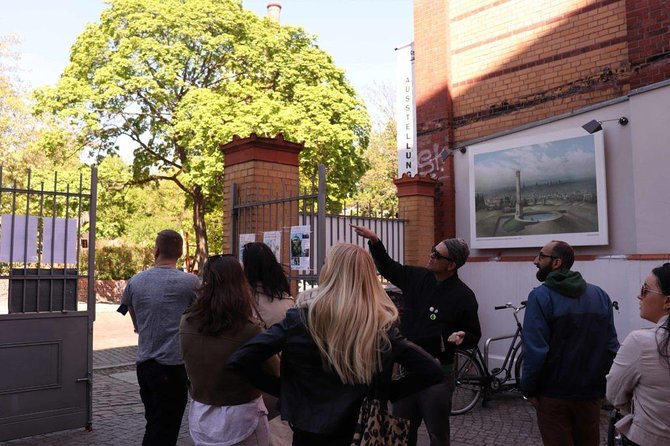
- Small group feel with a max of 20 people, so the guide can keep the pace interactive.
- Neighborhoods most people miss, including Kreuzberg, Friedrichshain, Prenzlauer Berg, and Mitte.
- Food culture, not a food tour, with currywurst and döner kebab stories plus a stop at Prater Garten.
- Counterculture timeline on foot, from 1960s student protests to Baader-Meinhof era and 1980s punk and May 1 riots.
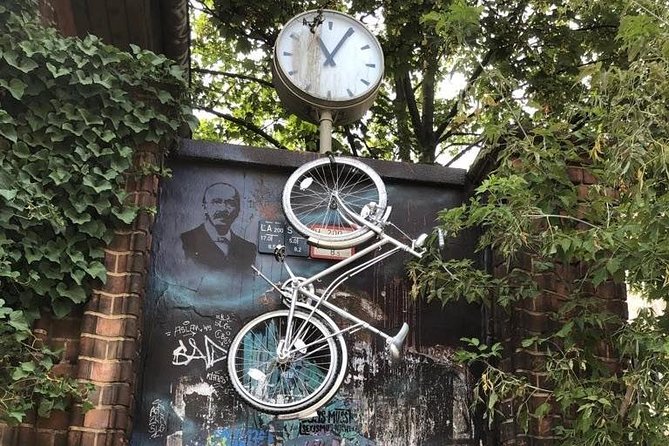
- Street art stops where you’ll learn what you’re looking at and why it matters locally.
- Ends at Yaam Beach, a creative, multicultural finish point that ties the whole walk together.
How Kreuzberg, Mitte, and Friedrichshain Work as a Single Berlin Story
This tour strings together parts of Berlin that sit close on a map but feel like different worlds on the sidewalk. You start in central Berlin and gradually shift into areas known for cultural mixing, alternative art, and creative resistance. The payoff is how quickly you learn to read the city: architecture, murals, markets, and even shop signs start to feel connected.
You’ll also get a tour version of Berlin’s personality. Instead of only the big government landmarks, the guide focuses on communities and subcultures that shaped everyday life, and you see how those stories still show up now. The strongest part is the balance: local neighborhood texture plus a clear timeline of political and artistic change.
More Kreuzberg and Friedrichshain tours:
- Kreuzberg: Culinary Food Tour
★ 4.5 · 770 reviews - Berlin: Kreuzberg Guided Walking Evening Tour
★ 4.7 · 555 reviews - Berlin: Alternative Bike Tour of Kreuzberg & Friedrichshain
★ 4.7 · 548 reviews
Meeting at Vapiano am Alex, Then Settling Into a 4.5-Hour Rhythm
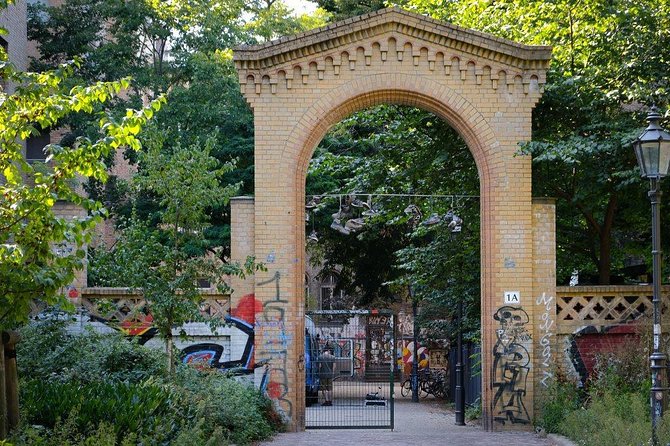
You meet at Vapiano am Alex, Rathausstraße 6 at 12:00 pm. The starting point is central and practical, which matters because a tour like this depends on smooth movement between neighborhoods. With a duration of about 4 hours 30 minutes, it’s long enough to feel like a real outing, not a quick walk around the block.
Also plan your timing around the outdoor parts. Several guides keep the pace relaxed, but you still spend real time on sidewalks and in alleyways. Comfortable walking shoes are not optional. If you’re the type who hates cold-weather suffering, pick a milder day and bring layers you can add or remove without stress.
One more logistics note that affects your planning: you should expect some tram or train legs during the walking route. That means you’ll need the required public transport ticket setup in advance, which I’ll cover next.
AB Tickets, Tram Legs, and Why This Tour Includes Transit
This experience requires AB transport tickets, and the day pass is recommended. That’s because the route crosses between neighborhoods smartly, rather than forcing every meter to be on foot.
Why this is good for you: you cover more ground than you could on your own without burning your whole afternoon on transit confusion. The trade-off is that you have to do a little prep. Bring your transport plan with you, and consider buying or loading your AB ticket before meeting time so you don’t lose momentum.
If you hate last-minute planning, this is where I’d stay organized. You can have a great guide and still waste time if you’re fiddling with tickets at the curb. Once you’re set, the tour flows.
Kreuzberg Street Corners: Turkish Community Life, the Jewish Quarter, and Guerrilla Gardens
Kreuzberg is one of the most rewarding places to learn Berlin, and this tour uses it like a living classroom. You’ll spend time around the area’s strong Turkish community, where daily life feels visible in shopfronts, eateries, and the overall neighborhood energy.
You’ll also connect that to Berlin’s Jewish quarter presence in the area. That matters because Kreuzberg’s story is not only “old vs. new.” It’s layers of migration, community building, and how neighborhoods respond to politics and history over time.
Then comes the part that makes this feel off the beaten path: the streets are dotted with signs of creativity and local ownership. You may see references to urban farms, guerrilla gardens, alternative art spaces, and organic markets. The guide turns those into evidence. Instead of telling you Berlin is creative, they show you where people literally create space, grow food, and make art in the cracks of the city.
Two things I like about this stretch:
- It helps you understand why Kreuzberg has long been associated with alternative culture.
- You get specific neighborhood texture, not generic platitudes.
More walking tours in Berlin:
- Discover Berlin Half-Day Walking Tour
★ 5.0 · 9,624 reviews - Berlin: Third Reich and Cold War 2 Hour Walking Tour
★ 4.9 · 6,830 reviews - Berlin: Discover Berlin Walking Tour
★ 4.9 · 5,998 reviews - Berlin’s Best: 2 Hour Walking Tour Third Reich and the Cold War
★ 5.0 · 5,486 reviews
Food Culture Stops Without Turning Into a Food Tour
This is where the tour feels like Berlin rather than a museum. You’ll learn about currywurst and döner kebab as key parts of Berlin’s food identity. Currywurst is a fried sausage with curry-seasoned ketchup, and it’s the kind of simple dish that carries big cultural meaning because it’s everywhere and yet still feels tied to local routines.
For döner kebab, the tour focuses on how Turkish-style gyros became popular in Berlin, and how that connects to the neighborhoods you’re walking through. That kind of context makes a casual street food story worth remembering.
There’s also a stop at Prater Garten, which is known as the city’s oldest beer garden. Even if you do not drink, the location is a strong setting for conversation. Beer gardens in Berlin aren’t only about beer. They’re social spaces with history and everyday rituals, and Prater Garten gives you that atmosphere as you continue the walk.
One practical note: food and drinks are not included. So treat the food moments as optional add-ons. If you budget for one meal or snack, you’ll be comfortable during the day.
Counterculture Timeline in Motion: Protests, Baader-Meinhof, Punk, and May 1 Riots
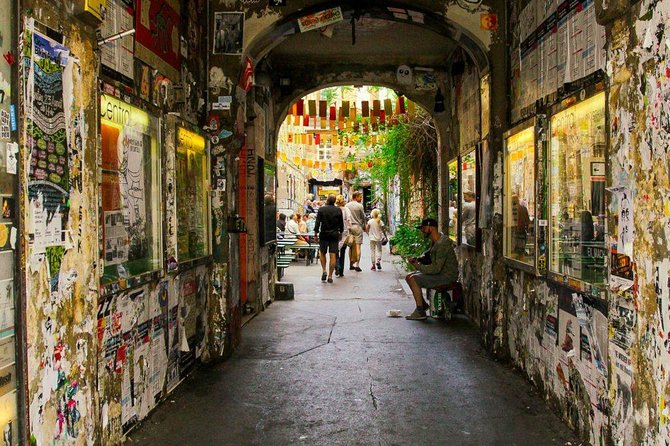
History here is not the quiet museum kind. The guide uses the neighborhoods as a timeline for how protest and rebellion kept changing shape.
You’ll hear about the 1960s student protest movement, how youthful activism and dissatisfaction turned into a wider political force. Then you move to the 1970s rise of Baader-Meinhof, a darker chapter that Berlin will not let you forget. The goal is not sensationalism. It’s understanding how ideas, fear, and conflict influenced the culture around them.
The tour continues into the 1980s, with the growth of punk and the May 1 riots. This is one of those areas where Berlin’s reputation makes sense because you see why it earned that reputation. Punk is not only music. It’s community identity, DIY energy, and a way to challenge authority, and the guide connects that to what was happening on the street.
I appreciate how this is delivered: the stories are attached to places, and the guide frames them as part of how Berlin’s neighborhoods became laboratories for resistance and creativity.
Music, Art, and the Creative Scene You Can Still See Today
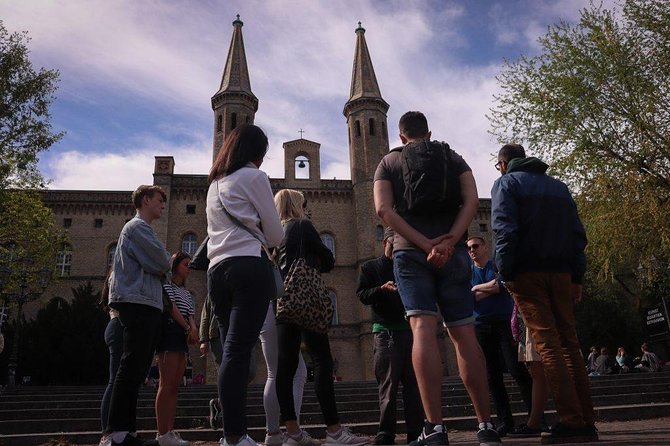
Berlin’s creative reputation isn’t only branding. It comes from music scenes, public festivals, and the art that appears in unexpected places.
The tour touches on Love Parade, the famous electronic music festival. Even if you never attended, you’ll understand why it became a symbol for a certain kind of Berlin energy: big sound, public participation, and identity built through shared culture.
You’ll also connect that broader music history to the street-level scenes around Yaam Beach, including the reggae, hip-hop, and rasta fans that helped shape the venue’s vibe. This is one of those moments where the tour connects past and present without pretending they’re the same.
If you love art, pay attention to how the guide talks about music as a social tool. It’s not just entertainment in these stories. It’s a way communities gather, express themselves, and push back against the idea that a city should only be orderly and official.
Street Art Stops: How to Look at Walls and Alleyways Like a Local
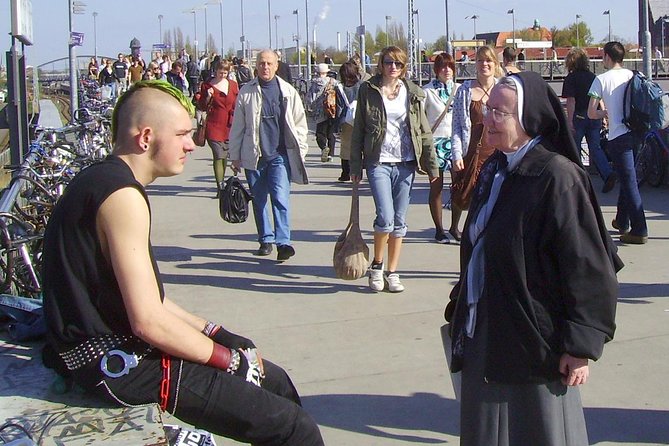
Street art is a big reason people join a tour like this, but the best part is learning how to look. You’re not only walking past murals and tags. The guide helps you interpret what you’re seeing and why different styles and messages show up where they do.
You’ll see street art across the neighborhoods connected to counterculture and alternative scenes. The guide explains how those images fit into the local identity, including the role of artists, alternative communities, and the shifting politics that shaped what people felt safe enough to say publicly.
This is also where guides like Reese and Jake stand out in the feedback: they bring humor, personality, and a sense that they live in the material, not just read it. When the guide’s energy matches the subject, street art stops being background and becomes the text of the neighborhood.
Yaam Beach Finish on Stralauer Allee: Ending With Diversity on Purpose
The tour ends at Yaam Beach, Stralauer Allee 34. That finish isn’t random. It acts like a bridge between everything you heard and the way Berlin shows itself today.
Yaam Beach is known for creative gatherings and an international crowd. By ending there, the tour highlights the city’s diversity, both ethnic and artistic, and it reinforces the theme that Berlin’s identity is shaped by many different communities working, partying, protesting, and making art.
If you like to keep momentum after tours, this ending also helps. You can usually stay nearby, grab something to eat, and continue exploring without feeling like you need a new plan from scratch.
Price and Logistics: Is $30.25 Worth It?
At $30.25 per person for about 4.5 hours, you’re paying for three things: a local guide, a tight route through multiple neighborhoods, and context that would be hard to assemble on your own in the same time.
Here’s my take on value:
- You get multiple neighborhood layers in one afternoon, which saves time.
- The guide’s focus on counterculture history plus street art interpretation is the kind of perspective you do not get from wandering randomly.
- The tour does not include food, so you’re free to budget for exactly what you want, but you should plan for at least one snack or meal of your own.
The only real “cost” beyond money is effort. You’ll walk a lot, and you’ll need the required AB ticket for the transit legs. If you’re traveling light, make sure you have what you need so you don’t lose time.
One more small heads-up from the experience details: the tour may finish a bit later in the broader area than you expect based on a printed end point. That usually isn’t a problem if you’re flexible, but if you have a strict appointment right after the tour, build in buffer time.
Who This Walking Tour Fits Best
This tour is best for you if:
- You want Berlin explained through neighborhoods, street life, and creative communities.
- You care about the city’s counterculture side, not only the official post-war narrative.
- You like guides who keep things lively. In the feedback, guides such as Rhys, Lee, Reese, Arnie, Antonio, Jake, and Jason are praised for engagement, storytelling, and humor.
It’s also a good fit if you’re returning to Berlin or already saw the big sights the day before. The themes here give you a different angle and help the city feel like more than a checklist.
Should You Book This Off-the-Beaten-Path Walking Tour?
Yes, I’d book it if your idea of a great Berlin afternoon includes street art, food culture stories, and the way political movements shaped real neighborhoods. The small group size, the mix of Kreuzberg with Friedrichshain and parts of Mitte, and the guide-led storytelling are the core strengths.
Skip it or choose another option if you hate cold outdoor walking or if you have no tolerance for transit planning. This tour is not a couch tour. It’s hands-on, on-foot Berlin, with tram and train segments that require your attention.
If you can handle that, this is an efficient way to see how Berlin became Berlin, and to leave with recommendations that point you toward more than the obvious tourist sights.
FAQ
How long is the Berlin Kreuzberg, Mitte and Friedrichshain walking tour?
It runs for about 4 hours 30 minutes.
What time does the tour start?
The start time is 12:00 pm.
What is the price per person?
The price is $30.25 per person.
Is the tour in English?
Yes, it is offered in English.
Where do I meet the tour?
You meet at Vapiano am Alex, Rathausstraße 6, 10178 Berlin, Germany.
Where does the tour end?
The tour ends at Yaam Beach, Stralauer Allee 34, 10245 Berlin, Germany.
Do I need public transport tickets?
Yes. AB transport tickets are required for the tour, and a day pass is recommended.
Are food and drinks included?
No. Food and drinks are not included.
How big is the group?
The maximum group size is 20 travelers.
Can I cancel for a full refund?
Yes, free cancellation is available. You can cancel up to 24 hours in advance for a full refund.
Recently added around Berlin
- Berlin Private Custom Walking Tour With A Guide (Private Tour)★ 4.5 · 8 reviews
- One Up to 3 Rickshaws(6 GUESTS)-Taylor Made Rickshaw Berlin Tour★ 5.0 · 20 reviews
- Moonshine Comedy – English Stand Up Comedy by the bay★ 5.0 · 11 reviews
- Private Half-Day Berlin Sightseeing Tour with a Minivan Including Short City Walks★ 5.0 · 31 reviews
- Private taxi tour to Potsdam and Sanssouci 6-8h★ 5.0 · 30 reviews
- Private City Kickstart Tour: Berlin★ 4.5 · 71 reviews
- Private tour of Berlin★ 5.0 · 15 reviews
- Private Tutankhamun’s Tomb Live Escape Room in Berlin★ 3.5 · 11 reviews
Kreuzberg & Friedrichshain Tours, compared.
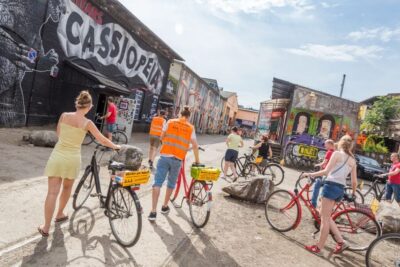
Alternative Bike Tour of Kreuzberg & Friedrichshain
Read our review →
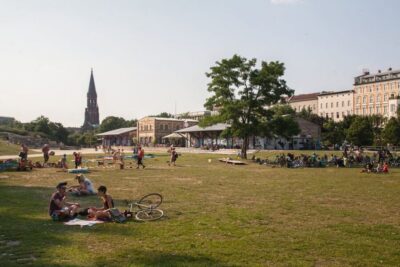
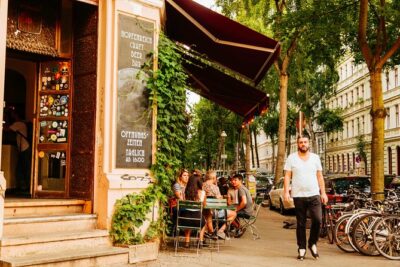
Kreuzberg Berlin: Off the Beaten Track PRIVATE Walking Tour
Read our review →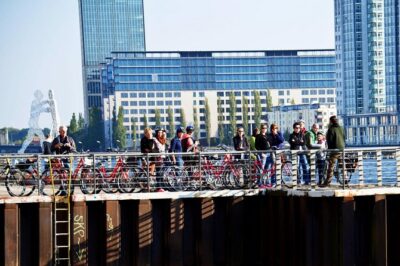
Experience the Alternative Kreuzberg on a Bike Tour
Read our review →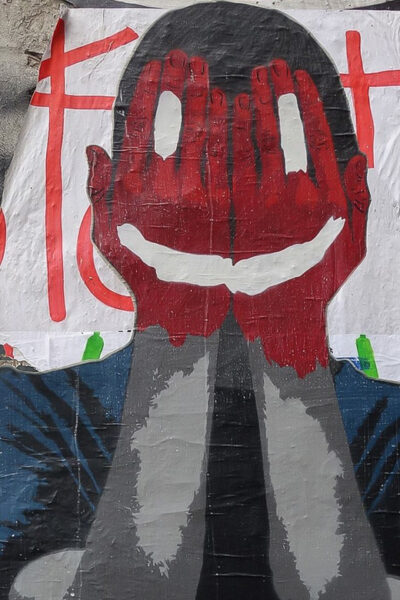
Browse the lists this tour appears in