
Reviewed · BERLIN WALL & COLD WAR TOURS
Wall Tour Berlin – Fates, Heroes & Love Stories
Berlin’s Wall is one of those facts that feels impossible until you see the geography. This tour stitches the story together in a very human way, moving you along key spots where the division was enforced minute by minute. I like that it stays story-driven, not lecture-driven, and I also like that you get a clear sense of how the border strip worked in real life. The main drawback to consider is reliability risk, since a small number of people reported a no-show or slow communication around the meeting point.
You’ll cover about 40 km worth of history in just about 2 hours, but the trick is focus. Instead of trying to teach everything, the guide zooms in on the mechanisms of control, the attempts to flee, and the cost paid by ordinary people. The tone is heavy, and it includes topics like deaths at the wall, Stasi propaganda involving young people, and coercion, so it’s not a casual stroll.
If you want a fast, guided way to understand why Berlin’s division lasted 28 years, this is a strong way to get your bearings fast, with just enough “how did they build this” detail to make the memorials click.
Key highlights you will feel right away
- Ghost stations explained as part of how the GDR controlled movement, even in places that looked like normal transit
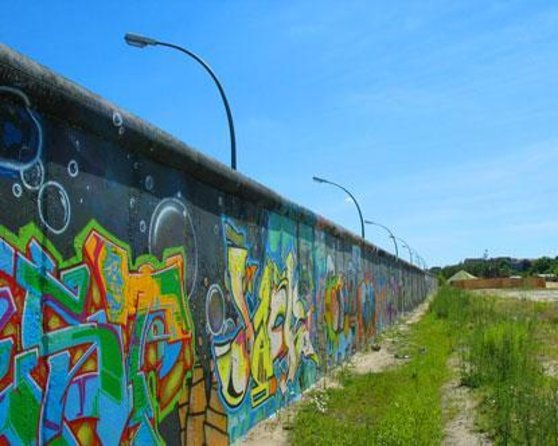
- Border strip construction made concrete, including what it was built to do and how it evolved after being sealed
- Real escape stories such as tunnel attempts and the jump of border guard Conrad Schumann
- Human cost at specific points, including deaths and the tragedies tied to windows and exits toward West Berlin
- Propaganda and psychological warfare, including the loudspeaker war and Stasi methods involving children and young people
A 2-hour guided walk that turns the Berlin Wall into stories you can picture
This tour is built like a guided timeline, but it’s grounded in physical places. You start near a S-Bahn station area and then move toward Bernauer Strasse, one of the most important stretches for understanding where the Wall hit everyday life. The guide connects what you see with what happened there, from how the border was sealed to why people risked everything to escape.
The value here is the pacing. Each stop is short, so you stay mentally sharp. You also get a mix of context and emotion: construction details, political lies, and the personal consequences for families and young people.
The group size cap of 25 travelers helps. You are not stuck in a giant crowd, and the guide can keep the narrative flowing without losing you in logistics.
More Berlin Wall and Cold War tours in Berlin:
- Berlin: Third Reich and Cold War 2 Hour Walking Tour
★ 4.9 · 6,830 reviews - Berlin’s Best: 2 Hour Walking Tour Third Reich and the Cold War
★ 5.0 · 5,486 reviews - Skip-the-Line: Berlin Wall Museum at Checkpoint Charlie
★ 4.1 · 2,041 reviews
Price and value: $19.66 for 2 hours with a mobile ticket
At $19.66 per person for roughly 2 hours, this can be a very good deal if you like guided storytelling and want to see the right memorial spots without spending the whole day mapping them yourself. You also get a mobile ticket, which is convenient when you are moving quickly across Berlin.
Most of the stops are listed as free admission. That matters because Berlin can nickel-and-dime you with memorial entry fees. Here, you mostly pay for the guide’s interpretation and the walk itself, not for repeated ticketing.
One practical watch-out: this kind of tour depends on weather. It requires good weather, and if it is canceled due to poor conditions, you should expect a different date offered or a full refund. Also, there is a minimum number of travelers, so sometimes the schedule can shift if they do not meet that threshold.
Where you start, where you end, and how to get there without stress
The start is at Elisabeth-Schwarzhaupt-Platz, 10115 Berlin. The tour ends at the Bernauer Strasse area by Oderberger Strasse, with the endpoint listed around Bernauer Strasse and the Oderberger Strasse corner, near Mauerpark.
You can plan it as a half-day add-on. After the tour ends near Mauerpark, you are already in a lively area for walking, grabbing a snack, or continuing onward by tram. The info specifically calls out the M10 tram to the main train station, which is handy if you want one clean transit link.
Because the end point is different from the start point, bring comfortable shoes. The tour is short, but it is still a guided walking experience along key Wall sites.
Stop-by-stop: how the tour builds understanding from ghost stations to Mauerpark
What makes this route work is the order. You do not start with the dramatic escapes. You start with the system, then you move into the consequences.
Still in Berlin, but a different kind of day:
- Berlin: Reichstag, Dome and Government District Guided Tour
★ 4.7 · 18,288 reviews - Berlin: 1-Hour City Tour by Boat with Guaranteed Seating
★ 4.3 · 16,993 reviews - Berlin: Boat Tour Along the River Spree
★ 4.4 · 11,252 reviews - Discover Berlin Half-Day Walking Tour
★ 5.0 · 9,624 reviews
Nordbahnhof S-Bahn area and the idea of ghost stations
Your first stop is at the entrance to the Nordbahnhof S-Bahn station on Gartenstrasse, where the guide frames the concept of “ghost stations.” These were transit stations that looked like part of normal city life, yet they were treated as controlled space by the East. The effect was unsettling: you could be near the machinery of daily travel, but you were not truly free to use it.
This is a smart opener. It teaches you early that the Berlin Wall was not just a wall you could point at. It was a system that shaped movement through transport, paperwork, and fear.
The Berlin Wall memorial and the question of how it was built
At the start of the Berlin Wall Memorial, you get a brief overview of how a wall like this could even be constructed and normalized. The point is not just dates. It’s the logic: how control becomes infrastructure.
This part helps you understand why later stories are so intense. When you know what the Wall was designed to do, the escape attempts stop feeling like random drama and start feeling like rational desperation.
The lie that came before the seal: June 1961 to August 1961
One of the most striking lessons comes next. On June 15, 1961, Walter Ulbricht used a famous line, saying nobody intended to build a wall. Less than two months later, on August 13, 1961, the border was sealed and the Wall was built.
This moment matters because it shows how political language and reality collided fast. You are not just learning history, you are watching propaganda collide with concrete.
The “window” of victims and the uncertainty around numbers
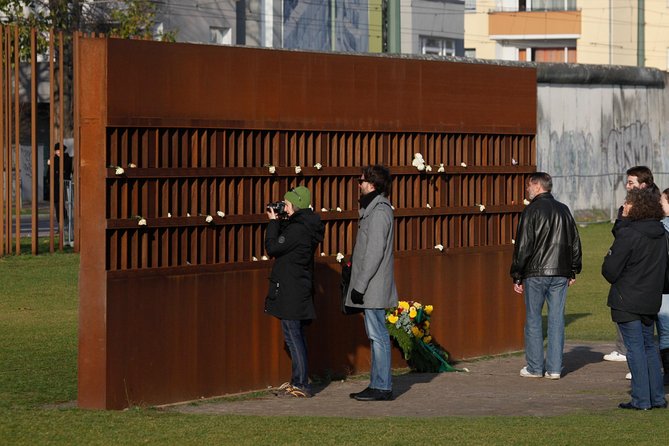
At the memorial window, the guide points out that at least 140 people died at the Berlin Wall between 1961 and 1989, and that the exact number of victims is unknown. Since the number is uncertain, the focus becomes human, not statistic-heavy.
The strongest takeaway here is that the Wall did not fail sometimes. It was designed to prevent escape, and people paid for that design with their lives.
Bernauer Strasse viewing platform: seeing the border strip in one view
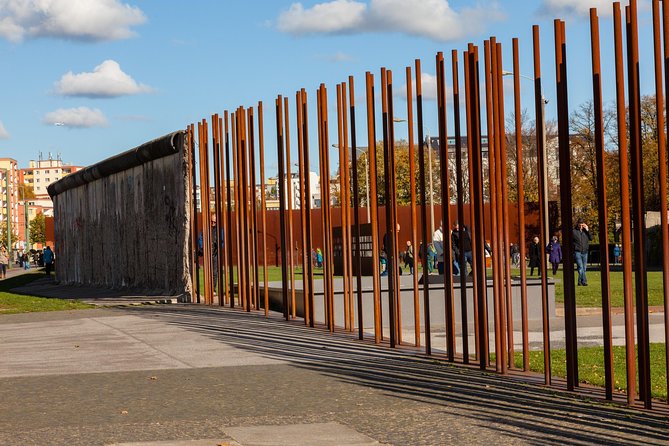
Next, the guide accompanies you to a viewing platform with an overview of the border strip on Bernauer Strasse. This is where you can finally connect the dots between earlier explanations and the physical geography.
From a viewpoint, you start understanding why certain escape routes made sense and why other routes were impossible. It’s also where you can imagine what families saw, night after night, standing near windows or doors that were no longer theirs to open.
Ackerstraße and the church that served both sides
At Ackerstraße, you reach the chapel of the Church of Reconciliation, where the church once stood in the middle of the border strip. The guide tells you how people from East and West Berlin celebrated services together there.
This stop is quietly powerful because it shows how normal life tried to continue, even when the border hardened. Then the story turns to what happened to the church after the border was closed, which underlines how division reshaped even shared spiritual space.
Passenger agreements and the darker side of control
At another memorial point, you hear about passenger agreements between West Berlin institutions and the GDR, designed to make the wall more permeable. On paper, that sounds like a compromise.
Then the guide shifts to a harder truth: the GDR abused children and young people as part of its propaganda. This is not the kind of history you can get just by reading plaques. It’s the interpretation that makes it land, because it explains how the Wall affected people who were not making political decisions.
If you are sensitive to uncomfortable topics, this is the section where your emotions may shift. I found it clarifying, but it is not light.
Windows, exits to West Berlin, and the tragedies of jumping
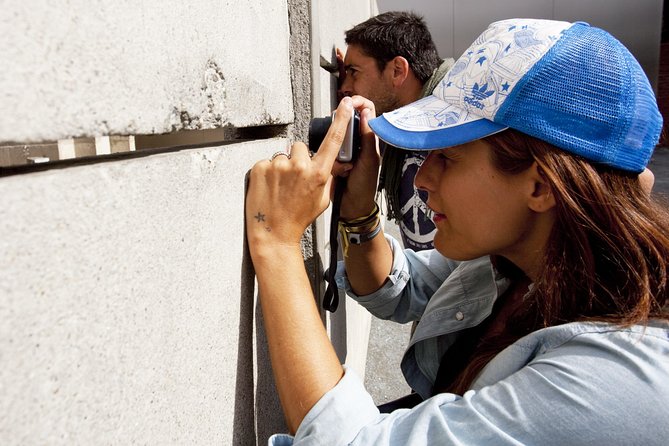
Along Bernauer Strasse, there used to be residential buildings where windows and exits faced West Berlin, while the houses themselves were on GDR territory. The guide explains how fear and despair drove hundreds of people to jump out of windows to their deaths.
There is also time to look at pictures and videos at your leisure. That pause is important. You are not being rushed through the darkest part of the story, and you can decide how much you want to take in.
Tunnel escapes and propaganda playbooks
You then cover tunnel escapes from the 1960s, including one tunnel that became legendary and is located near the border house. The guide shows you there, and the story includes how the GDR used these escape attempts for propaganda purposes.
This section reframes “escape” as more than a physical act. It’s a media event in a propaganda state. You learn how the GDR tried to control the narrative, even when people were trying to break out.
Conrad Schumann and the escape that turned into a symbol
The jump of border guard Conrad Schumann is another anchor point. The guide tells his story, including that he was wanted until the fall of the GDR.
This is one of those moments where Berlin history stops being abstract. You realize that even guards were trapped inside a system that rewarded cruelty and punished disobedience.
Kidnappings tied to the NVA and People’s Police
The tour also addresses kidnappings as a core part of GDR operations. It specifically notes that former employees of the NVA and People’s Police were targeted by criminal gangs acting on orders from the GDR, with the goal of dragging them back to the GDR. One kidnapping even ended in death.
This is the tour going beyond the wall as a physical barrier, into the broader reach of the security apparatus. It helps you understand how division lived in fear, not just in concrete.
Loudspeaker war: when politics entered your ears
Another stop shifts to a less expected angle: the loudspeaker war. The guide explains how West and East Berlin made each other’s lives hell using sound.
It’s a small detail in the sense that it sounds less dramatic than tunnels or jumps, but it is a big insight. It teaches you the Wall was not only seen, it was heard. Nightly noise, harassment, and psychological pressure were part of the everyday environment.
Ending at Mauerpark and the fall of the Wall story
The tour ends at Mauerpark. Like the Wall’s construction, the fall of the Wall has its own story, and your guide brings you there to close the loop.
Ending at a public, active area helps your brain do something useful. You don’t just leave with tragedy. You leave with a sense of how Berlin reclaimed space after 1989.
What I think you will love most about this style of Wall tour
This isn’t just “here is a wall, here is a photo, move on.” It is organized around the way the Wall changed people’s choices.
You will likely appreciate three things most:
- A clear chain from policy to street life. You see how decisions became structure, and structure became danger.
- Escape stories with consequences. Tunnels and Conrad Schumann are not treated as movie moments, they are connected back to the system that pursued people afterward.
- The inclusion of love stories. The tour promises one or two love stories because they happened, too. Even with heavy content, that choice signals something important, division did not erase relationships.
That mix is why this kind of tour can be meaningful even for people who already know the basic timeline.
The one big consideration: reliability at the meeting point
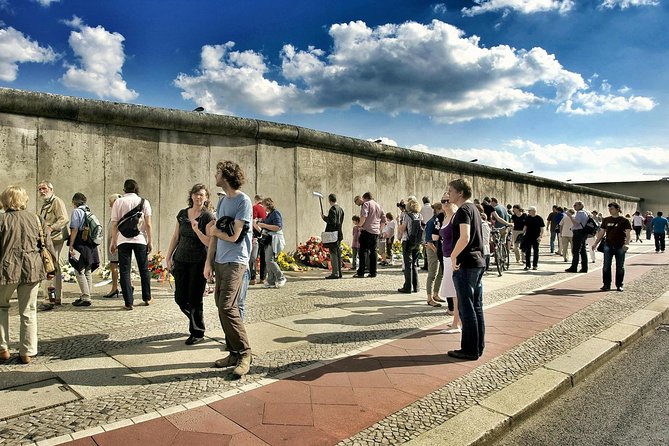
The strongest caution I can give is practical. The average rating is 4.1 out of 5 from 9 entries, and a couple of reports describe a no-show, plus delayed or unhelpful communication attempts.
I cannot predict what will happen on your date, but you can reduce risk:
- Arrive a few minutes early.
- Keep an eye out for the group and the guide at the start location.
- If you are using the mobile ticket, make sure your confirmation details are accessible offline.
If you are someone who hates surprises, it is worth building in a little buffer so you are not stuck with a wasted start time if anything goes wrong.
Who this tour is best for
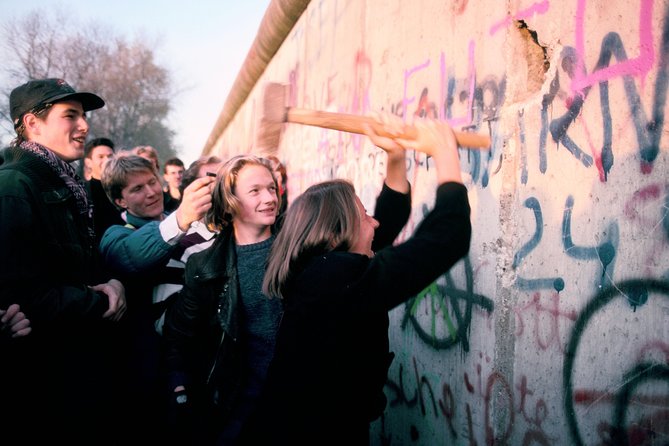
This fits best if you want a focused, guided overview in a short time window, and you like your history with specific human stories attached.
It might be less ideal if:
- You want a museum-style deep dive with long stops.
- You need a fully relaxed, low-emotion experience.
- You dislike walking between memorial points, even though the tour is only around 2 hours.
Still, for many first-timers to Berlin, it is a smart way to connect major Wall memories without spending half the day on planning.
Should you book Wall Tour Berlin – Fates, Heroes & Love Stories?
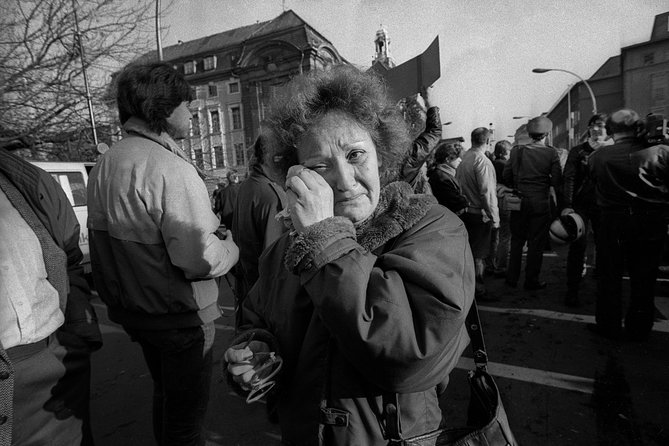
I would book it if you want a 2-hour, story-led Wall orientation that covers ghost stations, Bernauer Strasse views, tunnels, Conrad Schumann, propaganda tactics, kidnappings, and the quieter human side like the Church of Reconciliation and promised love stories. At $19.66 with a mobile ticket and free memorial stops, the value is strong for what you get.
I would think twice if the idea of a possible no-show would seriously ruin your schedule. If your trip is tight, add buffer time around the start. If you have flexibility, this is the kind of tour that can make Berlin’s Wall make sense in a way reading alone often does not.
If you book, show up early, dress for the weather, and come with the mindset that this is history with real consequences, not just scenery.
FAQ
How long is the Wall Tour Berlin experience?
It runs for about 2 hours.
What does the tour cost?
The price is listed as $19.66 per person.
Where does the tour start and where does it end?
It starts at Elisabeth-Schwarzhaupt-Platz, 10115 Berlin, and ends around Oderberger Straße, near the Bernauer Strasse corner by Oderberger Strasse, close to Mauerpark.
Is the ticket mobile?
Yes, the tour uses a mobile ticket.
Are the memorial stops included or do I need to buy tickets?
The stops at the Berlin Wall Memorial are listed as free admission tickets.
How large are the groups?
The tour has a maximum of 25 travelers.
When should I book?
On average, it is booked about 30 days in advance.
What if the weather is bad?
The experience requires good weather. If it is canceled due to poor weather, you are offered a different date or a full refund.
What is the cancellation window for a full refund?
You can cancel up to 24 hours in advance for a full refund.
Does the tour require a minimum number of travelers?
Yes, it requires a minimum number of travelers. If it is canceled because the minimum is not met, you are offered a different experience or a full refund.
Recently added around Berlin
- Berlin Private Custom Walking Tour With A Guide (Private Tour)★ 4.5 · 8 reviews
- One Up to 3 Rickshaws(6 GUESTS)-Taylor Made Rickshaw Berlin Tour★ 5.0 · 20 reviews
- Moonshine Comedy – English Stand Up Comedy by the bay★ 5.0 · 11 reviews
- Private Half-Day Berlin Sightseeing Tour with a Minivan Including Short City Walks★ 5.0 · 31 reviews
- Private taxi tour to Potsdam and Sanssouci 6-8h★ 5.0 · 30 reviews
- Private City Kickstart Tour: Berlin★ 4.5 · 71 reviews
- Private tour of Berlin★ 5.0 · 15 reviews
- Private Walking Tour: Behind the Iron Curtain and Berlin Wall★ 5.0 · 10 reviews
Berlin Wall & Cold War Tours, compared.
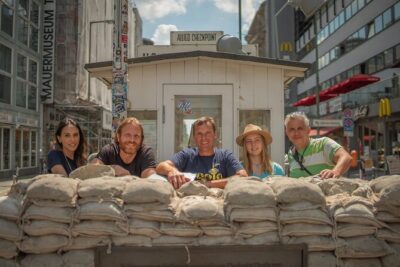
Berlin’s Best: 2 Hour Walking Tour Third Reich and the Cold War
Read our review →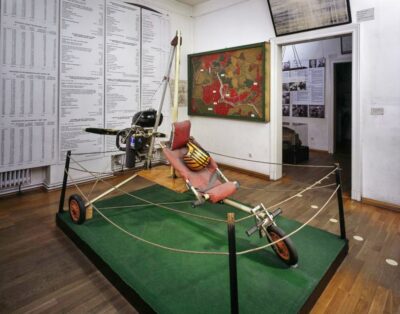
Skip-the-Line: Berlin Wall Museum at Checkpoint Charlie
Read our review →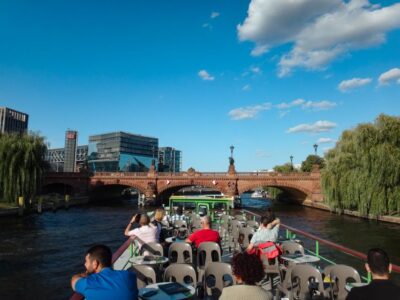
2.5-Hour East Side Boat Cruise with Commentary
Read our review →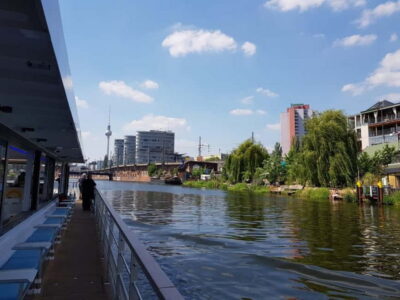
East Side Gallery Spree Cruise in a Solar Catamaran
Read our review →
Cold War, Berlin Wall, Spies and the East Side Gallery
Read our review →
Guided Bike Tour of the Berlin Wall and Third Reich
Read our review →Browse the lists this tour appears in