
Reviewed · THIRD REICH & WW2 HISTORY WALKS
Berlin Third Reich & Cold War Walking Tour With A Guide
This walking tour is interesting because you move from symbols of German unity to some of the darkest chapters of the 20th century without wasting time. I especially like the tight 5-stop route and the chance for high-detail explanations from a live guide. One consideration: it is a city walk focused on seeing key sites, not a slow, inside-the-museum deep dive.
You’ll cover the big names in Berlin history in about 2 hours, starting at Unter den Linden. The tour runs in multiple languages, and you get a mobile ticket so you can keep things simple once you arrive. Heads up, some stops deal with heavy subject matter, so pace yourself mentally as well as physically.
Key things to know before you go
- 5 landmark stops in about 2 hours: Brandenburg Gate, Reichstag, Holocaust Memorial, Hitler’s bunker site, and Topography of Terror
- A guide-led story, not just a route: expect detailed context and clear explanations that connect eras
- Mobile ticket and free access to the main stops: the itinerary lists free admission tickets at each stop
- Outdoor plus indoor museum time at the end: Topography of Terror includes both, so you get the best finish line
- Small group or private option: you stay with your group, guided, with flexibility to ask questions
- Family-friendly in tone, heavy in content: guides have been praised for engaging explanations even for kids
A smart way to connect Third Reich and Cold War Berlin fast
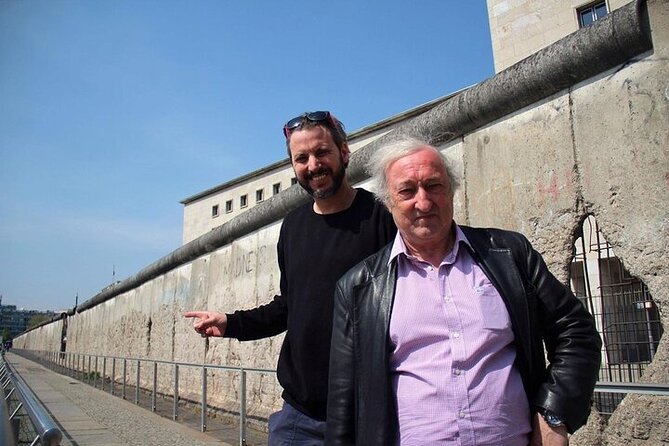
Berlin can feel like a history quiz with too many answers. This tour helps you sort it out. Instead of bouncing across the city on your own, you get a guided sequence that links regime power, mass murder, collapse, and the long shadow of the Cold War.
The route is practical: it is concentrated and designed for walking. You’ll spend roughly the same amount of time at each stop, which keeps the tour moving and prevents the common problem where you linger too long at one site and then rush the rest. For me, the best value here is the guide’s ability to explain how the sites relate, not just what you are looking at.
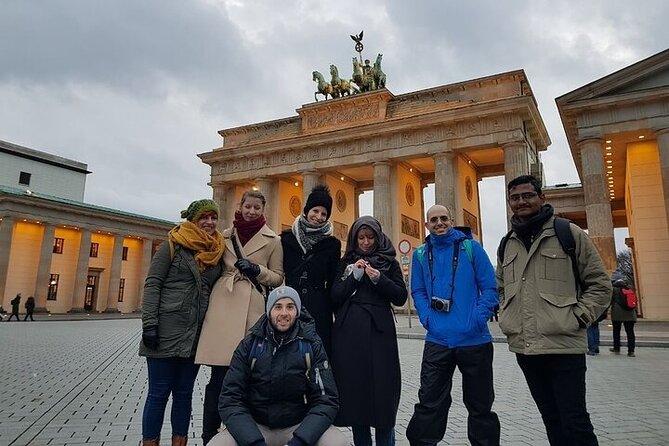
You also get a nice mix of visual anchors. You start with the Brandenburg Gate, which is built for photo-worthy symbolism. You end at Topography of Terror, where the story becomes physical in a more direct way. And between those, you pass through the Holocaust Memorial and key locations tied to the Nazi leadership and state security apparatus.
Other Third Reich and WW2 history walks in Berlin:
- Berlin: Third Reich and Cold War 2 Hour Walking Tour
★ 4.9 · 6,830 reviews - Berlin’s Best: 2 Hour Walking Tour Third Reich and the Cold War
★ 5.0 · 5,486 reviews - Third Reich Berlin: Hitler and WWII Walking Tour
★ 5.0 · 3,301 reviews
Meeting at Unter den Linden, then walking the story in sequence
The tour meets at Unter den Linden 77, and it ends back at the meeting point. That matters because you can plan the rest of your day without guessing transit routes. Since the meeting area is near public transportation, you can also stitch this walk into a bigger Berlin itinerary without stress.
Time-wise, think of it like a two-hour historical sampler. Each stop is allotted about 24 minutes. That includes walking between points and time to absorb what the guide is explaining. If you are the type who likes to linger, this format still works, but you may want to add extra time on a second visit later, especially around Topography of Terror and the Holocaust Memorial.
Group size is another practical point. There is a group option with a minimum of 2 participants, and the tour is also described as private so only your group participates. The net effect is less noise than a massive bus tour and more room to ask questions.
Stop 1, Brandenburg Gate: unity symbol, and the Wall in the background
You start at the Brandenburg Gate, the famous neoclassical gateway that has become a national symbol of unity and peace. What makes it more than a landmark is the way Berlin’s 20th century history clings to it. This is a site tied to major events, including the fall of the Berlin Wall.
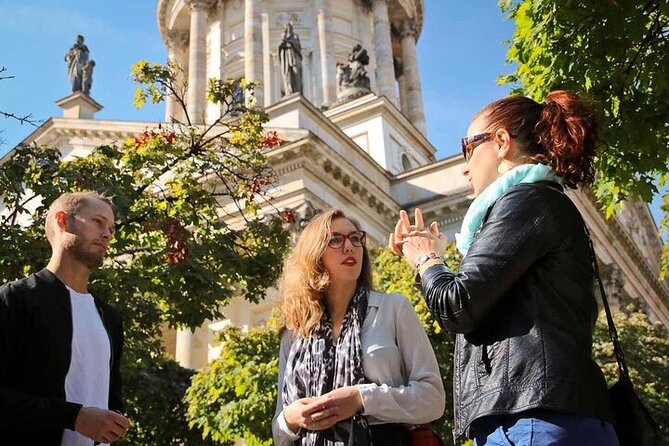
As you look at the Gate, ask your guide to point out the layers: what the monument represents in the long arc of German history, and how the surrounding area became a stage during the Cold War era. The value of having a guide here is that you can connect what you see in front of you to what happened just a few blocks away in the past.
A drawback to keep in mind: this stop is short. You can photograph it, get context, and move on, but you cannot expect a full education on the Wall’s fall in 20-some minutes. The goal is orientation, not overload.
Stop 2, the Reichstag Building: from German Parliament to panoramic views

Next comes the Reichstag Building, home to Germany’s Parliament. The architecture is historic, and the building is also known for its modern glass dome, which offers panoramic views of the city.
Even if you are not spending hours inside, the guide-led context helps you understand why this building matters in Berlin’s political story. You are standing in the setting for a country defining itself after dictatorship and division. The glass dome theme is often used to symbolize transparency and a shift away from closed-off power, so it pairs well with the tour’s overall narrative.
Practical thought: this stop is also a visual checkpoint. If you plan to view the dome or do any extra paid entry, the tour info signals that monument and museum entry is not included. Still, the Reichstag area is a strong place to get your bearings, and the guide’s explanation can help you decide later if you want more time inside.
More Berlin Wall and Cold War tours in Berlin:
- Skip-the-Line: Berlin Wall Museum at Checkpoint Charlie
★ 4.1 · 2,041 reviews - Berlin: 2.5-Hour East Side Boat Cruise with Commentary
★ 4.4 · 2,016 reviews - Berlin: East Side Gallery Spree Cruise in a Solar Catamaran
★ 4.0 · 1,039 reviews - Cold War, Berlin Wall, Spies and the East Side Gallery
★ 5.0 · 1,024 reviews
Stop 3, the Holocaust Memorial: walking 2,711 slabs with context
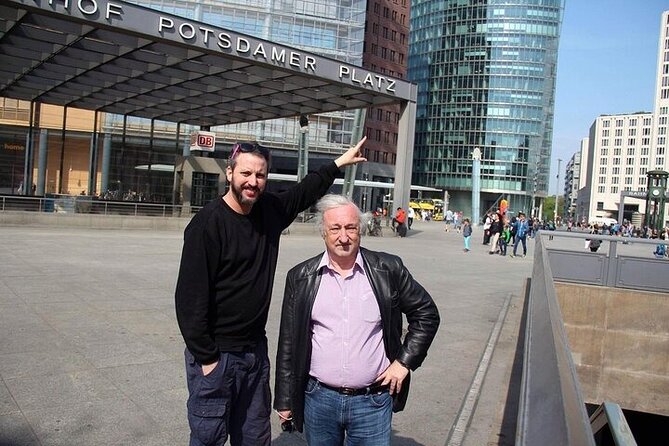
The Holocaust Memorial, officially the Memorial to the Murdered Jews of Europe, is one of the most important stops on the entire route. It is made up of 2,711 concrete slabs, and the design forces you to slow down, because the space feels like it changes as you move through it.
You’re not just looking at an artwork here. You are walking a memorial built around absence and loss. The guide’s role is crucial because this site can stir strong emotion fast, and it is easy to misread your own reaction as confusion. A good explanation keeps the focus where it belongs, on the lives lost and the system that led to it.
A note on pacing: this is not the right place to treat the stop like a photo break. You’ll have about 24 minutes, so use it for quiet attention. If you want more time, plan to come back on your own later, when you can pause longer without the tour schedule.
Stop 4, the Berlin Story Bunker area: the final days of WWII
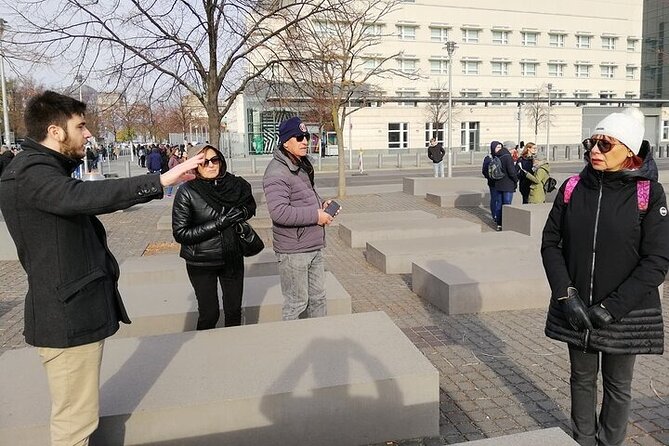
After the memorial, you head to the site of Hitler’s bunker, now marked with an information board. This is where the timeline tightens. The tour explains the final days of World War II and the fall of the Third Reich, so the emotional tone shifts from remembrance toward collapse and consequence.
This stop works best when you treat it as a grounding moment. You are stepping into an area strongly tied to how the Nazi regime behaved at the end, when decisions were frantic and reality was catching up. An information board is not the same as a full exhibit, but a guided walk helps you understand what you are looking at and what it represents.
Consideration: because it is an outdoor, marked site, the experience is more about interpretation than about seeing rooms and artifacts. If you want heavy detail in a more formal museum setting, make sure you save your energy for the final stop at Topography of Terror, which is built for that kind of learning.
Stop 5, Topography of Terror: Gestapo and SS, then the facts hit harder
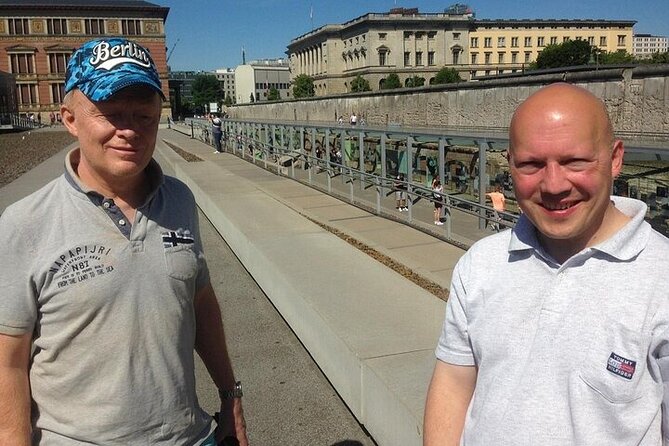
The tour ends at Topography of Terror, located on the former site of the Gestapo and SS headquarters. This is where the story turns from landmarks into documents, photographs, and historical explanation. The site includes both outdoor and indoor museum areas, so you get a mix of open-air context and more focused exhibit spaces.
The big draw here is that you are dealing with the mechanisms of terror, not just the aftermath. A guide can help you navigate what you see, especially when the exhibits explain how the Gestapo functioned and how the Nazi regime carried out repression.
This is also the stop where your time budget matters most. The tour gives you a set window, but if you feel pulled in, you might want to add extra time after the walk. The good news is that the tour ends back at the meeting point, so you can choose to keep exploring nearby without a long trip.
If you are doing this tour because you want a clear understanding of Nazi institutions and Cold War-era consequences, this is the finish line that makes it feel worth it.
What you actually get for the price
The price is $42.06 per person for about 2 hours. On paper, that can sound like a lot for a walking route. In practice, the value comes from three things.
First, you are paying for live interpretation. History sites in Berlin are dense, and a guide helps you avoid the common problem of seeing everything and understanding nothing. Second, you get structured pacing across five sites in a short time, so you do not waste half a day figuring out what order makes sense. Third, you get ticket help from the team for visits you want to add.
Now, a reality check. The tour information says monument and museum entry is not included. At the same time, the itinerary lists free admission ticket for each stop. That can mean you can access key areas without paying extra for the basic visit. Still, if you decide you want extra paid entry, you should expect additional costs. I’d treat this tour as a guide-led overview, then budget separately if you choose add-on museum time.
Also helpful: group discounts are mentioned, and the average booking is 45 days in advance. That’s a sign this route is in demand, so if you want a specific language or your travel dates are tight, book early.
How to get the most out of the guide on a heavy route
You will be walking through subject matter that can feel intense. So the best way to get value is to come ready to ask simple questions. Things like: What changed from the Nazi period to the postwar era? How does this building or site connect to policy and everyday control? Why is this monument designed the way it is?
Guides on this tour have been praised for being engaging and very prepared, with detailed facts and precise explanations. One guide name that comes up is Carlo, described as engaging and even working well for families with kids. That kind of teaching skill matters because it helps you stay focused and understand the why behind what you see.
Practical tip: if your group includes kids, keep your expectations realistic. This is still a serious tour with serious topics. But a strong guide can make the explanations clear enough that kids can follow along without zoning out.
Language options and the small comforts that make it easier
The tour offers in-person guidance in English, Spanish, French, German, and Italian. You also get help from the team to book tickets for the visits you want. Add in a mobile ticket, and it becomes a lot simpler than the typical self-guided scramble.
It is also described as a city tour, not a tour inside the monuments. That might sound limiting if you are hoping for long indoor exploration at every stop. But it also keeps the experience moving and makes it easier to fit into a day with other Berlin highlights.
If you know you want to spend extra time inside a specific site, use this walk to decide where you want to return. That is often the smartest way to avoid spending your only full day in Berlin trapped in a queue.
Who should book this tour
This tour is a strong match if you want a focused, guided route through Berlin’s Third Reich and Cold War story, without spending hours coordinating transit and trying to understand complex history on your own.
It is also a good choice if you like structured itineraries. Five stops in about two hours is a clear plan, and it gives you a workable outline for deeper follow-ups later.
If you are looking for an extended museum day where you can sit with exhibits for hours, this may feel too short. The tour is built to be a walk-and-learn overview. For that deeper museum time, you will likely want to add Topography of Terror again on your own or book a different format that includes more inside-the-exhibit hours.
Should you book this Berlin Third Reich and Cold War walking tour?
I’d book it if you want to get your bearings fast and you care about understanding how Berlin’s political and human tragedies connect across time. The main stops cover the big anchors, and the guide input is the difference between collecting landmarks and actually grasping the story.
Don’t book it if you only want a long, self-paced museum experience, or if you strongly prefer to explore historical sites without explanations. Also, because the content can be emotionally heavy, make sure your group is ready for that tone before you commit.
If you’re on the fence, here is the deciding shortcut: if you want a guided storyline in a tight window, this tour fits. If you want slow, deep, inside-only exploration, plan a different add-on day for museums and exhibits.
FAQ
How long is the Berlin Third Reich and Cold War walking tour?
It lasts about 2 hours.
How much does the tour cost?
The price is $42.06 per person.
Where does the tour start and end?
It starts at Unter den Linden 77, 10117 Berlin, Germany, and ends back at the meeting point.
Is this tour offered in English?
Yes. The tour is offered in English, with in-person guide options also available in Spanish, French, German, and Italian.
Is the tour private?
It is described as a private tour/activity, with only your group participating. A group option also exists with a minimum of 2 participants.
Are tickets and museum entries included?
Monument and museum entry is not included. The itinerary lists free admission tickets for the main stops, and the provider also offers help booking tickets for any desired visits.
Will I have food or drinks during the tour?
No. Drink or food is not included.
Do I need to arrange transportation?
Transportation is not included. The meeting point is near public transportation.
What is the cancellation policy?
Free cancellation is available up to 24 hours in advance for a full refund.
Do I get a mobile ticket?
Yes, the tour includes a mobile ticket.
If you tell me your travel month and whether you prefer English or another language, I can suggest a good time of day for this walk and what to pair it with nearby.
More Walking Tours in Berlin
- Discover Berlin Half-Day Walking Tour
★ 5.0 · 9,624 reviews - Berlin: Discover Berlin Walking Tour
★ 4.9 · 5,998 reviews - Berlin: Hidden Backyards Guided Walking Tour
★ 4.8 · 5,360 reviews - Berlin: Alternative Berlin Walking Tour
★ 4.6 · 1,204 reviews
Recently added around Berlin
- Berlin Private Custom Walking Tour With A Guide (Private Tour)★ 4.5 · 8 reviews
- One Up to 3 Rickshaws(6 GUESTS)-Taylor Made Rickshaw Berlin Tour★ 5.0 · 20 reviews
- Moonshine Comedy – English Stand Up Comedy by the bay★ 5.0 · 11 reviews
- Private Half-Day Berlin Sightseeing Tour with a Minivan Including Short City Walks★ 5.0 · 31 reviews
- Private taxi tour to Potsdam and Sanssouci 6-8h★ 5.0 · 30 reviews
- Private City Kickstart Tour: Berlin★ 4.5 · 71 reviews
- Private tour of Berlin★ 5.0 · 15 reviews
- Private Walking Tour: Behind the Iron Curtain and Berlin Wall★ 5.0 · 10 reviews
Third Reich & WW2 History Walks, compared.
Berlin’s Best: 2 Hour Walking Tour Third Reich and the Cold War
Read our review →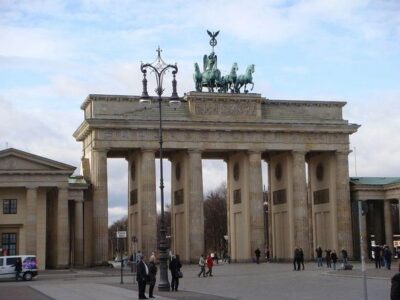
Third Reich Berlin: Hitler and WWII Walking Tour
Read our review →

Berlin Third Reich Sites: Half-Day Walking Tour
Read our review →
Guided Bike Tour of the Berlin Wall and Third Reich
Read our review →
Hitler’s Germany: Berlin During the Third Reich & WWII
Read our review →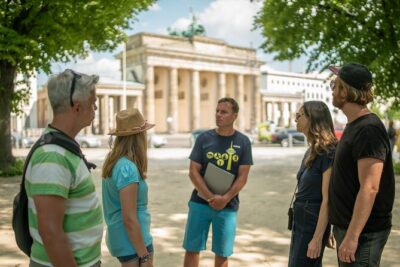
Private Walking Tour Berlin Third Reich Hitler and World War II
Read our review →Browse the lists this tour appears in