
Reviewed · THIRD REICH & WW2 HISTORY WALKS
Berlin Third Reich Sites: Half-Day Walking Tour
Berlin’s Third Reich sites are heavy stuff, but this half-day tour is a smart way to handle it. I like the efficient route, and I like that a historian guide gives context you would not pick up just wandering. The tour also keeps the rest of your day open for your own Berlin route.
One consideration, though, is that you are dealing with persecution and mass murder. You will also cover a lot of ground in about four hours, so plan on comfy walking shoes and a steady pace.
Key takeaways before you go
- A historian guide who stays in English and answers questions along the way, not just on autopilot
- Covering major sites in one morning block, so you do not waste time figuring out connections
- Memorial stops for multiple victim groups, including Jewish, Roma and Sinti, and people persecuted for sexuality
- Topography of Terror and the Prinz-Albrecht-Strasse area, focused on how the regime worked
- Hitler assassination attempt context, via the Johann Georg Elser Sculpture stop
- Small group size up to 25 people, which usually makes it easier to ask questions without shouting
Berlin Third Reich Sites, the half-day format that actually works
This is the kind of tour that makes Berlin feel less like a scavenger hunt and more like a guided timeline. In four hours, you go from the rise of the Nazi Party toward the end of World War II, with key sites tied to what happened to real people.
The best part for me is that it balances speed with explanation. You are not just moving between plaques. You are listening to a guide connect the dots: how the dictatorship formed, how state institutions enabled violence, and what that means when you stand in front of memorials.
Another practical win: it is a half-day tour. You get your bearings fast, then you still have hours left for the rest of Berlin at your own pace.
Other Third Reich and WW2 history walks in Berlin:
- Berlin: Third Reich and Cold War 2 Hour Walking Tour
★ 4.9 · 6,830 reviews - Berlin’s Best: 2 Hour Walking Tour Third Reich and the Cold War
★ 5.0 · 5,486 reviews - Third Reich Berlin: Hitler and WWII Walking Tour
★ 5.0 · 3,301 reviews
Where you start, where you finish, and why it matters
The tour starts at Neue Promenade 3, 10178 Berlin, and it ends at Platz d. Republik 1, 11011 Berlin. Start time is 10:00 am, and it runs for about 4 hours on foot.
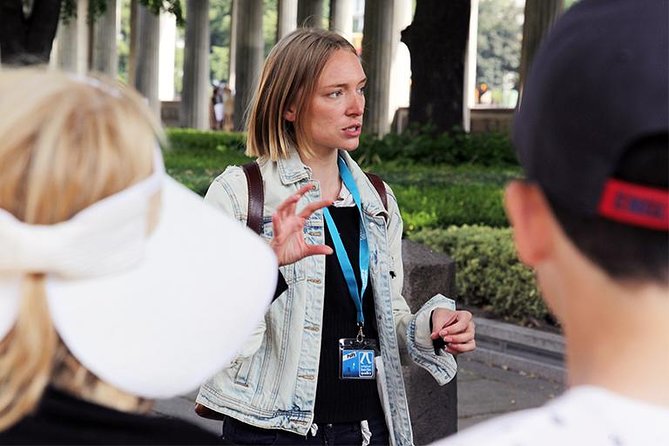
Why I think this is a good setup for first-timers: you begin near central transit and end in the parliament area, close to the Reichstag. That means when you finish, you can keep exploring nearby without needing to re-plan your day.
One small cost note that you should factor in: the tour does not include the AB Zone transport ticket (listed as about €3.80). If you are already using transit that day, you can treat this as part of your normal Berlin planning. If you are not, it is still an easy add-on, since the sites are in manageable walking-and-transit range.
What the guide does at the start, and how you stay oriented
The tour begins with a setup at the start point. Your guide introduces Adolf Hitler and the Nazi Party, and explains the dictatorship and violence that shaped Germany between 1933 and 1945.
This matters because it changes how you read the places. Without that framing, some sites can feel like random stops in a city. With it, you notice patterns: how power gets built, how institutions act, and how the consequences show up in Berlin streets and memorials.
You also get an opportunity to ask questions. The tone is usually careful and sensitive. Many people praise certain guides for that balance, especially guides like Peter, Tom, Hannah, Gregor, Giles, and Eran, who are repeatedly mentioned for being open with questions and for handling the subject with appropriate care.
Stop-by-stop: Otto Weidt and the other side of history in Berlin
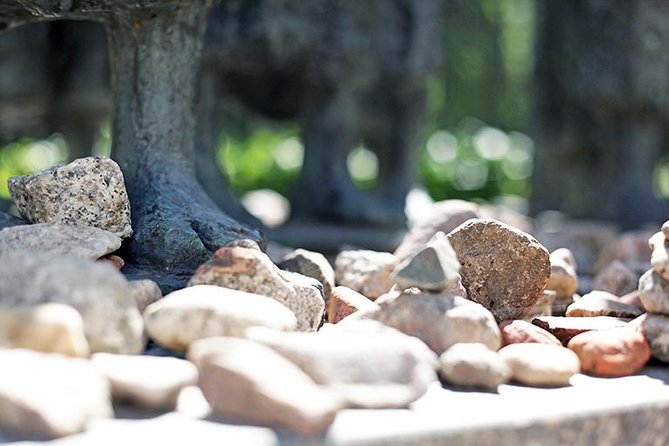
Stop 1: Museum Blindenwerkstatt Otto Weidt (5 minutes, free)
This first stop is short on purpose. It gives you an early anchor and sets a tone: Berlin’s Nazi era is not only about offices and armies. It also includes stories of people living through, resisting, or being affected in ways that are easy to miss if you only focus on the headline sites.
Even in five minutes, a good guide can help you look at the site without rushing past it. If you are sensitive to heavy topics, starting with an educational museum stop can feel like an easier entry point before you move into the most intense memorial areas.
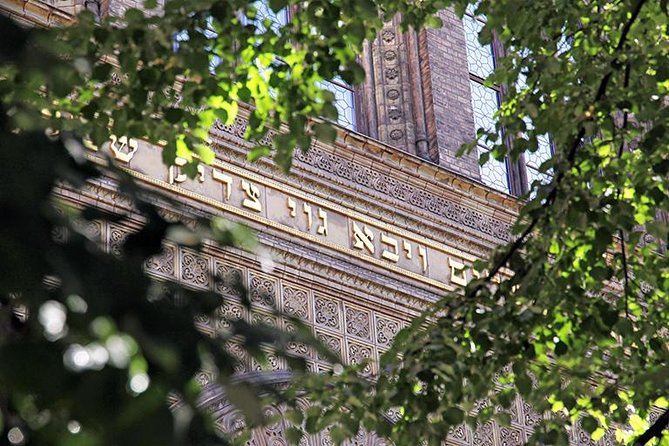
Stop 2: Stiftung Neue Synagoge Berlin – Centrum Judaicum (5 minutes, free)
Next comes the Jewish community context, again in a quick stop. This is the kind of location where the guide’s explanations can help you understand that the Nazi regime did not arrive in a vacuum. It targeted and reshaped Jewish life in Berlin over time.
If you want to get more out of this stop, listen for the guide’s framing, not just the location details. That framing will help when you later stand at deportation-linked places and Holocaust memorials.
More walking tours in Berlin:
- Discover Berlin Half-Day Walking Tour
★ 5.0 · 9,624 reviews - Berlin: Discover Berlin Walking Tour
★ 4.9 · 5,998 reviews - Berlin: Hidden Backyards Guided Walking Tour
★ 4.8 · 5,360 reviews - Berlin: Alternative Berlin Walking Tour
★ 4.6 · 1,204 reviews
Anhalter Bahnhof to Topography of Terror, where the story gets stark
Stop 3: Anhalter Bahnhof (5 minutes, free)
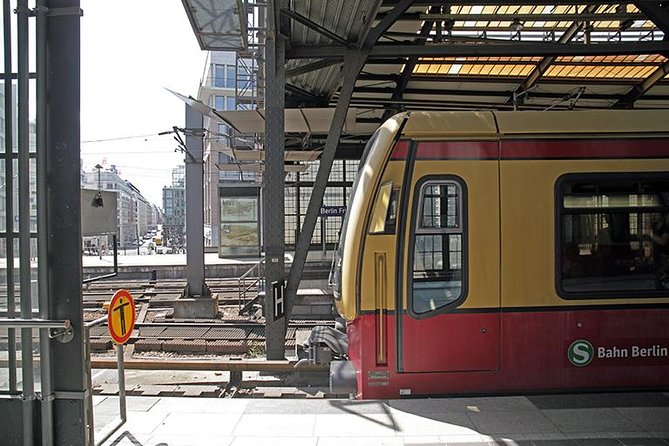
You then reach the ruins of Anhalter Bahnhof. This is a key site for understanding deportations, since many of Berlin’s Jewish residents were deported from there to concentration camps.
Even though the stop is brief, it sets a hard fact in your mind: the Nazi system was not only ideology and propaganda. It was logistics, transport, and organized removal.
Stop 4: Topography of Terror (15 minutes, free)
This is one of the most important segments on the walk. The guide connects the former SS and Gestapo headquarters at the former Prinz-Albrecht-Strasse to how the regime operated.
Fifteen minutes is enough time for a guided mental model, but not enough to treat it like a museum visit where you can wander forever. That is part of the value here. You get focused interpretation, then you keep moving.
One practical tip: if you tend to read slowly, do not panic. You can catch the big themes from the guide’s pacing, and then later, if you want more, you can return on your own time.
Prinz-Albrecht-Strasse era meets the aviation command, and you see the machinery
Stop 5: Aviation Ministery of Berlin (10 minutes, free)
This stop focuses on the former Ministry of Aviation and the consequences of Nazi rule for Jewish people and for Sinti and Roma communities. The guide also ties it to the former German Air Force headquarters, the Luftwaffe.
This is a valuable pivot because it shows how persecution connects to everyday state power. It is easy to think of Nazi violence as something that only lived in police and camps. This stop helps you see how it spread through multiple sectors.
The best tours are the ones that keep you asking, Why did the regime need that, and what did it enable? A solid historian guide keeps that question alive without turning it into a lecture you lose interest in.
Johann Georg Elser to the memorial stops, how the tour handles emotion
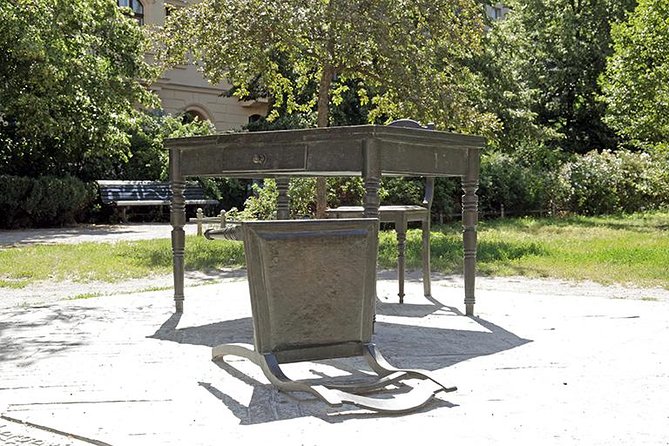
Stop 6: Johann Georg Elser Sculpture (5 minutes, free)
You get a stop tied to an attempt on Hitler’s life, via the Johann Georg Elser Sculpture.
This matters because it adds an angle beyond victims and perpetrators. It reminds you that people recognized the danger and acted, even though the regime kept control and terror going.
Even at five minutes, the guide can change how you interpret the site. Instead of treating it as just a statue, you understand what it represents in the broader timeline.
Stop 7: Holocaust Memorial – Memorial to the Murdered Jews of Europe (10 minutes, free)
Then comes the most widely recognized memorial on the route. The guide explains the site, and the time is set aside for you to take it in without rushing.
Ten minutes may sound short, but it is long enough for a guided explanation plus a personal moment to stand still. This is where the tour becomes less about facts on a page and more about how Berlin asks you to remember.
If you want to make this stop meaningful for yourself, slow down on your own. Let the guide finish, then spend a minute or two quietly absorbing the space.
Stop 8: Monument to Homosexuals Persecuted Under National Socialist Regime (10 minutes, free)
Next is a memorial specifically for people persecuted under the Nazi regime for sexuality.
I really like that this tour does not reduce the tragedy to only one category of victims. It gives you a broader view of how Nazi persecution targeted multiple groups for reasons rooted in ideology and control.
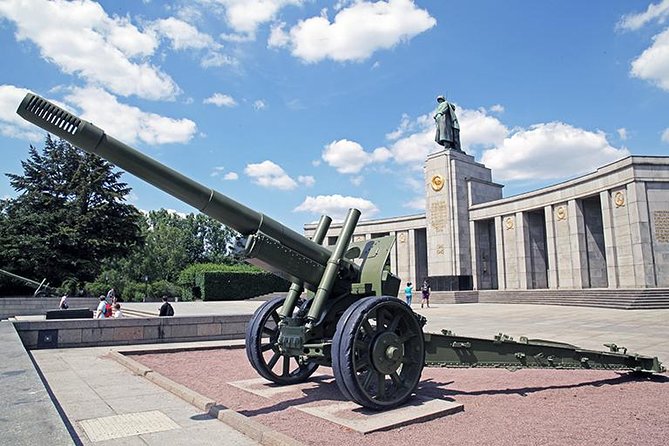
Stop 9: Soviet Memorial Tiergarten (10 minutes, free)
You continue to the Soviet Memorial in Tiergarten, which the guide explains as part of the story of Nazi-era violence and its aftermath.
This stop expands the lens beyond the immediate German and Jewish focus. It helps you see World War II as a multi-front catastrophe with long consequences.
Finishing at the Reichstag, closing the timeline
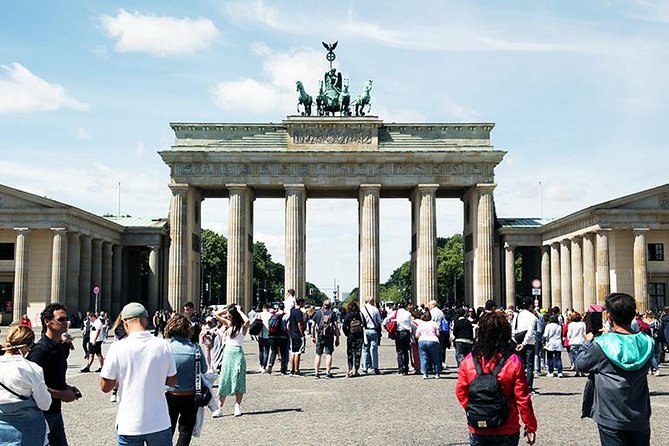
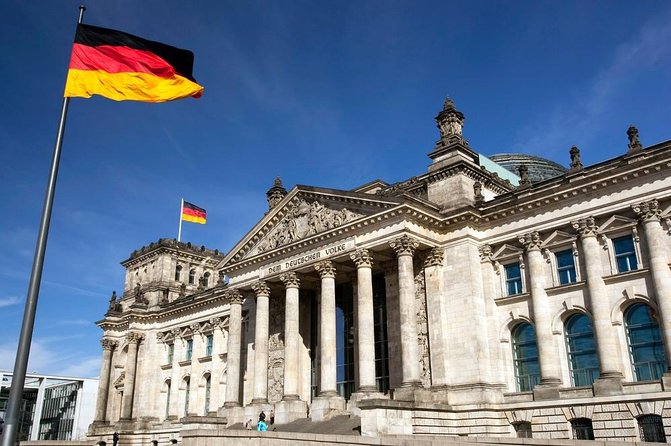
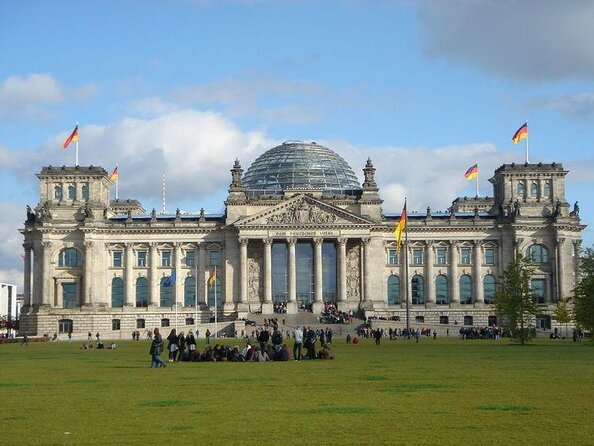
Stop 10: Reichstag Building (10 minutes, free)
The tour concludes outside the Reichstag. The guide explains how the Nazis came to power in 1933 and what the final days of World War II looked like in 1945.
Ending here works well because the Reichstag area is tied to major political turning points. Even if you never step inside, the guided wrap-up gives you a clear sense of the before-and-after.
Then you are done. You are not stuck on a late schedule, and you can choose how to spend the rest of your day, whether that means another museum, a long café break, or a follow-up walk to places you want to see in depth.
The small-group style that helps you actually learn
The tour keeps the group to a maximum of 25 travelers. That size usually makes a difference: the guide can slow down when people need time, and you can ask questions without feeling like you are interrupting a machine.
This is also where the guide quality shows. Many people specifically call out guides like Glen, Tom, and Peter for being open to questions and easy to hear, plus other guides such as Hannah for making the four hours move quickly with strong explanations.
A few reviews also mention a careful mix of emotion and thought, sometimes with humor used sparingly to keep the group steady. That matters on a topic this dark. You need the facts, but you also need a guide who can manage the group’s energy so everyone can keep up.
Price and value: what you pay for, and what you do not
The tour price is listed at $21.77 per person, for about 4 hours with a professional guide speaking perfect English.
Here is why I think it is good value. You get a historian-guided route through major sites that would take a lot longer to connect on your own. You also get guided time at multiple memorials, not just one or two photo stops. The guide is the main expense, and the walking route keeps the cost low.
On top of that, the itinerary lists free admission tickets for the stops, including Topography of Terror and multiple memorials. So you are not paying extra entry fees at each stop.
What is not included is the AB Zone transport ticket (around €3.80). If you are already planning transit that day, it is a minor add-on, but it is still a real cost you should remember.
Who should book this tour, and who should think twice
This tour fits best if you want a structured introduction to Berlin during the Nazi era and you prefer learning from a guide rather than piecing together sites alone.
It is also a good option if you have limited time. A half-day is enough to get a solid overview of how Nazi power grew and how it affected Jewish people, Sinti and Roma communities, and other targeted groups, while still leaving you time to explore the rest of Berlin independently.
Think twice if you know you are not up for emotionally heavy topics. This is not a light or breezy walk. The time is short at each stop, but the theme is severe.
Also consider your stamina. You will be walking in all weather conditions, and the tour keeps moving. Reviews repeatedly point out the need for comfortable shoes, so plan for real walking time, not sightseeing at stroller pace.
Should you book the Berlin Third Reich Sites half-day walking tour?
Yes, if you want a guided, time-efficient route through some of Berlin’s most significant Nazi-era locations, with memorial stops that cover more than one victim group. The combination of a historian guide, a route that covers a lot in four hours, and the chance to ask questions makes it a strong first step for many visitors.
Skip it if you want a long museum-style experience or if you are looking for an upbeat history walk. This is about responsibility and remembrance, and the pace assumes you are ready for walking and reflection.
FAQ
FAQ
How long is the Berlin Third Reich Sites half-day walking tour?
It is about 4 hours.
What language is the tour in?
It is offered in English, and the guide speaks perfect English.
Where do I meet the guide?
The meeting point is listed as Neue Promenade 3, 10178 Berlin, Germany.
Where does the tour end?
The tour ends at Platz d. Republik 1, 11011 Berlin, Germany.
What time does the tour start?
The start time is 10:00 am.
Is the transport ticket included?
No. An AB Zone transport ticket is not included, and it is listed at about €3.80, available from the station at the meeting point.
Are entrance fees included at the stops?
The itinerary lists free admission tickets for the stops, and the tour includes the guided experience, but transport is not included.
Does the tour run in bad weather?
Yes. It operates in all weather conditions, so dress appropriately.
How big is the group?
The tour has a maximum of 25 travelers.
What is the cancellation policy?
Free cancellation is available up to 24 hours in advance for a full refund. Canceling less than 24 hours before start time does not get refunded.
Recently added around Berlin
- Berlin Private Custom Walking Tour With A Guide (Private Tour)★ 4.5 · 8 reviews
- One Up to 3 Rickshaws(6 GUESTS)-Taylor Made Rickshaw Berlin Tour★ 5.0 · 20 reviews
- Private Half-Day Berlin Sightseeing Tour with a Minivan Including Short City Walks★ 5.0 · 31 reviews
- Private taxi tour to Potsdam and Sanssouci 6-8h★ 5.0 · 30 reviews
- Moonshine Comedy – English Stand Up Comedy by the bay★ 5.0 · 11 reviews
- Private City Kickstart Tour: Berlin★ 4.5 · 71 reviews
- Private tour of Berlin★ 5.0 · 15 reviews
- Private Tutankhamun’s Tomb Live Escape Room in Berlin★ 3.5 · 11 reviews
Third Reich & WW2 History Walks, compared.
Berlin’s Best: 2 Hour Walking Tour Third Reich and the Cold War
Read our review →
Third Reich Berlin: Hitler and WWII Walking Tour
Read our review →
Guided Bike Tour of the Berlin Wall and Third Reich
Read our review →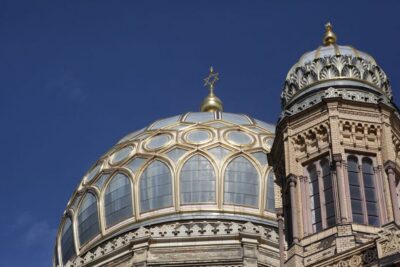
Hitler’s Germany: Berlin During the Third Reich & WWII
Read our review →
Private Walking Tour Berlin Third Reich Hitler and World War II
Read our review →
Hitler’s Berlin The Rise & Fall Guided Walking Tour
Read our review →Browse the lists this tour appears in