
Reviewed · THIRD REICH & WW2 HISTORY WALKS
Third Reich Berlin: Hitler and WWII Walking Tour
Berlin has a way of being both ordinary and haunted. This walking tour is interesting because it links the big, grim decisions of the Third Reich to the exact streets and buildings where they happened, then follows the final Soviet push through the city.
I really like how the route combines high-impact landmarks with the “how did this work?” context, from propaganda sites to the places tied to military command. Second, I like that the guide’s stories are tied to what you see, so stops like the Reichstag and Hitler’s bunker location feel less like facts on a list and more like a sequence of events you can picture. Guides you may see named include Maria, RU, Paul, Tom, and Ciarán, and their common theme is making the whole timeline easier to follow.
One drawback to plan for: it is a mostly outdoors walk, and you can be standing around in cold, wind, and winter light. Also, the Reichstag stop does not include an admission ticket, so you should expect some viewing from the outside, not a guaranteed interior visit.
Quick Hits: What You’ll Remember After This 3-Hour Walk
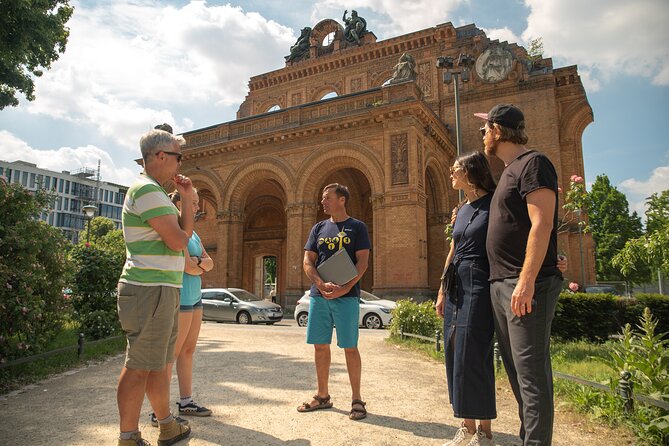
- Hitler’s bunker location and the surrounding official Nazi-government footprint, including the nearby Reich Chancellery context
- Goebbels’ propaganda headquarters area and the mechanics of Nazi messaging in everyday city life
- Trains to Life, Trains to Death memorial, putting deportation into a human scale
- The Reichstag as both a democracy warning and a WWII turning point, tied to the 1933 fire and the Soviet flag in 1945
- Tiergarten Soviet War Memorial, where the symbolism is blunt and unavoidable
- Topography of Terror, focused on the SS and Gestapo system behind persecution
Start at Friedrichstrasse, Then Get Oriented the Berlin Way
You meet near Reichstagufer 17, 10117 Berlin, then head out toward the core sites that shaped the Third Reich. The tour runs about 3 hours, in English, with a group capped at 25. You get a mobile ticket, which keeps things simple once you are on the move.
The best part of starting this way is orientation. Berlin can feel huge and confusing, even when you know the neighborhoods. A guide turns the walk into a map of power: who planned what, who carried out orders, and where the city’s civilians got caught in the middle.
The pace is steady, not a museum sprint. One practical note I will stress: bring layers and comfortable shoes, because you are outdoors for most of the experience. One guide approach that comes up a lot with this route is handling key reveals at the right moment, so you stay curious rather than just “crossing off” locations.
Other Third Reich and WW2 history walks in Berlin:
- Berlin: Third Reich and Cold War 2 Hour Walking Tour
★ 4.9 · 6,830 reviews - Berlin’s Best: 2 Hour Walking Tour Third Reich and the Cold War
★ 5.0 · 5,486 reviews - Berlin: Third Reich, Hitler, and WWII Walking Tour
★ 4.9 · 1,133 reviews
Friedrichstrasse to Wilhelmstrasse: Following Power Through German Government Streets
Early on, you get an overview around Friedrichstrasse Station, then you move into the broad story of Nazi rule through the places where it was organized. This is where the tour does something more useful than sightseeing. It shows you how dictatorship runs on offices, communications, and control of institutions.
You are also pointed toward Wilhelmstrasse, the kind of street that sounds boring until you realize it housed multiple crucial ministries and leadership offices. In the Nazi era it functioned like a command hub, tied to war planning and to the persecution that came wrapped in “administration.” Afterward, much of what stood there was destroyed or repurposed, but the area still carries the weight of what those buildings represented.
This is also where the guide connects the “big history” to daily life. You hear about Berliners dealing with air raids, and about how propaganda and official policy shaped what people believed, feared, or tolerated. It is the difference between learning World War II as dates and learning it as a system that squeezed real lives.
Trains to Life, Trains to Death: Deportation Made Visible
One stop hits hard in a quiet way: Trains to Life, Trains to Death. This memorial focuses on the deportation of Jews from Berlin to Nazi concentration camps. The topic is heavy, but the value here is that the site forces you to think about process, not just events.
It is not about abstract numbers. It is about people being forcibly taken from their homes, placed on trains, and sent to their deaths. That “rails and schedules” feeling is exactly what makes it chilling, because it shows how atrocity was made routine.
You stop for a short moment, but it is the kind of stop that changes how you look at the rest of the route. After this, you will likely notice how often Nazi power is framed like theater, while the victims experienced a cold machine.
The Reichstag: Where Democracy Was Attacked, Then Symbolically Fell
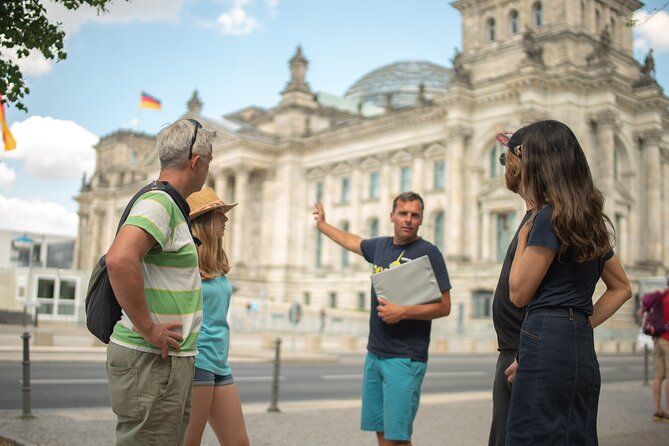
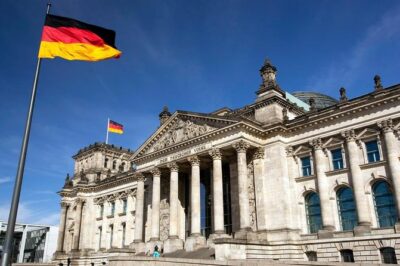
The Reichstag Building is one of Berlin’s most important political symbols, and it is also a master class in how regimes use crisis. In 1933, a fire ravaged the Reichstag, and the Nazis treated it as a pretext to consolidate power, suspend civil liberties, and dismantle democratic checks. In other words, violence plus propaganda plus legal control equals dictatorship.
Then comes 1945, when the Soviet flag was raised over the Reichstag after intense fighting in Berlin. That is why the building matters even if you have seen photos before. It is not just “a historic building.” It is the physical marker of both the rise and the defeat of Nazi Germany.
One planning point: Reichstag admission is not included. So do not count on a full interior visit being included in your ticket. Still, the stop is worthwhile for the context and the symbolism, and the guide’s explanation helps you read the building’s meaning in both time periods.
More walking tours in Berlin:
- Discover Berlin Half-Day Walking Tour
★ 5.0 · 9,624 reviews - Berlin: Discover Berlin Walking Tour
★ 4.9 · 5,998 reviews - Berlin: Hidden Backyards Guided Walking Tour
★ 4.8 · 5,360 reviews - Berlin: Alternative Berlin Walking Tour
★ 4.6 · 1,204 reviews
Soviet Memorial in Tiergarten: War Cost, in Stone and Symbol
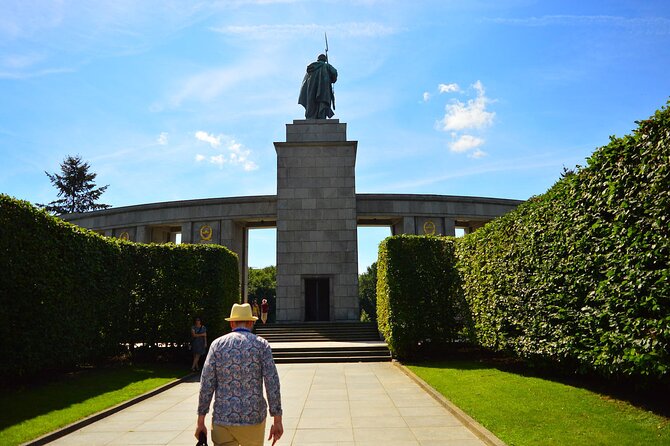
Next you head to the Soviet War Memorial in Tiergarten. This stop commemorates Soviet soldiers who fought and died in the Battle of Berlin in 1945.
The design is direct: a large Soviet soldier statue holding a flag stands over two fallen Nazi soldiers. You are also in a cemetery setting, which makes the stop feel like a real memorial rather than a dramatic photo op.
Why I like this stop on a walking tour: it provides balance. Too many WWII tours jump straight to the Nazi story and forget the scale of the fighting and the human cost on all sides. The memorial reminds you that Allied victory was paid for with blood, and that Berlin’s final days were brutal for everyone caught there.
Brandenburg Gate and the Holocaust Memorial: Germany’s Public Face and Private Horror
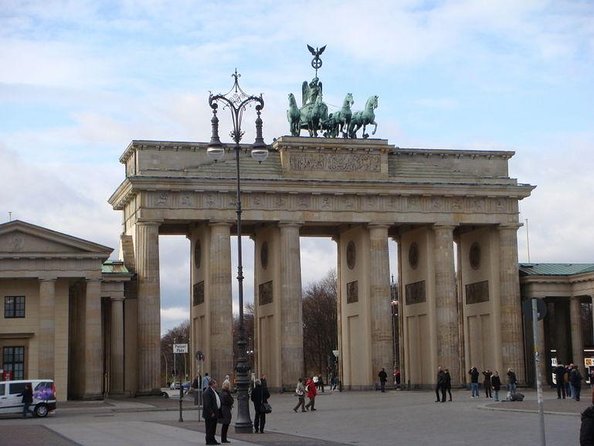
After Tiergarten, you loop toward major landmarks, starting with the Brandenburg Gate. During the Nazi era, the gate was used in propaganda and public rallies, and it was decorated with swastikas. Today it is tied to German reunification, but the tour keeps you honest about the layered meaning behind the famous arch.
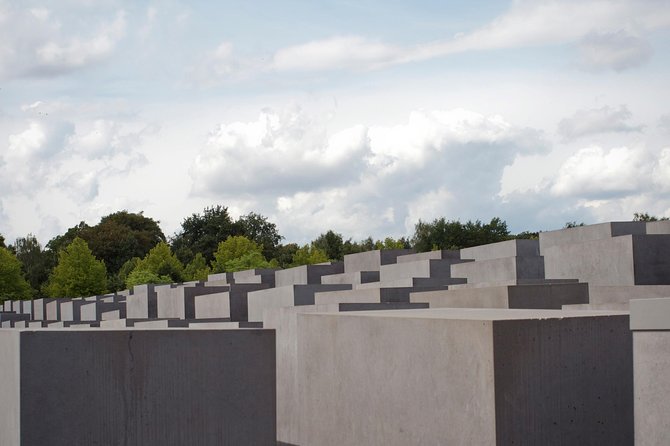
Then you reach the Holocaust Memorial, Memorial to the Murdered Jews of Europe. This is the field of 2,711 concrete slabs that create an uneven, disorienting grid. You walk through it, and the design does something surprisingly effective. It makes you feel small and unsure in a way that fits the subject matter.
This is not the kind of site you “finish.” You pause, take it in, and let the experience settle. On a tour like this, it also acts as a turning point, because the route has been explaining ideology and institutions, and now it brings you back to the victims and the scale of murder.
Hitler’s Bunker Location: The Final Days, Told Where They Happened
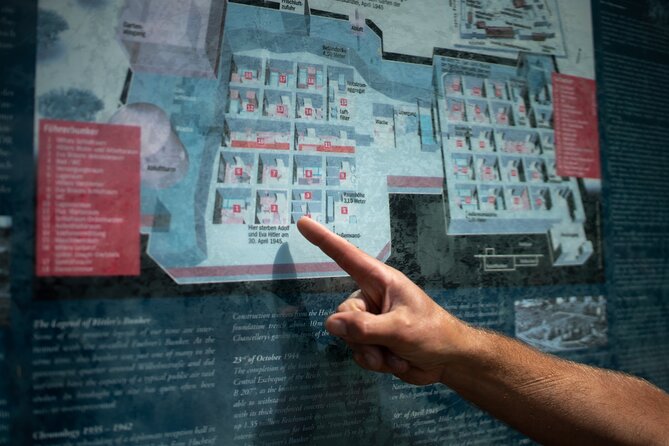
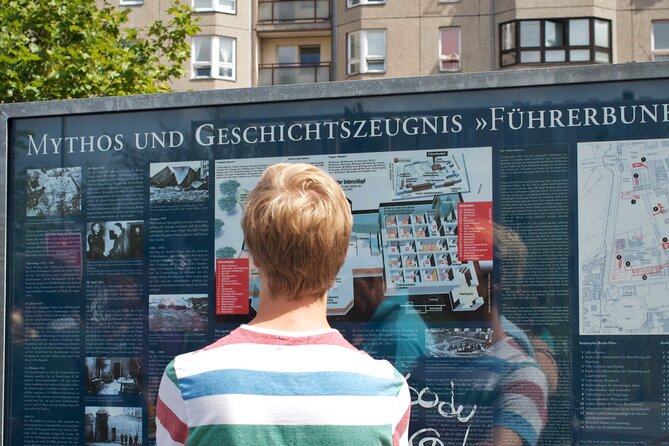
The most intense segment of the route is when you stand above the location of Hitler’s bunker, and you learn about his last days and death in April 1945. This is not the full bunker site you can tour like a museum, but the stop matters because it places the final phase of the regime in a precise geography.
The tour also ties this area to the Nazi government’s core, including references to Hitler’s Reich Chancellery, built by Albert Speer. If you remember any one thing from this part, let it be the idea that the Nazi regime did not fall somewhere distant. It collapsed in the center of Berlin, among the institutions that had controlled and terrorized the city.
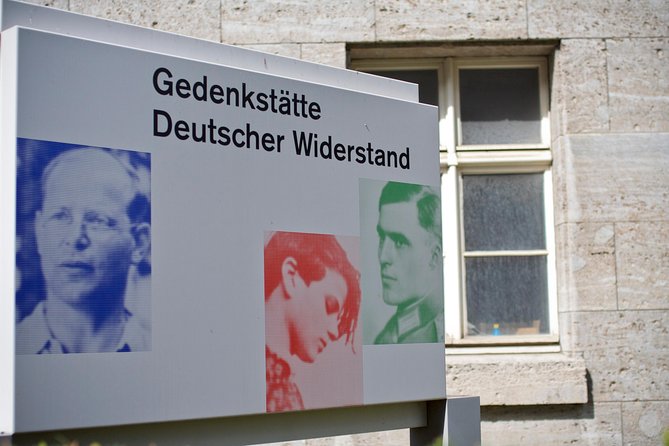
A standout detail from how guides often handle this moment: some guides hold back the specific bunker-location reveal until you reach the right spot, which makes the explanation land harder. You also hear about the resistance movement, including names like Henning von Tresckow, Hans Oster, and Claus von Stauffenberg. That adds a critical layer, because it shows there were people opposing the regime even inside the system.
This is also where the tour connects ideology to consequence, including discussion of Lebensraum and how that doctrine contributed to the Holocaust. It is not a trivia lecture. It is a cause-and-effect lesson.
Wilhelmstrasse, Göring’s Air Ministry, and the Machine Behind the War
After the bunker area, the walk returns to the “how the regime worked” story through Wilhelmstrasse and nearby official buildings. You are told that Wilhelmstrasse housed key government structures, including the Ministry of Foreign Affairs, the Reich Chancellery, and the Ministry of Propaganda, plus offices of high-ranking Nazis like Joseph Goebbels.
Then comes the Reichsluftfahrtministerium at Niederkirchnerstraße, Hermann Göring’s former Air Ministry. This is the kind of stop that helps you understand Nazi power beyond ideology. The Luftwaffe coordinated military air operations throughout the war, and the building’s grand design mirrored the regime’s obsession with authority.
The value here is that the tour turns architecture into information. You see how official power likes to look monumental and permanent, even when the end is already near.
Topography of Terror: Where SS and Gestapo Control Gets Its Name
The tour ends at Topography of Terror, at Niederkirchnerstraße 8, and it is an important final chapter. This museum and memorial sits on the site of the former SS and Gestapo headquarters.
The focus is on the role these organizations played in Nazi repression, persecution, and the Holocaust. Exhibitions use photographs, documents, and accounts to show how state-sponsored terror operated in practice. This is where the tour’s story becomes clearer and more specific, because it labels the machinery behind the cruelty.
I also like that the end point leaves you near the Checkpoint Charlie area. It gives you an easy next step for the rest of your day, whether you want a quick bite or more walking to connect the dots around Cold War Berlin.
Price and Pace: Is This Good Value for $24.07?
At $24.07 per person for an about 3-hour guided walk, you are paying for a local expert guide and a tight route through high-impact sites. Most of the stops include free admission tickets, which matters on a budget. The one major caveat is that the Reichstag stop lists an admission ticket as not included, so you should treat that as a “context stop,” not a guaranteed interior visit.
The pacing is real walking, not sitting. A common practical tip from guides and past participants is to expect around 5,000 steps briskly between points of interest. If your knees or energy level are limited, you might feel it, even though the tour is only a half day in length.
The tour also works well for people who want structure. Berlin’s WWII sites can be scattered, and you can easily walk past the meaning of a place. This tour stitches the areas together so you leave with a clearer timeline and a better sense of why the city looked the way it did in 1945.
Should You Book the Third Reich Berlin Walking Tour?
I think you should book this tour if you want a guided, coherent route through key WWII and Third Reich locations, with context that connects ideology, institutions, and the final collapse in Berlin. It is also a good choice if you care about seeing memorials like Trains to Life, Trains to Death and the Holocaust Memorial in a way that is grounded in place.
Skip it if you are looking for a light, casual Berlin morning. This is heavy subject matter, and the walk includes very solemn memorials. Also, if you want a guaranteed Reichstag interior visit, you will need to plan separately since the admission ticket is not included.
If you do book, go prepared: warm layers, good shoes, and an open mind. Then let the guide do what you cannot do on your own, which is turn streets and buildings into a story you can actually understand.
FAQ
How long is the Third Reich Berlin walking tour?
It lasts about 3 hours.
What does the tour cost?
The price is $24.07 per person.
Is the tour offered in English, and do I get a mobile ticket?
Yes, it is offered in English, and you receive a mobile ticket.
Where do I meet, and where does the tour end?
You start at Reichstagufer 17, 10117 Berlin, Germany. The tour ends near Topography of Terror at Niederkirchnerstraße 8, 10963 Berlin, Germany.
Is admission to the Reichstag included?
No, the Reichstag stop lists admission as not included.
Is hotel pickup and drop-off included?
No, hotel pickup and drop-off are not included.
Can I get a full refund if I cancel?
Yes. You can cancel up to 24 hours in advance for a full refund.
Recently added around Berlin
- Berlin Private Custom Walking Tour With A Guide (Private Tour)★ 4.5 · 8 reviews
- One Up to 3 Rickshaws(6 GUESTS)-Taylor Made Rickshaw Berlin Tour★ 5.0 · 20 reviews
- Moonshine Comedy – English Stand Up Comedy by the bay★ 5.0 · 11 reviews
- Private Half-Day Berlin Sightseeing Tour with a Minivan Including Short City Walks★ 5.0 · 31 reviews
- Private taxi tour to Potsdam and Sanssouci 6-8h★ 5.0 · 30 reviews
- Private City Kickstart Tour: Berlin★ 4.5 · 71 reviews
- Private tour of Berlin★ 5.0 · 15 reviews
- Private Tutankhamun’s Tomb Live Escape Room in Berlin★ 3.5 · 11 reviews
Third Reich & WW2 History Walks, compared.
Berlin’s Best: 2 Hour Walking Tour Third Reich and the Cold War
Read our review →
Berlin Third Reich Sites: Half-Day Walking Tour
Read our review →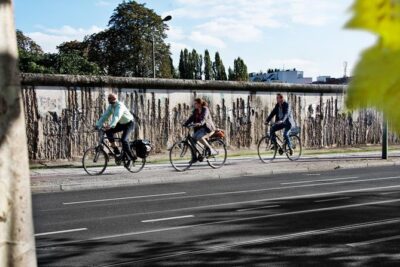
Guided Bike Tour of the Berlin Wall and Third Reich
Read our review →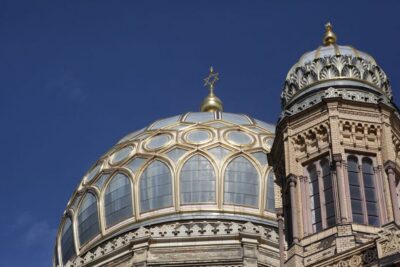
Hitler’s Germany: Berlin During the Third Reich & WWII
Read our review →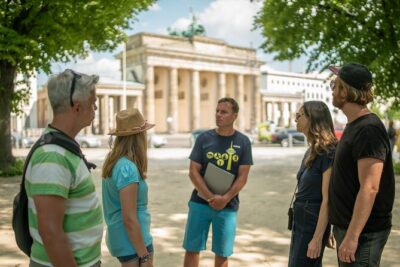
Private Walking Tour Berlin Third Reich Hitler and World War II
Read our review →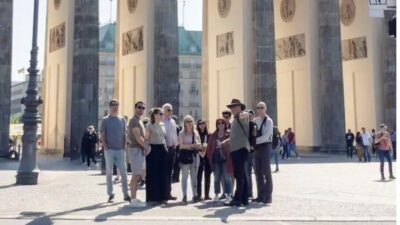
Hitler’s Berlin The Rise & Fall Guided Walking Tour
Read our review →Browse the lists this tour appears in