
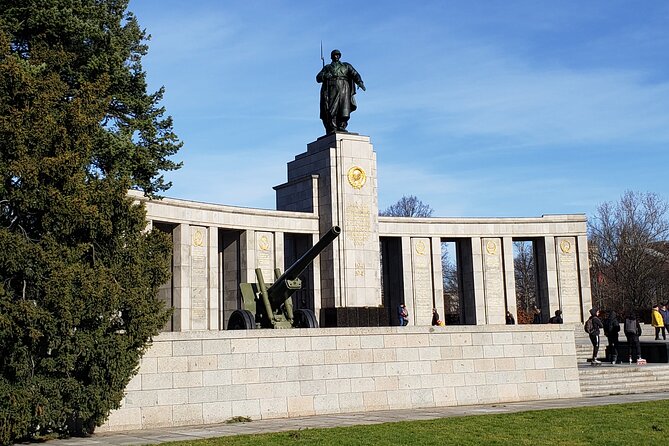
Reviewed · THIRD REICH & WW2 HISTORY WALKS
Private Third Reich Walking Tour of Berlin
What makes the Private Third Reich Walking Tour of Berlin so interesting is that it turns major, still-visible places into a clear human story of how the Nazi regime gained power and then collapsed. It is also private, so your guide can shape the pace around your questions instead of rushing a packed group.
I especially like two things. First, I love how the walk links Topography of Terror with the Führerbunker area, so you feel the timeline from propaganda and terror into the final days. Second, I love that the guides, including historians like Stefan and Alexander, focus on details and conversation, not lectures you cannot use.
The main drawback is that this is heavy subject matter. If you want a light, casual city stroll, this one will feel intense, because it is built around atrocities and their aftermath, not sightseeing thrills.
Key highlights you will feel on this walk
- A true private 2-hour route through key Third Reich sites, designed for questions and real discussion
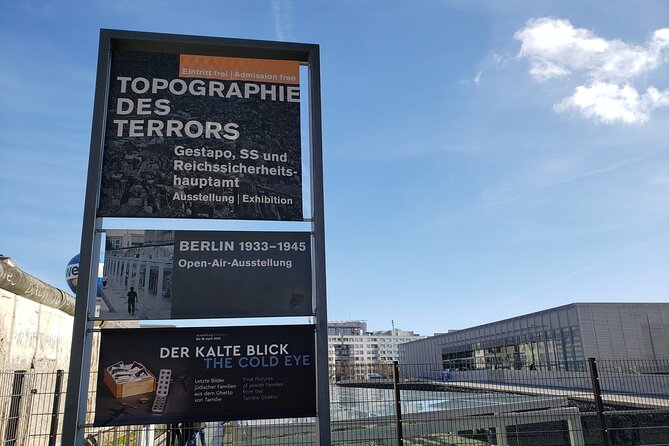
- Topography of Terror + exhibition time at a central place tied to the Nazi terror regime
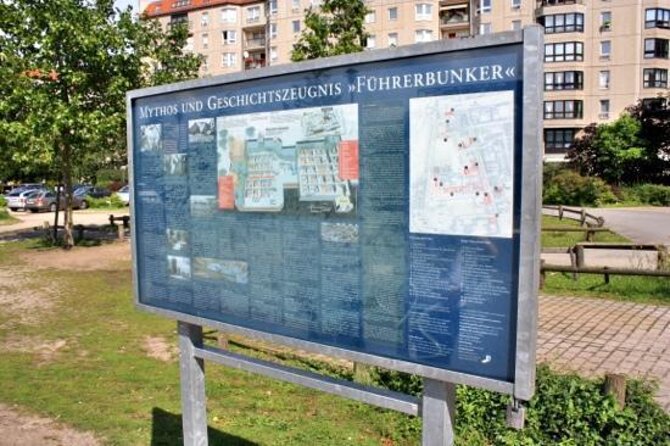
- The Führerbunker site where Hitler committed suicide, handled with seriousness and context
- A guided walk through the Holocaust Memorial so you understand what it represents, not just what it looks like
- Nazi-era architecture explained through major government buildings tied to the regime’s machinery
- Georg Elser remembered at the memorial to the 1939 attempt to kill Hitler with a bomb
A private 2-hour walk that actually makes sense
This tour works because it is short and focused. In about two hours, you cover multiple major sites that can otherwise blur together when you try to study them on your own. Instead of dropping names, your English-speaking historian guide gives you a threaded explanation you can hold onto as you walk.
You should also know it is built as a private experience. That matters in Berlin, where you can easily end up with a tour that feels like a stampede. With only your group, your guide can stop where you have questions, slow down near sensitive memorials, and keep the story readable even if you have teenagers or first-timers.
One more reason I like it: you can feel the change in Berlin’s landscape. Some of what you see is preserved, some is repurposed, and some is simply marked. Your guide helps you interpret what you are looking at, including places tied to Goering’s Air Defence Ministry and Hitler’s New Chancery, which gives you a wider view of the regime beyond the obvious headlines.
Other Third Reich and WW2 history walks in Berlin:
- Berlin: Third Reich and Cold War 2 Hour Walking Tour
★ 4.9 · 6,830 reviews - Berlin’s Best: 2 Hour Walking Tour Third Reich and the Cold War
★ 5.0 · 5,486 reviews - Third Reich Berlin: Hitler and WWII Walking Tour
★ 5.0 · 3,301 reviews
Getting oriented at Brandenburg Gate, then stepping into Topography of Terror
The tour starts at Brandenburg Gate, Pariser Platz, 10117 Berlin. This is a good starting point because you are in a place people recognize fast, and then you transition into a part of the city that most visitors only skim. If you arrive a little early and take a minute to orient yourself by the gate area, the first walking segment goes smoother.
The first major stop is Topography of Terror (the former headquarters area of the Nazi terror regime). Today, you visit the exhibition there, and the schedule calls for about 20 minutes. The key value here is that you are not just looking at a site, you are stepping into a place that explains the system behind the terror. You get the sense of how state power, propaganda, and violence were connected.
What I like is that your guide does not treat the exhibition as separate from the walk. You connect what you see inside to what you will see outside next. That makes the time feel efficient, not like you are bouncing between unrelated stops.
A small consideration: exhibitions can vary in how much you want to read. With only a 20-minute window, you should expect to skim the highlights unless the guide steers you toward specific parts. If you are the type who likes to read every caption, plan to come back later on your own time.
The Führerbunker site: where history feels brutally final
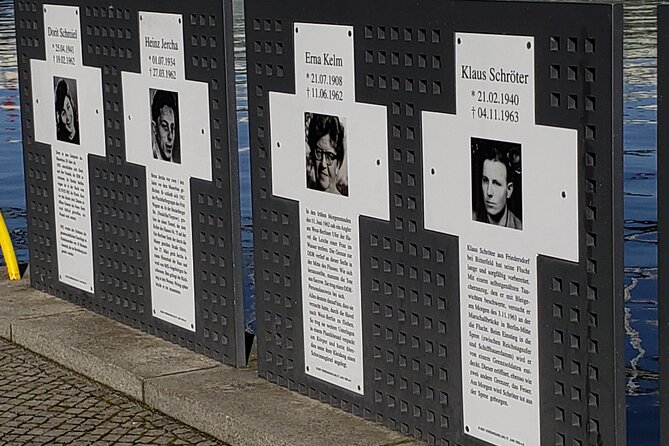
Next you move toward the former location of the Führerbunker, with a stop focused on where Hitler’s bunker used to be and where he committed suicide shortly before WWII ended. The time listed is about 20 minutes, which is enough for your guide to set the scene and for you to process what you are looking at.
This is the kind of stop where pacing matters. I like that the tour frames it with context, not sensational details. Your guide’s job here is to help you understand why this place symbolized the regime’s end, and how the story of Berlin’s fall connects to the broader Nazi collapse rather than becoming a single grim headline.
Another reason this stop works on a walking tour: you can feel how the city has changed around it. The bunker area is not a movie set. It is a real urban location, and that contrast is part of the lesson. You are seeing how destruction and ideology leave marks that do not always look dramatic at street level.
If you are bringing kids or teens, this is also where your guide’s tone becomes crucial. The best guides, like those named in feedback such as Stefan and Alexander, know how to explain without turning the moment into shock value. You get the facts, then you move on with purpose.
The Holocaust Memorial: walking it with guidance keeps it respectful
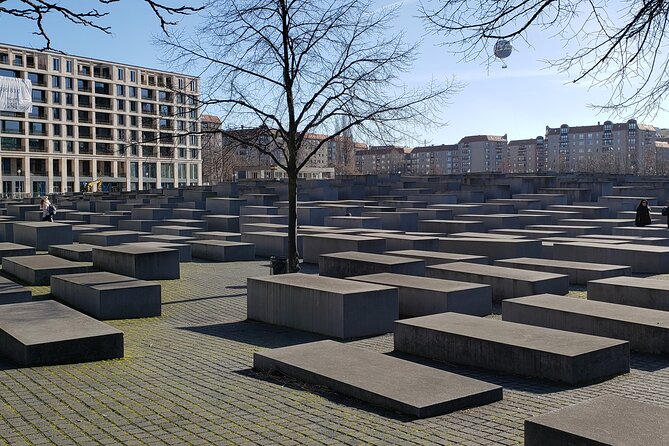
After the Führerbunker area, you reach the Memorial to the Murdered Jews of Europe. The plan includes walking through it with your guide, with about 20 minutes allotted.
This stop is powerful on its own, but guided helps a lot. The memorial is designed to create an experience, and you may not immediately know how to interpret what you feel. A good historian guide gives you the meaning behind the design and the reason it exists. That transforms the walk from photography time into understanding time.
I also like that the tour does not treat the memorial like one more checkpoint. It builds on the previous stops, helping you connect the mechanics of terror to the specific targeted genocide commemorated here. You are not just learning that Jews were murdered, you are seeing how Nazi power led to systematic, state-backed destruction.
A practical note: the memorial involves walking through outdoor paths and between structures. Wear comfortable shoes and expect a slow, reflective pace. If your group is prone to distraction, focus on the guide’s prompts and try to be present for this one, because it is easy to switch into autopilot.
More walking tours in Berlin:
- Discover Berlin Half-Day Walking Tour
★ 5.0 · 9,624 reviews - Berlin: Discover Berlin Walking Tour
★ 4.9 · 5,998 reviews - Berlin: Hidden Backyards Guided Walking Tour
★ 4.8 · 5,360 reviews - Berlin: Alternative Berlin Walking Tour
★ 4.6 · 1,204 reviews
Nazi-era government buildings and the “machinery” of control
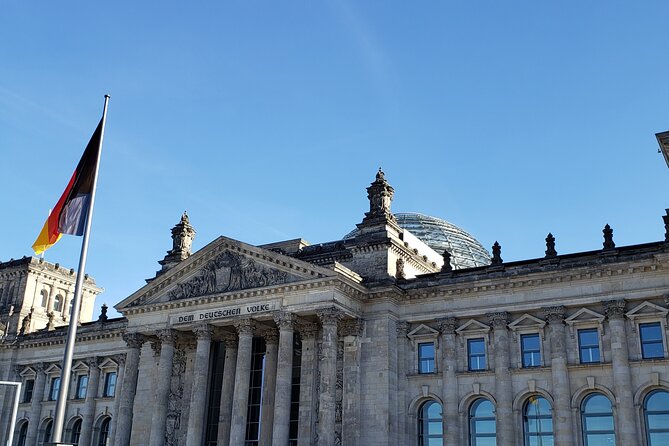
The tour then moves to Bundesministerium der Finanzen, a huge building in a typical Nazi architectural style that used to be tied to aviation ministry functions. The stop is listed for about 20 minutes.
This part can feel less emotional than the bunker or the memorial, but it is just as important. This is where your guide helps you understand the regime’s bureaucracy. Nazi rule was not only about propaganda posters and street violence. It also ran through offices, buildings, and administrative power that made the system function.
I particularly like when a guide connects this type of architecture to the names you already know, like Goering’s role in air defense and the regime’s bigger command structure. Even when you are not standing at a perfectly labeled historical spot, the building style and its former purpose help you grasp how power looked and operated.
One drawback to be aware of: without guidance, some visitors miss the point here because the building can look like any other monumental structure in a major European capital. With a strong guide, it clicks. Without one, it is easy to treat it as scenery.
Johann Georg Elser: a reminder that resistance existed
The final stop is the Johann Georg Elser sculpture, a memorial to Georg Elser who tried in 1939 to kill Hitler with a bomb. The time here is shorter, about 10 minutes.
This is a smart closing stop because it widens the story. Many tours focus heavily on the regime and its victims, which is necessary. But ending with resistance helps you balance the picture. You get a reminder that not everyone accepted the system and that people attempted to change its course, even at tremendous personal risk.
This stop also gives your guide a chance to talk about the wider context of 1939, and why an assassination attempt mattered in the regime’s own logic of power. The timing is brief, but it lands well at the end of a walk that started with terror and ended with remembrance.
Why the guide matters as much as the stops
The sites are significant, but the guide is what makes the route cohere. The tour is designed around a historian who gives you insight into the rise of the Nazis, and that is where the experience becomes more than a list of addresses.
In feedback, guides like Stefan and Alexander were described as friendly, highly knowledgeable, and passionate. You can also expect plenty of time for questions and photo stops without the guide shutting the conversation down. That balance matters, especially if you want explanations you can actually use later.
I also appreciate that the tour can be individualized. If your group is more interested in propaganda, government structures, or the human impact, your guide has room to adjust the emphasis. With a private format, you are not forced into the same script every time.
As you walk, listen for the connections. If your guide is doing a great job, you will start to see patterns, not isolated events. You will understand how power, ideology, and violence were linked, and why the memorial spaces and exhibitions in Berlin were designed the way they are.
Price and value: is $150.51 per person worth it?
At $150.51 per person for roughly two hours, this is not a low-cost walk. But in Berlin, private guided history is often expensive because you are paying for specialized interpretation and flexibility, not just movement from stop to stop.
Here is why I think it can still be good value. You get a private guide, English language service, and a focused route that covers multiple major sites without you coordinating transport or ticket logic. The tour also lists admission ticket free for the stops, including the exhibition time at Topography of Terror, so you are not stacking additional entry costs on top of the guide fee.
You might also notice the price makes more sense if you are traveling as a small group rather than as a single solo traveler. The tour offers group discounts, which can help. The best comparison is not with a free self-guided walk. It is with other guided options that either do not cover as much in two hours or do not explain the connections well.
If you want a deeply structured timeline and a guide who will answer questions instead of sending you off with a pamphlet, the price can feel fair. If you only want broad familiarity and you hate walking in a single route, you might prefer to build a do-it-yourself day.
Practical tips so you get the most from the walk
- Plan for a serious tone. This is not sightseeing comedy hour, and your guide will treat the subject accordingly.
- Wear comfortable shoes. It is a walking tour, and some stops involve slow, careful movement.
- Bring questions. The private format is best when you ask, so write down what you want to understand, like how Nazi terror was structured or how resistance fits into the timeline.
- Take photos if you want, but don’t treat the memorial as a photo studio. Follow your guide’s cues and keep it respectful.
- If you are with teenagers, this tour can work well because guides can shift explanations to match your group, and the conversation can keep attention from drifting.
Where you finish, and what you can do next
The tour ends at Topography of Terror, located at Niederkirchnerstraße 8, 10963 Berlin. There is a note that you can visit a documentation about the Third Reich for free afterwards, which is a nice bonus if your schedule allows it.
It also mentions that the next underground station is about a 10-minute walk away, and your guide will show you how to get there. That small bit of guidance can save you time if you are trying to connect to the rest of your Berlin day.
Should you book this Third Reich walking tour?
Book it if you want a tight, private, English-guided route through major Berlin sites tied to the Third Reich, with a historian who links events into a timeline you can follow. I especially recommend it if this is your first time in Berlin or your first time studying this period, because you get clarity fast and you do not have to guess what each location means.
Skip it if you are looking for casual sightseeing, or if your group is not ready for intense, emotionally heavy material. Even with the best guide, this is a tour built around genocide and the machinery of terror, and it will demand more focus than a typical history walk.
If you do book, go in with one goal: understand how the places connect. With a guide like Stefan or Alexander, you will leave with more than photos. You will leave with context you can carry into the rest of Berlin.
FAQ
How long is the Private Third Reich Walking Tour of Berlin?
The tour lasts about 2 hours.
Is this tour private?
Yes. It is a private tour, meaning only your group participates.
What languages are offered?
The tour is offered in English.
Where do we meet and where does the tour end?
You start at Brandenburg Gate, Pariser Platz, 10117 Berlin, Germany. You end at Topography of Terror, Niederkirchnerstraße 8, 10963 Berlin, Germany.
Are admission tickets included?
The itinerary lists admission ticket free for all stops, including the exhibition visit at Topography of Terror.
Is there a mobile ticket?
Yes, it is listed as a mobile ticket.
What is the cancellation policy?
You can cancel for a full refund up to 24 hours in advance of the experience start time.
Are service animals allowed, and is it generally suitable for most people?
Service animals are allowed, and most travelers can participate. The tour is also near public transportation.
Recently added around Berlin
- Berlin Private Custom Walking Tour With A Guide (Private Tour)★ 4.5 · 8 reviews
- One Up to 3 Rickshaws(6 GUESTS)-Taylor Made Rickshaw Berlin Tour★ 5.0 · 20 reviews
- Moonshine Comedy – English Stand Up Comedy by the bay★ 5.0 · 11 reviews
- Private Half-Day Berlin Sightseeing Tour with a Minivan Including Short City Walks★ 5.0 · 31 reviews
- Private taxi tour to Potsdam and Sanssouci 6-8h★ 5.0 · 30 reviews
- Private City Kickstart Tour: Berlin★ 4.5 · 71 reviews
- Private tour of Berlin★ 5.0 · 15 reviews
- Private Tutankhamun’s Tomb Live Escape Room in Berlin★ 3.5 · 11 reviews
Third Reich & WW2 History Walks, compared.
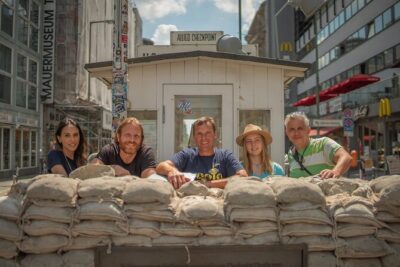
Berlin’s Best: 2 Hour Walking Tour Third Reich and the Cold War
Read our review →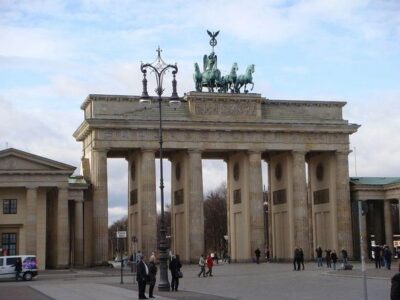
Third Reich Berlin: Hitler and WWII Walking Tour
Read our review →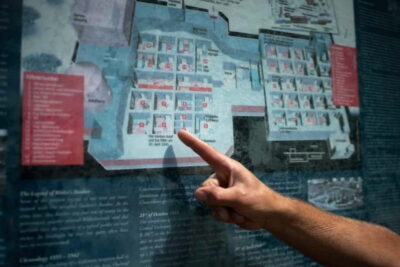

Berlin Third Reich Sites: Half-Day Walking Tour
Read our review →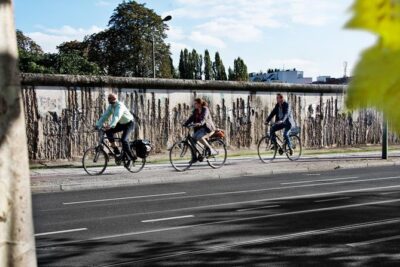
Guided Bike Tour of the Berlin Wall and Third Reich
Read our review →
Hitler’s Germany: Berlin During the Third Reich & WWII
Read our review →
Private Walking Tour Berlin Third Reich Hitler and World War II
Read our review →Browse the lists this tour appears in