
Reviewed · THIRD REICH & WW2 HISTORY WALKS
Berlin: World War Two Third Reich and Cold War Walking Tour
Berlin is one of the only places where you can walk through the same streets and feel two broken eras still echoing. This tour is interesting because it connects WWII Berlin to the Cold War Berlin Wall story in one timeline you can actually follow on foot. I especially like how it pairs famous buildings with the human consequences behind them, and I like that you’re looking at the Wall not as a photo backdrop, but as a system that shaped daily life. One drawback to consider, based on at least one messy check-in experience, is that group assembly at the start can be chaotic, so arriving early really matters.
You’ll start near Alexanderplatz at Generator Berlin and end right back at the same meeting point, which makes this easy to tack onto the rest of your day. The route is about walking and listening, not about museum browsing all day, so bring comfortable shoes and snacks. If you prefer flexible stops or lots of free time, this is more structured than you might like.
Key things to notice before you go
- WWII to Cold War, in one connected storyline so the Wall makes more sense.
- Berlin Wall remnants and escape geography so you see the ideas behind the concrete.
- Major sites like the Reichstag, Flak Tower, and Hitler’s bunker area that anchor the timeline.
- East Berlin reference points such as the East Side Gallery to connect art with politics.
- A local historian guide who turns dates into cause-and-effect on the sidewalk.
- A meeting point that can get busy, so plan a stress-free start.
A 5-hour timeline walk that links WWII to the Wall
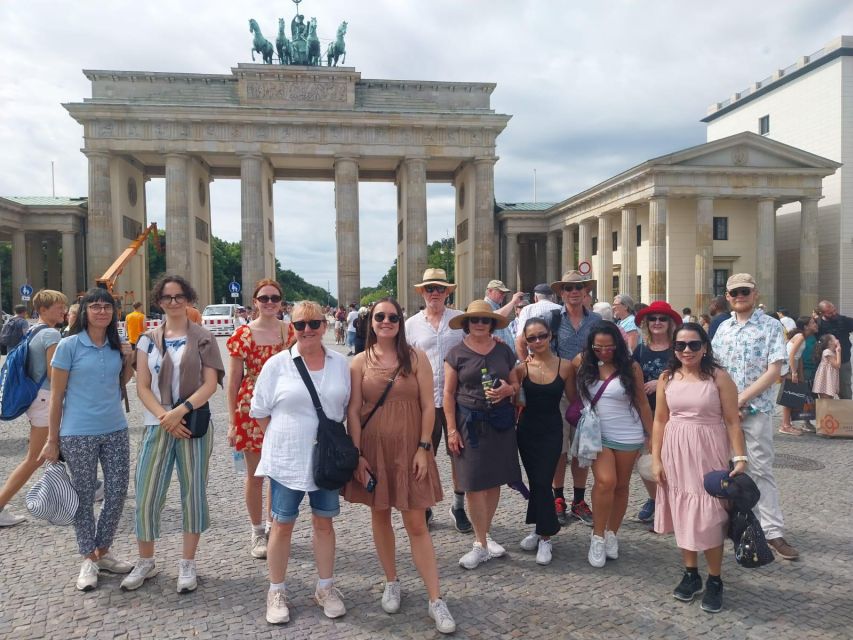
What makes this experience work is the way it treats Berlin like one long conversation. You start with the Third Reich period, then you move into the Cold War, and you keep tying the pieces together until the Berlin Wall isn’t just a landmark. It becomes a result of decisions, fear, propaganda, and competing systems.
In practical terms, that means you’re not jumping randomly between sites. You’re walking a line: regime power, wartime consequences, then the East-West split, then the Wall itself and what it did to people who lived beside it. If you like history that has momentum, you’ll enjoy the pacing.
You also get a guide who acts like a human map. When the story changes from WWII to the Cold War, the guide doesn’t just say different words, they explain why the same neighborhoods now mean different things. That helps a lot if you’re visiting Berlin for the first time, because you’re building mental folders as you go.
The main consideration is emotional content. This is about Nazi rule, war, occupation, and repression behind the Wall. You may want to take breaks if you get tired or affected. The tour is about walking and talking, so if you’re sensitive to heavy topics, it helps to know what kind of day you’re signing up for.
Other Third Reich and WW2 history walks in Berlin:
- Berlin: Third Reich and Cold War 2 Hour Walking Tour
★ 4.9 · 6,830 reviews - Berlin’s Best: 2 Hour Walking Tour Third Reich and the Cold War
★ 5.0 · 5,486 reviews - Third Reich Berlin: Hitler and WWII Walking Tour
★ 5.0 · 3,301 reviews
Meeting at Generator Berlin, and how to avoid check-in problems
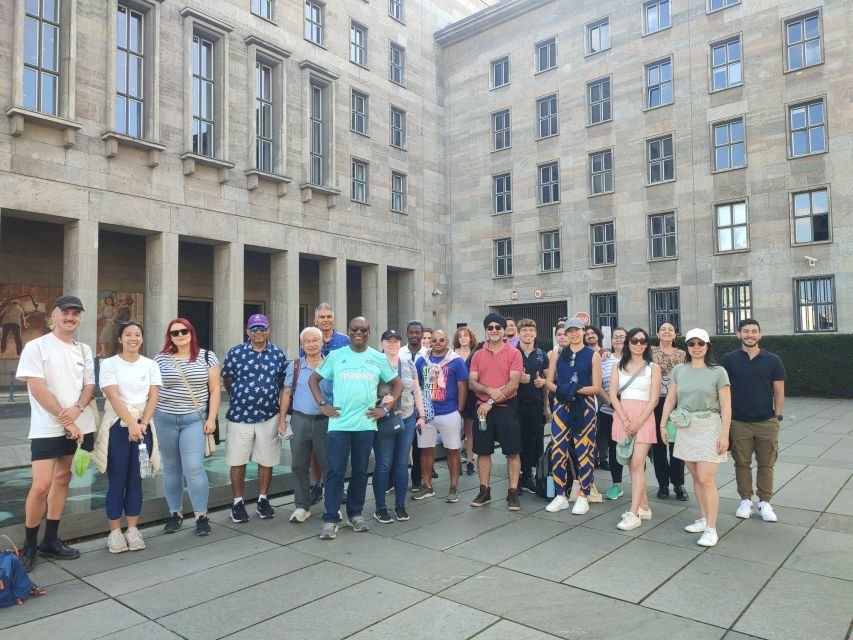
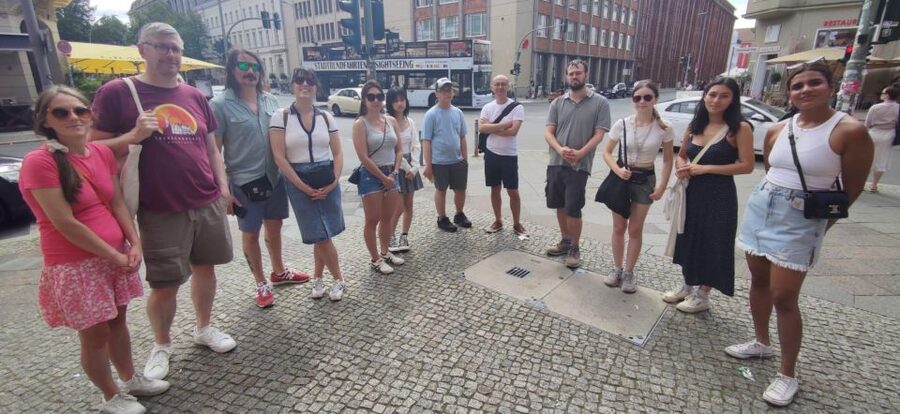
Your start is easy to find if you look for the detail the tour gives you: a white umbrella on the corner in front of Generator Berlin Alexanderplatz. The end is back at the same meeting point, which is convenient for resuming your day in central Berlin.
Here’s my practical tip: arrive a little early and do a quick visual sweep for the group, not just the umbrella. One reported experience described a chaotic start where groups didn’t seem to split cleanly, and the tour did not run exactly as titled for that person. I can’t predict how your group will go, but you can avoid most stress by being there early, staying flexible if the grouping takes a minute, and asking the staff on site which group you’re in.
The tour is listed as English and wheelchair accessible, so the meeting point is set up for a standard city pickup. Still, with a walking format, you’ll want to show up on time so you don’t have to catch up mid-story.
Also, the tour asks you to bring the simple stuff that keeps your attention from wandering: comfortable shoes, weather-appropriate clothing, and basic snacks and drinks. That last part matters more than it sounds, because WWII and Cold War conversations can take real focus, and hunger kills focus fast.
Third Reich era stops: Reichstag, war museum, Flak Tower, bunker context
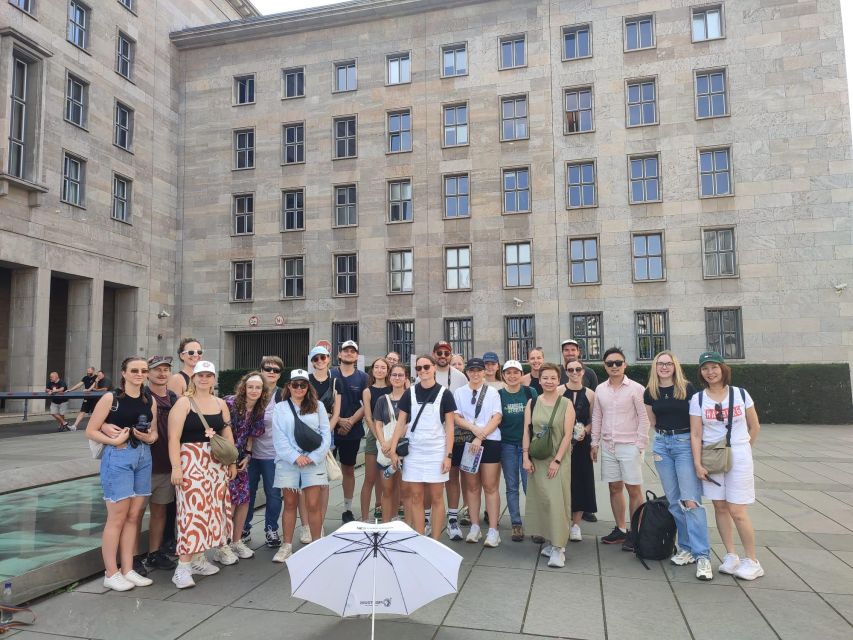
The first stretch of the walk is about grounding WWII power in place. You’ll hear stories connected to the Third Reich period, including stops tied to the Reichstag area and other heavy-historical landmarks listed in the tour description, such as the Russian-German war museum, the Flak Tower, and the bunker associated with Hitler.
Even if you already know the broad timeline, I think you’ll get more out of this portion if you watch how the guide frames cause and effect. Buildings and monuments can feel static, but the guide’s job is to make them dynamic. Why did leaders choose these locations? What did wartime look like for people moving through the city? What kind of structure was built for survival or for control?
Reichstag area context
The Reichstag is famous, so it’s tempting to treat it like a single photo spot. On this tour, it’s used as an anchor for the political power story, and then the tour moves you forward to how wartime damage and ideology changed Berlin’s role.
Russian-German war museum context
When the tour mentions the Russian-German war museum, it’s pointing you toward how different sides of the war remembered their experiences. Even without museum time described in detail, the tour uses it as part of the “you can’t tell one story” lesson. You see how Berlin sat at the center of conflict and then became a trophy, a battleground, and later a message.
Flak Tower
A Flak Tower is architecture with a mission, literally built to shoot down threats from above. That makes it a strong teaching stop. You can understand how the city prepared for bombardment and why those structures shaped what people lived with day to day.
Hitler bunker area
The bunker reference is one of the most serious stops on the list. The value of including it is not shock value. It helps you connect the end of the regime to the physical reality of the final period. You’ll understand how Berlin’s last chapters during the war were not abstract.
A drawback here, and it’s worth saying plainly, is that the content is intense. If you prefer lighter sightseeing, this tour may feel too heavy. But if you want to understand how Berlin moved from Nazi rule into postwar division, this is exactly the right opening act.
Transitioning into the Cold War: East Communism and a city with borders
Once the tour turns from WWII to the Cold War, it changes tone and direction. The story becomes less about one regime and more about systems competing in the same city. The guide focuses on East Communism and the lives that developed behind the Berlin Wall.
This part can be a turning point for many visitors. In Berlin, the Wall can look like an artifact, something you view. But on this tour, the Wall is presented as a lived barrier that affected travel, family life, work, and safety. That is what makes the tour more than sightseeing.
You’ll also hear the idea that Berlin’s Cold War role mattered far beyond Berlin. This is where the guide often helps you see the larger world impact, not through theory, but through how a city became a symbol for the conflict between East and West.
If you like your history connected to everyday life, this is the best stretch. It’s where you start to understand how political choices shaped ordinary routines. You’ll find yourself looking at neighborhoods with a new question in mind: how would it feel to stand here if crossing were forbidden?
More Berlin Wall and Cold War tours in Berlin:
- Skip-the-Line: Berlin Wall Museum at Checkpoint Charlie
★ 4.1 · 2,041 reviews - Berlin: 2.5-Hour East Side Boat Cruise with Commentary
★ 4.4 · 2,016 reviews - Berlin: East Side Gallery Spree Cruise in a Solar Catamaran
★ 4.0 · 1,039 reviews - Cold War, Berlin Wall, Spies and the East Side Gallery
★ 5.0 · 1,024 reviews
The Berlin Wall experience: East Side Gallery, Memorial, and escape routes
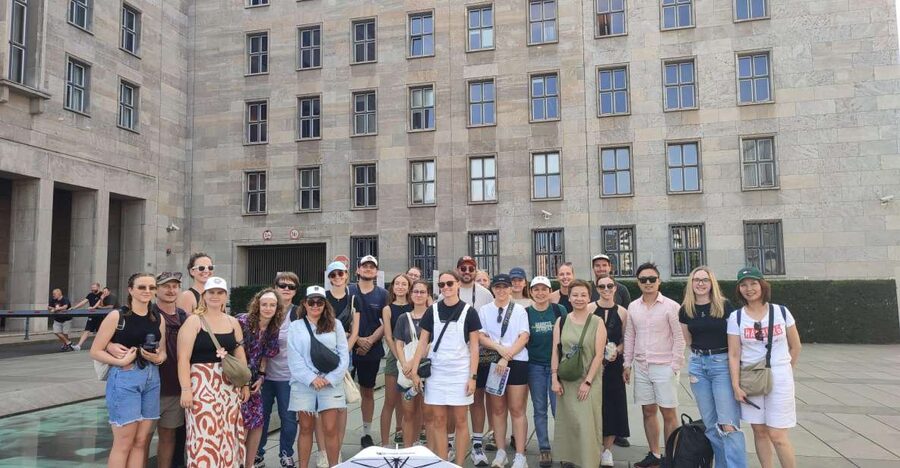
The Wall portion is the core reason many people book this tour. It includes major Wall references listed in the description, including the East Side Gallery and the Berlin Wall Memorial, plus additional Wall remnants and structural details like guard towers and escape routes.
East Side Gallery as a link between art and politics
The East Side Gallery is often seen as street art, and it is. But on this kind of tour, it also works as proof that the Wall became a medium for messages. You’re encouraged to connect the visual language of murals to the political reality that created the Wall in the first place.
Even if you’ve seen East Side Gallery photos before, a guide can help you read them with more context. You’ll be thinking about who painted what, why it mattered, and how public art can carry political weight.
Berlin Wall Memorial as the emotional anchor
The Berlin Wall Memorial is where the tour often lands hardest. The value isn’t just that it is official or well known. It’s that the guide uses it to explain the Wall’s deeper implications, not only its physical existence. You’ll learn how the Wall was designed to prevent escapes and to enforce the split.
If you’re the type of traveler who likes to understand the intent behind a site, this is a great place to slow down, listen, and let the guide turn the setting into meaning.
Guard towers and hidden sections
The description mentions guard towers, escape routes, and hidden sections. That’s important because it moves you from the Wall as a line on a map to the Wall as an engineered control system. Once you understand the structure, the stories of escape make more sense, and the tragedy becomes more specific.
This is also where the tour can feel physically demanding if you’re sensitive to long standing or uneven sidewalks. The content is worth it, but plan to stay alert and comfortable.
Architectural survivors: why Berlin’s buildings matter in the story
A walking tour stands or falls by how it makes you look. Here, the guide uses architecture to do the explaining. The description calls out “architectural marvels that stood strong through Berlin’s challenges,” and that idea shows up as you move between WWII-era heavy sites and Cold War border reality.
Berlin’s buildings aren’t just pretty backdrops. They’re evidence. Some structures survived war damage and kept serving as symbols. Others are reminders of militarization, propaganda, and the efforts to control a city under stress.
As you walk, I’d encourage you to notice what kind of building you’re looking at: a place of government power, a defense structure, a museum-related anchor, or a Wall-linked space. Each type teaches a different part of the story. That’s why the itinerary is effective. It doesn’t treat history as one layer. It treats it as stacked layers you can separate with the right guide.
You’ll also hear about Berlin’s cultural impact, including music and revolutionary art. This matters because it helps you see resistance and identity beyond politics. Even under pressure, people created and communicated. Berlin became a place where art and culture were not decoration, they were tools for meaning-making.
Price value: what you’re really paying for at $21
At $21 per person for a 5-hour guided walk, the price is relatively low for the subject matter and the time. The real value is not the walking. The value is the guide, described as a local historian, plus exclusive entry to certain landmarks.
That combination matters because history in Berlin can be overwhelming. You can read signs on your own, but you can’t easily connect WWII to the Cold War on your feet without help. A guide turns scattered facts into a timeline with explanations.
A second value factor is central location. The tour starts and ends near Generator Berlin Alexanderplatz, which is a practical hub. You don’t need a long commute to get into the story. You’re in the middle of the city, which helps you keep the rest of your day productive.
One more note: the tour does not include meals and refreshments. The good part is you’re free to choose where you eat afterward, but you should still follow the advice to bring snacks and drinks so the tour stays enjoyable rather than calorie-deprived.
Overall, if you want a guided framework for Berlin’s toughest eras, this pricing feels like a fair deal. If you only want highlights and photos, you might find it too heavy and too narrative-driven.
Who this tour suits, and who should think twice
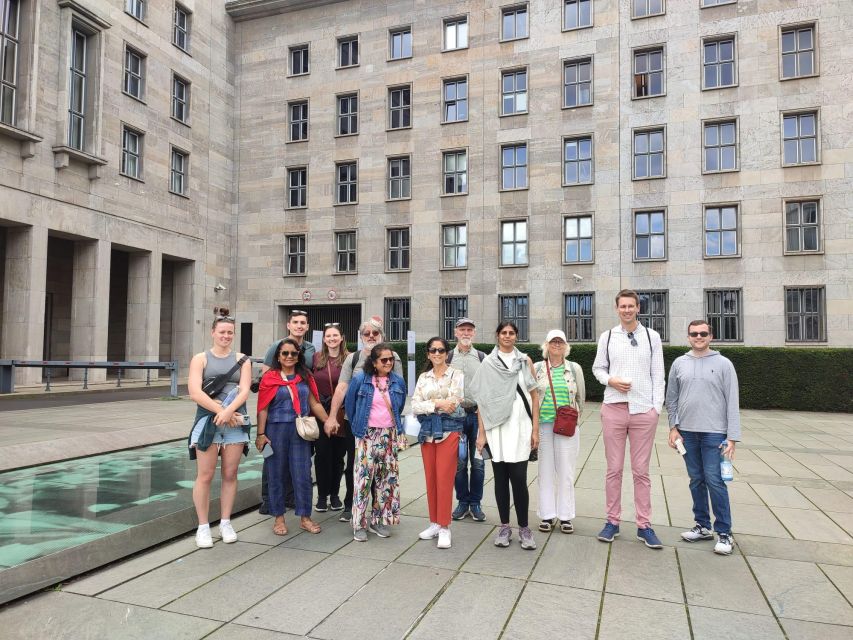
This is best for you if:
- You want the WWII to Cold War connection rather than isolated stop-by-stop facts.
- You like guided history with context and cause-and-effect.
- You’re okay with serious topics and want to understand them, not just see them.
- You want Wall-related sites explained as human barriers, not only as visuals.
You might think twice if:
- You want a light, casual day and prefer comedy over gravity.
- You hate structured tours and want to wander freely at each stop.
- You get anxious if group logistics feel messy. If that’s you, show up early and check in calmly when you arrive.
Also, keep your expectations aligned. A 5-hour walking tour is not a full museum day. It’s a guided storyline with targeted landmark time. That’s a feature, not a flaw, as long as you want the big picture framework.
Should you book this Berlin WWII and Cold War walking tour?
Yes, I think you should book it if Berlin history is on your list and you want to understand how the city’s darkest chapters link directly to the Wall. The combination of major WWII anchors and the Cold War Wall story is exactly the kind of ordering that makes Berlin feel coherent instead of confusing.
Book with a small dose of realism about the start. Arrive early at Generator Berlin Alexanderplatz, look for the white umbrella, and give yourself time for group sorting. If everything runs smoothly, you’ll walk away with a clearer mental map and a deeper sense of why the Wall mattered beyond the concrete.
If you’re planning your day, pair this with something restorative afterward, like a meal and a slower stroll. This tour asks you to listen hard. When you’re done, Berlin will feel different in a good way, because you’ll know what you’re looking at and why it’s still there.
FAQ
How long is the Berlin WWII and Cold War walking tour?
The tour duration is 5 hours.
Where do I meet the guide for the tour?
Meet at the corner in front of Generator Berlin Alexanderplatz, and look for the white umbrella.
What is included in the tour price?
You get a guided journey with a local historian, plus exclusive entry to key landmarks, and guided deep dives into Berlin’s transformative eras.
What is not included?
Meals and refreshments during the tour are not included. Personal souvenir purchases are also not included, and there is no hotel pickup and drop-off service.
Is the tour wheelchair accessible, and what language is it in?
Yes, the tour is wheelchair accessible. The live guide offers the tour in English.
What should I bring, and can I get a refund if plans change?
Bring snacks, drinks, cash, weather-appropriate clothing, and comfortable shoes. You can cancel up to 24 hours in advance for a full refund, and you can reserve now and pay later.
More Walking Tours in Berlin
- Discover Berlin Half-Day Walking Tour
★ 5.0 · 9,624 reviews - Berlin: Discover Berlin Walking Tour
★ 4.9 · 5,998 reviews - Berlin: Hidden Backyards Guided Walking Tour
★ 4.8 · 5,360 reviews - Berlin: Alternative Berlin Walking Tour
★ 4.6 · 1,204 reviews
Recently added around Berlin
- Berlin Private Custom Walking Tour With A Guide (Private Tour)★ 4.5 · 8 reviews
- One Up to 3 Rickshaws(6 GUESTS)-Taylor Made Rickshaw Berlin Tour★ 5.0 · 20 reviews
- Moonshine Comedy – English Stand Up Comedy by the bay★ 5.0 · 11 reviews
- Private Half-Day Berlin Sightseeing Tour with a Minivan Including Short City Walks★ 5.0 · 31 reviews
- Private taxi tour to Potsdam and Sanssouci 6-8h★ 5.0 · 30 reviews
- Private City Kickstart Tour: Berlin★ 4.5 · 71 reviews
- Private tour of Berlin★ 5.0 · 15 reviews
- Private Tutankhamun’s Tomb Live Escape Room in Berlin★ 3.5 · 11 reviews
Third Reich & WW2 History Walks, compared.
Berlin’s Best: 2 Hour Walking Tour Third Reich and the Cold War
Read our review →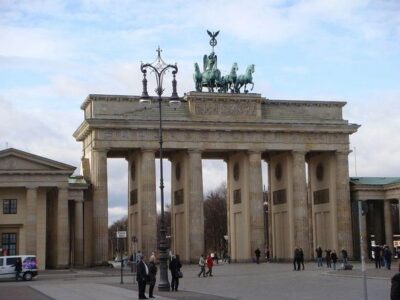
Third Reich Berlin: Hitler and WWII Walking Tour
Read our review →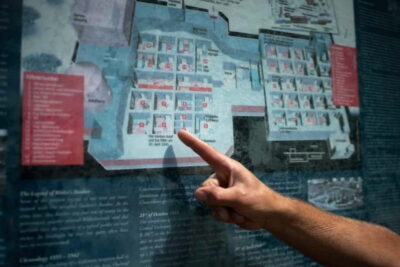

Berlin Third Reich Sites: Half-Day Walking Tour
Read our review →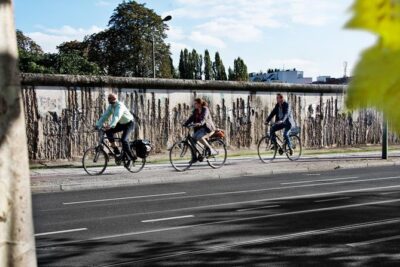
Guided Bike Tour of the Berlin Wall and Third Reich
Read our review →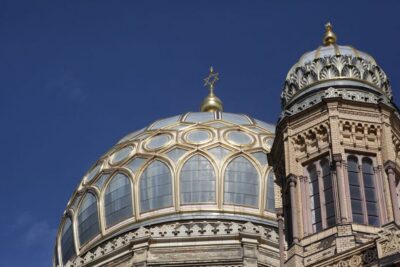
Hitler’s Germany: Berlin During the Third Reich & WWII
Read our review →
Private Walking Tour Berlin Third Reich Hitler and World War II
Read our review →Browse the lists this tour appears in