
Reviewed · THIRD REICH & WW2 HISTORY WALKS
Berlin during Nazism – Tour in Italian
What makes this experience interesting is that it connects Nazi power with the places where Berlin’s Jewish community lived, and with the transport infrastructure tied to deportations. I love the small group setup, because it keeps the pace human and makes it easier to ask questions during the tougher parts.
I also like that the route is packed with free-entry memorial stops tied to specific Nazi programs and resistance activity. The only real drawback is the subject matter is heavy, and most stops are brief, so you may want extra time after the tour if you want to sit with one place longer.
Key highlights you should know before you go
- Italian-language guiding with strong personalities: guides such as Lorenzo, Fabio, Paolo, Vita, and Federica are repeatedly praised for clarity, preparation, and keeping the group engaged.
- Operation Valkyrie context at the Resistance Memorial Center: you visit the place tied to planning and explore how people acted against the dictatorship from 1933 to 1945.
- The T4 euthanasia program memorial, with an exact victim estimate: about 300,000 people killed due to disabilities or chronic illness.
- Anhalter Bahnhof ruins and the idea of death trains: a major rail hub where deportations left from 1942 to 1945.
- Jewish Quarter focus in Scheunenviertel: landmarks such as the Neue Synagoge and the Old Jewish Cemetery, including what was destroyed.
- Otto Weidt’s story at the Blindenwerkstatt: the factory tale often compared to Schindler from Berlin, where blind and disabled Jewish workers were hired to survive longer.
Nazi Berlin, explained in Italian without the fluff
This is not the kind of tour where you hear a few dramatic facts and then rush to the next photo spot. It’s structured like a guided walk through cause-and-effect: how the Nazi state rose, how people resisted it, and how persecution reached everyday places in Berlin.
The Italian language can be a big plus if you want to understand every nuance. You’ll also spend time at memorials that explain individuals and groups, not just big headline names. That makes the history easier to hold in your head, even when it’s grim.
Other Third Reich and WW2 history walks in Berlin:
- Berlin: Third Reich and Cold War 2 Hour Walking Tour
★ 4.9 · 6,830 reviews - Berlin’s Best: 2 Hour Walking Tour Third Reich and the Cold War
★ 5.0 · 5,486 reviews - Third Reich Berlin: Hitler and WWII Walking Tour
★ 5.0 · 3,301 reviews
Starting at Potsdamer Platz with Vive Berlin Tours (blue bicycle meet-up)
The tour starts at Potsdamer Platz 10, right near the S/U-Bahn station. Your best bet is to look for the blue bicycle linked to Vive Berlin Tours and the flag with their logo. That kind of clear meet-up matters when you’re arriving on a busy Berlin morning.
The tour runs at 10:00 am and finishes at Hackescher Markt. That end point is handy because you can keep exploring after without backtracking across town.
One more practical detail: the experience uses a mobile ticket. You’ll get confirmation at booking time, and there’s no need to plan for a printed voucher.
German Resistance Memorial Center: Operation Valkyrie and everyday courage
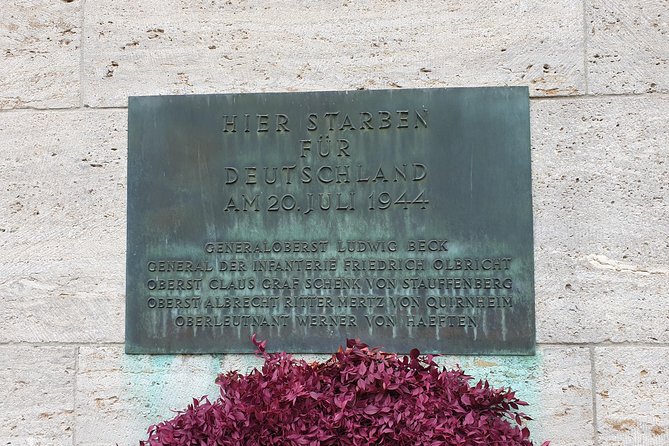
One of the most powerful stops is the German Resistance Memorial Center. The setting is the place from which Operation Valkyrie was directed, which gives you a grounding for how resistance connected to real political and military moments.
This memorial center’s goal is clear: it’s about how individuals and groups took action against the National Socialist dictatorship from 1933 to 1945. That framing is useful, because it pushes you beyond the idea that history only happened at the top. You see resistance as something with many forms, not one heroic stereotype.
You’re given about 25 minutes here. That’s enough time to read carefully and absorb the main themes, but not enough to become an expert. If you know you want more, treat this as your entry point, then plan a follow-up visit later.
T4 memorial for Nazi eugenics: 300,000 victims, and the “why”
Next comes the T4 – Memorial for the Victims of the Nazi Euthanasia Program. This stop is dedicated to the estimated killing of about 300,000 victims, including people murdered because of mental and physical disabilities or chronic diseases.
The tour also spells out what T4 means. It’s named after the office in Tiergartenstrasse 4, from where the program was directed. And it’s presented as a precursor to the Holocaust, which is a tough but important connection to understand.
You’ll spend around 15 minutes at this memorial. That brevity is intentional for a 3-hour route, but it also means you’ll likely want to pause, reflect, and maybe revisit later if you feel your brain is trying to outrun the topic.
Still in Berlin, but a different kind of day:
- Berlin: Reichstag, Dome and Government District Guided Tour
★ 4.7 · 18,288 reviews - Berlin: 1-Hour City Tour by Boat with Guaranteed Seating
★ 4.3 · 16,993 reviews - Berlin: Boat Tour Along the River Spree
★ 4.4 · 11,252 reviews - Discover Berlin Half-Day Walking Tour
★ 5.0 · 9,624 reviews
Anhalter Bahnhof ruins: where rail power met deportations
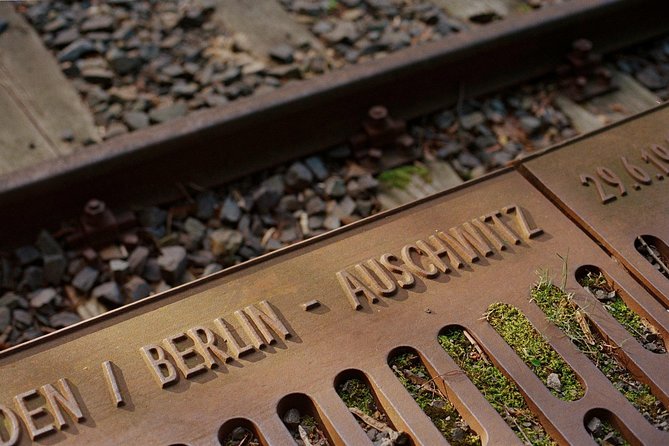
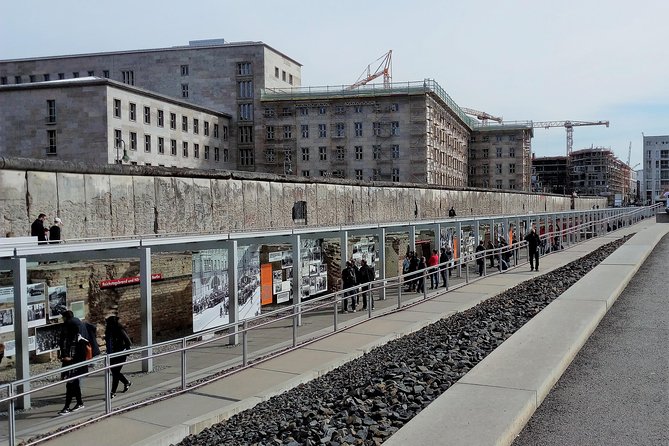
Then the route takes you to Anhalter Bahnhof, whose ruins are one of Berlin’s most haunting reminders of how modern systems were used for atrocity.
Historically, it was described as the biggest European station at the end of the 1800s. Today, only the ruins remain after the Second World War. The key point is what departed from there: many “death trains” from 1942 to 1945.
This stop lasts about 10 minutes, which is short, but it’s also a place where you can learn without needing to read a textbook. Once you connect the station’s role to deportation logistics, you start seeing the city differently. Berlin is full of layers, and this one is particularly uncomfortable in the best possible way, meaning it doesn’t let you pretend the past is vague.
Scheunenviertel in the Jewish Quarter: synagogues, schools, and survival symbols
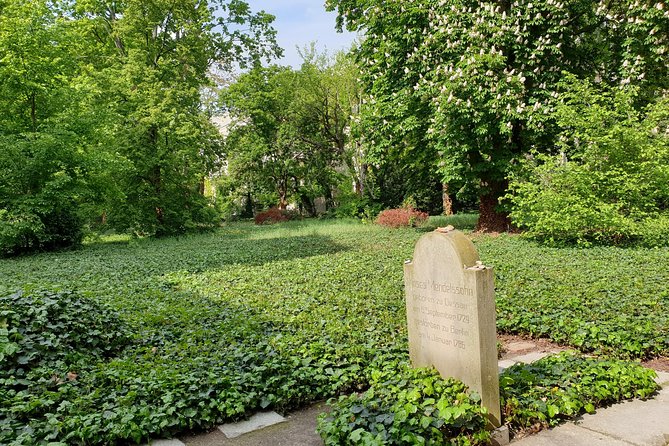
After the rail and memorial context, the tour shifts into the Jewish Quarter in Mitte, specifically the area known as Scheunenviertel and often referred to as Quartiere Ebraico.
You get about 45 minutes here, which is the longest block of time on the walk. That’s your signal that this part matters.
The tour focuses on major Jewish institutions, including the New Synagogue and the school founded by the philosopher and modernizer of Judaism, Moses Mendelssohn. That adds an important dimension: Jewish life was not only about persecution. It was also about community, learning, and institutions that served thousands.
This section also helps you understand why the Nazi period hit such deep social roots. When you stand near places linked to community pillars, the loss is clearer, and the destruction feels less abstract.
Otto Weidt’s Blindenwerkstatt: the Schindler from Berlin angle, without myth-making
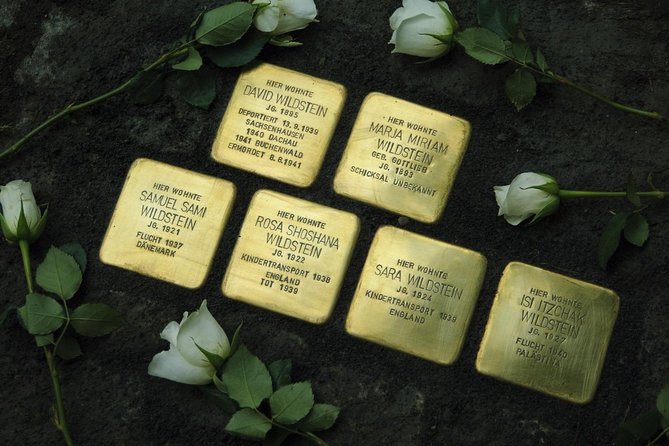
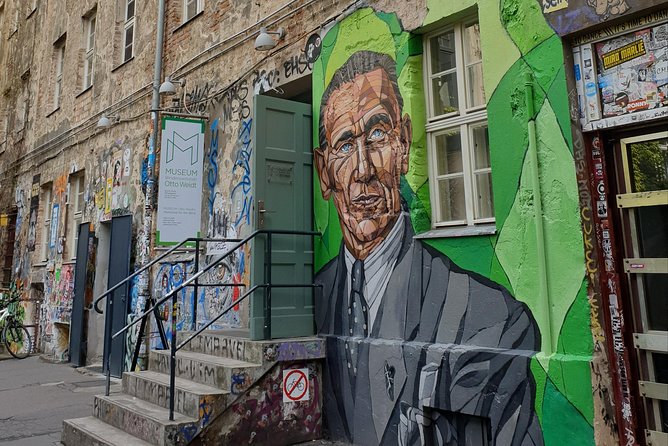
One of the most compelling stops is the Museum Blindenwerkstatt Otto Weidt, sometimes described as the Schindler from Berlin. The story centers on Otto Weidt, who hired Jewish workers, including blind and disabled employees, to help keep them safe from deportation to Nazi extermination camps.
The tour visits the original location of his factory. That matters. In Berlin, you can’t always tell what happened just by looking at a street. Standing at the place where people tried to survive gives the story weight.
The time here is about 15 minutes. It’s a short visit, but it’s also one where the human details tend to stick. You leave with a better sense of how survival sometimes depended on practical choices and narrow windows of opportunity.
Neue Synagoge Berlin and the Old Jewish Cemetery: memory that was rebuilt, then broken
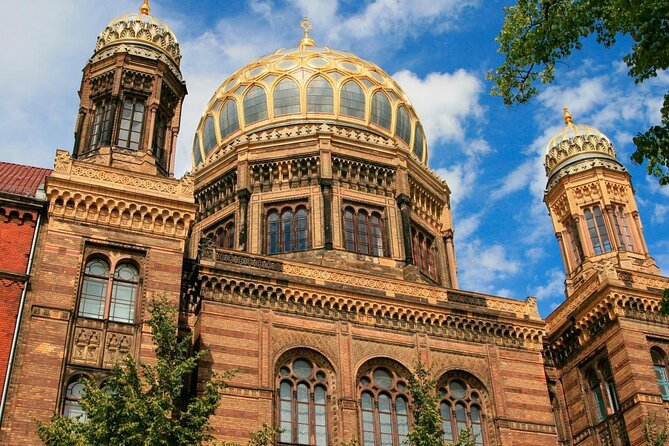
The walk continues to the Stiftung Neue Synagoge Berlin – Centrum Judaicum, home to the Neue Synagoge. Built in 1866, it was designed to seat 3,200 people, described as the largest Jewish place of worship in Germany at the time.
The tour frames the synagogue as a symbol of a thriving Jewish community. That’s not just trivia. It’s a reminder that the Jewish Quarter wasn’t marginal. It was central to Berlin’s identity.
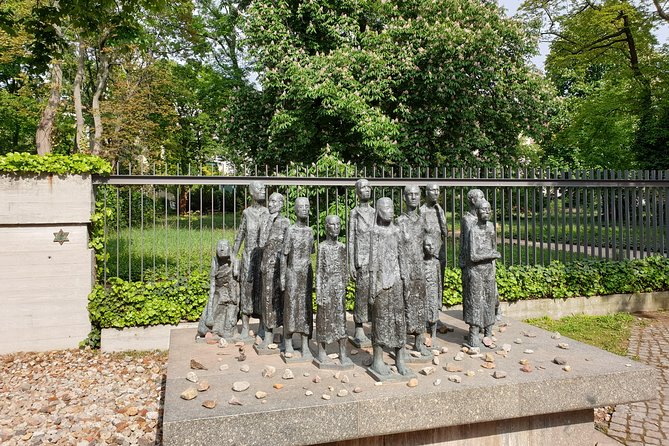
You’ll then visit the Alter Judischer Friedhof (Old Jewish Cemetery) on Hamburger Straße. The tour explains that it was once the resting place of many prominent members of Berlin’s Jewish community. Today, very little remains, and it was destroyed during the Nazi period by the Gestapo.
This cemetery stop is about 10 minutes. It can feel like you’re getting only a slice, but with sites like this, you’re often better served by respecting the space and letting the guide’s context do the heavy lifting.
Price and value: why $27.87 can actually be a good deal here
At $27.87 per person for roughly 3 hours, the price is surprisingly approachable for a guided history tour. The big value lever is that the stops are treated as free admission within the experience framework, and you’re also paying for an Italian professional guide.
You should still plan for a couple costs outside the ticket. Transportation to and from attractions is not included, and the tour suggests getting a Berlin day card for zones AB. Food and drinks are also not included, so budget for a snack break on your own schedule, not theirs.
In a city like Berlin, where memorials are spread out and public transit takes real time, a guided route can save you from piecing together a dark puzzle on your own. This one does the connecting work for you, fast but not sloppy.
Getting the timing right: 3 hours is enough, but not for everything
The tour is designed to be done in about 3 hours, and the itinerary reflects that. Some stops are 10 minutes, while the Jewish Quarter section reaches 45 minutes.
That means you won’t get long, quiet time at every memorial. You’ll get guided context and a clear walking route. It’s ideal if you want a structured introduction that doesn’t leave you wandering.
If you tend to read slowly at memorials, you might want to do two passes in your trip. Do the tour first for orientation, then return to one or two places on another day when you’re ready to sit with the details.
Who this tour fits best
This is a great fit if you:
- Want a Nazism-era Berlin route that includes both resistance and Jewish landmarks
- Prefer a small group format where you can ask questions
- Can comfortably handle an emotionally serious topic for a few hours without needing a light, sightseeing vibe
It’s also a smart choice if you’re an Italian speaker who wants more than an English overview. Guides like Lorenzo and Vita are repeatedly described as engaging, and that kind of pacing matters for a subject that can otherwise feel like a lecture.
If you only want a surface-level photo tour, this is not the right style. This is history you have to face.
Should you book the Berlin during Nazism Tour in Italian?
Yes, if you want a focused, guided route through the parts of Berlin where dictatorship, persecution, resistance, and Jewish community life intersect. The combination of Operation Valkyrie context, the T4 memorial, the Anhalter Bahnhof ruins, and the Jewish Quarter sites makes the story feel connected instead of chopped into unrelated landmarks.
Book it especially if you like the idea of a 3-hour small-group walk with strong, passionate guides. Just go in knowing that the stops are short by design, so plan to return to the one place that hits you hardest once you’ve got your bearings.
FAQ
How long is the Berlin during Nazism tour in Italian?
It lasts about 3 hours.
What language is the guide?
The guide is in Italian.
Where does the tour start and end?
It starts at Potsdamer Platz 10, near S/U-Bahn Potsdamer Platz, and ends at Hackescher Markt.
Is transportation included?
No. You should arrange your own public transport. The tour suggests a Berlin day card for zones AB.
Is admission included for the stops?
The experience lists admission as free for the stops included in the itinerary.
What is the group size limit?
The tour has a maximum of 20 travelers.
Are mobile tickets used, and will I get confirmation?
Yes, you’ll use a mobile ticket. Confirmation is received at the time of booking.
Are service animals allowed?
Yes, service animals are allowed.
Recently added around Berlin
- Ultimate E-Bike Tour of Berlin with Beer Garden Stop★ 5.0 · 4 reviews
- Berlin: guided canoe | kayaktour★ 4.1 · 7 reviews
- Where It All Began: Berlin’s Queer & Trans History Tour★ 4.9 · 6 reviews
- Understanding Kreuzberg: The roots of local (sub)culture★ 4.9 · 11 reviews
- Warnemuende Shore Excursion: Private Berlin Tour★ 4.5 · 27 reviews
- Your ticket to The Wall Museum Berlin★ 3.0 · 60 reviews
- Love and War in Berlin: Self-Guided Story Puzzle Walk★ 5.0 · 7 reviews
- eSIM for Germany and 34 European Countries★ 4.5 · 16 reviews
Third Reich & WW2 History Walks, compared.
Berlin’s Best: 2 Hour Walking Tour Third Reich and the Cold War
Read our review →
Third Reich Berlin: Hitler and WWII Walking Tour
Read our review →

Berlin Third Reich Sites: Half-Day Walking Tour
Read our review →
Guided Bike Tour of the Berlin Wall and Third Reich
Read our review →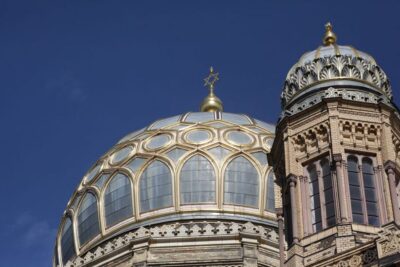
Hitler’s Germany: Berlin During the Third Reich & WWII
Read our review →
Private Walking Tour Berlin Third Reich Hitler and World War II
Read our review →Browse the lists this tour appears in