
Reviewed · HISTORICAL TOURS
Berlin Historical Highlights Walking Tour
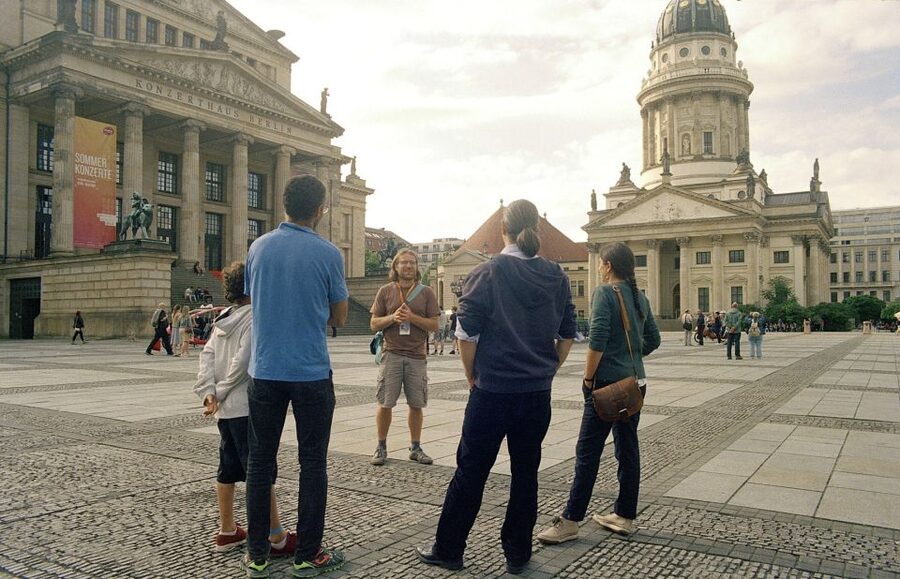
Berlin is one of those cities where the past is not buried, it is built into the streets. This tour is interesting because it strings together major eras in one logical route, starting at Potsdamer Platz and ending with the grandeur of the Brandenburg Gate and the Humboldt Forum.
I especially like how the stops are chosen for meaning, not just photo value, with Cold War waypoints like Checkpoint Charlie alongside places that demand quiet respect, like the Memorial to Murdered Jews of Europe. I also like the guide style, since you get narrative storytelling rather than a fast history lecture. One possible drawback is that you are walking for a good stretch, so pack comfortable shoes and expect weather to matter.
Key highlights at a glance
- Potsdamer Platz to Brandenburg Gate route: a clean way to see central Berlin’s shifts in power and design
- Cold War symbolism in real locations: Berlin Wall fragments, Checkpoint Charlie, and Hitler’s bunker area
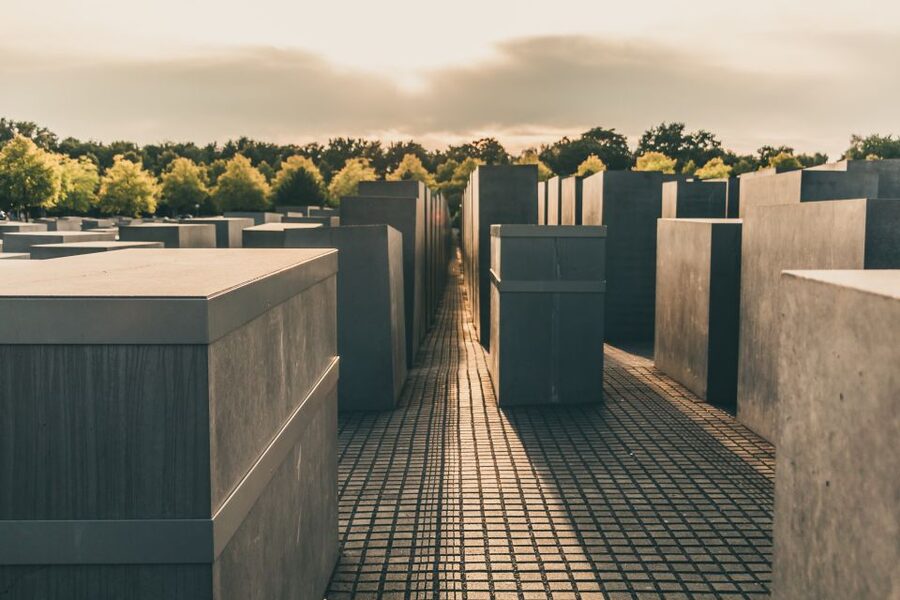
- A respectful pacing for difficult sites: including the Holocaust memorial and Topography of Terror area
- Classic Berlin landmarks: Reichstag views from the outside, Unter den Linden, Bebelplatz
- Museum Island and the Humboldt Forum: learning and culture wrapped into the walk
- Small group feel with named guides: guides like Paul, Jean Charles, and Céline make the route feel human
Why this Berlin historical highlights walk makes sense in 3 to 6 hours
If you only have a half day, Berlin can feel like homework. This tour helps by stitching the city’s story into a walk you can actually follow, with a guide who connects the dots as you go.
You start in a modern setting, then you slowly step backward and sideways through political shifts: empires, fascism, war damage, division, and eventual reunification. That timing matters because Berlin’s landmarks can look “random” until someone explains what changed and when.
And you do not just get the big poster sites. You also hit the in-between locations that give the whole story structure, like the approach corridors along Unter den Linden and the cultural hub around Museum Island and the Humboldt Forum.
More history tours in Berlin:
- Berlin: Natural History Museum Entrance Ticket
★ 4.6 · 3,382 reviews - Berlin: World Heritage Cruise to Potsdam
★ 4.5 · 1,435 reviews - Berlin Private Complete History All Day Walking Tour
★ 5.0 · 474 reviews
Starting at Potsdamer Platz: modern Berlin sets the timeline
You begin at Potsdamer Platz, and that matters more than it sounds. This is where the city shows its post-war reinvention, and it gives you a reference point before the darker stops.
Expect a short guided intro, then you move quickly into the parts of Berlin that reflect separation and ideology. The practical upside is that your brain gets oriented early. It is easier to understand the “why” of later places when you have a modern baseline.
If you chose pickup, you meet your guide and start from your hotel, with a simple rule: wait in the lobby about 10 minutes before pickup. If you are going on your own, remember the tour does not end at the meeting spot, so you will want a plan for your return.
The Wall, Topography of Terror, and Checkpoint Charlie: Cold War Berlin up close
This is the core of the tour’s momentum. You do not just hear about the Cold War. You walk through its geography.
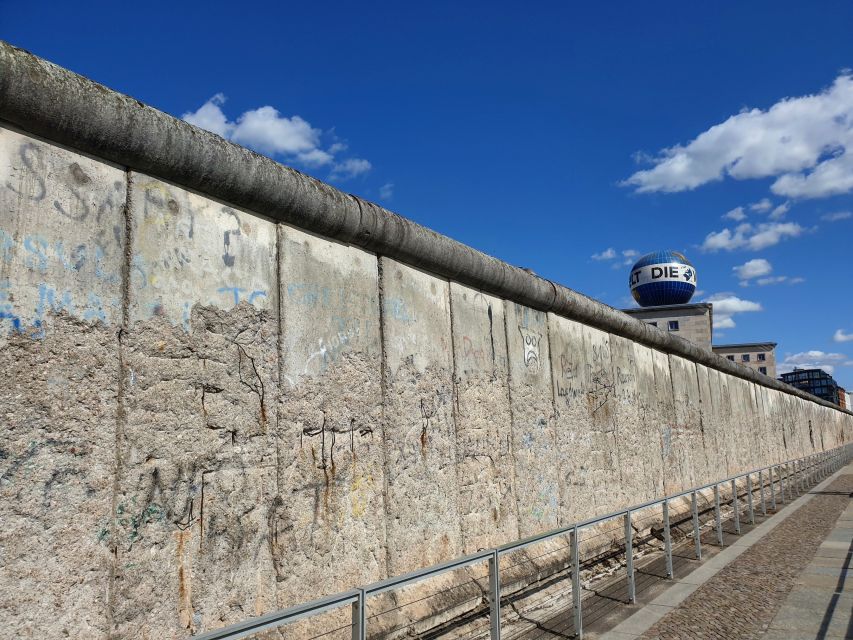
First comes the Berlin Wall segment, where you can see how the city’s physical layout shaped everyday life. It is one of those spots where history stops being abstract. A guide’s job here is to explain how the wall functioned as more than a barrier, it was a statement.
Next is the Topography of Terror area, where the tone turns serious. Even with a short stop, you get context about the machinery of repression and how Berlin became a center for that system. The value is not how long you stand in one place. The value is how the guide helps you connect it to what you see later.
Then you reach Checkpoint Charlie, one of Berlin’s most famous Cold War images. Here, the guide focuses on symbolism, who used it, and why it became the world’s recognizable face of division. If you like history that feels concrete, this part tends to be a highlight.
A small timing note helps you set expectations: you typically spend about 10 minutes in each major Cold War stop like Checkpoint Charlie and the bunker area. That is not “museum time.” It is enough time to get the story without turning the walk into a grind.
Hitler’s bunker area: context without sensationalism
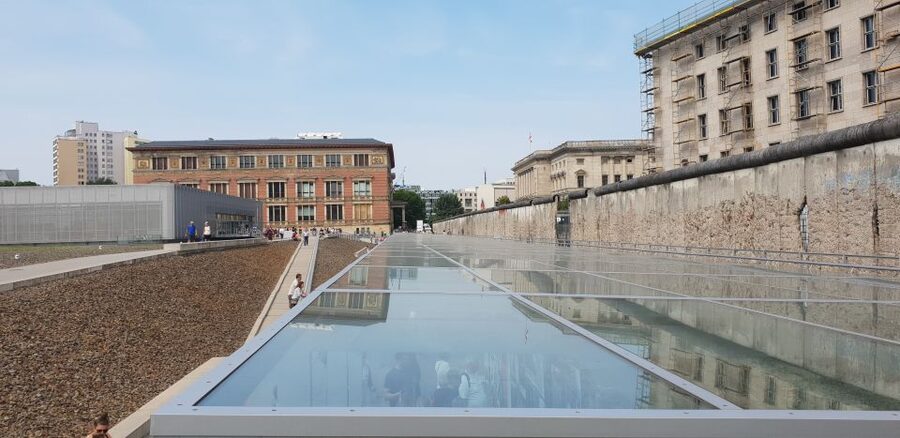
One of the most striking inclusions is the stop for Hitler’s bunker area. You will not be hunting for a dramatic ruin. Instead, you are there for context, to understand what happened here and why Berlin’s landscape ended up carrying the weight of those decisions.
The key is the guide’s framing. You are meant to connect this spot to the surrounding story: the rise of fascism, the war’s end, and the city’s transformation afterward. The guide’s role is to keep the stop grounded and respectful, not theatrical.
If you are sensitive to dark topics, this tour is still structured in a way that does not rush you from one heavy stop into the next with no transition.
More walking tours in Berlin:
- Discover Berlin Half-Day Walking Tour
★ 5.0 · 9,624 reviews - Berlin: Third Reich and Cold War 2 Hour Walking Tour
★ 4.9 · 6,830 reviews - Berlin: Discover Berlin Walking Tour
★ 4.9 · 5,998 reviews - Berlin’s Best: 2 Hour Walking Tour Third Reich and the Cold War
★ 5.0 · 5,486 reviews
Memorial to Murdered Jews of Europe: pause, reflect, and understand why it lands
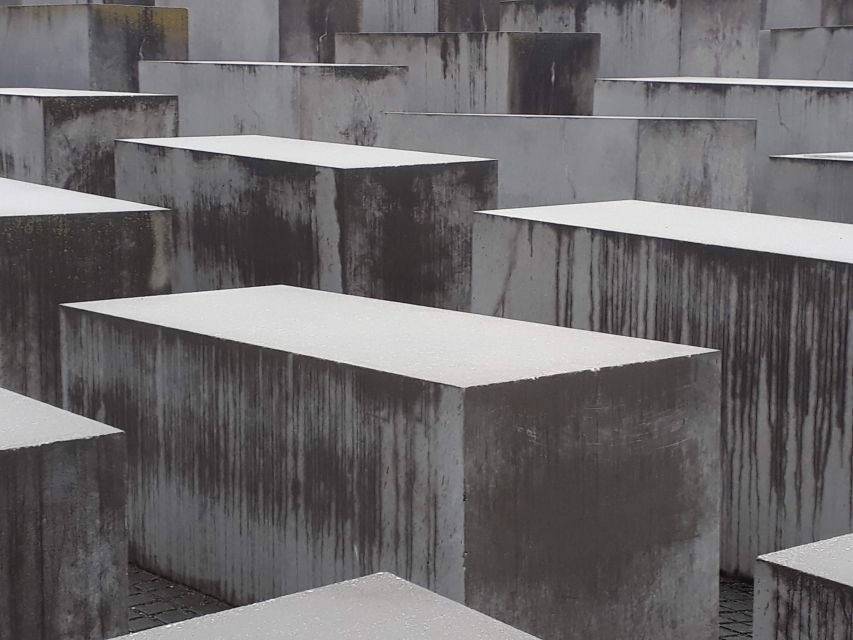
After the Cold War section, you shift into remembrance. The Memorial to Murdered Jews of Europe is approached with a slower feel, with a longer guided moment than most other stops.
You spend time here with the guide helping you understand what the memorial is trying to communicate, including why the design matters and how to look at it the right way. The practical value is that you do not walk past it like another monument. You learn how to treat it as a place of memory.
It is the kind of stop where I recommend you take the guide’s suggested pacing. Look, step back, and let the scale register. Even a short guided segment can help you get more out of the space than if you rely on your own interpretation.
Reichstag and Brandenburg Gate: power, rebuilding, and one big symbol
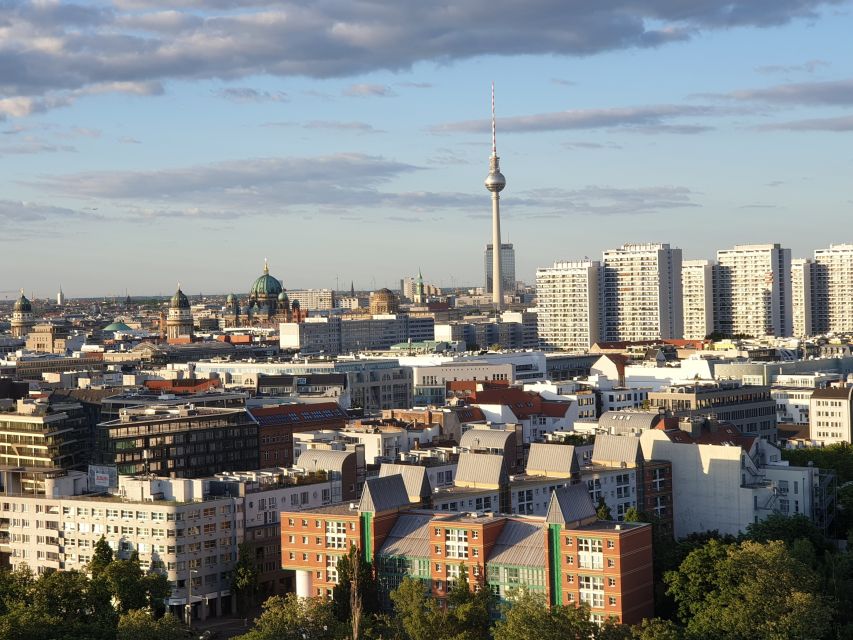
From memory and loss, the walk moves toward national identity and civic space.
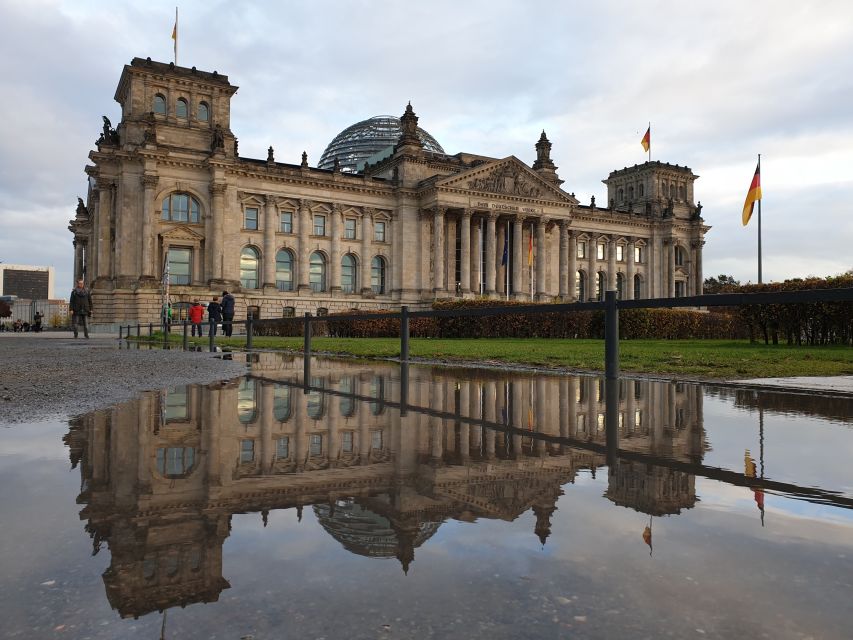
You get a stop at the Reichstag area with a brief guided explanation. The goal is to show why this parliament building and its surroundings matter in Berlin’s political story. Even if you are not going inside during this tour, seeing where power plays out helps you understand the city’s shifts.
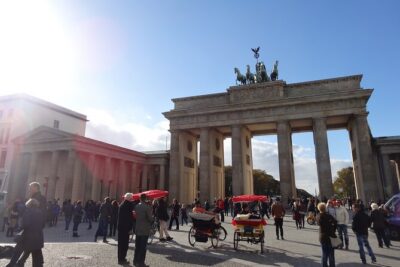
Then you reach the Brandenburg Gate, the classic end-of-arc landmark. You get a guided look that ties it to its historic role, including its 18th-century roots and why it still functions as a symbol today. The guided stop is followed by a break, which is smart. You will want a moment to reset, grab water, and get your legs back.
If you care about photos, this is also your best stretch. But do not treat it as a single selfie stop. With the guide’s context, the Gate becomes a readable piece of Berlin’s political evolution.
Unter den Linden and Bebelplatz: the city’s long corridor of ideas
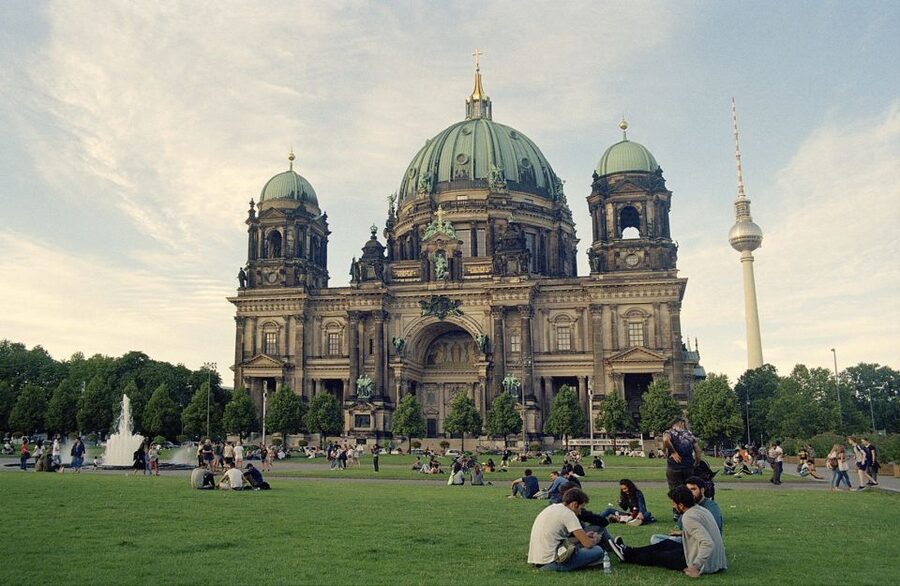
After the Gate, you walk along Unter den Linden, which is one of Berlin’s most famous central boulevards. The charm here is that the street acts like a spine. As you move, you see how different eras shaped the public face of the city.
The tour includes time for a guided stop at Bebelplatz as well. This is where you start seeing Berlin not just as politics and monuments, but as culture, education, and public life. Even if your day is already packed, this part helps your brain switch gears for a minute.
Also, this is one of the stretches where you can appreciate the scale. Potsdamer Platz feels like a point. Unter den Linden feels like a direction.
Museum Island and the Humboldt Forum: learning and reinvention in one route
Ending with Museum Island and the Humboldt Forum gives the tour a satisfying finish. You go from memorials and division into a Berlin that displays its ideas openly.
At Museum Island, you get a guided stop that connects the museums to the island’s role as an education hub. Even if you do not plan to enter any museum today, the perspective matters. You learn why these buildings are where they are, and how they fit into Berlin’s long obsession with culture and scholarship.
Then you move to the Humboldt Forum for a guided introduction. This part tends to work well because it shows how Berlin reinvents spaces in the present. The name alone signals learning, but the guide helps you understand the modern story layered onto older ground.
And that’s why this closing segment is valuable. You finish with a sense of how Berlin thinks now, not just how it suffered then.
Price and logistics: what $389 per group really covers
The price is listed as $389 per group, up to 6 people. That means you are not paying per head, so the value can be strong if you travel with friends or family who want the same route.
What is included is simple: a guide. You should plan for walking time, and for not being able to rely on public transit tickets being covered. The tour recommends buying a day public transport ticket for the AB zones, partly because getting to the meeting point is only half the story. Berlin is huge, and the tour does not end where you start.
Also, the duration is flexible, listed as 3 to 6 hours. That usually reflects pace, weather, and how the guide manages transitions between sites. In practice, this is a tour built for live guidance. If it rains hard or conditions are difficult, you might use the metro during the tour to keep things moving.
One more practical note: it is designed as a walking experience. If you want mostly bus and minimal steps, you may find the pace a bit much.
Who this tour suits best, and who should consider another plan
This is ideal if you want a guided “spine” through central Berlin. You will get the big names, but also the connections that make them make sense as a timeline.
It also suits you well if you care about speaking with a real person who can answer your follow-up questions as you stand at each site. The tour offers languages including French, Italian, Spanish, and English, so you can pick what you are most comfortable hearing all day.
I also see a clear fit for people who struggle to piece together Cold War geography on their own. Checkpoint Charlie and the wall areas are easy to photograph and hard to interpret without help.
If you have mobility challenges, the tour is listed as wheelchair accessible. Still, Berlin walking days can be uneven. If you have specific needs, it is worth contacting the operator before you go.
Real-world guide energy: what “good” looks like here
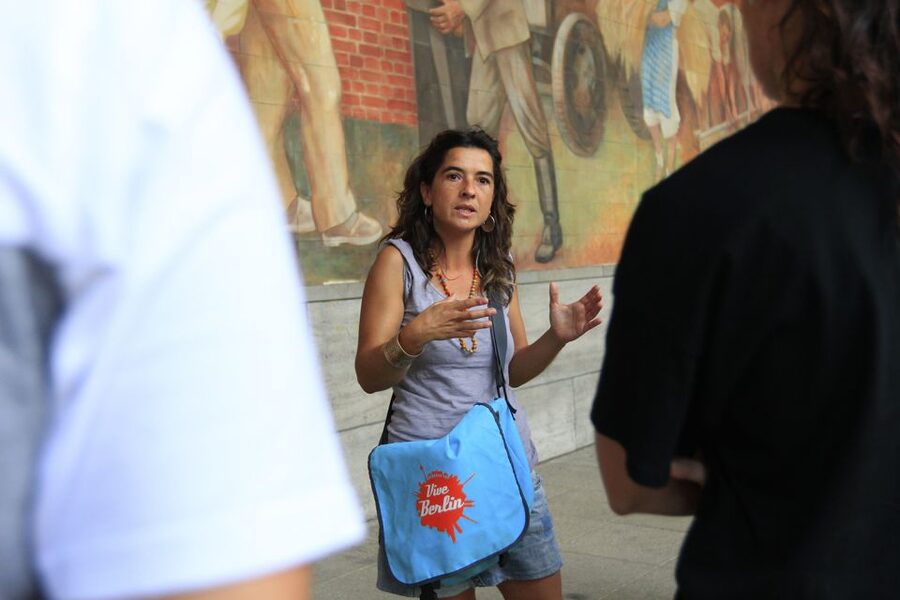
The most praised aspect in the guides’ approach is how they keep the walk from feeling like a textbook. Guides like Paul, Jean Charles, and Céline are specifically highlighted for turning monuments into stories you can actually remember.
Even in rough winter weather, the guides are described as handling conditions well while keeping the route understandable. That is not a small thing. Berlin in cold months can make a walking tour feel harder, so the ability to manage pace and explanations matters.
So if you are choosing between a self-guided map and a guided day, this tour leans toward the guided side for a reason. The guide is the product.
Should you book this Berlin walk?
Book it if you want one day that hits Brandenburg Gate, Holocaust remembrance, and the major Cold War landmarks in a single coherent route. It is especially good value at $389 per group when you can share the cost up to 6 people.
Skip it or adjust your expectations if you want an all-day, slow museum experience. This is not that. It is a focused walk with guided stops, so plan your evening accordingly.
My quick decision rule: if you want Berlin to make sense fast, and you like learning outdoors with a guide, this is a strong pick.
FAQ
FAQ
How long is the Berlin Historical Highlights Walking Tour?
It runs for 3 to 6 hours, depending on availability and the day’s timing.
Where does the tour start?
It starts from Potsdamer Platz. The exact meeting point can vary depending on the option you book.
Is public transport included in the price?
No. Public transport tickets are not included. The tour recommends getting a day ticket for the AB zones for getting to the meeting point and continuing your journey.
What is the group size and who is the tour for?
The price is listed per group up to 6. A small group is part of the experience, and private group options are available.
Which languages are offered for the live guide?
Live tours are available in French, Italian, Spanish, and English.
Can the tour include hotel pickup?
Pickup is optional. If you choose it, you should wait in the hotel lobby about 10 minutes before the scheduled pickup time.
Is the tour wheelchair accessible?
Yes, it is listed as wheelchair accessible.
Recently added around Berlin
- Berlin Private Custom Walking Tour With A Guide (Private Tour)★ 4.5 · 8 reviews
- One Up to 3 Rickshaws(6 GUESTS)-Taylor Made Rickshaw Berlin Tour★ 5.0 · 20 reviews
- Moonshine Comedy – English Stand Up Comedy by the bay★ 5.0 · 11 reviews
- Private Half-Day Berlin Sightseeing Tour with a Minivan Including Short City Walks★ 5.0 · 31 reviews
- Private taxi tour to Potsdam and Sanssouci 6-8h★ 5.0 · 30 reviews
- Private City Kickstart Tour: Berlin★ 4.5 · 71 reviews
- Private tour of Berlin★ 5.0 · 15 reviews
- Private Taxi Tour City East & West History and Architecture 3-4h★ 5.0 · 42 reviews
Historical Tours, compared.
Berlin Private Complete History All Day Walking Tour
Read our review →


Small group Potsdam: A Journey Through History and Palaces
Read our review →
Berlin Private Half-Day Walking Tour: Discover the German Capital’s History
Read our review →Browse the lists this tour appears in