
Reviewed · HISTORICAL TOURS
Berlin Private Complete History All Day Walking Tour
Berlin is the kind of city where history is not on a shelf. It is on the pavement, in the stones, and in the spaces where people tried to survive. This private walking tour is interesting because it connects Berlin’s big turning points in one long day, from iconic East-West symbols to the places tied to Nazi rule and Cold War division.
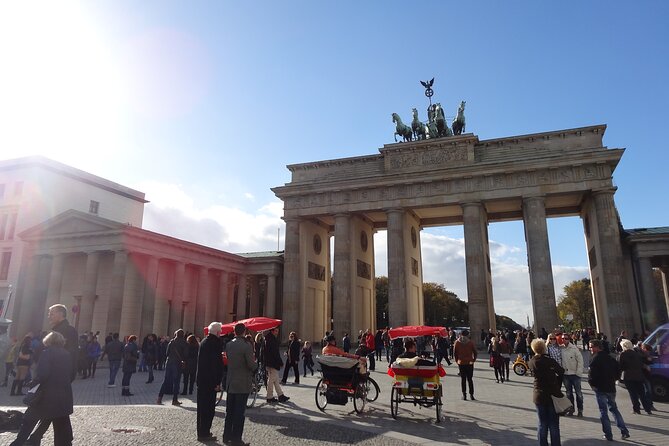
I love the private setup. You are not waiting for a group consensus or getting stuck listening to someone else’s questions. I also like how the guide can bring famous landmarks down to human scale, with photo moments at places like the Brandenburg Gate and context you can actually use while walking.
One drawback: it is a 6-hour walking day with stops that hit heavy themes. You will cover a lot on foot, and there is no food included, so plan water and a snack strategy, and be ready for emotionally intense memorials.
Key takeaways
- A true private tour means you can ask questions and steer the pace without slowing everyone else down
- World War II and Cold War sites in one run helps you understand why Berlin looks the way it does today
- Free-admission stops keep your money for meals, transit, and your next museum visit
- Guides like Rhys, Paul, Ciaran, Eugen, Darren, Beth, and Francisco are repeatedly praised for staying flexible and answering questions in plain language
- You finish at Alexanderplatz, a practical end point if you want to keep exploring or head to dinner fast
- No vehicles keeps it simple, but you need comfortable shoes
Start Where Berlin’s Stories Collide: Ebertstraße to Alexanderplatz
This tour is built for first-timers and return visitors alike, because it follows a logic that Berlin itself still shows. You begin at a meeting point on Ebertstraße, and you end near Alexanderplatz. That matters more than it sounds. Starting in the Mitte area means you get the central landmarks early, and finishing at Alexanderplatz gives you a major transit hub and lots of dinner options for later.
Also, this is not a bus day. It is a walking day with pickup on foot by the guide, which keeps you close to the street-level Berlin you actually want. You get to see the changes in architecture, the way neighborhoods feel, and the differences between restored civic spaces and memorial landscapes.
The route is also arranged for flow. Instead of zigzagging randomly, you move through layers of German history: imperial and pre-Nazi power, the Nazi dictatorship and its aftermath, the Cold War border mind-set, and then the city’s post-war rebuilding. You leave with a mental map, not just a list of photos.
More history tours in Berlin:
- Berlin: Natural History Museum Entrance Ticket
★ 4.6 · 3,382 reviews - Berlin: World Heritage Cruise to Potsdam
★ 4.5 · 1,435 reviews - Berlin Historical Highlights Walking Tour
★ 4.9 · 657 reviews
A Berlin Best-Of Walk for WWII and the Cold War Border Mind-Set
If you only visit Berlin’s major sights by themselves, you risk treating them like separate postcards. What I like here is that the tour treats them like connected chapters.
You get an early dose of symbolism at the Brandenburg Gate, including why it was built and how it became a focal point for Berlin’s shifting identity. Even if you have seen it in photos, it hits differently in person, because it sits at the intersection of politics, propaganda, and reunification memory.
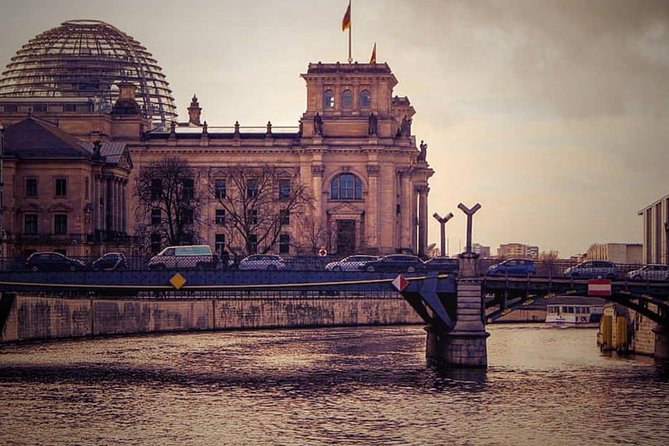
Then you move toward the Reichstag Building, often described as the most iconic building in Germany for a reason. The guide explains how it connected to the Hohenzollerns and how it played a major role in the solidification of Nazi dictatorship in early 1933. And because Berlin’s modern history is not tidy, you also hear what happened there during the Soviet battle for Berlin and what followed after reunification.
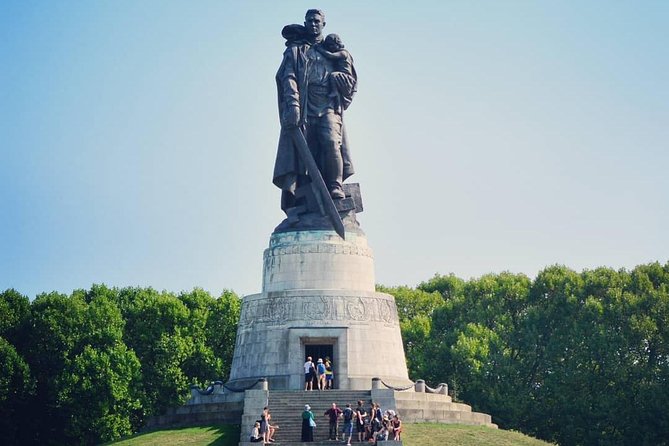
After that, the tone changes in a way that feels intentional, not random. You walk past the Soviet Memorial in Tiergarten, including details about its construction and an added layer of controversy tied to the symbolism. This is one of those stops where the guide’s job is to help you look without rushing, and to explain why the same object can mean different things depending on where you stand in time.
Tiergarten and the Victory Column: When Power Tried to Look Like Peace
Not every stop is a monument with a direct Nazi or Wall connection. Tiergarten helps balance the day and makes Berlin’s story feel more complete, because it was shaped by politics as much as by gardeners and city planners.
You walk through a slice of the park, learning how it developed from medieval times and how events in Berlin influenced the park itself. That gives context to the feeling you get in real life: Berlin looks green in places, but it is still a city built on careful control of space.
From there, you see the Victory Column from a distance. You learn when it was constructed and why, and you also get a surprising piece of information about where it used to be located. It is a small detour in the middle of heavy history, but it is a useful reminder that symbols can move, meanings can shift, and regimes often want monuments to look permanent.
The Holocaust Memorial and the Art of Saying Too Much With Too Little
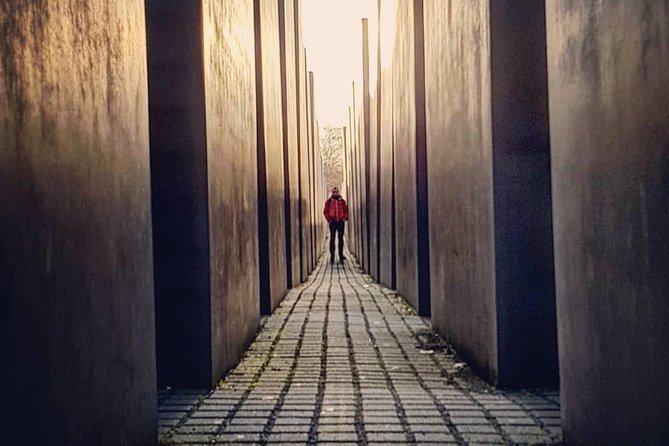
This is the emotional center of the walk. The Holocaust Memorial, Memorial to the Murdered Jews of Europe, is described as one of the most substantial and incredible memorials in Berlin, and it shows why.
What you get from a guided approach here is not trivia. It is structure. The guide can explain the design idea and how to hold your attention without being overwhelmed. You are not meant to rush through. You are meant to slow down enough to feel the weight of what is being remembered.
If you are the type who likes to read placards quickly, I would still push yourself to spend those moments inside the memorial space without multitasking. Take a few minutes. Let it land. A private guide helps because you can ask questions if something specific bothers you or confuses you, and you can do it in real time.
More walking tours in Berlin:
- Discover Berlin Half-Day Walking Tour
★ 5.0 · 9,624 reviews - Berlin: Third Reich and Cold War 2 Hour Walking Tour
★ 4.9 · 6,830 reviews - Berlin: Discover Berlin Walking Tour
★ 4.9 · 5,998 reviews - Berlin’s Best: 2 Hour Walking Tour Third Reich and the Cold War
★ 5.0 · 5,486 reviews
Fuhrerbunker and Johhan Georg Elser: The Last Days and the Almost
The tour’s WWII segment becomes very specific at the Fuhrerbunker site, described as the infamous parking lot/car park in the world. It is a strange feeling to visit a place associated with Hitler’s final days when it is presented in such an ordinary modern form. The guide helps connect the location to what happened there and why it is now treated as a historical site rather than a personal myth.
Then you meet the Johann Georg Elser sculpture and hear the story of the man who came painfully close to changing world history. Elser’s role is powerful because it complicates the usual story of inevitability. It reminds you that individuals can matter, even when they are crushed by bigger forces.
This is also where I like the private format most. If you want more depth on a specific person, a specific decision, or a specific turning point, your guide can follow that thread without worrying about keeping a large group moving.
From Aviation Ministry to Topography of Terror: How Berlin Stores Its Past
Not every stop is a museum building. Some are imposing streetscapes that still carry the memory of what happened inside.
At the Aviation Ministry of Berlin, the guide shares why the building was in continuous use since 1936 and why it became a witness to the turbulent 20th century. It is a reminder that bureaucratic structures were part of the machine, not just background scenery.
Topography of Terror is one of the toughest stops. You enter the site of the former SS, Gestapo, and SD headquarters in Berlin, with the guide framing it as one of the points of evil with Nazi Berlin. Then you also get what happened post-war with the site. This is where a good guide matters because the space can feel cold if you only read facts. With context, it becomes a place where the system’s gears are easier to understand.
The Berlin Wall Memorial and Checkpoint Charlie: Trying to Escape a Border Made of Concrete
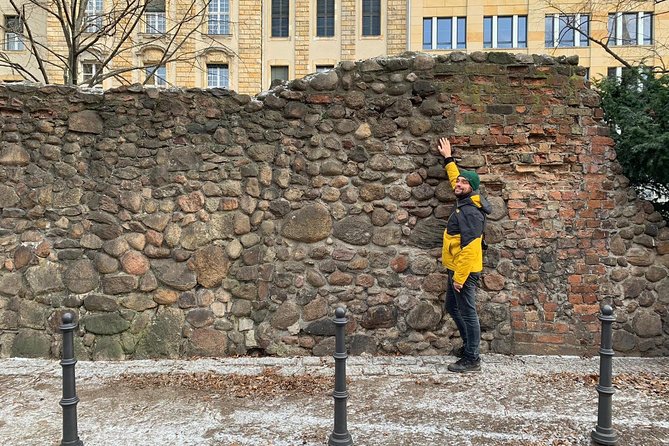
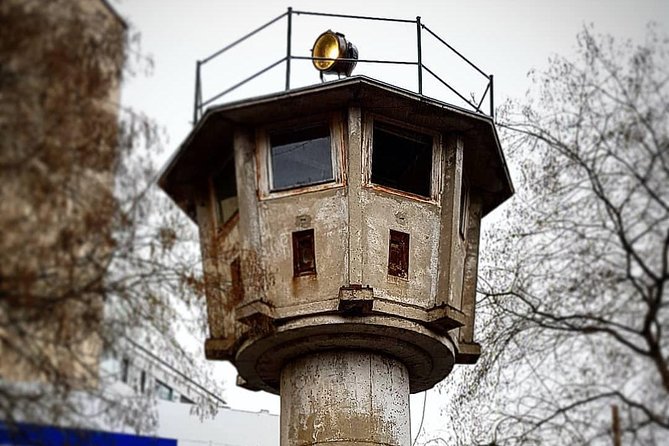
After the Nazi story, you walk into the Cold War reality. The Memorial of the Berlin Wall includes a section of the Wall and stories of escapes and tragic deaths. This part is not about sensationalism. It is about the idea that physical borders can become life-or-death structures, and that Berlin citizens lived inside those consequences.
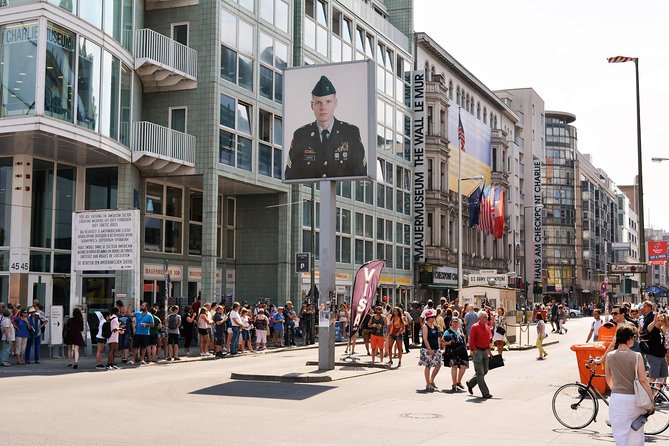
Then you hit Checkpoint Charlie, the most famous checkpoint and one of Berlin’s iconic Cold War sites. It is a tourist magnet, yes, but the guide approach keeps it from being empty. You get the border logic explained, how checkpoints functioned, and why this spot became a symbol.
A quick practical tip: this is a great moment to take photos, then ask your guide one more question about what made this crossing different. The answers help you avoid leaving with only images and not the meaning behind them.
Friedrichstraße, Gendarmenmarkt, and Bebelplatz: Berlin’s Culture Under Pressure
One reason this tour works is that it does not treat Berlin as only war history. Even during the darkest periods, people lived lives that included music, books, and public squares.
Friedrichstraße, once known as the Cabaret Mile, gives you a glimpse of social life. It helps you picture what Berliners did when they were not counting days until the next political shift.
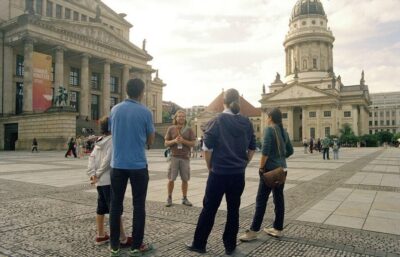
Gendarmenmarkt is a different kind of emotional reset. The guide explains the origins of the square and how it developed into an architectural gem. It is one of those places where you can feel the city’s desire to look elegant, stable, and proud.
Then Bebelplatz brings you back to pressure and control, including the Catholic cathedral (St. Hedwig’s), Humboldt University’s law faculty, the City Opera House, and the site connected to Nazi book burnings. The memorial present in the square is thought-provoking for a reason, and a guide’s context makes it easier to understand what you are looking at and why the space was kept.
Museum Island and Humboldt Forum: UNESCO Beauty With Complicated Timing
Museum Island is a UNESCO World Heritage area, and you walk through it with the guide explaining how the island developed and how the museums, cathedral, and architects came together. Even if you are not museum people, this stop helps you understand why Berlin invests in cultural institutions as part of its identity.
You also visit the Humboldt Forum and hear its complicated, surprisingly recent history. That phrase matters because it fits Berlin today: the city is constantly renegotiating what it preserves, what it rebuilds, and how it tells its own story.
This section is a good time to slow down and ask about what you plan to see next. After hearing how the island formed and how the forum evolved, you will have better instincts for what museum topics to prioritize later.
St. Mary’s Church and Alexanderplatz: Survival, Continuity, and the DDR Capital
The tour continues with St. Mary’s Church, described as the oldest church in Berlin in continuous use, and an architectural gem and lucky survivor. You get a chance to step into a place that made it through the city’s many disruptions, and that perspective gives your day a sense of continuity.
Then you finish at Alexanderplatz, rebuilt after the war as the capital of the DDR. It is a practical ending point, but it also acts like a final chapter. You close the day by landing in a space that shows how the Cold War didn’t just split Berlin. It also reshaped its center.
If you still have energy after the tour, this is where it pays off. You can stay nearby for dinner, pop into shops or viewpoints, or take transit to a museum you now understand better because of what you just heard walking over to it.
Guide Style and Group Experience: Why This Private Walk Feels Like a Conversation
The standout theme in the praise is how the guide runs the day like a real conversation, not a scripted lecture.
Names like Rhys, Paul, Ciaran, Eugen, Darren, Beth, and Francisco show up again and again, and the recurring idea is simple: they answer questions, they adapt to the group, and they keep the pace from turning into a sprint. One review even mentions a guide helping break up the day for teens with a practical distraction during the walk, which tells you something important. This is not just for adults who want to stand still and listen.
You should also expect flexibility if you have specific interests. The tour can pivot toward the parts of Berlin that grab you most, whether that is WWII details, Cold War escape stories, or how modern Berlin chooses to memorialize the past.
One more practical note: because it is private, you will feel more comfortable asking the clarifying questions that many people are too shy to ask on a group tour. If a symbol feels unclear, if a timeline seems messy, or if you want a photo at a specific angle, your guide can help you do it.
Price and Value: Paying for Time, Not Just Tickets
At $253.95 per person for about 6 hours, this is not a budget stroll. You are paying for three things you cannot fake.
First, you are paying for the private guide time. That is the core value. Second, you are paying for a route that packs a lot of major Berlin history into one day without relying on a vehicle. Third, the stops are marked free admission in the tour description, which means you can spend more on meals and optional museums later.
Is it worth it? If your time in Berlin is limited, and you want context fast, it often is. If you already have strong background knowledge and love planning your own routes with lots of reading, you might feel less pressure to pay for this kind of guided pacing.
For me, the tipping point is this: Berlin’s history is emotionally heavy and politically layered. Having a guide help you connect the dots makes the walk feel like it builds understanding, not just endurance.
Who This Tour Suits Best, and Who Should Think Twice
This tour fits you best if you want a structured first-day overview of Berlin’s WWII and Cold War story, plus the big civic landmarks that shape the city. It also fits well for couples and small groups because the private format makes it feel personal.
It may be less ideal if you want a light, casual day. This walk includes the Holocaust Memorial, the Fuhrerbunker site, and Topography of Terror. Those are not easy topics, and the day is long.
Comfort matters too. You should come prepared to walk for about 6 hours at the pace of your group. Comfortable shoes are non-negotiable, and you should plan simple snack and water breaks since food is not included.
Should You Book This Private Complete History Walking Tour?
If you want to understand Berlin, this is a strong booking. You get major landmarks tied to Nazi history, Cold War division, and Berlin’s post-war rebuilding, all arranged into one continuous walking storyline. The guides repeatedly earn praise for flexibility, for answering questions in a way that sticks, and for making the day feel like it belongs to your group.
I would book it if:
- You have limited time in Berlin and want your bearings fast
- You like your history grounded in real places, not just museum walls
- You want a guide who can explain tough material clearly and adjust to your interests
Skip or reconsider if:
- You need a very relaxed day with minimal walking
- You are not up for emotionally heavy memorial sites
- You prefer self-guided travel with lots of independent reading
Overall, this is the kind of tour that helps you stop seeing Berlin as separate sights and start seeing it as one ongoing story.
FAQ
How long is the Berlin Private Complete History All Day Walking Tour?
It runs for about 6 hours.
Is this tour a walking tour, and do you use transportation?
Yes, it is a walking tour and there is no private transportation. Pickups happen on foot with the tour guide.
What language is the tour offered in?
The tour is offered in English.
Where do you meet and where does the tour end?
You start at 10117 Ebertstraße 24, Berlin and you end at Alexanderplatz, 10178 Berlin.
Is there admission to pay at the stops?
The tour details show each stop with admission ticket free.
Is it a private tour, and how does cancellation work?
It is a private tour with only your group participating. You can cancel for a full refund up to 24 hours in advance of the experience start time.
Recently added around Berlin
- Berlin Private Custom Walking Tour With A Guide (Private Tour)★ 4.5 · 8 reviews
- One Up to 3 Rickshaws(6 GUESTS)-Taylor Made Rickshaw Berlin Tour★ 5.0 · 20 reviews
- Moonshine Comedy – English Stand Up Comedy by the bay★ 5.0 · 11 reviews
- Private Half-Day Berlin Sightseeing Tour with a Minivan Including Short City Walks★ 5.0 · 31 reviews
- Private taxi tour to Potsdam and Sanssouci 6-8h★ 5.0 · 30 reviews
- Private City Kickstart Tour: Berlin★ 4.5 · 71 reviews
- Private tour of Berlin★ 5.0 · 15 reviews
- Private Taxi Tour City East & West History and Architecture 3-4h★ 5.0 · 42 reviews
Historical Tours, compared.


Small group Potsdam: A Journey Through History and Palaces
Read our review →
Berlin Private Half-Day Walking Tour: Discover the German Capital’s History
Read our review →Browse the lists this tour appears in