
Reviewed · HISTORICAL TOURS
Berlin Protest History Tour: Rebels, Resistance, and Revolution
Berlin has a knack for putting politics in plain sight, and this walk does it in a very human way. You’ll move through places tied to resistance, revolution, and public protest, with stories anchored to buildings you can actually stand next to.
I especially like that it starts with Berlin’s official heart, the Rotes Rathaus, then switches to East German symbolism and missing chapters. I also love how the route keeps returning to ordinary people taking risks, from 1943 civil disobedience to 1989 street defiance.
One consideration: it’s weather dependent, and it is a walking tour with a set route and stops, so you’ll want comfy shoes and an easy pace.
Key highlights you should not miss
- Stone timelines at Rotes Rathaus, built to read Berlin’s past as a story in public art
- East German symbolism and omissions, including how the Berlin Wall is handled in one timeline setting
- Rosenstraße 1943, a powerful look at civil disobedience against the Final Solution
- Unexpected landmarks, like St. Mary’s Church and Martin Luther King’s 1964 sermon
- 1989 Peaceful Revolution details, including a young protest action remembered by the fountain
- A clean finish at Weltzeituhr, the rotating world clock at Alexanderplatz
Why a protest-history walk works so well in Berlin
Most Berlin tours tell you dates. This one tells you why people acted. You’ll see how power tries to manage the story, then how resistance finds cracks to move through anyway. That contrast is the whole point of the “rebels, resistance, and revolution” theme.
The route is also practical. It is compact enough to feel manageable, and it stays focused on key sites where the past shows up in architecture, monuments, and public space. If you like your history grounded in the real city, this format fits.
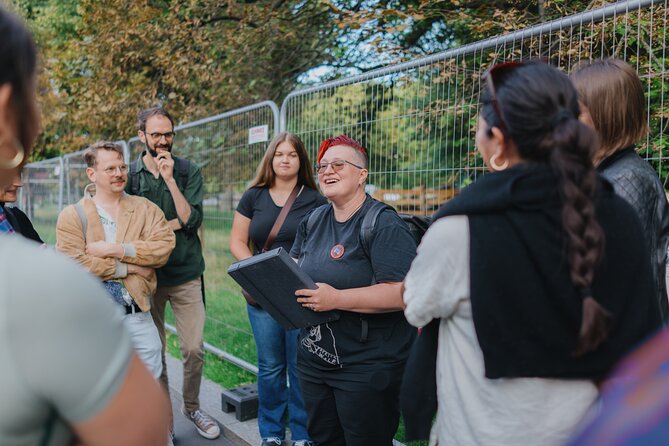
Finally, the human delivery matters. The guides from Beyond and Beneath, including Martina and Simone as named in feedback, are praised for connecting small details to big events without making it feel like a lecture. You get to notice what you’d otherwise step past.
More history tours in Berlin:
- Berlin: Natural History Museum Entrance Ticket
★ 4.6 · 3,382 reviews - Berlin: World Heritage Cruise to Potsdam
★ 4.5 · 1,435 reviews - Berlin Historical Highlights Walking Tour
★ 4.9 · 657 reviews
Start at Rotes Rathaus: a city timeline in terracotta
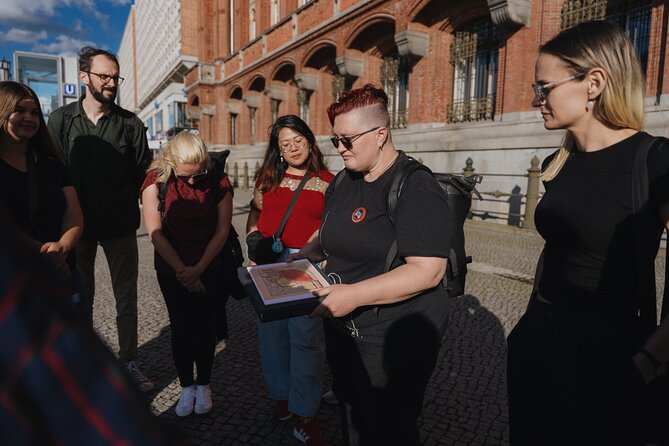
You begin at the sculpture Aufbauhelferin by Fritz Cremer near Rotes Rathaus, a strong choice because it puts you next to Berlin’s civic identity right away. The guide then takes you to the terracotta timeline that circles the building. It’s a long, public-facing “history read” in stone and tile, and it sets the tone for how Berlin likes to narrate itself.
At this stop, you’ll learn about Berlin’s origins and the causes behind a major early uprising. Even if you already know the general outline of the city, you’ll likely find yourself rethinking how early resistance is framed when it is carved into government-facing architecture.
Practical tip: use this first stop to calibrate your mental map. By the time you turn the corner, you’ll understand how the tour “reads” buildings, not just facts.
Nikolaiviertel and Mutter Hoppe: socialist spectacle, but with clues
Next you head toward Nikolaiviertel, where you’ll see a very visible piece of East Berlin self-presentation. The area was built as part of Berlin’s 750th anniversary, and the look is often described as socialist kitsch. The tour highlights that beneath the style, you’re also catching the last remnants of the Palace of the Republic.
This matters because the Palace of the Republic wasn’t only a political building. It was also tied to East German parliamentary life and entertainment in the socialist half of the city. So you get a double layer: government authority on one side, public culture on the other.
Then the tour shifts to Gasthaus Mutter Hoppe, positioned as an East German “answer” to the Red Town Hall’s timeline. Here’s the kind of detail this walk is built around: the timeline shows major moments in socialist country history, but it has an obvious absence, the Berlin Wall.
That missing element is a great lesson in how regimes edit memory. You’ll spend a few minutes looking at what is included, then what is left out. It’s one of those moments where the guide’s explanation makes the street feel like a document.
Marx-Engels-Forum: politics in bronze and debate in real time
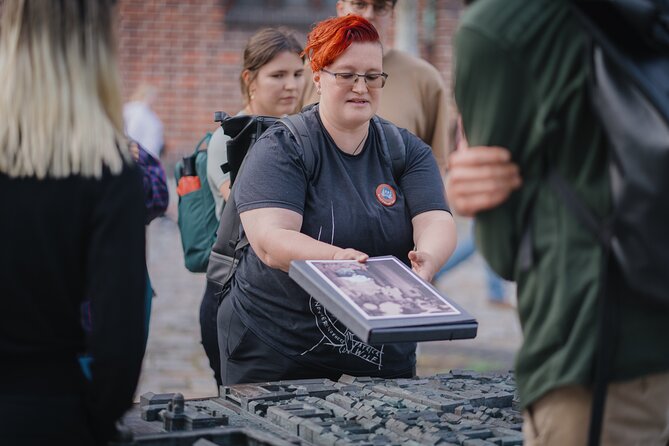
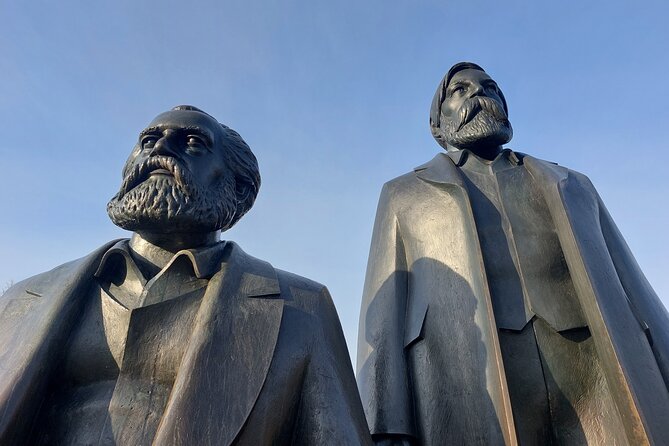
At Marx-Engels-Forum, you meet Karl Marx and Friedrich Engels in statue form. The statue of the two socialist philosophers has drawn debate over the years, and the stop is a chance to talk about how public art becomes a public argument.
Even if you know the names, you’ll benefit from how Berlin treats their image in space. This is where you’ll start connecting the theme of the tour to a bigger idea: revolutions do not end when the fighting stops. They continue in symbols, in schools, in statues, and in what gets taught or argued.
If you like political history but hate dry storytelling, this stop works because it’s tied to a tangible object you can see from multiple angles.
Still in Berlin, but a different kind of day:
- Berlin: Reichstag, Dome and Government District Guided Tour
★ 4.7 · 18,288 reviews - Berlin: 1-Hour City Tour by Boat with Guaranteed Seating
★ 4.3 · 16,993 reviews - Berlin: Boat Tour Along the River Spree
★ 4.4 · 11,252 reviews - Discover Berlin Half-Day Walking Tour
★ 5.0 · 9,624 reviews
Humboldt Forum and the March Revolution of 1848
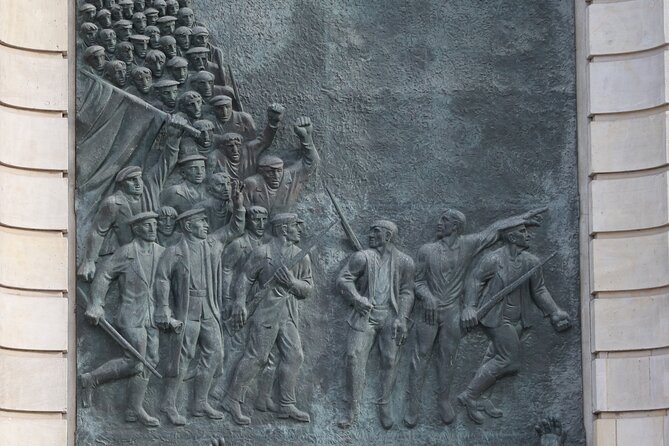
Next you reach the Humboldt Forum, where the rebuilt Berlin Palace sets a powerful stage. The tour explains that the original palace was a witness to protests and revolutions, with special attention to the March Revolution of 1848.
This is where the walk stops being only about twentieth-century Berlin. You’ll trace the idea that seeds of German democracy were planted in that 1848 moment, and you’ll see how the built environment becomes a backdrop for civic change.
A useful way to think about this stop: a palace is supposed to signal permanence. But revolutions thrive on the fact that “permanent” things can crack. Humboldt Forum lets you stand in that tension.
Rosenstraße 1943: civil disobedience that stands out for a reason
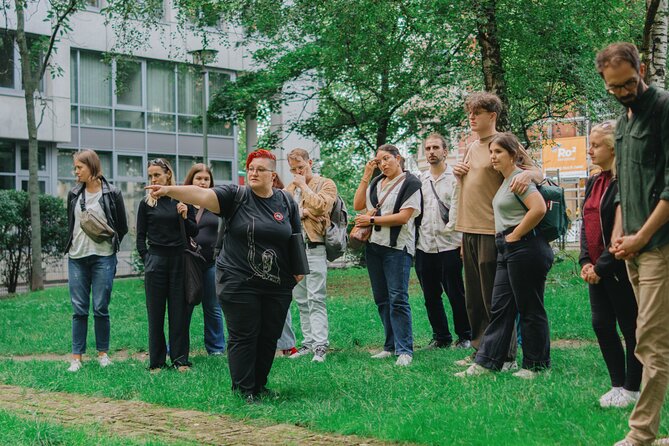
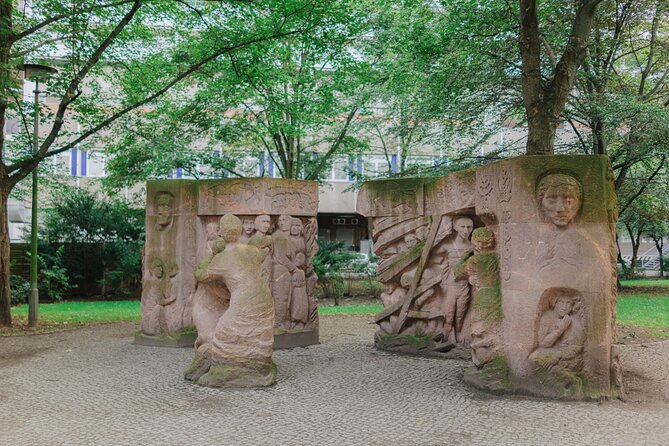
Rosenstraße is the stop that can hit you hardest. You’ll see the monument for the women who staged civil disobedience in the cold winter of 1943. The tour frames it as the only protest by Germans against the Final Solution.
That claim is heavy, and it changes how you read everything around the street. The guide also connects the story to Jewish life under Nazi rule and points out the foundations of what is described as the oldest synagogue in Berlin.
This is not a “quick photo op” moment. Plan to stand, listen, and let the information settle. If you’re sensitive to WWII subject matter, you may want a moment afterward to regroup before moving on.
St. Mary’s Church: a 1964 Martin Luther King sermon in Berlin
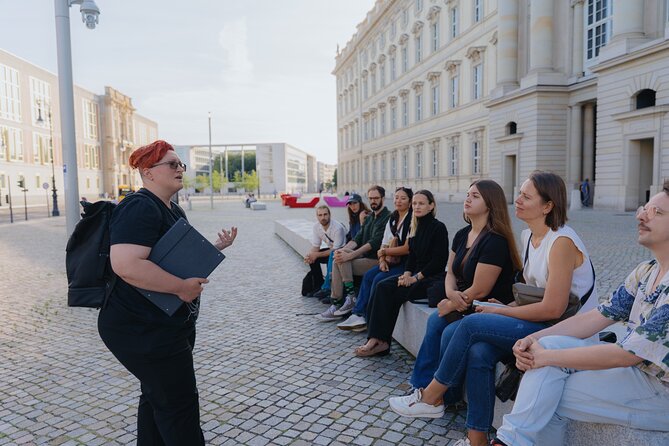
Then the tour shifts to St. Mary’s Church, one of the oldest churches in Berlin. The reason it matters here: Martin Luther King delivered a sermon to a huge crowd in 1964.
That detail is easy to miss if you only think of King in terms of the United States. This stop helps you understand how ideas about civil rights and moral protest travelled and found an audience abroad.
It also keeps the tour’s theme moving forward. You’re no longer only dealing with German political upheaval, you’re seeing how global activism lands in Berlin’s historical spaces.
Berlin Television Tower: communist power made into a landmark
At some point along the route, you’ll catch sight of Berlin’s Television Tower. It’s described as a landmark of the city and a symbol of communist power. For many people, it’s mainly a skyline feature.
For this tour, it becomes a visual shorthand. When you look up, the guide helps you connect what the tower represents politically to the lived reality of the era. It’s one of the ways the tour uses big urban markers to anchor complicated themes.
Tip: if the weather is clear, this stop is a good moment to take a wider view. The tower tends to pull the eye, and it helps you understand why East Berlin had such strong visual statements.
Brunnen der Völkerfreundschaft and the T-shirt protest of 1989
One of the most engaging parts comes at Brunnen der Volkerfreundschaft. The tour traces the Peaceful Revolution of 1989 and walks you through the sequence of events that led to the fall of the Wall.
You also hear about young East German oppositionists who staged a T-shirt protest by the fountain in autumn 1989. That specific image is memorable because it sounds simple, like something students would do, not like a military action. It’s the kind of detail that turns “1989” into a set of human moments.
If you’ve read about the Wall’s collapse in broad strokes, you’ll likely enjoy how the guide keeps shrinking the timeline until you can picture people on the ground, taking small risks that add up.
Weltzeituhr: finishing at the rotating world clock
Finally, you end near Weltzeituhr, the world time clock by Alexanderplatz. The clock is described as rotating, and it shows time in 148 cities around the world. It’s also a popular meeting spot in East Berlin.
This ending is smart. After hours of Berlin-specific political struggle, you get a symbolic pivot outward to the rest of the world. You also land in a place with obvious transit and an easy meetup point for onward plans.
Practical tip: since the route ends at the world clock, it’s a great moment to check your dinner plan. Alexanderplatz has lots of options, and you’ll be well positioned to move on.
Price, time on your feet, and whether it feels like value
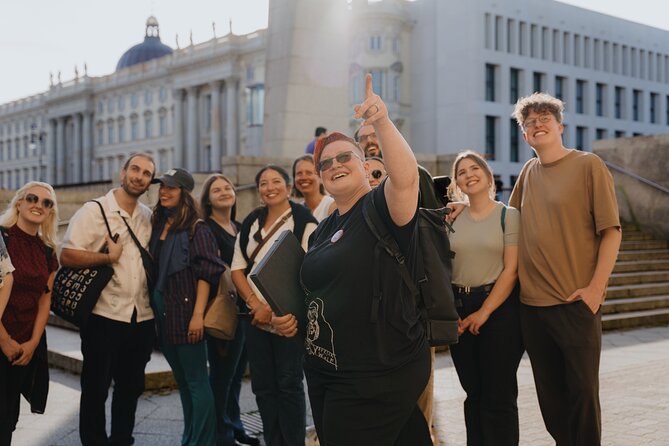
The price is $30.04 per person for about two hours, in English, with an expert guide and a mobile ticket. The group size is capped at a maximum of 15 travelers, which usually helps you get more direct answers instead of feeling like you’re stuck listening over a crowd.
There’s also something subtle about the value here: most stops listed are free to access, so you are paying for the interpretation and guidance, not for entry fees. For a history theme, that often makes the difference between “I saw buildings” and “I understood why those buildings matter.”
One more plus is the walking pace. A short stroll is part of the design, and feedback notes it stays compact, around two kilometers. That makes it a good choice if you want depth without committing to a long, exhausting day.
Who this tour is best for
This tour is ideal if you want Berlin’s protest history connected to specific sites. It’s also a strong fit if you like the way East and West Berlin narratives intersect at street level.
You’ll likely enjoy it most if you care about at least one of these threads:
- East German state symbolism and how it shaped public memory
- WWII-era resistance and moral courage, especially the Rosenstraße story
- Civil rights connections, like the Martin Luther King moment in 1964
- The everyday feel of 1989 protests, including the T-shirt action
If you only want a high-level overview of Berlin’s timeline, you might find the number of stops too concentrated. But if you like details you can picture later, you’re in the right place.
Quick booking checklist, plus the one thing to watch
A few practical points to consider before you go:
- Confirm you’re booking for the English experience.
- Plan for a walking route with a fixed start and finish.
- Bring comfy shoes, and dress for the weather. The tour is noted as requiring good weather.
The meeting point is the sculpture Aufbauhelferin by Fritz Cremer near Rotes Rathaus on Jüdenstraße. The end point is by the World Time Clock at Alexanderplatz (Alexanderpl. 1). Getting there early helps you start calm instead of rushed.
Should you book this Berlin Protest History Tour?
Book it if you want Berlin’s resistance and revolution story told in a way that sticks. I like that it doesn’t just name events. It ties them to public spaces where politics becomes something you can see, read, and argue with.
Skip it only if you want a long, wide-ranging sightseeing day or if you dislike WWII and 1943 subject matter. The Rosenstraße stop is not light, and the tour treats it seriously.
If you’re planning just one “history with meaning” walk in Berlin, this is one of the best ways to spend two hours, especially because it ends right where you can easily continue your day around Alexanderplatz.
Recently added around Berlin
- Ultimate E-Bike Tour of Berlin with Beer Garden Stop★ 5.0 · 4 reviews
- Berlin: guided canoe | kayaktour★ 4.1 · 7 reviews
- Where It All Began: Berlin’s Queer & Trans History Tour★ 4.9 · 6 reviews
- Understanding Kreuzberg: The roots of local (sub)culture★ 4.9 · 11 reviews
- Warnemuende Shore Excursion: Private Berlin Tour★ 4.5 · 27 reviews
- Your ticket to The Wall Museum Berlin★ 3.0 · 60 reviews
- Love and War in Berlin: Self-Guided Story Puzzle Walk★ 5.0 · 7 reviews
- eSIM for Germany and 34 European Countries★ 4.5 · 16 reviews
Historical Tours, compared.
Berlin Private Complete History All Day Walking Tour
Read our review →

Small group Potsdam: A Journey Through History and Palaces
Read our review →Browse the lists this tour appears in