
Reviewed · THIRD REICH & WW2 HISTORY WALKS
Clash of Titans: Battle for Seelow Heights WW2 tour
Clash of Titans: Battle for Seelow Heights is the kind of Berlin-area day trip that actually changes how you picture the war. You trade headlines for real terrain, and your guide connects the dots from the Soviet advance to the German fight on the heights.
I especially like the small group size and the way it keeps you in sync with the story, not stuck listening to a lecture from the back. I also like that you get comfortable transfers plus museum time, so you can focus on what you are seeing instead of logistics.
The main thing to consider is that this is a heavy subject, and you will do some walking on uneven ground. If you prefer easy, purely scenic sightseeing, this may feel too intense for your taste.
Quick takeaways before you go
- Max 7 travelers means more guide attention and room to ask questions
- Seelow Heights museum stop includes a guided intro and access to exhibits
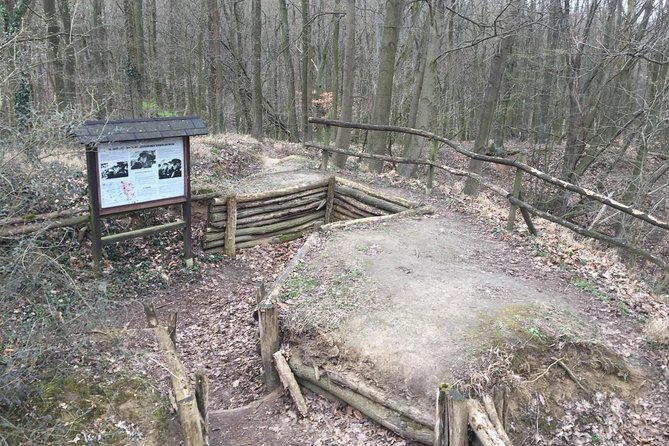
- Reitwein trenches and Zhukov’s viewpoints turn abstract history into something you can stand on
- Dolgelin and the German command posts explain how hard the crossing really was
- Cemeteries and memorial sites add context on both sides and the cost of the fight
- Lunch is not included, so plan what you will do for food
Why Seelow Heights hits harder than a typical WWII tour
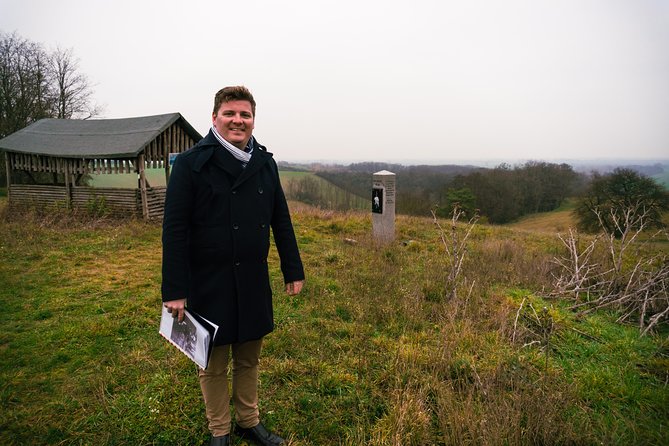
Seelow Heights sits on the edge of Berlin’s story, but it also sits right in the middle of the Eastern Front reality. In April 1945, this was where the Soviets pushed toward Berlin, and where German defenses fought with brutal urgency, often from hardened positions close to the front line.
What I like about visiting these sites is that they do not let you stay in the abstract. When you stand near command posts, trench remnants, and viewpoints linked to key decision points, the “why” behind the battle becomes clearer. The terrain shapes everything, from where you can see, to how you move, to what happens when an advance stalls.
One more point: guides on this route tend to talk about the battle in stages, not as one giant blob of dates. That gives you a mental map fast, even if you are new to the subject.
Other Third Reich and WW2 history walks in Berlin:
- Berlin: Third Reich and Cold War 2 Hour Walking Tour
★ 4.9 · 6,830 reviews - Berlin’s Best: 2 Hour Walking Tour Third Reich and the Cold War
★ 5.0 · 5,486 reviews - Third Reich Berlin: Hitler and WWII Walking Tour
★ 5.0 · 3,301 reviews
Price and what you are really paying for ($167.74 for 7 hours)
At about $167.74 per person for roughly a 7-hour day, this is not the cheapest Berlin tour. But it is priced like a specialized, guided field trip, and you get several things that usually cost extra elsewhere.
You are paying for:
- A small-group format (maximum 7 travelers)
- Air-conditioned transport to scattered sites
- Museum entrance included
- Wifi and a bottle of water included
Lunch is not included, so you’ll need to budget for food on your own. Still, the value is strong because the day is built around specific battle locations that take time to reach and time to explain properly.
If you compare it to a basic city tour, the difference is simple: you are getting a guided “field lesson.” You leave with a far more grounded understanding of the fight for Seelow Heights than you would from a quick stop at a single memorial.
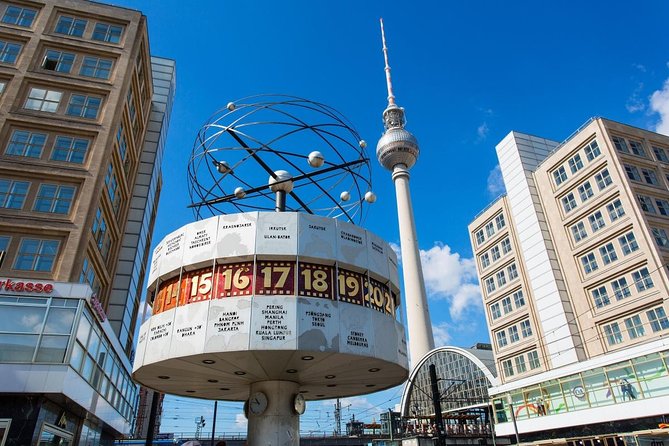
The day starts at Alexanderplatz, then moves fast toward the Oder Valley story
The meeting point is Alexanderplatz (Dircksenstraße 2, 10179 Berlin), with a start time of 9:15am. You will end back in central Berlin, with the guide dropping you at the meeting point or another central spot of your choosing.
This structure matters. A late start would leave you racing between sites, and you would lose the best part of the day, which is time at each location to absorb the ground and the timeline. Starting in the morning gives your guide room to pace the narrative and keep you from feeling like you are just “checking boxes.”
Expect a mobile ticket setup and an English-speaking guide. Service animals are allowed, and the sites are accessed by vehicle and short walks where conditions allow.
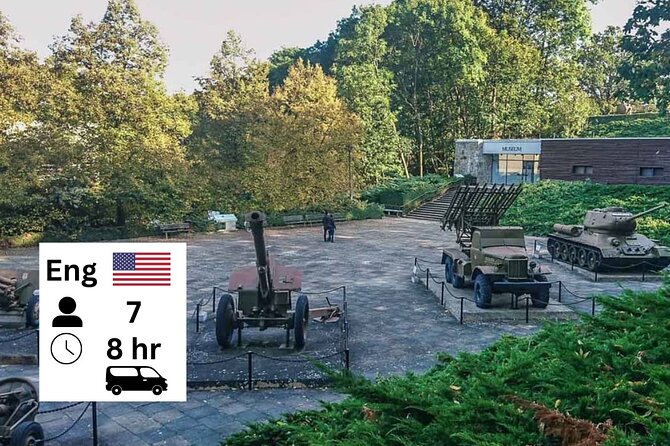
Stop 1 at the Gedenkstätte Seelower Höhen: museum first, then the bunker network
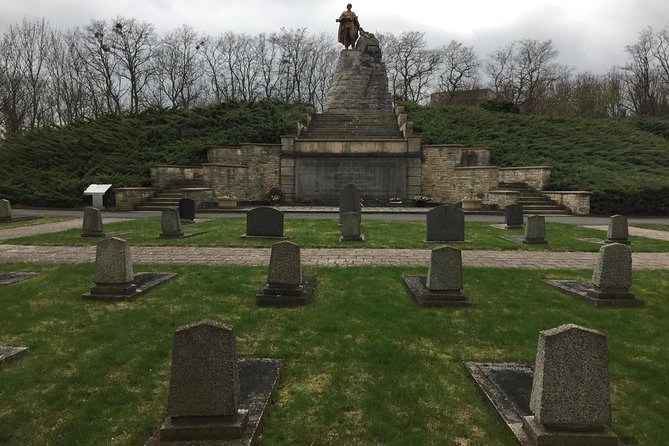
Your tour begins at Gedenkstätte Seelower Hoehen, where the guide gives you a detailed overview of the Berlin-Seelow offensive operation. This is the moment where you get the big picture and the terms you will need later.
You get two parts here:
- A guided introduction to what you are looking at
- Museum time on your own, so you can slow down and absorb at your pace
A standout detail is the 3D model of the Soviet 1st Belorussian Front bunker and trench network, tied to places you will visit later. It is a smart teaching tool because it turns later walking into something you can “place” in your mind.
Time on this stop is about 40 minutes, with the museum ticket included. The main drawback is also simple: this museum intro is where you may need to focus most. If you arrive half-asleep, you’ll feel it later when you are trying to connect viewpoints to the timeline.
Still in Berlin, but a different kind of day:
- Berlin: Reichstag, Dome and Government District Guided Tour
★ 4.7 · 18,288 reviews - Berlin: 1-Hour City Tour by Boat with Guaranteed Seating
★ 4.3 · 16,993 reviews - Berlin: Boat Tour Along the River Spree
★ 4.4 · 11,252 reviews - Discover Berlin Half-Day Walking Tour
★ 5.0 · 9,624 reviews
Reitwein, Zhukov’s command points, and the trenches you can still read
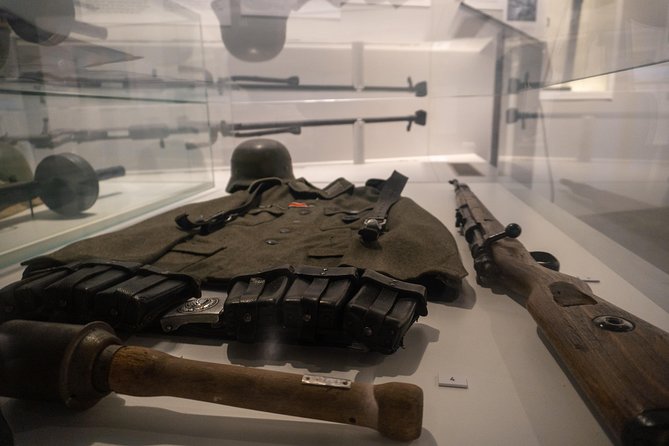
After the museum, you drive toward Reitwein, a small town with a huge role in the Soviet push. The tour sets up the scale of what was coming at Seelow, including figures like 768,000 infantry (including 78,556 Polish 1st Army soldiers), 3,059 tanks, 16,934 artillery and mortars, and 3,279 combat aircraft.
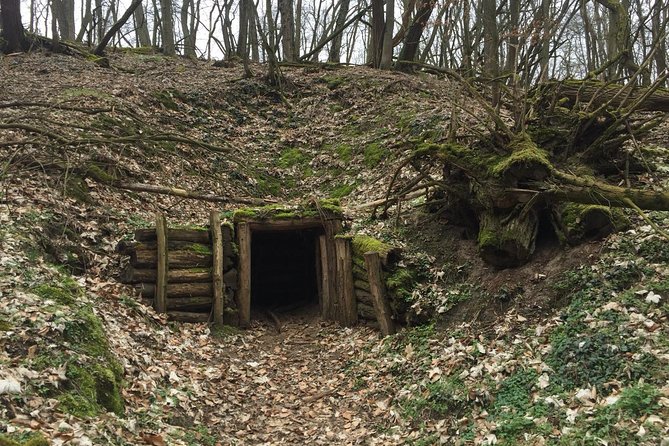
Then comes the part that many people remember most: the walk into the forest where you can see trench remnants. From here, the tour goes to key preserved features including Marshal Zhukov’s command bunker and observation point. Standing near those spots is one of those experiences that makes the battle feel less like an online history paragraph and more like a command decision carried out under pressure.
This stop sequence includes:
- A short drive through Reitwein, with about 20 minutes before the walk
- A walk through the forest to the bunker and trench network, about 30 minutes
Practical note: the terrain can be uneven and muddy depending on the season. Wear sturdy boots, not city sneakers. You do not need climbing gear, but you do need stable footing.
Dolgelin Railway station and the German defense under pressure
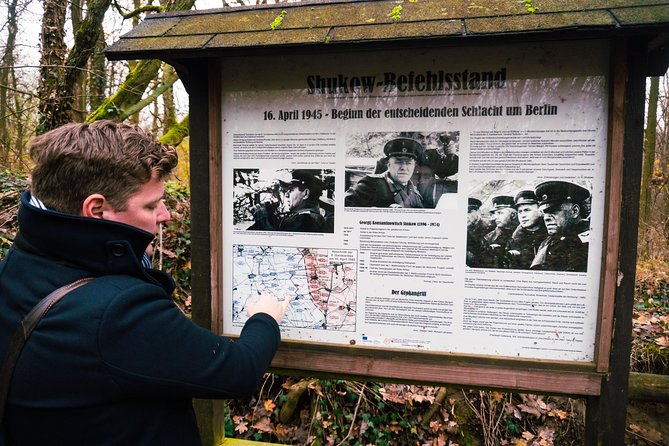
Next you head toward Dolgelin, specifically Dolgelin Railway station, where the German defensive command position was set up. The tour explains how Colonel Scheunemann, commander of the 303rd Infantry Division, used the area to run defense of the heights.
This stop matters because it answers a question your brain will have after Reitwein: if you are looking at Soviet preparation and trench lines, what did the German side do with time and terrain?
You also get the story of the crossing, described in the tour as a kind of shooting gallery, a brutally exposed space where the attackers faced extreme difficulties. The “why” is the key. You learn that the terrain is not neutral. It funnels movement, and it changes survival odds fast.
The time here is shorter, about 20 minutes, and a lot of that is tied to explanation plus a short leg of movement. It can feel quick, but it is the right pacing after the longer museum and forest walking.
Lietzen’s cemetery stop and the path of retreat back toward Berlin
As you move back, the tour passes through Lietzen, with a brief stop at the German field cemetery. This is not just a moment for quiet viewing. The guide connects what you see to the fact that the cemetery has been extended since German reunification, with newly found remains added regularly to the wartime graves.
That detail changes your mindset. You are not only looking at the past. You are seeing how later generations still work to identify and record the people left behind.
Lietzen also has an unexpected layer of older Europe built into the day. The town includes what is said to be Germany’s oldest barn and a manor house associated with the Knights Templar, dating back to 1252. It is a quick shift in time period, but it helps you remember that this region is not only a battlefield. It is lived-in land with deep roots.
This stop is about 30 minutes. You might wish it was longer if you like history beyond WWII, but the tour keeps the schedule so you still reach the final emotional stop in good time.
Jahnsfelde sports field: the field hospital attack and the artillery last stand
The final major stop is at Schlosskirche Jahnsfelde, in the town of Jahnsfelde. This is where the tone shifts to desperation.
The guide describes a sports field area that was once the site of a German field hospital, attacked by Soviet aircraft targeting red cross markings. After that, the tour covers the last stand of the 3rd Battalion of Artillery Regiment 18, including the idea that the battalion destroyed an estimated 100 tanks while paying a devastating cost.
The figures shared here are specific and sobering: around 8 officers, 163 killed, over two-thirds wounded, and the battalion’s guns lost during the withdrawal when it was caught by advancing Soviet armor.
This stop is about 20 minutes, but it is not “quick” in impact. You leave with a clearer picture of what it means when a defense position gets surrounded, and when medical and artillery functions get hit directly.
If you are sensitive to graphic war realities, take this moment slowly. Pause, breathe, and let the guide’s timeline settle in before you move on.
How the tour pacing works, and why the small group matters
This day is designed like a timeline on wheels. Museum context early, trench walking in the middle, then cemetery and last stand moments as the story moves toward Berlin.
The pacing is not accidental. It prevents the common problem with battlefield tours, where people see lots of sites but cannot connect them into a coherent story. Here, you keep learning new pieces, then you physically place them in the next stop.
The max 7 travelers limit also changes the feel. In a small group, your guide can correct misunderstandings in real time, answer questions as they come up, and adjust walking pace. Several people specifically mentioned the guide being considerate of slower walkers, which tells me the group size is being used for real rather than just marketing.
If you get a guide like Steve or Matt (names that come up in the experience), you should expect a passionate, question-friendly approach and maps used to connect the route and timings.
What to bring and how to plan for comfort (without losing the battlefield focus)
A few practical tips make a big difference on this kind of day.
Bring:
- Sturdy boots for forest paths and uneven ground
- A light layer depending on weather
- A small snack option if you easily get hungry, since lunch is not included
The tour includes a small bottle of water, and the format includes wifi. Some guides also add small extras like fruit or cookies, but that is not something you should count on every time. Plan as if only water is guaranteed.
Also, plan your lunch decision smart. There is time for lunch in the broader flow of the day, and having the guide’s suggestions can be helpful because you are in small towns where menu options may be different from what you expect in central Berlin.
Who should book this, and who might prefer something else
This tour is a great match if:
- You want more than a memorial photo stop
- You like WW2 history with specific locations and command decisions
- You enjoy maps and clear timelines that you can connect to physical ground
- You want a guided battlefield day without a huge crowd
It might be less ideal if:
- You want a purely scenic outing with minimal emotional weight
- You dislike walking on uneven outdoor terrain
- You are not comfortable with detailed, somber discussions of war and casualties
The upside is that this is not only for hard-core history fans. The way the day is structured helps beginners build understanding without getting lost.
Final call: Should you book Clash of Titans for your Berlin trip?
I think you should book if you want one truly meaningful day outside Berlin that teaches you how the battle for Seelow Heights actually worked. The museum grounding, the Reitwein trench and bunker access, and the small-group guide attention are the big reasons this tour feels worth the time and cost.
If you are willing to wear proper shoes and handle an intense WWII story with care, this is one of the more focused experiences you can add to a Berlin itinerary. It is not just a drive-by. It is a guided walk through the decision points that brought the war to Berlin’s edge.
FAQ
What is the duration of the Clash of Titans: Battle for Seelow Heights tour?
The tour runs for about 7 hours (approximately).
Where does the tour start and what time does it begin?
It starts at Alexanderplatz (Dircksenstraße 2, 10179 Berlin, Germany) at 9:15am.
Is lunch included in the tour price?
No. Lunch is not included.
Is the tour in English?
Yes, it is offered in English.
Do I get a museum ticket included?
Yes. Museum entrance is included (the museum stop has an admission ticket included).
How many people are in the group?
The tour has a maximum of 7 travelers.
What is included in the tour besides guiding?
Included items are air-conditioned vehicle, museum entrance, wifi, and a small bottle of water.
Does the tour require good weather?
Yes. The experience requires good weather. If it is canceled due to poor weather, you are offered a different date or a full refund.
Can I cancel for a full refund?
You can get a full refund if you cancel at least 24 hours before the experience starts.
Recently added around Berlin
- Berlin Private Custom Walking Tour With A Guide (Private Tour)★ 4.5 · 8 reviews
- One Up to 3 Rickshaws(6 GUESTS)-Taylor Made Rickshaw Berlin Tour★ 5.0 · 20 reviews
- Moonshine Comedy – English Stand Up Comedy by the bay★ 5.0 · 11 reviews
- Private Half-Day Berlin Sightseeing Tour with a Minivan Including Short City Walks★ 5.0 · 31 reviews
- Private taxi tour to Potsdam and Sanssouci 6-8h★ 5.0 · 30 reviews
- Private City Kickstart Tour: Berlin★ 4.5 · 71 reviews
- Private tour of Berlin★ 5.0 · 15 reviews
- Private Tutankhamun’s Tomb Live Escape Room in Berlin★ 3.5 · 11 reviews
Third Reich & WW2 History Walks, compared.

Berlin’s Best: 2 Hour Walking Tour Third Reich and the Cold War
Read our review →
Third Reich Berlin: Hitler and WWII Walking Tour
Read our review →

Berlin Third Reich Sites: Half-Day Walking Tour
Read our review →
Guided Bike Tour of the Berlin Wall and Third Reich
Read our review →
Hitler’s Germany: Berlin During the Third Reich & WWII
Read our review →
Private Walking Tour Berlin Third Reich Hitler and World War II
Read our review →Browse the lists this tour appears in