
Reviewed · HISTORICAL TOURS
Historic center of Berlin – Tour in Italian
This Italian-language walking tour is interesting because it strings together Berlin’s biggest 20th-century story beats in one efficient route. I love how the Italian-speaking guide connects what you see with what happened, and I like that the walk hits both the public icons like the Brandenburg Gate and the heavier memorial sites like the Holocaust Memorial. One possible drawback: it is a 3.5-hour walk in all weather, and the themes include Nazi crimes and the Cold War, so you will want comfortable shoes and the right mindset.
You also get a human touch from the guiding team. Names like Paolo, Giulia, Fabio, Chiara, Daniele, and Elena show up in the feedback, and that points to consistent, prepared storytelling in Italian. The itinerary ends near Museum Island, so you are well placed to keep exploring right after the tour.
Key highlights worth your attention
- Italian guidance on the ground that helps you connect monuments to the real timeline
- A route built around landmark clusters from Potsdamer Platz to Museum Island
- Topography of Terror, Checkpoint Charlie, and Berlin Wall traces on the same walking day
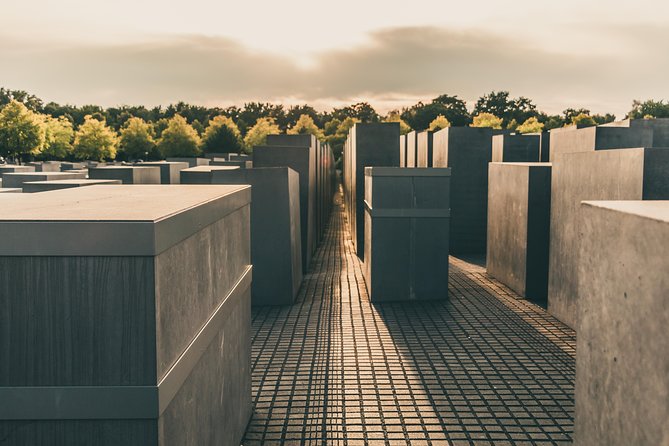
- Emotional stop at the Holocaust Memorial plus reminders of war’s refusal at Neue Wache
- Reichstag outside view and a tip on the dome visit so you can plan your next step
- Finish near Pergamon Museum, with direction on the best ticket approach
Why a Berlin “historic center” walk in Italian is such smart value
Berlin can feel like a patchwork. One block looks brand new, the next block looks scarred, and then you hit a memorial that changes your mood fast. This tour helps you read that patchwork in order, with an Italian-speaking guide who puts the story into context while you move.
I like that the tour is built for understanding, not just photo stops. You are not only looking at famous names, you are learning why they became symbols. That matters because Berlin’s landmarks often changed meaning over time, from empire to dictatorship to division to reunification.
The price, about $27.91 per person for a 3.5-hour small-group walk, is also easier to justify when you compare what you get. Many self-guided walks leave you with random facts. Here, you pay for guided interpretation, and the route is packed enough that you do not waste half a day figuring out what is worth your attention.
The group size cap of 28 is another practical plus. You should still be able to hear the guide without fighting for space every minute, especially at the outdoor stops.
More history tours in Berlin:
- Berlin: Natural History Museum Entrance Ticket
★ 4.6 · 3,382 reviews - Berlin: World Heritage Cruise to Potsdam
★ 4.5 · 1,435 reviews - Berlin Historical Highlights Walking Tour
★ 4.9 · 657 reviews
Potsdamer Platz to Sony Center, your “how Berlin changed” warm-up
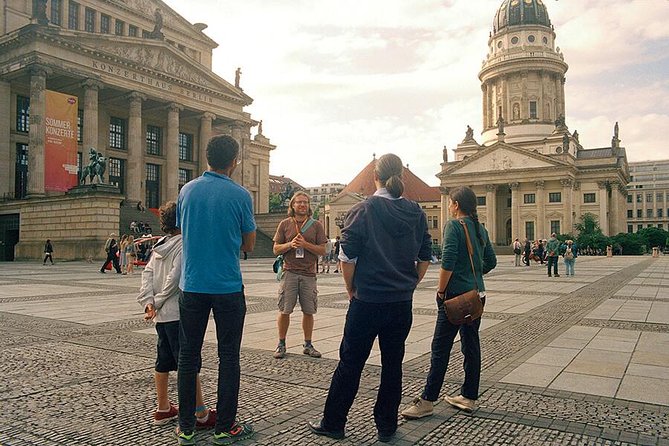
Your tour starts at Potsdamer Platz 10 near S/U-Bahn Potsdamer Platz. This is a strong starting point because it sits in an area that went through major destruction, reinvention, and modern rebuild. The meeting spot is easy to find with the VIVE BERLIN TOURS signage and a blue bicycle reference.
The first stretch is a “get oriented fast” kind of segment. Your guide uses Potsdamer Platz to set up the main theme: Berlin’s dramatic political shifts and how they left physical marks on the city.
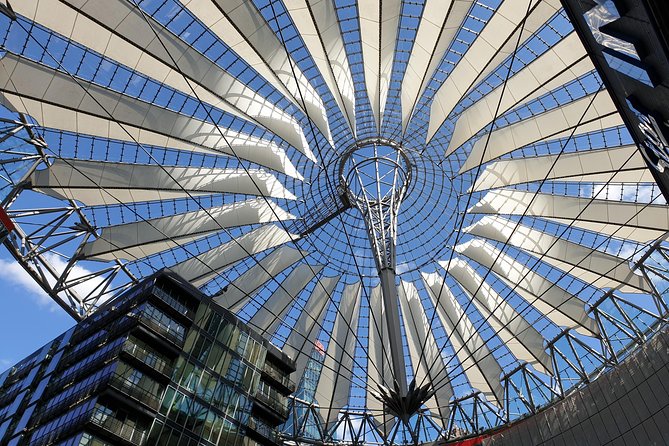
Then you move toward Sony Center, a place that often surprises first-timers. The point is not just the sleek architecture. The value is that you can see how some remnants from a war-damaged area were preserved and integrated into newer design. That gives you a visual shortcut for understanding Berlin’s layers without needing a museum ticket for every stop.
Topography of Terror, where the Nazi story becomes specific
A key moment comes at Topography of Terror. The tour goes here to connect memory to location, because this is the kind of site where names and events stop being abstract. Your guide explains how this place is remembered today and why it matters that it sat where key Nazi organizations operated.
You also get views from the area that help you “zoom out.” From here, you can see buildings associated with later Nazi-era planning and different institutional uses over time, including the Martin Gropius Bau museum area. You will also notice an original segment of the Berlin Wall, which is one of those details that makes the Cold War feel real instead of historical.
One practical consideration: this stop is emotionally heavy. Even though it is not an indoor museum session in your schedule, you still spend time at a site tied to persecution and terror. If you tend to get overwhelmed in memorial spaces, slow down your pace and give yourself a few breathing moments when your guide pauses.
Checkpoint Charlie and the Cold War’s hottest hotspot
Next up is Checkpoint Charlie, the Cold War crossing point that became a global symbol. Your guide covers how the Berlin Wall was constructed and how the city’s division shaped daily life.
This is where Berlin history turns from political timeline into human geography. You see why crossings and borders mattered so much, and you start to understand the city’s “two realities” mindset that lasted for decades.
Nearby, you also get a sense of Cold War power structures through the surrounding buildings. The tour keeps the story moving, so you do not get stuck just staring at one landmark. Instead, the guide links the physical setting to the bigger system it represented.
Still in Berlin, but a different kind of day:
- Berlin: Reichstag, Dome and Government District Guided Tour
★ 4.7 · 18,288 reviews - Berlin: 1-Hour City Tour by Boat with Guaranteed Seating
★ 4.3 · 16,993 reviews - Berlin: Boat Tour Along the River Spree
★ 4.4 · 11,252 reviews - Discover Berlin Half-Day Walking Tour
★ 5.0 · 9,624 reviews
The Aviation Ministry building, Fuhrerbunker site, and Reichstag planning tip
After Checkpoint Charlie, the tour focuses on places that carried power in different regimes.
You stop at the huge Aviation Ministry building, which was built by the Nazi dictatorship to house offices tied to the leadership of Goering. The tour then connects it to the later Cold War era when the building served as part of the “home of the ministries” for the communist dictatorship. Today, it is used as a ministry by the Federal Republic of Germany.
That quick regime-to-regime explanation is one of the most useful parts of Berlin on a walking tour. Berlin often reuses grand buildings, and the guide helps you notice the continuity instead of treating each era as a separate story.
Then you reach the Fuhrerbunker area, described as the site where Hitler spent his last days. Your guide explains what the place means and why it looks the way it does now. Even if you do not see a dramatic structure, the interpretation matters because you are standing on a key end point of the Nazi regime.
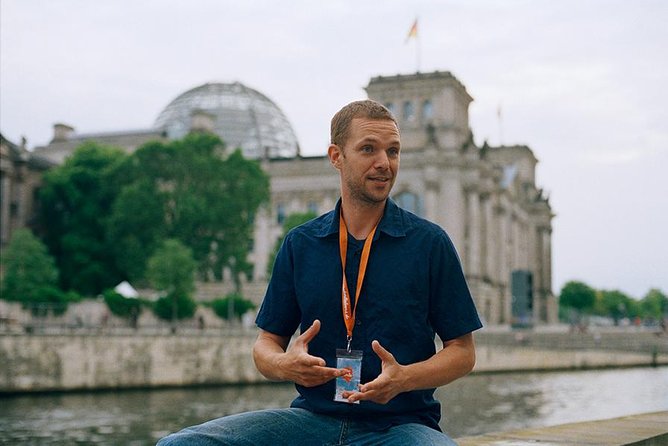
Finally, you arrive at the Reichstag building. You view it outside only, but you do get a practical tip: your guide explains how to book a visit to the dome. That is smart because the dome visit is one of the top follow-on activities for many people, and having guidance on the process saves time.
Holocaust Memorial and Neue Wache, two different kinds of remembrance
The tour then moves into one of its most important segments, the Memorial to the Murdered Jews of Europe. The guide’s stories here focus on why Berlin uses this space to remember the greatest crime committed by the German state in the Nazi period. Even with a short scheduled stop, the impact is significant because the memorial is designed to slow you down.
Right after, the walk brings you to Neue Wache. This memorial offers a different emotional angle, one centered on the rejection of war and its horrors, shown through the image of a mother grieving a soldier. If the Holocaust Memorial gives you weight through recognition of victims, Neue Wache gives you weight through the cost of war itself.
I like how the tour does not treat memorials as checkboxes. You get time to let the meaning land, then you move on. That pacing prevents memorial fatigue while still keeping you engaged.
Brandenburg Gate and Unter den Linden, Berlin’s symbolism in motion
Then you hit the big “icon zone,” and the tour makes sure you understand what you are looking at.
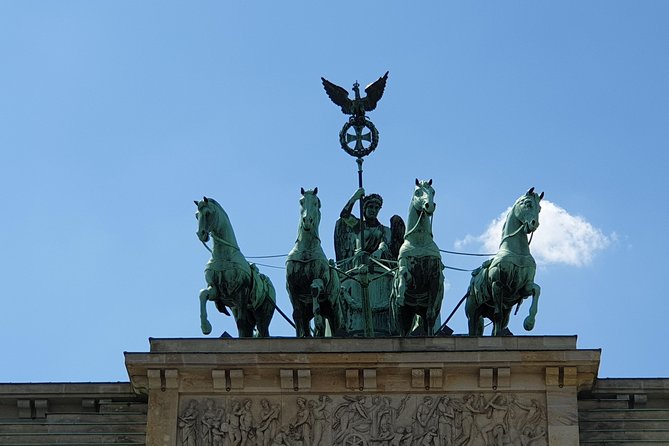
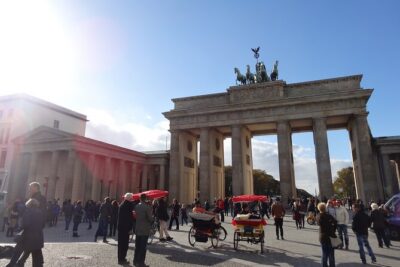
At Brandenburg Gate, you learn how the gate’s symbolism changed over time, from an image tied to a king’s strength to a Cold War emblem and, later, a symbol of reunification. The guide’s explanation turns what looks like a simple photo spot into a timeline you can see in stone.
Next comes Unter den Linden, the grand avenue once used as the access road to the emperor’s palace. Your guide points out how you can recognize different construction periods and how the war left physical wounds. That kind of guidance is valuable because Berlin’s architecture can be readable, but only if someone shows you what to notice.
If you enjoy architectural storytelling, this section is a sweet spot. You are walking, so you stay energetic, but you are also learning what changed and why.
Bebelplatz book burning and Humboldt University context
One of the most thought-provoking stops is Bebelplatz, linked to the Nazi-era burning of books. Your guide explains the square’s dual significance, including its connection to Humboldt University and the presence of the Catholic Cathedral in the area.
Right there, you also see the Book Burning Memorial. This is not just a plaque. It is designed to make the act of censorship feel tangible, and the guide’s narration is what brings the memorial to life. If you have ever wondered how propaganda becomes policy, this stop gives you a clear example.
The adjacent mention of Humboldt University matters because it reminds you that intellectual institutions were not just background. They were part of what regimes targeted, controlled, or reshaped.
Berliner Dom, Museum Island, and your smart ending at Pergamon Museum
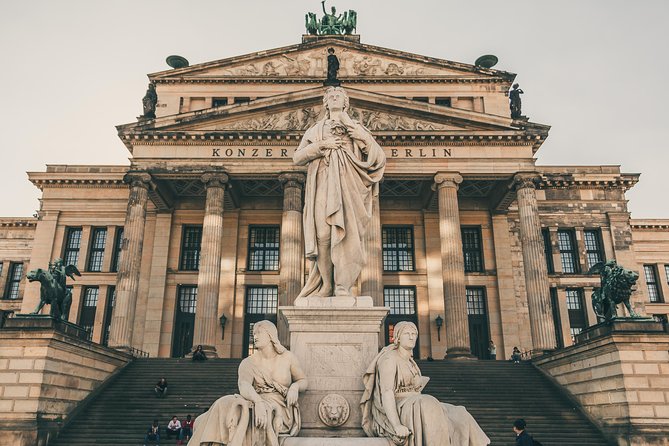
The tour continues toward Berliner Dom, the impressive church associated with the emperor’s vision. The guide uses it as a point for visual comparison, with mention that it was meant as an equivalent of St. Peter’s for Lutheran religion. Even if you are not going inside on this part of the schedule, you still get a sense of why the building looks so assertive.
Then you reach Museum Island, a UNESCO World Heritage Site. This is where the tour finishes, near Pergamon Museum at Bodestraße 1-3, and your guide gives you direction on how to continue your day. The tour’s end description specifically highlights that the guide can explain how to visit the museum and which tickets are the most convenient.
That ending is practical value. Berlin is huge, and first-timers often struggle with timing. Finishing near Museum Island means you do not have to relocate across town right after the tour. You can transition immediately into a museum visit plan.
Price, timing, and what makes $27.91 feel fair
Let’s talk money in real terms. At about $27.91 per person, you are paying for a 3 hours 30 minutes guided walk with an Italian-speaking guide, and the booking includes local taxes and the guide.
What makes that price feel reasonable is the density of major stops packed into one outing. You are covering places like the Brandenburg Gate, Checkpoint Charlie, Topography of Terror, the Holocaust Memorial, and Museum Island in one route. The alternative is doing it in chunks on your own, which often leads to wasted time between far-apart sites.
Also, the itinerary lists each stop as Admission Ticket Free. That does not mean you will never pay for anything in Berlin, but it suggests you are not required to buy separate entries for the viewpoints and memorial locations on this tour. Your costs stay mostly in the ticket for the guide itself.
One thing to note: food and drinks are not included. Berlin days can run long, so I recommend planning for a coffee or snack break before the walk if you need it, then budgeting time afterward.
Practical tips for a smooth 10:00 AM start
This tour starts at 10:00 am, and your walking pace depends on how often the guide stops for explanation. The route is outdoor-heavy, so it is smart to treat this as a proper walking day.
A few simple moves help a lot:
- Wear comfortable shoes. The stops are short, but you still cover real ground.
- Dress for the weather. The tour operates in all weather conditions, and you are explicitly advised to dress appropriately.
- Use the mobile ticket on your phone so you do not scramble at the meeting point.
- Arrive early enough to find the meeting marker, like the blue bicycle and VIVE BERLIN TOURS logo.
Group size is capped at 28, and the tour runs near public transportation, so it is easier to join from anywhere in central Berlin.
If you need extra support, service animals are allowed and the tour says most people can participate. Still, because the schedule covers memorial-heavy areas and involves continuous walking, be honest about your stamina.
Should you book this Historic Center of Berlin Italian Tour?
I would book this tour if you want a first-time Berlin framework that connects the city’s biggest landmarks to the events behind them. The combination of Italian guidance, a compact 3.5-hour route, and stops that range from Potsdamer Platz to Museum Island is a strong value mix.
You should think twice if you dislike walking for long stretches or if memorial sites related to Nazism and the Holocaust feel too intense for your current emotional bandwidth. In that case, you might prefer a lighter sightseeing-focused day, or you can plan a calmer follow-up after this one.
If your goal is to understand Berlin quickly and then move on to deeper independent exploring, this is the kind of tour that sets you up well.
FAQ
Is this tour guided in Italian?
Yes. The tour includes an Italian-speaking guide.
How long is the Historic Center of Berlin tour?
The duration is approximately 3 hours 30 minutes.
Where does the tour start and what is the meeting point?
The tour starts at Potsdamer Platz 10, 10785 Berlin, Germany near the S/U-Bahn Potsdamer Platz station.
Where does the tour end?
The tour ends at Pergamon Museum, Bodestraße 1-3, 10178 Berlin, Germany.
How large is the group?
The tour has a maximum group size of 28 travelers.
Do I need a printed ticket?
No. You receive a mobile ticket.
Are there admission tickets required at the stops?
The itinerary shows Admission Ticket Free for the listed stops, and the tour includes local taxes and the guide. Food and drinks are not included.
Does the tour run in bad weather?
Yes. It operates in all weather conditions, so you should dress appropriately.
Can I cancel for a full refund?
Yes. Free cancellation is available if you cancel up to 24 hours in advance for a full refund.
Are service animals allowed?
Yes. Service animals are allowed on this tour. The tour also notes that most people can participate.
Recently added around Berlin
- Berlin Private Custom Walking Tour With A Guide (Private Tour)★ 4.5 · 8 reviews
- One Up to 3 Rickshaws(6 GUESTS)-Taylor Made Rickshaw Berlin Tour★ 5.0 · 20 reviews
- Moonshine Comedy – English Stand Up Comedy by the bay★ 5.0 · 11 reviews
- Private Half-Day Berlin Sightseeing Tour with a Minivan Including Short City Walks★ 5.0 · 31 reviews
- Private taxi tour to Potsdam and Sanssouci 6-8h★ 5.0 · 30 reviews
- Private City Kickstart Tour: Berlin★ 4.5 · 71 reviews
- Private tour of Berlin★ 5.0 · 15 reviews
- Private Tutankhamun’s Tomb Live Escape Room in Berlin★ 3.5 · 11 reviews
Historical Tours, compared.
Berlin Private Complete History All Day Walking Tour
Read our review →


Small group Potsdam: A Journey Through History and Palaces
Read our review →Browse the lists this tour appears in