
Reviewed · HISTORICAL TOURS
Historical city tour in the African Quarter in Berlin
Berlin’s African Quarter is fascinating because it turns ordinary city streets into a map of German colonial thinking. You’ll walk through an area monument made up of 22 streets, where names point to African countries, European cities, and colonial-era figures, all in the north of Berlin. In about two hours, you get a very different angle on German-African history, one that rarely gets the spotlight.
I love how the tour treats street names like evidence, not trivia. You’ll connect Germany to Namibia starting with Swakopmunder Straße, and the stories tied to those names make the city feel like a living textbook. I also like the way the tour uses bigger historical moments, like the 1884 Congo Conference, to show how decisions made in Berlin reshaped Africa on paper.
One consideration: it runs on good weather, and it’s mostly an outdoor walking experience. If rain or cold has you grumpy, you may want to dress for comfort and be ready to keep moving.
Key highlights you will actually care about
- A 22-street area monument where colonial-era names still shape how Berlin looks today
- Swakopmunder Straße as a jumping-off point for questions about Germany and Namibia
- Anna-Mungunda-Allee vs Petersallee, including a debate about street naming and what it means
- Manga-Bell-Platz and Gustav Nachtigal, tying a central square name to colonial-era influence
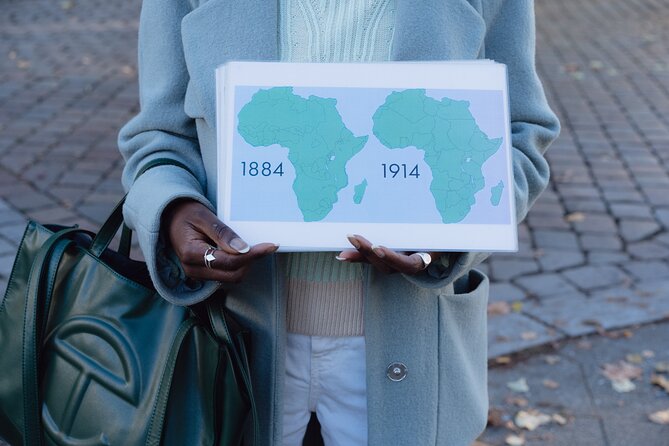
- Kongostraße and the 1884 Congo Conference, including a before-and-after map of Africa
- Small group size, up to 20 travelers, which helps questions and conversation stay focused
Why Berlin’s African Quarter is about more than street names
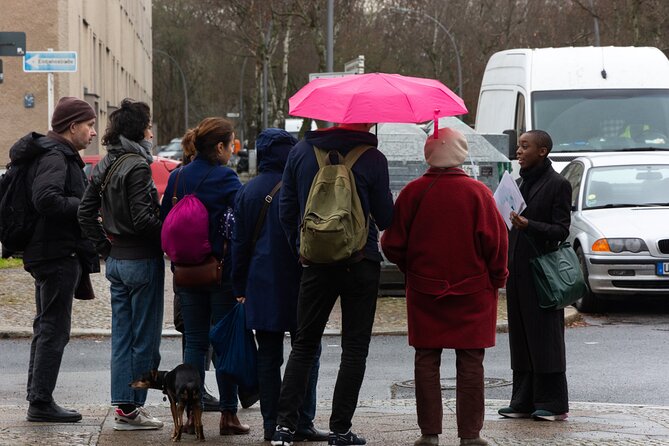
Berlin has no shortage of history tours. This one works because it starts with something you can see every day, street signs and blocks of buildings. The African Quarter is officially an area monument, made up of 22 streets, and the names are not random. They reference African countries, European cities, and colonial-era power players. That is the puzzle the tour uses, asking what Germany had to do with those places, and how colonial rulers fit into the story.
What makes it feel fresh is the change in perspective. A lot of European history tours focus on courts, wars, and famous leaders. Here, the conversation centers on how political control travels through everyday life, even long after the original decisions were made. The result is that you walk a normal neighborhood while thinking about something enormous and uncomfortable.
And yes, the subject matter can be heavy. Colonialism is not a cheerful topic. The good news is that the tour uses short, concrete stops. It keeps things moving, so the information lands without becoming a lecture marathon.
More history tours in Berlin:
- Berlin: Natural History Museum Entrance Ticket
★ 4.6 · 3,382 reviews - Berlin: World Heritage Cruise to Potsdam
★ 4.5 · 1,435 reviews - Berlin Historical Highlights Walking Tour
★ 4.9 · 657 reviews
Price, timing, and group size: what your $33.57 buys
At about $33.57 per person, you are paying for a guided walking experience built around outdoor interpretation. The stops are street-side, and the tour keeps the focus on what the names mean, what the era involved, and how the conference-era decisions connected Berlin to Africa.
Two practical details matter for value. First, the duration is about 2 hours, so you are not sacrificing an entire morning or afternoon. Second, the group is limited to a maximum of 20 travelers, which tends to make it easier to hear explanations and ask questions.
A small scheduling tip: this tour is often booked around 21 days in advance. If you are traveling in high season or on a tight itinerary, you may want to reserve early rather than hoping for last-minute space.
Before you go: how to read colonial names in a modern city
If you only do one thing before the walk, do this mental shift: look at street names as decisions that outlived the people who made them.
When you walk the African Quarter, you will notice patterns. Some names point outward, to African countries and European cities. Others point inward, to colonial-era officials and naming choices that were made when European powers controlled the conversation. The tour frames these names as prompts, then gives you the historical connections behind them.
You do not need a background in African or German colonial history to enjoy it. The tour is built around questions, like what Swakopmund has to do with Berlin, or why a square was named after Gustav Nachtigal. Those prompts help you follow along, even when you are encountering the story for the first time.
You should also be ready for the tone shift that comes with this kind of history. The goal is not to shock you for sport. It is to show you how public space can carry ideology forward, and why people argue about renaming streets in the first place.
Stop 1: Swakopmunder Straße and the Namibia connection to Berlin
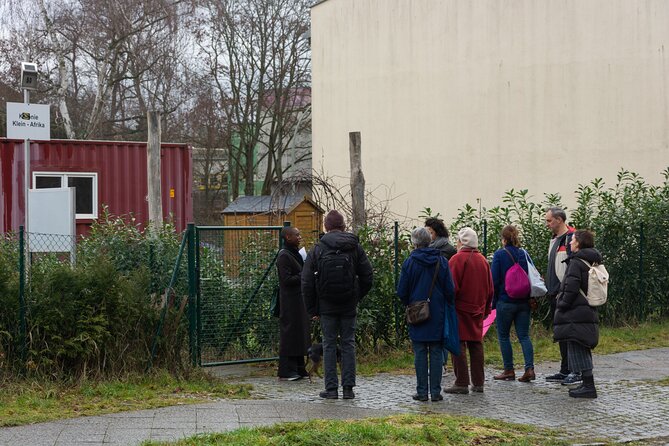
You start at Swakopmunder Str. 44, right at the kind of street sign that makes this tour work. The first question is simple and effective: what does Swakopmund have to do with Berlin?
That is the doorway into the tour’s big theme. Swakopmunder Straße becomes more than a name. It becomes a clue about Germany’s relationship to Namibia and about how colonial links were turned into permanent labels on maps and in cities.
This first stop is valuable because it sets your reading lens for the rest of the walk. When you leave this area, you will likely start seeing street names as compression machines. One short label can represent treaties, power moves, or the outcomes of decisions made far away from the people most affected.
If you are the type who likes to understand why things got named the way they did, this is a strong opener. It gets you thinking right away, instead of waiting until the tour is half done to explain the approach.
A few more Berlin options worth a look
- Berlin: 1-Hour City Tour by Boat with Guaranteed Seating
★ 4.3 · 16,993 reviews - Berlin: City Sightseeing Hop-On Hop-Off Bus Tour
★ 4.1 · 4,233 reviews - Berlin: 1-Hour City Sightseeing Cruise
★ 4.4 · 2,210 reviews - Berlin City Hop-on Hop-off Tour with Optional Cruise
★ 3.5 · 1,155 reviews
Stop 2: Anna-Mungunda-Allee and the Petersallee renaming question
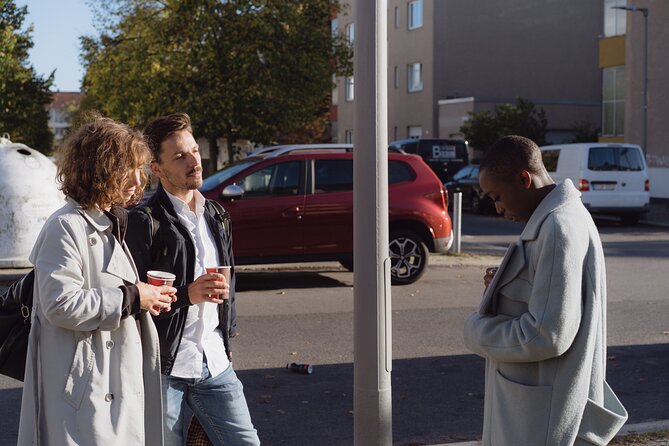
Next you move to Anna-Mungunda-Allee, where the tour tackles street naming and what it signals. The key prompt here is who a different street, Petersallee, was named after. Then the tour goes a step further, raising a question that feels very current: should the street be renamed, and if yes, why?
Even if you know nothing about the names, you can feel why this stop matters. Naming is not neutral. It shapes what a city honors, what it forgets, and whose stories get treated as standard.
This stop also helps you understand the “past to future” part of the tour message. The tour is not only about what happened in the colonial era. It is also about what that legacy means in public space today. You walk away thinking about questions you have likely seen in other places, debates about monuments, street names, and the difference between history as facts and history as honor.
One note for your expectations: since this stop includes a debate-style question, it is not there to hand you a single conclusion. It is there to show you how the same street sign can trigger different interpretations depending on who you ask and what values you apply.
Stop 3: Manga-Bell-Platz and why Gustav Nachtigal is on the map
At Manga-Bell-Platz, the tour shifts from street names as clues to public squares as statements. Here, you hear about Gustav Nachtigal and why Berlin’s African Quarter includes a central square named after him.
This stop is a good example of how the tour connects local geography with continental-level consequences. A square is not just a place to pass through. It is where people gather, where cities display identity, and where names can normalize power relationships long after they are politically outdated.
The most useful thing about this moment is how it changes your attention. You stop looking at the square like a landmark and start thinking about it like a decision. Why this person, why this time, and why does the name remain visible in daily life?
Also, because the stop is only a few minutes, it works like a chapter break. You get the key concept, then you keep walking. That keeps the pace manageable and prevents the topic from feeling like a single overwhelming wall of information.
Stop 4: Kongostraße, the 1884 Congo Conference, and maps that matter
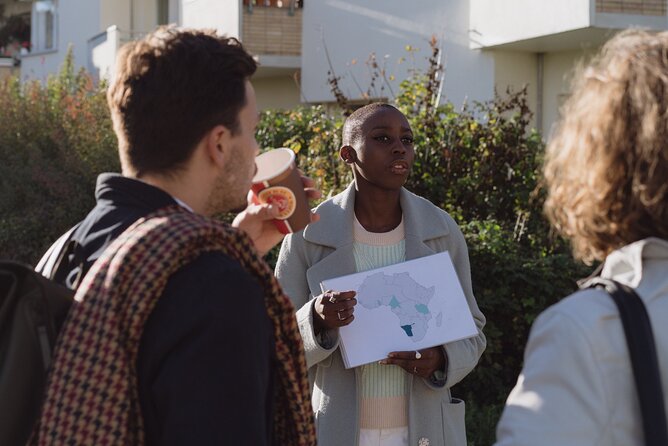
The final stop is Kongostraße, and it brings the tour’s timeline into sharper focus. The big prompt here is what happened in Berlin in 1884 and what the Congo Conference was, plus a very pointed question: why was no one from Africa present?
This is the stop where the tour is likely to feel the most dramatic, even though you are still standing on a street corner. The Congo Conference is a reminder that major political changes often get presented after the fact as if they were inevitable. The tour counters that by focusing on who had power at the table and who did not.
One practical and memorable feature here is that the tour uses a map comparison, showing Africa before and after the Berlin conference. That matters because it turns abstract history into visible change. You can literally see how lines and arrangements shifted as a result of decisions made elsewhere.
If you are curious about how modern borders and political realities were shaped, this map moment is probably the highlight. It gives your brain a concrete anchor, so the previous street-name connections start to feel like part of a single story rather than separate trivia facts.
Walking logistics in Berlin: where you meet and how to plan your time
You start at Swakopmunder Str. 44, 13351 Berlin, and the walk ends at Rehberge, 13349 Berlin. That matters because you are not returning to the original pickup point. Plan your next stop or transit based on that end location.
The tour is near public transportation, which helps if you want an easy connection to other Berlin sights. Also, you get a mobile ticket, which is convenient. Bring your phone charged, or at least make sure you can access it at the meeting point.
The pace is described as a walking tour of about 2 hours, and most people can participate. The maximum group size is 20, so it is not a swarm situation, and service animals are allowed.
What to wear? Keep it simple. Since it requires good weather, you should wear shoes that handle sidewalks comfortably. If you are sensitive to cold or wind, dress like you are staying outside for two hours, not like you are popping between buildings.
Who this African Quarter tour is best for
This is a good fit if you like history but you want it delivered in a street-level way. You enjoy connecting names to context, and you want your city walk to teach you how public space reflects politics.
It is also for you if you care about how communities talk about memory and recognition, including why debates about street renaming happen. The tour’s questions about Petersallee and Anna-Mungunda-Allee make it feel relevant, not locked in the past.
If you dislike walking tours or you want a purely museum-style experience with minimal outdoor time, this may feel like too much on your legs. But if you can handle a compact two-hour walk, you will get a lot of insight per hour.
Should you book this African Quarter tour?
Yes, I think you should book it if you want a short, focused way to understand the colonial-era logic behind Berlin’s street names. For the price, the structure is efficient: street-side stops, a clear sequence of locations, and a memorable map comparison at the end.
I would not book it if you are looking for a gentle, lighthearted stroll. The topic is serious, and the tour asks questions about power, presence, and absence. It is best when you are ready to think, not just to photograph.
If you are visiting Berlin for the first time and want one tour that feels different from the usual big-name monuments, this one is a smart choice. Reserve ahead if you can, dress for the weather, and bring your curiosity. You will finish the walk seeing Berlin’s street signs with a much sharper eye.
FAQ
How long is the African Quarter walking tour?
The tour lasts about 2 hours.
How much does the tour cost per person?
The price is $33.57 per person.
Where do I meet, and where does the tour end?
You start at Swakopmunder Str. 44, 13351 Berlin, and the tour ends in Rehberge, 13349 Berlin.
Do I get a mobile ticket?
Yes, the tour uses a mobile ticket.
Is the tour suitable for most travelers?
Most travelers can participate, and service animals are allowed.
What is the cancellation policy if the weather is bad?
You can cancel up to 24 hours in advance for a full refund. The experience requires good weather, and if it is canceled due to poor weather, you will be offered a different date or a full refund.
Recently added around Berlin
- Berlin Private Custom Walking Tour With A Guide (Private Tour)★ 4.5 · 8 reviews
- One Up to 3 Rickshaws(6 GUESTS)-Taylor Made Rickshaw Berlin Tour★ 5.0 · 20 reviews
- Moonshine Comedy – English Stand Up Comedy by the bay★ 5.0 · 11 reviews
- Private Half-Day Berlin Sightseeing Tour with a Minivan Including Short City Walks★ 5.0 · 31 reviews
- Private taxi tour to Potsdam and Sanssouci 6-8h★ 5.0 · 30 reviews
- Private City Kickstart Tour: Berlin★ 4.5 · 71 reviews
- Private tour of Berlin★ 5.0 · 15 reviews
- Private Tutankhamun’s Tomb Live Escape Room in Berlin★ 3.5 · 11 reviews
Historical Tours, compared.
Berlin Private Complete History All Day Walking Tour
Read our review →

Small group Potsdam: A Journey Through History and Palaces
Read our review →Browse the lists this tour appears in