
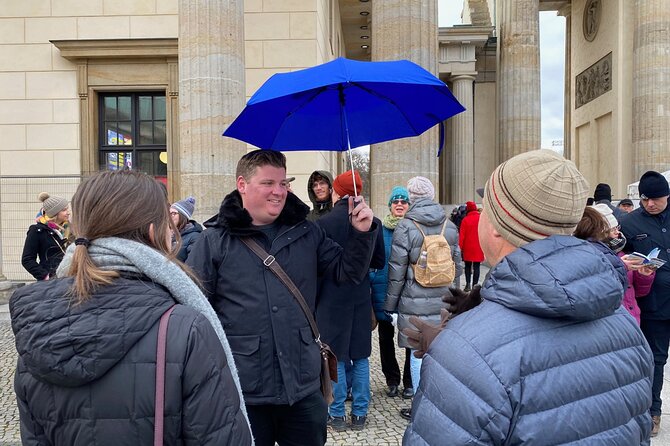
Reviewed · THIRD REICH & WW2 HISTORY WALKS
Hitler to Stalin – WWII & Cold War Tour (Small Group)
Berlin is one of Europe’s most honest cities. It doesn’t sugarcoat what happened here, and this walk connects the dots from the last days of the Nazi regime to the Cold War border that followed. You see the Brandenburg Gate, the Berlin Wall, and the places that still carry emotional weight.
Two things I really like: the tour stays practical and story-driven, so it feels like you are learning history by looking at real stone and streets, not just hearing names. And the guide talent matters, with Mark in particular bringing the story to life with pictures that compare what you see now versus what stood there during the war.
One thing to consider: it is a walking tour with a fairly tight schedule through several major sites, so bring comfortable shoes and a bit of mental stamina for the darker stops.
Key things to know before you go
- Small group, max 15: you get more chance to ask questions and keep the pace moving.
- Mark and other passionate historians: the best moments come from a guide who can explain what you are seeing, not just point at it.
- Many stops are free to enter: each listed site is marked Admission Ticket Free, so you can focus on the guide.
- The emotional range is real: you will go from European unity symbols to memorials that deliberately create discomfort.
- Cold War details are not abstract: the walk includes places tied to Berlin’s division, including Checkpoint Charlie.
Walking Berlin from Brandenburg Gate to Checkpoint Charlie
This tour works because it is built like a timeline you can physically follow. You start near the Brandenburg Gate, then work your way through WWII locations and the Cold War geography that shaped daily life in Berlin. In about 2 hours 30 minutes, you cover a lot of ground, so you get the big picture fast.
The small-group format matters more than you might think. With a max group size of 15, you are not stuck behind strangers while trying to hear a complicated story. It also helps that the guide style is active and question-friendly, which shows up in how Mark answers what people ask on the spot.
You will also notice something else as you walk: Berlin is layered. The city has rebuilt itself again and again, and history is visible even when the buildings look modern. That is the point. You are not just collecting trivia, you are understanding how power, fear, resistance, and control left marks on the same city blocks.
Finally, I like the balance of the route. It does not only focus on Nazi leadership or only on Cold War showdowns. You move through sites that represent the machinery of war, the architecture of remembrance, and the everyday reality of a divided city.
Other Third Reich and WW2 history walks in Berlin:
- Berlin: Third Reich and Cold War 2 Hour Walking Tour
★ 4.9 · 6,830 reviews - Berlin’s Best: 2 Hour Walking Tour Third Reich and the Cold War
★ 5.0 · 5,486 reviews - Third Reich Berlin: Hitler and WWII Walking Tour
★ 5.0 · 3,301 reviews
Brandenburg Gate and Reichstag: power, fire, and European symbolism
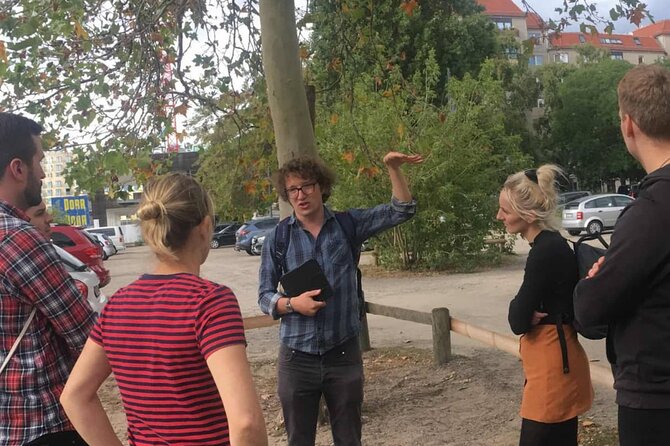
You begin at Brandenburg Gate at Pariser Platz, one of Berlin’s most recognizable intersections of politics and public space. The gate itself dates to the 18th century, built by Frederick William II after earlier city-gate history. As you stand there, you can see why it keeps returning as a stage for major events.
What makes this stop useful on a tour like this is contrast. Today, Brandenburg Gate is often treated as a symbol of European unity and peace. But the same structure has also been present for moments of conflict and regime change. Your guide helps you hold both ideas in your head at once, and that is where the city really starts to make sense.
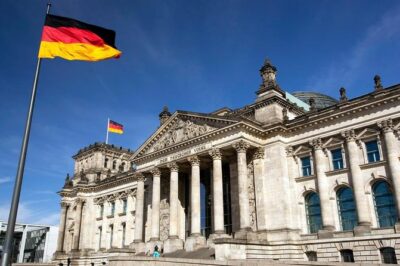
From there you head to the Reichstag building, home of the Bundestag, Germany’s lower house of parliament. The building has an older Imperial Diet purpose, opened in 1894. Then came 1933, when a fire destroyed the Reichstag, followed by heavy damage through WWII.
The restoration is also key to understand. After the war, it was badly damaged, then fully restored in 1999. Standing outside, I find it helps to connect the political meaning of a restored democratic parliament with the physical history of what was destroyed and rebuilt. It is one thing to hear that Germany changed after WWII. It is another to see the building that became a symbol of that turn.
One practical note: both these stops are marked free for admission, so you can spend your time on the story rather than waiting around for tickets.
Soviet Memorial Tiergarten: victory that still had casualties
Next you reach the Soviet War Memorial in the Grosser Tiergarten. This one has a clear purpose and a clear date: the Soviet Union erected it in 1945 to commemorate soldiers of the Soviet Armed Forces who died in the Battle of Berlin.
The location helps. It sits in the northwest corner of the Straße des 17, which puts the memorial into a major city axis. This matters because war monuments are not just “objects,” they are placed into daily movement patterns. You are seeing how a narrative of sacrifice gets embedded into the city’s long-term routine.
If you are expecting a simple “good guys and bad guys” explanation, reset that expectation before you arrive. Memorials like this can be respectful and also complicated, because Berlin’s WWII ending involved multiple armies and multiple costs. A strong guide like Mark helps you understand what the memorial is saying, without pretending history has one clean moral diagram.
This stop also does something smart for the tour’s emotional arc. It anchors the WWII story not only in the Nazi side, but also in the scale of the final battle. That sets you up for the later stops where the consequences become more personal and more chilling.
The memorial is also marked free to access, so it fits smoothly into the overall walking rhythm.
Holocaust Memorial: 2711 slabs and the feeling of uncertainty
If you take only one stop seriously on this walk, make it the Memorial to the Murdered Jews of Europe. It is not a traditional monument. It is an entire field of concrete slabs designed by Peter Eisenman, opened as a memorial site in 1999.
Here are the details that matter: the memorial uses 2711 concrete slabs across a site measuring about 19,000 square meters. The floor is uneven, and as you walk, the experience can create uncertainty or even a moment of giddiness. That is intentional. The design pushes you out of the comfortable, straight-line tourist approach.
What I appreciate is that the route does not just rush past this. You are given time to react, and your guide frames it as a place for confronting the subject in your own personal way. You do not need a script to feel how strange it is to walk through a physical maze built for remembrance.
Also, I respect how this tour includes it before the more specific Nazi-command story. That order helps you connect different layers of WWII. You move from symbol and battle memorials to the memorial for murdered Jews, then you go into the machinery of the Nazi leadership’s final chapter.
One caution for your body: this stop can feel physically awkward because of the uneven surfaces. Wear shoes with good grip and take it slowly if you need to.
Admission is marked free, so your time goes to walking the space and listening to the guide’s framing.
More Berlin Wall and Cold War tours in Berlin:
- Skip-the-Line: Berlin Wall Museum at Checkpoint Charlie
★ 4.1 · 2,041 reviews - Berlin: 2.5-Hour East Side Boat Cruise with Commentary
★ 4.4 · 2,016 reviews - Berlin: East Side Gallery Spree Cruise in a Solar Catamaran
★ 4.0 · 1,039 reviews - Cold War, Berlin Wall, Spies and the East Side Gallery
★ 5.0 · 1,024 reviews
Fuhrerbunker and the last days of the regime
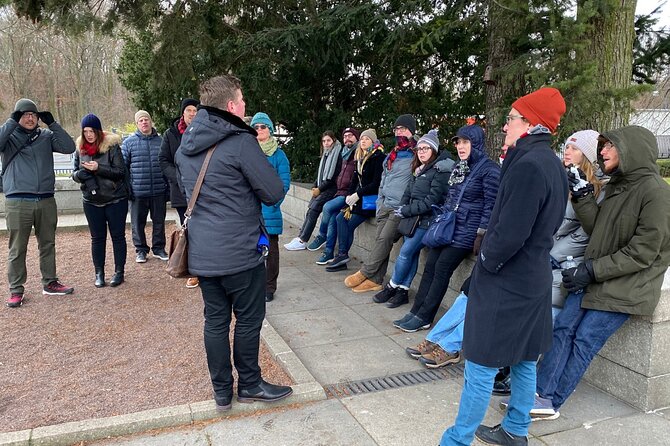
Then the tone turns stark at the Fuhrerbunker. This was an air-raid shelter built in Berlin during WWII, described as the last of Hitler’s headquarters complexes. Standing there in the story’s context, it is hard not to picture a shrinking world, with decisions and paranoia compressing into a few final days.
The timeline your guide connects is very specific. On January 16, 1945, Hitler took over the Fuhrerbunker. Then, on April 29, 1945, he married Eva Braun, less than 40 hours before their suicide.
Those dates matter because they counter the lazy movie version of history. This was not a distant end. It happened quickly, with the city collapsing around the leadership.
You also learn about what happened to the bunker after the war. The old Chancellery buildings were leveled by the Soviets, while the new ones were built later, and the underground complex remained mostly undisturbed until 1988. That is a reminder that history can be preserved quietly underground, even after everything above changes.
This stop is marked free to access. So again, the value is in the guide’s ability to turn a location into a timeline you can understand, rather than treating it as a quick photo stop.
If you are the type who likes facts, you will probably like this portion a lot. The story has dates, names, and clear sequence.
Cold War still visible: NKorea embassy, June 17, and the Berlin Wall
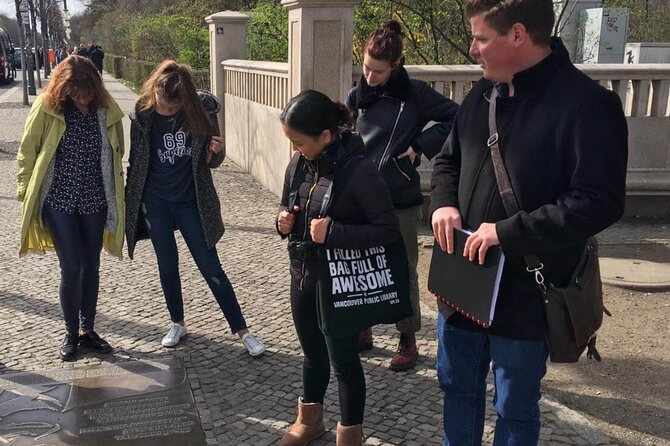
After WWII, the tour pivots into Berlin’s division and the everyday reality of living in a city cut in two. One stop you pass through is the Embassy of the Democratic People’s Republic of Korea in Berlin, located in the Mitte district at Glinkastraße 5. It is a striking reminder that Cold War politics did not vanish when the Berlin Wall fell. Some structures and international relationships remain.
From there, you move to Denkmal zur Erinnerung an den Aufstand des 17. Juni 1953. This is tied to the uprising that became the first major challenge to the communist regime after the war, and it was suppressed by Soviet tanks. About 15,000 people were arrested following the incident.
This stop is valuable because it makes repression concrete. You are not only talking about walls and border crossings. You are seeing how resistance showed up on the streets, and how quickly the system responded.
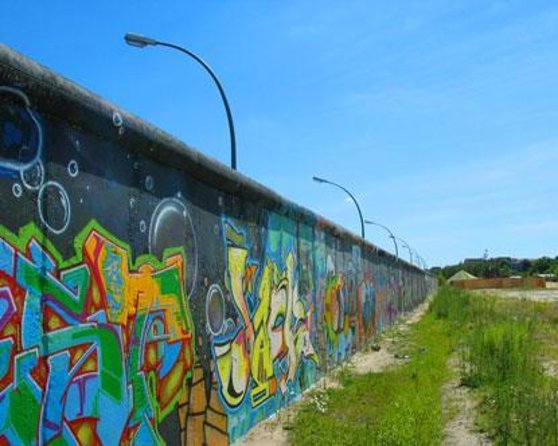
Then comes the Memorial of the Berlin Wall. This is where Berlin’s division becomes physical in your mind. The memorial commemorates the division of Berlin by the Berlin Wall and the deaths that occurred there. Even if you know the Wall story in theory, seeing a memorial tied to deaths makes it heavier.
And then you end at Checkpoint Charlie at Friedrichstraße 43-45. It is the most famous place where the Wall separated East and West Berlin during the Cold War period from 1947 to 1991. The Western Allies called it Checkpoint Charlie, and the name has stuck as shorthand for border tension.
This ending works because you get closure on the theme. You start with symbols of power and political rebuilding, then you pass through memorials of loss, and you finish at the Wall’s boundary point that people associate with the Cold War showdown era.
All of these stops are marked free for admission, which helps you keep the tour focused on the walk and the explanations.
Price, pace, and who this walk suits best
At $23 for about 2 hours 30 minutes, the value is strong, especially because the itinerary sites are marked Admission Ticket Free. You are paying mainly for a guide, and the guide seems to be the centerpiece of the experience. The best parts, based on what I have learned from how people talk about it, are the moments when Mark uses pictures to show what places looked like during the war versus today, and when he can answer questions clearly.
Group size is another value driver. Max 15 keeps things conversational. You are less likely to feel rushed or drowned out, which matters when the subject is emotionally heavy and details are easy to miss.
The pace is brisk because the tour covers many stops, each with a set of facts and a moral or political angle. Plan for standing and short walking segments, and bring water if you think you will need it. Since the experience requires good weather, dress for comfort outside and avoid overpacking.
This tour is a good fit if you want a guided route that connects WWII leadership decisions to the Cold War border system. It is also a strong choice if you are the type who likes context for what you are seeing rather than just the photo angle.
Should you book this Hitler to Stalin walk?
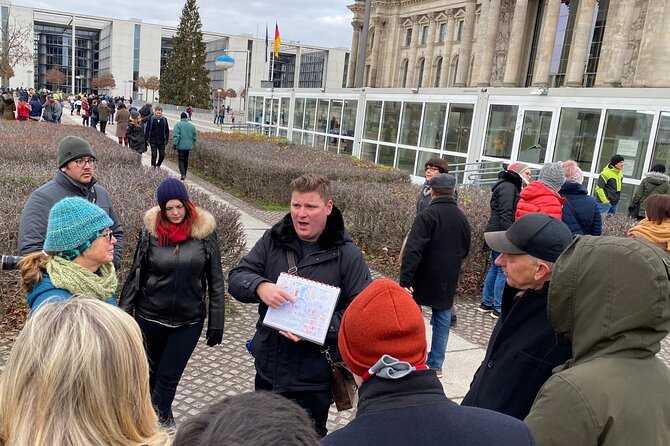
Yes, book it if you want a guided, small-group way to understand Berlin’s WWII-to-Cold-War transformation in one focused walk. The combination of major landmarks, free site access, and a guide like Mark who uses visual comparisons helps the story click quickly.
Skip it if you are looking for a slow, museum-heavy day or if long stops at serious memorial sites feel too intense back to back. Also consider that it requires good weather, so if you hate walking in cool or rainy conditions, plan your day accordingly.
FAQ
How long is the WWII and Cold War small-group tour in Berlin?
It runs for about 2 hours 30 minutes.
Where do I meet and where does the tour end?
You start at Brandenburg Gate, Pariser Platz 10117 Berlin, Germany, and you end at Checkpoint Charlie, Friedrichstraße 43-45, 10117 Berlin, Germany.
Is the ticket mobile?
Yes, the tour includes a mobile ticket.
How big is the group?
The group size is capped at a maximum of 15 travelers.
Do I need to pay admission at the stops?
The listed stops are marked Admission Ticket Free.
What if the weather is bad?
The experience requires good weather, and if it is canceled due to poor weather, you will be offered a different date or a full refund.
Can I get a full refund if I cancel?
Yes, free cancellation is offered. You can cancel up to 24 hours in advance for a full refund, but cancellations less than 24 hours before the start time are not refunded.
Is the tour suitable for most people, and are service animals allowed?
Most travelers can participate, and service animals are allowed. It is also near public transportation.
Recently added around Berlin
- Berlin Private Custom Walking Tour With A Guide (Private Tour)★ 4.5 · 8 reviews
- One Up to 3 Rickshaws(6 GUESTS)-Taylor Made Rickshaw Berlin Tour★ 5.0 · 20 reviews
- Moonshine Comedy – English Stand Up Comedy by the bay★ 5.0 · 11 reviews
- Private Half-Day Berlin Sightseeing Tour with a Minivan Including Short City Walks★ 5.0 · 31 reviews
- Private taxi tour to Potsdam and Sanssouci 6-8h★ 5.0 · 30 reviews
- Private City Kickstart Tour: Berlin★ 4.5 · 71 reviews
- Private tour of Berlin★ 5.0 · 15 reviews
- Private Tutankhamun’s Tomb Live Escape Room in Berlin★ 3.5 · 11 reviews
Third Reich & WW2 History Walks, compared.
Berlin’s Best: 2 Hour Walking Tour Third Reich and the Cold War
Read our review →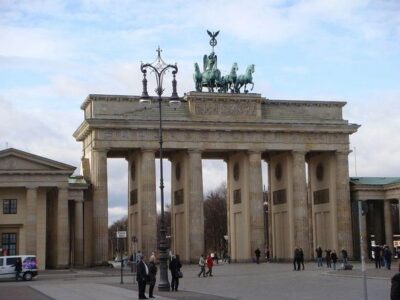
Third Reich Berlin: Hitler and WWII Walking Tour
Read our review →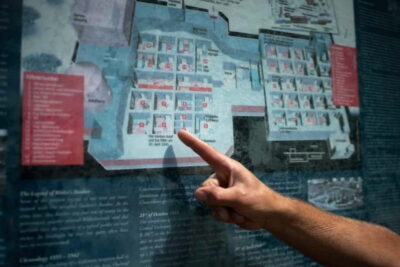
Berlin Third Reich Sites: Half-Day Walking Tour
Read our review →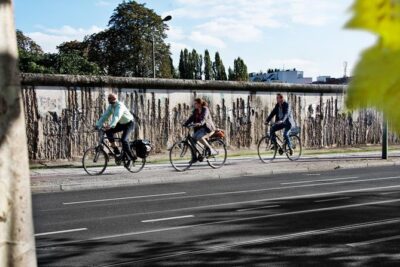
Guided Bike Tour of the Berlin Wall and Third Reich
Read our review →
Hitler’s Germany: Berlin During the Third Reich & WWII
Read our review →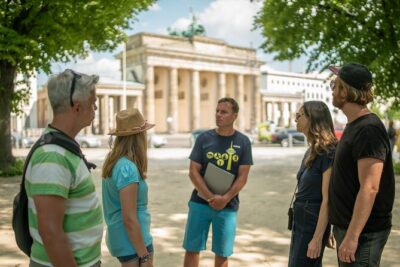
Private Walking Tour Berlin Third Reich Hitler and World War II
Read our review →Browse the lists this tour appears in