
Reviewed · THIRD REICH & WW2 HISTORY WALKS
Hitler’s Berlin – the rise and fall (Small Group)
Berlin can look calm, even elegant. That is exactly why this small-group walk hits so hard, you move through famous places while the guide explains how Nazi power took hold and how it ended. It is a focused, no-frills way to understand how quickly a society can change, and what it left behind.
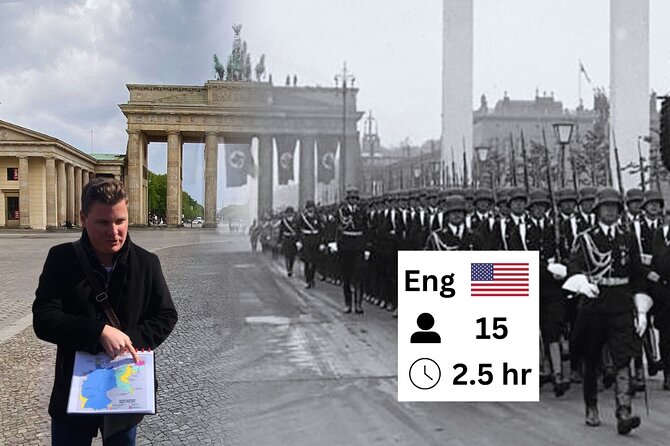
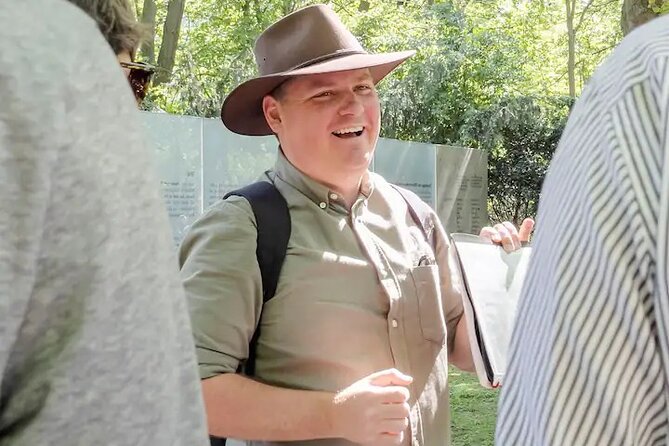
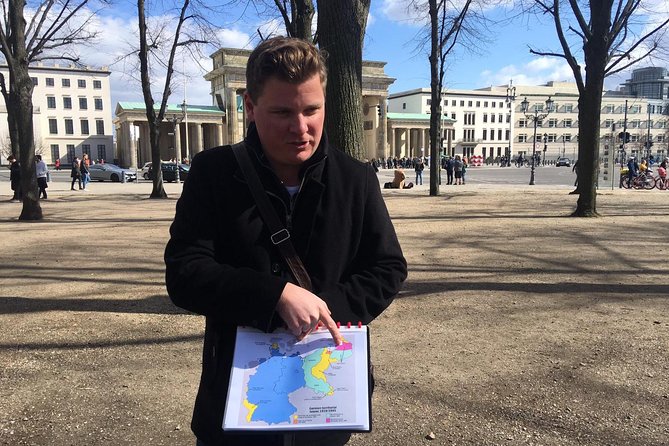
Two things I really like are the small group size (max 15) that makes Q and A feel real, and the way you use Then & Now photographs and historic maps to connect the past to what you see today. Guides I have heard named include Johan, Scott, Jochen, Roshana, and Matt, and they all share the same goal, tell the story clearly and with care.
One consideration: this is a heavy topic, and there is not much time to pause. If you prefer a slower pace or lots of sitting down, wear your patience and your walking shoes, and plan to bring your own coping rhythm for memorial stops.
Key things to know before you go
- Starts at Brandenburg Gate and builds the story of power, war, and accountability across a compact route
- Small-group format keeps questions in the flow, not at the end
- Then & Now photos and historic maps help you picture what changed between eras
- Stop-by-stop memorials and major government sites cover Nazi persecution and the war’s final days
- Free admission at each listed stop means you pay mainly for the guided narrative
- Ends at Topography of Terror, a strong place to continue on your own
Why Brandenburg Gate to Topography works so well
I like this tour because it does not treat Nazi history like a textbook chapter. You start at Pariser Platz, just steps from the Brandenburg Gate, and then you walk into a chain of sites where the story tightens. The route stays close enough that you do not feel like you are commuting through unrelated parts of Berlin, and you get that rare sense of cause and effect.
The tour is priced at $54.44 per person for about 2 hours 30 minutes, which is a sensible value for Berlin. You are paying for an expert local guide, structured time at multiple key stops, and the extra interpretive tools like maps and photos. Most of the stop locations listed are admission free for the visit, so your money goes to understanding, not entry fees.
Small-group tours can go two ways, you either get a polished script with little interaction, or you get a real conversation. This one aims for the second. The guides also build in reflection moments and Q and A, which matters on a subject this difficult. If you like asking questions, or if you want help tying together the rise and fall into one line, the format is built for that.
Other Third Reich and WW2 history walks in Berlin:
- Berlin: Third Reich and Cold War 2 Hour Walking Tour
★ 4.9 · 6,830 reviews - Berlin’s Best: 2 Hour Walking Tour Third Reich and the Cold War
★ 5.0 · 5,486 reviews - Third Reich Berlin: Hitler and WWII Walking Tour
★ 5.0 · 3,301 reviews
What you will learn about the Nazi rise and fall, in human terms
This walk is not just about names and dates. It is about systems and choices. The first half leans into persecution and the ideology that made atrocity possible. Then it moves into government power, war, and the physical reality of Berlin near the end.
You will see how Nazi rule expanded from politics into violence, and how memory in Berlin is designed to prevent the country from turning away. Germany has made a public commitment to record what happened, and the way these memorials are placed and explained gives you a direct path to understanding. It is also why the guide spends time letting you reflect and talk, instead of rushing past the hardest parts.
And I like that the stops are not only about the Holocaust, even though that is central. You also visit memorials for other groups targeted under National Socialism, including Sinti and Roma, and homosexual men and people persecuted for that identity. You even get a resistance angle with the Johann Georg Elser story, which keeps the tour from feeling like only power and punishment.
Stop-by-stop: from ideology to government power
Stop 1: Memorial to the Sinti and Roma Victims of National Socialism
You start with the Memorial to the Sinti and Roma Victims of National Socialism. This choice sets the tone. The guide explains who was targeted and why, with attention to the cruel social philosophies that later supported the Holocaust.
What makes this stop valuable is that it widens the lens early. A lot of people come thinking the story begins with one event or one group. Here, you get the earlier logic, the ideology that helped normalize persecution. It is also emotionally demanding, so I recommend taking a moment to slow down, read what you can, and let the guide’s framing settle before moving on.
Still in Berlin, but a different kind of day:
- Berlin: Reichstag, Dome and Government District Guided Tour
★ 4.7 · 18,288 reviews - Berlin: 1-Hour City Tour by Boat with Guaranteed Seating
★ 4.3 · 16,993 reviews - Berlin: Boat Tour Along the River Spree
★ 4.4 · 11,252 reviews - Discover Berlin Half-Day Walking Tour
★ 5.0 · 9,624 reviews
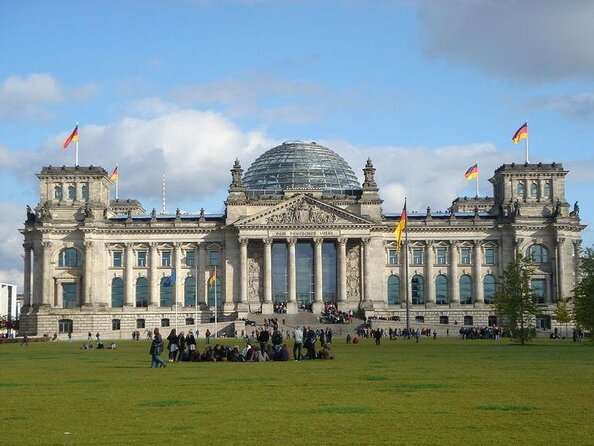
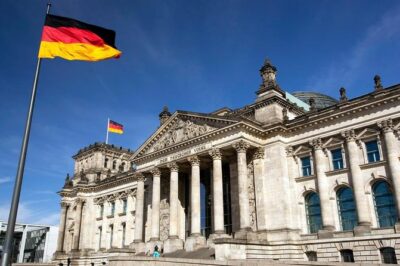
Stop 2: Reichstag Building and the road to Hitler as Führer
Next is the Reichstag Building, Germany’s parliament. The guide connects Nazi election and political rise to the moment Hitler becomes Führer of Germany.
This part is useful even if you know history already. Berlin’s political landmarks can look timeless, but the guide turns them into turning points. You learn how parliamentary power and political maneuvering mattered, not only street violence or military action. It helps you understand that authoritarian rule is often built step by step, using institutions as tools.
Stop 3: Soviet Memorial Tiergarten and the end of battle in Berlin
After that, you shift to the Soviet Memorial Tiergarten. This stop centers on the Battle of Berlin, described here as the third bloodiest operation of World War II, with discussion of the brutal fighting and post-war remembrance.
This is a perspective many visitors miss. It is not just Germans dealing with their own downfall. It is Berlin as a city under siege, and it is the way the victors and later generations built memory. You also get a reminder that the human cost does not stay neatly tied to one side of the story.
A practical note: this segment is typically brief at about 15 minutes. If you want extra time for photos or reading plaques, you will likely need to come back later on your own.
Stop-by-stop: Holocaust memory, persecution, and Berlin in the final days
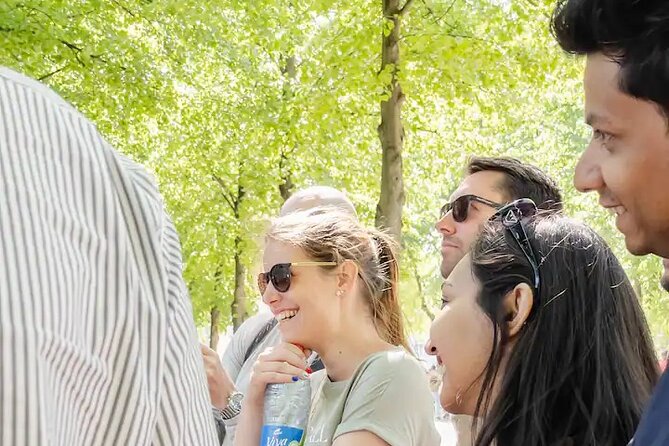
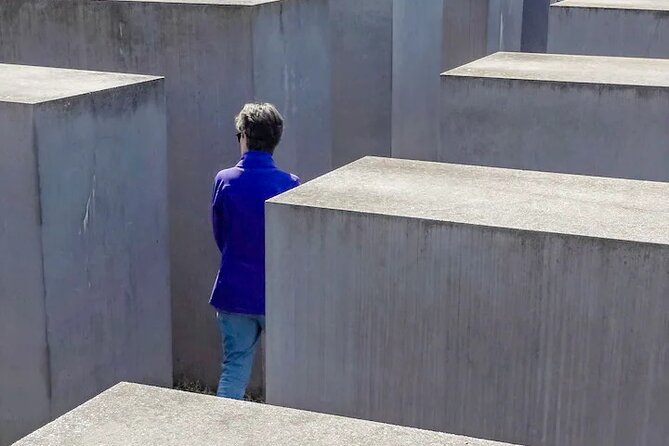
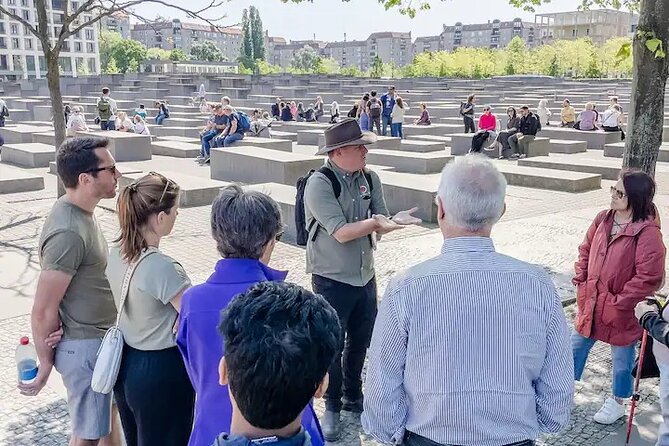
Stop 4: The Holocaust Memorial for the Murdered Jews of Europe
The next stop is the Memorial to the Murdered Jews of Europe, often called the Holocaust Memorial. Here, you get time to experience the memorial itself and talk about its meaning, with emphasis on that it represents the largest ethnic group targeted by the Nazis.
I like that the tour does not rush this. Even in a 2 hours 30 minutes schedule, the guide builds in 15 minutes here and leaves room for discussion. If you have ever stood at a memorial and felt unsure what you are supposed to feel or understand, this guided moment gives you prompts that are respectful, not scripted.
This is also the stop where you will notice the tour’s tone. Many Berlin walking tours speed through difficult material. This one is more careful, and you can tell the guide is choosing words and pacing intentionally.
Stop 5: Monument to Homosexuals Persecuted Under National Socialist Regime
Then you visit the Monument to Homosexuals Persecuted Under the National Socialist Regime. This stop is short, about 5 minutes, but it fills an important gap in the story of persecution.
If your history focus tends to be Holocaust-centered, this is where you widen your understanding of how the Nazi regime categorized people and punished them. It also connects well with the larger theme of ideology becoming policy. A short visit can still land, especially when the guide explains what the monument represents and why it matters in public memory.
Stop 6: Führerbunker, where Hitler spent his final days
You then head to the Führerbunker, the bunker where Hitler spent his final days of the Second World War.
This is where the tour shifts from the ideology of persecution to the mechanics of collapse. Even if you know the end of the war, seeing the location through guided context makes it feel less like a movie ending and more like a sequence of decisions in confined spaces. The stop is about 15 minutes, enough for the guide to frame what was happening and what the bunker symbolizes today.
I do recommend keeping expectations realistic here. This is still a walking tour with set time windows. You get guided context, but not a museum-level deep dive into every detail of the final days.
Stop 7: Johann Georg Elser Memorial and resistance that mattered
Next is the Johann Georg Elser Memorial. The guide discusses Elser’s story and his role in attempts to oppose the Nazi regime and assassinate Adolf Hitler.
I appreciate this stop because it adds something that many tours forget: resistance. Not just the broad idea that people resisted, but specific actions tied to real people. Elser’s story also helps you see the regime as contested, not inevitable. The stop is about 15 minutes, so it gives you enough substance to remember the name and understand why he fits this chapter of Berlin history.
Stop-by-stop: from Göring’s aviation ministry to Topography of Terror
Stop 8: Aviation Ministry of Berlin and the machinery of power
You then visit the Aviation Ministry of Berlin, built in 1936 to house the German Ministry of Aviation, the Reichsluftfahrtministerium (RLM), headed by Hermann Göring. This is about 5 minutes.
Even though the time is short, the location is a strong clue for what you are seeing across the rest of the route: how the Nazi state built specialized offices for power, production, and control. If you are the kind of visitor who likes to understand what governments actually do beyond slogans, this stop gives you one clear example.
Stop 9: Topography of Terror, with a break built in
Finally, you end at Topography of Terror at Niederkirchnerstraße 8, with a 20 minute break built in for tea or coffee and to use the restroom.
This ending matters for your day planning. When the tour finishes at the site, you are right where you can keep going if you want, instead of racing across town. And the break is practical. By the time you reach this point, you have already had multiple memorial stops and heavy context, so having that reset time is more than a convenience.
Also, the tour connects the dots before you go in. The guide explains the location where the Gestapo headquarters once stood, so when you look around at Topography of Terror, you have a reason for what you are seeing.
Group size, walking pace, and how to prepare like a pro
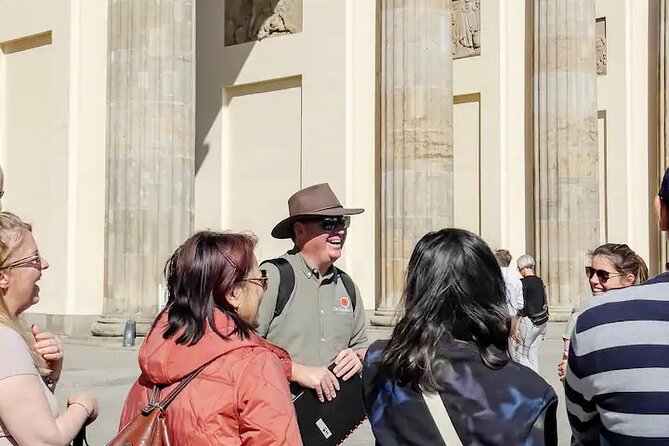
This is a walking tour of historical Berlin with maximum 15 travelers and moderate physical fitness recommended. It is also 2 hours 30 minutes, and the route covers multiple city blocks of serious content.
Here is what that means for you in real life:
- Wear comfortable shoes, you will want traction on all surface types.
- Dress for cold, wind, and weather shifts. The tour operates in all weather conditions, but it also notes that the experience requires good weather, and if canceled for poor conditions you will be offered another date or a full refund.
- Be ready for a topic that can land emotionally. The best guides create space for reflection, but you still need to be mentally prepared.
If you want to hear clearly, position yourself where you can. One small lesson I took from guides in the same style is that you often get the most from their wording when you are close enough to catch the details, especially around busy streets.
Finally, because food and drinks are not included, plan a snack or plan to eat after. The built-in break at the end helps, but it is not a full meal stop.
Is the $54.44 price a good deal?
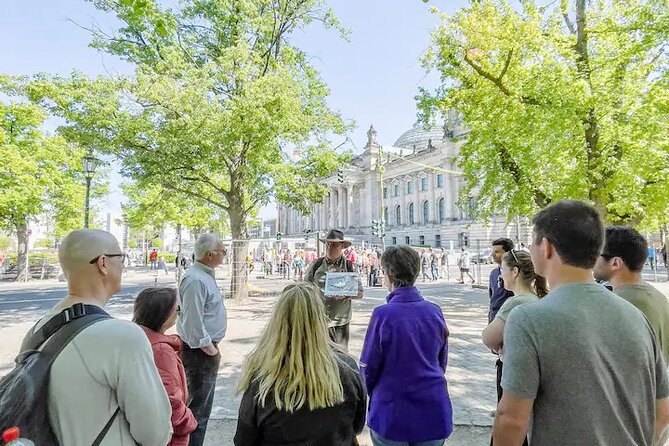
For Berlin, a guided walking tour with an expert guide plus structured time at multiple key memorials often costs more than you expect. At $54.44 per person for about 2.5 hours, I think this is good value if you care about interpretation.
Here is why:
- You pay for an expert local guide with an academic WWII background.
- You get a small-group format, not a huge crowd that turns into passive listening.
- You get Then & Now photographs and historic maps, which elevate the tour beyond just pointing at plaques.
- Each listed stop is marked admission ticket free for that visit, so you are not stacking costs on top.
The trade-off is that you will not get food included. Also, because it is only 2 hours 30 minutes, you cannot expect museum-level time at every single site. You get clarity and direction, not exhaustive coverage.
Who should book this tour, and who might want to think twice
This fits best if you:
- Want a guided, chronological sense of the Nazi rise and fall across a compact route
- Like asking questions, and you enjoy learning with other small-group voices
- Have at least some interest in WWII, the Holocaust, and how Berlin remembers these events today
- Prefer an approach that uses maps and photos to connect past and present
It might not be ideal if you:
- Need lots of sitting time, or you dislike walking with fixed time windows
- Are very sensitive to memorial spaces and heavy historical material without much control over pacing
- Want a light, casual sightseeing vibe. This is serious, even when the guide uses small moments of humanity or humor to make it bearable.
If you are traveling with teens, it can work well, especially with a guide who handles the topic with care. The key is choosing the right emotional readiness for your group.
Final call, should you book Hitler’s Berlin: the rise and fall
I would book this if you want one strong, guided thread through Berlin’s most essential Nazi-era sites, without having to assemble the route yourself. The small group size, free admission stops, and the use of Then & Now photos and historic maps make it feel like more than a walk, you get interpretation you can carry into the rest of your trip.
Just go in prepared: dress warm, bring water if you prefer (since drinks are not included), and accept that you are walking through history that deserves your full attention. If you do that, you will leave with a clearer understanding of how the regime rose, how persecution expanded, and how Berlin remembers the worst of it.
FAQ
How long is the Hitler’s Berlin small-group tour?
It lasts about 2 hours 30 minutes.
Where does the tour start and end?
The tour starts at Brandenburg Gate, Pariser Platz, 10117 Berlin. It ends at Topography of Terror, Niederkirchnerstraße 8, 10963 Berlin.
Is the tour offered in English?
Yes, it is offered in English.
What is the group size limit?
The maximum group size is 15 travelers.
Are there admission tickets included for the stops?
The itinerary lists each site visit as free admission ticket. Specific included entry details beyond that are not described, so you should rely on what the tour states for each stop.
Does the tour include food and drinks?
No. Food and drinks are not included.
What will the guide cover during the tour?
You will learn about the rise and fall of German Nazism, including Nazi election and Hitler becoming Führer, WWII events like the Battle of Berlin, Holocaust memorial meaning, persecution of additional groups, and resistance efforts such as Johann Georg Elser.
What should I wear or bring?
You should have moderate physical fitness, wear appropriate clothing for weather, and wear comfortable shoes. The tour operates in all weather conditions and you are advised to dress appropriately.
What happens if it is canceled due to weather?
If it is canceled due to poor weather, you will be offered a different date or a full refund.
Will I receive confirmation after booking?
Yes, you will receive confirmation at the time of booking.
Recently added around Berlin
- Berlin Private Custom Walking Tour With A Guide (Private Tour)★ 4.5 · 8 reviews
- One Up to 3 Rickshaws(6 GUESTS)-Taylor Made Rickshaw Berlin Tour★ 5.0 · 20 reviews
- Private Half-Day Berlin Sightseeing Tour with a Minivan Including Short City Walks★ 5.0 · 31 reviews
- Private taxi tour to Potsdam and Sanssouci 6-8h★ 5.0 · 30 reviews
- Moonshine Comedy – English Stand Up Comedy by the bay★ 5.0 · 11 reviews
- Private City Kickstart Tour: Berlin★ 4.5 · 71 reviews
- Private tour of Berlin★ 5.0 · 15 reviews
- Private Tutankhamun’s Tomb Live Escape Room in Berlin★ 3.5 · 11 reviews
Third Reich & WW2 History Walks, compared.
Berlin’s Best: 2 Hour Walking Tour Third Reich and the Cold War
Read our review →
Third Reich Berlin: Hitler and WWII Walking Tour
Read our review →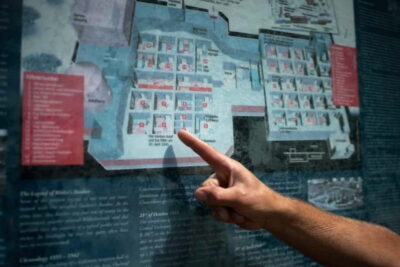
Berlin Third Reich Sites: Half-Day Walking Tour
Read our review →
Guided Bike Tour of the Berlin Wall and Third Reich
Read our review →
Hitler’s Germany: Berlin During the Third Reich & WWII
Read our review →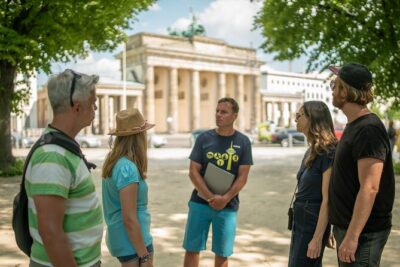
Private Walking Tour Berlin Third Reich Hitler and World War II
Read our review →Browse the lists this tour appears in