
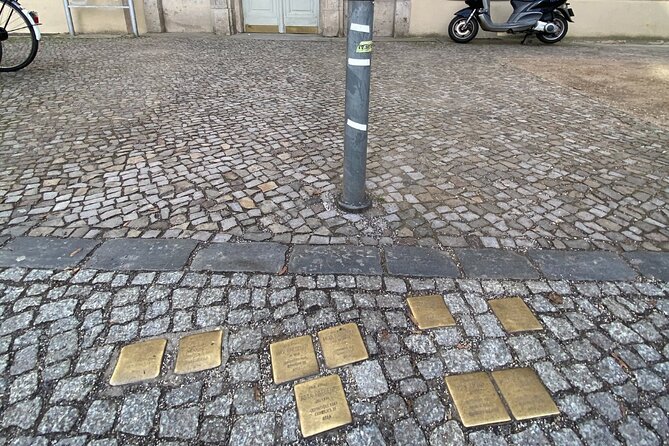
Reviewed · THIRD REICH & WW2 HISTORY WALKS
Path of Resistance: Berlin’s Hidden Holocaust Stories
Berlin has plenty of big-history tours. This one feels different because it focuses on resistance in real places, not just big names in books. You walk through Berlin sites that show how persecution unfolded, and how people pushed back in the face of terror.
I especially like how the route pairs then and now viewing with specific stories tied to exact corners and buildings. I also like the small-group size, which makes it easier to ask questions when the topic gets heavy.
The main drawback is practical, not emotional: expect a fair amount of standing during the walk. If you tire easily, wear comfortable shoes and plan for breaks when your guide offers them.
Key highlights you should know before you go
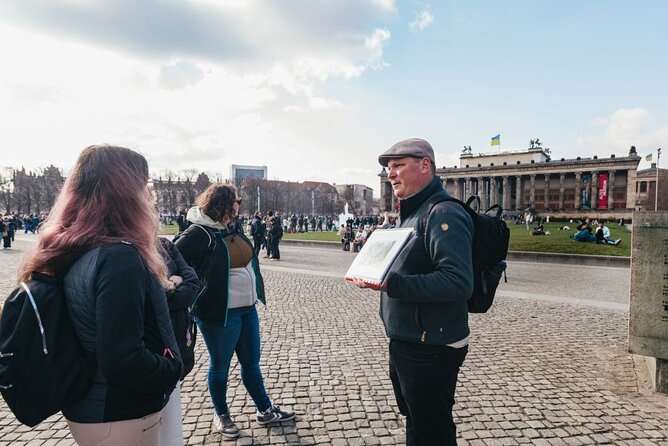
- Small group, big focus with an expert guide and an on-foot route that keeps you close to the sites
- Turning points at each stop, from Jewish education before deportations to protest in the streets
- Courage with faces, including Otto Weidt’s efforts to save blind and deaf Jewish workers
- Memorials that connect eras, like the Rosenstraße protests and the Kindertransport sculpture
- Easy transit end point, finishing at S+U Friedrichstraße so you can keep moving
Why this Berlin resistance walk feels personal, not just historical
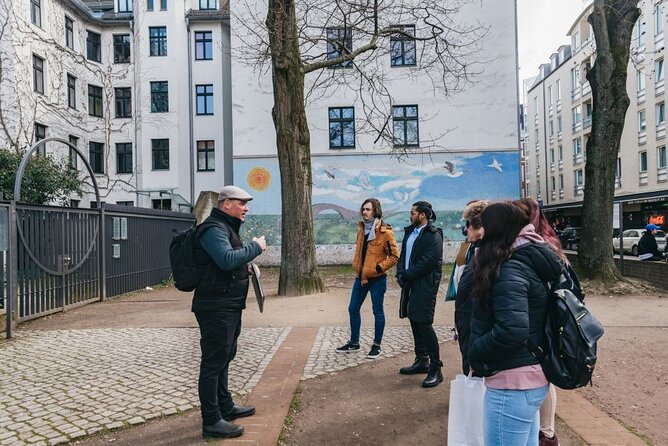
There are two ways to learn Berlin’s wartime story. One is by looking at monuments from a distance. The other is by walking the streets where decisions were made, where families were torn apart, and where resistance took forms that ranged from public protest to quiet paper work and bribes.
This tour is built around that second approach. You start at a synagogue that survived early Nazi violence, then you move to places where Jewish life was limited, forced underground, and eventually attacked through deportations. You also get the flip side, the stories of people who resisted, whether they did it openly, like the wives at Rosenstraße, or quietly, like Otto Weidt hiding workers and falsifying documents.
I also like the balance in the pacing. The stops are short, but the stories are specific. You are not just told that something happened, you’re shown how it happened, and why it mattered.
Other Third Reich and WW2 history walks in Berlin:
- Berlin: Third Reich and Cold War 2 Hour Walking Tour
★ 4.9 · 6,830 reviews - Berlin’s Best: 2 Hour Walking Tour Third Reich and the Cold War
★ 5.0 · 5,486 reviews - Third Reich Berlin: Hitler and WWII Walking Tour
★ 5.0 · 3,301 reviews
Price and time: what $48.01 buys you in real-world value
At $48.01 per person for about 2 hours 30 minutes, you are buying time with an expert guide plus a tight walking route across major sites. You also get maps and “then and now” photos, which is more useful than it sounds, since Berlin can look confusing if you try to connect landmarks by memory alone.
The group limit is up to 15, which helps you hear your guide clearly and keeps the tour feeling like a conversation rather than a crowded lecture hall. Booking tends to happen in advance, with the experience commonly reserved about a month ahead, so if your dates are firm, it’s smart to lock it in early.
One reality check: this is a walking tour with multiple memorial stops. You will spend meaningful time standing, especially at outdoor sites. If you have a mobility limitation, you should still consider the “accessible tour” note, but bring practical expectations and ask your guide how they handle pacing on the day.
Logistics that matter: meeting at Oranienburger Strasse and ending near Friedrichstraße
The tour starts at Oranienburger Str. 36, 10117 Berlin, right by the Neue Synagoge and Centrum Judaicum area. The walk ends at FriedrichstraßeGeorgenstraße 14/17, with the practical finish at S+U Friedrichstraße, a major rail hub with easy connections.
That end point is a big deal. After a tour this emotional and information-heavy, you don’t want to fight your way through complicated local transit. Friedrichstraße is a straightforward place to grab a next train or change lines.
You’ll also get a mobile ticket, and the tour is offered in English. If you travel with a service animal, the tour allows it. Food and drinks are not included, so plan for a quick snack afterward if you need one.
Stop 1 to 3: from the Neue Synagoge to the Jewish school and a cemetery turned into a warning
Still in Berlin, but a different kind of day:
- Berlin: Reichstag, Dome and Government District Guided Tour
★ 4.7 · 18,288 reviews - Berlin: 1-Hour City Tour by Boat with Guaranteed Seating
★ 4.3 · 16,993 reviews - Berlin: Boat Tour Along the River Spree
★ 4.4 · 11,252 reviews - Discover Berlin Half-Day Walking Tour
★ 5.0 · 9,624 reviews
Neue Synagoge, Centrum Judaicum (Stop 1)
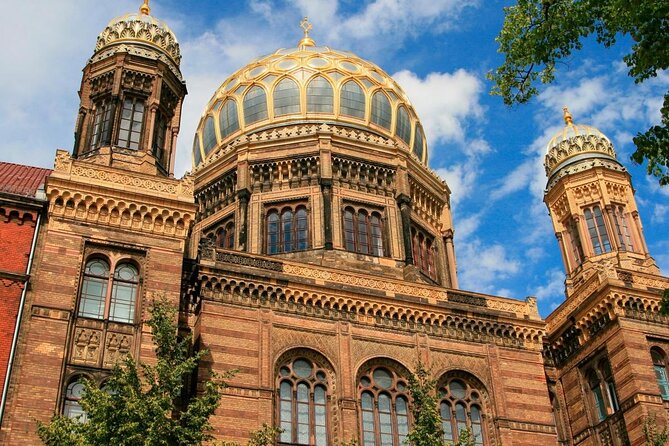
You begin at the Neue Synagoge, built in 1866 and once the largest and most magnificent synagogue in Berlin. The guide frames it as a snapshot of a once-thriving Jewish community, then walks you through how the building was later repurposed and damaged.
What stands out here is the timeline. The synagogue was in use until 1940, then confiscated by the Army and used to store military uniforms. In November 1943 it suffered severe damage in an allied bombing raid, and later the main hall was torn down. Partial rebuilding began in 1988, and it reopened officially in 1995.
Today, it houses the Centrum Judaicum foundation, which preserves Jewish memory and tradition. That continuity matters. You’re not only learning about destruction, you’re seeing what recovery looks like in the same physical space.
Jüdisches Gymnasium Moses Mendelssohn (Stop 2)
A short walk brings you to the Moses Mendelssohn Jewish school. Founded in 1779, it was the first Jewish school in Germany without fees. The building’s story also shows how this community worked within the larger city, since it was open to all faiths and encouraged liberal Jewishness.
The Nazi crackdown snaps that story in half. In fall 1941, deportations to the newly conquered eastern territories led to banning Jewish schools. In 1942, the SS turned the building into a transit camp. Windows were barred and Jews were crammed inside to await deportation.
This stop is brief, but it hits hard because it shows how quickly education, daily life, and safety were stripped away.
Jewish Cemetery and Holocaust Memorial (Stop 3)
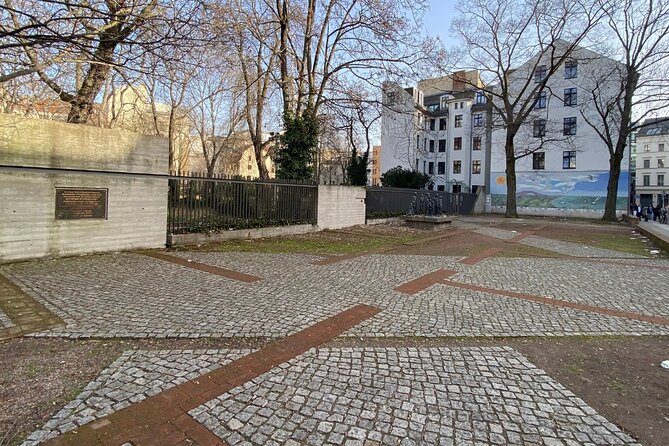
Next is a site marked by deliberate cruelty. Between 1672 and 1827, about 12,000 Jewish community members were buried here. In 1943, the Gestapo ordered the SS to destroy the cemetery, smashing thousands of gravestones, discarding remains, and committing violent desecration so extreme it’s hard to even process.
Then the memorial adds another brutal layer. In April 1945, burials took place again. About 2,500 German soldiers and Berlin civilians killed in the fighting, or shot for hanging white flags from windows, are buried in mass graves.
If you’re trying to understand resistance, this cemetery matters because it shows what the Nazis were destroying alongside people: memory, dignity, and the physical record that a community existed.
Stop 4 to 5: Otto Weidt’s workshop and the Rosenstraße protest that forced a release
Museum Blindenwerkstatt Otto Weidt (Stop 4)
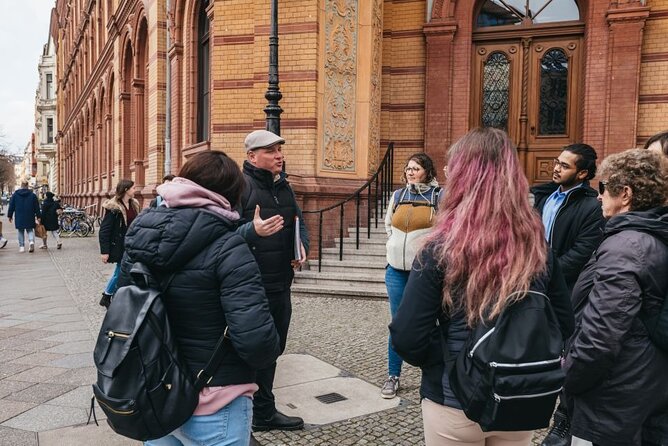
This is where the tour shifts into active rescue stories. You visit the workshop for the blind in a hidden courtyard, connected to Otto Weidt and his wife Else. Between 1940 and 1945, Weidt employed more than 30 blind and deaf Jewish workers.
The guide explains how survival was sometimes built from paperwork and bribery. As Nazi pressure increased, Weidt worked to protect employees from persecution and deportation, bribing Gestapo officers and falsifying documents. Even more striking, he went as far as traveling to Auschwitz to help break one of his employees out.
You might expect a memorial to be only about remembrance. This one is also about tactics. It shows resistance as something done under risk, with constant danger and no guarantees.
Denkmal Rosenstraße (Stop 5)
The Rosenstraße story is resistance you can feel in the streets. On February 27, 1943, Gestapo, Waffen-SS, and Berlin police arrested around 2,000 Jewish men married to non-Jewish German women. The key detail here is what the wives did next.
Hundreds gathered to protest. Even with periodic threats of being shot if the women did not disperse, they scattered briefly and then returned in larger numbers. As pressure mounted, Goebbels authorized the prisoners’ release.
This stop gives you a rare angle on power dynamics. It’s not about secret operations. It’s about public pressure and the fear the regime had of disorder.
Stop 6 to 10: Lustgarten protest history, the Zeughaus plot, and memorials that connect to your feet
Lustgarten (Stop 6)
Lustgarten sits in a grand open space framed by major buildings like the Berlin Cathedral, the Altes Museum, and the Zeughaus. Before the Nazi takeover, the square was a place for protests and speeches.
The tour highlights a moment early in Hitler’s rise: one week after his appointment as Chancellor, around 200,000 Berliners protested. Then the Nazis tightened control, restricting the right to protest with fines and arrests. By 1934, the square was paved over for propaganda rallies, swearing-in ceremonies, and military parades.
This stop works well for understanding how regimes reshape public space. You look at a place and realize it wasn’t always used for the same purpose, and that choice reflects political intent.
Zeughaus and the Gersdorff resistance plan (Stop 7)
The Zeughaus is a major visual landmark on Unter den Linden, built in 1730 as an artillery arsenal. Here, the tour moves into the story of captured Soviet weapons displayed on March 21, 1943.
A key name follows: Major General Rudolf Christoph Freiherr von Gersdorff, part of Wehrmacht resistance. The guide explains that after many failed assassination attempts against Adolf Hitler, Gersdorff agreed to a plan to blow himself up with the Führer using two concealed British clams mines, intending a death embrace that would take them both.
This is a stop that rewards close attention. The details are tense, and your guide’s role is to keep the story clear without sensationalizing it. You’ll also hear what happens next on the day, so don’t rush this one.
Neue Wache (Stop 8)
Neue Wache is quieter. It’s described as Germany’s central memorial for victims of war and tyranny. The setting is right in the middle of busy city life, which can make it feel even more unsettling.
If you’ve been absorbing a heavy sequence of sites, this stop gives your brain a moment to slow down and register what the memorial is asking you to hold.
Book Burning Memorial at Bebelplatz (Stop 9)
Next is the Bebelplatz book burning story. On May 10, 1933, Nazi German Student Union members and their professors gathered here next to Humboldt University. In a nationwide action against the idea of un-German spirit, they burned upward of 25,000 volumes deemed un-German.
What makes this stop powerful is that it shows how oppression targets ideas, not only bodies. It also connects to how propaganda works, because destroying books is not a side action. It’s the start of controlling what people are allowed to think.
Trains to Life, Trains to Death at the sculpture (Stop 10)
You end with Trains to Life, Trains to Death, a sculpture showing two groups of Jewish children facing opposite directions. One group represents lives saved via Kindertransport to England, the other represents children deported to concentration camps.
The tour also names the sculptor: Frank Meisle, who was himself among those rescued by Kindertransporte, traveling from here to England in 1939. That personal connection is part of why the stop lands.
You’re not just seeing abstract suffering. You’re seeing a visual argument about choice, chance, and survival. It’s a strong final note for a tour that started with a synagogue and ended with a memory made of stone and metal.
The guides: where the experience really clicks
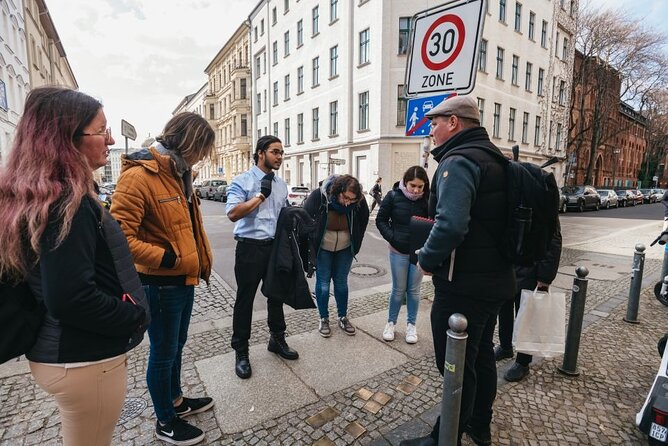
On a tour like this, the guide matters. The expert guides you’ll meet on this route are often praised for clear explanations and for making hard stories feel grounded in real people. Names that show up again and again include Johan, Jochen, Scott, Jorg, and Benjamin.
What I like about this style is how it stays practical even when the subject is not. Guides explain key names, then tie them back to why the site matters. One personal detail worth noting: the tour can be tiring because of lots of standing, but the pacing and the way questions get answered often help people feel in control of the experience.
And yes, kids have enjoyed it too, which tells me the delivery style usually finds a way to make the story understandable without turning away from the facts.
Practical tips so you feel comfortable and get the most from every stop
- Wear comfortable walking shoes. You’ll be on your feet for a while, and several stops are outdoors.
- Bring a light layer. Weather matters because the experience requires good conditions, and Berlin can swing fast.
- If you’re hungry later, eat before or after. Food and drinks aren’t included.
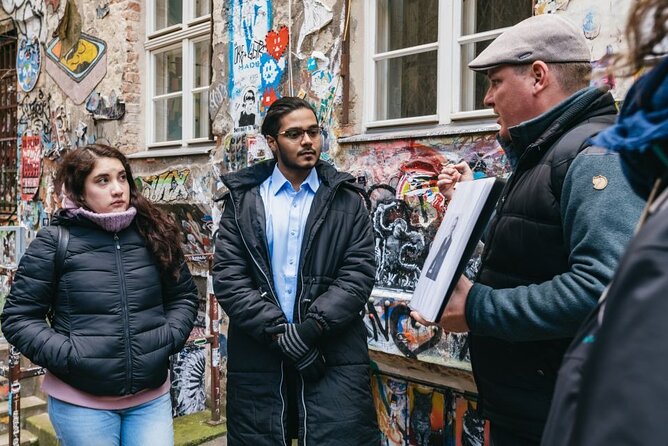
- Use the then and now photos as a tool, not a distraction. They help you see what changed when the Nazis remade public life.
- When the guide asks for a pause or turns you to face a building, do it. Small angles make the story click.
Should you book this Berlin Path of Resistance tour?
If you want Berlin beyond postcards and beyond the usual “greatest hits,” this is a smart choice. The route is compact enough to do on a busy trip, but it connects key Jewish sites, Nazi-era public spaces, and resistance stories in a way that feels coherent.
Book it if you:
- want a walk-through of memorials and historic buildings tied to resistance and survival
- like guided context, especially for sites that can be easy to miss on your own
- prefer small-group tours with room for questions
Skip it (or think twice) if:
- standing for long stretches is tough for you
- you want a purely upbeat itinerary. This tour is moving, and it deals with persecution directly
If you choose it, go in with comfortable shoes, a steady pace, and the willingness to let the stories land where they happened. That’s where this tour earns its power.
FAQ
How long is the tour?
It runs for about 2 hours 30 minutes.
What does the tour cost?
The price is $48.01 per person.
Is the tour in English?
Yes, it is offered in English.
How big is the group?
The maximum group size is 15 travelers.
What time of day should I plan for?
The exact time of day isn’t listed in the details provided, but the total tour length is about 2 hours 30 minutes.
Where does the tour start and end?
The tour starts at Oranienburger Str. 36, 10117 Berlin. It ends near FriedrichstraßeGeorgenstraße 14/17, finishing at S+U Friedrichstraße.
Do I need to bring tickets?
You get a mobile ticket.
Is food included?
No. Food and drinks are not included.
Is the tour canceled for bad weather?
It requires good weather. If it’s canceled due to poor weather, you’ll be offered a different date or a full refund.
Is the tour accessible?
The tour is marked as accessible. It also allows service animals.
Recently added around Berlin
- Berlin Private Custom Walking Tour With A Guide (Private Tour)★ 4.5 · 8 reviews
- One Up to 3 Rickshaws(6 GUESTS)-Taylor Made Rickshaw Berlin Tour★ 5.0 · 20 reviews
- Moonshine Comedy – English Stand Up Comedy by the bay★ 5.0 · 11 reviews
- Private Half-Day Berlin Sightseeing Tour with a Minivan Including Short City Walks★ 5.0 · 31 reviews
- Private taxi tour to Potsdam and Sanssouci 6-8h★ 5.0 · 30 reviews
- Private City Kickstart Tour: Berlin★ 4.5 · 71 reviews
- Private tour of Berlin★ 5.0 · 15 reviews
- Private Tutankhamun’s Tomb Live Escape Room in Berlin★ 3.5 · 11 reviews
Third Reich & WW2 History Walks, compared.
Berlin’s Best: 2 Hour Walking Tour Third Reich and the Cold War
Read our review →
Third Reich Berlin: Hitler and WWII Walking Tour
Read our review →

Berlin Third Reich Sites: Half-Day Walking Tour
Read our review →
Guided Bike Tour of the Berlin Wall and Third Reich
Read our review →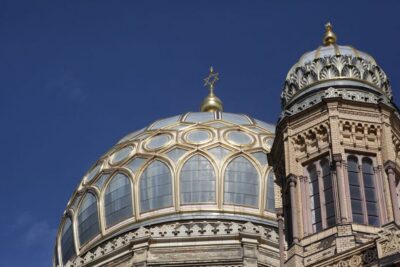
Hitler’s Germany: Berlin During the Third Reich & WWII
Read our review →
Private Walking Tour Berlin Third Reich Hitler and World War II
Read our review →Browse the lists this tour appears in