
Reviewed · THIRD REICH & WW2 HISTORY WALKS
Path of Resistance: Berlin’s Hidden Holocaust Stories
Berlin can feel like a museum city, but this walk focuses on something different. You trace the Nazis’ persecution through real places in the Jewish quarter, then you follow the Path of Resistance through everyday people who risked everything.
I like two things a lot. First, the tour is led by World War II specialist guides who keep the stories human, not abstract. Second, you hit major moments like Otto Weidt’s workshop and the Rosenstraße women’s protest, plus quieter stops such as old cemeteries and memorial plaques.
One consideration: expect heavy, emotional content and a respectful, somber pace. It is also a proper walking tour, so wear comfortable shoes and plan for all-weather conditions.
Key things to know before you go
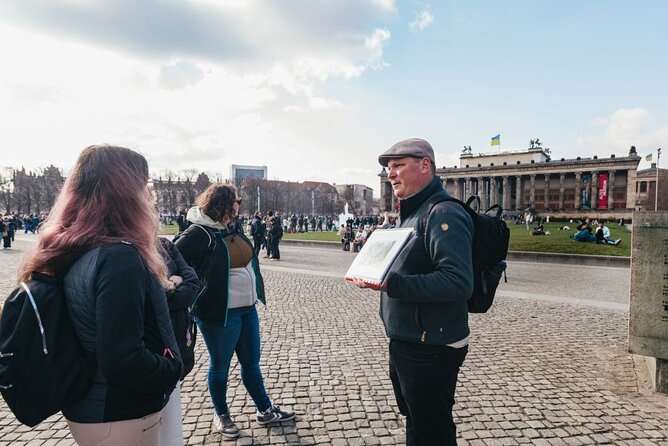
- Small group size keeps the tone personal and the Q and A useful
- WWII specialist guides focus on resistance in multiple forms, not only headline events
- Otto Weidt’s workshop shows practical courage for blind and deaf Jewish workers
- Rosenstraße Protest highlights collective action by German women seeking the release of husbands
- 1933 book burning site at Bebelplatz connects ideology to attacks on free thought
- Memorial stops like Stolpersteine and cemetery grounds make the history feel close
A standard Holocaust visit often moves in big waves: museum, timeline, facts. This tour keeps bringing you back to the street level. You stand where families were threatened, where people hid, and where courage showed up in different shapes, from quiet help to public defiance.
This is also why the title matters. The emphasis is not only on suffering. It’s on choices made under pressure, and on the uncomfortable truth that resistance was sometimes small, sometimes local, and sometimes collective.
The guides are central to that effect. In the best sessions, guides such as Tom and Hannah come across as passionate storytellers who stay organized and answer questions clearly. That matters here because the subject is sensitive and details can get mixed up fast if the guide is sloppy.
The price is $56 per person for about 2.5 hours. For Berlin, that is not cheap on the surface, but it is good value when you consider what is included: an expert local historian, entry to museums and memorials, and guided stops that you might miss on your own.
Also, you are not just following a route. You get then and now photographs and historical maps, plus discussion and Q and A. That added context turns a collection of landmarks into a connected story you can remember.
One small practical point: you are walking, not taking trains between major attractions. Public transport tickets are not required for this walking tour, which helps keep the total cost simpler.
You meet at the Former Imperial Post Office. The guide holds a blue umbrella at the main entrance, so you will have a clear visual target. Arrive about 10 minutes early, give yourself time to locate the group, and get comfortable before you step into the route.
What to bring is straightforward and actually important on this kind of day. Wear comfortable shoes for city walking. Bring an umbrella and water, because the tour runs in all weather and you do not want to be halfway miserable while you are trying to absorb the stories.
Two basic rules help keep the setting respectful and focused. Alcohol and drugs are not allowed. The tour guide keeps the experience professional, especially at memorial stops.
The tour begins with an immediate sense of Berlin as a place where power and bureaucracy mattered, not just a backdrop. From the starting area near the post office, you transition into the Jewish quarter’s institutions and spaces where community life existed, then faced collapse.
One of the early highlights is the New Synagogue Berlin, Jewish Centre stop. You get a guided visit and a sense of Jewish presence as something that was alive and organized, not only a memory. It helps the later stops land with more weight, because you are not starting from blank history.
Next you visit the Jüdisches Gymnasium Moses Mendelssohn. Even if you pass a school building on your own, a guided stop changes how you see it. It becomes part of the wider story of education, identity, and what the Nazis tried to erase.
Then comes Grosse Hamburger Strasse Cemetery, presented as Berlin’s oldest Jewish cemetery. Cemetery grounds are different from museum rooms. The pace naturally slows, and you get time to take in plaques and quiet reminders. If you tend to rush on vacation, this is the moment to slow down on purpose, even if you think you already understand the topic.
One of the most moving stops is Otto Weidt’s Workshop for the Blind. Here, the story turns from persecution in theory to help in the real world. You learn how Otto Weidt, working through a humble workshop, shielded blind and deaf Jewish workers from persecution.
That detail matters. It is one thing to hear the word resistance. It is another to see how resistance could take the form of shielding people day by day, using whatever resources were available.
This is also a good moment to listen for the guide’s framing. The goal is not only biography. It’s the bigger lesson: resistance often worked through human networks, personal risk, and constant problem solving.
Next you shift into a different kind of resistance: collective public action. The Block of Women stop connects to the Rosenstraße Protest, when German women stood up to demand the release of their Jewish husbands.
This is one reason the tour feels balanced. It does not treat resistance as only dramatic undercover heroics. It shows courage that looks loud, visible, and stubborn. You can also understand why it mattered that these women were Germans, not outsiders. The Nazi system depended on fear and isolation. Rosenstraße disrupted that plan.
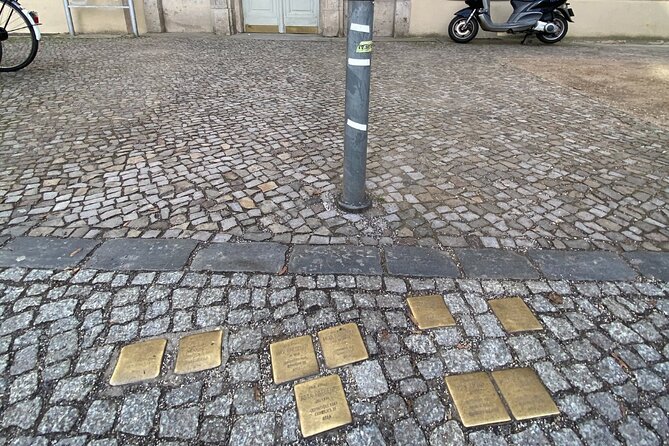
The walk also includes memorial elements tied to the neighborhood, including Stolpersteine memorials. These small brass markers can be easy to miss if you do not know what you are looking at. With a guide, they become a way to connect names to streets, and streets to lives.
You finish this phase with more reflective stops that keep the tone focused on individuals who vanished, survived, or were forced into impossible choices.
Midway through, the route brings you toward Museum Island and then Neue Wache. These are not random sightseeing detours. They broaden the frame from the Jewish quarter’s specific sites to Berlin’s larger way of marking memory in public space.
At this stage, I like that the tour does not treat history as only one neighborhood story. Berlin is layered, and the guide helps you connect how public memory works in the city today.
The pacing is also important here. You still keep moving, but you get pauses for absorption. The Q and A helps you clarify anything you missed earlier, before you head into the next heavy set of sites.
The tour reaches one of the symbolic turning points at Bebelplatz, the site linked to the 1933 Nazi book burning. You stand where the campaign signaled an assault on free thought and intellectual freedom.
This is where the ideological explanation becomes practical. You learn the Nazis’ belief in Aryan superiority and how they categorized so-called Sub-Races. The point is not just to repeat hateful ideas. The point is to show how ideology becomes policy, then violence.
You come away with a clearer chain of cause and effect. Words were targeted. Ideas were targeted. Then people were targeted. It’s a grim progression, but understanding it makes the rest of the story make more sense.
As the tour nears the end, you move into the story of deportations and the mechanics of how the Holocaust operated. One stop is Trains to Life, Trains to Death. This is where you hear about Nicholas Winton, often called the British Schindler, who helped hundreds of Jewish children escape the Holocaust.
Even though the subject is tragic, this part of the tour has a different emotional texture. You still face the brutality of the system, but you also see how rescue could happen through coordination and urgency, not only through armed conflict.
You also connect this to the idea of deportation centers and the terrible journey of families being torn from homes. The tour keeps returning to the human cost, but it also credits people who tried to interrupt the process.
The walk finishes around Berlin Friedrichstraße station. By the end, you are not just tired in a physical way. You may feel mentally full, which is normal after a focused experience like this.
This is where the included Q and A is a gift. Sensitive topics can raise questions that feel uncomfortable. A good guide creates space for those questions while keeping the story accurate and respectful.
Also, you leave with insider suggestions for further exploration, which helps if you want to keep going after the two plus hours. If you enjoy turning one guided visit into a self-guided route the next day, this is the kind of tour that supports that habit.
This tour suits you if:
- You want Holocaust history in Berlin that focuses on resistance and defiance, not only suffering
- You like guided storytelling with Q and A, and you value a small group setting
- You care about specific sites such as Otto Weidt’s workshop, Rosenstraße, and the book burning at Bebelplatz
It may not fit as well if:
- You prefer a lighter, entertainment-first city tour. This is not that.
- You find memorial settings hard to handle. If so, go slowly and tell yourself you are allowed to step back emotionally for a moment.
Yes, if you want a thoughtful Holocaust walking tour that gives you more than facts. Booking this is worth it for the way the route links ideology, persecution, and real-world resistance across a chain of sites that you can picture later.
I’d book it with intention. Bring your questions, keep your shoes comfy, and plan a quiet evening after. If you want Berlin history that respects the subject and still leaves you with a sense of humanity, this one delivers.
FAQ
Other Third Reich and WW2 history walks in Berlin:
- Berlin: Third Reich and Cold War 2 Hour Walking Tour
★ 4.9 · 6,830 reviews - Berlin’s Best: 2 Hour Walking Tour Third Reich and the Cold War
★ 5.0 · 5,486 reviews - Third Reich Berlin: Hitler and WWII Walking Tour
★ 5.0 · 3,301 reviews
How long is the tour?
It runs for about 2.5 hours.
What time does the tour start?
Starting times vary, so you need to check availability for the specific day you choose.
What language is the tour in?
The tour is guided in English.
Still in Berlin, but a different kind of day:
- Berlin: Reichstag, Dome and Government District Guided Tour
★ 4.7 · 18,288 reviews - Berlin: 1-Hour City Tour by Boat with Guaranteed Seating
★ 4.3 · 16,993 reviews - Berlin: Boat Tour Along the River Spree
★ 4.4 · 11,252 reviews - Discover Berlin Half-Day Walking Tour
★ 5.0 · 9,624 reviews
How big is the group?
It is a small group. The information lists a limit of 10 participants, and it is also described as max 15 people.
Is the tour wheelchair accessible?
Yes, it is wheelchair accessible.
What is included in the price?
You get an expert local historian, entry to museums and memorials, then and now photographs and historical maps, interactive discussion and Q and A, and insider recommendations for further exploration.
What is not included?
Public transport tickets are not included, and food or drinks are not included.
What should I bring?
Wear comfortable shoes, bring an umbrella, and bring water.
Does the tour run in bad weather?
Yes. It runs in all weather conditions, so dress appropriately and bring rain protection or sun coverage.
Where do I meet the guide?
You meet at the Former Imperial Post Office. The guide stands at the main entrance holding a blue umbrella. The tour ends back at the meeting point in the activity description, and it also lists Berlin Friedrichstraße station as the finish point, so it is worth confirming the exact end during booking.
Recently added around Berlin
- Berlin Private Custom Walking Tour With A Guide (Private Tour)★ 4.5 · 8 reviews
- One Up to 3 Rickshaws(6 GUESTS)-Taylor Made Rickshaw Berlin Tour★ 5.0 · 20 reviews
- Moonshine Comedy – English Stand Up Comedy by the bay★ 5.0 · 11 reviews
- Private Half-Day Berlin Sightseeing Tour with a Minivan Including Short City Walks★ 5.0 · 31 reviews
- Private taxi tour to Potsdam and Sanssouci 6-8h★ 5.0 · 30 reviews
- Private City Kickstart Tour: Berlin★ 4.5 · 71 reviews
- Private tour of Berlin★ 5.0 · 15 reviews
- Private Tutankhamun’s Tomb Live Escape Room in Berlin★ 3.5 · 11 reviews
Third Reich & WW2 History Walks, compared.
Berlin’s Best: 2 Hour Walking Tour Third Reich and the Cold War
Read our review →
Third Reich Berlin: Hitler and WWII Walking Tour
Read our review →

Berlin Third Reich Sites: Half-Day Walking Tour
Read our review →
Guided Bike Tour of the Berlin Wall and Third Reich
Read our review →
Hitler’s Germany: Berlin During the Third Reich & WWII
Read our review →
Private Walking Tour Berlin Third Reich Hitler and World War II
Read our review →Browse the lists this tour appears in